[removed]
[removed]
[deleted]
[removed]
[deleted]
Every sales office I've ever seen it's almost exactly the 80-20 rule. Mostly because the top salesmen, aside from being the best sellers, also have been around for the longest and have the best client list.
It's a big issue for management, obviously they don't want their eggs all pooled in a few baskets.
It would be interesting to see the performance gap by gender by product.
My stereotypical assumption is that women are better at selling clothing, cosmetics, pharmaceuticals and real estate while men are better at selling cars (especially used cars), software and hardware.
Is there any good data here? I'd be interested to see if my stereotype is accurate or outdated.
Definitely not true from my own personal experience.
Anything aimed at general employment or mid-high level executives (GM-MD level) women are generally better. This is for two major reasons (and again this is anecdotal)
1) Most of the decision makers are men
2) Men are MUCH happier to talk to a woman than a man
A man who tries to sell something to someone gets far, far less traction than a woman. This can work against them where if a women rings an absolute booter, he'll often be really happy to just have a 30min conversation when it should take 5mins max, but DM's aren't often that pathetic.
A good saleswomen who goes out and hits the floor has a huge advantage, she should be if not among your top sales then at least among the top half of the middle every time.
The problem is that there just aren't many saleswomen. I'd expect maybe 5-10% of my salesfloor ends up as women, it's generally a boys club, it's rowdy, it's macho and generally women want to do marketing (creative) instead of sales, twe two being generally somewhat intertwined.
The only downside I've seen for saleswomen is that it's often practically impossible for them to sell into Asia. Someone with a clear Western accent can make some headway, but if you're clearly a Korean women then a Korean CEO/VP isn't going to give you the time of day, Japan is probably even worse (The mid-men are fucking awful in Japan, they'd die before letting you speak to someone important). This is even true for places like Singapore or HK that're far more westernised.
[deleted]
Most men aren't CEOs so that doesn't make any sense.
[deleted]
There aren't 10 people though, there are millions. And the vast, vast majority are not CEO's. So I think YOU'RE bad a math, and I would be extremely surprised if the difference between median and mean is very different.
You're using a situation where 20% of men are CEOs. In real life, only about 1% of Men are CEOs, and it's closer to 0% for women. That has a much lower impact on the skew than in your scenario.
On top of that you're using mean salary when generally speaking in this manner we use median.
I guess it does so long as women CEOs are accounted for.
I was confusing for the median earlier, but still the difference between median & average is alarming. How much are those fuckers making?
Firstly, be sure to remember that "average" does not mean "typical". It's entirely plausible for the typical (mode) income to be well below average.
Secondly, averages can be extremely misleading in the absence of more information; the cost of living in the US varies widely, so you get things like mid-level professionals making $300k in New York, with similar positions making $70k in mid-America.
Thirdly, I think this is the average in their data-set, which is men working in selected professional fields rather than "all men".
It is the median on the graph, though. Not the mean
Should use median instead of mean
[removed]
Generalizing from specific research isn't uncommon or necessarily bad at all.
The median would be more informative here. This number is easily skewed as income does not follow a normal distribution.
Average not median. Executives and lawyers and investment bankers are nearly doubling the avergage.
That's how averages work. The put the extremely poor and the extremely wealthy in the same pool and average it. That's why the ol' * women make 77 cents on the dollar* claim is bull shit. Because it puts fast food workers in the same pool as the top 1% earners in America, and formulates and average. When you take out the top and bottom 10% of earners in America, the wage gap also deceases down to a few cents. Still to much, but not 23 cents.
[deleted]
American salaries are unbelievable inflated for absolutely no reason, it's very weird. Well, student debt is one reason. The insanely high cost of living another, but that doesn't explain all of it.
United Arab Emirates
Pascale caters to the higher end of the career spectrum, not a lot of retail employees using it.
I know a lot of men who make much more than this by 48. My dad was making alost 150K at that age.
But, I grew up around quite a few engineers who had entered management fields, so it's probably not typical. I've also dated a few engineers, and my boyfriend is in a STEM field. Lots of guys in engineering/science/research fields can end up making that.
And you think that's average? The average 48 year old male in the US probably can't name the 48 contiguous states.
You're right...it's probably just average for me personally. Big difference from the actual nationwide average.
[deleted]
My girlfriend [...] is single and has no priorities outside of her job.
I hope you only mean she's unmarried. If your girlfriend is single, you're doing something wrong.
[deleted]
[deleted]
So... is she single?
Not for long, he's still renovating his basement (he accidentally bought inferior chains).
I prefer the term available ( ͡° ͜ʖ ͡°)
i think in legal terms "not married" = "single"
"Single" != "in a relationship"?
"Single" means "unmarried," so it's safe to say that's what he meant.
"I don't have a girlfriend, I just know a girl who would get really mad if she heard me say that." - Mitch Hedberg
It's pretty obvious that he meant she is single as far as financial liability.
That what single means.
hand, 32 hours a week is considered full-time at the hospital I work at. Most of the women who are mothers are satisfied working that much and having three days off
Do you really only get paid as much as other female nurses? I am curious what you do as a nurse day to day, because you might want to ask for a raise.
I work for HR in a hospital and we are running into a large problem with pay rates between male and female nurses. Here is our problem: the number of obese patients who come in to our hopsitial has grown over the last decade. Though the female nurses are just as good at the medicine part of nursing, they tend to have trouble lifting the patients. We even were forced to purchase new equipment to handle obese patients. If a nurse can't lift a patient, we have to hire someone else who can. This means more of the hospital's money goes into paying for wages, workers comp, health insurance, and retirement plans. I hope I don't sound sexiest, but males tend to be stronger than females. Overall, we in HR tend to be happy giving a male nurse a pay bump if the nurse is willing to do the physical labor as well. If a female is strong enough to handle the weight of some of these patients, we will give them a pay bump too, but this tends to not happen as much.
I am comparing you to the 24 year old male nurses at our hospital, but I am guessing you probably are able to do a lot things older and weaker nurses cannot. As an employee, you should point this out to your supervisor. Giving you a 5-10 dollars raise, is much cheaper than hiring a new person to help lift and carry patients.
I hope I don't sound sexiest, but males tend to be stronger than females
It's pretty messed up you need to be so afraid to say that.
No significant population has ever disagreed with that statement. If anything, it is messed up to qualify with "I hope it's not sexist" in this case because our shows a misunderstanding of what people who are sensitive to sexism actually care about.
But what prompted the caution in the first place? Wouldn't it be an fear of oversensitivity to sexism?
A discomfort over change.
Sexism is real and it used to be a much bigger deal. Men created a workplace environment that was hostile for women. When that began to change and men couldn't tell dick jokes in meetings some complained about over sensitivity. In that case it clearly was an appropriate change but people don't like to have to adjust, even when it helps other people.
Of course he's afraid to say it, the wrong observational comment related to gender on here can result in serious repercussion from the more unhinged members.
Thanks, feminism
Don't know why you're getting downvoted. Second-wave feminism and the rest of the "social justice warrior" trend caused this severe case of political correctness that is slowly killing logic.
I mean, I can't say feminism is inherently bad, because in it's base form it's a great movement. Equality for the sexes seems like a no-brainer, should have happened long ago. But as you said the new age feminists don't want equality through equal treatment, they want equality via the degradation and demonization of men. The whole "don't hit a girl" thing is a perfect example. A true feminist is equally upset by a woman hitting a man as when the roles are reversed. Unfortunately most feminists today say a man has no right to hit a woman, but a woman can do damn near anything to a man without repercussion.
I agree, when feminism began it was a great movement. However, it has been tainted. Old-school feminists are egalitarians, second-wave feminists are pieces of shit. I don't refer to first-wave feminism as feminism anymore, I refer to it as egalitarianism because it's equality for all. When I say "feminism", I'm referring to second- and third-wave feminism.
Know what's funny about that? The broad majority of injuries from domestic violence come from reciprocal violence. A man and a woman attacking one another. When violence is not reciprocal, the perpetrator is a woman more than 70% of the time.
This suggests that a bigass chunk of domestic violence injuries results from women attacking men until they attack back. So the feminist view that women are always the victims and one should never hit a woman are causing women to be injured. You'd actually have less battered women if you told women to stop hitting men.
Try explaining that to a cock-hating fem-nazi. "it's the man's fault, he shouldn't have hit back!" In the world I live in, if someone hits me, it's a fight. You better believe I'm fighting back.
I don't mean to sound judgemental, but it's not very nice to say that.
To say what?
To state a fact. It's a terrible thing to do.
No, it's stupid that he even strawmans like this.
Aren't nurses in a union? In Canada, I don't think there's any discretion for what you can pay a nurse. Classification = salary.
Which is bullshit, because then they're getting paid the same for different work. Right? RIGHT??
[deleted]
Wonderful, young healthy people are getting injured caring for fatties who should take care of their own fucking problems. Just fucking shoot them already for all I care.
No, negotiating for more pay is clearly an unfair advantage of men, and permitting or even condoning the very concept is sexist.
/s I hope?
That doesn't make sense. You pay educated people more to do heavy lifting? That takes time away from what they were trained to do. Puts them at risk of injury (and lost time at work) when you could hire someone for minimum wage to do the same thing? You essentially pay "men" more money to do less of the job they were hired to do when you could have 2 staff for the same price.
Men have their strenghts, women have their strengths. Especially in a job where you have to different things like talking to people, heavy lifting and exact things, those strengths should balance each other.
EDIT: Why is this being downvoted, i'm seriously interrested.
you're saying that men and women are different? what kind of sexist HR hospital do you work at?
Yes, I am saying they are biologically different. However, I guess I need a source: http://health.howstuffworks.com/wellness/diet-fitness/personal-training/men-vs-women-upper-body-strength.htm
shitty source.
Guys it's called sarcasm... God reddit can be stupid sometimes...
in my experience the pay difference is just based on lifestyle, which as a woman, statistically means you have other priorities outside of the workplace and thus aren't on the clock as much.
I think you raise an interesting point.
I only have personal observations and anecdotes to work with, no statistics. I get the impression that women tend to, on a whole, be better with personal care then men do; having a better sense of when enough is enough, and what needs to be taken care of outside of work. Men will do whatever it takes to get the job done. Companies are going to inclined to reward the person pulling the extra commitments and work loads. I've only had one employer remotely care about my well-being outside of work.
So I wonder what the emotional, psychological, spiritual, and physical ramifications are from the pay differences. Does the rate of stress related illness/injury; substance abuse; etc correlate in any meaningful way to the pay gap?
ya, women tend to be happier than men on average, because they work less hours. But you don't see any women arguing for happiness equality.
I never looked into how much a nurse makes before, I always presumed they were paid shit. If 32 hours x $23.50 brings you $39,014 plus $18.6k for your extras, that's $57,704 and that's pretty decent. I'm glad you are being paid a good wage for the good work you do.
[deleted]
Interesting. I'm in medicine and it seems that the closer you get to the coasts, the less physicians get paid, because more people want to be in the populated fun coastal areas as opposed to say, rural wyoming where physician salary is quite good...
why do you think it's different for nurses than say doctors?
23.50 ain't too high for a hospital nurse. What state are you in?
[deleted]
23.50
agreed, that's where I'm from. Though I think san francisco is the mecha of awesome, just too expensive. NY is nice too, but wayyy too expensive. haha
I think you're touching on something I've seen many times before that claims to account for the wage gap - that women chronically choose less lucrative professions. It would seem that even amongst equals, these women are choosing a less strenuous schedule in favor of spending more time with their families.
It's an interesting case study for sure, thanks for sharing!
I think your situation, although interesting, doesn't necessarily reflect all pay disparities. Especially considering we don't have any measurables here to test your theory other than your personal experience. All it takes is one woman with a strong work ethic and no family obligations to cancel you out.
i don't see a mention of factoring in hours worked into their algorithm. i would imagine that the 4% difference is exactly that. men tend to work longer hours which would make them higher earners. also, men are more likely to ask for promotions and wage increases.
I know how much work is put in to being a mother.
It isn't 1920 anymore, being a housewife/husband isn't nearly the back breaking labor that people make it out to be, unless you're lazy or a slob.
Being a single dad, I can tell you that I have to work an extra 3-4 hours a week day by being a parent. So 8 hour days suddenly become 11 hour minimum days. While I'm not doing overtly physical like moving large boulders, raising a child takes attention, concentration, and a shit load of patience. That and cleaning up poop.
Stay at home parents of school aged children? They have it easy.
I think he meant a full time parent, which isn't that hard compared to a job. Being a single parent definitely is hard.
Maybe not back breaking, but the stay at home moms that I know still work their ass off; since their partner works, they take on most of the household responsibilities as well as taking care of their under-five kid(s) which is a ton of work in of itself. I'm not saying parents are automatically infallible, angelic labourers or anything, but I do think it's comparable to a full time job on top of whatever else they're doing. As kids get older though, I think they are less constant work (which is why parents can return to work at a certain point).
[deleted]
what confuses me is that if taking care of 1 kid is a full time job, then you'd think it'll be impossible to take care of 3 kids by yourself. But somehow it's possible.
Efficiencies of scale. It doesn't take that much more time to cook for 3 kids than it does 1. Cleaning up after them, same. Entertaining, educating, etc - same. Hence why daycares exist. I think you're being deliberately obtuse in this regard.
I think I'm pointing out that women who raise kids are being deliberately stupid if they arguing that they are working a full time job
[deleted]
They aren't paid directly, but their husband shares the money he makes at his job.
I'm genuinely sorry that you feel that way and I hope one day you get the chance to know more intimately someone who raises their kids and manages a household to a high standard.
have seen it from all angles. Raising a family is hard work. I would price it at 50k/yr. But it's not "the hardest job in the world". It's full time work meaning you can't take a break from it, but it's not the hardest job in the world. Id say more than 50% of the people at work right now at 3:21pm would love to take time off from their work and raise a kid for a few hours.
Raising a kid for a few hours is very different from raising one full time and managing a household, and I also never stated it was the hardest job in the world, just that it was at least equivalent to a full time job. Taking care of a kid and a household isn't just playing with a kid for a few hours and feeding it.
[deleted]
this affects women in their 40s, but if you are in your teens or 20s, how does this affect you? in the 1970s, this was seen as women's work. If you are in your 20s, you obviously know that you can get into whatever field you want, and the more male dominated the field is, the more the companies would pick you over an equally qualified guy (this is true only if you are in your 20s. This is NOT true if you are in your 40s). Stop complaining. Use your fucking brain.
[deleted]
such a waste of my time...
oh, attacking me personally instead of talking about the topic. You're probably a woman aren't you. I can tell, and you reflect badly on your gender when you pull shit like that. I'm happy you're not making much.
I don't have kids and the money I make is great, all things considered. There was no intent in that comment to attack you either.
[deleted]
Even then, like 90% of household chores are ridiculously easy in the first world. You just press a button, and walk away. As long as you maintain a baseline of cleanliness, the house just tends to stay clean. Nobody has to go out and hand wash clothes, or beat the dirt out of their rugs. Most homes have a dishwasher, and even those that don't, so long as you wash your dishes after a meal, it's not really an issue.
I'll never understand this mentality that despite decades of advancement, that sitting at home all day watching the kids is difficult. I've done it, it's a fucking cake walk compared to working.
Even then, like 90% of household chores are ridiculously easy in the first world. You just press a button, and walk away. As long as you maintain a baseline of cleanliness, the house just tends to stay clean.
Let me guess, you're a guy, you don't have kids, and you've never cleaned your own home by yourself.
I'm a guy, whose worked full time, while taking care of someone else's kids living in my home, and where I was the only one cleaning. It's seriously not hard.
Well stated. I have trouble wording a phenomena like this.
Just curious, but here do you work where nurses are paid $23.50? I thought nearly all would get paid at least $28 starting, aside from places like nursing homes.
You are only pointing out another flaw in society. Women are expected to do the bulk of the household work, especially when it comes to children. That's not a priority, that's oppression. You make it sound like women in general like to work full time then go home and clean up full time. Do your male coworkers with children also work less? If you plan on having kids do you think it will change your career or your girlfriends more?
Don't get me wrong, you work more you get paid more, I hear what your saying. All things being equal that's fair, but things aren't equal.
[deleted]
Generally speaking, society expects it. Those women likely do more at home than their spouse, because that's "women's work". Taking care of kids and cleaning house. Men mow the lawn take out the garbage. See any problems there? Garbage day is once a week. Mowing the lawn is once every two weeks. Cooking, washing clothes, washing dishes, putting kids to bed; those things happen every day.
What's it like in your house? Who does the bulk of the house work? What do you think will happen when/if you have kids?
It affects your life too. Nurses are under paid mostly because it's considered a career for women. How long did you have to go to school to make $23.50/hr? You could easily make that money on a construction site with no education.
I'm an engineer, and multiple times I've had to negotiate for wages given to male co-workers with the same job and the same responsibilities.
But there is observable inequality in nursing. Men make more than woman in all but one speciality.
http://thesocietypages.org/socimages/2015/04/04/chart-of-the-week-male-nurses-outearn-female-ones-every-which-way/
Again, she is single and has no priorities outside of her job.
Are you sure you've told her that she's single?
the solution is to force women to work as much as men!
I'm a male nurse. I'm no economist, but I get paid, hourly, the same as any woman with my amount of experience and certification in my field.
Anecdotes aren't really evidence. More over, you're just demonstrating that in an otherwise female dominated field, men aren't discriminated against.
[removed]
[removed]
[removed]
[removed]
[removed]
[removed]
[removed]
[deleted]
[removed]
[removed]
[removed]
[removed]
[removed]
[removed]
[removed]
[removed]
[removed]
[removed]
Are you seriously comparing alimony payments to rape?
Yes. Alimony will fuck your life and your mind up. Five minutes of rape is bad. A lifetime of financial and emotional, and consequently physical rape because you know, work and all, is pretty fucking miserable. I guess I should know better than to look decent and have decent money. I guess I was asking for it.
Check your privilege. Women don't and will not have a monopoly on pain. Women know how to dish it out just as well. If you don't think so, you undermine the power of women. Now that's being a bigot.
You're right and anyone with any critical thinking skills can see that. I'd be curious to see your response to my sarcastic "1-in-4" post, as that got deleted.
Also: in before this section of this thread gets deleted, too. I LOVE CENSORSHIP ON REDDIT! XD
What the hell happened here
[removed]
[removed]
Economist here, to claim that this shows gender discrimination is not occurring because wages within occupation wages are similar is generally incorrect. The economics literature has studied this gap extensively. Now I'll avoid going into boring details on methodology, but simply put YES there is a wage gap and YES the gap generally disappears in the data when you control for positions within occupation/job titles.
There is very little wage disparity within specific occupational titles (or tiers.) That is because the mechanism for discrimination lies within the promotional and title allocation process. Women are overqualified for their positions relative to their male counterparts. i.e. they generally have more education/tenure. Now companies are not necessarily discriminating because they have a preference against women, there are some other reasons. Female employees generally have a lower turnover rate and firms can exploit this by paying them less. Now firms don't generally just give women a lower wage, because that would be obvious and never hold up in court. Instead they promote women less frequently and put them in lower paying job titles. If you look at the differences in college educated wage growth, it suggests women don't get promoted/get placed in lower paying categories.
edit: GOLD. Thanks. I really should get back to typing that research proposal...
edit 2: Here is some summary lit from a 1999 chapter on discrimination from the handbook of labor economics. Just don't hug it to death. http://www.econ.yale.edu/~jga22/website/research_papers/altonji%20and%20blank.pdf
edit 3: So apparently people don't appreciate theory and methods that are still relevant, but aren't behind a paywall? Just because something is from 1999 doesn't make it useless.
Now I'll avoid going into boring details on methodology,
But, we love that sort of stuff on this sub. Please do.
I haven't even had my coffee yet :P
Economentrically speaking, people do wage-gender decompositions. (Oaxaca Decomposition.) You run regressions for men and women separately, get the beta coefficients, and split the wage gap into explained and unexplained differences. I hope I don't bork the math up, but simply put:
Let Y_ denotes mean wage for a gender, X_ denotes the matrix of mean characteristics, B_ is the beta vector.
Ymale - Yfemale = (Xmale - Xfemale)Bmale + Xfemale(Bmale-Bfemale)
We're not animals. Go drink your coffee first .
Says a devil...
Says a dave...
Teh Dave
"And what do we say to the devil?"
"Not Teh Dave."
You deserve way more recognition for this.
holy shit
edit: wish for moar upvotes for both of you
Fuck man, so much gold in this thread and you get none of it
Laughed way too hard at this without knowing why. Guess it's teh coffee time.
We're not animals. Go drink your coffee first.
Teh Daaaaaaaaaaaaaaaaa....ve
Which we all know means to duff!
...says the END OF ALL THINGS!
Not just any dave. TEH Dave.
Says Ω
Devils are Lawful Evil, man, and there's gotta be a law about coffee first somewhere.
Well it is an addictive substance shunned by the Mormon church.
Can confirm. Source: am coffee
Actually I think it's a spanish word for "fighting chicken with those claws"
Actually it's a Blizzard word for "Spending 100s of hours killing demons trying to get 1 lousy $@#^##ing legendary to drop"...
Coffee is gross. /r/teamasterrace
Team aster race?
Tea master race
I always forget to get the coffee after I brew it, You just reminded me sir. Thank You!
No one knows I am a German Shepard.
Ooh, I've never seen this kind of regression. Doesn't it mean that you have to have pairs? Since you're subtracting design matrices? How do you pair them? Then what do the betas represent? This is fascinating, trying to wrap my head around it. Oh and you're subtracting the dv vectors too, so they must be paired.
What does this mean?
So I think a potentially easier way to think about this is that you're having a regression for the wage, Y, of an individual based upon a vector of other covariates (background characteristics of a person like education, race, etc.), Z, and their gender, X. Where X = 1 if a person's male and 0 for female. Now you have the regression:
Y = beta_0 + (beta_1) X + (beta_2) Z + epsilon
Or in other words: Earnings = beta_0 + (beta_1) (Is_male) + (beta_2) (background characteristics vector) + error term
(Note: that beta_2 is a vector of coefficients, while beta_1 and beta_0 are just scalars in this)
In this regression, beta_1 is the mean difference in earnings between males and females conditional on the covariates in Z. This is pretty easy to see if you take the expected value,
Mean earnings male (X=1): E(Y|X=1,Z=z)=beta_0+beta_1+beta_2 * z
Mean earnings for female (X=0): E(Y|X=0,Z=z)=beta_0+beta_2 * z
(z is just some vector of background characteristics)
Mean difference in earnings for males and females:
E(Y|X=1,Z=z)-E(Y|X=0,Z=z)=beta_1
Now this is a relatively simple linear regression, no interaction terms to see if background characterstics affect different genders differently or any of that.
What about pairing?
There isn't necessarily "pairing" per se in this case, but your question hits on an interesting point. There's two different general methodologies for estimating causal impacts in a situation like this which are popular in econometrics: propensity score matching, and linear regression.
So in a linear regression model, the implicit assumption is that females function as a valid comparison group for males conditional on all the factors in Z in the model above (and that we've specified the functional form of our model correctly). Suppose that our sample consisted of males who were high school dropouts, and females who were college graduates. This isn't comparing apples to apples! In our model above, you'd imagine that beta_1 would be biased downwards because of this sample the mean difference in earnings of a high school dropout male compared to a college graduate female is substantially different from the mean difference in earnings of a college graduate male and college graduate female. Therefore, sample selection is important. In most research papers, they usually have a section dedicated to talking a bit about the data and their sample and the distribution of the background characterstics in Z to make a case that two groups are comparable.
In propensity score matching, we would construct a "propensity score" for each individual in our sample based on their background characteristics in Z and then attempt to match males to females using some sort of algorithm (you can read more about it here). This is probably more directly related to your question of pairing. However, both linear regression and matching should result in the same estimates in an ideal world, they're just different ways of thinking about the problem.
Hopefully that kinda answers some parts of your question :\ Sorry I'm in a bit of a rush!
No, I understand linear regression. That's not what OP posted though. He's got differences all over the place. Differences as in subtraction I mean. It kind of doesn't make sense to me but he gave me a link.
The "linear" in linear regression refers to the equation being linear in parameters (the B terms). The independent variable (the X terms) can enter in about any fashion you'd like, as differences, raised to some power, log'd , exponentiated, etc.
Yeah, it's the same thing pretty much except simpler functional form and only one regression.
Thanks for the exposition.
If only you could RA gender, your answer wouldn't have had so many follow up questions :P
This thread has been linked to from another place on reddit.
^(If you follow any of the above links, respect the rules of reddit and don't vote. ) ^(Info ^/ ^Contact)
Good response, but the old adage, make your math complicated enough and nobody will question it.
Haha, didn't mean to do that, I was just responding at the level the guy above me seemed to want it, although by the time I was done with the simpler explanation, the OP had already provided a link. If you want a less mathy explanation I can give one too :), I just found it simpler to post the more mathy one
Not making an accusation, it's just simply true. Unless I learned enough about the subject there's no way I could challenge you (not that I doubt you). No need to make it simpler - that wouldn't solve the problem :)
No, it only requires that there is overlap of men and women within job occupational categories (that's if you control for said variables.) Which can be a problem in cases of gender segregation.
Betas represent returns to certain observables, like education, tenure, etc for a specific group. You basically say if women are treated like men, what would their characteristics say about their wage. Then you compute how much difference is coming from differences in the Betas.
Here's a link on the methods (just google Oaxaca decomposition) http://www.stata-journal.com/sjpdf.html?articlenum=st0151
Thanks will read more. I understand what betas represent in general, just didn't understand them in your formula, but I think I get it. You're interested in the difference of betas. And if I understand correctly, your observations are more like "categories" of jobs instead of individual observations. You don't have to answer though, ill read through the link.
Here's a handbook of labor economic chapter if you want to have some more fun: http://www.econ.yale.edu/~jga22/website/research_papers/altonji%20and%20blank.pdf
Couldn't the latent inequality after adjusting for job type and placement be due to maternity leave? Say a women takes leave and after returning is more concerned with child care than promotion? I'm just saying I think a simple human element exists to explain the discrepancy you see. I fail to believe that the wage gap is anything more than hype and manipulation for political gains. Perhaps there is a reason women are more often passed over for promotion, perhaps many choose to pass on the promotion because they chose personal life over more investment in their chosen field? There are significant biological differences between men and women, it's it unreasonable to ascribe a significant portion of the gap to simple biological differences and personal goals? I mean why would businesses choose to alienate their women workers when the reward is almost nothing and the consequences are severe? There doesn't seem to be a lick of sense in this business strategy that you claim exists.
God I love econometrics.
Regress X on Y, assume away endogeneity and have a degree from an Ivy => Publish
Have a valid instrument, do all the correct methods, conduct IV, show consistent story => Criticism of instrument, more robustness checks, stupid referee comments => Revise, resubmit, repeat = > Publish
Undergrad: Regress X on Y, what endogenity? => Fails Class
Also fuck most referees, bunch of cunts.
Ya, had a guy desk reject my paper for not controlling for something that he wasn't able to control for in his own working paper. We have the same identifying variation !!!!
He didn't want you to publish...
Oaxaca Decomposition
Oh god, that's what it's called? I saw this in a paper and it hurt me. How does this measure perform asymptotically? If you have any bias from violation of OLS assumptions (easy endogeneity claims), isn't this measure just garbage? Sorry to complain, but I've never seen it named before and now I want to know more.
Also all the gender studies I've read in QJE or JPE don't use this. Anecdotal and bitchy, I'll admit.
I mean, you could argue heteroskedasticity, but endogeneity? How would that work? Sex kind of outdates most other variables in the social sciences.
Sexism is easy and salient. Sexism is correlated with the gender wage gap, sexism is correlated with raises or overtime allowance (which, say, are in X). The omitted variable bias causes endogeneity because it's correlated with \epsilon and Y. (That last sentence wasn't intended to be mansplaining, ignore it if you know econometrics.)
Point being, the regression ascribes gender gap to differences in work hours, when the real causality is partially attributable to sexism which causes differences in work hours. That's all well and good when it's your argument, but when you are considering asymptotics of this oaxaca decomposition the bias could result in misleading inferences. I'm not saying it has to be biased, I'm just looking for clarification, perhaps from a good stats or top econ journal. The only cites I saw on google were to some international journal I've never heard of, so my hackles were raised.
Only a master's student, but I think I get what your saying, and, absolutely. Oaxaca does not break down what part of the wage gap is caused by sexism, it simply breaks down what part of the wage gap is explained by a vector of control variables, and what part is unexplained. As researchers, we have to be careful to note when differences in one of these control variables between genders may in itself be caused by sexism, as is the case with industry, hours worked, union status, etc.
And I'll admit, without these controversial variables, the Oaxaca decomposition doesn't tell us much. I saw a paper earlier that found a negative predicted wage gap, when using only the uncontroversial variables of age, province, and education, mostly due to women having higher educational attainment than men. But this in itself tells us a lot about the wage gap: if uncontroversial variables cannot explain any differences in wages by gender, then there is a strong case to be made that the unexplained portion of the gap (all of it, in this case) is caused by discrimination.
Any one of those control vectors could be argued to proxy for whatever the researcher is selling, so there's always a trade off between complaining about endogeneity and accepting a proxy's validity.
As for the gender income disparity, there's research all over the place with all sorts of nice results. Including menstruation being the cause. I just don't know what to believe anymore, but at the end of the day it still seems wrong. I think women eventually will need to be paid more, commensurate with their competitive advantage in the whole... procreating thing. When it comes to 'murica's female work force, I think we're going the way of Japan unless we try to be more like France.
Now i realise how good was my teacher of econometrics...
But not so good your English teacher was.
but at least that teacher taught him how to raise a crashed x-wing out of a bog
English is not my first language, i'm still improving my english. You're a total badass making fun of someone that made an honest mistake.
Your English is so good for a second language. I feel like lots of English speakers don't even attempt to speak another language (especially in America).
Reddit is full of such heroes.
Your english is excellent.
I meant it in light fun. Your English is great; don't let anyone discourage you.
Why not just run a regression with a dummy variable for sex?
Because the betas are different. It will only shift the intercept of the wage equation rather than the slopes. You could get a similar effect if you interact the dummy with all the betas too.
STATA shortcut example: xi: reg wage education i.female*education
Oh duh. Thanks! And I should know you're an economist since you're using Stata...
There is also the problem with pooling, you don't get a pure male treatment effect.
Not all critics have a political bias against you.
split the wage gap into explained and unexplained differences
Who decides what the unexplained differences are? As you said here
it wouldn't describe the entire gap
I believe this is key. This is a phenomena involving millions of people in a complex world so the gap must be due to a wide variety of different factors, which no doubt include the theories put forward by popular feminism that prejudice and cultural attitudes are to blame but likewise I doubt this explains 100% of the gap. This does not imply the remaining proportion of the gap is explained by the arguments of your opponents in a tug of war between 2 sides, it implies that the remaining proportion is unexplained.
One factor is apparently the number of work hours, this in itself is partly explainable by cultural attitudes but again it can't be 100%, but anyway.
http://scholar.harvard.edu/files/goldin/files/goldin_aeapress_2014_1.pdf
The answer may come as a surprise. The solution does not necessarily have to involve government intervention. It does not have to improve women’s bargaining skills and desire to compete. And it does not necessarily have to make men more responsible in the home although that wouldn’t hurt. But it must involve alterations in the labor market, in particular changing how jobs are structured and remunerated to enhance temporal flexibility. The gender gap in pay would be considerably reduced and might even vanish if firms did not have an incentive to disproportionately reward individuals who worked log hours and who worked particular hours. Such change has already occurred in various sectors, but not in enough.
This I think has further ethical implications. Shouldn't a person have the right, if they choose, to work harder than their peers and earn more without being penalized?
Feminism I believe is a subset of overarching ethics, which hopefully means the answer from popular feminism is "yes" and support for some other solution should be found like changing cultural attitudes, it also means that the truth is more important than what is politically expedient and analysis like this should be objective and unbiased. It is difficult when confronted by a bunch of internet trolls but even worse than falling for a troll is assuming legitimate criticism is from a troll when it's not.
It is like making predictions on the stock market, you can't afford to make mistakes, you can't pretend you made money when you didn't, so you have to take criticism and accept failure even if it is a hit to your ego or you will never learn and improve. Except here you can't test your assumptions easily and it is all to easy to let your own prejudices interfere, something I am guilty of so I'm not pointing any fingers.
Ah Claudia, she gave me data once. Yes, everything is much more nuanced that what people really have put out here. People generally want concrete answers and explanations when things are really much more gray. This whole thread kind of exploded beyond the little point I was trying to make.
I'm really interested in this, but as a qualitative kind of researcher this confuses me a bit. Could you explain it a bit more... slowly? Thanks.
It's also worth nothing that the most serious flaw in the Oaxaca decomposition is that there's a great deal of grey area regarding just what is in that unexplained area-- is it prejudice, or has some variable been left uncontrolled? Or, on the opposite side, has a variable been over controlled? Oaxaca is a really great tool, but as you say it's by no means the end of the conversation.
That's why it's an unexplained gap :P So much of econometrics is about trying to look inside of a black box, especially in the IO lit.
But everything you say contradicts Reddit's own studies and findings indicating that young White Males are the most discriminated demographic in the history of civilization. Edit: Hey look at there. They've arrived. Tell me more about your battles.
"Oh my god! I'm so superior to this strawman! AAAHHHHH!"
finishes
Edit: Ok, deep breath. The people that responded could be black, brown, yellow, green, blue, or even female. Better double down by going on the attack.
Who the fuck is claiming that? I see plenty of people who are tired of having to hear, over and over, that women have it so f'ing bad in this country (US) based on false/empty data.
Ya, reading some of the comments, I would think that was the case :/
No, it's just that this sort of thing is almost impossible to quantify. I'm an actuary...your formulas are child's play to me in terms of analytical comprehension....but at the end of the day you're basically trying to make something objective into something subjectively meaningful (women getting passed over because of emotional bias isn't exactly measured objectively).
It's just an impossibility with this topic given the fact that our endocrine systems drive us towards different priorities in life. I firmly believe that if women and men switched hormonal profiles (all else being equal), then women would out-compete men. Believe it or not, testosterone elevates competitiveness.
we aren't discriminated against...we just aren't given something for nothing. Since we were at the top for so long, no one really gives a shit about our demographic.
what did you think was going to happen when you shove everyone else to the front of the line for something that we had nothing to do with? Punishing us for our father's sins by rewarding everyone else isn't fair and I can't really think of a legitimate argument that justifies it.
I cannot believe that 158 people who upvoted this actually understood this. Can you do an ELI5 if possible?
¯_(ツ)_/¯.
Read further, it just says what effect is from women's characteristics and what effect is from differences in how employers compensate for said characteristics.
u/WaxenDeMario had a good summary.
B is the variable error right/ variables that you haven't accounted for. my econometrics course was a shit ton ago. I forgot how to math econ
How do you factor in maternal leave into the difference on frequency of promotion?
Marriage dummies? Maybe marriage dummies interacted with a fertility age measure?
Ymale - Yfemale = (Xmale - Xfemale)Bmale + Xfemale(Bmale-Bfemale)
Did anyone else read this like Strongbad?
Economentrics huh?
This is just y= mx + b. Not even calculus level stuff. You could have easily explained bro. :P
I think an intuitive way to understand decompositions is as follows:
Making up numbers here: let's say men make $10 an hour, and women make $9 an hour. So there is a $1 difference. The decomposition looks at how much of that $1 difference is due to the fact that men have higher levels of education or experience (etc), and how much of that difference is due to the fact that men get paid more for an additional year of schooling/experience compared to women.
This doesn't tell us anything. It's a basic formula... But you didn't plug any data in.
You say 'economics literature has studied the gap extensively'. What economics literature, besides a nearly two decades old study, indicates there is wage discrimination based on the sex of the worker?
Wasn't this explained in Maddox recent video, as simple as , men ask for the job.
Eg. Women complained that they were only given teaching assistant roles and men teaching roles, the answer. Men asked for the teaching roles. Maybe they should ask for what they want instead of expecting it.
Don't you think a more lamens explanation can be done with dummy variables such that if the beta is statistically significant, it implies gender based disparity?
X_ denotes the matrix of mean characteristics
What does that mean? How are numbers applied to these "characteristics"?
Oaxaca Decomp is such an amazing technique. So freaking useful.
Decomp dem Oaxacas.
The issue is the data you're using. You can support either claim using regression depending on how you pick and choose your data.
Ya, if you used only a sample of unionized Federal government employees you probably would not observe a gender wage gap...
I'm an ecologist, not an economist, but I wonder why you don't run a multiple regression with dummy variables (for sex and sex by X interactions) instead of running two simple linear regressions (actually, I assume general linearized models are used?) separately and trying to fit them together?
Either way, from what I understand, the unexplained variance is attributed to discrimination? Seems like an overly simple assumption.
EDIT: One reason I wonder if it's appropriate to run separate regressions here is that it likely inflates the error, since you have fewer degrees of freedom for each regression. Normally that would increase likelihood of a type II error, but here it would increase type I.
That would have practically the same effect, but would be messier and wouldn't help you do the decomp.
Unexplained variance is just that an unexplained gap. If it's discrimination, it doesn't show the form it takes (preferences, monopsony or statistical discrimination.)
Would it be messier? If you set male = 0 and female = 1 in your dummy column it would be very easy to pull out the sex effect on the intercept and slope, since setting male to 0 would void that data from your dummy parameter estimates. Also, it seems like MR would give you a better idea of how individual known predictors (including sex) are influencing any potential wage gap because you could look at the extra sum of squares. I feel like this is good exercise for my brain, trying to think of this in economic terms instead of ecological.
EDIT: I'm sure people much, much smarter than me have thought about this.
There's probably something that happens when you pool the data. The gender interactions would be the extra effect of being in that category gender category. The betas themselves would not be the pure effect of X on Y for males.
I recall one of my friends doing a macro paper on the public expenditures crowding out private consumption. Pooled regressions found no statistical significance. Running the regressions separately for each state showed large complimentary effects between state public spending and consumer purchases (it was OH, WY, TX and UT biasing against finding an effect.)
There's probably something that happens when you pool the data. The gender interactions would be the extra effect of being in that category gender category. The betas themselves would not be the pure effect of X on Y for males.
Fitting the model with interaction terms would yield the same response functions as fitting separate regressions, however in addition to allowing you to do one regression instead of two and find the common slope (which you may or may not be interested in), you have greater degrees of freedom, and thus smaller MSE, and greater power. It also makes it very easy to test for differences between the two regressions and tease out what is influencing their divergence.
Here is an example with a single X variable and gender, with an interaction term, and with male set to 0:
Yhat (male) = B0 + B1X1
Yhat (female) = (B0 + B2) + (B1 + B3)X1
Also, in regards to your friend's analysis, that sounds like an interesting problem. Could be that the model had too few variables, or suffered from multicolinearity (did they have a high r2 but no significant parameters?). It clearly opens new and interesting research questions: "how come this model works great if I pull out these states? What's different?
I just want to make it abundantly clear I'm not trying to argue with you or anything. Mostly I'm just using this as an opportunity to improve my stats knowledge.
[deleted]
Your X is where you fail to quantify gender differences. Hey Economist, please don't let your politics pollute your science.
But he's gotta run the numbers first
^^it's ^^a ^^username ^^joke
How do you know they're a 'he'?
72% of economics majors are male, so it's more likely than not.
And like 95% of PhDs. We are worse than engineering and comp sci in terms of gender representation :/
I have an M.S. In economics. I remember roughly 6 women in the program when I was in, and one quit after 1 semester.
I never saw any actual discrimination or gender issues though, it just didn't attract many women.
33% of the professors I encountered at that level were women, but there were only 6 graduate level professors where I went, so that doesn't mean much.
Top 20 schools have equal gender ratios, the lower down the list you got the more male the students become.
At what level? I just looked up the numbers for Harvard and Yale's economics graduate programs. They're 73% and 74% male.
Maybe I should've used the qualifier "more" equitable.
Which makes it all the more destructive to women in the field to presumed not to exist.
Speaking as a female scientist.
You're triggering me.
I'm going to second that. It sounds fascinating.
Yeah, it's pretty much fluff without that. (That barb is not aimed at OP, but the thousands of people that think reading a title makes them informed).
edit:sp
Convenient thing to forgo...
This. I took a look at the pdf, basically it boils down to "women are often overqualified, and not promoted as often" but how do you measure frequency of promotion considering that it's something an employer doesn't want do give you regardless of gender, and one must be aggressive in certain cases? Maybe some of this is attributed to the same idea as with other studies which show that women tend to agree to lower salaries, and don't haggle as often as men. Which isn't really discrimination as much as buyer beware. I'm thinking like most things, it's a bit of everything.
Yes, why else post two long paragraphs explaining your opinion when you can just ignore the boring little details like proof and logical explanations. Trust me, I know, I'm the President of the United States. Now I'll avoid going into boring details...
[deleted]
Sounds like people are putting in two different meanings into 'wage gap'. No wonder there's such a huge debate over it.
Nobody knows what the other person actually means.
what's even more confusing is that equality and equal opportunity are EXTREMELY different things that are actually mutually exclusive in a free economy, despite sounding very similar.
I disagree. Reasonable equality of outcomes for a group of parents generally results in equality of opportunity for their offspring; the same goes for unequal outcomes and inequality of opportunity. If you are to have equal opportunity in a society where grossly unequal outcomes are tolerated, then society must provide resources that level the playing field at the outset.
You can't be for equal opportunity AND for using your personal resources to give your kid a leg up. Not in a true meritocracy, where individual (not familial) differences should decide one's standing.
There was a famous incident in which a community of successful African-American professionals felt that their schools were neglecting the children based on race, and they hired an African-American economist as a consultant to crunch the data. His conclusion? The parents in that consort were less directly involved in their children's education than the white families in that area, and this, in his opinion, explained the disparities in outcomes.
Needless to say, this analysis was not welcomed. But whether or not it was accurate, it certainly illustrates a way in which one generation's equal outcomes will not necessarily lead to the next generation's equal opportunity.
I've heard of this, and I do remember that the conclusion and methodologies were criticized, particularly for neglecting to consider the oft-proven bias against black children in the classroom, the black/white pay gap vis a vis comparable education (which would indicate possible financial stresses that would impact black families more than white families), and so on. Thank you for providing details about this case so that others can verify its veracity. /s
Additionally, I would hope that when attempting to square a narrowly-scoped illustration of a small, particularly unscientific sample of the black population vs, say, a broadly-scoped CDC study which shows that black men are by FAR more likely to be involved in their children's lives than others, you would (or, rather, will in the future) defer to the latter. Innuendo does not a rational argument make.
You are absolutely right and I'm glad you replied with an actual link to information!
My sole point -- and I obviously should have clarified this -- was to illustrate a possible scenario in which equality of outcome was not directly tethered to equality of opportunity. I hope, hope, hope that no one could read my gloss on that situation as a conclusive determination of the merits. The older I get, the less likely I am to believe any one simple description of a complex phenomenon-- and anything involving race, perception, and achievement in America is likely to involve a large number of feedback loops and bias traps.
It's still erroneous, because the equality of opportunity was not necessarily shown. IIRC, the parents were roughly equivalent in income, but this does not necessarily account for familial wealth (which white families have a 20x advantage in) or any of several other factors that tend to affect the well-being of black families and their ability to engage successfully with society. Your assertion was fallacious from the outset in assuming that a systemic issue could be chalked up to personal failings. In a country where so many people believe this kind of convenient myth, even suggesting its veracity without proper and thorough support is far more irresponsible than suggesting or advocating a contradicting stance. The latter is a cornerstone of skepticism; the former is tyranny.
This is assuming you were posting in good faith, which I'm not convinced of. You should edit your original comment.
I think I see where we're talking at cross purposes. Your original comment said "Reasonable equality of outcomes for a group of parents generally results in equality of opportunity for their offspring," and my response was meant to highlight a particular situation I'd read about that might show an exception to that rule.
As for posting in good faith: sorry I can't find the article about the economist or the community that hired him. You're familiar with that situation as well, so surely you don't believe I'm making it up to prove some kind of rhetorical point.
And I would think that going back to edit my original comment would indicate bad faith! It would undercut your response (because no one following the thread would see what you were responding to).
You seem to be flirting with the accusation that I'm talking about racial disparities generally or inequality generally. I'm not. But your mention of white families having an average of 20x the familial wealth of black families doesn't seem to have anything to do with the case I mentioned, and is extremely unlikely to be an accurate description of that community (there are few towns I can think of in which any one lawyer living next to another lawyer has 20x the familial wealth).
I hope you do better than I did in finding information on this situation, and I do look forward to a meaningful refutation of the economist's results, precisely because I do know that racial inequality has a systemic effect that suffuses every aspect of a person's life. Again, I mentioned it because you seemed to be implying that if parents had equal outcomes, then the children would have equal outcomes -- and frankly I've seen too many situations in life in which successful parents had children who for a variety of reasons failed to thrive. (Perhaps some would consider me one of them.) I think you're far more persuasive in talking about how personal failings can't possibly be invoked to explain away the gross inequalities of our current society, simply because you'd have to simultaneously believe in tremendous coincidence (all those people who are under-achieving just happen to have the same personal failings? really?) while ignoring reality (does anyone truly think it's as easy to be black in America as it is to be white?). All that having been said, I've seen parents who drop the ball, and I've seen entire towns in which many parents are dropping the ball, and sometimes those parents were so successful financially that it's hard to believe that financial stresses were the reason.
just because you disagree doesn't mean you're right. In the long run, you can have 2 of the 3 but not all 3 of: equality, equal opportunity, freedom. bla bla bla your logic is so laughingly flawed. Don't hurt yourself
just because you disagree doesn't mean you're right.
Proceeds to spout contrary opinion as if it were fact.
The freedom to fail to be born to wealthy parents isn't freedom at all; it imprisons one's nascent ambition from the first breath. If freedom is a zero-sum resource measured by one's personal riches, I would gladly reduce the freedom of adults to ensure the freedom of babes.
Adults shouldn't rob coming generations of their opportunities; inherent in adulthood is the slow shuffling off of potential (in your flustered case, as one who was not thoughtful enough to consider the obvious interconnectivity of a parent and child's fortunes, the potential to be right). Equality of outcome ensures equality of opportunity, which is freedom.
[deleted]
Humans are born into a societal context. You have never not had someone else's will imposed on you, nor have you never not had someone else's advantages imposed on you (btw this is "privilege"). These are both determined in part by your identity, of which your family is probably the most important factor. If you want equality of opportunity, you have to control for these factors, which means that some who arrive at the opportunity require more help than others in order for everyone to begin at the same starting line.
How is affirmative action, particularly in education, an outcome? I thought education was supposed to be an opportunity? How can there be freedom in a society where the most basic opportunity to prove one's potential and resolve isn't afforded on equal terms to all?
You are being quite charitable, assuming that the disagreement is due to confusion,not malice.
Hanlon's razor.
The thing is, stupidity (or more correctly, ignorance) is usually supported by an internal bias.
It's true that most people who deny the wage gap are being more stupid than hateful. But their choice to latch on to false notions and adamant refusal to hear what the actual science says? I'm sorry, but at some point, you become responsible for that.
... is a catchy phrase but little else. There are a lot of very smart people shaping the discourse around any given major political issue, and they're a lot more malicious than they are incompetent.
I wouldn't say it's due to malice. I think it's more due to people being dumb and way too invested in some culture war. People who say, "Gender wage gap is a myth!" and people who say, "Women only make 70 cents to the dollar!" are both fucking stupid with their inaccurate statements.
[deleted]
Your comment deserves to be copy and pasted to the description of the post for all commentors to see before getting overly emotionally invested in unnecessary arguing.
But I guess I'll just upvote you.
This is a great comment. A shame it didn't get more attention.
Agreed. I tend to think most mainstream attention to the wage gap is asking the wrong questions. They shouldn't be agitating to pay women more, because women are 'generally' paid at the same level for the same work. But that doesn't factor in time off for children, career choices, etc.
The better questions are 'How can we make child-rearing more equitable between men and women?' and 'How can we encourage young women to go into traditionally male (and high paying) fields?', etc. If we solve those problems, the gender gap is going to disappear.
But women actually do make less.......
Many people in the social justice communities don't understand how some of the things they reference really work, either. People aren't magically imbued with an understanding of the definition of "privilege" or "triggers" or the "wage gap" or what-have-you just because they're ostensibly on the "right" side of the discussion, and they do sometimes propagate unfortunate laydefinitions of those words (though not nearly to the extent that reactionaries paint their opposition to equality movements as the result of those within them).
It's a subtler thing—making the case that women are often steered away from work from a very young age which contradicts with other expected gender roles (availability for childcare being a huge one, often incompatible with dedicated career work); and face various stereotypes and narratives which prevent advancement in the career space. When people say "when you control for x and y there's no gender gap," I can't believe that others don't read into the nuance of what that means regarding what careers people end up in.
It's a subtler thing—making the case that women are often steered away from work from a very young age
People hate that argument, as logical as it is. Try to make that statement on a main sub (askreddit/news/ect) and you'll get a lot of responses saying 'I made up my own mind on what job/major I wanted. Anyone who is affected by what teachers/parents/tv says are weak minded and wouldn't make it in X field anyway'.
I don't think it's malice, but a lot of people who have never had a 'glass ceiling' don't understand just how punishing that is. It's not just gender, but race and economic status as well. Plenty of poor inner city kids are told when they dream about college/going into science/engineering/politics ect that they aren't going to make it and it's a laughable idea. People who have never had that don't grasp just how crushing it is to be told over and over again, not just explicitly but also subtly in the background everyday. It's on your favourite tv shows, it's in the jokes the comedians make, it's how your teacher talks about the future you face. Maybe it acts as a catalyst for some people to overcome, but for the majority you just accept it as true, especially when you are at such an impressionable age.
You don't try at school because your parents don't see the point of you getting good grades, just as long as you don't get expelled. You don't go to college because you are expected to get a job down the factory as soon as you finish/drop out of highschool. You choose a different major because electrical engineering is for geeky boys, why would you want to do that? You don't get the job because the employer doesn't want the risk of you getting pregnant and taking time off. You stop your career because you'd be a bad mom if you didn't stay at home to look after the kids.
Yeah, many of the narratives and opportunities we've experienced or been brought up in are so ubiquitous that we can't even see them. The idea of something like race resulting in disadvantage or discrimination, for example, can seem ludicrous to those of us (like me) who were considered the "default" in that regard and would have to really reach to think of a circumstance in our lives moderated by our race.
But it's funny how quickly these people sometimes get up in arms as a result of e-mail forwards or blog posts propagating stories where their status might theoretically result in a disadvantage. Some people really get up in arms by the idea that a college professor somewhere might have said x or that they might be put on the sex offender registry for public urination or whatever. Then we've got people literally elevating some theoretical anxiety over the real-life experiences of people with real problems, obstacles, and dehumanizing narratives to worry about.
When people say "when you control for x and y there's no gender gap," I can't believe that others don't read into the nuance of what that means regarding what careers people end up in.
I think part of it is that when you control like that you get to the point where you're ignoring the larger structure and looking at individual people compared to each other. "Oh, yes, if you ignore the actual structure of society, you'll find men and women who are paid equally!" But society is a structure, and when you zoom out and look at things from a structural perspective, it becomes all too obvious.
Man, I seem to be having to reupvote everybody back to 1 here. Glad to see the brigaders not having the only voice in the comments at least.
Anyway, yeah-these types of conversations are often a reminder of how little people understand statistics. Controlling for a variable is fine, but you have to know why you're controlling for it and how the variance within THAT variable may or may not matter for the groups studied.
Exactly. Analysis like what the OP posted more or less strips out social factors, revealing that -- surprise! -- the perceived bias stems from deeply ingrained social behaviors that will only go away as successive generations die out. Obviously you have to bring those social biases to society's attention now, but at this point there's nothing else we can really change with a "top-down" solution.
Yeah, that's sort of my concern too. I wish that people would embrace and understand the subtler explanation, because a top-down solution is better than one which tries to solve the problem far too late. Geoffrey Canada has done some great work in Harlem, for example, and the book "Whatever It Takes" is a great chronicle of how early imbalances can begin to develop and how a more comprehensive attempt to counteract them is needed.
The reason what you're saying is bullshit isn't because you're wrong. It's because your perception lacks depth. Men are encouraged to take risks, this is possibly nurture based but more likely a result of more testosterone.
This is why men make up simultaneously the top 10% of income earners and 90% of the homeless population. Gamblers hit big and lose big, and business is a lot of gambling. Men are more likely to put their house on the line than a woman.
Side effects? Suicide rates, crime rates, dangerous working conditions: all dominated by men. The military, police, fire fighters, dominated by men.
There are SJW types who did gender studies, telling other girls to become petroleum engineers. I can't get behind feminists because their analysis ignores 50% of the population and will elastic band the inequality problems to the other side given their way.
See—that feels reductive to me. Most men who are homeless didn't flub out on some business deal or make a poor financial decision as you're portraying it; they're overwhelmingly dealing with substance abuse problems, mental illness, or PTSD from military service. And all of those things could have causes or influences ranging from biological propensities for a certain type of activity, to gender roles encouraging independence for men even when it means not admitting or dealing with very real problems until it's too late (see also: increased risk for some lifestyle diseases, emotional isolation, etc.).
I think a reasonable position here is working to allow people to develop skills, interests, and life paths based on their own inclinations and experiences without undue gender-based socialization, without discounting the fact that this influence is impossible to remove fully, and that there may be other influences as well. But I tend to think we vastly exaggerate these influences; our tendency to just chalk up the current state of things to biology (though many people do this until something leads to a disadvantage for men and then begin to yell about "feminazis" and "SJWs") totally negates a lot of scholarship, including studies showing that the effects of many stereotypes can be controlled and accounted for if addressed earlier.
I have no doubt that the chemical differences between men and women are in a feedback loop with the nurturing phase. Boys are encouraged to be independent and competitive. Mostly because it benefits the majority of boys in the long run to be that way. Even the major concerns of women when choosing a mate value those traits highly.
Raising boys to be active and independent is fine. Society now considers these traits beneficial for both genders, so I have no problem in raising girls the exact same way.
Given all else is equal in upbringing and education, you should still expect to see men preferring to become soldiers and making up the top and bottom of the income brackets. I have no problem with that.
You're taking about people crying "feminazi" and I could reply with a dozen feminist articles talking about "manbabies" and demonizing every (and I mean every) aspect of a modern man's personality. Then you'd say most feminists aren't like that and I'd reply with a half dozen of the most popular feminist blogs and articles doing just that.
I have no doubt that my parents buying me toy soldiers as a kid influenced my decision to join the army as an adult. But the reason I'm a better soldier than any woman I've met is nearly all the differences between us. Mental and physical. The army is an easy target when comparing genders. It's harder to do in business, science or the other streams.
I'll say this. I believe that women are better communicators and listeners and not too many people will disagree with that. But when I say men are better leaders, they lose their minds.
It's an exchange. Men earn more and die younger.
I still feel that compensating for unhealthy narratives is a huge way of overcoming this sort of thing. Unhealthy lifestyle, risk-taking, poor lifestyle management, etc. I'm not going to deny that differences in various bell curves might exist, but I think we make more of a deal out of them than we ought to, ignore the enormous variation within populations because we're so focused on the comparatively small variation between them. I appreciate the perspective :).
That's intentional.
"Women are paid $.77 for every dollar men make."
What is factually true:
"Women, together, on average, work such that their total earnings equate to roughly 77% of men's aggregate average earnings. This can be explained through part time vs full time work, flexible schedules, more physically demanding jobs, more technically demanding jobs, more schooling, more risk taking, and more continuous careers uninterrupted by raising children."
What people hear (and what the quoters of the statistic are banking on):
"Evil men are paying men and women doing equal quality work for equal hours on equal obs with equal schooling 77% because sexism."
Yep. Earnings gap and wage gap are 2 different things.
Also:
Female employees generally have a lower turnover rate and firms can exploit this by paying them less.
Women are less competitive so they get paid less. I'm shocked.
'Women are more loyal' would have been an equally accurate way of phrasing it. And if not shocking, it's certainly appalling that employers exploit loyal employees by paying them less.
Let's leave connotation out of it. A more reasonable assertion than either of you made is that women are, on average, more risk averse professionally. Over a large sample size, having one group (men) that are more likely to jump jobs (generally for significant pay increases) than women, you're going to see wages spread. Most jobs only give a few points to yearly raises (inflation essentially). You have to get promoted to get a real raise at a company you already work. At the same time, you shouldn't take a job at another company without at least a 15% bump. If you took 1000 men, 500 in two groups where each member of group A remained at the same company for 12 years and group B worked for 4 companies, the median salary for group B will be higher. Of course you could find an exception, but that wouldn't have much effect on the averages.
As far as employers "exploiting loyal employees"... It's not a conspiracy. Most supervisors have no idea what the fair market price for your position is until they have to fill it. Supervisors have a million responsibilities and keeping track of the labor market for every position subordinate to them is not a priority. It's your responsibility to know what you are worth and to demand it. Most people start resent their employer and quit without ever saying, "Hey, I think I should be paid more." Once a year I apply at a few places, get a few offers, and when I have annual review, I say, "I'm worth x. Why do I think that? Because company A will pay me that. I'd prefer to stay here, but that's the fair market value for my labor." The reason I get real raises is because I don't pretend I'm irreplaceable or that it is personal. I treat it like its a business negotiation...which it is.
No, it's capitalism. If enough people seek their own benefit, they will accidentally help everyone. If I could pay women 77 cents on the dollar, I'd fire my male employees. If they pushed for promotion as hard as men they'd be paid as much as men because that's the only way to get those employees.
I think you're rushing past another valid way to look at it when you resort to capitalism.
A more loyal / less competitive person might wind up in lower-paying positions, because she doesn't pursue her advancement to the extent that others may -- for example, when something goes wrong, perhaps she takes responsibility instead of shifting blame onto someone else (or merely isn't as effective at shifting blame). Or, perhaps she's content to fill her roles, and isn't as aggressive at finding ways to advance
The capitalist argument works too, when you boil it down, but I think it's easier to relate to things in a slightly less abstract context -- and it's harder to throw it out as "greedy scumbaggery"
That's not capitalism, that's one way in which greedy scumbags exploit capitalism for personal gain. There's a difference.
Capitalism depends on them being greedy scumbags, and the employees being greedy scumbags too. If the greedy scumbag employees demand more, the greedy scumbag boss has to pay them more to keep lining his pockets. If they aren't greedy scumbags, greedy scumbag boss keeps the cash.
The greedy people will push for as much as they can get, but make sure they keep their jobs. Greedy boss keeps as much as he can. They both push until they come upon a wage that both parties are satisfied with.
This greed gives capitalists reason to anticipate the market and respond to trends fast. Competitors realize that they can steal good employees with better wages, to further their greed. Where consumers are involved, greedy scumbags compete to please them and meet their needs with the most cost effectiveness to win their disposable income. Everyone's greed necessitates fulfilling the common good (if there are active competitors. We have antitrust laws for a reason).
Thank god it's that simple.
it's certainly appalling that employers exploit loyal employees by paying them less.
It is, but sadly that's how it works nowadays.
Nobody knows what the other person actually means
This, sadly, is the problem with pretty much all online (or even public) discourse.
[deleted]
Edit: simplifying comment:
The study in the graphic found the median salary of men in a particular title and the median values on a number of factors, and "Then, using PayScale's proprietary MarketMatch™ Algorithm, we determined what the female median pay would be using the exact same blend of compensable factors as our control male group."
This would only tell you, within a particular job title, whether a qualified man makes the same as a qualified woman, or whether an overqualified man makes the same as an overqualified woman. It wouldn't address the question of whether there is a higher percentage of overqualified women in that title.
In other words, there is no contradiction.
In reality aren't you going to have overqualified people regardless?
You have an endogenous problem which is that: composites for education consider averages of educational effects on income, whereas in reality, educational effects on information are bifurcated by gender!
Yes, if you presume the man with the Penn MBA and the women with the Penn MBA both use their education equivalently, if you ignore that women are more likely to take large periods off (including the employers concern for future time off), and if you ignore the differential and male/female aggressiveness in negotiation. IE: if you pretend women are men..
My intuition:
A. Most studies don't find "no gap", but rather a smaller one than is commonly reported. So the discrepancy you're discussing could be the driving force there.
B. An over qualified woman could get the same pay as an over qualified man. Imagine you have 3 people, identical aside from the fact that one is female. One of the men gets promoted and gets a big pay raise next year, the others just increase their tenure and get a small one. under the standard controls, there's no bias if the two unpromoted folks earn the same wage. But if women are promoted less, there's still a bias against then.
One may be overqualified but prefer a job with less responsibility and hours. I wonder... hmm... could women be choosing to work in positions for which they are overqualified? Oh, of course not, an Economist posted on Reddit to say "no". Meanwhile, those of us who actually follow economics regularly are aware of many other Economists who do not put their Progressive politics before their science, and therefore do not presume that the remaining gender gap is a priori evidence of discrimination. Jesus.
This is all based on how you look at the data. The same set of data can always be looked at two ways. In this case it's mostly similar data looked at in two different ways. Based on OP's statement you quoted, we assume that it is excluding data where the woman is overqualified.
In the second quoted statement we will have to assume that there is a lot of data added about women who are overqualified and have been passed over by promotion that was not included in OP's.
Now there are lot's of explanations. Do we know that any of these overqualified women didn't reject the promotion to spend more time with kids? Studies like others have mentioned say that women would rather work the potentially less stressful position even if it for less money, to be at home with kids or just value their free time more then men, regardless of children. The second quoted statement, in my opinion assumes way too many things, although it may be accurate. Like /u/FieldMarshalCrunch stated, he may be paid more than other nurses who have been working in that position longer and may be more qualified by tenure/experience, but he works the night shift and an extra 14 hours, so in his place of business the extra hours worked in the current week is put ahead of length on tenure. He also gives an example of a woman working the exact way he does and makes the same amount.
EDIT : CLARITY
You're right. It doesn't seem like both can be true. While there are a few possible reasons for this, one of the most likely is in the research methodology.
While this infographic does briefly discuss its methodology, it doesn't tell us how they calculated the average or what the standard deviations for those are (which is important) or how many people were surveyed and how the education/experience broke down. Instead it says "we got this using proprietary technology". It also didn't look at a wide range of jobs (or doesn't display/discuss them).
With this in mind, and the fact that the data is not peer-reviewed, it's safer to rely on the current academic literature surrounding the issue which solidly confirms the idea that even accounting for education, experience, and performance, women in the same jobs as men tend to make less.
As I respond to the guy above you, they can certainly both be true. The infographic just looked at whether pay was equivalent of you synchronized qualifications within a job title. It wouldn't tell you anything about the relative spread of these qualifications within the title. For example, say 10% of men in a given job have an MA but 40% of women do (because they are less likely to be promoted out). The infographic would just compare salaries in that job if 10% of women had MAs. As long as the premium in pay in that job for an MA was equal for both sexes, the infographic would find the pay rates equivalent -- it wouldn't capture the relative over-qualification of women in that position and their lower likelihood of being promoted out.
I think this is how it's squarred...
[for] men and women who are similarly qualified and working the same job, no major gender wage gap exists
The researcher here seemed to select only men and women with "similar qualifications and working the same job" for the analysis. That means that there can still be more...
Women are overqualified for their positions relative to their male counterparts
Think of it this way. If I select only women and men with equal experience and qualifications for my data, then I am matching based on my preselected criteria. That in an of itself says nothing about the actual distribution, which might actually demonstrate that in general, women are more qualified than their male counterparts. It just means I'm selected a subsection of women.
Imagine a company with two kinds of workers: level A and level B. If you are promoted to level B, you get a 50% raise. If you stay with the company a year, you get paid 10% more than last year. Bob and Cindy have been working for the company for 10 years, while Dan has been working for 5 years. All are level A workers.
A round of promotions comes up, and Bob gets selected (for whatever reason). Now, Cindy earns more than Dan even though their both level As, but that's because she's more experienced. Bob is earning more than Cindy, but that's because he's level B. So in the study posted by OP, the differences between these people's wages wouldn't be considered. There would be no apparent wage gap.
However, if you have a company that, for whatever reason, tends to promote men more often then women with similar experience, then you'll end up with a bunch of men earning more at level B that have the same experience as a bunch of women at level A. As long as the company's rules about paying people based on job title and experience are consistent, then you won't see any difference between the sexes if you compare people with the same job title and experience. But if you compare how much those women at level A would be earning if, on average, they were promoted to level B at the same rate as men with similar experience, then there is a gap. Also, if you look at the average amount of experience of men and women at both levels, since women are less likely to be promoted to level B, women at level A would tend to be overqualified relative to male level As. Assuming they eventually do get promoted to level B, only later, than the experience level of women at level B would also skew more experienced, since males have a wider (younger) distribution. So that's how this situation arises.
The thing to remember about the "forces" of supply and demand is that they're not laws of nature, they're just something that tends to happen in cultures that have a certain set of social rules about how money and markets work. Other forms of capital, like social, cultural, and symbolic capital, can influence our decisions. Men, for instance, tend to make friends more easily with other men, and tend are often raised to possess traits that are traditionally associated with "promotion material", like ambition, extraversion, confidence, etc., while women are sometimes discouraged from acting these ways. So even if you have a boss that's not some caricature of a sexist jerk, if he's a man, he may subtly prefer men without understanding that his preferences are, in part, driven by a gender preference because the traits can be individualized ("I just like this guy more than that woman"), and even if the boss is a woman she may prefer men because they tend to act in certain ways. This points to a broader problem in discussions of sexism in the workplace, because it gets talked about as if it's something driven by people who are hateful and by practices that are clearly unfair. But these kind of differences can appear when everyone has the best of intentions and is careful to pay people the same money for the same job and level experience.
those two quotes co-exist without contradiction, that's the point. Women tend to be relatively over qualified for their positions.
So the first point is true, when that situation exists, but mostly that situation does not exist.
[deleted]
[removed]
Oh nevermind, I see your last response was along the lines of "cunt I can't be bothered to read" and was removed (rightly so, well done mods).
It's clear you aren't discussing this in good faith so I retract my previous question.
I've noticed a difference in the willingness of women to job hop. They're more likely to stick with a lower paying job out of a sense of loyalty to their coworkers. "Oh, I can't leave them, they need me." Guys are also not penalized for demanding more money in the negotiation process. Women aren't supposed to do that. Women are trained not to demand, not to set their own value, not to rock the boat.
I don't think there is rampant sexism; I think companies are perfectly happy to pay people less who don't demand more and aren't willing to leave when they aren't paid what their skill set is worth.
Very little sexism these days is overt and conscious; it's mostly structural. Don't forget that people aren't really a product of the current societal attitudes, but of the ones that existed when they were growing up.
So individuals who are in the position of hiring or promoting are going to probably be in their late 30s to early 60s, and grew up when certain attitudes about women were widespread and acceptable. These attitudes will shape how they make decisions. They'll also shape things like whether a woman is likely to demand higher wages or not.
It's a case where men still "benefit" from sexism even if there is no overt sexism in place. That said, there are still tests that show that two identical resumes will be treated differently if the candidate sounds female. Apparently for some fields resumes where the name is traditionally male do better than resumes where the name is gender-neutral (e.g. Chris) or where it may even be a man's name that is now almost exclusively thought of as female (e.g. Dana).
And yet, just last week, a study came out showing the exact opposite what you're claiming.
In a very small number of high skill, academic occupations. Don't over-generalize the results of that study.
To be fair, that study Youlleatitandlikeit is referring to could be considered equally niche. It specifically studies people within academic institutions and wasn't an especially large sample size.
Oh so you're pushing more women to work in a die cast company with me for 9.50 an hour in 130+ degree heat? 50-50 amiright ladies
Sounds fine by me.
Honestly I don't want to see men or women do that work, it's honestly the worst job I've ever had in my life. But pushing for women to be in white-collar and ignoring blue-collar seems pretty unjust.
I agree, I think blue color work in general will be automated within 20 years. I'm not sure I know what you mean by the second sentence.
If you're gonna "fight" about unequal pay and not be equally represented in the work force, you shouldn't be allowed to only apply it to cushy jobs.
I agree. More machine shops should hire women.
Thats the point dude, we should be able to apply for whatever we damn well feel like.
Uh what? Since when can you or me not apply for whatever we want?
We have limited time, and limited resources. The fact is, there simply aren't a lot of women who are trying to be (insert male-dominated blue collar job here). Because there aren't a lot of women in that industry and there aren't many women TRYING to get into that industry, there are just not a lot of women being discriminated against in that industry. If more women were doing it or trying to do it, then there would be enough sexism to justify fighting against. The fact is, we aren't fighting for the principle of equality, but fighting for actual equality for women who aren't experiencing equality in their fields. It would be an absurd misuse of time and resources to push for women's equality in the boiler-maker industry when there aren't any women who want to do that, and thus aren't many women whose lives would be improved by those efforts.
It was my understanding that there aren't many women interested in STEM fields, yet there isn't there being a push for more women in that?
[deleted]
So do you have actual sources on this?
Yes:
http://gender.stanford.edu/news/2011/researcher-reveals-how-%E2%80%9Ccomputer-geeks%E2%80%9D-replaced-%E2%80%9Ccomputergirls%E2%80%9D
Women have been pushing to work in blue collar jobs since feminism has been a thing. If you haven't heard of them that's your problem.
[deleted]
I wasn't discounting it. kbotc was trying to say that the study somehow disproved the existence of sexist hiring practices when it only looked at a small part of academic hiring.
When I moved and had to get a new job I realized I had received no callbacks on my resume with a very, very obvious female name. After a few months with no bites I decided to change the name on my resume from the name I go by to my first name, which is mostly seen as a masculine name. Within a week I had been scheduled for five interviews.
Where I live, hiring females has become risky business. Affirmative action means that you can’t trust her resume. If she gives birth you have to pay her full salary* even though her productivity is zero. If you don’t promote her, or fire her, you risk a discrimination lawsuit regardless of the reason.
And this stuff hurts small business the most, because they can’t afford the risks. It’s almost as if the system were put in place to protect monopolies…
*) correction; right to leave of absence, salary paid by the state or state/company
Do you live in America?
greatest place on earth aka social democratic utopia aka scandinavia
Oh that makes more sense. We don't have mandatory paid maternity leave here.
Well, it was a slight exaggeration. I looked it up, and you have the right to a leave of absence with salary paid by either the state or state/company.
Anecdotes are totally reliable sources of information.
Didn't make any claims about my story, just thought it was interesting.
Edit: Though before I moved I wouldn't have considered my name a problem at all. I would use my anecdote to research /why/ this move and job hunt was so different than my others and /why/ my name made a difference. Perhaps I had a very 'southern' female name or I don't understand the culture since moving and there is something else 'wrong' with my name that I'm not considering. I wouldn't draw conclusions from an anecdote but I'm not in a study right now. I'm just sharing my experience.
When I was hiring programmers, I paid more attention to female candidates because they were more rare. My assumption was that good female developers were likely to be stubbornly obsessed with programming, and as that is the hallmark of the best devs, I was alert to this possibility. To be fair, if I got any sense that they were half-assing it, I was quick to assume that they were not first tier applicants.
Very little sexism these days is overt and conscious; it's mostly structural. Don't forget that people aren't really a product of the current societal attitudes, but of the ones that existed when they were growing up.
How do you know the cause isn't biological? Or something else?
Because it doesn't happen the same in all cultures throughout time. it changes quite a bit. Just like sexism has changed from not allowing women to vote 50+ years ago.
So in your view there are no meaningful biological differences between the genders?
Other than muscles and some specific things like spacial recognition yeah pretty much.
Thanks for responding. So, on the flip side, is the relative criminality of males compared to females simply due to systematic sexism as well?
Testosterone definitely effects aggression, as you can see with trans men, so partially no, but also I do think that systematic sexism does contribute to it.
If it was all due to biology we would see trans men with the same level of criminality as cis men and we don't.
But does an observation have to be "all due to biology" to be unsexist? There are some females who are stronger than some males, and sometimes that's due to hard work and personality, and not biology. But, I think we both agree, it's not sexist to say that, in general, men are stronger than women, correct? So if testosterone levels tend to be higher in men, due to biology, even if it's not in every case, and as a result, men tend to be more aggressive, can't it be unsexist to observe that men tend to commit crimes of aggression more than women?
I'm with you until you say Aggressiveness = Criminality
Yes they're more aggressive, but that doesn't mean they commit more crimes because of it. If even the more aggressive you are the more likely you are to commit crimes that doesn't mean that there is no other cause.
As long as 1% of it is due to socialization of men then its sexist.
OK, so in other words, you think the fact that men commit more crimes than women is evidence of sexism, and stating that observation is sexist. Is that right?
I think that's too strict a standard, but at least you're consistent.
I'm sorry, which observation is sexist??
Sorry, I got this thread confused with another. Let me try again (and thank you for your responses, you're expanding my views, even if I don't agree)
So we observe that women end up in lower paying jobs then men, right? And it's been said this is evidence of sexism. But there may be other biological factors that influence this, like how biological factors influence higher rates of aggression in men. But your position seems to be that its still evidence of sexism, even if there are biological factors that influence it, because biology isn't 100% determinative. Is that right? So just as you say that income disparity between men and women is evidence of sexism against women, would you also say that high crime rates for men is evidence of sexism against men?
That's about right yeah :D
Do you work in a corporate setting? I cant disagree more, I feel that most companies are making real strides at fixing these problems.
Not just the ones that existed when they were growing up. People's attitudes towards gender and work are the products of their social culture going back thousands of years. Consider this: http://www.economist.com/node/18986073
Long after most people have stopped tilling the land for a living, the economists find, their views about the economic role of women seem to line up with whether their ancestors ploughed or whether they hoed. Women descended from plough-users are less likely to work outside the home, to be elected to parliament or to run businesses than their counterparts in countries at similar levels of development who happen to be descended from hoe-users.
This is exactly what's going on; I wish this was top comment.
I suppose that disproportionately rewarding people who demand more and / or threaten to leave turns out to be an indirect form of sexism.
Indirect, yeah. A ex coworker of mine is the breadwinner and took a more lucrative job. She felt really bad about it, but it was $10k more a year. How many guys would feel bad about a $10k boost in pay? Very few. But the place she was working had a set pay scale. No wiggle room. You are on a pay scale based on education and whether you are bilingual. No consideration for productivity. A lot of people stay there when they could be making a lot more elsewhere. But loyalty. Friendship. That's what snags a lot of women. You don't abandon your friends.
She was smart. She left for more money.
A lot of women have trouble separating the professional and the personal because society pushes them to be nice above all. Make friends. But work is not home. Workmates can be friends but they are workmates first. The loyalty you have to your job is not the loyalty you have to friends. Women get really screwed by the "friendship" problem.
Men will leave a job if it doesn't pay what they know they're worth. More women need to start doing that. Want me? Pay me. This place offered me $10k above what you are. Here is my two weeks if you can't make the numbers dance for me.
Women need to start thinking like men in this regard. I'm not giving a company a discount just to be nice. Fuck that.
My sister is a CPA, has a master's degree and several other professional designations. She was making bunk money at a major accounting firm, and hated life, so applied for another job in the public sector. They offered her 5% more, not too shabby wjen you're making 40k. I told her to go back and, without sounding demanding, ask if they could make a better offer. They came back with 10% more and benefits.
She still questioned if it was a good move for her because she didn't want to abandon her "friends at work". She had forgotten why she was looking for a new job to begin with. She hated her old job and thought people she worked with/for were terrible.
I know this is all just personal experience, but I'd consider her to be pretty average (when it comes to attractive professional white females from an upper middle class background). It didnt even occur to her she could ask for more money. I'm sure she's not the only person who has been offered a better paying job with benefits over a job that she hated, and still wasn't sure if she should take it because of relationships formed (even bad ones) at the current employer. And I'm sure a number of those people didn't take the better job.
It's really weird to hear stories like this as a man. 15+ years ago, I was in similar position, and asked the prospective employer to double the offer.
And they did. I never lost a wink of sleep over it. Not one. Never crossed my mind the people I left behind.
And she's still friends with the friends she did have there....but here we go again, a position opened up in another area of the same agency as the Managing CPA, and she says shed like to apply for it but doesn't want to abandon her new friends at work. She'd be on the same floor.
Wow, that's just odd for me to hear. Good luck to her.
Yep. My ex coworker actually agonized over it. Better pay, better commute, more opportunities to move up, more flexible pay scale... but she was so hung up on the friendships she'd made. She cried when she left and talked about how she just "had to do it" for her kids and her husband because they needed more money. Not, you know, because she was worth more.
It's something I don't think a lot of people looking at the pay gap really examine because it's not something that enters the minds of the people doing the research.
How many women over-qualified for their positions are staying in those positions because they feel bound by the relationships they've made?
Tons of studies also show women are more risk averse than men when it comes to investing their retirement money. It's not surprising they are more risk averse when it comes to job hopping. I recently left one job for another where they wanted to pay me more, but there was no guarantee I would actually like it better since my old co-workers were all pretty much my age and we got along really well in and outside of work. It turned out to be a really good move, but that doesn't mean I didn't take a risk in switching, and I couldn't know that beforehand.
I'm just tired of hearing about how the world is sexist because women, on average, tend to follow their personal preferences as if they're not perfectly valid options. Being more risk averse is a perfectly reasonable way to make decisions, and it doesn't make your employer sexist for not rewarding that.
Would it be if an equal number of males and females are on each side?
I don't think it is sexism to not give people a raise who don't ask for a raise. That is economical.
There is a difference here between a sexist induvidial action and a sexist culture. For example, of course it's not sexist to hire only men if there really are no women availible that could do the job. However, the fact that there are no women availible can itself be the result of sexism sowhere further down the line.
Just because it's economical doesn't mean it's not sexist.
By that same logic paying people more if their job is dangerous is also an "indirect form" of sexism.
There is rampant sexism if society expects women to fit a gender norm which reduces their incomes. It's just more subtle than consciously paying women less for being women.
There is rampant sexism if society expects women to fit a gender norm which reduces their incomes.
But what if women themselves are to blame for this?
We already know that for most women their priority for jobs go something like this 1) Job satisfaction/How meaningful is the job to me? 2) Ability to take time off/change hours 3) Wages
For men wages rank higher. So what you have are tons of women who go into professions like kindergarten/teaching/healthcare because they love working with people and don't care so much that the job doesn't pay as much as other jobs. Suddenly you have wage differences and men didn't even do anything.
Sources on that shit? Cause as a woman, wages are pretty damn important to me. I think women go into teaching and healthcare jobs because traditionally women are the caretakers, the mothers. So they're expected to be in positions like these.
I can't find the results of similar questionares in English but I found two studies that came to the same conclusion: Peer Salaries and Gender Differences in Job Satisfaction in the Workplace - Gender, job satisfaction and relative wages.
Conclusion:
Relative earnings are also found to be important for job satisfaction for men: Men care about their own wage level and the higher their wage is above the average wage (especially of other males) in their workplace. In contrast, women do not appear to care about the average wages of other men or women in their workplace. Their job satisfcation is sensitive only to their own wage level.
If you have 38 minutes to spare I recommend watching the Norwegian gender equality paradox
Ok but the conclusion says they don't care about other people's wages in relations to theirs, not that they don't care at all.
I didn't say that women don't care at all :/
No but you said that women value it less than men, and that isn't true either.
It's true though. Or else women should stop answering surveys stating otherwise.
http://economix.blogs.nytimes.com/2012/02/16/women-may-earn-less-but-they-find-their-work-more-meaningful/
Men and women are about equally likely to say that they are satisfied with their jobs; about 65 percent of both sexes say they are satisfied. Plus, for both sexes higher job satisfaction is associated with higher job pay.
But it typically takes a lot less money to get women to say they are satisfied with their work than it does to get men to say it.
http://economix.blogs.nytimes.com/2009/11/18/money-gender-and-job-satisfaction/?_r=0
Plus, for both sexes higher job satisfaction is associated with higher job pay.
How the hell do you get that women value it less? They're happier with less but that doesn't mean they don't want more.
There is rampant sexism if society expects women to fit a gender norm
How does a society have expectations? Right. So this is a sort of metaphorical expectation. How is it enacted?
Oh come on, think of any stereotype. Not everyone believes in them, but they've heard of them because enough people do.
But you say 'society expects women to fit a gender norm which reduces their incomes.
In what way? How? is that true of the women you know? My mother worked, but brought up her children: is that a gender-fitting norm foisted on her? My partner has better academic qualifications than me, and she works. Is she fitting a gender norm that reduces her income?
Is this true of any of the women you know?
Specifically it's informal negotiation. Is it unreasonable to think that social gender norms make women less likely to negotiate? Stereotypes do influence the way people act, and the stereotypical salary negotiator is assertive and aggressive, both male stereotypes.
Here's a good summary article.
Incidentally, I have actually seen first hand anecdotal evidence supporting this. I know of at least two times when women I know were reluctant to negotiate salary because they felt uncomfortable being that aggressive. They both sought male advice.
You've read the conclusion of that article have you?
Yes?
On one hand, the dominant stereotype of a successful negotiator is comprised of mostly masculine traits... the tendency of women to succumb to stereotype threat when the stereo type about their ability is activated subtly is the strongest evidence to suggest that the bargaining table is, at least stereotypically, a male domain. On the other hand, the activation of this negative stereotype about women does not appear to do them to confirm it. By blatantly endorsing the stereotype to provoke reactance, strengthening the perceived value of stereotypically feminine traits, or instilling a belief that negotiating ability is highly malleable, female negotiators are able to overcome the hurdle imposed by the suggestion that the bargaining table is no place for ladies.
So like I said, women are more likely to avoid informal wage negotiation due to stereotypes. Here is another paper which has consistent results.
Well, you'll have to forgive me for not yet having ploughed through all 40 pages and looked up all the references, as I'm sure you have. But even in this conclusion it points out that any stereotype effect is highly malleable; that sometimes there are gender differences in counter-stereotypical directions; there are findings contradictory to the naive intuitions; gender effects are 'multi-determined'; and the activation of this negative stereotype about women does not appear to doom them to confirm it.
I think that's a world away from your bald statement, which was that:
society expects women to fit a gender norm which reduces their incomes.
And as for the link to the second paper; the first warns about drawing conclusions from single papers and urges metaanalyses. As you know.
There is rampant sexism if society expects women to fit a gender norm
if
So not particularly bald if you use the entire sentence eh?
The not dooming refers to specific interventions that do not tend to occur in real life. The first paper is also a lit review, not a single paper.
As opposed to your partial quote?
The first paper is also a lit review, not a single paper
I know. I was talking about your second paper.
As opposed to your partial quote?
What?
I know. I was talking about your second paper.
So if you don't like single studies stick to the first paper.
I did.
it points out that any stereotype effect is highly malleable; that sometimes there are gender differences in counter-stereotypical directions; there are findings contradictory to the naive intuitions; gender effects are 'multi-determined'; and the activation of this negative stereotype about women does not appear to doom them to confirm it.
I think that's a world away from your bald statement
There is rampant sexism if society expects women to fit a gender norm
You are misconstruing me by ignoring both the original context and by omitting the if . I'm saying that given that women are less likely to negotiate, if this is because of a gender norm then it is still sexism even if it's not people intentionally paying women less. It's a purely hypothetical and deductive statement.
The research I shared is to merely show that it's not unreasonable to think that social norms play a part in explaining why women are less likely to negotiate. I don't think it conclusively shows it's purely an effect of social norms, but it's absolutely good enough not to rule it out as a theory.
Nope, that isn't what sexism is. If people who are less likely to negotiate are less likely to be paid more then that's unfortunate for people who are less likely to negotiate; but that isn't confined to women, it isn't discrimination based on sex, but on willingness or ability to negotiate, and it isn't prejudice.
If men - as a group - can lift heavier weights although women - as a group - could move up a notch or two by training; and if our demand is not for men but for people who can lift weights; then it isn't sexism that we might employ more men because it's men who are more able to life the weights. We just want weight-lifters, and if our demand for weight-lifters isn't something arbitrary used just to exclude women but because we need weights lifter well, that's just how it is.
BYW, completely disagree that successful negotiating is about aggression. That seems just a swipe at a male stereotype.
You are making very strong implicit claims that I do not think are justified. Lets break this down.
There are gender differences such as weight lifting or negotiation. These are determined to differing degrees of nature and nurture.
Example A:
Weight lifting. On average men are biologically stronger due to well understood biological mechanism. It is also fairly likely that women are less encouraged to develop physical strength by society. If you hire a man over a woman for being stronger for a strength based task, then you aren't individually prejudiced.
However, there would still be systematic sexism if men are more encouraged to reach peak strength then women and this significantly impacted socioeconomic outcomes. I doubt it has any major socioeconomic outcomes, so not a high priority concern to determine.
Example B:
Negotiation. On average men are more likely to negotiate, but there isn't any well understood biological mechanism. It is also pretty likely that women are less encouraged to negotiate by society. If you pay a man more because he is better at negotiating, then you aren't individually prejudiced. (Unless you have preconceived notions of what good negotiation looks like that is associated with men. There is research that suggests this might be true but it is as far as I know inconclusive.)
However, there would still be systematic sexism if men are more encouraged to negotiate then women and this significantly impacts socioeconomic outcomes. Since the potential impact on socioeconomic outcomes is large, it is worth investigating. A lot of investigations suggest that social norms have a very significant yet complex impact on the way women negotiate. This would make it reasonable to suggest that systematic sexism is a concern.
p.s. Aggression as a negotiating stereotype comes directly from the literature, it is not an original claim of mine.
but there isn't any well understood biological mechanism
Not quite the same as saying there aren't pretty plausible suggestions - though they may not be true.
Aggression as a negotiating stereotype comes directly from the literature
But my point is aggression would not be a successful strategy so if more men that women are aggressive then my guess is that'd count against them. Aggressive is a very different beast than assertiveness.
Let me ask you: Assuming you're male, have you been trained by 'society' to negotiate for higher wages?
pretty plausible suggestions
Such as?
trained by 'society' to negotiate
Still not getting the subtlety? Or just being facetious? Society is the domain in which culture operates, and I'm talking about cultural promotion of different traits in different genders.
Such as
You're being disingenuous.
No I'm asking for examples. But OK.
I think it's pretty safe to say that society as a whole definitely does not expect this. Certain people or groups of people, sure, but not society in general.
Guys are also not penalized for demanding more money in the negotiation process. Women aren't supposed to do that. Women are trained not to demand, not to set their own value, not to rock the boat.
So are you disagreeing with the poster above me or does this not look like a social norm? Saying something is a social norm doesn't mean literally everyone in a society subscribes to it.
I doubt the poster subscribes to that mindset so I don't see the need to disagree with them. I would also argue that a societal norm is something you would expect to be exhibited in the majority of people, and I do not think the "that's a woman's place" attitude is kept by the majority of people. Too many, yes, but not the majority.
It doesn't have to be explicitly "a woman's place is blahblahblah." e.g.
Like look at this study. Women are less likely to negotiate if it's a. not explicitly ok and b. in person.
OK so what underlying cause consistent with both results? Nurture or nurture? It certainly seems consistent with a social gender norms cause, e.g. stereotype threat.
Did I miss the part where women are thrown into cells for demanding things? What fucking world do you live in where the women don't act like human beings but instead Japanese Geisha from the Edo period.
You were spot on until "woemn are trained" Right there shows your sexist outlook.
Women do not tend to demand money in the workplace, however, in the 25 years I've been working, they do demand...better benefits, better leave, better ancillary objects like a workplace challenge, a Keurig machine, employee recognition programs,a walking club etc..
What today's generation tends to view as Sexism is really just priorities for a majority of one gender or another
Nope. Women are raised by the society they live in and the media they surround themselves with. They're trained in the same way everyone else is in whats acceptable to do or say.
What we're talking about is a that idea of what a women should act like and look like and the effect it has on not only women but men. So you have women who are told to be demure and quiet and friendly and happy all the time, and men who expect them to be so. If that isn't sexism I don't know what is.
Yeah.. i think in some ways if there is a gap you cant necessarily ascribe it to male bias, when female choices affect it as much if not more. If women tend to value stability over risky rewards that could lead to lower average pay but benefits at other times (less likely to face periods of unemployment, for example)
Guys are also not penalized for demanding more money in the negotiation process. Women aren't supposed to do that.
Needs source.
Women are trained not to demand, not to set their own value, not to rock the boat.
Needs source.
[deleted]
This actually happened with my wife. She and a male colleague both applied for the same job, and she was upset because they offered him $40k more annually than here (exact same qualifications between them, no difference on paper). My followup question was "Did you ask for more?" "No."
She was offended, and possibly rightly so. I mean, maybe the people are just sexist and offered the guy $40k more out of the starting gate. Or maybe he being a tall and handsome guy successfully negotiated $40k more after being offered the exact same amount my wife was earlier. And since my wife didn't attempt to negotiate, she doesn't know what they would have offered to pay her.
Wow that's a significant difference. How did she find out he was offered so much more than her?
They talked about it after as both parties declined the position.
He may also have been full of shit. I saw so much insecurity in middle management at a fortune 500 company...
While you make a good point (differences in negotiation), the research tells us that it's likely that a good part of that difference was due to the initial offer.
The research also says that women who negotiate are seen as "bitchy" and "emasculating," instead of "driven" and "assertive."
I've had job offers reneged upon trying to negotiate either better benefits or higher pay based on the fact that they were trying to hire me as a fresh-out instead of someone with almost 10 years of experience.
And, in one job where I tried to get a raise because I was working well beyond what I had signed a contract for (I was told 12-hour days were rare, turns out, they really meant 18-or-more-hour days were common enough that I probably could have gotten rid of my apartment because I was sleeping at my desk most nights, if I slept at all), I would I was told they wouldn't bother because as a young woman, if probably leave to have kids anyway.
Needless to say, I left and got a 15% raise in doing so
That sucks! But you learned a lot about those companies during the process and they don't sound like places where you'd want to be. I hope you are happier in your new role!
Good to hear. You'd probably asked yourself, "Why didn't I do this sooner?" When a company doesn't appreciate hardworking employees, it's easy to undervalue your self worth as a professional and keep working long hours until you reach your breaking point. When I left my last job, I got a 25% pay increase. After that, I started working harder and developed more skills to justify my current salary.
Exactly this, I was actively looking, but wasn't getting much in terms of possible offers (one company was like "you've only had that job a year, why are you leaving so soon, how do we know you won't quit within a year here".
Finally, another company at the same facility gave me an offer. I've been happy here ever since
I would I was told they wouldn't bother because as a young woman, if probably leave to have kids anyway.
I don't think I believe you because that's a moronic thing for someone who doesn't like getting sued to say.
As long as the company itself doesn't state it, they're generally safe from litigation, but my everyday superiors would remind me often that as a woman, I was never going to be considered for anything better there because women can't be trusted not to "get pregnant and leave".
Some went as far as to constantly ask if I had a boyfriend or anything else they thought might indicate the chances of me getting knocked up.
So, I left and got knocked up 2 years later. I saw one of the d-bags in the hallway (still work at the same facility, but under different contracts and in a different role, and am currently very pregnant, but still not leaving my job), he was like "see, I knew it was just a matter of time"
As long as the company itself doesn't state it, they're generally safe from litigation
If you're in the US and your supervisors take an adverse employment action against you on the basis of sex, that's technically illegal. Under Title VII, employers have vicarious liability for the actions of supervisors so that if a supervisor denies you a job, promotion or pay increase or materially changes the terms of your employment on a discriminatory basis, the company is liable, though they can make some defenses against that liability - such that you (the employee) unreasonably failed to take advantage of existing complaint mechanisms (for actions of coworkers, it's a more permissive standard - negligence). Especially since these comments were repeated and connected to discussions over promotion/pay, it's pretty clear that what they were doing was illegal and the company could be held liable. Damages might be difficult to calculate since it's unclear what your promotion or pay increase might have been, but the elements of a discrimination claim are definitely there.
Of course, in reality, most workers in your situation never sue because suing is a pain in the ass, time-consuming, and expensive, so while the laws are on the books, they're not all that useful.
(IANAL disclaimer and all that)
Of course, in reality, most workers in your situation never sue because suing is a pain in the ass, time-consuming, and expensive, so while the laws are on the books, they're not all that useful.
Something that more people need to realize when jumping to the "that's illegal" argument. It may be the employee's right to sue, but it's time consuming, costly, and could burn bridges.
Yep. As someone who wants to be an employment lawyer, it's really exhausting and depressing to realize just how little the law matters even in the best of scenarios.
That said, if people are misinformed about their rights, which does happen a lot, I think it's better for them to know about all of their options, even if they still decide not to take any action, so at least they're making a fully informed and aware choice.
I was told they wouldn't bother because as a young woman, if probably leave to have kids anyway.
Is that legal? Seems like a kind of discrimination
Sounds like a statement you could have taken to HR and beyond.
Is this fresh-out of college? Because whether you're male or female, you really shouldn't be negotiating too much on those offers as you have zero leverage and the company often has many candidates. It's during job-hops or salary/promotion reviews where you should be doing any types of negotiating.
That being said, sucks what happened at the job you had because it seems with the hours you worked that you would have genuinely deserved a raise after adequate time. Good for you for leaving and finding something that paid you better.
EDIT: I'm intrigued as to why this is being downvoted. Would love to be enlightened.
EDIT 2: I'm not saying you shouldn't negotiate at all coming out of college, but it's in rarer cases (very strong education, strong internships, multitude of offers) that you'll have sufficient leverage to negotiate a higher salary at an entry-level position.
I wasn't a fresh-out, I'd been in the field for at least 5 years at that point, with about a dozen or so papers, but the company wanted to hire me into a fresh-out position because I didn't have direct experience in that specific branch of my field
Gotcha, I misunderstood what you were originally saying. In that case, yeah, that's pretty shitty of them to reneg because you were negotiating. A simple no would have done just fine.
you really shouldn't be negotiating too much
I think that people are hearing you say "you shouldn't be negotiating at all" instead of what you actually said.
Yeah, you're probably right. shrug. Oh well.
One big problem with negotiation is the "bitch factor". A pushy and self assertive woman is much more likely to be seen as bitchy, grabby or undeserving than her male equivalent. As such many women get negative feedback when they try to go into such negotiations and some eventually stop.
While it's easy to say to women "be more assertive and demanding!" it's not really relevant or constructive when this tactic won't gain them much because of a cultural bias against it.
My mother is pretty high up in her company (Fortune 100) and has been negatively affected from this perception. Some of her employees were being mistreated by another manager and she called him out on it. He then told people she was "over-protective", "motherly" and should let her employees handle themselves. Had a male done the same thing he'd be standing up for his peers and met with respect.
Edit: You guys are dissecting this waaaay too much. I have one single story and everyone is extrapolating this into the whole corporate culture. The other manager in question was out of line and needed to be made aware of that. As I said in another comment this was one incident and every other time she has had to apply force to get something done (which every single manager ever has done) it's met with respect.
This is where you get into anecdotes and poorly controlled experiments.
A male in that scenario may have been called "over-protective" and "a dick."
No matter what, it was on the other guy to respond properly and he didn't like his control being challenged. If it wasn't gender, he would find something else to attack.
This is where you get into anecdotes and poorly controlled experiments.
/u/OrbitsUnbounded is just providing an example to explain the phenomenon that the economists talk about. S/he isn't conducting an experiment, but is relaying an experience.
You're probably right that the "other guy" would have attacked a man differently, but that misses entirely the point /u/RunningNumbers and others are making. When women assert themselves they are characterized according to gender norms that disproportionately affect women. He might have said a man was, "being a dick," but in the workplace that carries a different cognitive/emotional charge than calling someone "motherly/over protective." And that's precisely what is being discussed in the economics literature in this comment thread in general.
Correct. I'm not trying to disprove or prove anything, just providing an example of how the workplace environment can be. Granted this is also confirmation bias because she's stood up for her engineers/sales people before and was met with understanding and respect. This was one instance where someone just went out of line and later apologized, but the underlying stereotype was still present.
Right, you're just showing how gender norms became inserted into an organizational dispute at your mother's company. Not suggesting all workplace issues follow the same pattern, but showing how the script being discussed can manifest within a company.
So why don't you try telling the truth up front next time.
In the sense that "motherly " implies weakness. That is why being branded that as a manager can be a blow to your reputation.
A man would of been told to "Stop being a pussy" and "man up" because that's how business works around here.
He didn't attack your mother for being a woman, he attacked her for stopping him being an asshole. The fact that she was a woman made him use those terms instead of ones applicable to men.
"Stop being a pussy" and "man up"
Neither of those are gender neutral.
The fact that she was a woman made him use those terms instead of ones applicable to men.
The economists are talking about the gender politics behind the terms, and their implications on the ability for women to get promotions, negotiate better salaries, etc. This is precisely the point /u/RunningNumbers and others are trying to make in this thread.
If it's so simply would that mean that a man would be called fatherly if acting in the same fashion? Because I have a hard time believing that.
Which would mean males and females are subjectively valued differently in different positions, context and mannerisms. So eventhough both a male or a female would suffer from verbal abuse if acting in the above stated fashion the abuse wouldn't be directly corresponding to each other but one gender or the other would fare worse.
Calling a male a pussy and calling a female motherly is not corresponding insults varied only with their gender as a factor. The argument could be made that the abuse would be corrisponding if the insult would fatherly/motherly, corresponding on whichever sex, or pussy/dick depending of the corresponding sex.
Even such minute details such as differing inslults based on gender is an example and manifestation of gender inequality.
If it's so simply would that mean that a man would be called fatherly if acting in the same fashion? Because I have a hard time believing that.
Of course not. Do you understand how attacking works? You go for what you believe to be the weak point.
Calling a guy a pussy is saying "you're being too sensitive, stop it", calling a woman motherly is "you're being too sensitive, stop it". I see no difference in these statements once you move beyond the harshness of the two.
Equality is impossible, so lets just drop that bullshit. We will never have a perfect balance, it's just not possible in real life. Like communism isn't possible. So instead of whining "oh he used a female body part as an insult here, but not there" just look at the bigger picture. Both were insulted for being overly sensitive in their insulters eyes, the language was modified for the person we're talking to (he/she is the same dynamic) and get on with our lives.
Oh and if you want to compare which gender has it worse when it comes to abuse, it's men. It's always men because we protect women and people don't like being harsh or abusive to them. It goes against everything our society teaches us.
You may want to revisit the statement that as far as which gender has it worse "when it comes to abuse, it's men" is completely unfounded.
I can direct you to some literature on the instances of abuse cases regarding men and women if you would like, or you could google it yourself if you're so inclined.
Do men suffer abuse at the hands of women, or other men while "protecting" their women? Yes, of course they do. These instances also likely occur more frequently then they are reported, meaning that the statistically determined number is likely quite low (men are embarassed to be hit by a woman? I don't know why). The punchline? Even if this grossly underestimated number of abuse cases invloving men were doubled it would not equal the number of reported cases of abuse against women (again, abuse against women often goes unreported or "downplayed" to be less serious out of fear, embarassment etc).
I, very sadly, agree that equlaity (complete and total equality in all things that is) is not possible. However, that does not mean I am willing to let that last statement slide just because your other argument was valid
Men are more likely to suffer every form of violence (usually from other men). It's just the facts of the data, society fucking loves women and it's very frowned upon to hurt them.
Remember a lot of abuse cases against men aren't taken seriously. Most violence relationships are a 2 way street, but society always sides with the woman even if she's the instigator.
Really? Violence against women is taken seriously? WOW.
So all those times a woman reports rape and it never gets taken to court, they make her feel like she did something wrong to the point where she unfiles the charges, they accuse her of "asking for it", they accuse her of attention seeking, etc.
Yeah, it's taken very seriously and hurting them is frowned upon.
I never said that men did not suffer abuse, nor did I say that all abuse cases against men are reported (in fact I said the opposite). Now you are talking about VIOLENCE which is not what you first said. Violence and abuse are different. Men are equally likely to suffer violence (this is where man on man alltercations factor in) they are NOT more likely to suffer abuse. Violence is any unwanted physical harm that comes to a person. Abuse is any emotional, psychological and physical attack on a person meant to make them feel violated, and is generally done to a person by someone they know on a personal level (husband to wife, mother to child etc.) Not all violence is abuse, and not all abuse is violent.
they make her feel like she did something wrong to the point where she unfiles the charges, they accuse her of "asking for it", they accuse her of attention seeking, etc.
It's noteworthy that these issues you're talking about are commonly contested (by both women and men) in public dialogues; if I (a dude) got mugged walking down a dark alley in the middle of the night in a bad neighborhood wearing headphones and juggling iPhones people wouldn't think twice about asking what the hell I was doing.
Abusing your wife is one of the worst things you can do in modern society, it is up there with rape and murder for "if you do this, society will exile you for it".
Rape is very very hard to prove unless it's violent or video evidence is presented. The after math of making love and rape look very similar, semen in vagina and two people telling conflicting stories. We will never ever have an easy time taking rape to court because of this.
Studies show that men and women are as likely to suffer abuse, it's just that the police take the woman's side by default and men have a harder time being believed or finding support.
I am not arguing this point anymore. I just read several articles before making the point I made previously, that say what I told you. I am going to agree to disagree and leave it at that.
You read several articles? I've read multiple studies.
You can run off crying if you want, or you can take the time to properly research the subject and look beyond the propaganda and see what is going on. Your choice, I don't care either way.
Nice, way to keep this mature. I am glad you feel the need to insult people to prove your point. Good on you.
Isn't it kinda counterproductive to not let females serve in the armed forces if thats your hangup?
Feminists have been fighting fo their right to serve with their male counterparts for centuries but I guess you juust look beyond that because that doesn't suit your narrative?
And in regards to the rest of your comment. So what I should take away from that is reasonably that we should do nothing? Perfection isn't reasonable, so why bother. Is that it?
Women have 65% upper body strength and 75% lower body strength of an equal male according to army research. I don't care what someone has between their legs, I care what they can do in roles like firefighter and soldier. If you're not good enough then you're not good enough and the minimum levels we accept in those jobs are the minimum able to do it effectively. If I need carrying out of a building on fire, I need someone who can carry me, not someone who can't, so why hire people who can't? If someone gets shot on the front lines and we lowered the standards to let women in because "we want equality", are we seriously going to tell that wounded soldier "sorry, couldn't pull you into cover, equality came before merit"?
Picking your battles in life is important, having a realistic expectation is where you should be. People aren't equal, trying to force equality of outcome is a vile thing to do, but making equality of opportunity is a good thing to do. Work towards give people the chance to prove themselves worthy, don't work towards handicapping people so everyone is equally as ineffective.
So have a demanding physical test instead of a blanket gender ban
That is how it's set up now. But people are trying to argue to lower the tests.
Pussy and Dick mean completely opposite things when used as insults, they aren't anywhere near synonymous.
Yes, I know. That kind of is my point.
"Dick" has female equivalents, but "pussy" insults a man's competence or grit by comparing him to a woman.
one single story and everyone is extrapolating this into the whole corporate culture.
That's the problem with examples.
Sounds anecdotal.
Wait.
You're saying that if she had been male the manager who she called out publicly would have praised her for it? That's absolutely ridiculous. Male or female if you call someone out they're going to fire back and they're going for the jugular.
The fact that you're basing this off the reaction of the accused makes me wonder if you're able to make an objective assessment of the situation.
[deleted]
They've done studies to examine this factor specifically though, and found that women pay a much higher "social cost" for negotiating. Somewhat suprisingly even women penalize women for negotiating.
Thank you for answering these strawman criticisms.
Thanks for sharing!
Thank you, this looks interesting and it's great that someone shares something with substance.
Here's another facet:
A 2012 randomized, double-blind study gave science faculty at research-intensive universities the application materials of a fictitious student randomly assigned a male or female name, and found that both male and female faculty rated the male applicant as significantly more competent and hirable than the woman with identical application materials. A 2014 study found that both men and women were twice as likely to hire a man for a job that required math. Harvard Business Review
It's an extremely complicated issue with many causes, but anybody that argues there is no bias in the workplace are out of their mind, in my opinion. Likewise anybody that argues the 77 cents on the dollar number as being wholly caused by discrimination is a bit kooky.
When it comes down to assessing what impacts the subconscious motivations of both men and women there aren't going to be any easy answers. By comparison, stamping out blatant discrimination is easy.
If everyone was as fair and balanced as you the world would be such a calm and nice place to live.
Men, women, POC, transpeople etc are treated differently and that is definitely not okay. Thankfully things are getting better and we can only hope they continue to improve, I just wonder if such bias will ever be completely gone.
Sure. The problem is that women have a much lower "acceptance level" to cross. Saying the same things and behaving the same way a male would behave will often cause women to be seen as crossing that line when a man can do it and be rewarded.
Which is what you see in politics. The first thing the media attacks about a female politician is her looks, then her clothing and then her family. It is NEVER first about what is fighting for, or her ambition or anything else that male counterparts get "graded" on.
Example: While I don't like Sarah Palin, and think she was well under qualified, I was shocked at how vicious the media was in regards to how she was portrayed. They attacked her family, the way her children were raised and how much money she spent on her clothes. It has really nothing to do with her political life and other male counterparts never had that kind of heat.
will often cause women to be seen as crossing that line
But who sees it like that? Because I see things similar to this repeated ad nauseum and I never see it explained. I feel the implication is that men keep women down. But I have worked a lot of different places and it makes no sense.
This is of course very anecdotal but I sure don't view women who are assertive as bitchy or "crossing that line". The only people that consistently call women bitchy, mean, bossy or any other demeaning term are other women.
People do it, from both genders. A lot of it is very subtle, too. Don't simply assume that you're not doing it, question it whenever you get put off by a woman being too assertive and encourage everyone around you to do the same.
I have a female boss, 7 female colleagues and a gay dude that works part time. I would get ripped to shreds if acted disrespectful. My mother is head of a psychiatric unit and I love hearing about how she fired some asshole doctor or straightened out some pissy nurse.
I like assertive and direct people. They are easy to deal with.
a woman being too assertive
you said it right there, TOO assertive. man or woman, being overly anything isnt going to come across good.
No.
Because when there is a bias against female assertiveness, a woman being TOO assertive may not actually mean that she is, it could be the bias coming through. That's why you should re-evaluate your thought process in that precise moment, stop and think "would I reallly think that this was bitchy if she was male?"
Don't say too assertive then. Say assertive. Too assertive is just that. Too assertive
If a woman being assertive you should re evaluate like you say. Too assertive is wrong for anyone
If you consider someone "assertive" instead of "too assertive" you're clearly not being a part of the problem. Do try to consider what I wrote again.
The difference here is that men are socially exposed to ridicule constantly from the beginning of their lives. This leads to men handling it differently than women. Your claim that women have a lower threshold before they are called a bossy bitch is lower hides the real problem in that their threshold for thinking abusive criticism matters or should be regarded as valid is really where the problem is solved.
Call a woman a bossy bitch and she'll listen. Call a man an asshole and he will write your opinion off and ignore you.
People trying to change the fact that people in work environments ridicule each other are wasting their time.
If you want to put effort somewhere, put it into making women stronger. Hey you can even do it like we do with men, and call them names from the time they are born.
"How's my cute little bossy bitch today?"
You're acting like there isn't a "prick" or "cunt" factor for men who do the same thing.
That's the thing. There isn't. Men are generally rewarded for being assertive.
I'm not saying there are no men acting like cunts or pricks or unaware of social manners. I'm saying there's a harsher cultural bias against women acting assertive and that a woman is likely to be seen as a bitch if she acts in the same way or says the same thing a man would be rewarded for.
[deleted]
Sure. The problem is with the whole of womenkind failing to communicate, not your perception of them communicating. /s
Maybe.... It's both. If you're taught that you shouldn't do something, and there's a prevalent cultural bias against it, how are you going to be good at it? Rising up above your oppression is tough, but necessary.
Raising above it won't actually gain you money in many cases though, it will just crush your self esteem a bit. What needs to change isn't womens will to negotiate, it's our cultural perception of how an assertive woman is seen.
We shouldn't be telling women to "be more assertive and stand up for yourself!", we should be telling everyone to be more accepting of assertive women standing up for themselves.. Once the feedback assertive women get is less soulbreaking, I'm sure more women will automatically dare to assert themselves better anyways.
Edit: I would really appreciate if it if people could stop giving me personal advice on being assertive. I am quite assertive and would encourage others to be that as well. I'm arguing that the general advice is flawed in this particular situation and that another advice directed at the general populace would be more helpful.
I disagree with what you feel doesn't need to change, although I do agree that what you pointed out also needs to change. Expecting your oppressor to hand you your freedom is a fool's errand. And yes, the road to freedom is easier said in a reddit comment than done. Women should stand up for themselves more, but that's what's tough about trailblazing. Great women throughout history didn't wait for cultural perceptions to change, they gutted the system from the inside.
That said, I'm a guy working in tech, and women in positions of authority get a lot of shit for doing the same things men will do in those same positions. Perception does need to change, and when you see it, call it out (nicely/non-confrontationally). Hearts and minds, people.
i wish more people had this mindset
A short (but sometimes really damn dense) read that helped shape my views on these types of topics was Pedagogy of the Oppressed by Paulo Freire. You might like it.
Thanks! added to my list.
A cultural bias that disadvantages a group of people is most certainly discrimination. How on Earth could it be anything else?
[deleted]
It's called systematic biases in social perception and it is the literal root discrimination.
That's like saying it's the school's fault that fewer men become elementary teachers because society views them all as pedophiles in waiting. The school doesn't have any control over cultural pressures.
No. no one saying it's the schools fault. It's the society that the school is operating in's fault. Cultural bias CAUSES workplace discrimination. How is this hard for you to grasp? They are not separate issues.
If your culture is bias against black people or the Irish or whatever, then those people will be discriminated against in the workplace, It's to that hard to get.
[deleted]
The employer is part of society, If the society is discriminatory then by default the employer is as well.
That's like saying it's the school's fault that fewer men become elementary teachers because society views them all as pedophiles in waiting. The school doesn't have any control over cultural pressures.
I think this is a very good example of what you are saying; notice there isn't outrage over that issue
Okay, I see your point. While I still believe a cultural bias is discrimination, it can't be blamed on the company.
You'll never successfully negotiate anything if you're afraid of negotiating because you're telling yourself stories about why it won't work. The first part of any negotiation is sizing up the other party, if you sense they have a delicate male ego then you've just got to walk a finer line around that. Even it really is more of an uphill battle for a woman than a man, that's no reason not to do it, you'll still come out ahead over the long run.
I'm the husband, most of my "coaching" involved stopping her from apologizing for asking. Beyond that I never even factored in her gender, I told her to say the same things I would have said myself and it's worked out every time. None of it would have been remotely considered bitchy or aggressive by anyone.
While it's easy to say to women "be more assertive and demanding!" it's not really relevant or constructive when this tactic won't gain them much because of a cultural bias against it.
This is called a self-fulfilling prophecy and is a really bad suggestion.
No. It's criticism of a prevalent attitude when it comes to why women have lower wages.
A more constructive advice would be to the general population: "Re-consider your attitude towards women being assertive. Think twice before judging anyone as a bitch or difficult to communicate with and really consider if what women says would be more acceptable if they were male".
Advicing women to take on an attitude they may have failed spectacularily with in the past is way less efficient than targetting their bosses, male or female, and telling them to re-consider their own attitude towards assertive women.
Irritatingly, these biases are to some extent self-fulfilling prophecies. People, including women, who go are inclined to outside the norms of their culture truly are more likely to be "rude" than people who stay within it. In fact, going outside a culture's norms might be considered rude in itself. So how do you prevent people from having beliefs such as this?
Strategically, we don't just want to increase the marginal number of assertive women here. Instead, we need to jump from one equilibria to another. That means we need a massive change involving many people acting collectively, rather than a gradual change from individuals making independent choices. But, this seems like something that's really hard or perhaps impossible to do. In the meantime, people will continue to respond rationally to the equilibrium on which we're seated.
While it might be true that being demanding is a common negotiating tactic, it's easily the lowest common denominator. You can negotiate without being pushy or demanding, it's just easier to be loud
Where is your source for this bitch factor?
Google it.. It's a very well known and studied phenomena.
No, why do we assume its for the same behaviour?
You might even have heard this one: "I just tried to lead people. I'm not sure why I'm being called a bossy bitch".
As another user put aptly: This may well be that you don't actually know how to "lead" at all. After all, the difference between my swing of a golf club and tiger wood's is a few degrees in angle and a few centimeters in aim. Yet I get jeered at and he earns millions.
How do you explain how, for example, you have assertive women kicking ass in every major blockbuster film and tv series there is with hardly a single submissive on-screen role model to be seen. And you see them not only sell, and have fandoms, but never a single one of those strong, independent girls be described as bitchy
Sure. The problem is with women being unable to lead, not a cultural bias that has been confirmed over and over again. /eyeroll
Read up on it. k?
I already have. I even have female leaders whom I respect. None of them were just aping men.
You are strawmanning your assumptions rather than thinking about what I'm saying. Women are not inherently unable to lead, but they do find it harder to by nature. And this is not simply a cultural thing.
Take the example of a 10 year old barking orders at you. The instinctual reaction he instills is not and probably never will be the same that a 6"4' drill sargeant would have. He is just not intimidating. A woman would come closer, but not by much. You would respect neither within the same role. They are just pretenders aping something they're not. They don't have the presence nor do they play on what they biologically elicit best in terms of emotions.
The boy would be better off rousing emotions or doing a church choir intro. that would attempt emotions he is able to conjure better.
Women, fortheir part, elicit sympathy/empathy/good will better. Google "women are wonderful" effect. They can talk about their feelings and be emotional and vulnerable in a way that a man can never do. Because men are universally supposed to be masculine. They can't just act like women and still get the same effect.
You are really quite full of it, aren't you.
Not as much as you.
Women tend to overshoot assertive and end up coming off as demanding and aggressive. It's why they are perceived negatively. It's not that assertive women are inherently negative, it's that most women are just bad at being assertive.
Sure. It's women that are the problem, not your view of them.
Women are generally not socialized to project power and assertiveness. I don't see how you can disagree with this as a feminist
From my experience, women also tend to feel more content with their current position, and don't really push for raises/promotions. I guess that goes along with the lower turnover rate with women since they aren't as actively seeking different jobs with potentially better pay.
This is what I have found also, women are generally - in my experience - more interested in job security and job satisfaction than they are in career advancement and financial compensation.
Which isn't necessarily a bad thing, I would say it's the healthier choice.
As far as companies actively preventing women from reaching prominent positions, I must say I've never found this. I'm sure it happens, but mostly business tends to focus on the bottom line. If a woman is a better suited candidate for a position (will make the numbers look better), and she has the ambition to make the numbers look better I haven't found many companies that would pass her over for a less ideal candidate, just because its a man.
This pretty much sums up why I've made the career choices that I've made during the past 7 years. It's either $18,000+ working 60 hours per work week vs. my current salary 40 hours per work week. Not that the rest of my female peers made similar choices but I can understand those common reasons when I talk to other women about job satisfaction.
The problem is that companies aren't making decisions, people are. And makes tend to be in positions of power more frequently, and often hold personal biases. Generally what I've heard (anecdotal, I know) is that male bosses in many professions tend to promote males over similarly qualified females. Obviously this isn't true across the board, but is another problem affecting the promotional disparities mentioned elsewhere in the thread.
I understand that's the perceived notion, but that's something I haven't found at all. Granted, I'm European, maybe it's different in European companies. But the people that make the decisions to hire someone are often accountable for the bottom line numbers of their department/team/company - and there, in my experience, quality trumps gender.
The most common unfair reason I've found that bosses don't hire someone for, is if that person is also easily qualified to do the boss' job.
While I can't speak for Europe, in the US the research consistently demonstrates that people tend to hire people who they think are like them (gender/race/whatever).
It gets a little more complicated when talking about higher positions. While the concepts of the glass ceiling, glass elevator, glass escalator, and glass cliff demonstrate minority positions in hiring/promotion/pay, each also speaks to relatively specific situations.
For example, the glass ceiling says that women tend to get promoted to a certain point and then face increased difficulty in getting promoted into upper management. On the other hand, the glass cliff idea shows that when a company is experiencing or expected to experience some sort of crisis, it is significantly more likely to promote a woman to the CEO position.
These complex and distinct, yet overlapping ideas make it very difficult to make a claim like the one this article makes, because there are so many variables and situations to account for.
There is also of course the problem that in quite a few sectors females are just now or recently starting up in.
You can't expect someone with a year or two of experience to be handed CEO status of a company, the world just doesn't work like that.
What about to someone who has the same number of years of schooling/education, same number of working years experience and work experience in an equally comparable job as the other candidate. Why does the male get hired over the female? She might leave one day to raise a family. He most likely will stay to make money for his family. An outdated opinion yes, but considering that the majority of company CEOs and bosses are middle-aged men it is not a surprising one.
And that won't change unless we get paid paternal leave just like paid maternal leave.
Forced paternal/maternal leave. If men can choose not to take leave they wont because it might reflect negatively on their workethic. (someone higher up posted a study from sweden regarding this) Women have less choice in taking leave because pregnancy and childbirth can be extremely physicly demanding to the point where working is impossible.
I never said we shouldn't? Not sure why you think I wasn't saying that?
Also, I have paid paternal and maternal leave where I live and it does work. I was just saying both should not have to stay home unless that is what they want.
Finally, paid leave is only a % of what you would make working. That's why the person making more money tends to take less time off, seeing as their income is the primary income.
I'm always surprised how little this is mentioned.
I work in a male-dominated company and it's not so much that I'm blatantly pushed aside for male candidates but if my boss Bill plays golf with Steve, Jeff, and Craig and they never invite women along, I'm sure that helped Jeff get promoted over me. Sure, I could ask to play with them, but I'm not very good at golf and don't want to be the typical girl that asks to play and sucks, nor do I want to go practice golf until I'm good enough. So I stay here.
But thats just networking, women will do it with female bosses and men with male bosses. I mean for every man and woman who does golf and thereby get promoted there are hundred of employees who dont, and either wont och cant learn and therefore dont get promoted. It sucks but nothing you can do about it but learn to golf.
Sure, I just mean that with more men in power it's likely to be more common with women.
The issue is that individual contributions are almost never accurately quantifiable within an organization. People are promoted to management because they are perceived to have a personality suited to it, which often means a masculine personality.
My parent works in this field specifically (studying the promotion/qualification habits of her major company) and this attitude "women are happier in lower paid, lower ranked jobs" is a big part of the problem. It's a very sexist idea. So I would encourage you to think a bit more about that position and consider not sharing such a huge generalization.
and this attitude "women are happier in lower paid, lower ranked jobs" is a big part of the problem. It's a very sexist idea.
I suppose that saying "men and women calculate the cost and benefits of higher wages vs more stress" is sexist in the strict sense of the word, but I'm not sure it's an inaccurate statement.
It's only sexist if it is put into application. The idea itself isn't sexist, it is based on surveys and talking to actual men and women in the field. Don't mix up truth with sexism, that just confuses everybody and messes up the narrative for people who are not sexist but still acknowledge general truths about the differences between the sexes. Unless of course you think that is sexist too.
I'm talking specifically about application.
Okay I interpreted it as you saying it was a sexist idea that shouldn't even be shared. I misread. Thanks for clarifying!
It is a sexist idea, and I don't think it should be shared... Because of its application.
Ah, and I don't think any ideas should be censored. It would only inhibit our ability to have an honest discussion about social matters. But that is just me.
I'm not suggesting an outside authority censor anyone. I'm suggesting OP (and everyone else) examine their own opinions for intellectual rigor and their effect in the world. But that is just me.
If that is what you were suggesting. You need to use more intellectual rigor to structure the sentences that state that so it doesn't take until the 4th reply or so to say it.
I would encourage you to think a bit more about that position and consider not sharing such a huge generalization
You're right. 4 replies to explain this simple sentence is extreme. If it continues to confuse I suggest you look elsewhere.
But /u/magicmingan isn't talking about application, he's talking about observation
And I'm talking about the real world impact of such an observation
So, when you said
I'm talking specifically about application.
you meant you were not talking about the application?
What /u/Qrwteyru is saying is that when some people hear that statement, they don't think "Women are more satisfied in stable jobs" or "Women place more emphasis on stability/satisfaction than pay".
Without the context of the literature that surrounds the idea, what many people hear is "women don't want to be promoted" or "women would be happier staying where they are instead of moving up".
The implications of that simple misunderstanding can color the hiring/promotion process, even when people are trying to be as fair as possible.
You don't just not say things because some people will misinterpret them though. Which is I think why people are questioning what qwerty said. It is an argumentive position that can trump anything and doesn't allow for open discussion. Obviously men and women are not the same. I think right now there are some growing pains but eventually we will just acknowledge and understand our differences and be cool with them instead of using them against each other.
Im talking about the direct application of the sentiment "women are happier in lower paid jobs" and similar. Sexist statements like that have real world effects which can be tracked in hiring and promotional processes. Is this unclear somehow?
Your comments are simply non-responsive to /u/dedom19 's point,
It's only sexist if it is put into application. The idea itself isn't sexist, it is based on surveys and talking to actual men and women in the field. Don't mix up truth with sexism, that just confuses everybody and messes up the narrative for people who are not sexist but still acknowledge general truths about the differences between the sexes.
"Women are happier in lower paid positions" is both sexist as an idea and as a practice. The fact that he presents the idea as "truth" makes me wonder if he's really aware of the definition of 'truth' or 'fact'. You too if you're standing behind it.
Do you have any evidence to refute the statement?
I'm not sure why it's so offensive to you. I'm also overqualified for the job I have, but I took it so my wife could live closer to her parents and care for her father. We don't have as much money as we would have if I simply tried to maximize my earnings, but life is much richer than that. On average, men place more value on earnings than women. It appears that's been borne out by the evidence. The corollary is that women typically place more value on things other than earnings. I'm a man, but I'm in that camp as well. And I'm not sure why you think that's a bad thing.
I don't need to refute it, he needs to establish it. The standard is somewhat higher than using the word "truth". And are you really confused about why sexism is offensive?
And are you really confused about why sexism is offensive?
Do you deny that there are differences between the sexes, and that many of these differences are biological in nature? Is it sexist to acknowledge that?
I'm not condoning any statements about differences in the gender, but I also think it's a bit irrational to hold that any statement identifying a difference in gender is sexist, and therefore offensive.
I suppose truth is too strong of a word just in case the people who participated in these studies are all lying. I can't prove they are not lying. So your logic checks out.
Sexist or not does the data show it's true?
Certainly does for her organization
How is it sexist? I've red several reports stating that women care more about job satisfaction and the ability to take time off work than higher wages or promotions. More women are happy with their current wages than men and when women ask for pay raises they ask for less money than men.
What /u/Qrwteyru is trying to say is that the idea that women are happy in lower paid jobs (which can be rephrased as women care more about job satisfaction) can lead to thinking that women don't want to be promoted.
It would be more accurate to say that for men and women with similar education/experience in similar lower paid jobs, that women may exhibit higher job satisfaction than their male counterparts. However, this shouldn't be taken to mean that they don't want to get promoted or wouldn't welcome a promotion.
It may be a fine distinction, but it is an important one.
Saying something is sexist is a pretty broad sweeping generalization, no? It's not some acute objective measure generally agreed upon.
A generalization of a single statement? No.
If it's true, it's not a problem. I think the attitude you mention is only considered academically - and doesn't often apply to the working environment.
I hope you catch my drift; if women are more inclined to choose positions where their job satisfaction and security are higher - compared to more competitive or risky positions, which might be the preference of their male colleagues - and they do so out of their own volition, than the problem isn't with the promotion/qualification habits of the employer - the problem is hypothetical: "In an ideal world where everything is fair and equal, men and women have identical motivations and identical opportunities to pursue these motivations."
Essentially; I think the opportunities are mostly identical, if you leave social expectations out of the equation - the difference is in the motivation.
But if there is an actual problem, something like; women are being forced to take lower paid and lower ranked jobs because employers think it would make them happier - we have a different discussion entirely.
Again, an extremely sexist position and not reflected in reality. This has been extensively academically studied (who have all concluded the wage gap does exist and had roots in sexism) but the environment I'm talking about is exclusively the business world. Specifically a major national bank.
The bias is on the part of the promotion system. Women aren't turning down offers, offers aren't being made at all. And a major contributing factor is this cultural attitude of "women are happier in lower paid, lower ranked jobs".
Women aren't turning down offers, offers aren't being made at all.
This is the important takeaway. Even if someone is trying to be as fair as one can and are acting without any sort of intended preference or prejudice, the idea that someone might not want the promotion/be happier where they are can lead to them being inadvertently overlooked in the process.
What makes you think that women are different enough from men that they would have statistically significant differences in motivation? Is the wants a promotion gene on the Y chromosome?
Men and women are damn near identical. We should expect damn near identical wages.
We know that testosterone reduces empathy levels and the ability to put yourself into other peoples perspective as well as increasing aggressiveness and making you more competitive.
It's not a difficult question really.
We know that testosterone reduces empathy levels
But to what extent and is it relevant? I have no reason to believe so. You have to demonstrate a link between testosterone level and job choice. A man might have more testosterone but it may not be a factor in the wage gap at all.
To a very high extent:
The researchers not only found that administration of testosterone leads to a significant reduction in mind reading, but that this effect is powerfully predicted by the 2D:4D digit ratio, a marker of prenatal testosterone. Those people with the most masculinized 2D:4D ratios showed the most pronounced reduction in the ability to mind read.
The new study has several important implications. First, that current levels of testosterone directly affect the ability to read someone else's mind. This may help explain why on average women perform better on such tests than men, since men on average produce more testosterone than women.
http://www.cam.ac.uk/research/news/extra-testosterone-reduces-your-empathy
Being competitive in a competitive job marked is a huge advantage, women have lower turn over rates, are more happy with their current wages and jobs (and subsequently less likely to ask for pay raises or promotions) and less agressive when applying for new jobs, only applying for jobs they are qualified for while men will more often apply for jobs regardless of being qualified or not.
Testosterone correlate negatively with empathy, empathy levels correlate negatively with promotion rate, therefore testosterone correlates positively with promotion rate does not imply testosterone explains the wage gap.
It is plausible that it could but men aren't just women with more testosterone. There are other social and physiological differences which may outweigh the effects of testosterone levels by orders of magnitude. You would have to make some effort to control for them to see if your claim is significant.
It is as if you said drag correlates positively with swim speed, vaginas generate less drag than penises, therefore women are on average stronger swimmers than men.
It is as if you said drag correlates positively with swim speed, vaginas generate less drag than penises, therefore women are on average stronger swimmers than men.
If women were consistently swimming faster then men then yeah, the lack of penis would be a factor to consider.
Your analogy fails because we already know that men do better than women at demanding pay rises.
Damn near identical, huh? So were you a man or woman in your past life?
What kind of inane argument are you trying to make here? That I can only see that men are women are similar if I was one of each?
Why are you so unwilling to concede that the some of the differences between men and women are sociological? We don't have any evidence that it is women's physiologies that are hindering their motivation towards their job.
Companies prefer to hire and promote women for public perception today. Between two equally qualified candidates, is there any reason to not choose the woman or minority?
It'll surprise you how few companies actually care about public perception, especially in their hiring process. If the position has an element of public relations to it, lets say marketing or consulting, the represent-ability of the candidate does matter. The target audience of the roll is important to consider, but that's it.
There is pretty much never a situation where there are two equally qualified candidates. Rarely happens. One will always be the better fit for the position that needs to be filled, team composition and chemistry plays a big part in this.
Your opinion is that companies don't care about their public perception in terms of gender and minority representation?
I guess you've never worked before.
At my last employer, there was a woman in my department at a higher title than me that has been with the organization for 36 years. When I was trying to get my own salary increase, after not having one for 2 years, my boss (a woman) had the nerve to say that I was already making more than Sally. As if to say, I should be content with my piece of the pie. Needless to say, I did get a slight increase and was out the door by year 3 for a better, higher paying role.
That just makes me feel terrible for Sally. She's probably oblivious to it too.
Seriously... and the sad part is she's not going anywhere and they know it.
I would have tried to tip her off on my way out the door.
This stems from how women have been raised in American culture, docile subservient avoid confrontation. Basically the opposite of what we value in men, aggressiveness and other alpha male qualities.
Not saying it's 100% of the reason why, but you can see how a culture that stands behind these concepts would have an influence on women when it comes to promotions.
It also stems from when women do not act in the manner you describe. Since a woman acting like your alpha male example is not "feminine" it can be/is extremely off-putting and she is punished for emulating successful strategies.
This would be my experience as well. Like you said, it's anecdotal, but both my S/O and I just got offered promotions - I(male) took it and she did not. Somewhat oddly enough, for pretty much the reasons /u/magicmingan listed below(job satisfaction as well as pay not being enough). She actually did negotiate a bit, and tell them if they paid her more she'd consider it. We'll see if that works out.
This. We recently did some hiring and wound up with 2 candidates. When negotiation time came around, the man asked for $65K. The women asked for $50K for the same job.
Both got hired; he makes a lot more.
This is an important point. An interesting addition is that the research in this area show that if she had been negotiating for someone else, she would have asked for (using your numbers as an example) something like $70k or so.
While there is a lot of discussion around the question of 'why', most of the literature considers gender roles (like /u/zykezero mentioned) as part of the reason.
Why not pay them both the same? Should she be punished for asking for less?
It's just how business works. It isn't about what is fair, it's about how they can make the most money. I hate that system too, just like I hate the system of haggling anything, or people being paid based off of tips instead of a living wage. It would be nice if the world worked on a fair system, but that will never happen.
Which doesn't this implicate most attempts to "alleviate" said gap as being discriminatory in nature themselves?
IE: "Oh? You're a woman? Well we'll just apply the 1.18x wage multiplier for you, one moment."
And any guy who doesn't aggressively negotiate for raises or promotions by default is in a worse position at that point.
In most cases, that's not what is being implemented or asked for. The overall push to close the gender gap has been much more education based.
[deleted]
Have you tried asking for a title to match your proposed salary? That would be harder for them to weasel out of (without being obviously twofaced)
Is it possible you're overbidding in negotiations?
No! She deserves everything she asks for
Wow, very interesting to hear it in reverse. What field do you work in?
If, as others have claimed, the wage gap disappears when qualification and job position are factored in, then negotiation shouldn't factor in at all. If negotiation was a factor, then we would expect to see some people in the same position getting more pay than others, based on their ability to negotiate.
I wonder though for people that do negotiate, how much their effort pays off. For example, I negotiated up 11% from their first offer. I feel like the field I'm in that's pretty variable (nonprofit fundraising). My title is not necessarily transferrable across similar organizations.
Of course, this is just a comparison of median pay. The people willing to negotiate almost certainly make up a larger share of those above the median.
As a woman, I've always negotiated my salary to what I wanted. It sure has helped having my husband as a negotiation coach.
Maybe if more women had a strong husband at home they could negotiate in the same way you have and finally get this wage gap closed. But no, we are allowing gay marriage so many women don't have that confident hand to guide them through their careers.
Edit: Poe's Law Activate!
You can remove husband and insert "confident hand" regardless of gender if you want to go there. In my personal situation, my husband is an excellent negotiator and he has given me a lot of advice and guidance. Also, as my best friend and partner, he helps boost my confidence.
Was totally not serious.
Hard to tell!
No it wasn't. At least for a man's superior sarcasm detecting skills.
Nice one.
[removed]
Seriously, it's all thanks to my husband. I literally followed his instructions word for word to get a better offer. It also depends on the whole situation. He has a good feel for these things. Feel free to PM me!
Your husband should do an AMA :)
Go ahead, ask me anything. :p
A study done a few years ago on men and women taking tests found that women were not incentivized to test better with additional pay while the men most certainly were.
From what I understand, women are less likely to even apply for higher positions.
In the case above, women were MORE successful than men if they applied, but just didn't apply much.
There were plenty of examples when I looked on google.
I've seen that idea a lot too, but if the wage gap for a same job is so low, doesn't that mean that they actually have relatively similar power in the area of salary negotiation ?
I understand that the cultural problems due to the way a woman who enters negotiations is apparently perceived can hinder promotions, etc..., which can at least explain part of the overall wage gap, but every time stats control for the same job, the fact that the wage gap per job is so low seems to indicate (at least, to me) that it doesn't affect salary raises within a same job (which are independent from promotions), or maybe I'm misunderstanding something.
It definitely comes off as aggressive when women negotiate salary. I would say as long as you're firm but polite, as well as stating the reasons why (education, experience, local averages) then it won't come off that way.
But are men held to that same standard of politeness?
I mean I can be polite and still be called a bitch (often to my face, behind my back, or, my favorite, in annual reviews) by my co-workers simply because I've stood my ground in a meeting or refused to make coffee every morning simply because the men in my office want it ready for them when they get here (I don't even drink coffee)
No, if we're too polite or not assertive enough we're called pussies. Usually behind our back too.
I'm not sure, I'm not a guy. I am just repeating what I heard from a recruiter who visited my graduate program a few years ago. But, I will say the one time a particular male colleague was rude and yelled in my face directly in front of our manager, the manager was outraged at his behavior. But that's an individual case, of course.
I think this is a pretty big deal, particularly in fields like tech. Once you get into the sub 10% range you're going to see a bunch of spooky factors, some actually indicative of bias and some not.
It's ridiculous that salary negotiation is still a thing.
Companies should pay the same starting salary for everyone in a particular position (allowing for some trade-offs like more vacation time for lower salary and whatnot). Yearly raises should be the same for everyone, and promotions should be handled as part of a review process (rather than who asks for one). If you want to move horizontally (like from being in marketing to being in IT), you should need to go through the same hiring process as someone from outside the company.
You should be able to roughly figure out the salary of anyone in your company by knowing what their job title is, and how long they've been with the company.
Having two workers doing the same job, but paying one significantly more because they were better at bullshitting their way through the hiring process is just silly.
I don't think that negotiations should end. But I do agree that there should be more transparency about the pay throughout the company. The way things are now, it tends to be one-sided with the employer having the upper hand. Ending negotiation doesn't only keeps the employer with the upper hand but also incentives them to pay all of their employees as little as possible. How will that help them attract competitive talent?
You can't eliminate negotiation if you wanted to anyway.
If a prospective employer says they "don't negotiate", and you're not happy with their offer, you walk. If they really need you, they either:
A) offer you a bonus to give you more money while maintaining the facade that they "don't negotiate."
B) give everyone a raise, meaning the new employee basically negotiated on behalf of everyone.
So no, it's not about who bullshits the best. Negotiation is no more than declining the position and having the professional respect to tell them why.
I think that women not seeking managing or higher tier positions may be a factor as well. When you consider that women's spending tends to be subsidized by men (men paying for dates/supporting women ect.) it makes sense that women wouldn't seek out more difficult jobs with greater pay.
I saw this same data being discussed on CNN or some other news network. The guy coming in to talk about how the conventional wage gap is actually nonexistent seemed to gravitate towards this idea. He said this wasn't because women are inherently worse at negotiations but because it had something to do with them giving their work less value than a man. I think this is also part of the logic why women are so poorly represented in our government. Polling men and women in the same positions of work, men were much more likely to find themselves qualified to hold public office than women.
Also women tend to look at benefits more than salary
There is a difference in how we think at same situations and that is great as one works as a team, but nowadays it is taboo to say there IS a difference in genders, even when it is blatantly true.
and this "Economist" ignored all the variables that show why when lumped all together regardless of job function, time off, leaving jobs, salary negotiation of course men are paid more
But same job, same seniority, there is NO gap
Men negotiate for $, promotions, we leave a job and get a higher paying job (nowadays) as a free agent getting a higher rate upon hire rather than stay for 20 years and get the 3% increase (thus losing money due to inflation) men tend to ignore time off and most benefits (except 401k) 3
There are so many 51% and up hypothetical and stereotypes that actually ring true for men and women
But same job, same seniority, there is NO gap
That's simply not true. Even the article doesn't claim there's NO gap.
Do some real research, or actually talk to people with a high paying job, you will find it is not true
General Electric does not pay it's women engineers less than it's male engineers Female US Representatives do not get paid less than male ones Female State department directors do not get paid less than Male ones Female college deans do not get paid less than male ones
I could go through the whole damn list and the only time it rings true are with attorneys in different areas of law, which proves...it's NOT the same job function
BTW, women make more in pharmaceutical sales then men, should we start a hashtag?
It's obviously not worth talking to you if you're simply going to reject out of hand the thousands and thousands of academic, peer reviewed articles that clearly demonstrate the pay gap in favor of half-assed infographic that pretends to share it's methodology.
As for the examples you gave, unless GE is some miraculous anomaly, they likely pay their female engineers less than their male engineers. The House doesn't have a pay gap because, with the exception of positions like the Speaker, they all make the same. It may be the same with Department of State Directors. However, in higher education, there definitely still exists a well documented pay gap.
EDIT: For your own sake, don't expand/click /u/lolno25 link below. It's graphic gore.
You really are a braindead fucking idiot. FYI there are cases where women get paid higher than men, and the scientific field is an excellent example of this. Here is a study that says that all the shit you're saying is dead wrong.
Just for the sake of anyone else's sanity, do not click the link. It's quite graphic, and not in the fun and happy way.
4 of the highest paid Deans are women and I know one of them, she does disagree with your statement, I will take her word for it
Good for her.
It doesn't stop the fact that 1) she is obviously not a researcher in this area and as such is unqualified to speak on the topic and 2) you don't understand what an anecdote is and why it cannot be used in situations like these.
Do you have the statistical breakdown of the dean-level pay at your school by gender? If not, you can't make the claim you're trying to make. Beyond that, even if it were true at your school, it isn't true of the rest of the schools across the country.
It took 5 seconds for me to look up College professor's salaries, surely you can do likewise...in other words, I am not wasting my time doing work for you that you will dismiss because it doesn't fit your ideals
Okay. If you want to change the conversation from Deans to professors, we can. It doesn't change anything.
Female professors are systematically paid less than their male counterparts. Had you found anything different, you'd be gloating instead of trying to deflect.
No, I see your username is reflective and am done trying to have an internet argument, that only benefits your delusion of sense of self and does nothing for me.
You an win, you need this. I can continue being correct
You're not correct. It's that simple.
If you think you are correct and can prove it, then you have an extremely high paid career in academic research.
Ding ding ding!
Could it be that the demeanor of most women is what keeps them in their tiers / positions and not go for promotions rather than the big bad patriarchy?
And why do women have this demeanor? Does it arise from nature, merely a product of our biology? Or do we as a society pressure boys and girls into different roles, and as adults treat similar behavior and demeanors by men and women differently?
That's a good question. I'd argue a lot of it is nature. But to be honest, that's not the concern of a business one way or the other.
EDIT: Or the government for that matter. It's up to parents how they want to raise their kids. And if it is an issue of how kids are brought up, well, private outreach companies can post all the "ACCOMPLIS(HER)" ads they like--just not with my tax dollars.
My husband and I often have this conversation when the wage gap thing comes up in the news. I hate to completely generalize, as I'm sure there are legitimate cases of women being paid less or not getting promotions because of the baby-making factor. But I tend to think the negotiation factor plays a big, big role.
[deleted]
What do women tend to do poorly in the process? What sort of advice do you have for us?
[deleted]
That's really interesting. I would have thought women low ball more than shoot too high.
It's not entirely unscientific. In the Maddox video he cited a study which showed women negotiate less, and received lower pay as a result (about 7%).
When negotiating my current position, I "unscientifically" surveyed my fellow female colleagues. I found it really eye-opening! It seemed as though they were just happy to get the offer and didn't think they could ask for more. If you're willing to accept less, you're going to get less. The employer is not motivated to pay you more, they're motivated to pay you as little as you will accept. Maybe for some people in really specialized fields, this isn't an issue. At my last employer, the consensus was that people got paid little and never got raises. I negotiated my salary up before I started and I managed to get a raise (which was difficult but it did happen eventually). My colleagues were completely surprised by this.
The thing that I don't understand is if there really is this wage gap for employees of equal skill, why would a company ever hire a man? Why would they not save millions and millions of dollars hiring only woman? If a man and a woman would produce the same exact work, and the woman can be had at .90 cents on the dollar, why would a company even consider hiring men?
Because the wage gap persists due to blindness of it. All this is not stuff that the manager at some firm is sitting down and putting into a business plan. It relies on long-term social convention, implicit bias, etc.
So less "score, this application is from a woman! We can pay her less or put her in a shittier position!", it's more "when this woman asks me for a raise I perceive her as pushy and rude, but when this man does it I see him as a go-getter".
[deleted]
Yeah isnt it something like men spend 5-10% more time or like 3-5 more hours a week working than women when applied to the same jobs while women use those hours working on the family? And there was a higher indication that men would be considered workaholics
Idk what article i was reading that but it was on here a few months ago i believe.
Yeah isnt it something like men spend 5-10% more time or like 3-5 more hours a week working than women when applied to the same jobs while women use those hours working on the family?
Basically. And I think that those women are contributing something very valuable to society. And I think, man or woman, we should encourage people to have a healthy work-life balance where they devote time to their families.
But if you have two equally educated thirty year old candidates for a job/promotion, and Candidate A has been working 45 hours per week without major interruptions for 10 years, and Candidate B has been working 37 hours per week for 10 years but took a 4 month maternity leave twice during that time period, Candidate A is a more qualified candidate. You don't have to be a sexist to recognize that; you have to be a realist.
Its honestly shocking to me the number of women Ive talked to, smart and business savvy women, that truly believe taking maternity leave shouldnt have an effect on your job or be taken into consideration by an employer. I get it, its necessary to take some time when youre pushin a kid out of your body, but time out of the game is time out of the game. The only way to make up for that is by simply being better than your competition and/or putting in more hours to make up for the lost time. And many of these women want to just snap their fingers and get their golden ticket to a better job. Not even veterans are that delusional.
the number of women Ive talked to, smart and business savvy women, that truly believe taking maternity leave shouldnt have an effect on your job or be taken into consideration by an employer.
No woman should be penalized for taking maternity time. We should grant paternity time, honestly. We should encourage people to use leave.
But recognizing that someone who didn't take leave developed professionally during the time that they were working that an alternative candidate did not is not punishing the candidate who took leave. It's insane.
Thats exactly what I try to tell my coworkers and friends but they just cant get past the rush of being able to play the victim, when at worst they just havent moved forward like everyone else. They just dont get this isnt little league sports where everyone gets the same reward even if they didnt show up for 3/7 games
But when women do ask for a raise/promotion/etc they are also more likely to be seen as more greedy instead of ambitious.
There are a lot of these type of things: "displays leadership qualities" vs "bossy". Aggressive (meant as a compliment) vs aggressive (she's a bitch). You get feedback that you're too much of a wallflower then that you're too overpowering. It's a very fine line to walk to not be considered a doormat but also not considered a man hating bitch.
Most of my friends haven't started having kids until around 30 so you would think putting in the same hours, all things would be more or less equal until that point. But it's not - people at the same title are relatively equal but it seems the people I've seen that take 2 or 3 tries to get the promotion instead of on the first attempt are about 4-5 women to 1 man (in my department), when the ratio of men to women in the department is probably about 7-8 men to 1 woman. Out of these women I would say the general consensus is that really only one wasn't doing a stellar job, the rest "deserved" to be promoted with their male counterparts.
Yup. Came across some data analysis on this sort of performance review language recently.
Nice article. The author doesn't mention it but in the comments there is someone that points out that men and women of color (mainly black and Hispanic) also have these same discrepancies in how their actions are interpreted.
But when women do ask for a raise/promotion/etc they are also more likely to be seen as more greedy instead of ambitious.
Source required.
There are a lot of these type of things: "displays leadership qualities" vs "bossy".
Source required.
Aggressive (meant as a compliment) vs aggressive (she's a bitch).
Source required.
It's a very fine line to walk to not be considered a doormat but also not considered a man hating bitch.
Source required.
But it's not - people at the same title are relatively equal but it seems the people I've seen that take 2 or 3 tries to get the promotion instead of on the first attempt are about 4-5 women to 1 man (in my department), when the ratio of men to women in the department is probably about 7-8 men to 1 woman.
Your anecdata is contrary to the demonstrated statistical evidence: Young career women are higher paid than young career men.
Seriously, be quiet with the analysis you read on Jezebel, Feministing, Cosmo, or from a Kate Gillibrand letter. It's all bullshit, and you will be hard-pressed to find any sources for your claims because they aren't true.
Yeah absolutely! I didn't mean to intentionally ignore any of that, more I just was trying to be brief and give a quick, digestible example.
Edit: with that said, many of the things you list as contributing factors are, likely, products of the the same culture that leads to my hypothetical conversation about raises. Just as a quick note: men have a hard time getting solid paternity leave, and so women are the ones who get forced into choosing between career and family. Even when men don't have as hard a time, there's a still a lot of social pressure pushing women to be the caretakers.
Also, there are a lot of places where a full-time father (stay-at-home dad) is not customarily welcome with children, and he is likely to be less well-trusted in most child-centric locations. So even if he makes the call, he is more restricted in what he can do as a parent, compared to his wife. Heck, there are places where they don't even recognize fathers as a legal guardian to a child. So that anti-paternal push is on both ends: difficulty getting there, and then less welcome once there.
Cultural norms bind from all sides. If it can be said that efforts to fight them have to date been focused most heavily on the womens' side, maybe some mould-breaking is needed on the other end to balance things and create some more wiggle room for us all. From what I am hearing of the UN and its initiatives, creating some more social mobility for men (even if only so that they aren't forced to occupy positions women actually want) is now a growing priority. Sometimes attacking an issue in a way completely opposite to what would be intuitive is the key. I'm curious to see if this works.
Which also ignores that it is far more difficult for women to get into the STEM fields, and more difficult for them when they are there, which are two of the reasons there are so few women in those fields. Not the sole reasons, but they exist.
Yeah, it turns out that giving boys lower grades than girls in everything but math and science somehow results in a boys' club in the careers that those subjects precede. Who'd have thunk it?
it is far more difficult for women to get into the STEM fields
That is absolutely false. Most tech employers are extremely motivated to be inclusive employers (or at least to look it). Some to the point of having quota systems because it's so difficult to attract qualified female candidates.
The problem isn't that women can't break in. It's that they're (on the aggregate) not frequently choosing to go into STEM fields.
Tai'shar Manetheren.
Exploitation is highly rational. At the extreme, Slavery is highly rational for the slaveowner. That doesn't mean it is socially correct or globally optimal.
Reductions to absurd on the other hand are hardly rational...
Reductio ad absurdum is one of the strongest logical arguments there is. This might be a bad one, but if so you should show why.
It's not rational because it makes sense to exploit people. It's rational because there are non-discriminatory reasons for its existence.
there are non-discriminatory reasons for its existence.
Which ones would that be?
That if you look at data relating to work, men are more likely than women to:
...these things are largely true because women are more likely than men to devote time to family than to career. That's good. I value that. Hell, I probably do it more than my wife. But on the aggregate, it's true, and it explains gender pay disparity.
There are real ways that bias affects women in hiring - the male leadership/female bossiness and male motivation/female greediness perceptions are real - but they're NOT the major cause of inequality. The major cause of inequality are the educational and career decisions that men and women tend to make on the whole.
The major cause of inequality are the educational and career decisions that men and women tend to make on the whole.
So if men leave all the child rearing to women by default, then that is
a) a decision made in a vaccuum without considering the financial realities of male wages vs. female wages and
b) basically the women's fault, anyway, and
c) no other factors are relevant in this issue, despite all evidence to the contrary.
...these things are largely true because women are more likely than men to devote time to family than to career. That's good. I value that.
Of course you do. It allows you to pursue a career free from obnoxious responsibilities like rearing a child, or having to choose between family and job.
So if men leave all the child rearing to women by default, then that is a) a decision made in a vaccuum without considering the financial realities of male wages vs. female wages and b) basically the women's fault, anyway, and c) no other factors are relevant in this issue, despite all evidence to the contrary.
First, I didn't say that "men leave all the child rearing to women by default." That's true in some cases, but what I said was that women tend on the whole to devote more time to family than men do - and, by extension, less to work. That's frequently something that people choose.
I know that data is not the plural of anecdote, but I believe that the data are supportive of the anecdotes I'm about to offer. Let's look at my married friends:
|Husband Education|Husband Employment|Wife Education|Wife Employment :-|:-:|:-:|:-:|:-: Couple 1|J.D., Law|Attorney (Small Firm)|M.A., Arts Journalism|Non-Profit Event Coordinator Couple 2|B.S., Software Engineering|Game Studio Owner|B.A., Art Education|Retail Couple 3|M.S., Electrical Engineering|Software|B.S., Electrical Engineering|Home (Mom) Couple 4|M.S., Electrical Engineering|Control Systems|B.A., Journalism|Office Worker Couple 5|A.A., Liberal Arts|Air Force Officer|B.S. Optics|Laboratory Worker Couple 6|Ph.D., Electircal Engineering|Professor|M.A., Education|Teacher Couple 7|J.D., Law|Attorney (Big Law)|J.D., Law|Attorney (Small Firm)
To the best of my knowledge, each of those degree programs and careers was selected by the individual spouse without coercion from the other. I know for a fact that the stay at home mom would rather be a mom than an engineer.
This is the context of these stats. I damn well plan on telling my daughter that she can do whatever she wants, and on discouraging her from playing in to traditional gender roles if that's not who she wants to be. Everyone should do that with their daughters.
But those friends of mine, self-selected, have created a situation where the men probably earn close to TWICE what the women do. It's not because industries are sexist. It's not because the employers are sexist. It's because the men have self-selected into fields with higher salaries than the woman have, and (in the cases of Couples 3 and 7, the women have chosen to take jobs that pay less in exchange for flexibility). The one couple where the wife makes more than the husband is Couple 5. More power to her.
This is not a workplace problem. It's not even a cultural problem, although when a woman wants to work or a man wants to stay home and prejudice results in them getting judgment for that, THAT'S a problem.
Of course you do. It allows you to pursue a career free from obnoxious responsibilities like rearing a child, or having to choose between family and job.
Excuse me, how dare you presume to know anything about me? I make about a third of my annual earning potential because I value my ability to spend time with my daughter and and to participate meaningfully in her upbringing as an equal partner with my wife, and to maximize my income potential would require steppinga way from that.
But those friends of mine, self-selected, have created a situation where the men probably earn close to TWICE what the women do.
And of course they arrived at these decisions in a vacuum, free from any monetary, social, or biological considerations.
Also, apparently, the women deliberately chose sub-par positions in their fields just for shits and giggles.
Excuse me, how dare you presume to know anything about me? I make about a third of my annual earning potential because I value my ability to spend time with my daughter and and to participate meaningfully in her upbringing as an equal partner with my wife, and to maximize my income potential would require steppinga way from that.
How horrible. You choose a situation that almost, but not quite, approaches a situation that is considered the default for the majority of women (for most it's more like "I'll have this subpar job in addition to the majority of child care and house work"). I am glad, however, that you unwittingly stated what a major material sacrifice being a woman with a typical feminine career trajectory actually is.
And of course they arrived at these decisions in a vacuum, free from any monetary, social, or biological considerations.
If your point is, "Women should not be discouraged from pursuing whatever makes them happy," I agree. Absolutely. We need to do whatever we can to ensure that women feel comfortable pursuing whatever field they want.
To the extent that your point is, "Women should be paid more for the same work to compensate for biological factors that disadvantage them" (such as, I assume, maternity leave), I think that's patently ridiculous.
To the extent that your point is, "Adults have to make hard decisions about money, so women should be paid more to compensate for their aggregate increased likelihood to sacrifice work for family," I also think that's patently ridiculous.
All people should be encouraged to pursue the career they feel fits them best.
Also, apparently, the women deliberately chose sub-par positions in their fields just for shits and giggles.
Some of them (humanities and education) chose career paths that were not suited to high income in the first place. One of them (Mom #3) happily chose to forsake her professional career to be a homemaker and mom. I assure you, she did not do that because of systemic bias. She did it because she wants to be a mom. I think her husband's desire for her to work outside the home is probably higher than hers.
How horrible. You choose a situation that almost, but not quite, approaches a situation that is considered the default for the majority of women (for most it's more like "I'll have this subpar job in addition to the majority of child care and house work"). I am glad, however, that you unwittingly stated what a major material sacrifice being a woman with a typical feminine career trajectory actually is.
I didn't say it's a major material sacrifice. I'm perfectly happy with it. If you're not (obviously you're not), more power to you. But you don't get to go on a rampage because other people don't make the same decisions for themselves that you would for yourself.
Fight the real fight. Fight the structural sexism that encourages women to avoid STEM fields and higher education. Don't tilt at the windmills of gender pay equality that are almost entirely based upon the decisions that people are freely making.
To the extent that your point is, "Women should be paid more for the same work to compensate for biological factors that disadvantage them" (such as, I assume, maternity leave), I think that's patently ridiculous.
To the extent that your point is, "Adults have to make hard decisions about money, so women should be paid more to compensate for their aggregate increased likelihood to sacrifice work for family," I also think that's patently ridiculous.
So I guess paying women according to their skills and qualifications is out of the question. Glad to know where you stand on that issue, it's not like it came as a surprise, given your inability to understand structural problems and socially reinforced behavior patterns.
I didn't say it's a major material sacrifice. I'm perfectly happy with it
So happy that you felt the need to point out how you could be making so much more money by not making that sacrifice.
So I guess paying women according to their skills and qualifications is out of the question. Glad to know where you stand on that issue, it's not like it came as a surprise, given your inability to understand structural problems and socially reinforced behavior patterns.
Nice strawman.
No, I think that everyone should be paid according to their skills and qualifications. If you work fewer hours per work and take multiple 3-6 month leave periods over the course of your early career, you are less qualified and skilled that someone who did not.
A woman (or man) who works 30 hour weeks so that they can be home to meet the kids after school and took two 6 month maternity (or paternity) leave periods to support those kids in their infancy is worthy of praise. But, all other things being equal, they will not be as skilled or experienced as someone else (man or woman) with the same educational background and age who worked 40+ hours per week and did not take any leave.
Imagining hypothetical thirty year olds who have been in the job market for 10 years - and let's make them both female, to illustrate why this is not sexist - Woman 1 who had a child at 21, took 6 months leave, had a child at 23, took 6 months leave, and worked 30 hours per week to keep flexibility for her family at all other periods, has worked approximately 13,700 hours. Woman 2 who had no children and worked 45 hours per week because her domestic partner was the primary caregiver of their children has worked approximately 22,800 hours.
The person who took time off to have a family might be the same age and have the same tenure and educational qualifications, but they are not equal in terms of skills and experience.
So happy that you felt the need to point out how you could be making so much more money by not making that sacrifice.
I'm not sure if you're a troll or you're seriously incapable of even a modicum of civil, reasoned discourse, but the reason I pointed that out was because you accused me of valuing the contributions of parents who devote time to their children (in fact, I am one) because
...It allows you to pursue a career free from obnoxious responsibilities like rearing a child, or having to choose between family and job.
I didn't raise it because I wanted to brag about how much money I could be making, or because I wanted to show how much of a sacrifice I was making. I raised it because you attacked me based upon your preconceived notions and PREJUDICES relating to male professionals.
I'm a feminist. But I'm not going to create problems where they don't exist. Your vitriolic, abusive, presumptuous approach to feminism is what alienates so many people from what should be a common-sense movement for everyone who loves equality, fairness, and justice. Not everyone who takes a different stance on things or sees facts differently from you is some patriarchy-loving hobgoblin.
No, I think that everyone should be paid according to their skills and qualifications.
Indeed, women's inferior wages are clearly their own fault, and has nothing at all to do with societal attitudes or structural obstacles. No, it's because women simply suck as employees!
The person who took time off to have a family might be the same age and have the same tenure and educational qualifications, but they are not equal in terms of skills and experience.
Which is a Red Herring, because neither of them are going to be in the same position, let alone earn as much, as a guy with the same skills and qualifications, for reasons that you have been fervently denying since your very first comment in this thread.
I'm a feminist. But I'm not going to create problems where they don't exist.
No, you are instead trying to explain to me that feminists shouldn't be complaining about unfairness or injustice on the job market, because it's their own fault for not being aggressive go-getters, like all the men who end up in better positions with better pay.
Turns out working less means you earn less, which isn't discriminatory.
It allows you to pursue a career free from obnoxious responsibilities like rearing a child,
So don't have a child, problem solved. Apparently you hate them anyway.
Oh, woe be unto you! Has some evil man made you bring a baby to term with his unfair reproductive rights? Hard to believe in this day and age we have laws that force women to marry men who make more than they do, making it the sensible choice that she leaves work if one of them has to.
Except in the case of the wage gap, the "rational" parts are typically defended as socially correct or globally optimal.
You really believe that companies are blind to this? It's get brought up all they time.
I think that they have been blind to it, though it's starting to be addressed which will hopefully reduce the problem.
You honestly believe that multi-billion dollars companies didn't think of this?
Shockingly, access to large quantities of money does not immunize one from error. See the recent economic recession for further examples.
So... then doesn't that mean there's a HUGE "Moneyball" opportunity just hovering there for an underdog to seize? It's not like nobody has ever heard of the gap.
I mean, I'm not an economist or a businessperson, but I'm sure there's some way to monetize the wage gap, probably. But if you're arguing that, just because the free market hasn't *discovered" or profited from it, that it doesnt exist or is not due to the causes I'm asserting I have to disagree. The free market isn't a perfect algorithm for exploiting every possible opportunity, it's made up of flawed people.
Well I can easily agree that big companies with a lot of momentum would have a hard time seizing such a gap.
But if nobody is trying to monetize that extremely-well-publicized gap I think that does cast some doubt. The free market isn't perfect and people are flawed, but there are millions of participants.
And yet there is substantial testimony and data supporting the existance and persistence of a legitimate wage gap. I'm sure there are companies that monetize the gap, but for PR/HR reasons do not freely admit to doing so.
Right, so we have conflicting observations. It would be foolish to ignore either.
Maybe it's an unusual thought process, but I do this kind of analysis for my job. "We have data that indicates X. Hold on, if X is true, we would expect to see Y. We don't see Y? Ok, we probably have something wrong here, we need to figure out what it is..."
I'm gonna work with your analysis model:
We have data that indicates X. Hold on, if X is true, we would expect to see Y. We don't see Y?...
Okay, so I agree that this is a valid mode of reasoning (as far as our purposes go), but I think that in this case that comes with a huge asterisk around "if X is true, we would expect to see Y".
(i) So the harder-core you get into feminist theory (think of all the radical feminists the internet has warned you about) the more they are going to say "YES. The free market DOES ACTIVELY EXPLOIT THESE GENDER ROLES FOR PROFIT. Capitalism demands family units where one member is as profitable as possible, and one member is staying home to raise the next generation of profit machines." I'm sure exactly what school of feminist thought this line of thinking belongs to (it's not my field, but it is the field of someone close to me, so I have a weird mix of in-depth and rank-amateur familiarity with it). I'm not going to assert that this is the case, because many people find it contentious and I don't want to de-rail things, but I did want to put out there some people argue that "Y" does actually happen very legitimately, in a very open manner.
(ii) But let's say that, no, most reasonable managers do not intentionally exploit the wage gap for profit (I'll be assuming that "exploit" here means "intentionally hire more women, and pay them less"). Should we expect them to? Well it depends on what you attribute the wage gap to. A cursory analysis of the wage gap says "men and women are getting hired to the same jobs, but women are probably getting paid less for it because sexism". As the header of this thread points out, the data does not bear out this hypothesis. When you examine men and women in similar job roles, the pay tends to be similar. But we still see women getting paid less on the whole. Then we look more at the "ladder" of a career, and how it is different for men and women. First up: biology. Women will need around 2-5 months off of work if they want to have a child. The demands of the job market are often incompatible with this need, so some women are forced to choose between a kid and a career. Then, by social and business convention, if a woman is partnered with a man as a child-rearing unit, the man is really unlikely to (a) be able to get paternity leave AND/OR (b) less likely to even seek/pursue it in the first place (not that all men don't want to raise children, but even for some of the ones who do, there's a huge stigma around men leaving their jobs to be fathers, and that is going to give anybody pause). So already, we have this massive block towards a long-term career labelled "family". But there's another huge thing going on with the ladder, and that's implicit bias around gender roles (my favorite source about this: https://implicit.harvard.edu/implicit/). Women and femininity have, traditionally, been associated with incompetence, or at least not "business and profitability". Basically this manifests most directly in the example I gave earlier about negotiation. Women tend to be punished, in a social/cultural way, for acting like a "businessman" or a "shark". I mean, look at all the bullshit around Hillary Clinton, especially the last time she ran. Even if you don't agree with her politics, how much of the criticism around her was something like "she's an ugly, cold bitch!". Women are told they are "cold", "bossy", or "bitchy" when they adopt the (often encouraged in men) traits of assertiveness, confidence, willingness to argue/haggle/negotiate, etc. This is a long term type of socialization, that continues for years throughout high school, college, and their career.
So this all adds up to a wage gap that is difficult to really monetize (unless you're the author of "Lean In"). It's not so much that businesses don't want to pay women as much as men (though that can enter into it, from a certain perspective), it's that "business culture" doesn't want women in the first place, and penalizes them for trying to enter it by keeping them from climbing the ladder as easily. In some ways, then, a business does profit from this, because it ensures a pool of extremely qualified candidates working low-level, but essential positions (while I believe this is specific assertion is true, if you disagree I don't really feel the need to debate it with you, as I understand that some people would regard it as contentious, and again, I don't want to de-rail things in general). But yeah, basically this is why I don't think the free-market has capitalized on the wage gap. If it tried to, in the sense of "exploit women with lower pay", it would open itself to very direct criticism and that would endanger the already existing structures of sexism (which I believe do generate some extra profit). Therefore it is in its best interests to continue with this (less immediately obvious) structure.
Ultimately, I think that "we should expect Y" is way to simple to really capture the structures behind why "Y" doesn't occur (or at least, doesn't occur for the purposes of our argument, I'm sure a Marxist Feminist would say that it does occur, and that we should dismantle the system).
Oh, also relevant xckd:
http://xkcd.com/385/
Or women are just CHOOSING not to ask for raises as much as men do. That must be mens fault since everything is mens fault.
There's a fairly substantial body of research showing that women are perceived negatively for things like asking for a raise or negotiating for a better position. https://hbr.org/2003/10/nice-girls-dont-ask/
You're also sort of setting up a straw man when you say sarcastically that "everything is men's fault". I did not make that claim, and frankly you sound sort of whiny and puerile. But let's address it head-on. It isn't (necessarily) men's fault that this culture exists, but it is absolutely our responsibility to address and dismantle it.
Because the wage gap persists due to blindness of it.
In other words, since females are, on average, less aggressive in negotiations, the only way to right this wrong is to offer to give them more money out of the gate. Brilliant.
That's not the only way!
[deleted]
Could you explain "imposter syndrome" a bit? I googled it for a definition, but I'd be interested in other sources/ insight you might have for it. I'm not arguing with you at all, btw, just looking to be more informed.
Impostor syndrome is when people can't internalize their accomplishments and thus believe that they do not deserve the success they have attained. Besides high-achieving women (which is covered in the Wikipedia article), I've also seen it a lot in high-achieving high school students and students at elite universities. Despite the incredible amount of work they put into being successful, they don't feel they actually deserve that success because they worry people are not judging them for their ability, but for some more shallow characteristic (in the case of women, charm or sexual attractiveness).
Commonly seen expressed as "I'm not as smart as everyone thinks I am, I'm just faking it well." (Yeah-- so are all the other people you're comparing yourself to.)
I think being in a high-pressure environment where everyone is expected to perform well makes very competent people feel like small fish in a big pond.
Impostor syndrome is a psychological phenomenon in which people are unable to [internalize](https://en.wikipedia.org/wiki/Internalisation_(sociology)) their accomplishments. Despite external evidence of their competence, those with the syndrome remain convinced that they are frauds and do not deserve the success they have achieved. Proof of success is dismissed as luck, timing, or as a result of deceiving others into thinking they are more intelligent and competent than they believe themselves to be. Notably, impostor syndrome is particularly common among high-achieving women.
^Interesting: ^Self-deprecation ^| ^Minecraft: ^The ^Story ^of ^Mojang ^| ^You ^Know ^Me ^Better ^Than ^That
^Parent ^commenter ^can ^toggle ^NSFW ^or ^delete^. ^Will ^also ^delete ^on ^comment ^score ^of ^-1 ^or ^less. ^| ^(FAQs) ^| ^Mods ^| ^Magic ^Words
So like every PhD student?
Yeah, grad students seem especially susceptible.
There was an entire workshop on impostor syndrome during my graduate school orientation.
Can confirm.
Male (and high achieving high school student) here, it's definitely a thing.
Isn't this closely linked to the Dunning-Kruger effect?
(In short: competent people view themselves as less competent because they are actually aware of their gaps and flaws in competency.)
Basically it makes you feel like this
Yes, very closely related. But impostor syndrome tends to be based off of unwarranted doubt in their own abilities, whereas the Dunning-Kruger effect seems to be more about hyper-awareness of their own flaws.
Apparently I have this. I automatically assume anything I can do is easy and not of much note, no matter what it is. My previous job had self portion of performance reviews and a key part was listing 5 accomplishments. Possibly the most difficult portion of the job for me.
I'm in the same boat and thought that was maybe something I should look into until the part about external characteristics. I'm a fat ugly dude, so that certainly hasn't helped me. It's nothing external in my case, it's just anything I'm capable of that I've done doesn't take long to just Google and learn, so I don't get why people see me as a good employee and such. I see that I clearly out perform others, but that's just them being even lazier than I am as far as I can tell.
A little dated, but still accurate as far as I can tell:
http://www.ryot.org/gallup-poll-70-americans-disengaged-jobs/376177
Most people hate their jobs and will put in the absolute minimum they can... As far as I can tell, the average employee really sucks. To get in the top 30% of performers ends up just requiring basic competence and actually caring about your work on a personal level. (The "caring" actually being more important, I find...)
Thanks, I needed to be slightly more sad today. I was in a decent mood coming home... :(
Don't worry, just because the standard you're beating is low doesn't mean you're not doing good! "Stephen Hawking is smarter than average." :)
I have this too. It can be a huge issue. It's like my brain knows I'm smart, but a part of me always plays off my accomplishments.
For instance, I consistently score in the 99th percentile for the nation on our standardized nursing exams. Instead of just being proud of myself and saying "heck yeah, I did that!" I get all awkward and down play it with "I'm just a good test taker" or "I studied really hard" or "I don't have kids to distract me".
I just can't live up to my own expectations, even when I exceed them. I'm glad it's not just me, and other people have this problem.
I'm betting imposter syndrome is due to people constantly telling women they shouldn't expect to be treated equally, which then creates the results of imposter syndrome, which reinforces the perception women aren't treated equally.
Or all the studies (I only linked to one but these are easy to google if you REALLY WANTED TO KNOW) that say that discrimination against women is real? But yes, lets blame the feminists, at least that way we won't actually have to change anything or examine the mechanisms in our society that actually lead to women making less money than men. OUR WORK HERE IS DONE.
I don't recall saying discrimination doesn't happen.
Also it's important to remember that criticizing ones methods that does not imply being against their goals.
You're criticizing feminists for speaking out against actual discrimination (with real consequences like getting paid less than men), though. Like what else are they supposed to do? Do it all silently?
I'm criticizing their methods.
Your intentions do not insulate you from scrutiny.
Methods like...
Well in the context of this topic, telling women the only reason results X occur are due to discrimination.
This makes them think there's nothing they can do personally to improve their situation, which is a) untrue and b) disempowering.
You cannot infer cause from results alone. That is the affirming the consequent fallacy.
telling women the only reason results X occur are due to discrimination.
I have never seen a feminist say that the ONLY reason why that the wage gap exists is due to discrimination. In fact it was feminists who FIRST say "yes, many women choose to take lower paying jobs" HOWEVER feminists are interested in examining WHY women choose lower paying jobs.
This makes them think there's nothing they can do personally to improve their situation, which is a) untrue and b) disempowering.
Does it? I'd like to see some source on that. I mean, right now we do know that discrimination exists, because multiple studies have proven that to be the case. So why would you assume that women feel disempowered because THE FEMINISTS are telling them that discrimination exists, and not because, you know, they've actually experienced discrimination.
And those reasons? Someone other than the women who made the choices themselves are at fault. Society discriminating is still the reason they conclude.
They basically are saying women's agency doesn't count when they don't like the result.
It's an argument. I fear you misunderstand the difference between arguments and facts. You can glean new truths from facts using arguments.
They basically are saying women's agency doesn't count when they don't like the result.
No they're not, that's what you've twisted it into.
It's an argument. I fear you misunderstand the difference between arguments and facts. You can glean new truths from facts using arguments.
Lol okay because I'm the only one in this discussion who has backed up what I said (that gender discrimination exists.. FACT) with studies, while you haven't at all.
No they're not...
Alright then what are the reasons?
you haven't backed up anything...
Well since I never claimed in didn't exist, that not as relevant as you think. Your claims must withstand scrutiny on their own, and me arguing the the manner and scope of discrimination claimed isn't demonstrated as robustly as you think, you don't prove your claim by saying your conclusions are right by default.
Your claim must stand on its own merits. Failing to account for other possible explanations is a fault in your claims, irrespective of other claims.
RIGHT BACK AT YOU SON
I'm criticizing your claim; I'm not making a claim of my own.
This is a fundamental difference you seem to misunderstand.
You also did not answer my question.
You've made these claims: that imposter syndrome is caused by feminists and that feminists say that discrimination is the ONLY reason for the wage gap, both of which I'd like to see receipts for.
You also did not answer my question.
The wage gap exists because women "choose" and/or are pushed into lesser paying jobs and are pressured into being the main caretakers of any children they have so they can't work longer hours and women tend to favor stability over higher pay. There's also the fact that wives' careers are expected to take a backseat to their husbands'.. Oh and also the aforementioned discrimination that definitely exists.
In any case, I'm done arguing with you. Have a nice day.
You said "I know no feminist.." which is just an argument from ignorance. You thought my conclusion was due to not interpreting them properly, and I asked for clarification and you just neglected to answer.
I also said "I'd be willing to bet..." which isn't a claim.
You do not address what people are actually arguing, and was so close to an actual argument in addressing my interpretation, which would have led to a discussion on how to interpret feminist arguments.
Instead you throw up your hands, which is your prerogative I guess.
lalalalalala keep on going because I'm not going to read it. This is a fruitless discussion. You won't concede that discrimination against women exists despite being shown evidence of it and you keep attacking the way I'm making my arguments instead of what I'm actually saying. So this is pointless, you are pointless.
Given your not addressing what is actually being argued in the previous exchange that wouldn't differ much from before.
HOWEVER feminists are interested in examining WHY women choose lower paying jobs.
Because women like these lower paying jobs more than men do.
But women aren't paid less than men, that is what we are discussion right here in this thread.
Yes, they are paid less than men. That's a FACT. WHY they are paid less than men is what we're debating.
But that fact is irrelevant if they are not being paid less for the same job.
Maybe to you.
No, to everyone.
Well clearly not because I don't find it irrelevant. Like why should it be assumed that I'll give up my career and be the sole caretaker of children if I get married? If I'm assertive in salary negotiations, why should I be punished when a male counterpart might get rewarded? Why was I pushed into the career that I'm in, as opposed to a higher paid, mostly male industry?
And there are thousands of feminists that don't find this irrelevant. So like I said, maybe you find it irrelevant but not everyone does.
And there are studies that negate your assertion that women DON'T get paid less for the same job. Many studies that try to look at the wage gap control for that (duh) and have found that women do in fact get paid less than their coworkers with the same titles.
Well clearly not because I don't find it irrelevant.
I see, let me rephrase: No, to every rational person.
Like why should it be assumed that I'll give up my career and be the sole caretaker of children if I get married?
You don't have to, nobody is forcing you. That is my point. If you do that you will make less money and there is nothing wrong with that.
Why was I pushed into the career that I'm in, as opposed to a higher paid, mostly male industry?
Pushed? Complain to your parents.
I seriously hope you're not actually implying that feminists cause misogyny. Feminism is about building up women's self-confidence - yes, they can pursue the careers they want; yes, it is okay for them to negotiate that pay raise; no, being sexually harassed in the office isn't their fault, and so on.
I'm saying they're doing a disservice to women. The company motto doesn't determine results.
So when looking to blame people for injustice, let's place the most focus on the people trying to fight the injustice. Got it.
Intentions don't determine results.
If an approach isn't working, you should reexamine the approach regardless of your intentions.
[deleted]
Correlation is not causation, but more importantly that doesn't mean there are not flaws or unintended consequences that are the result of any policy, feminist ones included.
[deleted]
Yes I was providing a reason for why the result could be occurring other than the presence/absence of something. I argued a mechanism, not just correlation.
[deleted]
Gosh galloping is when you just numerous points and don't give the other person sufficient opportunity to address them.
I did provide a reason why.
It's not about placing the focus on people trying to fight the injustice per se - it's about people manufacturing injustice to fight, convincing people that they're victims who need to be rescued, setting up conflict with others which only exasperates the situation and causes hatred and mistrust between groups.
Scroll up to the top comments on this thread, these things aren't manufactured, they're actual problems. I'm not convinced that these actual problems are even less urgent than whatever problems are "being manufactured."
You lost.
Interesting. Care to share the data with me showing that?
My husband definitely falls into this as well. He has a GED and now works as a software engineer at his company. First he was on a more local team, then he was selected for a more international team, and was the only IT person in the US who made the cut. In the past year, he has been learning a language (for his job) that I spent seven years trying to master, and he is now better than me. Still, he thinks that he is just getting lucky an faking it. Meanwhile, I am about to get my MD and I will be making way less money than him for the next 5 years. He's really self conscious about not having a degree, yet he's doing way better than I will be doing for a long time. It amazes me how he can still think that he's inferior.
It is like the opposite of The Dunning–Kruger effect. Even tough the person is accomplished, s/he feels like s/he does not deserve it and feels like an imposter. It is very common among female scientists, ehm yeah it is not like I have it or anything.
It's not the opposite. Dunning-Kruger still has overqualified people (intelligence) assuming themselves less than they are.
[deleted]
.. And overqualified people assuming themselves under qualified. It's both, and thus, not at all the opposite of imposter syndrome.
I don't see anything on that in the Wikipedia article. Is there something I'm missing?
First paragraph on wiki- Conversely, highly skilled individuals tend to underestimate their relative competence, erroneously assuming that tasks which are easy for them are also easy for others.[1]
Are you just trolling?
Whoops, my bad. Not trolling, just dumb.
Can't be but so dumb if you're willing to admit you've made a mistake.
So you're saying I'm understating my intelligence? 😉
I guess so.
The overestimation is more pronounced than the underestimation though.
https://imgur.com/kwJhIkA
No, the DK effect is all about how people who lack a base proficiency at a thing don't actually know how bad they are at it. That really can't go the other way.
And I just quoted the part on wiki below that shows why it does go both ways.. I'll paste it again. "Conversely, highly skilled individuals tend to underestimate their relative competence, erroneously assuming that tasks which are easy for them are also easy for others.[1]"
Hmm, indeed. I stand corrected!
Female scientist here, spent most of last night curled up in a ball of anxiety in bed convinced somebody is going to figure out that they made a mistake in promoting me to a lead PI.
It isn't the opposite, it is the same thing.
Dunning-kruger is not recognising personal incompetence. Imposter syndrome is not recognising personal competence. It's about as close to an opposite as you can get.
Nope, as mentioned on some of the other comments here, the Dunning-Kruger effect describes both sides of this -- incompetence in a subject preventing you from understanding of the breadth/depth/complexity of a subject (and thus thinking your shallow understanding is the entirety of the subject), and experts perceiving a false sense of ease to the subject causing them to underestimate their abilities ("If I can do this, and it all makes sense to me, it must be easy for everyone.").
As described at the end of the first paragraph: "Conversely, highly skilled individuals tend to underestimate their relative competence, erroneously assuming that tasks which are easy for them are also easy for others.[1]"
http://en.wikipedia.org/wiki/Dunning%E2%80%93Kruger_effect
Impostor Syndrome relates to that second category. (and is in the "See Also" section for that reason)
The second category is an over acceptance of competence; the sufferer doesn't recognise that a task requires competence. Imposter syndrome is under acceptance of competence; the sufferer recognises that the task requires competence but thinks they succeeded despite their own incompetence.
So it's just a different sort of opposite.
The Dunning–Kruger effect is a cognitive bias wherein unskilled individuals suffer from illusory superiority, mistakenly assessing their ability to be much higher than is accurate. This bias is attributed to a metacognitive inability of the unskilled to recognize their ineptitude. Conversely, highly skilled individuals tend to underestimate their relative competence, erroneously assuming that tasks which are easy for them are also easy for others.
As David Dunning and Justin Kruger of Cornell University conclude: "The miscalibration of the incompetent stems from an error about the self, whereas the miscalibration of the highly competent stems from an error about others."
^Interesting: ^Ignorance ^| ^Confidence ^| ^Hanlon's ^razor
^Parent ^commenter ^can ^toggle ^NSFW ^or ^delete^. ^Will ^also ^delete ^on ^comment ^score ^of ^-1 ^or ^less. ^| ^(FAQs) ^| ^Mods ^| ^Magic ^Words
According to the other parallel thread, Dunning-Kruger technically encompasses both.
If you're basing that technicality on a very narrow interpretation, sure. Technically you can say anything is anything, but usually you find you're muddying the waters when you construct technicalities to overrule actualities.
The second category that people are using to make this claim is basically an over acceptance of competence; the sufferer doesn't recognise that a task requires competence so assumes anyone can do it. In other words, they believe that people worse than them can do it.
However, Imposter syndrome is under acceptance of competence; the sufferer recognises that the task requires competence but thinks they succeeded despite their own incompetence. In other words, they believe that better people than them can do it.
So it's still opposite. The lesson to take is that dunning-kruger is actually about exaggerating competence while imposter syndrome is actually about exaggerating personal incompetence. Thinking that everyone can do something isn't exaggerating your incompetence, it's exaggerating another's competence.
I've always seen it as an extension of the Dunning-Kruger effect as opposed to it being the reverse of it. After all, research on the subject shows that there is a decrease in self-perceived intelligence after a certain level of "objective knowledge" has been surpassed. The explanations I've generally seen argue that this is caused by the individual knowing so much that they better appreciate the gaps in their knowledge. But if you take it to the next step and question the absolute extent of your knowledge, you may start to wonder why you have the position or reputation that you've attained or whether you "deserve" it.
At least, that's how I try to frame it when I have those panic-stricken moments of "oh my God I have no idea what I'm doing here-- have I just been bullshitting my way through my whole life?" It calms me down when I tell myself "no, you haven't been deceiving anyone or faking your way through. You just know enough to know what you don't know. As long as you take this as a chance to learn more and grow, you're really doing nothing different than the scientists you idolize."
If I recall correctly, it's not actually the opposite of the Dunning-Kruger effect, it's simply what Dunning–Kruger says happens to the actually qualified people.
I'm a scientist and I feel this way all the damn time. >_<
Dunning kruger covers this.
It is very common among female scientists,
Any reason you don;t think men don't have the self doubt too?
Oh I am sure both genders can have self doubt. I have just read it is more common for the females in academia. There is still some prejudice against women in STEM fields and that perpetuates the syndrome. I grow up in Turkey and one of our professor actually said that he does not believe women can do math to our faces. He was wrong but to a 18-year old girl that was like a horrible thing to say.
Let me give you a really easy example. Take two people working at the same company with a similar level of accomplishment.
Employee A is aware of his shortcomings, but sees his contributions as valuable and feels confident asking or demanding a raise.
Employee B is highly aware of his shortcomings, but does not believe his contributions overcome the weight of his shortcomings, leading him to avoid asking for a raise and question if he is cut out for the job at all.
Regardless of your gender, and typically regardless of skill, it is nearly always more advantageous career-wise to act like Employee A, even if you feel like Employee B.
I went to Caltech and I always caught myself thinking that I only got in because I was female... despite there explicitly not being an affirmative action (for race, gender, sexuality, income, etc) policy for Caltech admissions. I know other women there felt the same way at times. Sometimes I feel the same way at work, even though rationally I know I'm well qualified. I know there are a multitude of reasons why one can feel like an "impostor", but it really sucks that for women, it's just one more reason to feel that way :/
One way it's been framed for me is that women feel less confident of their ability to meet the demands of a job relative to others, like they don't really belong in a position. It can manifest itself in a number of ways, but the one that most directly relates to the original post is this:
A man sees a job ad with five stated requirements, he matches three of them and thinks 'Great! I'm good for more than half of these, this will be a good fit." and applies. A woman (might) think, oh shit, I'm only qualified for 60% of the things they want, they want someone better, and passes.
This way they don't move up the ladder, or laterally to progressively better positions. I've never seen anything that quantifies this behavior, but I've had it explained to me this way enough times that I'll accept it as solidly anecdotal.
Oh, man, I have done that. "Oh, that full-time job with benefits that my supervisor wants to recommend me for? I'm totally not qualified, so I won't waste my time applying." Even though the best jobs I've ever had were ones I wasn't fully qualified for, I still hold back in applying for jobs I'm not fully qualified for. I'm working on this.
Ooo. Are we providing our own anecdotal experiences now?
Ok then. I'll add mine.
Outside of self selective factors you describe, my experience with the wage gap is exactly as "Economist here" relates, it's related to differences in promotions between levels rather than pay at individual levels.
Here are a couple of examples of how this works:
Both my husband and I worked at a major software company, when we had our first child we both took the same amount of unpaid leave and both returned to our jobs after the leave.
In my husband's case this resulted in no changes at work. He wasn't treated differently than in any previous year. He received the same sort of work to do and received the same evaluation as usual at the end of the year.
In my case, my manager was noticeably nervous about my pregnancy, she continuously asked me if I planned to return after my leave despite the fact that I gave no signs of wanting to leave my job and kept telling her I was returning. Once she learned I was pregnant she gave me the lowest quality work to do in our group. I did this work well, but was too naive to know I needed to push back hard on what work I was being assigned.
I returned from maternity leave to a negative performance review. This was somewhat surprising since my manager had only given my positive feedback during the year on my work. She said the review was not because of the performance on the work I had done, but just because I hadn't worked on anything high profile that year and thus came out low in stack ranking. This had a hit to my income that year and all year's going forward as well as delaying any promotions.
I learned from this that it is important to push back on what work you are given.
Flash forward many years to a new boss. I meet my new boss at my performance review for the previous year under a different manager. Despite receiving a positive review from my previous manager, new boss tells me I should really consider whether I want to continue to be an engineer and asks whether it isn't time to move to more of a project manager role. He wonders whether I can keep up technically when there are so many "very smart young men coming out of college today." I, of course, am appalled and explain to him that he does not know me, but once he does he will find I am very smart and do high quality work.
I spend the next year fighting hard with him about the work he is assigning me. In some cases, management above him who regard my work highly notice that he is not giving me the right kind of work and lean on him before I even hear about it. When I grab work of a scale and complexity appropriate to my experience, he tells me to give it to men on my team many years my junior because he wants to get them promoted this year. I inform him I also want to get promoted and need a plan for that as well. This leads to a lot of hostility on his part and is probably not helped that I have upper management on my side.
Needless to say, he gives me a poor performance review because I'm not doing work at level. He tries to fire me, but is thwarted by my allies in upper management.
I request a transfer. My new manager is delighted with my performance, gives me appropriate work, works to provide me a promotion plan and makes sure I am singled out for recognition for my contributions that go above and beyond.
I, however, take a permanent hit to my salary, and have effectively delayed any further promotions for a couple of years.
These two examples are the most overt ones from my career. I've had other experiences that would be harder to tie definitively to my gender, but gender probably played a role in at least a few of them.
These two examples are instructive because they illustrate how you can be hurt by not pushing back as well as by pushing back.
Generally, the most damaging discriminatory behavior I've seen directed toward other women at work involves this driving work towards unproven young men at the expense of proven women to provide them with promotion potential.
To say that holding factors like position steady shows that discrimination is not a factor is naive.
Holy shit, as a lady in engineering, I really hope I don't have to go through this. I'm young so I'm still learning just how important it is to gun for more visible work... and how having a shitty manager can really set you back. I'm sorry you had to go through this--though damn, props to you for sticking it out. I would have just jumped ship to the next company willing to give me a higher position. Is there any reason you stayed?
Do you work for A****n by any chance, or is this generally how all tech companies work?
I may not stay in the long run. I stayed initially probably because I was over confident. I have a solid reputation in my org and I've never had any problems like this before. I figured my manager just needed to see the quality of my work, which is excellent, and then things would turn around for him.
When things reached a breaking point, I went to upper management and they were apologetic and offered to help me go wherever I wanted. I chose to stay close for one year. The goal for me was to get made whole in the review process so I have unlimited options going forward and to have an opportunity to damage my manager for his behavior as much as possible. He pushed two other women out of the org while I was there and he was pretty smug about it (I hear he gave one of them the exact same speech he gave me the day he met me.) If I just bail, he wins.
It was delightful to tell him in the middle of a meeting where he was talking about firing me to say simply that I was moving to a sister group. His eyes widened and he started telling me how much "respect" he has for me and then pressing me for what I thought of him. He knows it's bad for him to have me around.
I want to be financially made whole as well, however. I've told management as much. I find out next week. If I'm not, I'm looking for a new job. If I am, I may be looking for a new job anyway.
My manager is still in the org. I don't have to work directly with him, so it is tolerable. I've told upper management that I think it is foolish to keep him on as he is a legal liability. I should note that the first day I met him when he made a bunch of crazy remarks announcing his biases, he did it not only in front of me, but in front of my outgoing manager with whom I had an excellent relationship. The man is seriously cruising for a bruising, legally speaking. I know they have talked to him about his behavior, but I doubt it is going to change.
I don't think this is how all tech companies work. My company, let us just say, is very large and has a very poor reputation when it comes to employee issues, but this behavior was really beyond the pale. I don't think it is common even at my company, but I would not be surprised that if it exists in pockets here and there. The way they handled it does not give me confidence.
Hope my story helps you out. People rarely talk openly about the shit that happens to them, so it can be hard to learn from others' terrible experiences. In retrospect, I should have moved to another group the day I met him. I'm sure I could have done that, but after I stayed with him he had some say in my future. When I told him I was looking elsewhere in my company midyear, he threatened to sabotage the move.
People I know often comment about my sang-froid about the whole thing. In part this came from the fact that everyone I've ever worked with has liked me and my work, and I knew I was highly regarded by folks I had worked closely with for many years who were higher in the org than my manager. During this time, I couldn't walk across campus without having former colleagues ask me to join their teams and I had old co-workers calling me to ask me to join local start-ups. This whole thing probably would have gone down differently if I had less experience and reputation backing me up. I've got lots of options, and I may exercise them after next week.
Good luck with your career. Know that something of this magnitude of badness probably happens to everyone at some point in their career, men and women. Don't take it personally, just work through your options. Always be working with your manager on promoting yourself and figuring out your next move. If you have a manager that isn't willing to work aggressively toward your next promotion, get out early and find someone who will. I think there are definitely some people for whom your immutable identity will be a problem, but there are many more for whom it is no issue, so don't waste your time.
Oh, and watch out about the whole pregnancy thing. Purely anecdotally amongst my friends in engineering and out, that's the most dangerous time for your career. My experience was pretty mild comparatively. I know several people who lost their jobs over a first pregnancy.
Thanks for sharing your story and your bravery. Did you find out about restitution for your pay?
He wonders whether I can keep up technically when there are so many "very smart young men coming out of college today."
I've gotten a similar line and tact for being an older developer (thankfully not the case at my current employer). Ageism is alive and well in tech.
Good work keeping on. Couldn't you have done something about the second guy in regards to discrimination? Seems pretty blatant to me.
This is it. This is the shit. Not that stupid ass 73 cents to a dollar tripe. This is what actual discrimination looks like in the workplace. My mom used to be a civil engineer and has told me about the same type of deal
This thread has been linked to from another place on reddit.
^(If you follow any of the above links, respect the rules of reddit and don't vote. ) ^(Info ^/ ^Contact)
Sounds like the exact situation many men go through. Nothing to do with your sex.
The exact situation?
How many men do you know who fell pregnant? ó_O
Flash forward many years to a new boss. I meet my new boss at my performance review for the previous year under a different manager. Despite receiving a positive review from my previous manager, new boss tells me I should really consider whether I want to continue to be an engineer and asks whether it isn't time to move to more of a project manager role. He wonders whether I can keep up technically when there are so many "very smart young men coming out of college today." I, of course, am appalled and explain to him that he does not know me, but once he does he will find I am very smart and do high quality work.
I spend the next year fighting hard with him about the work he is assigning me. In some cases, management above him who regard my work highly notice that he is not giving me the right kind of work and lean on him before I even hear about it. When I grab work of a scale and complexity appropriate to my experience, he tells me to give it to men on my team many years my junior because he wants to get them promoted this year. I inform him I also want to get promoted and need a plan for that as well. This leads to a lot of hostility on his part and is probably not helped that I have upper management on my side.
Needless to say, he gives me a poor performance review because I'm not doing work at level. He tries to fire me, but is thwarted by my allies in upper management.
I request a transfer. My new manager is delighted with my performance, gives me appropriate work, works to provide me a promotion plan and makes sure I am singled out for recognition for my contributions that go above and beyond.
I, however, take a permanent hit to my salary, and have effectively delayed any further promotions for a couple of years.
That exact situation. It isn't related to gender, it's related to bosses playing favorites.
It's both. I agree men also suffer from bosses who play favorites. The question is are they more likely to play favorites in men's favor and less likely to play favorites in women's favor, and does that, even when only occasionally applied, over the the course of a career and across an entire population play into a significant difference in opportunity that gets translated into differences in job titles and thus the wage gap.
That question is one for the economists. My suspicion is that it does work that way in some fields, but that is just based on my personal experience which is, of course, narrow. My point in posting was just to show some examples of how these events can play out on the ground to provide some real life context for the post from the economist who said that the economic literature indicates that this is significant factor in the wage gap.
Am male, have worked in many different fields and felt I have suffered from bosses who played favorites in most of them.
Barista: YES
Restaurant: BIG TIME
Security: No
Teacher: Not really
Self-employed: Currently playing favorites with myself.
So as a straight, white, tall male I have been discriminated against blatantly at about 50% of my places of employment.
It is real for everyone. Make a change if your life isn't what you want it to be.
My wife left the workforce specifically because of #3. She's smart and vocal, this never went over well at companies that were staffed with a majority of males. She would see her male colleagues curse and make their opinions about company proceedings known. If my wife tried to make any critiques at all she was told she was rocking the boat. Heck, the last guy she trained before she left her last employer fell asleep during training. Still, 3 months later he had been promoted past her. Regardless of his lesser experience, or his foul mouth, or his braggadocio, he was deemed a better candidate. She noted that none of the women in her company were being promoted. She now runs her own business as she can't take the psychological strain of the environments she's worked in. I never knew how bad it was for women until I watched her drag herself through a short list of jobs where this was the norm.
Want to pipe up in a bit of agreement here: I'm a smart and vocal guy and I've got a smart and vocal co-worker who I absolutely adore — our management adores her, too, so that's a bit different than this scenario. But I heard so many other co-workers talk shit about her while praising me. It's incredibly frustrating even in my case where there's no repercussions and it's gotten to the point where my co-worker has been on the verge of quitting several times. I can only imagine how fucked up it would feel if the discrimination/stupidity was coming from management. :-/
Thanks for being her friend. As a smart and vocal woman, it's friends like you who have kept me sane at work over the years. The reality check helps more than you can imagine.
Mostly anecdotal but still very interesting. There isn't a better way to examine the different treatments of men and women than asking transgender people how they were treated at work before and after transitioning, because it accounts for all other factors (education, experience, time off for kids, etc). Everyone mentioned in the article reports that while presenting as women, they had to fight for their ideas to be taken seriously and defend everything they said; while as men, their ideas were accepted much more quickly, and they didn't have to have a page full of scholarly articles to back up what they said. These are only a few stories, so it can't yet be extrapolated to the wider population, but it certainly supports the experiences of your wife, myself, and many other women who get bad reviews or evaluations because we are assertive and get punished for it. It's a catch-22, because if we voice our opinions and issues, we are called "bitchy", but if we don't voice them, we are seen as too soft and not suited for management positions.
My mom is the same way and has never had a problem throughout her career, in fact she turned down many promotions because it meant she'd have to do mega travel and even more time devoted to work because she wanted to be a mother instead. She's consistently been reviewed as the top 1-2 people in her group, and when I interned there for 2 summers during college I got to see in person how frank she was with male coworkers and how much they didn't care and were all friends with her. This is at a Fortune 100 company in the aerospace industry.
I'm just saying that one anecdote doesn't mean anything. I see female friends lapping me in their careers (I'm 28 now), doesn't prove anything for sure, but I just don't see the gap as being anything that can't be overcome.
I wonder what it would be like in my career if I constantly read stories about how my gender, or race, has these institutional disadvantages thrust against them. Does that make some people think "Why should I even try?" It seems to me the female friends that I see succeeding the most are the ones that I feel like would be the least likely to even think about these issues. They just go on doing their thing.
If my wife tried to make any critiques at all she was told she was rocking the boat.
Maybe she was. Maybe when the guys complained they didn't rally behind each other. Maybe when she complained it made them all start echoing the complaints and the business was threatened by what might happen if they didn't silence her.
Is that sexism or good management?
EDIT: To the down votes. Pardon me for pointing out how managers work. I'm not a huge fan of it either but if you're effectively rallying employees to demand better treatment you're going to get flack for it. Doesn't matter if you're a man or a woman.
Re: #3, there've been recent human interest pieces (not sure they would qualify as proper studies, if course), that suggest women are treated more harshly in review and evaluation processes than men, even when exhibiting the same behaviors, attitudes, and tendencies. E.g. Julie and John were both late to work by 15 minutes once last quarter. When it came to their quarterly evaluation, Julie's timeliness was called into question, while John's was not. x5000
Also there was a curious article I read once that centered on the word "abrasive," which - in employee evaluations especially - is very rarely used to criticize male employees, but frequently used to criticize women. Male employees are very, very rarely penalized for "not being nice enough," while women are penalized for both not being nice enough ("abrasive" or "unapproachable"), but also for being too nice (interpreted as naive, ditzy, or generally incapable).
Just an anecdote but at a previous job I was actually scolded by my supervisor because I looked "too intense" when working at my computer and it was intimidating my colleagues. I wish I was joking. I didn't believe shit like that happened outside of sitcoms. Needless to say my tenure at that job was very short (for many reasons, of course, not just the "smile more! Even when working alone at your desk, staring at the computer!")
I HATE being told I'm not nice enough. Yes it happens!
Ok, but let's not act like men don't have to watch what they say or how they act at work in other ways. Sexual harassment laws are far more harsh on men than they are women. So while women have to be careful about being too abrasive, men have to worry about not saying something that another (female) co-worker might misconstrue as being harassment or sexually charged. Just like you were chided for "looking too intense", a guy can just as easily be chided for looking at a female the wrong way or "looking creepy".
I'm not trying to compare sexual harassment with swearing in the workplace, or saying the effects are comparable, or anything of that sort. I'm merely pointing out that both men and women have to alter their work behavior in order to tiptoe around certain pervasive societal prejudices. For men, it's avoiding saying things like "I like the way your hair looks today" even though that statement from another woman is totally acceptable. For women, it's avoiding saying things like "That guy we just negotiated with was such a dick!" even though that statement from another man is totally acceptable.
Both suck in their own regard, but corporate America expects people to play their roles. It's a shitty reality, but that's just life. I'd love to walk into a client meeting unshaven and wearing blue jeans, or get a tattoo in a visible place, but unfortunately I'm neither rich enough nor powerful enough for people to want to do business with someone who looks sloppy or rebellious. So I wear a suit and shave my face and refrain from getting tattoos because that's what's expected of me and I won't get a raise/promotion if I don't do that stuff. Just because I dress sloppy doesn't mean my work is sloppy, just like how a woman isn't a bitch if she's competitive or stern-mannered.
Unfortunately, perceptions matter in business. So everyone just has to suck it up at a certain point and play along if they want to reap the benefits of corporate America. These sorts of things are not exclusive to women, nor are they implemented with some grand scheme of oppressing females, and we should stop acting like they are.
Relating to your first point, there may also be a bias against these "female" professions in terms of their value.
In regards to 4, I can throw in my 2c as a female Engineer who has been in the industry for 6 years:
Impostor syndrome was definitely a huge issue for myself and for the other STEM ladies I know. When I started my first job after graduating, I spent a good year feeling completely inadequate for my job. I was completely convinced that my boss was going to fire me any time I was called to his office and was surprised when he didn't. I had a number of STEM lady friends switch jobs just because they felt like they couldn't handle the feelings of inadequacy. I was very lucky to have a boss who was a great team leader. I remember going into his office one day about 3 months in and asking him "Am I doing okay?" because I just was so stressed about my performance that I just wanted him to tell me I was crap and get it over with. I felt like it was the most unprofessional question I could ever ask. And he said I was doing great. After three years at that company, the impostor syndrome wasn't an issue anymore. I knew what I could do and I felt respected and professional and was proud of my abilities. I was proud of myself. It took a long time to get to that point, and I can definitely understand why a woman would feel like they weren't able to do their job. Not everyone has an understanding boss, or the motivation to stick it out.
I'd like to add that it seems to me, women can be less willing to ask for a raise, or assert themselves into a higher position. Now this can be for many reasons, like the company is mostly male, therefore intimidating, or its women aren't taken seriously, but it also could be that many women are just less aggressive. Just thought I'd give mention to this possibility.
impostor syndrome deal with everyone, not just women. Even people in the highest tiers of management.
He didn't claim that.
Does it affect everyone equally?
What's impostor syndrome?
When you don't believe that your accomplishments are due to personal competence.
not to sound sexist but many women make these choices themselves. Several ex-gf's in college picked "women-centric" majors and careers, because the fields interested them. Also many of the women I knew really wanted to be mothers and raise a family. No one is forcing them to do this, it's in our genetics as humans. Most modern companies do their best to work with this, but when it boils down to it the women's own human nature is the main cause of many of these issues.
You're erroneously assuming these decisions usually operate on people's rational self-aware frequency. A lot of evidence shows that is not the case.
Here are findings from a study where a large pool of employers was asked to evaluate a candidate based solely on their application materials. The application materials are actually identical aside from half being labeled "John" and half being labeled "Jennifer."
Results:
I understand that, but why is it that you think it interested them? I am not trying to fight or anything, just offering some food for thought.
You mentioned that you believe our interests are embedded in our genetics, while some of this may be true (studies have been done which indicate that "naturally gifted" athletes are genetically different than "decent athletes", ie. different genetic expression of certain genes) it is NOT the end all. I would like to mention nature vs. nurture at this point. You said that you know many women who went into 'female-centric' careers because they were interested in them? But, why were they interested? It is possible they were so interested in stepping into those careers because they are fascinated at the prospect of teaching Kindergarten or can't wait to care for sick people everyday (many women probably are just naturally interested in these things, which is great for them!). It is also possible, however, that from childhood they were unknowingly geared towards these things so that they could uphold their assigned gender role in society. I experienced this first hand, allow me to explain.
Firstly, I am a biochemist. Secondly, I graduated University with an Honours Degree (even making Dean's List) and graduated from a post-grad program in College top of my class. Thirdly, I work for the government doing research into oil sands contamination in a high paying entry-level position with endless advancement opportunities. Lastly, but most importantly, I am a woman.
When I was a child, after about the age of 7, I wanted absolutely nothing to do with any toy which was conventionally female. Barbies, other dolls, play kitchens, dress-up, etc. meant nothing to me. I can remember my Mom being very confused at Christmas one year because I asked her for, at age 13; batman comics, a science experiment set, a complete volume of encylopedias and the back to the future movies.
My point is, not all women are inherently interested in "typcial female job choices" because it is a part of our genetics. We live in a society that tells girls they should play with Barbies and toy kitchen sets, before telling women they should have nurturing careers or stay home and raise children. All of those things are fine, if that is actually what they want instead of what they are beind TOLD to want.
I am lucky that my parents did not push traditional gender roles on me. If they did I would likely be stuck in a job I hate (I was not cut out for "woman-centric" jobs like nursing or teaching; I have very different skill set lol), instead of doing what I love.
There have been a lot of studies on male/female differences, trying to pin down what's nature vs. nurture.
Here's a documentary "Is Your Brain Male or Female?" that I think is well made.
Skip to about 18 minutes in, they show an experiment where they put "male" and "female" toys with monkeys (toy trucks vs. dolls), and the male monkeys were much more interested in toy trucks and female monkeys were much more interested in dolls. There have been lots of others studies like this that tend to agree.
Anecdotally, I had a sociology teacher in college who tried to raise her kids without gender bias, giving them only gender neutral toys (so no dolls or toy guns) and she thought they would not follow the stereotypes, but her boys started treating every object they had like it was either a gun or a sword.
While this doesn't mean that all men or women follow a certain pattern, I'm convinced that male and female brains are different and it causes us to tend to have different interests, and that this would be true even in a society with no gender bias or stereotypes about what's a masculine or feminine job.
That's not to say that some women aren't discouraged from science and some men aren't discouraged from being nurses, but ultimately these differences can't all be blamed on society/nurture.
So when someone says "Engineering is 80% male/20% female, therefore gender bias" I have to disagree with them. Even if we got rid of all nurture aspects of this, I still don't think we'd see more than 25% females in engineering.
One thing that strikes me about these conversations when they come up is the lack of historical context. It was not that long ago that women were on the whole simply not allowed to go into technical fields. George Tech, for instance, didn't even allow women in all courses until 1968. We are finally aging out of that generation that had direct experience with very explicit gender discrimination, but there are still people working who have had personal experience with this -- Ruth Bader Ginsberg would be a very famous example of someone who was explicitly discriminated against based on gender in her early career -- and it was all perfectly legal and considered socially acceptable at the time.
I've had conversations with my mother's friends who talk about how they weren't allowed to take higher science classes in high school or college because of their gender despite plenty of aptitude and interest.
The point is that many of the people working today are just one or two generations out from a time when it was perfectly legal and common to bar women from certain kinds of education and jobs.
I'm in the middle of my career and I can remember as a child going through career days as a young child at school and doing gendered crafts projects and wearing gendered costumes. For example, boys were dressed up as doctors and girls as nurses. This was well after laws like the Equal Pay Act had been passed to provide employment protections based on gender. Even after these protections were put in place, the rest of the culture lagged behind. I never worked in a time when it was legal to prevent women from taking certain jobs, but I have worked in the past with people old enough to have experienced that in their careers.
Why does this matter in this discussion?
Because the apple doesn't fall far from the tree -- so to speak. It is pretty common for people to pursue careers that they've seen those close to them pursue. If your mother was a teacher, as was mine, because that was one of the few professions open to women, then when you are a girl you may look at what your mother did and chose that profession because that is what you know. Likewise you may chose a more technical profession if you are boy and you see the men around you working in those fields.
I have little kids, and they and their friends seem to have pretty open ideas about what they can choose to be. If you ask them if they can be anything they want, they say, of course. If you ask them what they would like to be when they grow up, however, their answers are pretty well bound by the people that they have come into contact with during their lives. Now it may be that some will go off and pick something that cuts across the grain that they have no familiar experience with and for which they will be the odd one out, but I think on the whole that is comparatively rare unless they get some explicit encouragement from someone in their lives.
Honestly, I don't believe I would be an engineer today if my mother hadn't suggested it to me and told me I would be good at it. I was always very good at math and science, but without at least one person saying you belong, it may not even occur to someone to go into a field that has few people like them. I can't say anyone else in my life ever encouraged me to take that path, but one is enough.
It strikes me as odd to look at, say, the nursing profession and say that it is predominantly filled with women because females are more nurturing when in reality it is predominantly filled with women because until relatively recently women were barred from other jobs, so they filled up nursing because that was one of the very, very few professional jobs allowed to them. The extreme gender imbalance in the profession caused by this is, I think, to a large extent fairly self perpetuating.
My mother was a teacher, but before she got her teaching degree, she studied nursing.
I'm convinced that male and female brains are different and it causes us to tend to have different interests, and that this would be true even in a society with no gender bias or stereotypes about what's a masculine or feminine job.
Let's assume this is true. Does it follow that women should be discriminated against in "male" careers because their brain chemistry didn't turn out right?
You really bring up two different points here. On the one hand, you disagree with the notion that we believe that aptitude or preference for certain skills or styles of thinking doesn't depend on gender (" Even if we got rid of all nurture aspects of this, I still don't think we'd see more than 25% females in engineering"). This is a positive question that science can't answer right now, but probably will in the near future. There's really not much else to it. However, you next conflate it with another issue: you say that, because some amount of gendered professional choice variance exists naturally, these statistics we see, the discrepancy in number of female to male engineers, the wage gap, etc, are natural and right and we shouldn't do anything about it. This is a normative question. When you say that, because women tend to go in direction x, it's alright that we push all women to go in direction x, you're making a policy decision that favors laziness over personal choice. Whether it is economically efficient or ethical for us to continue doing this in 2015 is a question that we can answer right now.
Does it follow that women should be discriminated against in "male" careers because their brain chemistry didn't turn out right?
No...
However, you next conflate it with another issue: you say that, because some amount of gendered professional choice variance exists naturally, these statistics we see, the discrepancy in number of female to male engineers, the wage gap, etc, are natural and right and we shouldn't do anything about it.
No, I'm saying that you can't point to a field that's 80/20 male/female and say that this is evidence of gender bias and that it should be 50/50. Maybe if we remove all gender bias, the natural inclination and interests of the genders would result in a gender representation that's 75/25, not 50/50. So pointing to the 80/20 as proof of bias is problematic because we don't have any idea what to compare that number to. I've seen many people say that it should be 50/50 and until it is, that's proof of gender discrimination, and that I think is completely wrong.
When you say that, because women tend to go in direction x, it's alright that we push all women to go in direction x,
I'm not saying that.
I'm saying that the gender gap is not proof of discrimination.
While there's a lot of concern about STEM fields being biased against women, there's no counter push that says that female dominated jobs are discriminatory against men.
Why is it that speech pathologists are 96/4 female/male? Is that bias against men? Are men conditioned from birth to not be speech pathologists? Or is it that men just don't tend to be as interested in that job as women are?
I think you're failing to see that the discrimination seen in STEM fields is not purely based on the numbers. It is in a large part the growing trend that women in these fields are facing real barriers (lack of acceptance amungst their peers, sexual harassment, the lack of opportunity..etc). These kind of experiences are generally not seen with men who enter women dominated fields and thus there is no reason to see that as discriminatory.
Edit: I shouldn't say that Men don't experience discrimination in certain fields. That's a very generalized statement with no validity to it.
Try talking to a male elementary school teacher about acceptance amongst peers, opportunity, etc. Nobody bats an eye at a female elementary school teacher, but the males are pre-emptively treated like pedophiles. Don't hear much outcry about a lack of male teachers in elementary ed or the plight of male elementary school teachers do you?
in fact I have a cousin who teaches grade 4-5. I haven't heard any such stories. Does it occur? Perhaps. But I haven't seen or heard of any reports of this systemic problem. If you want to link me to some sources, I'd be happy to read them.
http://abcnews.go.com/Health/story?id=5670187
http://www.telegraph.co.uk/education/3101958/Paedophile-hysteria-preventing-men-applying-to-work-in-primary-schools.html
There are airlines that have policies that unaccompanied minors can't be seated next to men. There are tons of people who are suspicious of any man who wants to teach children.
I've experienced it personally. Be a man, walk into a high school, they have a security guard who who will politely greet you and direct you to the right place. Same with middle school. Hi, can I help you?
Walk into an elementary school and get shouted at and then interrogated "what are you doing?"
"I just don't understand why a young man would want to be a daycare teacher," the parent writes. "It makes me think they have an ulterior motive or something."
"I know i may exaggerate but i don't even trust my husband giving my daughter a bath! I know i may be wrong on not trusting him but thats the way i think!"
http://www.boston.com/community/moms/blogs/child_caring/2009/06/would_you_leave_your_child_with_a_male_caregiver.html
There's no doubt about it, there's a general perception that men are a threat to children.
But that's not why elementary school teachers are overwhelmingly female. It might contribute to the disparity, but it's not the root cause. The worrying thing for me is that the public discourse is so focused on women overcoming gender bias and discrimination while very little attention is paid to the men in female-dominated fields or to the men who are suspected of being pedophiles for wanting to be elementary school teachers.
Here's my take on this. I agree that it's quite unfortunate that many male teachers have to deal with negative gender stereotypes from parents and such. It certainly deserves to be addressed, but I don't necessarily see it as being equal to the discrimination of females within STEM fields.
The reason being that the barriers that exists for females in STEM fields are caused by the industry itself. The discrimination they face are within the classrooms, within the workplace and by their peers/instructors/supervisors. That is a systemic problem that that exists within the industry itself. Whereas male teachers are facing societal barriers that have to do with negative gender stereotypes. This problem is not industry specific, but a greater issue within our culture that has wide reaching effects for both men and women. It certainly needs to be addressed, but I beleive you're comparing apples to oranges here.
EDIT: I also want to point out that the links you posted don't really do a good job in conveying how systemic this problem really is. It seems to be based entirely off of a few quotes of parents expressing some pretty radical views and one teacher explaining some bad experiences he had. It's like me writing an article quoting a few people saying how men with long hair shouldn't be allowed to work in an office environemnt and then going on to write about how this is a systemic in our society and how men with long hair are severely discriminated aginast and underepresented in the office place. I'm not trying to dismiss these experiences, but these are pretty poorly written arguments if you ask me.
I don't see any apples and oranges.
I see a job that attracts far more of one gender than the other, resulting in one gender dominating that field and characterizing everything about that work environment.
I also want to point out that the links you posted don't really do a good job in conveying how systemic this problem really is. It seems to be based entirely off of a few quotes of parents expressing some pretty radical views and one teacher explaining some bad experiences he had.
So there are lots of studies and articles about discrimination against women, but widespread discrimination against men isn't well documented? Color me shocked.
It's like me writing an article quoting a few people saying how men with long hair shouldn't be allowed to work in an office environemnt and then going on to write about how this is a systemic in our society and how men with long hair are severely discriminated aginast and underepresented in the office place. I'm not trying to dismiss these experiences, but these are pretty poorly written arguments if you ask me.
Or it's like pointing out one man wearing a t-shirt with scantily clad superhero ladies on it, then tacking on stats on how so few women are engineers and thus proving that women are discriminated against.
If you don't believe that men are widely seen as predators of young children, just do some googling for yourself, find message boards with moms talking about male teachers and see for yourself.
My ultimate point is this. There are isolated incidents of women being harassed or discriminated against in male-dominated fields. There are isolated incidents of men being harassed and discriminated against in female-dominated fields. There are very male-dominated professions. There are very female-dominated professions.
If you want to prove widespread sexism, bias, etc, you can't just point to the female side and ignore the counter-parts on the male side. You can't point to "Only 12% of aerospace engineers are women, because there is widespread sexism and women are discouraged from taking math and science classes," without then explaining why SLPs are 96/4 the other direction.
These arguments I see are always flawed. And I'm not saying there's no discrimination, bias, etc., I agree that there is, just that if you want to prove how widespread it is, you can't do it with these broad statistics.
I was recently talking to a female engineer and she told me the reason so few women are engineers is because the workplace is hostile to women, so women don't stick around. So I pointed out that engineering degrees are skewed male, so of course engineering firms aren't hiring an equal proportion, there's far more qualified males than females.
"That's because women don't want to work in a hostile profession."
So how does the hostile work environment cause women who are in high school and college and never worked in engineering to choose to major in something else?
"No, that's because women are pushed out of math and science classes, and discouraged from those majors."
Okay, so let's look at the percentages not at graduation, but at major declaration. In other words, when they are freshmen, are engineering majors 60/40 male/female, and by graduation time it's 80/20? That would be a damning stat and would prove some kind of bias is at play in colleges. So let's look at the numbers!
http://nces.ed.gov/pubs2014/2014001rev.pdf - Page 18.
Percentage of STEM entrants who A. Left college without a degree or B. Switched to a non STEM-field and graduated there.
Men: A. 23.7%, B. 25.5%.
49.2% of male STEM entrants did not graduate with a stem degree. So if this percentage is higher in women, then we might be on to something about gender bias.
Womena: A. 14.2%, B. 32.4%
46.6% of female STEM entrants did not graduate with a STEM degree.
Oh...so um...attrition from STEM programs is actually higher for men than women. So yeah, are we sticking to the "colleges discriminate against women" argument?
Amongst STEM entrants that fail to get a STEM degree, women are far more likely to switch to a non-stem field and still graduate. In other words, Men who enter STEM programs are more likely to completely drop out of college than women.
So now what? It's the high schools that are discriminating against women and pushing them out of math and science? Do I need to cite the gender participation rates in AP courses? Is it the elementary schools full of female teachers that are pushing women out of math and science?
Women aren't as interested in STEM fields. That's it. That's the cause of the gender disparity. Same reason SLPs are overwhelmingly female. Doesn't mean there isn't discrimination or bias, but when the root cause isn't widespread systemic sexism, it changes the discussion.
You're still talking specifically about the numbers and I personally don't put much if any weight on those statistics. I personally somewhat agree that the large proportion of men (and thus low proportion of women) entering stem fields is most likely explained by interest in those fields.
My point about discrimination within the industry of STEM fields is based around the treatment of women who enter these fields. There are plenty of reports that show the mistreatment of women in the classrooms and within the workplace and that to me is a real serious problem. And its these issues which are adding to the reason why women don't want to pursue these careers in the first place.
I personally hate the idea that in order to talk about gender discrimination, everybody's perspectives has to be aknowledged first. It's like I come to you with a problem and your first response is, well I also have a problem too! Aknowledge my probem first before I listen to yours! That sort of attitude doesn't help anybody and its what creates this stupid segregation between gender equality issues. Anytime a women's issue is brought up, the MRAs will speak up and say "well Men experience these problems and they never get talked about!" And then when a men's issue is brought up, a portion of feminists will speak up and say the exact same thing about how the women's side is more important and needs to be aknowledged!
Issues are issues and they need to be discussed and dealt with seperately.
I personally somewhat agree that the large proportion of men (and thus low proportion of women) entering stem fields is most likely explained by interest in those fields.
So you somewhat agree, but think that discrimination in classrooms and workplace "are adding to the reason why women don't want to pursue these careers in the first place."
It seems our only disagreement is just how impactful is natural interest and how impactful is discrimination. I see natural interest as overwhelmingly more impactful to gender disparity in jobs than discrimination. You see natural interest and discrimination as being closer to equal partners in the cause of disparity. So if you want to prove to me that discrimination is a more significant problem, you should be trying to demonstrate it using numbers.
There are plenty of reports that show the mistreatment of women in the classrooms and within the workplace and that to me is a real serious problem.
Okay, so then why is it that if you look at people entering STEM programs and graduates of STEM programs, women are actually more likely to graduate than men are? If it's such a serious problem that women are discriminated against in STEM programs in college, why is the male attrition rate higher?
And when you say that mistreatment in the work place is a serious issue that drives this disparity, I have to wonder how mistreatment in the workplace causes 18 year old women to not choose to major in a stem field. I get that it would cause attrition in the work-force, but why would it be a significant factor in women choosing to major in something else if they've never been in a work place? Can it be demonstrated that a lot of 18 year old women are deciding to major in something else and that the reputation of the stem-workplace is a major contributing factor? Is that a study that's been done?
Or how about this study: National hiring experiments reveal 2:1 faculty preference for women on STEM tenure track
I personally hate the idea that in order to talk about gender discrimination, everybody's perspectives has to be aknowledged first. It's like I come to you with a problem and your first response is, well I also have a problem too!
You've missed my point. I don't think there is misandry in the SLP field.
When anybody points to the gender disparity in engineering as "proof" of discrimination, as if just the existence of the disparity prooves discrimination, implying that jobs would be 50/50 if we eliminated discrimination or gender stereotypes, then the best way I know to disprove their argument is to use a counter-example that is extremely similar. SLPs are more gendered, yet there's no reputation, no widely known stereotype, no accusations of sexism, it's just that for some reason men aren't going into SLP. If few women going into a field is proof of discrimination, then few men going into a field is proof of discrimination too...right?
I'm not saying "before I care about a women's problem, first acknowledge this male problem." I think that's a rather unfair attack on my argument that makes it seem like you are trying to discredit me as an MRA. I don't think the SLP field has a male discrimination problem. I'm saying that at the heart of the claim of discrimination against women is a flawed argument and that flaw is exposed by using this counter example. I'm bringing up SLPs so that I can deal with the females-in-STEM-fields issue and illustrate that gender disparity in and of itself is not proof of bias or discrimination.
There's a thing called radical feminism, which, together with Imperialism, colonialism, etc grows out of Foucauldian power structure theory. It states that our society exists in a hierarchy determined partially by gender, whereby men are, say, 1, and women are, say, 0, and when this hierarchy encounters a variable that is set to 1 it executes one set of commands, and when it encounters a variable set to 0 it executes another set. Rather than being arbitrary, one of these sets is designed to empower, and the other is set to disenfranchised (look up power binary). As such, when one is born in this society and the doctor records 0 or 1 on one's sheet, one is launched into a social algorithm that is a significant determinant of where they end up. Radical feminism states that these algorithms shouldn't exist because it arbitrarily limits personal choice. That's what is meant by taking down gender roles.
So, regarding your points:
Why is it that speech pathologists are 90/10 female/male? [...] Are men conditioned from birth to not be speech pathologists?
Probably. Men tend to be conditioned to take high-paid, non-caregiver jobs. If we decompose, say, high-paid, we find high-stress, high-time commitment, which women are discouraged from so that they are more able to serve their families.
So pointing to the 80/20 as proof of bias is problematic because we don't have any idea what to compare that number to
You're absolutely correct. We come to that number because we have certain assumptions, and you reject that number because you have different assumptions. It's unclear whose assumptions are more reflective of reality. However, in my experience, this number is used as an illustrative statistic rather than as "proof". When people get down to looking at the data behind that statistic, they find stuff that OP mentioned - social expectations, fewer promotions, misogynistic work culture, need to exhibit higher achievement relative to males - which is proof of discrimination. Discrimination happens at the level of opportunity, not at the level of results. However, a result being vastly unequal may suggest discrimination. To be clear, we don't know that gender ratio should be 50/50 or that it should not be 80/20 (mathematically, those are very hard questions to answer), but we do know that some of the discrepancy is the result of discrimination.
Probably. Men tend to be conditioned to take high-paid, non-caregiver jobs. If we decompose, say, high-paid, we find high-stress, high-time commitment, which women are discouraged from so that they are more able to serve their families.
SLP median salary is ~75k, is that a low-paid caregiver job?
Does SLP have a reputation of being a feminine job? I had zero idea that it was a female dominated job until the day I walked into an SLP-track class in college. As far as I can tell, there is no reputation, nothing at all like nursing, which is so feminine that there are multiple instances in media I can point to of jokes being made about male-nurses. There's obviously some stigma to being a male nurse, yet nursing is currently about 90/10....so how does SLP get to be 94/6 if it's A. high paid, and B. doesn't have the feminine reputation of nursing. What makes it so gender biased? Is it systematic misogyny by SLPs that keep men out of the field?
Or is it that men just for some reason tend not to be interested in it and women do?
That ultimately is what is behind the STEM-field male-bias.
That doesn't mean there isn't discrimination or bias, but if you removed all gender stereotypes and biases, you still wouldn't have 50/50 gender participation.
So whenever someone points to these stats, I am skeptical. They have the illusion of being more significant than they really are.
SLP median salary is ~75k, is that a low-paid caregiver job?
Assuming I don't check my privilege, yes, yes it is. For the amount of education it takes and what else you could do with that education? Wildly.
Is it systematic misogyny by SLPs that keep men out of the field?
Misandry?
I mean, reputation is a social thing. Some jobs have reputations you can see in tv shows, and some jobs, which are more niche, have reputations in their particular community. For instance, healthcare economists skew towards being female. Economists that deal with finance and other more abstract systems are overwhelmingly male. Especially in male-dominated fields like economics, women, as the minority, tend to cluster together. I am, however, very impressed with your numbers. 96/4 is wow; you must've done some pretty precise population estimates there.
That ultimately is what is behind the STEM-field male-bias.
We don't know that. We simply have no instrument by which to definitively prove that this male-bias is natural rather than determined by the social environment. It's all conjecture on your part, which is cool, because most things in social science are conjecture, but you have to, like, be aware of the fallibility of your beliefs.
And here we realize that you were ranting about how journalists use a number, not about anything salient.
It's all conjecture on your part, which is cool, because most things in social science are conjecture, but you have to, like, be aware of the fallibility of your beliefs.
I think Occam's razor applies here.
Are there professions that are wildly gendered because:
A. The genders just tend to have different interests and that leads them to choose these jobs at different rates, it's just part of our nature.
or
B. Systematic misogny/misandry is widespread across all kinds of professions, combined with stereotypes, societal pressure, etc. you get to gender differences that have no basis in nature.
This is the question as I see it. I am not arguing that there is no bias or discrimination or stereotypes, just that the statistics of gender representation are not evidence of it and that we would not be at a 50/50 split. I think it's down to inherent gender differences that are responsible for the majority of these gender disparities. To think otherwise is to see gender discrimination in almost every field, both anti-woman and anti-male, as few professions are really evenly split.
I am, however, very impressed with your numbers. 96/4 is wow; you must've done some pretty precise population estimates there.
I'm sensing sarcasm? Or am I mistaken? In any case, this was not a "population estimate" I performed:
According to ASHA's membership data, the number of male SLPs in 2012 was 4,601—only 3.8 percent of certified SLPs. Of those SLPs employed in a school setting, a very small slice—2.5 percent—are male. Although the numbers haven't changed dramatically over the past decade, they do suggest that the gender disparity is worsening—in 2002, males comprised 4.7 percent of certified SLPs and 3.1 percent of school-based SLPs [PDF]. The trend that the gender disparity may be worsening is ubiquitous throughout communication sciences and disorders.
http://www.asha.org/Publications/leader/2013/130801/Where-the-Boys-Arent.htm
So whenever I hear someone mention that engineers or STEM fields or whatever job is very male-dominated and therefore women are discouraged, discriminated against, pushed out, whatever, I have to ask them about SLPs, because I don't know any field that is more gender biased than SLPs, and so any claim someone wants to make about misogny in a stem field because of those stats is implicitly making the same claim about misandry in SLP.
Also...you think 75k a year median salary is a low paying job? I know people with PhDs that are working full time (in Universities, not at Starbucks) that are making under 25k.
just that the statistics of gender representation are not evidence of it and that we would not be at a 50/50 split.
And I'm not arguing with you about that. I have said, I think, 5 times at this point that I don't necessarily believe in a 50/50 split. I have reiterated the same number of times that the split in a lot of professions seems too extreme to be unbiased; this is a completely different hypothesis from saying that split = 50/50.
To me it seems like you believe that these things are due to natural causes or they are due to social causes. This is not a binary. Natural and social forces interact to create the patterns we see in our society. Demand for ice cream is seasonal, but that does not mean that summer causes the demand for ice cream. Demand for ice cream also depends on marketing, but that doesn't mean that seasonality does not affect it. Natural and social forces act in tandem. It may be that gendered preferences and even gendered skills exist; it does not preclude the reality that we as a society preselect for certain preferences and skills based on an individual's gender. The former we cannot change; the latter we can. That it is not beneficial for us to discriminate against women given how our economy is set up is the whole point of this conversation.
It is also a little dishonest of you to claim that gender discrimination does not exist because one STEM field has a prevalence of women that, according to you, is not cultural. You're kind of extrapolating from one data point, and furthermore choosing to ignore a wealth of data that doesn't fit with your story. Like, when I get a data set with an anomaly, I throw out the anomaly, not the data set.
PS this misandry you see in SLP is also the cause of gender norms. It's the same thing that makes it normal for women to wear pants yet abnormal for men to wear skirts. Gender norms harm men as well as women.
To me it seems like you believe that these things are due to natural causes or they are due to social causes. This is not a binary.
I didn't say it's a binary. I am not saying only one of these factors exist. I'm saying that the vastly more impactful reason for the gender split is natural gender preferences. Watch the documentary I linked to. For years we've heard about how girls are pushed to like dolls and feminine toys and conditioned to be mothers and boys are pushed to like guns and conditioned to be bread-winners. Yet in monkeys with no media, no culture, no stereotypes, no idea of that's a masculine toy or a feminine toy, we find that boy monkeys play with trucks and girl monkeys play with dolls. That to me is a far more convincing argument.
It is also a little dishonest of you to claim that gender discrimination does not exist because one STEM field has a prevalence of women that, according to you, is not cultural.
I'm sorry, I claimed that gender discrimination does not exist? Don't think I did that.
My point is this. If a gender disparity in one job is proof of gender discrimination, why is it not proof of gender discrimination in another job? Why do we see the male-dominated STEM field as a sexist misogynist world and the female-dominated SLP field as perfectly fine and the outcome of men simply not being interested and choosing other jobs?
Like, when I get a data set with an anomaly, I throw out the anomaly, not the data set.
Except it's not one erroneous data point. Go check the SLP stats in other countries if you want, check it going back several decades. It's not an erroneous data point. This is a job that's extremely gendered, but because it's female-dominated, you don't hear any outcry about the sexism that must be preventing men from going into that field.
PS this misandry you see in SLP is also the cause of gender norms.
Wait, so you're acknowledging misandry in SLPs?
If a gender disparity in one job is proof of gender discrimination, why is it not proof of gender discrimination in another job
Holy shit, the "STEM field" is one job??? Engineer, biologist, chemist, physicist, programmer, medical doctor is one job??? Mechanical engineer, chemical engineer, biomedical engineer, software engineer, aerospace engineer, petroleum engineer, civil engineer is one job, and it's the same job as engineering technician??? I'll tell you what's one job. SLP is one job. And you're saying that because SLP has more women than men, then clearly the STEM field does not have a problem.
I work with data. When I have a linear model and one residual is 5 standard deviations away from the trend, it represents no scientific interest to me because it is an anomaly. SLP is that one residual.
Except it's not one erroneous data point.
I'm talking about the cross-section here, not the time series. You are claiming ( from what I can understand) that gender discrimination is not a thing because SLP is heavily gendered within STEM so clearly it's okay that other STEM fields are also gendered. Looking at SLP in other countries or eras is not relevant to your questions because you're not trying to answer a question about SLP; you're trying to answer a question about how SLP relates to trends in other jobs. Or at least you should be. You may just be spinning your wheels.
This is a job that's extremely gendered, but because it's female-dominated, you don't hear any outcry about the sexism that must be preventing men from going into that field.
Would you like to hear such an outcry? Because I'm all for it. I can think of some other heavily gendered jobs - teacher, nurse, publishing - where it'd be great to see some more guys. However, what would be the point of such an outcry? A man can already decide to become a teacher etc - although men are not encouraged to - and nobody will try to stop him, discourage him, discriminate against him. A woman who decides to become a computer scientist is going to encounter all kinds of sexism on her way, from colleagues, bosses, you name it. That's why she needs help. Not because of some number. You're completely ignoring the power dynamic that exists between women and men. It seems to me that you're upset because you're not getting attention instead of these pesky feeeeemales, rather than because you see some real problem. Sorry, but you're being facetious all over the place.
Wait, so you're acknowledging misandry in SLPs?
That was the wrong word to use. I don't think men are being discriminated against by SLPs. I'd have to study it to be sure. I am saying that most of the instances in society where men are prevented from doing something for sexist reasons stem from men not wanting to be associated with femininity, because femininity is considered weak or bad.
Holy shit, the "STEM field" is one job??? . . .I'll tell you what's one job. SLP is one job.
SLP was one example. There are tons of jobs that are female dominated.
and you're saying that because SLP has more women than men, then clearly the STEM field does not have a problem.
Nope. Didn't say that. I have never claimed that STEM fields don't have a problem. I've specifically said that they surely do have sexism and bias. My point is about using the fact that it's gendered as proof of discrimination is lazy and incorrect.
I work with data. When I have a linear model and one residual is 5 standard deviations away from the trend, it represents no scientific interest to me because it is an anomaly. SLP is that one residual.
So the trend is that most jobs are 50/50 male/female and I cherry-picked SLP as the one job that's female dominated?
The majority of jobs are gendered at least 60/40 or more. Professions that are close to 50/50 are actually not a huge slice of the pie. Look here. Or here. Or here.
So look at Social Workers who are 82/18 female/male, or Psychologists who are 71/29. Why are those fields that female? Is SLP still just one outlier?
And you're saying that because SLP has more women than men, then clearly the STEM field does not have a problem. . . You are claiming ( from what I can understand) that gender discrimination is not a thing because SLP is heavily gendered within STEM so clearly it's okay that other STEM fields are also gendered.
Here's what I said last time you accused me of saying that gender discrimination isn't real:
I'm sorry, I claimed that gender discrimination does not exist? Don't think I did that. My point is this. If a gender disparity in one job is proof of discrimination, why is it not proof of gender discrimination in another job?
OR the time before that when I said:
What makes [SLP] so gender biased? Is it systematic misogyny by SLPs that keep men out of the field? Or is it that men just for some reason tend not to be interested in it and women do? That ultimately is what is behind the STEM-field male-bias. That doesn't mean there isn't discrimination or bias, but if you removed all gender stereotypes and biases, you still wouldn't have 50/50 gender participation.
You'll find I'm consistent on this. Gender discrimination, sexual harassment, I'm not arguing that any of these things aren't real. I'm saying that if you were to eliminate all stereotypes, discrimination, societal pressure, etc. that you would not end up with all professions being 50/50. When people point to STEM fields as being male-dominated as though this is proof of discrimination, or evidence of how widespread discrimination is, they are being disingenous because they are ignoring the fact that most jobs are gendered. If 87/13 male/female Architecture is proof of bias, then 96/4 SLPs must be really biased against men.
And SLP is a great counter-example because it's not a job like secretary or nurse that you can argue is "feminine." It's not low-paying and you can argue that men are pushed out and women pushed in. None of the usual lazy arguments work. So explain to me the 96/4 split of SLPs, or if for some reason that's just an outlier and you won't address it, fine, then address why 82% of social workers are female, or why 71% of Psychologists are female. Explain to me the gender split in those jobs without saying it's down to the difference between male and female interests, which is what I say drives the gender disparity in almost every job.
Would you like to hear such an outcry? Because I'm all for it.
No I don't want an outcry. Men make up 4% of SLPs because men generally aren't interested in it. There's nothing unfair going on at all.
A man can already decide to become a teacher etc - although men are not encouraged to - and nobody will try to stop him, discourage him, discriminate against him.
What's stopping the average girl from growing up to be a software engineer? You say sexism. I don't disagree that there is sexism. I bet every profession you can think of has an example of a sexual harassment lawsuit. There's going to be anecdotal evidence of almost anything you want to prove. I want to know how widespread the problem is. When people point to the gender gap as evidence, they are both being lazy and incorrect. You agree with me, because earlier you said.
To be clear, we don't know that gender ratio should be 50/50 or that it should not be 80/20 (mathematically, those are very hard questions to answer), but we do know that some of the discrepancy is the result of discrimination.
And that's what we're arguing about, how much of the discrepancy is the because of discrimination. If it makes a half a percent difference, it's not perfect and could be better, but probably isn't worth having national campaigns over. IFfit's 20%, then that's a serious issue.
But don't pretend that I'm standing here saying that sexism does't exist or putting words in my mouth:
It seems to me that you're upset because you're not getting attention instead of these pesky feeeeemales,
What attention am I seeking? In another comment in this thread, another person said this about me:
It's like I come to you with a problem and your first response is, well I also have a problem too! Aknowledge my probem first before I listen to yours! . .. Anytime a women's issue is brought up, the MRAs will speak up and say "well Men experience these problems and they never get talked about!"
That person, just as you have, missed the point about the SLP example. I'm not saying anything about these "pesky feeeeemales," or demanding that you acknowledge a male issue. I'm using a counter-example to illustrate why a claim about STEM fields is disingenuous. A point on which, we actually agree!
we don't know that gender ratio should be 50/50
So whenever somebody points to the STEM gender gap and implies that the gulf between where we are and 50/50 is the scope of discrimination, you are with me in disagreeing, and that's the fundamental point I was making. We don't know what the non-biased, no-discrimination, no-stereotype gender breakdown would be, so the gender gap is proof of nothing. UNLESS you are one of those people that says that the genders aren't different, and that boys like engineering only because they are pushed into it, that only nurture accounts for these differences, which is demonstrably wrong.
I am saying that most of the instances in society where men are prevented from doing something for sexist reasons stem from men not wanting to be associated with femininity, because femininity is considered weak or bad.
So SLP is a feminine job? I went my whole life having zero idea that SLP was a female-dominated job, right up until the day I walked into an SLP-track college course and realized there were 30 girls and I was one of two guys. We could study this, we could see if people are even aware of such a reputation for SLPs, I doubt it has a significant one. What about Social Workers? Are they feminine and therefore "weak or bad?" What about Psychologists?
A man can already decide to become a teacher etc - although men are not encouraged to - and nobody will try to stop him, discourage him, discriminate against him.
Google "male teacher worried" or find a message board that moms participate in and search "male teacher." There is a ridiculous level of distrust of male teachers. Airlines have policies that unaccompanied minors can't be seated next to adult men. We as a society view men pre-emptively as predators and this is seen in elementary education.
"…I was okay with our teacher assignment until I realized that not only is my son's new teacher a man, he is also young and single! What's a young single dude doing teaching fourth grade anyway?!""
A similar discussion erupted on a Detroit's parent blog called Momslikeme earlier this month. A slew of self-conscious but clearly prejudiced posts responded to the question: "Do you think it is appropriate or inappropriate for young men to be teaching the little ones?"
"I had a parent who was complaining and concerned about me working with her daughter," Nelson said. "The kid really liked me a lot, and because the child was liking me so much the mother got worried and suspicious."
http://www.menteach.org/news/the_mistrusted_male_teacher_male_elementary_school_teachers_face_low_ranks_and_sometimes_parent_bias
The fact that you just jump to the conclusion that men can be teachers and there is no barrier to it whatsoever is telling. You seem to ignore male issues. Your view seems to be that male-dominance in a job is the result of discrimination and sexism, female-dominance is the result of men choosing not to be seen as feminine or weak.
A woman who decides to become a computer scientist is going to encounter all kinds of sexism on her way, from colleagues, bosses, you name it.
Prove it. Not just with anecdotes. Prove it with data. And remember, I'm not saying sexism isn't real or hoping to prove that STEM fields are perfectly fine with no problems and men are great. I want to know the truth. I want to know to what degree this sexism plays.
For example, one accusation often lobbed at STEM fields is that universities discourage women and are biased against them, trying to weed out the women. I've heard this argued many many times. So prove it. Show me that in university STEM programs that women have higher attrition rates than men. Don't just say "sexism" and provide an anecdote then point to the STEM job gap. Show me good data. Gender-gaps in jobs is not good data, and you agree with me on that.
Oh boy. When you write a 2000 word essay in response, you know an argument has gone too far.
Let me clarify my position. I believe that, if a field that encompasses roughly half of all professional jobs available in our economy (e.g. STEM) has an average ratio of men to women that is significantly far from 50/50, that, considered in context of historical, anecdotal, and randomly-sampled data, is evidence of sexism. I have no hypothesis regarding the "true" distribution, because such a distribution would still be socially determined, never fully natural, and therefore the current distribution is just as "true". I hold a strong normative belief that, given the optimal productive conditions that the structure of our economy gives us, and given the socio-political context the western world operates in, promoting women in the sciences will result in more prosperity and a better society.
As regards your argument, I resent that you believe the multitude of anecdotal evidence and data-driven studies corroborating sexism in the workplace is evidence of approximately nothing. I further resent that you see the gender split as some huge point that the entire debate hinges on, when it should be considered within the general spread of evidence of sexism in the workplace. Once again, your one example is not a counterfactual. I don't think you agree with me, really. I think you like to use feminism as a decoy for spouting sexist opinions.
You seem to ignore male issues.
And you need to check that male privilege.
When you write a 2000 word essay in response, you know an argument has gone too far.
In other words, you didn't bother to read it and won't bother addressing any of my points.
I resent that you believe the multitude of anecdotal evidence and data-driven studies corroborating sexism in the workplace is evidence of approximately nothing.
Maybe if you would bring up some evidence rather than claiming things with no citation I would consider them. I've brought plenty of data to this discussion, I don't see you doing the same, so it's difficult to see how I'm dismissing evidence when you haven't provided any.
I further resent that you see the gender split as some huge point that the entire debate hinges on, when it should be considered within the general spread of evidence of sexism in the workplace.
Resent it all you want, you haven't refuted anything. When the STEM-gap is constantly trotted out as evidence and there are huge national campaigns to combat the "problem" of not enough women in STEM fields, then it's easy to see that the gender-gap itself is a central point. That's what I've been talking about this whole time. That this gender-gap is not proof of sexism and that shouldn't be used as such.
I think you like to use feminism as a decoy for spouting sexist opinions.
Oh hey, our old friend Ad Hominem. What sexist opinion? Pick an opinion of mine that's sexist, using direct quotes, none of this mischaracterization of what I'm saying as you've done multiple times that I've called you out on.
And you need to check that male privilege.
Oh man. You got me. That stings. I guess I can't talk about this issue because of my penis.
Howabout I let a woman speak for me?
Why the STEM gender gap is overblown
By Denise Cummins
...One interpretation of the sex difference in STEM careers (and the workforce in general) is that females are pressured into areas that are more “gender appropriate,” not that they are choosing to study what is intrinsically more interesting to them...
The problem with this “blank slate” interpretation of gender differences is that it doesn’t jibe with results of developmental studies. Newborn girls prefer to look at faces while newborn boys prefer to look at mechanical stimuli (such as mobiles). When it comes to toys, a consistent finding is that boys (and juvenile male monkeys) strongly prefer to play with mechanical toys over plush toys or dolls, while girls (and female juvenile monkeys) show equivalent interest in the two. (See this for summary of this research.) These sex-linked preferences emerge in human development long before any significant socialization can have taken place. And they exist in juvenile non-human primates that are not exposed to human gender-specific socialization efforts.
It is not difficult to see how such early emerging preferences can end up shaping career choices later on: Women tend to gravitate toward fields that focus on living things and agents, men to fields that focus on objects.
This is my main point. Gender differences drive the gender gaps. Citing a gender gap as proof of discrimination is disingenuous because it ignores all other reasons for the gender gap, including human nature and even the ability of females to make their own choices.
And here's a woman who agrees with me. Does she need to check her privilege too?
I gave you a very specific task that you ignored. Let's try again. STEM departments at universities are often accused of gender bias, trying to weed out the women. So here's an opportunity for you to find more concrete data to prove discrimination. Show me that in university STEM programs that women have higher attrition rates than men. That might show that they are biased. So can you show that?
Great, you trot out another single example in the spirit of your SLP obsession and claim that it proves or disproves something. It doesn't. The existence of Redpillwomen doesn't make all women Stockholm-syndrome Stepford wife-wannabes.
So can you show that?
[I googled "female attrition rates" and this came up. Does this work for you?] (http://faculty.virginia.edu/attrition-cs-bio/ga_rates.htm)
I guess I can't talk about this issue because of my penis.
I don't think you get it. What you can't do is tell me that I must talk about your gender whenever I talk about my gender. I am allowed to discuss the problems faced by my gender without mentioning the problems faced by your gender. It's fucked up that you expect your interests to be considered in every conversation. It's an example of male entitlement. And yeah, I skimmed that thing and, whilst I'm sorry that your effort has been wasted, but you really didn't need to devote 2000 words to reiterating the same tired point in increasingly combative language.
That this gender-gap is not proof of sexism and that shouldn't be used as such.
When used appropriately in a scientific context, gender gaps can be comprehensible proof of sex discrimination and should be used as such.
The existence of Redpillwomen doesn't make all women Stockholm-syndrome Stepford wife-wannabes.
What? What on Earth are you talking about?
What you can't do is tell me that I must talk about your gender whenever I talk about my gender.
Is that what I was doing? I was using a counter-example to add context to a stat that was being used. Have I tried to de-rail the discussion to no longer be about women in STEM fields?
And yeah, I skimmed that thing and, whilst I'm sorry that your effort has been wasted, but you really didn't need to devote 2000 words to reiterating the same tired point in increasingly combative language.
So you didn't really read it, you don't need to, you've made up your mind already.
increasingly combative language.
Citation needed. Let's see here, you've just said my expectations which you have mis-represented anyway are "fucked up," and tried to put the words " Stockholm-syndrome Stepford wife-wannabes" into my mouth. Also you called me a sexist, and said "you're upset because you're not getting attention instead of these pesky feeeeemales." What have I said that's combative? Have I called you any names?
When used appropriately in a scientific context, gender gaps can be comprehensible proof of sex discrimination and should be used as such.
You yourself have said that:
To be clear, we don't know that gender ratio should be 50/50.
So if we don't know what the gender ratio would be without discrimination, how is a gender ratio proof of discrimination?
As for the quick googling you did, that's a single study about a single university from 20 years ago. Want to lecture me again about how you work with statistics? How's that sample size working out for you?
How's this for you.
"STEM Attrition: College Students' Pathis Into and Out of STEM Fields" A report by the US Department of Education and the National Center for Education Statistics.
They looked at STEM entrants, that is, people who enter a STEM degree program, then looked at how many of the entrants actually finished with a STEM degree (within 6 years). They had a sample size of 16,700 students across many schools.
This study concluded in 2009, so it's pretty recent, has a significant sample size, and was put out by a pair of agencies with no bias or agenda.
They found that 49.2% of male STEM entrants failed to get a STEM degree.
If colleges/universities are discriminating against women, you would expect to find a higher attrition rate for women than men. However, they found that 46.6% of female STEM Entrants failed to earn a STEM degree.
That is, pick a male and female STEM entrant, the woman is 2.6% more likely to get the degree than the man is. So where's the discrimination?
The gender gap in the profession follows pretty closely the gender gap at graduation. That is, if 20% of degrees go to women and then companies hire 20% women, that makes perfect sense and is not evidence of any bias in the industry. So if the bias is because women are pushed out before they get degrees, why did this study show a higher male attrition rate? Are we now going to blame high schools?
I am not claiming no discrimination exists. I want to know the truth. I want to know if there is a problem, where is it? But I have never seen any statistical evidence that has convinced me that there is a widespread problem. If female attrition rates in college STEM departments were significantly higher than male, that would be pretty convincing. If you want to convince people that the discrimination is real and serious, you need to find a better way of arguing the point with more concrete, relevant statistics. Telling me to check my privilege and then linking to a random thing you googled with no attempt to synthesize that information into an argument is not going to do it.
I will not dignify your personal attacks with a response. Clearly you don't like being called on your shit. You can fix that or you can continue being a self-important ass.
Thanks for the study, it was interesting. But yes, you do have to consider high schools, and you do have to consider how many women enter STEM initially, and you do have to realize that graduating with a STEM BA does not translate one-to-one into getting an entry-level job in STEM (which, in many STEM fields, don't represent the majority of available positions), and so on down the career ladder. The sample size in your study is large enough that the difference between male and female attrition rates is probably significant, but keeping in mind how many fewer women enter STEM in the first place, I doubt it's practically significant.
I will not dignify your personal attacks with a response.
What personal attacks? Can you quote me? I want to know what part of that you thought was a personal attack.
Clearly you don't like being called on your shit.
It's hard for you to call me on my shit when you admit that you aren't even reading my comments.
you can continue being a self-important ass.
Oh hey, there's a personal attack.
But yes, you do have to consider high schools
Okay, then show me a study that shows women being discouraged from taking higher level math and science classes in high schools.
I can't count the number of times I've been told that college STEM programs are sexist, the number of anecdotes I've heard about teachers being jerks to girls. Yet the stats for attrition rates don't show any systemic bias. Why is that? If they are so biased, then we should be able to show the systemic bias in the numbers. But I've never seen any data that shows a significant bias, and now I show you some data and you say "I doubt it's practically significant."
Well, where's your data to show the bias exists? So you dismiss the data you don't like then move the goal posts further back to high schools.
So let's look at high schools. As of last year, AP class participation was 54/46 Female/Male. More women are taking AP classes, which fits the trend of more women going to college than men. Women seem to be doing alright in education.
But, if you look at each particular AP subject, you can find gender differences (From the AP Board's website)
French Language/Culture : 69/31 Female/Male
Art History: 66/34 F/M
Spanish Language/Culture: 66/34
Italian Language/Culture: 65/35
English Lit/Comp: 63/37
Psychology 63/37
Biology: 59/41 - That fits the trend of more women in biological sciences than men.
Environmental Science: 56/44
World History : 55/45
US History - 54/46
Statistics 52/48
US Govt 52/48
Calculus 49/51
Chemistry 47/53
Macroecon 45/55
Physics B 35/65
Physics C 26/74
Physics C (EM) 23/77
Computer Science 19/81
So there you have it. In the way HS boys and girls choose their AP courses, you can see the trend that shows up in the gender gap in the workforce. Girls are into languages, psychology, Life-Sciences, Art. Boys are into Physics and Computers.
So looking at this, it's clear that it's not the hostile work-environment that's the root cause for a lack of women in CS. That would explain attrition, but how could that explain HS girls not being interested? It's not that the colleges are filtering out women. It's clear that the interests of the gender when they are 15-18 years old is very similar to the gender breakdown of the profession, that's before they've been in the workforce or set foot in a college classroom.
So now the question is, why are girls only 19% of the CS students in AP courses? Why are boys only 31% of the French AP courses? Why are girls only 23% of the Electricity and Magnetism class? Why are boys only 34% of the Art History class?
To me, it's obvious; girls aren't very interested in computers or physics, boys aren't very interested in Art or Romance Languages. It's not sexism, or discrimination, or colleges weeding them out or a hostile work environment. In their teens, their interests are already aligned with the professional gender gap.
So all that really seems left is to blame society for influencing women to stay away from masculine interests and vice-versa. But then that's not a problem for STEM fields, that's a media/society-at-large problem. I mean, if CS departments are only getting 18% female applicants, and CS companies are only getting 18% female applicants, it makes perfect sense that it's such a gendered profession with no need for any bias or discrimination any further down the line than the AP classes.
I of course don't think the media is to blame for 18% of girls going into CS AP classes. I think the genders just have different interests that are the result of genetics, epigenetics, hormones, brain development, and that these difference are manifested in their different interests and that explains the gender disparity in AP classes and from there to college to the workforce.
As a female software engineer who has seen many female colleagues LOVE the profession at first then drop out because they're sick of battling the perception that they don't belong, I strongly disagree with you. Also the percentages in my field were roughly equal when I started 30 years ago and have gotten more and more male dominated over time. Genetics haven't changed much, I'm pretty sure.
I'm not saying that there is no gender bias. I'm saying that if all gender bias was removed, you still wouldn't have perfect 50/50 gender representation because fundamentally the genders are not equally interested in the same things.
Also the percentages in my field were roughly equal when I started 30 years ago and have gotten more and more male dominated over time.
In 1985, software engineering was close to 50/50 male female? I don't think that's accurate.
"In 1984, 37.1% of Computer Science degrees were awarded to women; the percentage dropped to 29.9% in 1989-1990, and 26.7% in 1997-1998.[2] Figures from the Computing Research Association Taulbee Survey indicate that fewer than 12% of Computer Science bachelor's degrees were awarded to women at U.S. PhD-granting institutions in 2010-11.[3]"
"Women’s representation in the computing and information technology workforce has been falling from a peak of 38% in the mid-1980s."
From wiki but I've seen similar stats elsewhere.http://en.wikipedia.org/wiki/Women_in_computing
And in saying "roughly equal", I am also factoring in my personal experience of working in multiple companies back then where the distribution was closer to 50/50.
So it peaked at 38%, that's not what I would call "roughly equal."
The first source that documents a fall of the female share of degrees in CS from 37.1% in 1984 to 26.7% in 1998 also shows the following: Women made up 27.6% of "Physical Science" degrees in 1984, and by 1998 that was up to 38.4%.
So CS dropped by 10.4%, but Physical Sciences increased by 10.8%.
If women are being pushed out of STEM fields, why does it seem that they left CS to go do Geology and Physics?
These stats aren't conclusive.
For example, this is looking at the percentage of those degrees that go to women, not the percentage of women that go into that degree. There is a big difference.
For example, suppose at a University every year 100 women and 200 men enter the computer science department. That's 33/66, or fairly close to the 37/63 split at the peak in 1984. This holds for several years, women are 33% of the CS grads, but then there's an explosion in the market for CS as a tech boom starts and CS grads are likely to make lots of money and this leads to lots of men deciding to enter CS instead of something else, maybe they are pushed into it by society telling them they should earn more money, but regardless, suppose that after a few years, the same 100 new women show up, but now 500 men are showing up to the CS department. No women have been discouraged, the rate of participation among females is the same, it's just that now more men are in the field so as a share of this field, women have dropped from 33% to 16%.
I teach at a university that has a lot of Saudi students. Saudi Arabia subsidizes their students to come to the United States and pays for their university education. But they being Saudi Arabia, send lots more men than they send women, and I've noticed that many of them are in some kind of computer field. So if this is a new trend, if foreign countries send over a disproportionately male student body that are for whatever reason inclined to major in computers/engineering, then wouldn't that drive down the percentage of those degrees going to women, even though american female participation rates are unchanged?
There are lots of factors that play into these stats that would need to be accounted for, including the fact that maybe men are being pushed into those fields and decreasing the percentage of women, rather than every percentage point drop being directly attributed to women being forced out.
38% is a lot more equal than the current 12%. And as I said, I was accounting for my own personal experience of being in companies where it was 50/50.
Your example assumes the factors that caused more men to go into CS were somehow totally lost on women, like we just didn't get the memo that the money was good or what? How could social factors encourage more men to go into CS but not encourage more women to do so unless they are in fact biased social factors? If more men as a whole are being encouraged to to into CS but more women are not, then that's a gender bias, no matter how you slice it. And whether women are explicitly discouraged/forced out or not, it's discouraging in itself to notice you are the only one of your gender in a meeting. I know. I've been there.
My argument was that if genetics accounts for the difference, we would not have seen a drop from 38% to 12% in 30 years. Here's another take on the reason for the drop:
http://www.npr.org/blogs/money/2014/10/21/357629765/when-women-stopped-coding
Your example assumes the factors that caused more men to go into CS were somehow totally lost on women, like we just didn't get the memo that the money was good or what?
My example was made up on the spot. I'm not saying this is the cause, I'm demonstrating how there are lots and lots of factors that we would have to control for. Say for example, if you were choosing to major in CS in the early 80s, you didn't play video games as a kid, but if you are choosing to major in CS in the mid-90s, you likely played video games as a child. Did more boys play Nintendo and Sega and then develop an interest in CS while fewer girls were doing the same? You could try to blame this on girls being discouraged from playing video games, which might be true, but there's evidence that women are less interested in video games in general, just as female monkeys are more likely to play with dolls than male monkeys are. So maybe what we're seeing in the data is lots of boys played video games and created a spike in male enrollment in CS classes a decade later. Is that discrimination?
How could social factors encourage more men to go into CS but not encourage more women to do so unless they are in fact biased social factors?
A. I used the example already of foreign governments shipping students to the US and they do so with more men than women and concentrated in STEM fields because western schools are where you want to be for them. That's a factor that could cause female proportions to drop while literally nothing else inside the US changed.
B. Deciding to major in computer science in 1982 is different than deciding to major in computer science in 1997. The field changed quite a lot. I'm not a computer scientist, so I can't say, but perhaps there was a shift towards a greater focus on advanced mathematics, which would skew the population more male as more males are in the higher end of mathematical ability.
C. What was happening to the size of the population over this time period? If say in 1984 there were 10,000 CS graduates and in 1999 there were 100,000 CS graduates, that's a significant change in the population. The same time period saw a huge rise in college enrollment, so maybe when you start sending more HS grads to college you skew the population statistics of some of these majors. You'd have to dig deeper into the stats.
Show me the percentage of women going into CS rather than the percentage of CS majors that are women. That statistic would control for some of these things, though not all of them.
it's discouraging in itself to notice you are the only one of your gender in a meeting. I know. I've been there.
Yeah, I've been there too, but you don't see me complaining about it or saying that there's gender discrimination preventing men from going into my field. Rather, I think men are just less interested in my field than women are, and so sometimes I'm the only man at the table. I don't think we need to launch a campaign to get men into my field, nor do I hear anyone complaining about female-dominated fields being discriminatory against men.
Explain to me why one of the most gender disproportionate jobs is Speech/Language Pathology. It's around 96/4 female/male. Why is that? If percentage of female participation in a stem field is proof of anti-female bias, why is this not proof of anti-male bias in this field? Are boys discouraged from a young age of being SLPs? I didn't have any idea it was a "Gendered" profession until I took an SLP-track class in college. Another redditor in this thread just responded to this question about SLP's by saying:
"Are men conditioned from birth to not be speech pathologists?" Probably. Men tend to be conditioned to take high-paid, non-caregiver jobs. If we decompose, say, high-paid, we find high-stress, high-time commitment, which women are discouraged from so that they are more able to serve their families.
SLPs have a median salary right now of around 75k. Are men being discouraged to take this because it's not high-paid? Oh because it's a "caregiver" job, men hate those...except, oh wait, Physical therapists are only 70/30 female/male. What about nursing? How many men go into nursing despite it having such a feminine reputation? Well nursing is about 90/10 female/male despite that reputation as a woman's job. So how is Speech and Language Pathology 96/4 if it doesn't have a reputation, at least not one anywhere close to that of male-nurses, and is higher paying and doesn't play into the stereotype of men pursuing higher-paying jobs? How can you possibly account for the 96/4 difference?
I can. Women are more interested in it. For some reason, it just really interests women more than men. The same is true for engineering but in the reverse.
This doesn't mean there's not bias or discrimination, but merely pointing to stats about participation rates will not demonstrate this bias.
You wrote this whole wall of text to say "differences in gender ratios are due to genetic gender preferences". And I still disagree with you and believe they are largely due to cultural influences, aka sexism. So no one has convinced anyone of anything but oh well.
Why would I want to do that? As a person who has lived her entire life loving supposedly "male" activities, should I agree with you and condemn myself as a freak of nature? Should I stop myself from loving programming and robotics and math since it's obviously un-natural that I'm good at those things? Nah. I'm happy. I love what I do. I just want evo psych assholes like you to shut the fuck up about how different women and men are and let me get back to coding. I have work to do. Bye.
How about you open your mind and watch a totally solid documentary, one of the presenters is Alice Roberts, an awesome paleopathologist (she has several series on human evolution and development that are great and you should watch those too, but this one in particular is about gender differences).
You seem to think I'm one of those people that think women belong in the kitchen or something. There's a big difference between saying that there are population wide trends that show the genders are different and saying that men and women fit into rigid stereotypes.
Nowhere in anything I've said will you find the sentiment that women shouldn't be into "male" activities, or that if they are they are freaks, nor have I resorted to amateur evolutionary-psychology based on my personal views.
You love programming and robotics and math. Great! That's just who you are! I'm not saying you should do any different. I'm saying that there are general gender differences that are not down to cultural influences.
There is a problem in my field of work: women are under-represented and the women who are here struggle to gain equal acceptance and opportunities due to cultural factors (aka sexism). This has made my life harder, on a very personal level. You started this discussion by saying that this is not a problem - the reason women are underrepresented is they just don't like tech! They're naturally not good at it due to genetics! We are not going to agree about that - I've seen too many good women who are great programmers bail after getting tired of battling the sexism in our field. I want to make my career field more welcoming to other women. You want people like me to shut up and believe that the reasons for the gender disparity are genetic, natural, and inevitable. I want YOU to shut up and stop promoting a belief (women naturally do not belong in tech) that makes it harder for me and women like me to get good jobs and do our work. We're just not gonna agree on this, dude! Good day, sir.
This has made my life harder, on a very personal level. [...] I want to make my career field more welcoming to other women.
By choosing not to engage with the evidence available, you've chosen a very ineffective route. You can't actually influence anyone that way.
I also think it's very unfair to suggest that the other person "wants people like [you] to shut up." There was no indication of that, at all. They just wanted you to listen to and engage with what they were saying.
Then why do I have NO interest in a feminine job, or feminie toys when I was a child?
It cannot be based soley on genetics. If it were then I would have spent my childhood playing with dolls etc, and would not be a scientist right now. I did not say genetics are not a factor. I said they are not the PRIMARY driving force.
Genetics provide us with a pre-disposition to many things (disease, intelligence, likely our interests also) BUT it is not so cut an dry as people are making it out to be (not you specifically although I am not going to touch the men and womens brains things bc in my neuroscience courses we discussed this and their is not; in what aspects of the brain are used there are some differences but the biological structure is damn near identical).
Yes. My parents allowed me to explore my interest in "boy stuff", sports, action figures, science, etc. BUT they did not spark the interest in me. I was already interested in those things from day one. I don't have an older male brother or cousin that I was super close to (a younger brother, but I already wanted to play superheroes before he was even born) that I was trying to be more like and thus developed an interest in their interest. I had mostly female friends at school, although when the dolls came out I booked it to the soccer field lol (so it isn't like my tons of boy friends influenced my interests).
Genetics are not cut and dry, as I said. I agree some females and males have an inherent genetic interest in what society tells them they should, even had society not told them to BUT not everyone does. That is why it is so important to be sensitive to those that don't conform to gender stereotpyes.
My field is dominated by men, on my floor at work they outnumber women 3 to 1. There are 5 supervisors and 4 of them are men. Yes, some of that is likely due to an inherent, natural interest in science on the part of men and a lack of interest in it on the part of women, but, as I can say from personal experience not all of it.
My mother, my grandmother and a couple teachers tried to talk me out of going into biochemistry and research due to the extremely competitive nature of the field (things like taking time off of work for having children and wanting to work part-time to raise them are frowned upon, and job security is not guarenteed bc the longer you aren't doing research for the less likely you can publish something new in your field). I don't want to be a stay at home mom (nothing wrong with this, just isn't for me) and I don't want a tradtional female career (again, nothing wrong with this, just isn't for me); and that is what they had a hard time understanding. I am a woman, why don't I want this.
A lot of people still think that way and still enforce those gender roles. There is nothing wrong with fitting your gender role, but there is nothing wrong with not fitting it either :)
Then why do I have NO interest in a feminine job, or feminie toys when I was a child?
We're talking about population wide trends. Don't confuse the fact that the majority of males play with guns/trucks and majority of girls play with dolls as "all girls play with dolls." This is a trend that's been shown not just in humans, but in other primate species as well. For some reason male monkeys are far more interested in truck toys and female monkeys are more interested in dolls. Try explaining that with culture and gender stereotypes.
It cannot be based soley on genetics
I said nature, not genetics. Nature is made up of more than just your genes, there's lots of other factors, epigenetics, or how your genes are put to work, hormones, brain development, there are lots of elements of your nature that are not simply down to your genes. Take the example of identical twins that have identical DNA, but they don't turn out as identical people, they can be quite different and have very different interests.
Here's a documentary on epigenetics.
Yes. My parents allowed me to explore my interest in "boy stuff", sports, action figures, science, etc. BUT they did not spark the interest in me. I was already interested in those things from day one.
Exactly! It's your nature. Something about your genetics, epigenetics, brain development, hormones, some inciting incident to spark your interest, somewhere along the line these developments led to you developing these interests. That's your nature and it's not the product of being pushed a certain way.
There are certainly girls like you that have these interests and are pushed to girl toys and feminine jobs, I agree that's awful, but I contend that this is really the exception and not the rule. That the general population trends are due to nature. Your mother and grandmother that tried to talk you out of a competitive field probably don't think the same way you do, probably don't see a competitive job as appealing, while you do, just as you are interested in "boy" toys and engineering and they aren't.
Genetics are not cut and dry, as I said.
Agreed! Watch that epigenetics doc. There are others I'm sure, it's very interesting to learn about how people develop and to look at it scientifically. I forget if I mentioned to you, but I had a sociology teacher who thought that boys played with "boy" toys and girls played with dolls because of gender stereotypes and that's what was in the literature when she was younger. But she raised her children as a-gendered as possible and didn't give her boys gun or car toys and yet they would grab any long object like a carboard paper towel roll and use that as a gun. The literature has changed a lot fairly recently on what drives these gender differences, but the outdated models are still being trotted out there despite being pretty much disproven by experiments with indigenous peoples that don't have media or with primates. For example, there was a view that what female body types men are attracted to was determined by the media. So they did experiments where they found indigenous tribes with no media and had them rate female body shapes and their results very closely followed the same experiments done with men from all over the world. But we still constantly hear the myth that male attraction has been heavily influenced by media to favor thinness when these studies have debunked that old idea.
Still arguing when I said similar things. There is a basis in genetics, but it is not solely genetics that drives our interests. Which is what I said.
I am not touching that last comment. Genetically, I have a body designed for successful child-bearing. Average size (an 8 to 10 pant size), with wider hips than waist etc. My body type (not super thin, not super heavy, wider hips) make me better suited (evolutionarily speaking) to bear children (which in the wild is the purpose for mating, so I assume that is why that tribe is seeking a partner) So why does American/Canadian media tell me that I am fat, I am plus sized and the MEN who are exposed to these images in the media frequently label me and other similarily sized individuals as fat? Last I checked a size 10 was not fat, so why do men think that my size is less desireable than a size 2 if not conditioned by the media, at least in part?
Just food for thought. We are humans. We are influenced by the media, people around us, nature, nurture etc. That is what makes us so complex. One cannot simply tie down human behaviour to genetics, media, nurture; it is a combination of all things.
I agree it's a combination of all things, however there are many that argue that it's all on nurture. I mean you just asked:
Then why do I have NO interest in a feminine job, or feminie toys when I was a child?
As if the idea of it being in the nature of some women's brains to be into more "male" toys does not jive with what I'm saying. It does, as long as you know about epi-genetics and all the variables in brain development. There's more to your nature than just your DNA. Identical twins aren't identical, and their differences aren't all nurture, some are in their nature because of how their genes have manifested or interacted with hormones.
So why does American/Canadian media tell me that I am fat . . . so why do men think that my size is less desireable than a size 2 if not conditioned by the media, at least in part?
First, don't conflate what the media says (which is usually trying to sell you something) with actual male preferences.
Studies tend to find that men in the western world find a woman with a waist-to-hip ratio of around 0.7 as ideal. Here's a bad source, but it has the information. (and I don't feel like spending any more time looking through the databases to find more studies). This actually translates to about a Size 4, not Size 2.
So, if you find the ideal amongst men in the in the media-riddled western world, then go find some indigenous tribes and have them do the same experiment, based on what you said, you would expect this experiment to find that indigenous men prefer larger women with a waist-hip-ratio that's higher than 0.7.
And here's one such study: Judgments of Sexual Attractiveness: A Study of the Yali Tribe in Papua
Similar to Europeans (Rozmus-Wrzesinska & Pawlowski, 2005), Yali men preferred a rather low WHR.
That is, their results showed that these tribesmen showed similar tastes to western men. In fact, they were kind of shocked to find that:
In our study, we also found that more than 30% of men rated the female image depicting a .60 WHR as the most sexually attractive.
They also found:
An interesting result (however, observed only at the trend level for WHR) was that the number of pigs possessed by participants was related to their preferences for body composition. Male participants owning less pigs preferred higher WHR.
That is, the more well off men with more meat handy were more likely to pick out a "meatier" girl. This result goes counter to what's often said by lay people that humans in the wild or in our evolutionary past, preferred women with more fat because it was a health indicator, and that in our modern world with little food scarcity we've suddenly flipped around the beauty standards. That seems not to be true. In this case, the men for whom food was more scarce, preferred skinnier women, and the men who had more food preferred the heavier women, which is exactly the opposite of this hypothesis about the western world.
So if you want to make this personal,
why do men think that my size is less desireable
Look to WHR, where being close to 0.7 is apparently the ideal even amongst indigenous tribes. They say WHR is the best indicator, not BMI or pant size, but waist-hip-ratio.
you should watch this
I can honestly say that every one I mentioned in my comment came from loving and supportive households. Their parents fully supported whatever majors they wanted, no social pressures. I know two sisters whose parents were both high powered career execs, in the tech and importing fields respectively. They gave the girls the best education in the area, and supported whatever dreams they had. They both were extremely smart, math team, debate team, etc. when the time came to pick schools they chose FIT to design handbags... It's what they were interested in. Ignoring the genetic drive both sexes have is folly. I feel that as a culture we have definitely moved past defined gender roles, heck how many times did you see PSAs on TV growing up? How many teachers, movies, politicians, TV shows, books, etc etc talked about "doing whatever you want to do with your life." This is especially true for women. The whole girl power movement, and even Nike's "Mia Hamm anything you can do I can do better commercials with Michael Jordan." Point being anyone under the age of 35 has to be bombarded with countless messages reinforcing the idea that women can do any job that men can, and that's a great thing. My point being society has made enormous attempts here, but you can't force women to be interested in things they aren't (and vice versa!)
Like I stated in my comment good for them if that's what they wanted. Also never said that girls were not traditionally encouraged to be smart or do well in school, at least in the last few decades they have been. BUT there are still large portions of society (I'm not even talking about religious groups etc) that enforce gender roles. All you need to do it watch a commerical or go to the toy store. Is there a commercial showing boys playing with barbies, or is the child on a toy vaccuum box a boy? No. The commerical for the barbies is filled with young girls, and that toy vaccum box has a little girl playing with the toy on it.
You think we have moved past gender roles in society? I challenge that statement. I think we have made great progress, especially as you mentioned the under 35 generation BUT a lot of people (and I hear it on a daily basis, even from co-workers in their mid forties) still think that "genetically" I should stay home and raise children, and that work should not be my priority if I also want kids. Why can't I want both?
You said that you can't force women to be interested in things they aren't and vice versa, so how is me staying home to raise my kids or me being in a traditonally feminine field (because genetics say so) meeting that requirement. I didn't go into a science field, or discuss with my boyfriend the options of him working part-time to stay at home with potential kids because I just "had to be different". I discussed those things with him because I am NOT interested in a tradtional female-centric career or being primary care-giver for children, which if these interests are genetic and "Ignoring the genetic drive both sexes have is folly" that must mean I am not female since my genetics don't make me interested in "female" things (I know that isn't technically what you are saying here, but it kind of is on a less extreme scale).
I am not saying that genetically men and women don't have different traits and pre-disposition or natural ability at things (women tend to be more patient,compassionate, etc. while men tend to be less emotion driven, analytical etc.) HOWEVER those traits are not so embedded in us that woman should be told to feel/be interested in/do certain things (the same is true for men).
Not every female is ignoring genetics when she chooses to work in a field/do things that are not typically associated with women; she might just WANT to go into that field because it interests her. If I ignored my genetics (an analytical thought process, a drive to learn anything and everything about science, seeking out the thrill of a scientific discovery etc.) then I would likely be teaching grade school (a woman-centric job) right now, bored and miserable. Not because it isn't a great career, it is (my family is full of teachers) but because I had no interest in it. And you said it yourself, you can't force women to be interested in things they aren't.
a man is being competitive while a woman is being a bitch
I'm sorry, but what? I see this pop up occasionally, but only in this exact topic on reddit. I have never seen it happen, and I'm having a really hard time imagining it happen.
[deleted]
Would you mind linking one of those studies, instead of using the cliche "studies have shown" line and then linking to an article which paints a narrative, but doesn't show anything resembling a study or data?
A few people being interviewed and saying "I'm a female boss and people have called me bossy" just doesn't strike me as a very definitive source of information.
Scholar.Google.com will allow you to find all sorts of studies on all sorts of topics.
With a couple hours work, a half decent study might be found. It's reasonable to ask, in case someone else has a link near at hand.
Your article is rubbish. No science to be found, especially since the likelihood of confirmation bias is through the roof! Seriously I can't believe you would take this crap "study" as proof of anything. Also does this mean that women who are called bossy suddenly lose their spine? This ban bossy crap is demeaning to women by the promotion of the idea that girls are so much more fragile mentally than boys. Teach kids to grow a thicker skin, they will encounter much worse than the word bossy in their lifetime and if they can't handle than then they are not prepared for a free society.
This has been my experience. And if women are nice, they are branded easy. Better be a bitch.
I've worked in several corporate environments and this notion is not an exaggeration in my experience. You'd be very surprised at how vastly different aggresive men vs aggresive woman are percieved in the office. It seems to stem from the idea that women are often seen as as more empathetic, caring, nurturing and more agreeable. Where as men tend to be seen as more confident, aggresive, and decisive. When either men or women display the opposite charactersitics of their gender norms, it's often percieved negatively. For women, you're seen as a troublemaker, difficult, "bitchy". Whereas men are seen as weak, emotional, submissive.
I've seen it happen. I'm a software engineer (male) and I've seen a non-combative woman challenge something and get shut down, while an extremely combative man will challenge something and be treated seiously. That's just in two jobs I've had in the past 8 years, both within a 20-30 person group with 2-3 women.
I think the 4rd point is often overlooked and it's the main cause that leads to the glass ceiling.
In my experience, and yes sorry for apporting anecdotical evidence, women are promoted faster until this glass ceiling. Men on the other hand get a slow start but are less effected by that glass ceiling because the natural growth from one level to another.
You didn't answer my question.
Women may also choose less well paid careers because they are more flexible in terms of time off, more forgiving of time taken off to be with the family, more flexible in terms of being the secondary earner and thus more transportable.
[deleted]
How do you know that? Many women want children and prioritize that over a career. Many women prioritize spending time with their children over making money. Whether you think they should or not is a different matter.
I am loving the word 4rd. :D
Women are encouraged to, or simply choose to?
You make them sound like mindless, unconstrained robots programmed by society, not sentient beings with agency (and innate instincts) who make choices.
Co workers handle women's behavior differently than they handle men's behavior (a man is being competitive while a woman is being a bitch)
I've always wondered about this one. I'm a man and I regularly am told I'm an asshole when I try to be competitive. I've also worked with competitive men who I considered assholes. It's not as if men get a free pass on all kinds of competitive behavior. There are rules, subtle rules that clearly even as a man I don't always understand. How are claims like this evaluated in a way that controls for this kind of thing?
Are you under the impressions that women are unable to make any decisions for themselves and make their own choices? Are they cattle? Is it possible that what women want be included in your analysis or no?
1.Bullshit, not only are there more women in college then men. Women have scholarships and lower admission stanards for careers like engineering that no man would ever get. 2.Maybe, but I don't think that's a bad thing. There are other ways to keep the score in life besides money. 3.This is in my experience bullshit also, a women being a bitch is a women being a bitch, and a man being an asshole is a man being an asshole. 4.Women's lack of confidence is something they'll have to get over. I don't know about this though, I've seen plenty of cocky women.
All of these behaviors are valid reasons to pay anyone, man or woman less.... That women are more predisposed to them and as a result are paid less shouldn't be the problem is framed to be.
Why should we just automatically pay someone who acts in these ways more? Why not do something to actually rectify the problems that cause poor performance instead of just pay more?
There have also been numerous citations that women don't ask for promotions and raises with the same veracity and frequency that men do. (related to point 4) don't expect a promotion or raise to just fall into your lap, no matter who you are, you won't get it if you don't ask for it and demonstrate why you deserve it.
I would say that it's difficult to pin down if these effects are caused by women being encouraged to do something and what is caused by their nature. Men and women are wired differently.
I'd say to your 1st and 2nd points, that women might be more likely to care more about family than career, more nurturing less hunter. I saw a study that said that there's a statistically significant difference between men in women in how far they are willing to commute to a job. That men tend to be willing to travel farther from home in order to maximize their income, whereas women are more likely to take a less well paying job that's closer to home. It seems clear that if you agree that men and women are wired differently, and if you don't watch this, that we would have differences in our very nature that would show up in studies like this and might be wrongly blamed on nurture. So perhaps men are more fixated on attaining status/money, while women are willing to make less money to be closer to home and a better nurturer, and it would be very difficult to prove if this is caused by nature or nurture.
I agree with your third point.
I think the 4rd point is often overlooked. To your 4rd point, this is all I have to say.
[deleted]
Women tend to suffer more and take more time to recover from impostor syndrome.
Why do you think so?
I think the 4rd point is often overlooked and it's the main cause that leads to the glass ceiling.
Then the real problem would not be sex discrimination but impostor syndrome?
I would add that women with the same experience and accomplishments as their male peers are often seen as less competent.
Article on identical resumes with male and female names:
http://www.nytimes.com/2012/09/25/science/bias-persists-against-women-of-science-a-study-says.html?_r=0
(Source study: http://www.pnas.org/content/109/41/16474.abstract)
Another one:
http://www.washingtonpost.com/blogs/she-the-people/wp/2014/04/28/deep-seated-bias-not-lack-of-confidence-knocks-women-off-the-path-to-success/
Women with greater past achievements are given lower evaluations:
http://onlinelibrary.wiley.com/doi/10.1111/peps.12083/abstract
More to your 3rd point:
http://fortune.com/2014/08/26/performance-review-gender-bias/
That 4% can also be accredited to the fact that men statistically ask for higher salary upon hiring (negotiation of salary and benefits).
The 4th point, though, is why this data surprised me. I am very familiar with the idea of women having a harder time negotiating a salary because we don't believe we deserve it.
Now I'm really wondering how much negotiations actually have an effect, and I'm thinking of all the men I know who didn't get the salary they were negotiating for... Does anyone know if there are statistics on the usefulness of salary negotiation?
Wow, amazing how all of these reasons are things that happen TO women, and none of them have anything to do with choices women make for themselves. /s
[deleted]
I know! Clearly women have no ability to make their own choices. If they don't make the same choices as men, there must be some nefarious reason! /s
[deleted]
You make it sound as if your advisement is the primary thing encouraging them to follow a given field! If anything, your dislike of that choice may be a subconscious motivator.
Oh, I know better than to think that. I try to be honest, and I obviously can't tell them how to live their adult lives, but I'm certainly not encouraging them to pick a low-paying career. I don't know anybody who is.
Both popular media and 'counter culture' portray those fields as personally (and even financially) rewarding, while showing almost nothing (or even negative views) regarding various (realistically obtainable) high paying jobs.
I fell for it. Made a hard go of being 'an artist' in my 20's and 30's. Picked up computer programming as a hobby in my late 30's, turned it into a better-than-average paying career by the time I was 40. Man, the years I wasted... I could have made a LOT more art with the extra cash and free time it allows than I did as an 'artist'.
I always wanted to be an artist. I ended up getting a Comp Sci degree instead. I love what I do, but sometimes wish I could spend the day drawing. My family would end up in poverty if I did, though.
You maybe can't spend the day doing that, but what about evenings and weekends?
I spend pretty much all day every Saturday building a custom motorcycle, including (actually primarialy at this point) doing machining and welding. Sunday is reserved for the family.
"Encouraged to follow" is the only way you can say that without it sounding sexist. The reality of the situation is that females are generally just not interested in/suited for those areas.
I can't put enough emphasis on the word "generally" in that statement.
That isn't sexist! That is cold hard face.
Women are different to men, each group has preferences they tend to go for. It isn't sexist to notice this any more than it's racist to notice a Labrador isn't a terrier. It's just how the world is and it's differences are a positive not a negative.
Absolutely. We're all different, and that's great. We should embrace it.
But that's not socially acceptable today. You're supposed to ignore those differences and pretend that they don't exist, because some people will always make the argument that if something is different, then it is unequal.
Ideologues trying to build a Utopia by ripping down everything that keeps society held together. Don't you love it?
I like how you say women are "encouraged" and don't consider that they are choosing lower paid careers.
If you ever write an article about point 4, I would like to read it.
4rd I like that it should be a thing.
I agree, the fourd point is often overlooked. Or is it fourst?
Would you say that, even though there clearly is a gap due to those factors, it'd be an extremely difficult thing to eliminate through direct legislation, which a fair number of people seem to be calling for (ie "Make wage discrimination illegal" or "Why is there no law to fight the wage gap") A lot of these seem to stem from societal pressures and personal choices, which except for number 3 on your list are generally outside of employer's control?
[deleted]
Right, to clarify I don't think you were arguing it could be legislated away either. I think we're probably on the same page with this issue.
Couldn't you flip all those?
Men are encouraged to sacrifice health and time with their family to make more money.
There's a definite work/life balance gap that favors women. But we don't talk about that one.
Likewise women who stay home with the kids are responsible loving parents.
Men who do so are lazy slackers mooching off their poor wives.
Why are you describing women so passively as if they don't make up at least half of society? These are decisions women make, stop attempting to remove agency from them. That's extremely sexist.
This is where things get really interesting. We already have laws against workplace discrimination (multiple to be exact.) So, if there are a legal frameworks to fight any such wage discrepancy, then what else could be the problem?
Enter the mysterious "encouragement" argument. Apparently, society is still so backwards (in the western world) that women aren't allowed to follow their own pursuits. This is yet another made up excuse to take the owness off the individual for their own life choices.
As for the behaviors of the genders. The same can be said for either gender when the workplace is majority one gender. A male working in a mostly female job will have his own set of issues to contend with, just as a female in a mostly male environment. However, it is in that business' best interest to create a productive and non hostile work environment. A company cannot thrive if they don't have people in leadership positions that can cater to the issues of the minority of their establishment.
The impostor syndrome just sounds like more excuses for something no else can control. Is it something an employer can fix? No? Then it is not their business to do so. It's the employee's responsibility to manage their emotions and their professionalism when in the work environment. If they cannot do so, then they have to seek help or counseling to address that "syndrome."
Women ~~are encouraged~~ choose to follow less well paid careers;
ftfy
Women ~~are encouraged~~ choose to dedicate less time to their career
ftfy
Co workers handle women's behavior differently than they handle men's behavior (a man is being competitive while a woman is being a bitch)
True story; I often work for a foreman who is a complete and utter dick. I can't tell you how many times I've done the right thing and gotten a load of shit from the guy. It just happened to be a smaller load than the one I would have gotten if I did the wrong thing. He's abrasive and he tolerates zero dissent. You do what he says, or you get the fuck out. He also comprehends and is capable of performing every task that he asks of his subordinates, save a few extremely specialized portions. When crunch time hits, he's out in the shit, humping materials back and forth with the rest of his crew. He started out by traipsing about the city from work site to work site with a bag of tools, going to the foremen and saying "Hey, boss. I could use a job, got any work today?" until he became a regular, and then a foreman himself. He's got to have a good twenty five years or better under his belt, and that's just in this industry. He's a worker. He respects his crew and wouldn't ask them to do anything he wouldn't.
When he calls, I answer. And it's usually "What can I do for you, boss?" when he does.
I would dare to say that I have run into few women with that work ethic or attitude. Out of a couple dozen women I've seen in my business, maybe a third of them are willing to do the grunt work or learn any specializations. They think that they should have the job just because they (sometimes) show up on time.
A lot of the women in management positions that I've run into prefer to stand around with clipboards and tell people what to do and when, when they don't comprehend the necessary processes or time requirements for those tasks. They think that everyone around them is there to cater to their every whim, and have no comprehension of chain of command.
When women are accused of being a bitch, it's usually because they are. If they're a bitch that knows the score and is competent at their job, they will be just as respected as the guy above. It just so happens that because women often get hired to positions that they are not qualified for, because of gender biased hiring practices in their favor, they often find themselves in positions that they ought to have thrown bricks for another five to ten years before being considered for.
The important part of being competitive is being competent. If you lack the competency, then your competitiveness will be seen as incongruous.
Women are fully capable of this competence, but because there are easier answers available, they often hamstring themselves professionally without even realizing it. Because to tell them so, makes one misogynist. And the cycle continues.
Women tend to ~~suffer more and take more time to recover from impostor syndrome~~ avoid being held to the same standards of resilience as men. This seems to be caused by a ~~series of cultural issues~~ society that refuses to stop coddling them, that probably would warrant an article just for them in addition to the hundreds already out there, absolving them of any agency or necessity for personal responsibility and panders to their preference to constantly only hear what gives them good feelz, but which also include point 3.
ftfy
The only glass ceiling that exists is a woman's refusal to do what is necessary to succeed in their chosen fields. If one person will only do 50% of that work, and another is going to do 100% or better, guess who's going to get the job. Unless affirmative action gets a say, that is.
Five: Women are far more likely than men to factor salary into datability. This leads to pairings between higher income men and lower income women, making it the sensible choice for her to leave work if it looks like one of them has to.
Have you ever heard of a man going to college for his "husband degree"? I sure haven't. How about a man who's just "doing this job for now until I get a wife and become a house husband"? I sure haven't. But those situations are common for many women and feminists do women harm by ignoring that aspect of the situation.
Of course, women couldn't possibly be responsible for any of their own choices. Women don't prefer the careers they go in to - they are "encouraged" to do so, unlike men who are impervious to encouragement. Etc, etc, etc, Bullshit, all of it. Source please. Don't project your sexism on the rest of us. Also, how's that straight ticket Democrat voting working out for you? You really seem to have eaten up the evidence-free narrative.
The simple answer is childrearing. In almost all families in the United States, if anyone takes time off to care for the children, it'll be the woman. The risk of that contributes to employer preferences.
The important thing to note here, however, is that there's no good way to prove that women actually want to take the time off more than men, and there is some good evidence from Scandinavia that men would take off just as much time to care for children, were that an option. Unfortunately, American society and American labor laws actively prevent that.
I'll give you two reasons that one might see a straight up within occupation wage gap.
1) Transactions Costs. A firm wants to hire cheaper workers but finding them is too costly/takes too long.
2) Employer Preferences. Gender wage gaps still appear within some datasets even after controlling for skill/observable characteristics. Some employers might have a preference for men but would be willing to hire a woman for X*MaleWage, where X<1. There is also gender segregation that can arise from preferences of employees rather than employers.
Most of the wage gap is likely due to women being underpromoted and/or overqualified for the positions they work in.
Is there anything that accounts for preference due to maternity leave? I had a boss that flat out said he would hire a man over a woman if he had the choice because he didn't have to worry about them getting pregnant.
First, that is illegal discrimination. Second, your boss is an idiot for saying that out loud.
You can control for it in regression modeling using number of children or marital status. Maybe marital status interacted with age or an age bin (under <35 with no children.)
It is discrimination and he is an idiot but I'm sure he's not the only one out there that thinks like this. It seems possible this way of thinking could have an effect on preference of hiring but I'm not sure to what scale.
Can't control it perfectly. In the eyes of an employer, all women might potentially have children. Someone might get married in a few years even if they're single now, for example.
I don't think that's illegal for a small company.
Wow. That kind of mentality is so poisonous. Did you report him or call him out for saying that?
He was an extremely intimidating person so I was too scared of the repercussions if I did anything. Retrospectively I wish I would have because not saying anything is how sexism continues.
Oh man, that sucks. Hope things are better for you now.
preferences of employees rather than employers.
Or even preferences of customers.
Good point, forgot about that. You've taken a course on this subject?
[deleted]
I think that you could argue that women-dominated fields have already taken advantage of this fact. Nurses and teachers are consistently underpaid, and if it they were more male-dominated industries I think you would see the wages go up significantly.
Teachers get pretty good total compensation when you factor in their pensions, have some of the highest job security out of all professions, and have a work schedule that reflects the academic year. With those benefits its hard to say they're underpaid. I suppose newly minted teachers are since they don't receive most of the benefits, but that's a trade off of having an incredibly strong union.
Teachers also get to give boys lower grades than girls without having to face any social accountability for the damage it causes. It sounds pretty awesome to be able to exempt your own gender from that school-to-prison pipeline.
I'm not someone who'll defend teachers to the last breath (unlike a lot of redditors), but you only get that job security if you've been working the same school for 5+ years. At my highschool, I saw several teachers get hired after the start of my freshman year, and get dropped before I graduated. And that's not the only place it happens.
Don't get me wrong- once you've been teaching for 10 or more years, you're gonna be juuuuust fine. Decent salary, hours, pension, a vicious advocate for you called the Teachers Union, and that whole 2 months off in the summer thing (teachers have to spend about a months worth of work over the summer getting their shit set up for the next year). But the key is breaking out in that market. It's rough for starting teachers.
Thus my caveat that new teachers don't get those benefits. Anyway, I don't dislike teachers I only dislike their union and the way it distorts labor markets in a way that is a net negative for everyone unless you're a tenured teacher.
Ya, but what they are exploiting is the fact that women are less likely to change jobs on average. What I think you are assuming is that men and women have the same propensity to switch jobs. Now poaching offers made to women might be lower than male counterparts. Yes there could be arbitrage there, but I haven't read any papers on that particular subject (probably data limitation, if someone could do it I bet it would get into AER.)
You actually wanted to write transitional costs not transaction.
If hiring cheaper workers is more expensive than hiring expensive workers then the cheap workers aren't really cheap. What's more, you mention time which means training. If women were really overqualified then it would take them less time to train them than men.
You're looking at this backwards. Men are paid more partially because they're valued more as hires. If everyone decided they wanted women, the wage gap would disappear.
Actually, it should be sufficient for a group of people with sufficient capital to decide they want women. Then they can just collect arbitrage on the biases of larger society until the pay gap goes away. If the bias is still here, then either there's a limitation preventing this arbitrage process or the bias is economically justified (though perhaps still immoral discrimination).
Companies are not being forced to hire women and minorities by gender quotas and feminist pressure groups. We're seeing an era where if you don't have X% women/disabled/racial mix you're going to get torn to shreds in the media.
Even if they're not up to the work and actually do a bad job, you have quotas in place you must meet no matter what.
pretty sure the premise of the article we are commenting on is that there is no wage gap
But the comment we are all responding to refutes that thesis.
Because the anti-discrimination laws still exist for men, too. A company couldn't just hire only women and not get sued for doing that.
Especially because then they'd be asked something along the lines of
"Hey, we appreciate your effort in promoting women presence in the industry, but how come you just hire women?"
And that point answering "Because I can pay them less" isn't gonna do him any good, right?
Anyway, the gap exists because the company assumes that when they hire a woman there are certains factor which decrease the ROI (return over investment) when hiring a woman (because many factors such as pregnancy, starting a family, etc.) which I think are backed by statistics. Hiring a man has lower risks (I presume), so they can pay them more because statistically they will still earn more when he will grow, become more efficient, and still stay within the company.
So, in short, it's not really that different from when I have to pay more for my car insurance because where I live incidents happen more often. I might or might not make more incidents than someone living somewhere else, but they don't base the fee on me, but on the average.
It is only "not really different" if those actuarial assessments are accurate. In practice, they aren't.
Yeah they can because sexism only effects women /s But seriously, places can and do hire only women. I've seen countless jobs posted that say they are looking for women but I can't recall seeing a single job posting for just men.
Show us?
[...the talented employees I had headhunted to achieve my utopian dream - a female- only company with happy, harmonious workers benefiting from an absence of men.] (http://www.dailymail.co.uk/femail/article-1168182/Catfights-handbags-tears-toilets-When-producer-launched-women-TV-company-thought-shed-kissed-goodbye-conflict-.html)
Sweetheart, buddy, buddyroo, we were talking about the United States and you linked us to a tabloid from the fucking United Kingdom.
Sorry about that! Here you go:
Restricted to female applicants only -- U.S. Border Patrol
And just because this is an international issue no matter what the people in this thread think, here are the Dutch and Indians:
If you want more women in your organisation, advertise jobs that are designated for women only. That’s what Delft University of Technology did.
Men are too fat to be flight attendants.
Not at all a /r/mensrights or /r/theredpill douche bag in the slightest, like the people that voted this psuedo science bullshit to the frontpage.
But - hooters waitress? That's about it, there are male everything but hooters waitress. How do they get away with that? I heard they call the job an, "entertainment" position where the, "role" is played by a woman, which sounds like bullshit. I knew a hooters waitress who said she brought home between 80-120 in tips per shift... I worked at a fine dining restaraunt where I regularly took home 200+, and never once had to fake-flirt with a white trash douche bag on their Walmart errands. That restaraunt sucks on so many levels.
I mean, to me it's the same thing as our local strip club only wanting to hire women.
Okay, we'll grant that some unpleasant, entry-level jobs with little or no room for advancement and very low lifetime earning potential do grant an advantage to women.
Bingo. It's absurd to argue with the something so thoroughly proven as the wage gap, yet, like those that will argue for creationism, the second their claims are disproved, they pull another turd out of their butt and start touting around like it doesn't stink. Classic reddit bigoted victimstance. Well, classic shitty neo-reddit, post facebook and corporate migration.
If only /r/mensrights would take accountability for the fact that they are socially irrelevant and alone because they are douche bags, opposed to blaming it on women being evil lying succubi.
so thoroughly proven as the wage gap
Hold on, I have been arguing elsewhere in the thread that the common knowledge wage gap is almost entirely related to career circumstance and aggregate personal decisions, not bias or prejudice. I think that the places where women gain unfair advantage are crappy, but I don't think that the problem is structural injustice so much as a statistically significant difference in the way that men and women approach their careers, especially from 18-35.
Gender bias and prejudice in the workplace exists, it is difficult to quantify unlike outright wages, but it does exist. The workplace is a reflection of our society, with the bias and prejudice prominent in society, it would be absurd to say it otherwise doesn't exist in the workplace. There are some personal decision factors that contribute to the disparity, for instance women tend to negotiate wages less than men, but they cannot explain the entirety of it. The wage gap is huge and well-substantiated with a huge amount of credible research. It's so much more than just the difference between the way men and women approach their careers.
http://blogs.scientificamerican.com/unofficial-prognosis/2012/09/23/study-shows-gender-bias-in-science-is-real-heres-why-it-matters/
http://web.stanford.edu/group/scspi/_media/pdf/key_issues/gender_research.pdf
http://amptoons.com/blog/2003/10/07/the-wage-gap-series-so-far/
http://social.dol.gov/blog/myth-busting-the-pay-gap/
There are some personal decision factors that contribute to the disparity, for instance women tend to negotiate wages less than men, but they cannot explain the entirety of it. The wage gap is huge and well-substantiated with a huge amount of credible research. It's so much more than just the difference between the way men and women approach their careers.
When you include industry selection (men tend to choose finance, business and STEM fields more frequently; women tend to choose education more frequently) and control for things like maternity and family leave, the gap practically disappears.
I agree that sexism still exists and that it needs to be addressed. But we don't need to use misleading statistics to get there.
On the whole, businesses just aren't saying, "This man needs $45,000 per year because he has a family, but we'll only pay that woman $32,000 per year even though she has the same qualifications" anymore. They used to. But it's exceedingly rare now. It's far more complicated, and, for the most part, the reasons why women make less are reasonable and non-discriminatory. We obviously need to stamp out the discriminatory reasons.
control for things like maternity and family leave, the gap practically disappears.
we're done here.
I'm aware of the arguments presented in what you linked. I disagree with them. There are a number of factors that weigh on the pay gap. "I'm going to pay her less because she's a woman" is such a minuscule one that it's basically immeasurable.
Protip: when dealing with a hot issue, easy back on the sarcasm. It comes across as false sarcasm.
" I've seen countless jobs posted that say they are looking for women but I can't recall seeing a single job posting for just men."
I've never seen a business only looking for women that didn't involve adult entertainment, or dealing with sensitive women things.
Can you imagine a job listing saying "we're dealing with sensitive men things" and asking only to hire men? Male domestic abuse shelters are a good example of this, a place that should exist but doesn't and if it tried that hiring policy it would be labeled as sexist the same way the army and fire fighting services are for not lowering their requirements to let more women in.
I've never seen a business only looking for women that didn't involve adult entertainment, or dealing with sensitive women things.
How about the hostess at a restaurant? Always a woman.
Uhh... Hooters?
[deleted]
Have you considered that the internships are unpaid? Unpaid interns are not protected against discrimination by employees.
Just like it's there for white people right? And that's why in my city public transit hires 80-90% minority while that minority is only 25-40% of the city?
Actually about that.. There are companies who do exactly that and have no problem what so ever with those laws. Men aren't a protected class unlike women, minorities and the disabled. Laws have been set up to "protect the minority", which completely ignores discrimination against white men for example. Look at Affirmative action, it's a 100% racist and sexist idea, it completely judges people based on race and/or sex, yet it's completely legal.
Well that's definitely incorrect. It's "class" in the sense "a way to group people," not "a specific group of people." It's not women specifically who are a protected class; it's gender that is a protected class. It's not black people; it's race. And yes, people are absolutely punished for so-called "reverse discrimination" (i.e. discrimination against historically non-oppressed groups). Here's a couple notable instances of that.
Affirmative action is a whole nother animal, but it's only a minor part of employment discrimination law, all things considered. I suppose it's fair to say that in those cases the law does "protect the minority" (well, women aren't a minority, but yeah), but it's abso-fucking-lutely incorrect to say the law "ignores discrimination against white men for example." At least, tell that to all the people in the link I gave.
Would you kindly show me all the arrests of universities and feminist organizations discriminating against white men then please? This week we had a university ban white people from attending a movie screening about "racial inclusion". That's straight up racism and discrimination and yet it's been completely ignored.
I can find you endless articles hating white straight men and blaming them for every problem on the planet and yet no one does shit about it.
We're taking about employment law, not the actions of private organizations. A feminist club can exclude men just like a country club can exclude minorities and women.
As for articles that are bigoted against white men... Okay? It's a free country. Hate speech is protected under the First Amendment.
Try it, I dare you to try excluding minorities and women. You will get labeled a racist and people will picket your group. Even just trying to discuss men's issues in a public space gets you a protest mob. Look at Christina Hoff Sommer's talks this week. She talks about educational problems for boys and how Gender ideologues are fucking up the system. They claim she supports rape and try to slander her as hard as they can. This is simply for saying "Girls are okay, but boys need a help. Girls and boys need each other, so lets pick boys up to the girls level". Imagine what would happen if they excluded people?
I agree that hate speech is fine, I support it 100%. I'm just saying look at how many national news sources happily post bigotry against straight white men and then reverse the gender and ask yourself "would this be published?"
You've changed the topic quite a bit. You made an incorrect assertion about the law. I corrected it. I have no interest in debating the culture wars with you.
As I said, go try and convince the police that people are being racist towards white people.
I'll be over here waiting, I've got a while. I'm sure you'll need all the time in the world.
Wait, why would I try to convince the police of that? Racism isn't a crime.
If you mean I should convince them that people are discriminating against white people... Did you read the EEOC link I sent?
Because, putting it simple, the wages show they like women less, because of gender bias. So companies pay women less, promote them less, value them less... It is not something rational, most of the time. And that is why it is so difficult to change.
Or alternatively, when weighing compensation it's likely women place more value than men on non-monetary benefits like flexible work hours, stability, and a nice work environment/peers over higher wages.
No person in the 21st century has had the beautiful idea of only hiring women? It seems that if women produce the same product at lesser pay then this hypothetical company would overtake every other by having an unfair advantage. Not everyone is sexist, some non-sexist people have to be entrepreneurs right? With 6 billion people on the planet wouldn't we have seen this company by now?
It's almost as if you wouldn't be allowed to do that. Only hiring women is still gender discrimination.
Are you sure that's 100% ironclad? I haven't seen any male hooter servers and I can't believe one never tried.
You can only do that if your physical state of being is important to the job. Hooters requires female servers. The NFL only hires male athletes. Most strip clubs hire female-only strippers because straight guys are their primary customers.
Now if it's for a job where gender is completely irrelevant (office jobs, customer service, legal services, etc), you are not allowed to discriminate because, well, the employee's gender has little to nothing to do with how well they will do at that job.
Hooters has a special allowance. Basically their servers are considered models/actresses, and discrimination on looks/gender is allowed in industries based off of, well, looks.
[...the talented employees I had headhunted to achieve my utopian dream - a female- only company with happy, harmonious workers benefiting from an absence of men.] (http://www.dailymail.co.uk/femail/article-1168182/Catfights-handbags-tears-toilets-When-producer-launched-women-TV-company-thought-shed-kissed-goodbye-conflict-.html)
Oh wow, it's the sausage king of Chicago!
That's me!
[deleted]
You know, I looked into that article. The writer, who also wrote "There are Downsides to Looking This Pretty': Why Women Hate Me for Being Beautiful", is a regular writer for the Daily Mail who writes about how stupid women are and a contestant on Big Brother, but there's no other sources to back up her story (everything references back to the Daily Mail, and no one seems to be able to find the company she's talking about). Daily Mail's already a shitty source and this writer seems a bit off her rocker anyway.
So, not sure I'd believe that story hook line and sinker.
[deleted]
Yeah, from what I can tell she's a dramatic type who can't see her own failings who may have (again, insufficient sources, it's all just her) hired a bunch of type A aggressive women who were frustrated by lack of advancement and put them all in the same company together without realizing that not everyone can all be type A at once, and got surprised they were catty and competitive. Definitely not a representative example of an all female workplace.
Though I don't know how you could force such a thing, as that would be illegal as far as I know.
But either way, the wage gap is created by women not getting the top jobs... not by women being paid less for the same jobs.
Though I will say that one of my older cousins did hire mostly black workers and women back in the 1960s (he's a cousin once removed, I think) specifically because he really could pay them less. He was pretty successful.
I heard about that, quite funny actually. The closest thing I've received to my question is the comment responding to my previous one about astronomy in the 19th century. One would think that the obvious fact that women have the same critical thinking skills and programming/coding capabilities as men, there would be a Google, Facebook, imgur, yahoo, microsoft, apple or YouTube run exclusively by women that generated 30% more revenue by now. I thought that's what the free market was all about.
If we take this to it's logical conclusion, we'd see an epidemic of non-sexist businessmen/women eclipsing the market with all-female companies. companies that had to pay men would quickly fall behind and go bankrupt to this 30% more efficient business model.
This hasn't happened so either the wage gap isn't real OR perhaps women biologically have different strengths and weaknesses to men. But that couldn't be true because Feminism™ right? we're all 100% equal.
There are probably some companies that take advantage of this situation.
Going much further back, here's a story on Memory Palace on Edward Pickering, an astronomer who discovered he could hire women to do the traditional man's job of measuring the stars and doing all of the tedious calculations necessary, pay them less, and get better work for it. The women who worked for him, many who went on to be scientists in their own right, did impeccable work, had better handwriting, were more accurate, and more committed to their jobs. They also made, or helped to make, many significant discoveries in astronomy including the discovery of several new celestial bodies.
I have seen plenty of places locally that had an exclusively or nearly all female staff
Anecdotal, but my mother runs a large marketing agency, and for a decent period of time her office was I'd say around 95% women.
She started actively trying to mix it up though because there were just a lot of cases where relationships would devolve between coworkers in a kind of irreparable way that was disruptive to the work environment. Things like being overly sensitive to sleights, bringing too much emotional baggage to the boardrooms, honestly a lot of behaviors that we associate with stereotypes.
The top 5-10 positions at her company are still all fielded by women though, but overall there's a better mix, and the work environment is healthier.
All anecdotal obviously, but I'd love to hear from men with high level experience in companies that are 95% men and what kind of problems come up from that environment.
Anecdotal or not, you're comment was very helpful :) +1
Company? Let me introduce you the whole garment industry.
Yep. Businesses hate money.
There is no such thing as businesses per se, there are always humans behind them. And humans are not only rational.
Funny that you base this on your own bias and are trying to refute numbers with your firmly held beliefs.
Which numbers? Ask the economist that wrote a few comments just above.
For you, all it takes to discredit hard data is some random guy on the Internet saying "I has a job titel!"
For me, I'll stick with the numbers.
Tell that to all the women above me in the chain of command...
Men don't take the same amount of pregnancy leave and are more likely to return to work after having children.
This is possibly due to incorrect perceptions that persist in the hiring process in some male dominated industries. For the same job, similarly qualified women are often not considered as good as their counterpart male candidates.
Just as an example, this thing popped up on everyone's facebook last week - http://www.popsugar.com/tech/Female-Programmer-Denied-Job-37287315
That's a really shitty example. That girl dressed casually to a job interview. I mean, come on, she doesn't look slutty or like she was going to go clubbing, I get that. But it's a job interview, you dress professionally. Oh, and that version of the article seems to conveniently leave out the part where she was late to the interview.
Yep this.
I'm currently typing this at work. Wearing Jeans and a hoody. But you damn well know I was suited and booted for my interview.
I have recently been on the other side of the table as well and can tell you. The persons appearance is the first thing you notice.
[deleted]
I know what I'm writing on my next business cards.
This is why you do NOT FUCKING SAY EVER WHY YOU ARE NOT HIRING SOMEONE.
The hiring manager did this out of pure sympathy/help, "Hey, you looked really good on paper, but you didn't look put-together for the interview. Dress more professionally and you'll probably get hired for your next one."
And now he or she is accused of being a misogynist.
Yep. Legally we don't ever tell anyone why they aren't hired.
And this sucks, because the mystical and black-box process of programming interviews could really be improved by feedback.
I wish there was a way I could sign away my right to sue them for not hiring me, and in exchange they would give me feedback. Now, if that was possible it would be abused so I'm glad it's not, but I can wish.
There is nothing stopping you from asking for feedback from a prospective employer after an interview. Traditionally, this is done during a follow up call when it is mostly assumed that you did not receive the position. Whether the employer remembers you and takes the time to give you proper feedback is a different story.
Every one I've ever spoken to gives a pretty categorical "we can't discuss the process due to legal reasons" response. Nobody has given me an actual critique, or what they would have liked to see better.
Sounds like a typical canned response, I've only received feedback from smaller firms and start ups but experience varies I suppose.
And now he or she is accused of being a misogynist.
Which he was, he just happened to be stupid on top of it.
I don't see any evidence for that from reading the posts and discussion. What did the hiring manager do that was misogynistic?
I don't see any evidence for that from reading the posts and discussion.
Yes, I can see that.
Ok, you seem to have drawn a conclusion without any evidence and when asked, you call me ignorant?
Personal anecdote, I lost a job interview the other day and was told by a friend on the inside that it was because I wore jeans. Supposedly he was talking to the hiring manager, and they mentioned someone who came in two hours early into the interview wearing jeans (me).
Two hours early? That couldn't have helped.
At most companies, the person interviewing you has other shit to do, and when you show up WAY before you're supposed to be there, suddenly now they have the obligation of this person waiting for them hanging over what they're doing. 10-15 minutes early, awesome. 2 hours early is honestly inconsiderate. Go grab lunch or something and come back.
I knew that would be an issue, I actually came 3 hours early, grabbed lunch and chilled around the area. Then went in an hour 30 minutes early. The place was far away and I needed to make sure that I could get there in time. If I missed a single ride during the trip I would lose an hour.
Was there nowhere else nearby you could wait?
Never ever wear jeans to a job interview. Unless you're interviewing for a construction job or something.
So arrive 15 minutes early like you're supposed to. Why did you go in an hour and a half early? Couldn't find anything better to do with your time?
Lesson learned. Also yeah I didn't really have anything to do.
That's unfortunate. But a lesson learned, at least!
In her defense, dressing for your first round of job interviews in tech can be confusing. I'm going through the hiring process right now as a software developer and people have been telling me that I don't really need to dress up, and that a tie is excessive. I've even heard that dressing in a suit might actually hurt my chances at getting a job since employers might see me as being too stuffy and stiff to be a good fit in their workplace.
That's why you research your specific company.
And there are very rare downsides with dressing business casual, don't have to go full blown suit. I work in a tech company where people dress casually for work (t shirt, shorts, flipflops etc.). But guess what? All of our candidates dress business casual. Some put on suits. Doesn't hurt their chances at all.
And don't get me started on the plethora of options that women have for "business casual", it's actually easier for them to look decently put together.
Can't believe how much crap I had to read through to find this. You can even ask the recruiter what to wear. Ask someone who does your phone screen. It's not hard. Who are all these people who don't think they can talk or ask questions as part of a job interview?!
I'd say suits are a good bet for anything that isn't a startup. It's not uncommon for managers to be wearing suits in any IT or Web company.
IT IS NOT EASIER. You have no idea how hard it is for more fashion challenged girls to figure out what the fuck you're supposed to wear. Guys have an easy gradation of casual to formal. Girls have weird options like "am I supposed to wear a skirt, or pants? Do I need to wear heels? How much make up is appropriate?".
That being said, I might be sitting at my desk right now wearing a hockey jersey and jeans, but when I interviewed I was wearing a proper outfit that was on the higher end of business casual.
I agree, and disagree with you. My girlfriend's work is completely unclear what 'business casual' means for women, so I agree that it makes it harder decide what is, and is not appropriate. However, women generally do have a much wider range of what is acceptable for business casual.
I guess I'm saying it comes down to women have a larger, undefined area of whats acceptable, but men have a very narrow, but well defined area.
At least you aren't expected to wear 10lbs of wool suit, in Florida, in July. I'm sick of my female coworkers showing up to work in a bra and a blouse, then bitching about the air conditioning and using space heaters at their desk, when it's literally hot enough to kill you outside.
10lb wool suit? Damn, dude, get a summer suit or something. My suits are wool and weigh nowhere near 10 pounds.
I decided to include my shoes for a nice round hyperbolic number.
Multitude of factors.
When in doubt though, I suggest dressing up. Especially if its entry level.
If you are applying for a senior dev position at a young startup, and they are looking for a 'stereotypical' developer. Then dressing down might be appropriate.
How is it confusing? You always dress smart for interviews, no exceptions. Even if you know the company has a casual dress code.
A well tailored suit or sport coat doesn't have to look stuffy. I usually think the stuffy ones look like they just took a suit off a rack that fits them like a potato sack. When in doubt interviewing for a job at least go with business casual. Then again I'm not in tech so I could be totally off base, but I do help with recruiting geologists at work and us rock jocks are notoriously casual as well.
You can't go wrong with business casual. Polo and slacks or something of that like has been what I've been told for most tech jobs, so that you don't look snooty or trashy.
I think the idea that a tie is stuffy is mostly wrong. I don't think anyone would put a suit and tie as a bad thing for a guy. Better to be overdressed for an interview than underdressed
There's this "casual professional" look which everyone is expected to have at their interview. That will always be a thousand times better than 80s makeup and fluo tights.
If you want to be right however, you do your homework.
If you ask, and they tell you to dress casually, then dress casually.
If you don't ask, or they don't tell you, then at least wear a tie.
I interview programmers often. Of the last 15 I interviewed, 1 came dressed "professionally". Programmers in general don't really dress up. I guess their attitude is, if Zuckerberg and Jobs didn't do it, why should thye?
I interview programmers as well. If someone comes in for an interview with 10 years of relevant experience, and they know their stuff really well, then I wouldn't even care if they came to the interview in flip flops.
However, if someone is interviewing for a job right out of college, and they dress way too casual, then I'm going to wonder why they aren't taking it seriously.
Yea this is what I was going to say. It's suspicious at the very least. Casual dress is very very accepted in the tech industry. I wouldn't immediately say it was because she was a woman, but some "reasons" for hiring/firing decisions ring up as bullshit. Like if you fire someone for going on facebook when every employee does on a regular basis.
Not all companies have the same standard for their workplace. I was a programmer at Intel, where people would wear shorts and tshirts to work. However, Intel still expects people to dress professionally to interviews.
Here's Intel's interview guidelines: http://www.intel.com/content/dam/jobs/documents/interview.pdf
"Dress for Success
Even when interviewing for a position within a casual-attire culture like Intel’s, it’s important that you dress in professional business attire for an interview. For women, this means a suit or a dress, and for men, a suit and tie. This might be the only suit you ever wear at Intel, but it’s important to dress professionally for your interview. "
Huh, this really has opened my eyes. I myself feel bad wearing a suit, because I feel like I'm trying to impress the employer with my attire and not my qualifications.
But having self-awareness and being able to present yourself in a professional and appropriate manner is a qualification. I mean, I'm sure they'd pass up a mediocre coder in a suit for the world's greatest coder in shorts and sandals, but most likely they have a number of candidates who meet the technical qualifications, and things like how you are able to present yourself, and your ability to use common sense and reason will make you the better candidate.
Why not both?
Sure, intel may want that. But a lot of tech companies actually dislike it, or at the very least don't require it. Being overdressed WILL stand out just as much as being underdressed. You can overdress. And people notice when you do. Besides that, I help with hiring for my current company and I can almost guarantee that she was not the only one that didn't dress formally.
Also, if someone actually had great credentials and was a personality fit, we would hire them in an instant unless they had come to the interview wearing sweatpants. There was something more at work than her definition of appropriate interview attire.
If you know the company you are going to interview for doesn't like professional dress, then dress accordingly. Do research on the company and if they seem to prefer you to dress business casual, or just casual, then you can usually figure that out. Clearly this company expected their candidates to present a professional image, and this girl missed that. Even in a business casual environment wearing ripped tights and showing up 20 mins late would be inappropriate. I don't see how anyone can see this as anyone's fault but her own.
I think part of the issue might be that women's professional attire is less defined. If she wears a pant suit (the like for like equivalent for a man) they might think she looks stuffy or overdressed as women rarely wear them.
I'm not trying to argue this specific case as others have mentioned she was late so I don't know. But I don't think that attire with a sweater is unprofessional.
I agree there is not enough evidence to get outraged about discrimination, but in fairness neither is there enough evidence to say that the girl is crying wolf. A fair portion of tech companies insist on informal dress for interviews. To me, with all the limited information I have here, it looks like she had one reasonable assumption about the dress code expectations, and they had another, and then she (genuinely, and somewhat understandably) misinterpreted their reaction as a sexist criticism of her clothing. I don't think there are ANY bad guys here, just a bunch of humans miscommunicating like humans are wont to do.
She had a cardigan over her top...she looks fairly put together. Maybe it's location: in the south, she's fine.
Edit: after reading more comments, it occurred to me that maybe "heavier makeup" is what pushed it from "bold business casual" to "going clubbing". To be fair though, makeup trends ARE more dramatic, and neutral makeup policies would be anti women because of that. However, that seems like an easy "problem" to fix for a candidate who seems competent. Just tell them what the office policies are.
She had a cardigan over her top...she looks fairly put together
The picture posted would barely qualify for a "business casual" office environment, let alone a more formal environment like an interview.
Cardigan & top plus skirt & tights (with closed heels) is not business casual to you? It's certainly on par, if not better, than polo shirt & slacks. Perhaps you'd approve if the skirt were pale pink and the tops are white (ie, more conservative palette)?
What exacyly is the problem?
It'd probably be fine in a business casual environment as they tend to be a bit loose, but immediately tights with cutesy hearts in them don't come off as businesslike.
There is a wide scale between "looks outrageous" and "dressed professionally". Her outfit isn't in any way provocative and for day to day life, but it doesn't look like someone dressing for a business environment.
I missed the cutesy hearts; I thought she said black tights, which are common in business environment, even NYC.
But it could be that corp is just more conservative, which is fine. Healthcare and finance are known for it. If she goes "across the street" to a design or marketing firm, she'd get compliments. Lesson learned, i suppose.
I'm sure some places wouldn't care, but it shows a real lack of maturity to dress casually, get feedback that they preferred you to dress professionally, then go on a tirade about it publicly bashing the company.
I'm not trying to start a debate, but from a cursory glance, what she wore would generally be a step below business casual. For a quick Google search of 'cardigan and skirt work outfit', similar themes pops up that are markedly different than what she had chosen to wear. I'll just use this picture as an example but I am not cherry-picking, as that is literally the first one that shows up in the google image search linked above, but there's also this or this from related results to give more examples.
Compared to the picture from the article, there are several differences:
The main takeaway from all of this is that I personally can't picture any of those who are wearing business casual (in the examples I gave and most of them on that Google Image link) actually going clubbing with what they're wearing - there is something distinctly more 'work environment' about it for the reasons I listed above.
Aside from issues of the work environment if where they're working, dressing casual and all is fine, but the interview process is something different - dress business casual (like above) at least. Then they can tell you to suit up or suit down once you get the job, but you don't make the assumption of wearing 'civilian clothes' when you're applying to become a professional.
Agree on your interview comment. However, I disagree on your definition of biz casual. The linked pic, seems business to me. It has 3-4 layers, belt, dark tights, etc. There is nothing casual about it. I also agree that it's more businessy than what she had on.
You are basically arguing for a more conservative look, which I agree is expected in an interview, but not necessarily for business casual.
Edit: Again, location and industry matter. In Florida, loose tops, casual pants, and open toed shoes are business casual, which most people would consider completely casual (running errands, perhaps).
It's not really my definition - I'm just going off experience and general expectations. For comparison, using Google just to be more unbiased, when I type in business casual women that's the result. I think if I was unsure of what to wear or what to expect of business casual, I would probably Google it right - and these are what the results show. Also notice that any more 'fashionable' or non-conservative outfits like this or this are fundamentally the same - what is more non-conservative are the colours. But notice skirt length (shorter lengths being part of dresses even!), skirt type, the tops, nothing that would actually be worn to club, etc are still what I mentioned above.
So I agree that I may be imparting something conservative, but I think in general - based on above - that's what is expected. Of course it varies by region, by company, etc - this is all in general and for the interview stage. And I think it's pointed out below that if she had researched her company, she would have seen that everyone on the team on the website was wearing suits.
Agreed. It seems she was going for something like #3 in the second set of more fashionable outfits and missed. Agree that doing your homework is important--she might not want to work for that kind of company.
And her tights were ripped and she was 20 mins late. No cardigan can fix that.
Being late is pretty bad, true, and puts the interviewer in a negative mindset. They didn't mention that, only her attire, that I saw, which may only be what we're being given by the aggrieved party.
Yeah, she omitted that. This article gives more details http://www.dailydot.com/lifestyle/programmer-denied-job-clubbing/
She had a cardigan over her top...she looks fairly put together. Maybe it's location: in the south, she's fine.
In the North and Midwest, if you have a job interview for something more professional than fast food, you wear a suit, male or female. If you don't, woe unto you.
She wore stocking/tights. In Florida, she's business dressed.
Ripped* stockings/tights.
Maybe it's location: in the south, she's fine.
I'm from the Pacific Northwest (which has an abundance of programming jobs) and that outfit would be totally considered the fashionable side of business casual. It's completely acceptable interview attire, in my opinion.
I've worked in the tech industry for almost 20 years, and I can tell you that you missed the point of contention for that situation. First off, no one expects you to show up in formal business attire for a programming job. Secondly, she was told to her face that the sole reason she was denied was due to how she looked. I've interviewed dozens of people over the years, and the only time someone's appearance would have mattered to me is if they looked like a hobo that just rolled out of a train station. She was being judged on appearance instead of merit, and she absolutely did not dress "casual" - the pictures in the linked article show otherwise. And even if she did dress casually (which is all I've ever done for interviews; jeans and a button up shirt), that doesn't excuse her being judged by her appearance, which you appear to be trying to justify.
I work in the tech industry, if someone came into my interview looking like this I would absolutely not hire them. It's an interview, show some respect for the people you're talking to by looking like this is important to you. That is not business casual by anyone's standards. And if you showed up in jeans I'd send you right out the door. You're right, she was judged by her appearance. She has all the control in the world over how she looked and she chose to look like she was going to class.
show some respect for the people you're talking to
How is lying to their faces showing respect?
And if you showed up in jeans I'd send you right out the door.
Why? I never understood that. How does that show no interested in the potential job? How do that show no skills required for the job?
It shouldn't be. I'm sure it will change over time, as younger people come of age and start running things. But we gotta play the hands we're dealt, and so does she.
If she worked for a company that deals with healthcare then she probably would have to travel to clinics and hospitals once in a while. They would want her to look professional there. And you seem to be forgetting she said she wore heavy makeup which is always an interview no no unless you work for sephora or somewhere that makeup is a key factor of the work. I too wish it wasn't this way since I enjoy wearing lots of makeup. "Professional" settings usually want as tame and minimal makeup as possible.
that the sole reason she was denied was due to how she looked.
And that she was 20 mins late. Why are we all conveniently ignoring that fact? I guess it doesn't sound as dramatic as "she was judged for being a woman and by how she looked!"
Im a network admin. I wear Khakis or cargo pants with a button down shirt every day. Yeah the whole office wears workout gear but im in IT and need to project a proffesional image.
Most of the guys I went to school with who interviewed for programming jobs didn't wear suits. Heck, I had to buy my husband (a programmer) his first suit at the age of 30 because he "never owned one because he'd never interview for a job that made him wear a suit for the interview"
Good for him. Anecdotal evidence doesn't do shit for me nor is it the norm for most people to have that expectation. Your husband is very lucky to be talented enough at a field to be able to turn down jobs like that.
Define professionally.
I've not gotten jobs becasue I have neat hair and wore a suit. Had I shown up in the nerd shirt of the week, I would have been hired. They literally made fun of me for showing up in a suit.
"Professionalism" depends on the business and the company.
That said, apparently is was for a medical software company, and those usually have a conservative business environment.
You're right that it depends on the company. If you know what you're doing you'll look into the company and then tailor your approach from there with regards to the interview. But, most people are missing the point. I'm not saying people need to wear a full suit and tie to an interview, but what I'm saying is that if what you're wearing doesn't even meet the standards of business casual, then you can't be mad at anyone but yourself if you're turned down for a job because of it.
But it's a job interview, you dress professionally.
In tech (programming, IT, etc), if you go to an interview in a dress shirt, dress pants and tie, you'll be overdressed and they'll overlook you for the position for "not being a good culture fit."
If you show up with tattoos, an ironic tech-themed t-shirt (Star Wars reference or something), some jeans and a pair of Dr Martens, they'll think you're hot shit and give you a position on the spot. You're outwardly creative and they love you for it. They want those sorts of people, not stuffy uptight corporate drones who do everything by the book. That's just how tech is these days.
That company honestly sounds like a shitty place to work if a skater skirt puts them off. I have people dressed more provocatively in my office right now than she was for that interview. They did her a favour, honestly.
Yeah, I'm pretty sure you're just generalizing an entire industry which is stupid.
Yeah, I'm pretty sure you're just generalizing an entire industry which is stupid.
Every tech job I've applied to, and every tech job my colleagues have applied to, have all had this criteria.
Why? Because Google, Apple, and Facebook do it. This is how they hire people. Everyone wants to be like Google, Apple, and Facebook, so they try to emulate the same hiring practices to a T. Except in a few exceptional circumstances, this is how it is in tech today.
The industry generalized itself. I'm just saying it like it is.
Those are IT companies. Not IT dept in any sort of company.
My company's IT dept has a really fat balding guy dressed to the nines, a ridiuclously handsome guy who wears checkered short sleeved shirts and daffy duck ties, and a regular guy who decorates his hunched skinny frame with just a much too large black sweater . No straight lines.
Those are IT companies. Not IT dept in any sort of company.
That's not a tech job, that's a computer janitor job. :)
Nah man, they installed some google stuff on my computer that NASA uses!
Where is the job culture you are speaking of located? I know in Northern Virginia, the massive amount of government contracting definitely has the job culture going in a much more business suit direction.
That company honestly sounds like a shitty place to work if a skater skirt puts them off.
Work in IT. If someone can't even be bothered to dress up for an interview, they probably will continue that "IDGAF" attitude everywhere else. And I say this as someone who wears novelty shirts to work every day. An interview is a formal environment, and dressing professionally doesn't make you a "corporate drone". Frankly the type of person with the attitude you're showing probably thinks thinks like "showing up on time" or "not getting drunk at lunch" are "stuffy" and for "corporate drones"
dressing professionally doesn't make you a "corporate drone".
It does if your company is trying to emulate Google, Apple, and Facebook, which is pretty much most of mainstream IT right now. Look up the "Rockstar Developer" or "Code Ninja" phenomenon if you don't believe me.
Listen, I'm not saying I agree 100% with the "new style" of doing things, for the reasons you point out: many of them see it as a continuation of their frat bro/college lifestyle and aren't reliable when it comes to getting shit done. But this is the trend in the industry, and any company wanting to stay competitive and keep their talent around has emulated the "Big Three's" hiring practices in the way I've described. T-shirts, jeans, Dr Martens. That's what people want to see. If you're a woman, dressing up in an "alternative" style is the equivalent of t-shirt/jeans/Dr Martens as long as you're not pulling a Lady Gaga.
Don't hate the player, hate the game.
It does if your company is trying to emulate Google, Apple, and Facebook, which is pretty much most of mainstream IT right now. Look up the "Rockstar Developer" or "Code Ninja" phenomenon if you don't believe me.
Being a developer at a software company is a very small fraction of the world that encompasses "IT"
It's also the most profitable, and where most of the talent is congregating. Everyone wants to be apart of a Google-esque startup company where they get to have big ideas and be a part of a fast-paced company. Dressing super casually is how you get your foot in the door.
A lot of older companies are losing their IT departments to this trend, and many of them have had to pull out the stops to retain their talent - catered lunches, exercise rooms, standing desks, etc - or just flat-out outsource their completely understaffed IT department to one of the companies I just described.
Again: I'm not saying this is 100% a good thing here. I prefer dressing up for an interview. But this is the trend I've noticed, the trend all my colleagues and contemporaries have noticed, and the trend I've had to follow.
Really?
Because this is from the Google jobs page
What to wear: At Google, you can be serious without a suit. While we have no formal dress code, you should look presentable during the day of your interview. Business casual is fine.
They still expect business casual. Not a suit per se, but they expect you to look nice than jeans and a tshirt.
Business casual is jeans and a t-shirt for tech companies. Seriously, dude, look at this photo, where every Google employee is literally wearing jeans and a t-shirt: https://www.google.com/about/careers/files/story_groups-at-google_image_726x726.jpg
Dude, I'm not denying that people AT WORK wear tshirt and jeans. I too, work at a major tech company and have worked at other major tech companies.
But interview attire is always at least one step above what you'd wear to work day to day. Unless the company specifies otherwise, it's a matter of common sense.
It's a programmer job. Fuck that, she's just fine. ._.
I'm having trouble understanding, what is the point you are trying to make?
People in anything IT related tend to think that they're exempt from traditional business norms like dress codes.
I'm in IT and we have pretty lax business casual standards but I guarantee you I would get shit for wearing a t-shirt. I don't know where this stuff comes from, because every job I've worked has had a similar dress code, and most have been those progressive "xboxs in the break room" kind of IT places.
My last job I was working in software development and I wore a t-shirt and jeans every day, the lead programmer wore t shirt and shorts. It was very "start-up culture" everyone from the CEO down wore similar clothes unless they were having a meeting with a client or other external group.
But this isn't the norm at other places I've worked.
Yeah, places like that certainly exist, and certainly more in the tech inudstry than anywhere else. All I'm saying is that you should go into the interview expecting that not to be the case.
Absolutely. I'll admit that I went to the interview for that job in a t shirt. But that's because I knew the people before I ever went in. I'd done my research and knew it was appropriate. At companies I have no real idea about, I default to at least slacks, collared shirt and maybe a jacket if it's cold.
That for the job she applied for, her appearance is perfectly fine. Which I agree. Pullover, skirt, thighs, perfectly normal working outfit. The missing point though is that the outfit for the interview and the outfit you later wear for the job still are 2 different things.
I mean, come on, she doesn't look slutty or like she was going to go clubbing, I get that. But it's a job interview, you dress professionally.
Why? She's dressing fine. She'll probably spend most of her day inside an office, in front of a computer. What's wrong with the way she's dressing?
Because this isn't day to day at the office, this is the interview. If you don't dress to impress at the interview, it doesn't exactly fill the interviewer's mind with confidence in you as an employee. It makes them think you are just going to do "good enough" and not try harder.
Show me someone who doesn't bother up-dressing for the interview, and I'll show you someone who doesn't properly comment their code.
I think the point is, we are not employer, we don't get to set the standards.
She was only discriminated against if a male prospective employee, dressed in a correspondingly similar way, would have been hired, where a woman was not.
This is simply a case of a prospective employee being passed over for how they look. It happens everyday. It's not illegal. It is legal discrimination.
I'm not implying in any way discrimination because of gender, don't get me wrong. I'm just saying that she, dressing the way she's displaying on the picture, is perfectly fine for a programmer job. Even for an interview.
In your opinion. I tend to agree, but I would not second guess or criticize an employer for having their own standards.
Most of the time I'm behind a desk, at a computer, and I'm expected to wear a certain style of clothing. Am I fully capable of doing my job in a tshirt? Yes. Does it matter to HR? Abso-fucking-lutely not.
THAT is the issue, not the other way around.
I can understand formal dress codes when the employee is in contact with customers, for example. You can't change the mind of a customer, or of the entire society, but you can easily change the HR's mind.
It's an inconvenience for the employee and it just doesn't change anything.
I agree that it's stupid but you can't fault them for turning her down when that's the case. You can only fault her for not being prepared for the environment she was applying for.
[deleted]
it was a freaking seasonal Lego store job
I've been in charge of blanket interviews like that. You were all equally qualified. The interview is to see what you are like and whether you would get on with the work force depending on your answers.
They are a whole different ballgame to Professional Interviews with a board of interviewers and hundreds of questions.
Good point. :)
So why is it obvious that this girl didn't get this job because of how she dressed?
Well, I think the prospective employer is given the benefit of the doubt and is presumed not to be lying. What the Facebook post says was she wasn't hired because she wasn't dressed appropriately, more or less. It's hard to know what that means.
Another perspective on this situation is this. The candidate shows up wearing clothes which are in her own words a "little booby". Well.
The employer is required to provide a workplace free from sexual harassment and sexual discrimination. For all the employee knows that dress was too casual, and would violate her male co-workers right to be in a workplace free from unwanted sexual attention and discrimination.
As far as your story goes, if I was the hiring person at the Lego store, I may not have hired you either. Especially if your attitude that the Lego store is beneath you or is just an unimportant road bump to you shone through. Employers are typically not thrilled to hire people who think the job is crappy or undesirable, especially when they have 17 candidates more than they need employees.
Very well put, thanks for that other perspective.
I definitely didn't mean to seem like the Lego store was beneath me. I honestly just meant, it's a seasonal job versus a programming job. I was pretty excited about working at the Lego store. I LOVE Legos!
I think it is because of how she was dressed, however a job at the lego store really can't compare to a job in an office. If you show up looking unprofessional to an intervie they usually don't offer you a job. Maybe at the lego store they just wanted someone with a super fun personality or something.
Hahaha what the actual hell? I'm a female engineer and I think she looks ridiculous. If someone wore that to an interview at my company they would be dismissed. Dear everyone: wear a suit to an interview.
Edit: That article seemed to miss the part where she had a 'huge run in her tights' and was 20 mins late. Yeah, no surprise she wasn't hired. http://www.dailydot.com/lifestyle/programmer-denied-job-clubbing/
Spot on, not to mention that now every prospective employer will forever find her on google showing that she complains on social media, shows up late to interviews, and does not dress professionally.
Time summed up her experience best for anyone that can relate to her: http://time.com/money/3828649/job-interview-tips-college-grads/
Yeah I'm always amazed the extent to which people are willing to embarrass themselves just to not admit their own faults and shortcomings.
No kidding. Day to day it's jeans and t-shirt, but interview time is italian silk suit time.
The red lipstick and tights pretty much sealed it.
Sometimes yes, sometimes no. In engineering, men usually dominate the field. However, since men dominate the field, any woman with the same qualifications/experience has an advantage because people want diversity now.
Same thing happens with elementary school teachers. Women dominate that field, but if a man with similar qualifications applied, he would get it due solely to the fact there are no men usually in that specific job area.
Interestingly enough, a study was just recently done that gave evidence towards the opposite; that there was a noticeable bias towards hiring women in STEM faculty positions.
So, a study finds that there's a gender bias towards putting women in teaching positions. News at 9.
Eh, I think the stereotype about women in teaching has more to do with less "prestigious" positions than these though, which are about STEM field research from what I understand. Never heard anyone complain about too many women working in maths or engineering research.
If you read the article, they actually say that the study is quite exciting, talk about how it goes against most common preconceptions, or the fact that only 32% of the hired are actually women, and others complain that it does not replicate reality, so yeah, no use being so cynical about it.
I think it is interesting, and I think it also does go against the more common preconceptions. What I hate is it being trotted out as some sort of argument that wage disparities don't exist or that inequality doesn't exist or that men aren't privileged when it comes to the workforce.
What an entitled load of shite, of course a man would get hassle depending on what they were wearing. I wouldn't take an unprofessionally dressed interviewee seriously or expect an interviewer to take me seriously if I didn't bother to dress professionally for an interview.
What is the difference between a clean-shaven, well-groomed, suited up programmer and a long-haired, bearded, t-shirt and jeans wearing programmer. The second programmer is employed.
It's a joke, but there is s lot of truth to it.
It's actually both the same person, once on the way to the job interview and once six months later.
She didn't look unprofessional though.assuming the dress fit properly and she did wear a sweater.
This is the outfit, it looks pretty causal to me.
Unless you work in finance or law, there was nothing unprofessional about her attire. You can see from the article that she was wearing something perfectly appropriate for a developer interview. This expectation of yours is either a rationalization, or you didn't bother reading the article.
She was also 20 minutes late for the interview.
Wait, all that and people are focusing on the clothes? 20 minutes late is an instant rejection for any industry I've ever touched.
If the candidate says a quick, "Sorry I'm late" we would let 20 minutes slide.
Our goal is to hire a great person that will be fun to work with for the next 5 years and hopefully this person will pull their weight making all of current jobs easier. (We hire when we are overloaded with work.) Everything else (like how you are dressed in the actual interview) is secondary, unless it somehow indicates whether you will be fun to work with and pull your weight.
Probably different industries. Mine (engineering) tends to value precision and organization pretty highly because being sloppy can get people killed.
Then again, I've specifically avoided conducing any interviews myself.
I've been brought up getting told that it's always a minimum shirt, tie and nice dark trousers for an interview. I had an interview to work as a cleaner for one of my first jobs and turned up in a suit. I also had a group interview to work in a supermarket and everyone there was wearing at least a shirt and tie. "Article" is also a stretch; it is a desription of a facebook post and some tweets. First impressions are important and if you turn up to an interview dressed casually you look like you are not taking it seriously. Not to mention she also turned up late, which the "article" you [EDIT: No wait you didn't post it! Sorry] posted seemed to omit.
I've heard on the east coast (of USA) it is different, but here in the San Francisco area, we are pretty relaxed about dress when interviewing programmers and IT. I interviewed a guy with a 3 inch bar through his nose like an aborigine and a cape (think superman), and it would not have stopped us from hiring him. (Nice guy by the way, we just couldn't afford him.) We do appreciate a tiny bit of effort, like dockers and a button shirt not a T-shirt, but if you come in with a full suit and tie it signals you aren't familiar with Silicon Valley culture. That's not a bad thing, we see it in fresh college kids interviewing, it won't prevent us from hiring a good person.
It cuts both ways, which is, I feel entitled to show up however I want for an interview. Done so in a dirty t-shirt, and baggy shorts, and flip flops, while sunburned and late.
And I've still gotten the job. Because reasons.
It's up to the employer. The person in question is competing for a job, and faced legal discrimination for not being the best candidate.
I feel entitled to show up however I want for an interview
Certainly, but I don't think anyone should be taken seriously when they complain and drum up some bullshit muh patriachy style outrage when the interviewer felt they weren't dressed appropiately.
This may be anecdotal, but the worst story I've heard pertaining to this was when someone I vaguely knew was in the defense force and up for a promotion. She was shortlisted along with a male who had similar qualifications, experience and performance. She was picked to get the promotion but she turned it down because she "didn't want to get handed the position" and "wanted to earn it".
I didn't know her well enough to comment but damn it made me so mad.
So employers hate women more than they love money?
How has no business capitalized on this? They'd have a monopoly within 5 years, undercutting competition by a quarter without hurting quality?
Have a look at this Cornel study out just this week:
http://dspace.mit.edu/handle/1721.1/65884#files-area
Does a good job of exploring how subtle psychological effects can result in discrepancies.
Some feminist actually did this once, there was an article on it somewhere. Anyways the company fell to shit really really fast.
I think you're talking about this article. I remembered seeing it when it came out, and luckily Google-god favored my search.
You got it. Good sluethin
Are you talking about that Mechan-chick lady who hired exclusively women and went on dragon's den? She went under because she stole the name of one of the dragon's businesses and he sued her over it.
Nobody said boo about hiring only women.
http://www.dailymail.co.uk/femail/article-1168182/Catfights-handbags-tears-toilets-When-producer-launched-women-TV-company-thought-shed-kissed-goodbye-conflict-.html
I don't want to live in a world where Daily Mail gets cited like it isn't some rag tabloid.
No we are thinking of different things
The reason women are hired less frequently, and earn less, is do to a emotional bias, not logic.
The subconscious bias is:
Men are better then women, there fore hiring men will produce more and better work.
People, markets, business are NOT rational. Never have been, never will be.
Exactly.
My background is in neuroscience, not economics, but I understand the rational actors assumption to be useful in forming certain economic models, which I can accept as plausible, not being an expert in that field.
But everything I know about human psychology informs me that people are generally not rational actors. Almost every decision any person makes is subject to emotional influences and cognitive biases.
This is why bubbles form and why economists have trouble predicting them.
To dismiss this as irrelevant to the present discussion is bizarre.
This is why bubbles form and why economists have trouble predicting them.
Just an aside, that is not why bubbles form. Bubbles form for very predictable reasons that have been heavily studied and evaluated, these reasons are simply ignored for the purpose of easier, more palatable policy decisions.
Some bubbles are partially understood. Overall, there is no clear consensus on what causes them.
If you can reliably and falsifiably predict economic bubbles and their trajectories, you should win a Nobel Prize.
you should win a Nobel Prize
One of the people who helped develop the theory won a Nobel Prize for it, in fact. However, it is not a system to predict economic bubbles (it can give you an idea of the warning signs, but has no real predictive capability). It is theory that, in practical use, shows you how to avoid bubbles altogether and/or fix an economy after a collapse.
If you're interested, here is a brief overview of the theory.
it can give you an idea of the warning signs, but has no real predictive capability
This is my point.
I can tell you how to reduce the risks of having a car accident. I can identify causative factors. I can predict, in the aggregate, how often they may occur.
But it is impossible to predict individual accidents or their causes, because people frequently do strange and unpredictable things, even if their overall behavior is generally predictable.
I can tell you how to reduce the risks of having a car accident
That is simply not analogous. Car accidents occur because of mistakes or errors. Somebody miscalculates, or is effected by something external like ice or a medical emergency. If all car accidents were the result of premeditated, intentional, conscious decision making that was simply misguided, than identifying those bad decisions could end all car accidents tomorrow.
The key to bubbles isn't being able to predict them, its understanding the underlying cause. Bubbles fundamentally cannot be predicted without the ability to read minds, but the ABCT shows that bubbles don't just "happen" and aren't the result of the ebb and flow of markets, but are caused by specific policy decisions. Those same policies are then used to attempt to end the recession but, in fact, make it worse.
I think they're analogous for the purposes of this present discussion, but regardless, you say
...bubbles don't just "happen" and aren't the result of the ebb and flow of markets, but are caused by specific policy decisions. Those same policies are then used to attempt to end the recession but, in fact, make it worse.
This is the sort of irrational behavior I'm talking about.
If people were free of emotional and cognitive biases in their decision making, bubbles wouldn't occur.
If people were free of emotional and cognitive biases in their decision making, bubbles wouldn't occur.
But its not a bias, its misinformation. Maybe I am misunderstanding, but isn't there a difference between the two? If I teach somebody that 1+1 = 5 and then they go off to design a plane that crashes and burns, I guess I wouldn't call it bias I would call it misinformation. No amount of correction to their thought process would fix the problem, they simply need to be taught actual math.
People make poor decisions for many reasons. Sometimes they are misinformed, but far more often cognitive biases are at work.
Just for one example: the phenomenon of delay discounting is a well researched and accepted psychological phenomenon. People drastically over-value immediate rewards and discount rewards farther in the future, even when they are fully and accurately informed.
When someone stays up all night playing video games instead of studying, it is not because they are misinformed. It is because their brain is, unaware to them, discounting the value of being prepared and significantly over-valuing the immediate reward of entertainment. The decision is fundamentally irrational.
Sure, there are deeply irrational actors. But unless almost ALL actors in this situation are deeply irrational, it seems like we should expect for rational people to pay women better in exchange for better employees. Doing that is like picking free money up off the street. And the gains from that can then be reinvested back into expanding the business, hiring more women, and so on. So there shouldn't be this large scale biased inefficiency, just like you shouldn't expect to see dollar bills floating in the breeze when you walk outside.
Behavioral economics should be integrated into mainstream economics work, not used as a substitute for it.
I posted this study earlier. It was published this week and here's what they found:
...we conducted three experiments with a total of 445 participants with managerial experience who were asked to make bonus, promotion, and termination recommendations for several employee profiles. We manipulated both the gender of the employees being evaluated and whether the company's core values emphasized meritocracy in evaluations and compensation. The main finding is consistent across the three studies: when an organization is explicitly presented as meritocratic, individuals in managerial positions favor a male employee over an equally qualified female employee by awarding him a larger monetary reward.
Explain how this is rational.
Sure, there are deeply irrational actors.
Did you even read my comment?
Yes I did. But the effect described by this study is not attributable to a few irrational actors.
As long as some percentage of actors are rational, they will be able to take money away from the irrational actors by hiring employees away from them.
Also, it looks like in the study whenever the company is "non-meritocratic" they give the woman a lot more than the man. So obviously something is weird here that is not sexism. I know the third study tried to deal with this, but from the description they give I feel like they changed the study in the middle of the experiment in order to try to get the result they wanted.
I think they probably ended up controlling for more than just discretion when they changed the wording. Their pretest used only 21 students, who could very well have been biased from earlier exposure to these ideas and proximity to the professors, and while they did check the results of the students' view that the updated non meritocratic and the meritocratic view were equally discretionary, they never used a large sample size to check their assumption that the original non meritocratic view was viewed as discretionary. (Unless they did check, but chose not to report that result...)
So where are those rational actors in this study?
[deleted]
Yes I am statistically literate.
If you care to do the research, there are dozens of similar studies finding the same result.
This one happens to be one the best-designed I've ever seen on the topic.
I'm unconvinced that you're interested in a sincere discussion and I'm too busy to argue in circles with you, if you're not willing to accept the data.
If you care to do the research, there are dozens of similar studies finding the same result.
This one happens to be one the best-designed I've ever seen on the topic.
I'm unconvinced that you're interested in a sincere discussion and I'm too busy to argue in circles with you, if your not willing to accept the data.
This is bullshit. You're oversimplifying a complex situation to the point of no longer adding anything useful to the discussion.
(Seriously though - in what way is my pointing out that they used an average in the study a sign I'm arguing in bad faith?)
Except where this is debunked because women are hired more often than men are in STEM fields.
This does not explain all of gender pay gap if we are assuming /u/RunningNumbers analysis of the data is correct.
Consider this scenario: Men tolerate lower titled positions less than woman and leave the company more often because of being stuck in a low titled position. When these men leave (and the more tolerant women stay) the proportion of men vs. women in these low titled / low pay positions leans to the women side.
So, in this scenario, the firm did not do anything to influence the gender pay gap. The gap formed on its own based on men being more likely to switch firms / take risks. I'm not suggesting this explains it all but it is one of the mechanisms that is driving gender pay gap.
I'm not so sure about this. I hire for technical positions, but I get 200 males for every 1 female applicant.
Since I'm hiring 2 positions, it's very hard to hire females, unless I toss out my standards and just assume that one female is qualified. She might be (and I've hired females), but I'm also not interested in discriminating the OTHER way just to make a political point.
What I'm getting at is... There is a filter in the system, but it exists FAR before the hiring phase, back in elementary or middle school when girls are convinced that they're bad at science and math...
There is a filter in the system, but it exists FAR before the hiring phase, back in elementary or middle school when girls are convinced that they're bad at science and math...
How can you possibly reach this conclusion? So because there's less women in ____ field... Young girls are being convinced they're bad at math and science. Wow. Talk about backwards logic.
All those female school teachers are laughing at Susie when she turns in her homework and shaming her from a life in science?
Get real. I just love that complete and utter leap of faith. You see, women aren't responsible for making their own decisions in life. Men are, according to you. Men don't need to be coddled or encouraged to do anything. You trust them to make choices for themselves. But women, no, if a woman makes the "wrong" choice (in your mind) it's because she was FORCED to. She was DISCRIMINATED against. Women don't ever make decisions based on what they want, women only make choices based on what they BRAINWASHED to do!
No, no, Susie, you don't actually like writing more than math, that's just what the patriarchy tells you! Trust me, Susie, I'm right and you're wrong...
According to some studies in Norway, the filter might happen before the child is 1y old. They tested the toy preference and there are gender bias already at work at an extremely young age.
They also tested on monkeys, and found they have the same gender bias.
Any proof of that subconscious bias? To put it nicely: that's a load of bullshit.
Statistical (read: not actual) discrimination does exist. But that's very different from what you're assuming.
Edited to reflect my reply later: It is interesting to note that the unemployment rate for men is actually higher than that of women. However the unemployment rate of married women is higher than that of married men. This illustrates the statistical bias I briefly mentioned. source
[deleted]
And the counterpoint to that is
http://www.pnas.org/content/early/2015/04/08/1418878112.abstract
The underrepresentation of women in academic science is typically attributed, both in scientific literature and in the media, to sexist hiring. Here we report five hiring experiments in which faculty evaluated hypothetical female and male applicants, using systematically varied profiles disguising identical scholarship, for assistant professorships in biology, engineering, economics, and psychology. Contrary to prevailing assumptions, men and women faculty members from all four fields preferred female applicants 2:1 over identically qualified males with matching lifestyles (single, married, divorced), with the exception of male economists, who showed no gender preference. Comparing different lifestyles revealed that women preferred divorced mothers to married fathers and that men preferred mothers who took parental leaves to mothers who did not. Our findings, supported by real-world academic hiring data, suggest advantages for women launching academic science careers.
This doesn't even capture all of the advantages that women and minorities have in the stem fields. They get into better graduate schools and have a much easier time getting fellowships and grants. So, without having any additional merit, they will generally get on the job market with a better resume than a male counterpart with the same level of talent and drive.
What's mildly infuriating to me is how some of my female colleagues walk around with a chip on their shoulder, as though their gender was something they had to overcome in order to succeed, rather than being a clear and obvious advantage at every stage of their academic career.
To be fair, this only captures end of cycle employment. So, the gaining of a tenure track position. The previous studies that showed women at a disadvantage were lab manager (I love my lab manager, but there's a reason he's been a lab manager for 20 years.), and for students looking for a mentor.
Grad school is not a fun place. It was never MEANT to be a fun place. It's meant to be discouraging, and a clear form of academic hazing to make sure that this is really what you want to do. Every time I hear complaining that Grad school is tough for women, No shit. It's tough for everyone.
But it wasn't always like this. And there is a definite problem with the time of life grad school occupies (child-bearing years). I dunno. I see it both ways.
I wouldn't be surprised if a study said that women and minorities experienced higher rates of attrition in graduate school. Affirmative action policies ensure that they are usually among the worst students in the class (not always of course). And actually not being as good as everyone else in the room is far more demoralizing than any amount of sexism can be.
The desire to have a family is an issue for women in every profession, although academia is especially brutal because, until you reach the point of tenure, you are always on a timeline. And there's essentially no coming back if you drop out or lose a huge chunk of time early in your career.
This is a pointless aspect of academia that I've always hated.
The truth is, anybody who tells you the studies are clear-cut hasn't read enough of them.
So now you have a chance to test that theory. Set up a company and hire women only.
Since women do the same work for less money then logically when they get as much as men they do more work. Withn a decade your company will grown into a huge multinational corporation.
Teachers grade the same math papers more generously when the name of the student is male: http://www.slate.com/blogs/xx_factor/2015/02/10/teacher_bias_in_math_new_study_finds_teachers_grade_boys_more_generously.html
.. are you suggesting that "actual" discrimination doesn't exist on this issue?
Any proof of that subconscious bias? To put it nicely: that's a load of bullshit.
Not at all. Implicit bias or implicit stereotyping is a recognised, well-researched phenomenon. This page summarises it nicely and here's one example of a study about it - you can easily find many more by searching 'implicit bias' or 'implicit stereotyping' on google scholar.
It's not the same as consciously thinking to oneself "well women are crap in my field so I'm not going to hire a woman". It's more like, for example, having heard the stereotype many times that women aren't as good in the field, there's a subconscious association between "woman" and "less competent" which primes the potential employer to be just a little harsher in reviewing women's applications.
This may make no difference to many (or even most) individual applications, but if every hiring employer in the field holds a similar implicit bias (and it's likely to at least be most of them, since stereotypes are pervasive and impact everyone's subconscious to some extent) it turns into a trend across the whole country that results in women being less likely than men to get hired in the first place - or, further down the line, get that promotion or pay rise.
[deleted]
Dude I didn't say anything about the patriarchy or claim that the wage gap is "always tied to an assumption of competency". You called bullshit on the idea of there being any subconscious bias against women at all and demanded proof, so I addressed that.
All I'm saying is, implicit bias is a thing and it can affect people's perception of women in such a way that affects the progression of their careers. Yes, of course there are tons of other, much bigger factors in it, but this one still exists all the same, which you didn't seem to believe.
I love how the hirers have come out of the woodwork to insist upon their total objectivity and lack of bias. If no one links that resume study by the time I get back to my desktop I'll find it.
Did it for ya.
But they promote rationality. A business that does behave rationally in this respect would be rich. The question, again, is why there are NO businesses capitalizing on this potential 10% increase in productivity per dollar. It would only take one company to grow like crazy given these benefits.
Businesses hire people who get the job done, period. If they don't, they're out of business or losing to the competition.
I understand your argument, but you offer absolutely no evidence to support your claim.
I hire people based on their trial period results. It's an objective measure of competence. Everyone in my industry does the same.
All it takes is one company to do it. What about female employers? What about Hooters? Why are Hooters wings just as expensive as Friday's?
How has literally nobody capitalized on this.
YOU genuinely believe this. Why haven't you done this? Be a billionaire! You're welcome for the idea!
I think what you're imagining being said here is different from what's actually being said.
Because it's unethical and you'd have dudes busting down your door for a "reverse" sexual discrimination lawsuit in seconds.
You think ethics (or lack there-of) would stop a company from saving 22% on payroll? That would be HUGE savings!
If it were true of course.
Personal ethics? Sure. Find me 10 tech VCs and I'll find you several that have never funded a woman-run startup in their careers. Why not? "Women aren't good leaders." "I don't see the potential. (Read: I don't see myself in this person.)" Etc. Copy-paste to hiring decisions.
Does it make sense to save 22% on payroll if you lose 25% of your productivity? And though you and I can sit here and agree that the notion of women being incompetent based on their being women is preposterous, we're not the ones signing checks. I would bet money that these kinds of thoughts are what run the minds of the people who make the pay gap a reality, and I know for a fact that I would make out like a bandit.
Because it's unethical
Most of capitalism is unethical.
you'd have dudes busting down your door for a "reverse" sexual discrimination lawsuit in seconds
More likely they'd get praise.
Most of capitalism is unethical.
We tend to try to limit the unethical parts.
More likely they'd get praise.
The article pretty clearly points out that the founder was taken to task for it.
We tend to try to limit the unethical parts.
And yet Walmart continues practices that put half their employees on food stamps. And EA gets to sell you unfinished games and fill it with tons of DLC. And Comcast exists.
Try
Maybe if you got out of Sen. Warren's way...
Can you give me the tldr for her? All I know is she's running for president.
She isn't running. She is a consumer advocate and former academic, employing and acting on left-wing populist rhetoric, who generally views the rights of workers and consumers as a priority over the rights of businesses. She essentially created the Consumer Financial Protection Bureau, and would have headed it up if not for political shenanigans; in its first few years of existence, it has most famously won multi-million dollar settlements for credit users who were deceived by their creditors. She is currently serving as the senior senator from Massachusetts. She is known as stoutly Democratic, but often votes to the left of even those within her own party; she recently publicly criticized Pres. Obama over the terms of the Trans Pacific Partnership.
Aww I looked it up again.
I am not running for president. You want me to put an exclamation point at the end?
Apparently people just kept thinking and saying she was.
They really, really want her to. I think she'll run eventually if she's not allowed to head up the CFPB as she's planned. It won't be a until she's exhausted all her opportunities in the legislature, though.
No business besides Scentsy, Mary Kay, Avon and Tupperware, you mean?
They hire men...
Are you thinking the entire business is sales girls and the owner and nobody else?
no. are you thinking that a company would literally have to be composed of solely female employees to capitalize on the perceived limitations of businesswomen?
If firms could completely rationally evaluate choices based on the best result for the least money, the position of salesman wouldn't exist. Just as in purchasing, decisions in hiring are made by people, who have all kinds of conscious and unconscious biases that don't necessarily align with profit.
You're also looking at the meeting point on the supply / demand curve in the wrong way. Women aren't a more attractive hire to a discriminating company because they have a lower price point. Women command lower salaries at discriminating companies because they are valued less and are in less demand. This is what needs to change, both from a moral standpoint (because it means people are devalued) and from an economic standpoint (because it represents an inefficiency in the cost of labor).
Why would they when women are considered sub par workers to begin with?
Warren Buffet said he capitalized on this back in the 60's, hiring almost only women, but when we passed the equal pay law the gap disappeared.
How has no business capitalized on this?
[deleted]
Did you read that yourself?
To be hired, women must first apply and the authors question whether ‘omniprescent and discouraging’ messages about sexism in academic appointments makes them reluctant to do so. A UK survey conducted in conjunction with the Royal Society of Chemistry seems to bear this out. In contrast to men, female postdocs who didn’t pursue an academic career reported that they’d had negative advice about the challenges they’d face in relation to their gender and the fierce competition for permanent posts.
If you read the study mentioned It's more disheartening than anything else: http://www.rsc.org/images/womensretention_tcm18-139215.pdf
And finally I'm kinda critical of looking at a UK based study and extrapolating the results and apply it to the US.
Edit: The following commenter claim this paragraph is intended to show feminists discouraging females to pusrue a scientific career. In reality its intended to show that supervisors of females often discouraged them to pursue a scientific career. It's all in the UK study, people.
Being discouraged to apply doesn't in and of itself say anything about whether or not that application would be considered as good as a male counterpart's application, once submitted.
There's certainly barriers for entry, but lets identify them honestly, this article doesn't say anything about the favorability of a male's application vs a female's application. Just the hurdles leading up to the candidate applying.
No I know. Actually It's says the opposite. Which is fine.
What I meant to point out is that the same "article"(or summaration of studies or whatever you wanna call it) at the same time paints a pretty disheartening picture for females aiming for the scientific field. I Simply wanted to point that out.
But actually regarding the study showing females being more likely to be hired there were plenty of critizism to both their methodology and conclusion. Namely:
Even if we’re surprised by the results – as the authors were – we have to take them seriously,’ says Curt Rice who leads Norway’s committee on gender balance and diversity in research. But he disputes the authors’ assertions that they have truly simulated the hiring process, because the decisions were made alone, rather than by committee. Decisions were also made by tenure track staff who would be younger than academics making actual hiring decisions. But if they’re favouring women, Rice says, ‘then there’s hope for the future’. He wonders whether the views of older faculty members would prevail in a real hiring situation.
And discrimination mostly being an issue with older generations is something I do agree with and so it wouldn't be a weird result that a hiring process composed of mostly young interviewers would favour males less than if composed of older generations.
[deleted]
Ok lets keep going then:
Others working in the field have described the findings as ‘fascinating’ and ‘important’. ‘Even if we’re surprised by the results – as the authors were – we have to take them seriously,’ says Curt Rice who leads Norway’s committee on gender balance and diversity in research. But he disputes the authors’ assertions that they have truly simulated the hiring process, because the decisions were made alone, rather than by committee. Decisions were also made by tenure track staff who would be younger than academics making actual hiring decisions. But if they’re favouring women, Rice says, ‘then there’s hope for the future’. He wonders whether the views of older faculty members would prevail in a real hiring situation.
But I guess Norways as the rest of Scandinavia is just manipulated by the feminazis or something?
[deleted]
Sorry that might have been uncalled for but everything in that link you posted points in the exact opinionated opposite than you own standpoint.
Aswell as your:
Yes. You might want to try doing so a second time, because you seem to have misunderstood it quite badly. What you are quoting says "feminists are telling women they won't get a job, so they don't bother applying. if they actually apply, they are twice as likely to be hired".
comment
which is entirely untrue if you actually bothered to read: http://www.rsc.org/images/womensretention_tcm18-139215.pdf
Which is what the relevant paragraph is referencing.
Let's take this again. This paragraph(in your link):
A UK survey conducted in conjunction with the Royal Society of Chemistry seems to bear this out. In contrast to men, female postdocs who didn’t pursue an academic career reported that they’d had negative advice about the challenges they’d face in relation to their gender and the fierce competition for permanent posts.
References this study: http://www.rsc.org/images/womensretention_tcm18-139215.pdf
Which says that females were actively discouraged by their supervisors and co-workers.
Yet you claim that the paragrafh from your own link is referencing feminists discouraging females into pursuing the relevant field.
Then you accuse me of spreading more "lies" when I edited my comment to clarify which people the UK study referenced.
Have I missed anything? Because by this point I feel that it's alright to assume you simple posted a link which you hadn't thourogly read in order to reinforce your own opinion.
So sure, let's have a discussion if you want altought that wasn't my original intent when answering you. I just wanted to point out that you link reinforced feminist viewpoint, not your own. But according to you I'm just constantly lying or what?
which is entirely untrue if you actually bothered to read
I just wanted to point out that you link reinforced feminist viewpoint, not your own.
Because by this point I feel that it's alright to assume you simple posted a link which you hadn't thourogly read in order to reinforce your own opinion.
He said exactly what his original link shows, and it does support his position! There are two studies linked in the original article, one of which you ignore in favor of repeatedly linking to the other. The one you link to claims that women are discouraged from applying; the one I link to here says that they're twice as likely to be first choice hires if they do apply. This is exactly what "blahblahblah2314" has said.
Your point is important and I would like to give you kudos for bringing it up, but the way you present your argument seems very dishonest to me: anyone who didn't look at the original article, or follow the links in it, would assume from your posts that the RSC survey you're posting is the only thing being considered, and that -- as you explicitly claim -- blahblahblah2314 misread or misinterpreted it... which is not the case at all.
Concur, good comment.
[deleted]
The point is that for some reason you feel studies showing no gender dinscrimination hold water while you discredit studies that show the opposite and your reasoning is that they're the "standard feminist claims":
Citing standard feminist claims that women face discrimination
Which you apparently still think is reasonable even when the study is performed by the freaking Royal Society of Chemistry, in Britain. If you think the royal scientific societys of Britain don't perform quality studies I simply don't know what will sway you. Which honestly leaves me with the assumption that nothing actually could sway you because you have predtermined your opinion of the subject and see every counterargument as false no matter its merit.
Well that and the fact that when I point out flaws in your reasoning adhering from you link because your own link is of a different opinion than your own I'm apparently lying? I just don't really know what to do about that.
[deleted]
Which says that females were actively discouraged by their supervisors and co-workers
Citing standard feminist claims that women face discrimination. I'm still not seeing your point.
This is your comment right? Just choosing to not believe a study because it's "standard feminist claims".
And this is your first comment:
Studies also show the opposite: http://www.rsc.org/chemistryworld/2015/04/women-twice-likely-be-hired-men-academic-posts
So you first present a study which you believe is trustworthy and it just happends to support the claim that discrimination doesn't exist. Then I specifiy a study in your own link which points toward the opposite but you disregard that as "Standard feminst claims".
Now tell me, how is that not picking and choosing between studies with your own pretedermined opinion of feminists as the only determining factor?
You should assume any group labeled about gender and diversity is heavily feminist leaning. Almost anything they put out will be through an ideological lens.
Couldn't that be said about everything then? By that reasoning no economist study ever would be respected since every economic education adheres more to some economic schools of thought than others.
Equally you would be able to "disqualify" studies singularly because of simple termes used rather that methodology and quality of reasoning which is hardly scientific.
I consider feminism to be on par with the KKK at this point. I know any KKK study is going to be racist, I know any feminist study is going to be racist and sexist. I've read enough of them to know exactly how it always plays out and every one I read still proves me right.
You can have a bias and still produce good data. If the data is good I don't care about what you conclude from it from an ideological point of view. I can make up my own mind from the data. But I've yet to see a single feminist study produce good data because they always manipulate terms to make the problem so broad it's no longer asking the right questions.
Well your gonna have a bad time overhere in scandinavia then seeing all of our countries have state agencies with the sole purpose of equalizing the job market. These agencies produce multiple studies every year which in general is held in high regard and used by agences abroad.
Also he study I specified in my earlier comment isn't from some private interest commnuity it's from the Royal chemistry Society of Great Britain. I have no idea how you succed in disregarding their findings as feminist propaganda but good luck to you.
I just skimmed. Still looks like women discouraging other women to me.
Female participants said their image of academic chemistry as “anti-family” did not hail from male academics. Rather it was female academics, perhaps less worried about being labelled sexist, who had rendered “motherhood” a dirty word. “My supervisor doesn’t understand why anybody would want children, why anybody would even contemplate doing anything except researching. She’ll come out with snide comments like ‘You’re not pregnant are you?’”… “I had a friend who got pregnant during her PhD and the female supervisor just said, ‘well that’s the end of your PhD, see you later, you can come back in six months time but the chances of getting the productivity we should out of you are probably quite slim so…” (focus group 3 participant, second year women)
Yes absolutely although that's just one of the factors brought up. Sorry for massive comment comming up:
The second set of factors act at the level of the research group. PhD students usually work within a research group. A research group links PhD students, post-doctoral fellows and established academics working on similar projects. Research groups are led by a group leader (who is usually also the student’s principal supervisor) and it is generally the group leader who has secured the research funding. Research groups vary considerably in size. It was seen by focus group participants as very important that a student is a member of a research group and feels content within that research group. However, some female participants reported they had felt isolated and said this was as a result of being in an inappropriate research group for their research interest or because they were not a member of a research group to speak of at all.17 This circumstance also meant they did not benefit from the support of post-doctoral researchers, support which was seen as vital by all participants. Other female participants reported that although they were members of their research group, they did not think of themselves as a fully integrated member. A handful of women said they had been ostracised or bullied because of their gender. Other female participants felt uncomfortable with the culture of their research group, particularly the way it operated in terms of working patterns and time.
And:
The perception that students are frequently either ‘under’ or ‘over’ supervised was widespread. Nevertheless, some female participants, unlike male participants, admitted experiencing these issues in the extreme. For example, some women talked about how, in their cases, these issues had extended to either favouritism or victimisation respectively. Where male participants had experienced significant supervision problems they had been active in resolving them. By contrast, female participants said they did not feel sufficiently empowered to address supervision issues 17 | The chemistry PhD: the impact on women’s retention believing the departmental community would fail to take their complaints seriously.
and
Socialisation processes (especially “early year” nurture) and biological influences arguably mould women and men differently long before either ever step foot in a chemistry laboratory. For example, in our society, many women may be intrinsically less self-assured and self-promoting than men. However, this research has added support to the contention that science itself has much to answer for in determining scientists’ career paths and outcomes. Experiences of the structures, cultures, environment and norms of practice in science can be seen to play a pivotal role. Experiences during doctoral study lead many women to view research careers, especially in academia, in a negative light. Although the findings cannot be easily generalised due to the qualitative nature of the research, there is no doubt they raise some important issues.
and they even promoted som sollutions:
There is a need to make sure that gender is not a determining factor of the quality of PhD supervision. There are two ways in which this could be achieved. (i) Supervisors, particularly those who have no previous management experience, could be provided with specific people skills training. This should sensitise them to the differing needs for support of male and female students. The QAA18 directs that an awareness of the range of support available and how students can access it is an important part of the supervision process. Also the supervisory role of post-doctoral fellows could be formally acknowledged and training given. Supervisor and post-doc training could be supplemented by a local pastoral care structure to support supervisors and post-docs. (ii) Where a student experiences significant supervision problems, mechanisms to resolve these could be made more accessible and the student empowered to use them. Where there are personality clashes it is important that these are identified quickly by both the supervisor and the student. If this is the case then it may be the best course of action is for the student to transfer to another supervisor recognising that this will almost certainly mean that this will also entail transferring to a new project. 18 The Quality Assurance Agency for Higher Education (QAA) Code of Practice, section 1: Postgraduate research programmes, QAA, 2004 (ISBN 1 84482 168 4). 1 | The chemistry PhD: the impact on women’s retention It is important that if particular supervisors seem to experience clashes with students that appropriate support and training is provided to improve students’ experiences. At the very least students could be empowered to approach a neutral third party (as in normal anti-harassment policies) perhaps to act as a mediator. At the moment, while most students will have a second supervisor (a policy in part implemented across graduate schools to address this very problem) students with supervisory difficulties may well be reluctant to approach him or her about the problems they are experiencing. The student may lack confidence in the capability and willingness of the second supervisor to help, fearing the second supervisor will be tempted to side with his or her colleague, leaving the reputation of the student tarnished.
The format of this is awfull, I realize, but it's right there in the study you want better formating.
Did you read that yourself?
The main thrust of the article (and the main study referenced) is that women are twice as likely to be first choice hires for academic positions as men, which supports the parent comment's contention. You make it sound like he misinterpreted the article, but that's clearly not the case; since the post was talking about how applicants are considered by employers, not whether they apply in the first place, what you quote is not strictly relevant. The part you quote is a minor caveat that may or may not actually be significant.
I'm sorry, I'm not gonna go through everything again. Just read the other three threads following my comment and I'm sure youll find whatever your seraching for.
I'm not searching for anything... as far as I'm aware. In the only comment in which you address the objection I raise, you just mention that one person had a criticism of the study's methodology: that older faculty members might be more biased. That's fair, and probably true; but it's speculation, and doesn't render the study invalid or uninteresting.
Or it reports that women notice discouragement from their supervisors more than men do.
If women as a gender prefer job satisfaction and security more than men, than the same comment made to a man and a woman may be taken two different ways. A woman may rake it as a warning, a man may take it as a challenge.
There was a study (linked somewhere on reddit, I'd find it if I wasn't on mobile) that indicated that men that treat women the exact same as they treat men (in the workplace) are perceived to be misogynist. Even men who treat women only slightly better than they treat men are perceived as misogynist.
Could it not be that women, who may be used to being effectively coddled by men in the workplace, treat honest advice as negative?
WHich doesn't actual match real world results; which isn't surprising.
The bias isn't , and most cases, a conscious one. So when someone knows that's what is being asked, the overide the bias. In fact it looks like they overcompensate.
This can not be stressed enough: Almost no one has a conscious bias against women. If that's all it was, it would be trivial to solve.
So when someone knows that's what is being asked, the overide the bias. In fact it looks like they overcompensate.
They didn't know -- the participants were presented with several applications, some of which were supposed to be subtly inferior, to make it look like they were testing different hiring criteria rather than gender.
I don't actually think that outfit is appropriate for an interview for an office setting and heavy makeup isn's a good idea for one either. she very well may have looked like sh was headed to the club if the outfit was at all ill fitting (aka baby tee style etc.)
And yet this study says women are twice as likely to be hired as a man for stem tenure positions.
http://www.pnas.org/content/early/2015/04/08/1418878112.abstract
Still, a 23% saving is huge (assuming the gap is 77 cents on the dollar). Businesses put amazing amounts of efforts into figuring out how to save a percentage. Labor is the biggest expense of most businesses. If this gap was the case, any smart businessman who cared about profit-maximizing at all would jump on the chance to hire more women than men.
The positions pay the same to men and women. Women get less promotions so, on average, they earn less. How did you get this far into the thread without grasping that concept?
I don't actually believe that the 23% gap is accurate. I thought it was pretty obvious that I was using reasoning to argue that the 77 cents on the dollar number cannot be accurate.
It is accurate, on average women earn less money than men. Women and men who have the same jobs earn roughly the same amount of money. The wage gap is due to less women holding high paying positions than men. Is this due to discrimination? Who knows. But it is an indicator based on sound analysis of reliable data, to say it doesn't exist seems like a failure to understand what is being said.
What's often implied when talking about the wage gap is that it exists for the same jobs. Rarely do you see the people who talk about it clarify time worked, experience, education, profession and so on as important factors. I see the people using that number to further their agenda as disingenuous at best.
What's often implied when talking about the wage gap is that it exists for the same jobs.
I have never seen that implied. It also makes no sense. The meaning of the wage gap is clear and demonstrable. The only people in this thread implying that it is representative of earnings within the same position are the ones attempting to discredit it.
Stop building straw men.
Still, a 23% saving is huge (assuming the gap is 77 cents on the dollar).
It's not. That figure fails to account for differences in education, training, experience, and willingness to work hours.
There certainly is still discrimination against women in the workplace. But a large portion of the gender pay gap is self-selected. Women tend to select fields with lower pay (preferring liberal arts to STEM), they tend to be less assertive in seeking promotions or raises, and they tend to be more likely to take significant time off (or otherwise sacrifice their dedication to a job) for family issues.
The 77% figure is misleading because it disregards context. As an employer, would you pay more for someone who is willing to work more, and has more experience? Yes you would. Maybe you don't hold the fact that one applicant took three months off to have a kid and then spent 5 years as a part time employee against her; but then again, the person of the same age who was working 60 hours per week getting experience in the field is going to come into the interview as a more impressive candidate.
You're preaching to the choir. I'm just using some basic reasoning to show that the 77 cents on the dollar figure cannot be accurate.
Studies that control for these factors come out with a gap range between 4% to 8%... which I think is still more than trivial.
The problem with the "why doesn't everyone just hire women then?" question is that it's obviously not as simple in real world application as "hire only women, reduce costs 4-8%!" for a wide number of reasons.
That's not how the wage gap works. Women don't get paid less to do the same job, they don't get offered the same jobs in the first place.
If that was the case, they wouldn't have the same bargaining power as a man, leading to the same result.
But the entire culture at large /thinks/ women are worse at those jobs. This isn't an economic model, this is real life, biases cloud the data.
People aren't completely homogeneous. If the gap existed, some would take advantage and increase their profits by a great deal, which would spread this strategy to everyone who wanted to make profits.
That's not how the wage gap works. Women don't get paid less to do the same job, they don't get offered the same jobs in the first place.
Oh please. There's been huge efforts in several prestige professions to get more women into those professions. Just in this thread I read about a female engineer who worries that she only got the job because she's female, and not because she was better than the competition.
There's also a lot of not very glamorous, but relatively well-paying professions that women rarely go into, by their own choice. Just compare the injury and death-on-the job statistics for men and women.
But the entire culture at large /thinks/ women are worse at those jobs.
Can't take that at face value. You need to back that up.
Look at the link. Women aren't represented in those jobs.
That would be great if the bias was a conscious decision, but it isn't.
" Labor is the biggest expense of most businesses."
Incorrect. Healthcare is. Labor is 3rd or 4th in most business.
That's a cost baked into labor though. It's a cost that comes as a direct result of hiring someone.
That has got to be country dependent. I can't imagine that's true in the UK.
But that's a reasonable reason - if someone is dressed inappropriately - yes makeup counts. That makes a first impression. People can base part of their judgement on that alone.
I have had friends rejected for the same reason, heck I've seen someone not get a job because their shoes weren't polished.
Finally my girlfriend did not get a job because of makeup.
Am I saying this is right? No. Give the person the opportunity to wear less makeup, to polish their shoes, to wear a different shirt.
But for every old-age "hate-on-women-men-rule" company that wouldn't take this approach, there's a cutting-edge competitor seeking higher profits and greater market share by cutting costs. If a wage gap persists, what better way for someone who isn't sexist to break ahead of their dinosaur competition by hiring women for the exact same work at a discount? Even if some firms are stuck in old ways, in a market economy someone always innovate methods to sniff out inefficiencies if they can be turned into profit.
What does that article have to do with gender gap? The girl was LATE to the interview and inappropriately dressed. That had nothing to do with her gender. And having worked in the field, women are way more likely to land a job in a STEM field all else equal vs a guy.
That example seems like the company wants people who dress and act casually, not that they judged the girl for being a woman.
Edit, nevermind. Misread the article.
Because it would be illegal under the equal employment opportunity act which protects against discrimination based on an individual's race, color, national origin, religion, sex, age, disability, genetic information, and retaliation for reporting, participating in, and/or opposing a discriminatory practice.
Men are a gender too, you know.
Because this happens? http://www.dailymail.co.uk/femail/article-1168182/Catfights-handbags-tears-toilets-When-producer-launched-women-TV-company-thought-shed-kissed-goodbye-conflict-.html
NB: daily fail article; only one data point; written subjectively by someone with an emotional investment in the story; haven't found any independent confirmation of anything in the article
Because the misogynist view that most people subconsciously hold where they do not view women as intellectually equal to men. They don't hire equally qualified women for less because in their heads the women still are worse candidates because of a cognitive bias that comes from years of existing in a society where women are consistently objectified and demeaned in ways men never are.
TL;DR - cognitive bias due to sexism subconsciously tells managers women's work is not as good as or as legitimate or valuable as men's, ceteris paribus
Because its a statistical variation that occurs after the offer to hire is made, not an individually planned difference. An individual hiring manager can't be sure making an offer to hire a woman vs a man is going to result in the same work at lower cost. When you look at layoffs (where cost vs productiveness comparison CAN be made) you DO see preferential termination workers with higher pay for given qualifications, which is reflected in higher layoff rates for men.
I think probably the main takeaway though, between your perspective and that of someone who might interpret this data differently is this: the existence of a wage gap, how it works, and why it is there is complicated. It owes itself to a NUMBER of different reasons, and finds itself complicated by a NUMBER of moving parts. Bottom line.
Most people see a wage gap and they go: Wage gap --> therefore, overt, institutionalized sexism. They see the 79 cents on the dollar number and they just think: "Well, that must mean that companies have specific policies to pay women less." And they just go on like that. That is as deep as they are interested in going. If you try to point out the reality, you are made to look like some sort of terrible misogynist.
The thing is, I'm not just talking about dumb people, either. I'm talking about smart people. I'm talking about people with research teams, people with audiences.
At the end of the day, we have the data. Fine. Now we have to do the WORK to try and figure out WHY the data says what it says, what the data MEANS. So, bravo to you. And bravo to everyone on this sub who goes about thier day and doesn't let people just get away with drawing whatever conclusion they want from some statistic, while leaving the middle step, the actual hard part, lying in the wake.
This is why labor economists have jobs.
labor economists have jobs to push narratives like: 79 cents on the dollar is evidence of discrimination, a priori. Don't kid yourself.
Real economists focus on the microfoundations. Like the all-female firm. It doesn't exist. Your hypothesis is wrong.
Other replies to /u/RunningNumbers' post have done what you are asking here. They outline, with evidence, the WHY and what the data MEANS.
They see the 79 cents on the dollar number and they just think: "Well, that must mean that companies have specific policies to pay women less." And they just go on like that.
People believe that because it is always presented like that. I can't count the number of times I've heard "79 cents for the same job title." You never hear "98 cents for the same job title, but there is evidence for other issues like being overlooked for promotions or resumes being overlooked because of gender alone."
The problem is that it is impossible to correct people about this without looking at you like you're a men's rights activist. So I usually just keep quiet when it comes up.
Thank for bring up these points.
When I worked for a large multi national company they found ways around the "wage gap". They would go as far as making up new managerial titles to pay a man more. I had a counter part with far less actual responsibilities than me who made $4,500 a year more than even though I had seniority. They gave him a different title when they hired him (he replaced a woman who had the same title as I did).
I was passed up for a promotion, not because I was out on maternity leave for 7 weeks but because I "just hadn't spent enough time on a project" (because I was out on maternity leave).
[deleted]
If I have a group of workers who are less likely to switch jobs of average, then I have to pay them less of a wage premium to keep them from leaving the firm for a competitor. This can be done by shifting them into lower paying job categories. That help?
Because it's easier to pay someone less than market rate if they're not going to leave as a result. This happened a lot at my last company. They avoided giving people proper pay rises for years, and then when they left they'd have to offer significantly more money in order to find an equivalently qualified replacement.
If you had real crazy wolf smarts, you could quit and then apply for your own job. There's a good chance you'd be the most qualified candidate, although I doubt it would hold in court (they could claim they were looking for a new skill set to change the jobs direction).
A couple of people did that - went to another company for 6 months and then came back (despite the dodgy pay the working environment was really nice). Invariably got rehired a few grades higher than the position they left.
You get your bigger year-to-year 'raises' by getting hired into new positions (at a new company) every few years than you do by staying in the same position for may years, or switching position inside the same company. I can attest to this personally; my average pay bump when taking a new job is a whopping 20% over previous salary, vs a typical 2-4% yearly raise when staying on more than a year. I'd be stupid NOT to seak a new job on a regular basis (as often as I can get away with without damaging my resume). I love my current job ... and am seeking a new one entirely on this basis.
It BS hypothetical
You are paid less by staying at a company due to inflation, the one BIG economic principle that the "Economist" failed to even mention
If worker A stays at a company for 20 years, they usually receive a yearly rate of 3% and inflation is 7 to 8 %
If worker B stays at a company for 8 years, they will enter the new job with a higher salary that is usually adjusted for inflation.
On average women are worker A, and men are worker B...depending on the job. Women tend to have relationships with coworkers and thus do not readily leave, wherein men usually do not have that type of relationship with coworkers
Go to work today and look in the offices/cubicles of female and male co workers...the former tend to make it more home like and men tend to keep it more business like
No, the article itself says
To compare male and female pay on a level playing field, we found the median pay for all men in a given job, as well as breakdowns of important compensable factors such as years of experience, location, education level, etc. Then, using PayScale's proprietary MarketMatch™ Algorithm, we determined what the female median pay would be using the exact same blend of compensable factors as our control male group.
So they corrected for women having more experience or better qualifications.
using PayScale's proprietary MarketMatch™ Algorithm
This is the most important part of the article. They aren't saying where the data came from and how they did the calculation. Also, the site that is reporting the findings is the site that owns the algorithm. This is very sketchy to me.
It's a black box, we don't know what they really did. If they did something it was likely a wage gender decomposition.
I mean I'm not saying "lol feminsims is wrong" because A) the job discrepancies is still bad and B) the loss from having kids is still bad.
My point is simply that in the actual employment criteria we have equality. And to better further gender rights we should start focusing on other areas like encouraging girls into stem.
So it's not that women are getting paid $18/hr for a $20/hr job, they're just being given the $18/hr job instead.
"Female employees generally have a lower turnover rate and firms can exploit this by paying them less."
I think this is a point that can be expanded on. I have found that the biggest increases in pay and title advances almost always come when you change jobs. Yes, you can work your way up through your company, but if a company can get you to do the work of a job above your pay scale without paying you for it...they will do so happily.
The willingness to quit your job and the flexibility to move locations is a big factor in long term career growth.
That is because the mechanism for discrimination lies within the promotional and title allocation process.
Citation needed
Here's a study that shows women are less likely to ask for a promotion. But we couldn't have that now could we?
So are these same women helpless beings without agency who are forced to never ask for promotions? You're trying awfully hard to make it seem like it.
That must be the case considering I'm getting downvoted. I guess it goes against the whole "women are victims of the white male" theory so of course I'm downvoted by the over zealous redditors that decide to ignore what doesn't forward their own agendas.
Do you not see the research paper they linked? It's full of them
My comment predates the citation.
You must be reeeeaaal fun at parties
I'm really fascinated to hear your opinion, as an economist, on something I've been noticing lately:
I studied neuroscience, but I have a strong background in math in statistics and I took all the freshman-level econ courses in college. In all that time, I never got the impression that the consensus position of economists is that people are all literally rational actors.
My understanding has always been that is just a framework for developing certain economic models and that this assumption is only useful at approximating aggregate behavior.
Lately, though, I've been seeing a lot of people on reddit claiming that people are rational, and that all market-based business decisions must necessarily be correct because they are based on rational actions.
Have I been wrong, or is this phenomenon a real thing? And if so, any idea where it's coming from? Like, is this a libertarian thing or something?
Also, I understand your inbox is probably pretty devastated right now, so I understand if you don't get to this. :)
Rationality in basic micro theory just requires complete and transitive preferences (i.e. people can order choice set and if a>b & b>c then a>c.) Most logical proofs are based off that. People violate these assumption, but in aggregate/ on average they generally tend to follow them. Profit maximization is also a fairly rational firm based assumption, but you could also have preference (utility) maximization.
The issue is that there are a bunch of people who took econ 101 and start spouting stuff off. "Rationality" is a salient explanation/descriptor for behavior, but it's used incorrectly in popular culture. It should be more like "to what extent can this behavior be explained with rational preferences?" That and most libertarians spouting the rationality stuff don't know about time inconsistent preferences, uncertainty, ambiguity, and myopic agents and how they influence decision making.
TLDR: Citing rationality is easy and makes discussants feel special/smart.
Thanks for the response! I suspected as much.
I know the struggle, there are plenty of arm-chair neuroscientists on the web making asinine claims as well.
Libertarians believe people are rational?
Have you read Hume, Mill, Locke, etc?
I've read Locke. Have you read Mises or Rothbard?
The wage gap exists even among the educated workforce. In medical positions--including doctors, dentists, pharmacists, and surgeons--men still make significantly more than women when you look at full-time earnings.
Yes, that is my understanding of the literature on the topic.
A quick answer is, there does not exist a free market (per definition) anywhere on the planet. It is a model for a perfect self correcting economy. We do not have it, therefore certain aspects of it do not apply to us.
[deleted]
Read more into the commentary. Promotion and job title is just a mechanism to exploit difference in gender turnover rates.
But that still means there is not a gender wage gap, the name is misleading and allows for the instant strawman of pointing to this kind of data. It needs rebranded unless the goal is to be misleading.
lower turnover rate
Moving companies is one of the only ways to get promotions these days.
This is a great explanation.
I recently met a woman who experienced this. She had taken over for not one, but two other male managers. Even though she had double the number of people working under her as other managers, she was not given the same title.
Wages are only a part of it though. What was even worse for her was the constant undermining of her authority to her male subordinates by her superiors and their gaslighting of her that it wasn't happening.
Now if only we could get politicians and activists to elevate the debate by citing more nuanced studies like this rather than just repeating "77 cents"
Wow thank you for speaking up, my bullshit meter was going off the scale. I even started researching the companies that own this site and published this report - they should be more careful with their data.
There's also general societal norms that push women away from potentially higher paying careers in some cases too.
Im in the tech industry, and sure, by the time it gets to the hiring stage there's not a ton of discrimination... But the real problem is way before that in the social norms.
There's actually problems at many companies after the hiring process too, where the hiring might not discriminatory but their coworkers or the company culture are.
My experience has been that a big company chose a male employee as a supervisor instead of a female (because they think more of men) , although the female was more qualified for the job. The said female quit and sued the company for discrimination and won. This happened thirty five years ago.
I'm not sure what you felt a 35 year old anecdote was going to add here ...
That's capitalism. If you could get away with paying women less than men, men would lose their jobs. If the cost for an experienced woman is lower than a man, they get paid the low rate. It's not ideological discrimination, it's logical discrimination. If women don't demand the promotion, don't give it to them. Statistics say they'll stay, and you will be richer.
Nice TLDR.
Thank you. Reddit has way too big of a hard-on for anti-feminist stories, and I just don't get it.
You are too kind.
DAE REDDIT HATES THIS CERTAIN THING
It has 3k upvotes.
Looks like 'reddit' isn't how you think it really is, looks full of feminists to me.
Thanks. It boggles my mind how almost every day, people are trying to post articles that deny the wage gap, when real academic research like this article describes from research done at Harvard that finds the pay gap absolutely exists when accounting for factors like full-time salaries. It frustrates me to no end that the "best" comment on this thread is someone arguing that we need to get rid of maternity leave, when--in the US, at least--there is no maternity leave. I feel like denying science and promoting getting rid of an imagined benefit that women don't even have just shows the amount of hate some people have toward women's rights.
Don't worry. They will keep on asking you for articles and "proof" when they will completely disregard the link/nit pick at something fallacious.
I am getting a bunch of flak for posting an older handbook link on discrimination that isn't behind a paywall. "It's 1999 and thus not valid." Methods published in 1989 still get regularly used, sheesh.
Did you actually read the link you posted?
“The gender gap in pay would be considerably reduced and might vanish altogether if firms did not have an incentive to disproportionately reward individuals who labored long hours and worked particular hours,” she wrote in a paper published this month in The American Economic Review.
Occupations that most value long hours, face time at the office and being on call — like business, law and surgery — tend to have the widest pay gaps. That is because those employers pay people who spend longer hours at the office disproportionately more than they pay people who don’t [...]
The people who say the wage gap doesn't exist are contesting that women are paid less for the same work, and your link supports their position.
Edit: Oh, and the top comment in this thread is the one you're replying to. The second top comment, which I've linked on the off-chance you've learned to read in the past 30 seconds, is supporting both maternity and paternity leave. Equally. You should be happy, there's actually no post against maternity leave that I can find and certainly not one with over 2.6k points. Maybe the patriarchy hid it?
[removed]
Nope, it wasn't. Lack of coffee.
I too speak gibberish without aid of caffeine
Me too. I read the sentence before drinking coffee this morning and thought it made perfect sense. That goes to show you.
Actually it can be, albeit an awkward one.
Where "to claim" becomes the action.
If it were that way, I would want to punctuate it differently:
Economist, here to claim that this shows gender discrimination is not occurring, because wage within occupation wages are similar.
If allowed to change a couple of words...
Economist here, it is my claim that this shows gender discrimination is not occurring, because wage within occupation wages are similar.
But of course this has the opposite meaning of what he is stating, as he has amended the original statement to include the phrase "is generally incorrect."
IT sounds like hes here to claim that.
How much does maternity leave factor into promotions in these studies? If you control for people who took maternity/paternity leave, how does that affect the wage/promotion gap? Genuinely asking
This is an excellent point, but there are definitely people out there without this level of nuance in their claims. You hear a lot about women being supposedly paid [some percentage] of what men get for the same work. Clearly when people say this they are not trying to communicate that the promotion process is biased, they're trying to say that when women and men have the same jobs, women are paid less. If the worry is about what jobs people of different genders tend to have, and how much they tend to be promoted, then that's what we should be talking about, not the pay gap.
This is the point most people miss. To say, as many activists and campaigns do, that "women make less money for equal work" is easily disproven in many fields, and only negligibly true in most others. The real issue is that women have a much harder time getting a promotion, even when they are well qualified, or even more suited than someone else who may eventually get the job. The problem is, that sort of discrimination is much less transparent, and much easier to excuse away. Promotion decisions aren't often made on empirical bases. There are a billion reasons why someone less qualified is the "better fit" for the position, but when it's so often women getting passed over for men, it's an issue that has to be confronted and dealt with.
Edit: a word.
"but not that much more"
That's all I had to see in the article. Thanks for your in depth explanation, though! Nice to see it broken down.
It should be pointed out that such 'gaps' of certain demographics being more like to be promoted than other despite similar skill level are not just between male female workers, but also found when comparing for example tall vs short men or to a much lesser degree such silly things as having low or high pitched voice.
Generally if you fit a certain ideal of what a good leader looks like better than you are more likely to be promoted and that ideal happens to be male and also has a lot of other traits that not everyone fits.
There is also the fact that women (on average) tend to be promoted slightly less often because men (on average) tend to ask more aggressively for promotions. Not every male is an aggressive go getter and ever female is a submissive who calmly accepts their lot in life, but either due to cultural influences or due to actual genetic predisposition men tend to be more aggressive in general and tend to pursue a career more aggressively.
Another factor is that for many women their career has not the same priority as it has for men. For many women having a family is a higher goal and that means slightly less focus on work compared to their male colleagues.
If you take an aggressive women with no plans to ever settle down and become a housewife than you get someone much more likely to have the same level in an organisation and the same pay as her male colleagues.
This is obviously not fair, but it is a problem far bigger than evil patriarchy trying to hold down women by paying them 3/4 of what they pay men. It is that our basic thought processes for evaluating people for leadership positions are influenced by instincts that were formed for the challenges of choosing the best ape to lead a band of primates somewhere in the plains of east Africa.
This is not an easy thing to fix.
Generally if you fit a certain ideal of what a good leader looks like better than you are more likely to be promoted and that ideal happens to be male and also has a lot of other traits that not everyone fits.
This. If you're a commanding looking dude with a presence and qualifications, you're probably gonna get promoted/hired over the guy with the high voice who is 5'4''. If you're a super sexy woman who seems like a pushover, you're probably not going to be get promoted vs. the woman who looks like she takes no shit, or the man who is the same way.
I agree with all you've said, except the part of "this is obviously not fair." I think it is. There is no fix to how we perceive people deep down, and there's no real way to fix that nor does there need to be. Gordon Ramsay's presence and behavior and looks demands respect, allows him to be commanding and a leader and whip people into shape. The people who are not like him, who command less respect are not being treated unfairly somehow. This is just life.
Anecdotal evidence time: i have had experience with several large law firms. Female partners generally receive the same pay as male. Good luck getting to partner as a woman though
As a counterpoint, I want to share my experience.
I work in product design. I develop products for clients, and the clients are always changing. Now, right away, women are responsible for more household purchases than men. So this makes having FEMALE designers on staff way more important than male designers. Because of this, women in my field, if they have decent skill/work ethic, EASILY out perform comparable men in terms of salary.
Know what else I see? Women in my company getting away with a lot. Lots more vacation, unpaid vacation, sick days, tardiness, and lazyness, yet they won't ever get fired because the feminine viewpoint is so important.
I am wondering if this is true for other male dominated fields; women are rare therefore get paid more due to supply/demand.
I wish I could find the study I read that showed how much less likely women are to ask for raises and promotions. I can't right now, so I don't have a statistic, but I remember the gender gap in raise/promotion requests being staggering. I personally don't think that the discrimination occurs when selecting between promotion candidates, rather that society as a whole pushes values on to women that make them far less likely to ask for a raise/promotion or use the threat of quitting as negotiation leverage. It's common sense that one is more likely to get a raise or promotion when they ask for it first, and I think that women as a whole are socialized by parents, schools, churches etc. in such a manner that leads them to be less inclined to ask in the first place. These are sweeping generalizations and I have no data to back them up, so take my opinion as such.
Now firms don't generally just give women a lower wage, because that would be obvious and never hold up in court. Instead they promote women less frequently and put them in lower paying job titles.
Sounds like a huge conspiracy.
Terminology question.... how does this represent a wage gap rather than an advancement gap when, for the same work, the pay is comparable?
Also economist: I did one of my major essays at uni on the study of a pay gap. Generally found what you confirm. There isn't a pay gap when you control for sensible items, this did actually include education in my study. however there was definitely still a glass ceiling. As an example at the time I wrote my essay there was only a female on the board of 97% of FTSE 100 companies.
It makes sense (although I'll withold my judgement about the overqualified part until I have more data).
But how is that different, from, well, anything?
Salary and wages are decided by stastics. Not really different from car insurance.
As the op has shown, women tend to put family over work more than men. This mean the ROI for hiring a man is higher (weighing also the chance that men could or could not be more inclined to change company).
In short, is it really sexism, or is it just math?
If a company earns more in the long term when hiring a male, it makes sense that they pay according to their forecasts.
Is it fair? Depends, but it isn't really that different from people paying higher fee for car insurance compared to people in the same situation but living in a region with less incidents.
It'll always be considered sexism to a certain group of people out there.
Yes, to the group that understands structural oppression.
How do you explain this?
http://blogs.scientificamerican.com/unofficial-prognosis/2012/09/23/study-shows-gender-bias-in-science-is-real-heres-why-it-matters/
All you have to change on an application is the name for the salary to go down!
[deleted]
My biggest concern with placing these studies side by side is I'm not sure they're an equal comparison. In many fields, academia and industry may be very different in their practices. Academia tends to be much more liberal than business, so these findings don't really surprise me.
I can't speak for every field, obviously, but in mine (biotech), industry workers get paid quite a bit more than academic workers. So actually, by the academic areas hiring MORE women, they're increasing the pay gap--if there are more women working for less in academic labs than in industry labs, it will appear as though biotech is engaging in discrimination, even if a man and woman at the same company are being paid identically.
You might like to read this: http://slatestarcodex.com/2015/04/15/trouble-walking-down-the-hallway/
Here's an article I recently read comparing the two studies:
http://slatestarcodex.com/2015/04/15/trouble-walking-down-the-hallway/
This link should absolutely be the top comment.
Its one study.
Furthermore a large portion of it is based on survey data. "hireability" is quite subjective.
Sample size was very small, n=63 males plus n= 64 females
This data isn't useless, but its not very important because its not using real world payroll and wage data, but rather is what amounts to a lab experiment which has its own shortcommings when it comes to studying human behavior.
Even if the sample sizes and methodology were adequate, you might still get a type 1 error, or a false positive, because whenever we do studies we are essentially taking samples of an entire population (which may not be representative in certain case, despite our efforts to ensure that it is).
Here's a more recent study, with a similar focus, but the exact opposite finding.
http://www.economist.com/news/science-and-technology/21648632-recruitment-academic-scientists-may-be-skewed-surprising-way-unfairer
I don't understand the salary data. How do you get to the point of offering salary without meeting the applicant. Are they really saying that these people are being hired based on their resume? There isn't even a phone interview?
I also like to point out that nursing and teaching are both stereotypically regarded as 'women's jobs'... and both just so happen to be incredibly underpaid and underappreciated in society.
and both just so happen to be incredibly underpaid and underappreciated in society
How do you determine that objectively? Seems like an individual, subjective assessment, which is at odds with the cumulative subjective assessment of value that's reflected by the market.
I'm someone who's been very skeptical of the wage gap because of the factors this study tried to control for. But I think you changed my stance on the issue. It only took an economist to do it.
[deleted]
Hey, He's a prince but he can't find a bank so he needs your bank.
You seem to suffer from the same lack of reading comprehension as the "psychologist" who responded to me. I did not change my opinion because he's an economist. I changed my opinion because of the reasons he gave.
Oh come on don't criticize my reading comprehension while you fail to read my post. He doesn't disclose any sources or data.
There is a counter argument here as well.
Sure, there are always counter arguments, however any that come to mind would still be a function of gender bias. Not necessarily outright discrimination, just a bias.
However, higher turnover ratios for female employees and estrogen related personality differences are valid arguments.
I wouldn't even necessarily say it has to do with "estrogen related personality differences".
I've read that women prefer jobs that have low rates of obsolesence and part time work, as well as jobs with less responsibility because they place a higher value on home life than men do.
estrogen related personality differences are valid arguments.
After reading some studies I actually think it's down to testosterone levels. Men naturally have much more of it which makes them more competitive with pay rates, raises and promotions. Women who have high levels of testosterone also exhibit more aggresivenes though I don't think anyone have compared their pay rates yet.
The aggressiveness and competitiveness is definitely part of it. Testosterone probably does have more to do with it. I've skimmed a few studies on pub med that concluded that testosterone is an anti depressant, anti anxiety, and improves spatial reasoning.
Some studies concluded that testosterone actually increases the standard deviation for spatial recognition skills. Some participants improved significantly, some got worse.
How very skeptical of you to change your point of view because someone said they're an economist. I can make these judgements because I'm a qualified psychologist
You might be a psychologist but it doesn't seem like you can read. I said he changed my opinion because of the reasons he gave, not because he's an economist.
Your giving weight to his argument because he said he is an economist. His summary is from a 1999 book. Which honestly I think based off only the date can be called outdated.
You're assuming he's giving weight to the arguments because he said he's an economist.
yeah I guess I was fooled when he said he needed an economist to change his opinion.
Given that he doesn't say anything like that the truth is you were mistaken when you misread his post.
"But I think you changed my stance on the issue. It only took an economist to do it."
If him being an economist had nothing to do with it, Why did he post that at the end?
He doesn't really have any evidence backing up his points.
I'm someone who's been very skeptical of the wage gap because of the factors this study tried to control for. But I think you changed my stance on the issue. It only took ~~an economist to do it.~~
an outdated textbook and some weakly sourced suppositions to shake my 'skepticism'.
Proud of you /u/Thegreenpander, for admitting this and for being an open-minded person.
Isn't part of this entire thing also that women are less likely to negotiate or work overtime? I've heard that as a possible explanation for the wage gap, and it means there isn't sexism happening at jobs, it's just a difference in the way we raise boys versus girls in society. That means the problem goes deep, and no economic tricks or plans would fix this, really, it'll only be fixed by changing how we raise children. I feel that if you're better at negotiating, you shouldn't be looked down upon just because the opposite sex is on average less capable of doing so.
It is certainly partially due to how we raise boys and girls. I speak from both personal experience and consistently reading about the pay gap, but it is also due to how people treat male and female behavior in the workplace. Women pay a social cost for negotiating and not being primary caretakers.
While I don't believe that economic policies can fix it all, I think they can help alleviate the situation. For example, I think this was mentioned on this thread, but I have always thought that forcing companies to provide paid maternal and paternal leave would be a good idea. I also think enforcing 40 hour work weeks more heavily would be good.
Another big thing is just to raise awareness. People who realize that they have a natural tendency to discriminate are often less likely to act on their discrimination in their choices. It should also be noted that executive boards with more women are largely more profitable. If all of these facts were common/accepted knowledge, I think it would help a lot.
It's not just about raising people, it's our natural make up. Boys are more competitive and have been breed by years of evolution to impress their mates with their ability to gather resources. So as a species we have bred the men to be more competitive and to do more impress things if they wish to carry on their blood line, as opposed to women who have been able to decide who to mate with. On a long enough time line this passes on genetic make ups that encourage this behavior and 50 years of social change can't fuck with that. Testosterone isn't going to change because we tell it to, it's going to continue to do exactly what it does to the human body and has done for a long time.
Why do women have a lower turnover rate? Is that not something they have some control over? Also doesn't it have a lot to do with personal choice which position in a business one wants to work in.
A flat wage gap would show us a sign of discrimination, while this does not necessarily, if I understand it correctly.
Note that turnover rate also includes promotions. Difficulty in getting selected for a more responsible position with better pay means lower turnover.
The wage gap is about showing disparity, not discrimination. The disparity it highlights is that within the same job level women tend to be more qualified and experienced than male counterparts.
Sure, but this argument is often used for implementing affirmative action or something similar. In this case one woul dhave to prove imo that there is actual discrimination going on, instead of different choices being made. (For example with regards to part-time, childbreak etc.)
I admit, I was afraid of clicking because I was expecting a circle jerk on how the wage gap doesn't exist or is simply because "woman want to stay home with kids / woman want less demanding jobs".
So I just want to thank for your comment. Really, my day is better because of it.
You are too kind.
Also you have to wonder why nurses are paid less than computer programmers. To be a registered nurse, you must have a significant amount of formal education. A nurse's profession in most cases will involve making decisions that are literally life and death.
Meanwhile, a computer programmer can but does not have to have formal education or any sort of college degree. While their work can be important, it doesn't necessarily rise to the same level, IMO, of being a nurse.
An argument can be made that many traditionally lower paid professions like nurse or elementary teacher are lower paid because the jobs, although vitally important, are not highly valued. And you have to wonder why they're not valued, and whether the very vast gap in gender participation has anything to do with it.
Keep in mind that in the 30s, 40s and I think going on into the 50s, women made up a sizable proportion of computer engineers. In fact the first "computers" were women, who did mathematical calculations in place of the mechanical/electronic counterpart. And, as you might imagine, these jobs were low pay (although, I imagine, fairly good wages for a female).
Also you have to wonder why nurses are paid less than computer programmers. To be a registered nurse, you must have a significant amount of formal education. A nurse's profession in most cases will involve making decisions that are literally life and death.
Demand. Wages are not driven by value, but largely by demand.
Highly skilled software engineers provide more value than a registered nurse to the prospective employers, who can therefore afford to pay more, and so they do. The demand for highly skilled software engineers far outstrips the supply, and so we have a wage escalation situation.
Certified (or registered, depending on where you are) nurses are in short supply in some areas, and so there are wage escalations happening in those localities. But overall, there is not a shortage, or even labor pressure, on those jobs.
The best thing you could do economically for the wages of nurses is to expand the services and procedures they are able to provide without supervision, and to create new classes of services and procedures they can provide with supervision. This would create more demand and increase wages.
ROI: return over investment.
Programmers are paid more because people hiring them can get more money from their work. Thus the salary needs to be tailored to that or programmers will work for someone else who pays more.
[deleted]
I didn't want to make the example of football stars because they are quite the extreme case, but yeah, most of the time the money the get is earned again by the society who hires them due to sponsors, tickets, advertisement, etc.
Also, I think what you are talking about in the second part is something close to vertical integration, although I'm not sure fear of vertical integration is what drives salaries mean.
No one complains when a football star makes 5+ million a year, because his tallent earns his employing team much more than that.
That's part of it yeah. The market does support that salary of course. But I think a bigger factor in star athlete salaries is sports betting. You have to pay them more money than they would be potentially bribed to throw a game. And sports betting is HUGE so that's why you get salaries that are commensurately obscene. If it comes out that a player/team threw a game, it would hurt the legitimacy of the entire league. See: 1919 World Series.
Supply and demand. Good programmers aren't present in large enough quantities for a lot of work of great value to many companies. Programming is a field with far more return per dollar spent on salary if you're running things halfway competently. Good code can easily run for years and sometimes decades without a great deal of additional effort. A nurse's care for a patient can only ever serve that one patient that one time.
Coal miners are what literally fueled the industrial revolution, yet were treated like shit. Serfs fed the lords yet were legally property in many areas. Managers don't actually produce anything that can be sold on the market, yet tend to make more than the people they manage.
Things aren't that simple.
Keep in mind that in the 30s, 40s and I think going on into the 50s, women made up a sizable proportion of computer engineers.
A lot of the computer workers sure, but engineers? Not really. Engineering was and still is male dominated in computers and otherwise. The women in the field, like Grace Hopper, were computer scientists or programmers, not engineers. While there was a heartening presence of women in the early days I'm not sure if they were ever really pushing a majority.
. In fact the first "computers" were women, who did mathematical calculations in place of the mechanical/electronic counterpart.
Because it was menial labour, except without the coal dust to breathe in, the back-breaking or just any danger generally. Being a human computer didn't even always require a high-school level education.
Weird, I was under the impression that nursing was a relatively lucrative career. A lot of women I know are pursuing careers in nursing.
It is. The above argument is a terrible one for a number of reasons.
it's wildly lucrative. I know several people who barely skated through their nursing programs at university, who are making $100-$150k a year now in the NYC area as registered nurses with 7 to 8 years of experience.
In fact I dated one for years. She admitted that she wasn't that sharp, and barely passed her classes at a small school in Philadelphia. She ended up landing a job at the famous Children's Hospital of Pennsylvania, and through a program ended up getting into UPenn for free for her NP. It took her twice as long as anyone else to pass, but she was extremely attractive, modeled even, and was able to get a ton of help from professors and tutors (people loved being around her.) She now makes over $200k a year working in a private practice on the main line. She is truly a terrific person, very bubbly and friendly, and she deserves her success. With that said she admits herself that she can't believe she lucked into her situation!
Would be nice if I didn't need this degree I'm working for right now to get hired as a programmer. And I also think that part of the reason nurses and teacher don't get paid a lot (part of the reason. Not the only reason) is that there are so damn many people that want to do it. When I graduated highschool I would bet that at least 50% of the people in my class were either education majors or nursing majors
I started in the field nearly 20 years ago, so it's possible that it's more competitive to get a job programming if you're just starting out.
My father started 20 years ago too he has a friend that is doing the same job with only a highschool degree. But it was a different day and age when he was hired. Right now I can't even get a damn internship without more experience and college classes
I am amazed at the amount of socialists on reddit. Lets just totally ignore basic market principles.
It's supply and demand like anything else in the economy.
Our society pays based on how much money a position brings in, not the use of the job to society. Bankers make way more than doctors, engineers, professors etc and they all have far more educational experience. A lot of bankers don't even have graduate degrees and make more than a doctor with 8 years of graduate training.
Nursing is important role because it's so close the life and death of people, but it's not how salaries are established: which is supply and demand.
The supply of people able to become a nurse, relative to the demand for a nurse, is less than the supply of people able to be programmers, relative to the programming demand. SO programmers are paid more.
Second, yes, nursing requires a degree. But I'm not sure if nursing actually requires a higher mental faculty than programming, and I'm really sure that it doesn't require a higher amount of grit. Being a progammer requires either extremely high grit or, if one lacks grit, they have to have high mental ability.
Last, I had the luck of having been spent time in many different programs; I was a computer science major, then a premed major, and finally a neuroscience major. So, having spent a lot of time with nursing majors in my latter two, let me be extremely frank: ON AVERAGE (not all the time, but most) there was a clear IQ difference between nursing majors and premeds and also between nursing and engineer/computer science majors. I know this will sound like a hugely douchey thing, but this explains why the supply of people able to do nursing is much higher relative to the supply of people able to be a doctor or lead programmer. The nursing course load is easier and it just doesn't require the same combination of grit/acuity to succeed. Often people wind up in nursing when they find becoming a doctor or pharmacist too hard.
This is a horse shit comparison.
Nursing is not an underpaid field whatsoever. I am not sure where you got that from. I'll be graduating with my BSN and I can get a job starting at $78,000 a year. With experience (and a master's degree) you can get even more lucrative positions.
I guess it must depend on where you are nursing. I've heard of salaries all over the place.
True, I live in the NYC metro area and salaries here are higher than say, North Carolina. But the cost of living is also higher so it's all relative.
Regardless, a male nurse and a female nurse with equal levels of education and experience make the same hourly wage, and that wage is definitely very good.
Low barrier to entry. If you self teach yourself computer programming good luck getting any paid work
4chan /biz/ is filled with plenty of self taught programmers all competing for 5 dollar an hour coding jobs and trying to make the next big app. Your exanple of high paid programmers isnt The norm.
An lpn/lvn is a year long certification. An rn is an associates degree. Easiest guaranteed way to break into the lower middle class because the burnout rate guarantees jobs.
I'd say well over half of (successful) programmers I know are self-educated. They may have a college degree but it wasn't in programming or computer science.
Maybe its a matter of hustle. Id love to see some stats on the salary diffrrence and employability of self taught vs degree holding
[deleted]
Yeah, there are clearly some very different geographic differences in play. Teachers in my area are pretty poorly paid.
Glad to finally see this here, I was thinking the same: WHY do those positions that are typically considered "women's jobs" pay the least? Chicken or egg? Exactly. Gender bias MUST be a factor here as well, though perhaps difficult to quantify. In addition, whenever I notice that an organization is predominantly staffed by women, it's almost always because the pay across the board is lower than market. So it could be too that women become accustomed to reduced pay and undervalue their market worth, being more willing to take substandard pay. Again, it comes back to a bias.
Women are overqualified for their positions relative to their male counterparts. i.e. they generally have more education/tenure.
Except education/tenure isn't the most important aspect for determining qualification, experience is.
Um, isn't tenure just another word for experience?
Correct me if I'm wrong but I believe tenure refers to time spent at one organization/school etc.. While experience is the sum of all past work experiences.
You are correct.
Tenure is a subset of experience specifically at the current institution. It also means something more like "time spent" than "ability gained."
Experience is time spent improving yourself.
Tenure is time spent.
Men have more experience with less education and less time on the job?
Education isn't experience.
But time on the job?
Except education/tenure isn't the most important aspect for determining qualification, experience is.
'Tenure' in occupational research literature designates the time spent working for any particular organization, pretty much synonymous with experience (working at a particular firm).
for any particular organization
That's the important part. I could have 3 years tenure at one company but 10 years total experience from previous companies I've worked at. Tenure is a subset of experience, not synonymous with it.
Tenure applies to how long you've worked at a job, not how much experience you have working in that field.
I'll take competence over experience and education any day.
[deleted]
Could you provide some studies that show less qualified men generate better returns than more qualified women?
Here was the comment I replied to by /u/YouWantSummaDis:
Exactly, and it goes beyond that as well. Let's say I have two Private Bankers working for the same company. The woman has 15 years of experience plus an MBA. The man has 10 years of experience and a 4 year degree. They're both making 150k per year. The part they don't tell you is that the man produces 30 Million per year in new loans and the woman only averages 10-12. Of course they're going to pay him as much or more, regardless of experience. Many studies would try to claim that somehow there's something wrong with the system. This woman with more experience and a better education should be making more than the male! But as usual, we're not accounting for all variables.
It's weird that he has a 2 year old account that I guess he uses to post sexist nonsense and then deletes it?
Yes enlighten us on this. The suggestion seems to be some sort of biological female incompetence is to blame and I must strengthen my feeble lady brain.
[deleted]
So you are trying to say there is a justification that the bias exists, but we can't always know what it is. I don't see the use in that. I would rather understand the variables than say it's too complex but there's a reason for it.
Economist here. If this is true then why don't women open their own firms and take all the overqualified women and promote them accordingly, while taking away business ff competitors? Or why don't male/mixed run firms do this and make the profit via arbitrage?
I think this comment misses the point, but my handwavy answer would be "transaction costs and general equilibrium stuff."
But seriously. It comes down to turn over rates and propensity for groups to switch employers. Women are less likely to switch jobs, i.e. lower turn over rate. Profit maximizing firms exploit this by trying to pay women less and the mechanism they use is job classification.
I think this comment/user misses the larger picture here. I don't think there's data to support that conclusion. Particularly in low margin industries like financial services where a qualified persons performance can be directly tied to revenue. I don't see companies as being likely to not pay and promote women if they're so much better as you're suggesting. Itd be uneconomical and my hand wavy answer is that I don't think highly ambitious women would be so stricken by the need to be tied to one particular employer, and that the data doesn't support this comments pre disposition so they're pushing back without anything to support their claim.
Thanks for providing a summary of the economics literature for us. I found this extremely helpful.
Not to mention OP is LYING about the wage gap
no major gender wage gap exists
This is 100% a lie. A 7% gap remains when accounting for all known factors such as similar qualifications, job position, hours worked, and education.
So even if the differences in job position were NOT caused by unconscious discrimination. There would STILL be evidence of discrimination, not only from the "unexplained" 7%. But also from the actual evidence of discrimination:
http://blogs.scientificamerican.com/unofficial-prognosis/2012/09/23/study-shows-gender-bias-in-science-is-real-heres-why-it-matters/
http://thinkprogress.org/economy/2014/04/08/3424043/gender-wage-gap-myth/
It also totally disregards that a 4% pay difference turns into a huge difference on disposable income. The difference between "money in your pocket" between $40k and $44k is fucking enormous.
You... do realize that $4000 is not 4% of $40,000, correct?
I do, I was looking at the 1% at $40k, and the 4% at $60k at the same time & mistyped.
Thank you so much for this informative post.
Thank you for this. I sighed as I saw this thread title, thinking I was going to have to come into this thread at full-tilt, swinging my sword of truth, and probably ultimately be felled by a spatter of blue arrows before having the chance to cut down any untruths. So this was a pleasant surprise.
You are too kind.
yep. just look at the percentage women in upper-level management and CEO positions.
Is it possible women on average are not as interested in leadership?
A large part of that has to be due to the fact that women will generally have higher job satisfaction than men with the same job, no? It makes sense as they wouldn't seek to get those promotions as much as men will.
There's also the issue of men working more than women, or women working less than men, right? And men tend to choose different jobs than women, right? Do you think that this might possibly have an effect?
Seeing that your someone who kind of knows what you're talking about, it seems to me that older women may have grown up in the 70s while younger women might have grown up in the 90s. So saying that older women make less isn't necessarily an indication that you make less as you get older, just that older women are a leading indicator of the current state of affairs.
I believe it's the same with white v black employment. A black man will generally be paid the same as a white man with the same job. However, the black man must generally have a degree higher than the white man in order to have an equal chance at attaining that job. I remember a few studies pointing it out, but I'm too lazy at the moment to look for them. If I'm mistaken, someone please correct me.
This thread has been linked to from another place on reddit.
[/r/againstmensrights] MRAs and armchair statisticians argue with economist about the wage gap in /r/dataisbeautiful.
[/r/goldredditsays] "YES there is a wage gap" [+1111] [Gilded]
[/r/goodeconomics] RunningNumbers on the econometrics of calculating the gender pay gap
[/r/mistyfront] "YES there is a wage gap" [+1111] [Gilded] (/r/goldredditsays)
^(If you follow any of the above links, respect the rules of reddit and don't vote.) ^(Info ^/ ^Contact)
Can you find some sources and make a full reddit post with this info? It is important and not well known.
That is because the mechanism for discrimination lies within the promotional and title allocation process.
Discrimination is a legal construct, what you're describing will spawn zero legal cases. Unless exploitation can be proven with evidence of outright intentional discrimination, laid out in text/audio/video, it technically isn't discrimination.
Employers with silent rules about promotions (like you have to ask for them) is not discrimination and cannot be fought on a gender basis. Making it about gender is wrong. Firms 'exploiting' women is a severe exaggeration as well and will not hold up in court unless it is direct, purposeful, and that purpose had been discussed. They exploit workers, not gendered workers. This thinking is why we have posts like this one. You simply aren't talking about discrimination just a wish to live in a perfect idealistic (and capitalist in name only) world
What makes you think that gap is any different from any other? as in easily explained when you have sufficient information.
If you take that to the extreme you'd have more control variables that degrees of freedom :P
Sure, and there would always be an unexplained gap until you accounted for literally every variable, oh well.
I'm asking why you seem to think this gap is any different from the 'wage' gap where taking a few factors into account functionally eliminates it.
Because when one controls for the discrimination mechanism that is proxied for by gender and then sees no effect on the gender coefficient, it's incorrect to proclaim that there is no gender discrimination.
Gawd that is awkwardly written, but that make sense?
Could you reiterate?..
One should not conclude that there isn't a gender wage gap if the gap is explained solely through job category controls included in the regression, for job title classification may very well be the means through which gender discrimination is implemented.
That's a load of shit.
to claim that this shows gender discrimination is not occurring because wages within occupation wages are similar is generally incorrect.
I'm not an economist, and I don't even have decent knowledge on this matter but that was my first thought as well. I'd like to see it compared to previous years to see that that there is less gender discrimination in the work place. But still that wouldn't be exact either; women's role in society and society's view of women's role have changed and affected the data.
This just in. Women bosses tend to hire women. Men bosses tend to hire more attractive women.
What about each gender's propensity to seek a promotion?
Instead they promote women less frequently and put them in lower paying job titles.
How much of this is attributable to the family factor? I know in academia, your prospects for moving up are limited if you want to be involved with your family. Typically this affects women more than men, but men see the same effect if they want to be a "family man" so to speak. I've heard it called the "mommy gap" before.
Does this same factor account for any of the lack of upward mobility for female employees? I doubt it explains the entire signal, but I assume it's a major contributing factor, and you seem like someone who would actually know.
So men are more ambitious about seeking new jobs and promotions? That still is not a gender pay gap, that's just saying genders are different.
Instead they promote women less frequently and put them in lower paying job titles
So you're an economist (from the sounds of it, econometrician), and you just made the claim that its the firms doing this?
Have you considered that, along with studies showing women are far less likely to ask for raises or promotions or that they're far more likely to take jobs with less responsibility, that these are decisions women are making?
I mean if we're going to be forthright about this topic, you have to include the possibility that firms are causing that phenomenon, but also that the women are the ones causing it.
I think the problem with this issue is the perception of what the term means. People say "wage gap" and everyone assumes they're talking about men and women working the exact same job with the exact same qualifications. It doesn't help when the bandwagoners hop on with misinformation and spread this idea even further. So instead of working to solve the problem, people are left debating the facts.
Bingo. We're currently looking at doing an equity study in my workplace, which is a University. This is also a workplace where women are very heavily represented and the money is good. However, there's loads of evidence we've seem from peers that women advance at a slower rate, receive less merit pay despite similar performance evaluation, and get less 'goodies' like market supplements, and because of the way women are taught to behave, negotiate lower starting wages.
If you only follow by rank, the pay gap is hard to spot. If you follow by cohort (all the people hired in 2007 and follow their careers today) the pay gap emerges and its typically quite significant.
If the gap disappears in the data, how do you have empirical evidence for a wage gap?
Is this a hypothesis with no supporting data? If you do have data, are less promotions indicating a "mechanism for discrimination" or higher job satisfaction for women?
Last question, does discrimination have to be the cause of any differences between men and women regardless of what reality/data shows?
I really should get back to typing that research proposal...
Are you serious? You just gave us this spiel that most people took for fact and this is just a theory that you haven't even written a research proposal for?
Unbelievable.
Something worth noting here: corporations are not necessarily in control of their own wage gaps.
For example, take a large law firm. I can speak to this scenario although I am not specifically describing any particular firm.
Most litigation departments of large law firms are male-heavy. All large law firms work exactly the same way: they hire qualified associates with a focus on gender and minority equity out of the available qualified pool of applicants. The more obscure your heritage (Indo-Japanese female polyglot with a J.D.), the more likely you are to have multiple offers from different firms, because your legal skills are equivalent to the rest of the hiring pool (nil at time of hire), but your other traits add diversity which firms value as a way to expand their business into new markets, in theory.
New hires become associates. Over the next seven to ten years or so those associates gain experience and become qualified lawyers who can operate without oversight. How do they make partner? It is not, as most non-lawyers would think, based on their merits as attorneys. There are plenty of exemplary attorneys stuck permanently as senior level associates. The criteria for making partner is extremely simple: business generation. At most law firms the trigger for making partner occurs when the associate begins to generate enough business to pay her own salary plus one or more associate salaries. At that point the economic factors favor the associate: they can take their book of business and leave for another firm which will make them a partner, or the firm they are at can go ahead and make them a partner to retain those profits.
Once an associate makes partner that scenario continues ad infinitum. Partners develop power bases and become players in their firms by becoming rainmakers and building large financial trees. The legal business is mostly a pyramid scheme and the more people you have working your files, the more you get paid.
Nothing about this situation is discriminatory against this type or that type of person, and yet the majority of litigation partners are men. Why?
Because this system operates within our broader society. Firms don't control who gets the work; clients do. And clients statistically are more likely to trust their sensitive files and in some cases their own personal careers to people they trust. For whatever reason, they seem to trust more men and white men most of all. Maybe this is due to ingrained societal prejudices. Maybe it's due to testosterone levels in a combative industry. Maybe the clients are simply giving work to people like themselves. But at the end of the day, the law firm has no say.
Every law firm would love to be perfectly balanced at the top end, but it isn't possible. Some specific areas of law favor women more than others (generally the further you get from trying cases the higher the quotient of ladies). There are plenty of bad ass lady trial lawyers, but proportionally they are a small number compared to their male peers.
All of this completely ignores the fact that many women also are forced to hand their files off to other attorneys during 3 or 6 month periods in the prime of their career-building years if they also want to start a family. Clients don't care if their lawyer is on maternity leave when they get sued. They will just hand that file to the next best option who is not on maternity leave. This also continues to serve as a sea anchor on working mother lawyers: every evening they have to devote to being at their daughter's softball practice is an evening when they are not out schmoozing more clients, and many of their husbands are still not as supportive as you would expect of their legal careers, which once again the firm cannot control.
This is the real world; it's not a mathematical model. Women absolutely should have every possible opportunity and we as a society should continue to look to women as completely equivalent options when placing our business. I just get tired of seeing these studies constantly held up as an example of some kind of nefarious prejudice at the top. If anything, the prejudice runs the other way to try to achieve as much balance as possible in an imbalanced system.
Tl;dr: the wage gap is not the employer's fault as often as you would think.
Public accounting and, I expect, most service industries are going to be remarkably similar. The motherhood tax is substantial. Being away early in the career when others are extra dedicated is a huge handicap. Beyond that, this is prime networking time. If you can't be available for happy hours, weekend events, etc... You don't develop the relationships you need.
Another poster was talking about women regularly being "over-qualified." Which, while maybe partially true is missing out on hugely important factors. Some skills can't be acquired in the office doing your job. Being gone or unavailable when important bonds are being built does way more damage than people realize. In low level work or non service work this may matter less, but it isn't simply a matter of doing the time and suddenly being worthy of promotion.
[removed]
[removed]
[removed]
[deleted]
[deleted]
[deleted]
The bulk of pay difference comes from choosing your career.
[deleted]
Since when did the wage gap discussion change from "Women make 77 cents to a Man's dollar!" to "Women are encouraged to take jobs that pay less"?
Feels an awful lot like shifting goal posts to me.
Inequality can be expressed in different ways. The most obvious way to tackle it before was to say you can't pay two people different wages for the same job based off of gender.
Yet, even after fixing that, inequality still exists. Some of that is deeply ingrained and psychologically motivated. If you're brought up in a household where your father was a breadwinner and mother took care of the kids, that might, at least in some way, seep into your management and/or hiring decisions down the road.
When you're setting up your team, or maybe promoting from within, the men on your team might appear to have more qualitative factors working for them. It's in this subjectivity that sexism, deliberate or not, thrives.
Since it is deeply subject and very difficult to get to the true root of, it really does require a great deal of reevaluating metrics.
If we don't care about having a fair and equal society, we can just forget about and hang on our old metrics. But I think the gains outweigh the costs in rooting out this kind of sexism in the work place.
Especially since we're moving towards a society of dual earners for each household. I want my future wife to have as good of career opportunities as I do.
I think your explanation is a good one, which really makes this all the more frustrating. Why hide the question "Why are women choosing lower paying jobs?" behind "Women make 77 cents to the dollar"?
The question is a good one that stands up on its own, while the statement is based on poor generalizations and reeks of intellectual dishonesty.
The question kind of ignores the cost of your career choice.
I'm a white male. If I want to be a CFO of a large company, I need to be cordial, smart and get the right qualifications and experience. Altogether I could make some good friends and contacts along the way, and a lot of my flaws may be overlooked if I play my cards right. On a completely arbitrary scale of difficulty, let's call this choice of career a 5. Requires some effort, but not a great deal of adversity to deal with, just stick with the plan and climb the ladder.
If I were a woman, the same career trajectory requires more care. Already, I need to work harder to prove that I'm serious, smart, legitimate and deserving of whatever opportunities I'm given. I have to put up with rumors that I'm a slut, that I'm sleeping my way to the top, if I get angry I am just an emotional bitch, if I don't get angry I'm a cold bitch. I have to try harder and face a greater amount of adversity for the same amount of success as my male counterparts. On top of all of this, I have very few strong female mentors within my company or within my own family.
Some women go this route despite the costs, but some, given this kind of societal pressure, abort halfway through and just go with the traditional family route, become stay at home mom's like everyone wants them too, and live through their husband's and children's success.
It works great for me, because I'm a white mail, but it's fucking difficult for women to make the same decisions that are merely challenging for me.
Yes, the discussion has changed, because we legislated against direct pay discrimination and yet women still make less overall. Sexism isn't over just because the issues have changed.
And you continue to ignore the very real explanations that women, overall, are choosing jobs that pay less. These are educated women who know exactly what they're doing. These women of today can study STEM and become an engineer, but they aren't, and it's likely because they don't generally value the same things men generally do.
Now you (and every other gender studies student) will claim this is sexist due to social pressures... But it's only sexist if you can prove that it's a social problem and not a biological one.
Maybe if feminists stopped lying about the wage difference and how "women are literally sexually assaulted every 3 minutes of the day in a STEM field" type propaganda messages they would see more women in these areas.
If you tell everyone that an area is dangerous, they're going to assume you're right and avoid it. By lying about this stuff the women who do want to go into the fields are going to avoid them because they're constantly being told how dangerous it is.
Show me the 23% wage gap without quoting the retarded study that just took the average income of women vs. average income of men.
[deleted]
Yup, thought you would.
So, you're comparing a relatively young group of people that have entered many job markets pretty recently (woman in stem and economics in particular) to a group of people that have a huge group (30-50 y/o men) that have been in those job markets for significant amount of times, and expect them to earn the same on average.
Which comes down to you thinking that someone who has 1-5 years of experience has ANY chance of becoming a CEO or similar in a company.
It's bad practice to compare two stats like that. One has to compare salary while accounting for variables like education/age/experience to come to a good conclusion.
People also forget that women tend to work less hours and retire earlier. If I'm hiring a CEO, I want the guy working the most hours and who retires at 70 not 60. His most experienced years are cut off if I pick a woman.
It's just simple rationality based on gender preferences.
It may exist but it is not it is not an issue that needs to be tackled. If professions A pays more but I prefer profession B, that is my problem. I have a decision to make regarding the job I take. I shouldn't be paid more just because someone that takes profession A (regardless of gender) makes more. I should be paid the average amount for my profession. Saying we need to tackle the wage gap is stupid. If you want to get paid more, work a job that pays better. It has absolutely nothing to do with your gender. End of story.
[deleted]
I think a big factor is that men (especially uneducated ones) are more likely to work physically demanding jobs that pay better than the less physical ones women choose. Construction workers, and other types of physical manual laborers usually make more money than the typical jobs for an uneducated woman (waitress, secretary, nurses aid, etc...), but it's hard work, wears your body down over time, and is usually dirty and outside in the elements. Most women are unwilling to do that type of work
Personally, as a female, I don't think it matters. I was never once told that I couldn't go into IT. I was never told that I should be a teacher, a nurse, or any other 'female' career. I think the only ones causing sexism are the sjw feminazis screaming about shit that simply doesn't matter. If you personally are not being paid enough, seek employment elsewhere regardless of your gender. Society may need to change their views on a lot of things, but I don't think that getting your panties in a twist because someone with a harder job gets paid more will be very effective.
You bring up an interesting point. Are female-dominated jobs like teaching really so much easier than male-dominated jobs like IT that they deserve significantly different pay? Or are jobs associated with women devalued through that association?
For the record, IT is not paid very well either and I do agree teachers wages need to be raised. I just don't think everything has to do with some big evil scheme to oppress women. Pay rates have been set by people willing to do the job for that amount of money. Instead of focusing on a wage gap between gender, lets focus on the one between classes. That is the war we should be fighting.
IT jobs in the strict snes of managing computers aren't necessarily well paid.
IT jobs in the broad sense of programmers and other information tech. workers are well paid because they bring a high financial return.
Teachers are less well paid because they bring no direct financial return and people see their wages as being linked to taxes, so it's hard to increase their pay.
men are taller than women so that proves women are withheld the same food portions as men. Prove me wrong.
That's not even remotely close to what he said. "Men are taller than women. Let's have an honest inquiry into why so we can concretely pin down the causes" is not the same as "women are withheld food portions prove me wrong".
Acting like it doesn't exist, and refusing to talk about why, doesn't make it disappear.
EDIT: I guess pointing out a strawman but otherwise taking no position is worth downvoting over. Thanks for the intellectual honesty and brigading, Reddit.
That is literally what the poster said though.
"Let's disregard any confounding factor and only look at the average difference."
Do you even know in what subreddit you are? This isn't your hugbox, be fucking rational and look at the facts.
This isn't your hugbox, be fucking rational and look at the facts.
Can you please not use such a dismissive tone? Disagreeing with you doesn't mean I want a "hugbox". That said, if you continue to be rude and abrasive, I'm just going to decline to respond to you. Insulting people does not advance your argument. It only makes you unpleasant to talk to and I don't really want to deal with someone that immature. The sub is 'dataisbeautiful', not 'actpatronizing'.
Here's the deal. There's a wage gap. It isn't due to active discrimination on wages. Neither him or I said that, nor are we suggesting that you ignore the data that points that out. But what we are saying is that it doesn't mean it's not due to discrimination or bad policies in other places.
For example, in the US, only women receive government-mandated maternal leave and it is very uncommon for men to get paternal leave to take care of their newborn child. Many other countries mandate that both men and women receive leave after childbirth. What that effectively means is that, due to discriminatory government policies, there's more monetary incentives for women to leave to take care of children than men. In turn, that means women are less likely to get promoted, since they are more likely to drop out of the job market to take care of their child. Looking at whether private employers discriminate based on gender reveals absolutely nothing about that.
How big of a role does it play? We don't know. There's a lot we don't know. Some kind of wage gap is inevitable. It's likely that many women would take off more than men even if we had more equitable child leave. But the point is that we're also not at the point where we have an entirely even playing ground. Furthermore, it's not just about what hurts women, but also what hurts men. Men may get higher wages, but they also don't get to see their newborn children as much as they might like.
why is it different. we are looking at results, ignoring details and factors that might contribute.
We're not saying to ignore the data and say employers are discriminating against women. We're saying that the wage gap hasn't been demonstrated to be caused by employer discrimination, but may have alternate causes, or it might not. We're simply suggesting you have to look deeper than to say, "Oh! This one thing didn't artificially cause it! Therefore, nothing artificially causes it".
Like I responded to the other poster with, US government childcare policy is discriminatory against men. Only women may receive government-mandated leave to take care of a newborn child. What that means is women are much more likely to drop out of the job force to take of their child because: 1.) They have extra monetary incentives to do so 2.) The father will not be able to get enough time to adequately take care of the child
In turn, that reduces women's wages. Just looking at whether or not private employers discriminate tells you nothing about that policy.
We're saying that the wage gap hasn't been demonstrated to be caused by employer discrimination, but may have alternate causes, or it might not.
You mean like the decisions women make and the general differences between the attitude of average men and women? Maybe if more women were willing to work knee deep in mud at construction sites they too could pull in 90 grand a year plus overtime.
[deleted]
Oh wait, you think men and women are the same? I see the problem here. You are confusing equality with sameness. Don't worry, a lot of feminists make the same mistake.
If men make more than women on average, that's called a wage gap
If that's how you define wage gap, then I don't care to reduce it at all. I also don't care to decrease the wage gap (as you are using it) between blacks and whites, or cs majors and english majors, or people who like money and people who don't.
Different demographics have different tendencies, and saying the wage gap is at 23% says a lot more about the demographic's preferences than it does about societal sexism.
[deleted]
Then discuss those things and determine whether they're worth "solving." Don't go around using a buzzword like "wage gap" that's often/easily misinterpreted as "women make 77 cents for every dollar men make."
I don't think the wage gap will ever disappear, due to our biological tendencies. Pregnancy will always affect a woman for at least as long as it would affect her partner, which will affect employment/promotion.
Also, I think the feminist analysis of the wage gap is based on the flawed assumption that lucrative careers are the best careers. Just like there are social pressures on woman to provide the nurturing role for her children and often "settle for" jobs with flexibility, men are pressured to earn more for their potential partner and children and pursue higher-paying prospects.
We're already aware of many of the factors that contribute to why these gender disparities exist, the question is whether they're worth addressing and if it would benefit society. Whatever the discussion is, misleading statistics are not the way to start the conversation.
The highest paying careers we have currently are all based on high intelligence or high risk. Women are more adverse to risk and don't take the high risk jobs because of it. Men value commodities more because men are valueless in society unless they have comdities unlike women.
Now for the intelligence thing it's simple. Look at the graphs for male and female intelligence. Men have a shallower but longer graph than women, there are 8 genius men for every 1 genius woman and 8 idiot men for every 1 idiot woman. Women are just more average. So on in an era based on intelligence, there will always be more men at the top than women. This is without taking into account that women are more social creatures than men are, so men deal with socially limiting jobs better, especially those on the autism spectrum who often turn to computers for their entertainment, so are more likely to get into those top tier positions and money.
[removed]
Difference in Annual Pay: To compare male and female pay on a level playing field, we found the median pay for all men in a given job, as well as breakdowns of important compensable factors such as years of experience, location, education level, etc. Then, using PayScale's proprietary MarketMatch™ Algorithm, we determined what the female median pay would be using the exact same blend of compensable factors as our control male group.
Wat.
The graph implies that they are doing a direct comparison of collected data on men and women's salaries corrected for factors like experience, location, education level, etc. But according to this what they are actually comparing is collected data on men's salaries vs. an algorithmically determined ideal woman's salary. Calculated via an undisclosed proprietary algorithm, no less.
Which basically means the first viz is entirely crap, backed up by a bunch of real data to make it appear legitimate.
The way this reads to me is they found the median income for men in various professions, from the population of median income earning males found the defining skill sets and characteristics of that population.
They then found a population of women with matching skill sets and calculated their median income.
The problem is one of generating comparable populations of men and women in each category - if this is in fact the approach they took it seems quite reasonable.
The methodology seemed dubious to me as well. Also, PayScale is a private company that works for businesses and is funded by a global private equity investment firm.
Yea, it isn't a terribly good methodology but it also shouldn't be surprising. They're trying to compare some profession where only 9-11% are women. It's pretty unlikely that they will have enough data from this small percentage of certain professions to get good statistical data about female pay.
Then they shouldn't publish these results so confidently. They should say "in our small dataset" or "this suggests that".
As soon as I saw "proprietary algorithm" with no footnotes, I became suspicious.
I am angry (although not exactly shocked) that this is not the top comment.
The second visual is also crap, in a way that shows pretty clearly that PayScale is not an unbiased source.
Look at the y-axis. It's "wage growth", but it's clearly not annual wage growth because nobody gets a 110% raise per year. It's actually growth relative to the median pay for each gender at 22... which is nearly $10,000 less for women than for men.
[deleted]
Women choose lower paying jobs, and that explains the average pay gap?
This is demonstrably true and is well explained in the article and elsewhere if you'd prefer a more academic citation. Maybe it should be rephrased to "Women choose lower paying careers."
Or the "ever notice how 95% of factory workers, construction workers and laborers are men?" principle. There are a whole bunch of shitty trades or labor jobs that are HEAVILY male dominated and these jobs pay really well.
So ya, women statistically take lower paying jobs.
What a shock: a controversial result that nobody but MRA's support (the pay gap and the fact that it remains even after correcting for other factors is a well established fact) is bullshit.
Y'know, I really feel like there's something wrong when the gender discussion focuses on a 4% pay difference instead of the 120% one-way domestic violence difference. Or the 400% suicide difference. Or the 1000% imprisonment difference.
SO MUCH THIS. I'm so sick of people being scientifically illiterate/statistically illiterate/ lack any critical thinking skills. I know all of us on Reddit are trying to find a good sound bite to throw in the face of all these whiny SJWs and confirm our biases but jfc.
[removed]
[removed]
[removed]
[removed]
[removed]
[removed]
[removed]
[removed]
[removed]
[removed]
[removed]
[removed]
I notice a couple of interesting things about this research:
They don't provide information about how they determined "similarly qualified"; since there's a fair bit of research on (mostly unconscious) discrimination in hiring and promoting practices, this bit of the methodology is really important to understand deeply.
The jobs they selected to analyze are jobs that are heavily gendered in our society. I find this a surprising choice, because it creates some confounds in drawing the conclusion. Does this analysis hold in job roles that have fairly equal gender representation?
They say that job choice matters, and that jobs that are heavily female-gendered pay less than those that are heavily male-gendered. There are two unstated major premises here: first, the assumption that these are free choices and not significantly mpacted by gender discrimination; and second, that the lower-paying jobs pay less for reasons other than gender discrimination. There's no work or background here to support (or refute) these premises, which confounds the strength of the conclusion.
tl;dr It's interesting work, but the problems with what's being claimed/reported vs. what the data actually say, as well as being very light on methodology details, make it difficult to draw powerful conclusions.
Congratulations, you noticed that sociology studies are complete BS. Apply this methodological rigor to studies supporting a wage gap and you will find similar problems.
The gender gap grows massively in the 30's for every age group. We have a parental gap, not a gender gap.
We have a Primary parental gap. Because mothers are overwhelmingly the primary caretaker of children during their formative, time-intensive years. But the kids still have fathers usually too.
Yes. I imagine being a secondary parent will result in higher pay and better job security because they don't see you as a risk for leaving.
Well, more than that, it's tough to get promoted if you're gone for 3-4 months. A company might not use that as a check against a person, but if another employee is putting in extra hours, going the extra mile, it really puts the parent at a big disadvantage.
Or both? The parental gap doesnt prove the non-existence of a gender gap.
More like, gender equality only really happened in the 80s. So every woman in their 30s grew up before gender equality, and women younger than their 30s grew up after gender equality. I don't think there is single article about gender equality that accounts for this.
It's like if you decide to cure measles. But to determine if you've cured measles or not, you look at data spanning all the way back to 500 AD. On average, people aren't cured from measles. But concluding that measles vaccine has failed would be incorrect.
Ehh that has yet to be demonstrated. Sure if you adjust for biases related to maternity leave the gap will shrink but does it explain it adequately enough? I don't know? That is for you to prove.
Yes. Instead of giving men circumcisions at birth we should give them a vagina, uterus and ovaries (a long with everything in between).
This is the only logical answer. We wouldn't want people feeling bad because they don't have a vagina or a penis?!??
This study only scratches the surface. Men are (generally) more likely to take financial risks than women. A man will ask his boss for a raise, leave his current job for a higher-paying but less stable/riskier job, approach his supervisors with different/better ways to do things (which often backfires), a bit more often than a woman might. Meanwhile, a woman is far more likely to stay in the same place of employment for 10 years, getting a nominal 6% raise each year, and not rock the boat.
True in every case? Of course not. But true enough to create the perception of a wage gap? You bet. I'd be willing to wager that if you look at the bottom of the barrel to find the world's biggest financial losers, those are men, too. Due to that risk-taking behavior, male outcomes tend to be polarized.
There's nothing wrong with that. People have different preferences.
Women choose to work in HR because the work is steady and predictable. Your HR manager is unlikely to be fired because business is slow. Men pick higher risk fields like sales. The wages are, on average, higher but the volatility is also higher.
Every study will show a gap in risk preferences between women and men.
[deleted]
Sorry. Only my experience regarding the limited number of candidates I interviewed in a previous hiring role.
I assume what you're getting at is that my personal statements, even if based on real-world experiences and anecdotes, are completely insignificant alongside the 7.2 billion population of Earth, and that I have no business stating them as though they're generally true when they cast women in a slightly negative light?
The percentage gap could be partially explained by the fact that men are - on average - more likely to negotiate higher salaries than women.
Women tend to take more time off. Also most big companies offer paid maternity leave. If you take a women and a man in same position with same salary you would say they are paid equal. However, figure in how many hours they were physically at work the man is paid less per hour.
In all the conversations I've seen on this topic, one point I've never seen anyone make is that, largely, women have access to the money men earn. For virtually every millionaire male CEO, you have at least one wife who gets to enjoy the benefits of those millions without earning them herself (often with ex-wives also receiving divorce settlement payments).
Even on a smaller scale, when you have a man acting as primary breadwinner, you have some portion of his income going to supporting his wife.
So maybe one of the many factors involved is the fact that men are more incentivized to get high paying jobs and women are less incentivized to do so, because men, in our culture, typically share their financial resources with their partners.
Has anyone ever calculated the wage gap when adjusted for money earned by men but spent by or for women?
You're asking for the numbers on consumption and on wealth accumulation. The numbers I saw show mixed readings. But they tend to show that most wealth in America is owned by women, and virtually all spending is done by women.
It seems to me irrelevant who makes the money. The only issue is who gets to spend it. The figures that show married men earn more are bizarrely interpreted as showing the advantage of marriage to men. This really does display the disfunction evident in the analyses
Agreed. The common analysis says that I'm in a better position than Melinda Gates (assuming she doesn't work), because I "make more money" than her.
This leads to two important lines of questions:
Why are women so much less likely to be software developers? My company goes out of its way to recruit them, but it shouldn't be that difficult.
Why do we as a society place so little value in elementary education that we pay teachers very little?
I don't know, but I'm a CS student at university in England, and the overwhelming majority of the course is male. It's easily 90/10, gender-wise.
It's the same here in the states.
Meanwhile, my PR classes are 90 percent female. You'd think more women would want to take advantage of their gender in a predominately male field.
There was an article posted on reddit a while ago that postulated that it was the aggressive marketing to males in the 80s that made society view computers and video games a predominantly male activity. Prior to that there are some very large contributions to the field of computer science by women.
And yet for some reason we don't see anyone in this thread asking why there are not more men in fields like PR, Nursing, Education, etc. It's always about getting more women in technology or more women CEOs and ignoring other non-sexy areas like construction, or natural resource extraction. The bottom line is that men and women have tendencies to be interested in different fields, and there is nothing wrong with that.
The bottom line is that men and women have tendencies to be interested in different fields, and there is nothing wrong with that.
Agreed, I never quite understood why people make an issue of this. Seems like an example of benevolent sexism, implying there's something wrong with predominately female fields, or that it doesn't make sense in a world of political correctness where, for whatever reason, people like to believe men and women are completely identical.
The question being though, do men and women have those tendencies to be interested in different fields because of inherent things, or because they're socialized to be more interested in those?
We have to look at how we are raised and cultural memes and general beliefs.
But those tendencies come, in large part, from the socialization that starts basically at birth.
I'm sure some of it is nurture, but I am also sure some of it is nature. When I talk to women who are not in tech about how tech fields have very few women, I ask them why they did not pursue a career in tech. The answer has always been a variant of "because that's boring"
Despite what SJWs want everyone to believe, there are (generally speaking) differences between men and women and the result is that they tend to be attracted to different occupations. I don't think the fix is to hire people based on gender to "balance the scales" or to raise children as genderless, I think the solution is for society to have a strong message that anyone can enter any field they are interested in and capable of performing in.
But why do they think it's boring? I'd argue that a good deal of that is possibly also explained by nurture, in the sense of parenting differences stereotype threat, and being risk-adverse.
Here's a study about the effect of stereotype threat on women's math achievement.
Here is an article mentioning the effect of female teachers' math existing math anxiety on girls' attitudes (and yes the article has multiple links to actual research).
I was looking for a good article on the way we use dismissive language such as "boring" to explain away anxiety about a subject, but at the moment I have no idea what key words to use for the search, so that particular piece of information will be left as a hunch. However as a teacher I hear students say they're "tired" or any other explanation rather than saying "this subject stresses me out" or "I feel inferior" because the latter phrases are not socially acceptable.
The point is that, when this wage gap is pointed out, the fact that women choose not to have high paying careers is an important part of the explanation.
My sister's in the CS field. It's pretty disheartening being the only female in a sea of male.
Good for her, I don't see how I could let a gender ratio determine the discipline I study. Using that as an excuse seems childish. "I want more boys/girls in my class or I'll quit!"
In India we started off with about 75/25. But by the final year a lot of male students had dropped a year and the graduating class was 50/50 for the CS class.
Same in Switzerland, it stays between 5 and 10 percent each year.
Seems about right at the start of my coursework. By graduation I don't think any females were in my classes as they all switched out entirely or went Computer Information Systems route.
Apart from perv guys at the office, most women are treated equally in IT. As long as they got the same education. There are some very talented female developers.
"Apart from the constant sexual harassment it's not so bad"
My company in KCMO is definitely 50/50 up till you get to head of department levels.
most women are treated equally in IT.
I somehow doubt that.
Yea, they're better treated.
You don't understand the amount of shit they can get away with for having a vagina.
jk, but they receive a lot of help with everything they do. Be it wanted/unwanted. Could be a good thing if you look at it from a certain point of view, but I don't really think so.
but they receive a lot of help with everything they do.
Probably because a lot of guys in IT either think they are dumb or incapable or have the twisted /r/theredpill mentality.
That's the problem - many women I have known going through college and university took different career paths to a lot of males.
A vast majority of female friends did not take IT, engineering, sceince, education, etc. No. They took hair and beauty, Dance, drama, social studies - found the market to be over saturated or the career to hard to break-into and are now starting from the bottom rung of an office ladder (if they're lucky to get in)
Whilst I'm not saying ALL women, I am saying in my opinion - too many, this does not help when comparing say a 23 Year old males to 23 year old females.
But maybe my experience and what I saw is different to where others are.
These are the differences we see across all of society. Men and Women aren't identical, we have different preferences and we evolved to complement each other. This is a great thing, but now we have gender ideologues who pretend we're all exactly the same and get offended when you point out everyone's different and as a group we have stuff we're statistically likely to go for.
I took C Programming in University. Started out in a class of 80-90 people, maybe 15 girls. By the end of the class there were only around 20 students, only 2-3 girls, and I was the only girl in the class getting A's.
I really believe, based on most other women I know, that pre-university education doesn't encourage girls to learn and enjoy STEM subjects. Personally I was homeschooled, and got to play around with different programming languages extensively from the age of 8, watched a lot of Sci-Fi, and it seems that my "dudeish" interests and skills developed from that.
90/10 isn't too bad. When I first started school, it was maybe 90/10 but as the courses got harder people started to rethink if CS was for them. Towards the end, there were about 3-4 girls in a class of 100.
There were 2 girls I saw taking CS courses the entire time I was getting my undergrad. One of the changed majors, the other I don't know.
EDIT: This was at CSU in Colorado.
Why do we as a society place so little value in elementary education that we pay teachers very little?
We really don't. Elementary school teachers earn on average $56,830 a year.That's more than the median household income. Teachers earn solidly middle class wages.
And even more when you include insurance benefits and pensions.
Tell that to North Carolina teachers, hah.
Each of the 50 states can try what they want. If it's that bad, teachers won't go to NC and NC will have to change. This is how we learn.
I agree with that. I had just hoped that North Carolina would have learned within the first 15 years. Teachers are jumping ship left and right, but there are still some that stay for the sake of the kids, especially when the teachers know that school is their outlet away from negative households.
Teachers earn solidly middle class wages.
Don't tell a teacher that. You won't hear the end of it.
My mother-in-law complains about how little she gets paid as an elementary school teacher, but she makes more than I do (and I'm a software developer, so it's not like I get paid poorly). It's infuriating.
Edit: To add some numbers, according to the town's contract with the teachers' union, this year she's being paid $75,224. I make $70,000.
Teachers also get long vacations, so they could take that time to have fun or do some side jobs like consulting.
Teachers also usually work long hours - (http://www.teachers.ab.ca/Publications/ATA%20News/Volume%2047%202012-13/Number-13/Pages/Teachers-spend-10-hours-or-more.aspx) suggests they work an average of 60.8 hours. In my province, most teachers get about 9 weeks for a summer break, plus lets say one more week in stat holidays - they therefore work 42 weeks of the year (with precious little sick leave). Based on the $75K salary above, that works out to $29.46/hour (plus benefits). My current position, as a software developer, works out to about $39.13/hour (plus benefits). And I'd say teaching is a little bit more important than what I do.
Obviously it's different based on country and state in the US. My school had 3 months summer break, 3 weeks winter break, 1 week spring break, and all the regular national holidays off. Software developer and engineer salary could be 60-200k, and you could be work 40 to 80 hours a week as well... Though even half that time could be dicking around on reddit, youtube, or in the game room.
How many years of experience does she have in her profession vs how many years of experience do you have in your profession?
Most states require a masters degree to teach. What's your highest level of education?
$75k is also more than I make as an engineer, but by the time I'm in my 50's and have 25+ years of experience, I should be making well over $100k. If you project her lifetime income over your projected lifetime income (assuming you stay in the same career), I would bet there is a large discrepancy.
How is any of that relevant? It has no impact on whether or not she's struggling to make ends meet (which is what she claims).
It's worth noting that she has also been collecting a Navy widow's benefit for 15 years, so her job isn't her only source of income.
How is that not relevant? You are comparing your salary to hers, so I'm asking you questions based on factors that affect salaries. Making $70k 5 years into your career is different than making $70k 25 years into your career. Just because you make less in one snapshot of time does not mean that she is wrong to feel that her profession is underpaid.
You are comparing your salary to hers
Only to explain why it's so galling to listen to her complain about being broke. I make less money, but I don't complain to her about my financial woes.
It's in their contracts to complain about anything and everything. It's a union thing.
In my high school the teachers would rather talk about their personal lives to the students than actually try to teach, I fucking hated that place.
What state does she work in? She is making more money than my mother who is a principal
Massachusetts, which is admittedly the second best paying state. But cost of living is fairly high too, so it kind of balances out.
I think in many scenarios teachers complain because they tend to compare their salaries to other city/state employees such as Firefighters, Cops, DPW etc. who make similar salaries but also have a much greater opportunity for overtime and more flexible scheduling.
In a vacuum their pay is quite good but compared to their "peers" in the public sector it can feel like they get the short end of the stick.
They'll spend their whole summer break berating you for it.
Also, their snow days.
Let's be fair; those snow days aren't free. They make it up at the end of the year. Snow days change when they work, not how much they work.
Our schools had 2 snow days built-in that didn't have to be made up
I don't know how it works in your state, but here, the teachers still had to make that time up. With non built in snow days, they call them optional teacher workdays. Teachers that didn't/couldn't make it to the optional work day had to both make up the day with the kids and make up the hours missed that workday. So, at least here, teachers don't get snow days off as free days.
What do you do when you have to go to school, but there are no students?
Grade, write lesson plans, clean, make copies, do paperwork, hold meetings about policies and curriculum, etc. Do you think teachers just shit out lesson plans and magically produce activities/ learning materials? My wife tends to work 10 hour days making sure everything is ready for her students.
Don't they have to do all that stuff anyway, regardless of snow days?
Yes, bit usually they're behind because of the massive amount of work they have to do. Used to be they had assistants to help, but that's not true anymore.
Even if they're caught up, they still have to go in and make up the time.
In my state there are a certain number of days set aside called calamity days (it was 5 when I was in HS) that aren't made up at the end of the year.
True but then they never have to drive in terrible weather conditions many jobs like my Mom's doesn't have that option.
Yes they do. You and I both know that it takes pretty much an active mammoth-and-sabretooth winter storm for public schools to call a day.
Even then there are some days granted I could make the argument that other university positions get it easier then hers because they close pretty damn easily. I mean at UNI my Mom's job is combined with IT when the university talks about salaries.
Go away with your non-Floridian ways >;(
My shop teacher had an annual pass to Cedar Point. He'd load up his RV and drive to Ohio for weeks on end.
It's a slightly different story here in NC. My mom's been working over twenty years as a middle school english teacher, makes less now than she did in 2001 (<35k annually). Combine that with my father being limited to less than 20 hours a week part-time in order to receive disability, and she's not exactly living the dream out here. Teachers are packing up and moving out just to find a living.
That actually sounds like something to complain about. If that happened here, I would understand.
I believe we're up to 42nd in the nation from 47th last year. I'm sure it's partly because she teaches in a smaller district, but last I heard she dropped her vision insurance because the increase in cost was more than her raise.
But our governor IS Pat McCrory, so this isn't exactly surprising.
Well the teacher's unions have always been big on leveraging the public perception of teachers to get more out of people, regardless of what's really going on.
Always find this comparison of teacher and physician salaries to be interesting.
I usually try to stay out of discussions about teachers' salaries, my mother was a middle school science teacher and never once complained about her income or the hours she worked, she even tried to convince my sisters and I that it was a good fall back for future employment. My eldest sister is now a community college professor and loves it. But I do remember that my mother never had to be on call at night or weekends (I do, so did my father, and so does my boyfriend), she never had to drive to another city/state at a moments notice to deal with mechanical or computer problems (I do and so do many people I know), she didn't have to work 10+ hours outdoors in the heat, cold, and/or rain (I do on occasion), she did have to bring home papers to grade but I and all my coworkers have to bring home work every now and again too. I believe teaching is a noble profession and should be respected but I have a hard time feeling sorry for them when many people out there work just as hard if not harder to make a comparable income.
I only think teachers should get paid more because it's one of the most important jobs we have in this country and we should have more incentives to have more of our brightest minds become teachers. I understand resources are tough and there's only so much a teacher can do, but the quality of teachers in this country is below par.
I disagree in only that a student is generally responsible for what they get out of their education. While a good teacher can make a small difference the majority of the onus is on the individual.
I make almost as much working in a Deli with no college experience as my teacher friends who have 4 years of education and typically work well into the night — being a teacher isn't JUST papers to grade, it's also lesson plans, meetings with students and parents, faculty meetings, project preparation, etc. While I won't say they should get paid X amount, the truth I find is that get paid woefully low.
An infographic sourced from bestmedicaldegrees.com
The amount of information they have supporting their estimate for a doctor's lifetime wage in $/hour is very substantial. For teachers it's "but they get the summer off".
Since it's doctors supplying information about their long work hours, it seems reasonable to get average hours for teachers from teachers: http://thumbnails.visually.netdna-cdn.com/teachers-dont-work-hard-enough-think-again_51dad7447e53a.jpg
So that teacher is also working sixty hour weeks and ten more weeks per year. Putting those numbers in yields the lifetime teacher wage as $19.50 per hour.
Cute that you think teachers work 40 hours per week.
oh god let me list they ways that is incredibly deceptive
They charge a flat rate 28% for income tax (so no progressive taxation which is very, very wrong) without any adjustments for 401k contributions, personal exemptions, and itemized deductions.
I highly doubt they are factoring in the fact that doctors and their family have Cadillac health insurance paid for by their employer.
The cost of becoming a doctor is highly debatable. Some sources say it's less than 170k others say over a million.
Teachers only work 40 hours a week. HA! I guess homework grades itself
Teachers don't work at all during the summer HA! I guess new lesson plans required by the state create themselves.
THE BIGGEST ONE: hours training: 40,000 for a doctor. WHAT!? You're telling me doctors spend over 21 per week, every single week they work, on training? In other words according to them, 29% of a doctor's time is spent training. That's garbage right there. I will never believe that.
Don't forget CMEs, research, etc. And if it's actually 80 hours a week for you, you might be the only one. Also, I know my family would love to see the money that's taken out of our pay every two weeks for our "Cadillac health plan paid for by the employer". Maybe we should get our union involved...
They earn that much and work less than other jobs. An entire 3 months off and 6-7 hours day.
This comment makes me so fucking angry. So ignorant to what teachers do. I'm a teacher and I get to work at 6:30am and don't leave until 3:30-4:30 every day. Also, I spend hours a week at home lesson planning and grading. I calculated all the extras hours I work a week and it comes out to be between 50-60 hours a week working. We put in extra time during the school year and then get that time back in the summer. Plus, not to mention, I have ZERO free time during the school day. Look at all the redditors that work their cushy 9-5 desk jobs and do like 1-2 hours of work and dick around on reddit for the rest of the day and get paid more than me. Fuck off.
I get to be on call 24 hours, cry more angry teacher. I get paid more for a reason.
Being on call =/= hours worked.
It means I get to wake up in the middle of the night on top of my 9-5 job. Go be angry about your cushy job to someone who works a job that's actually easy.
Being on call doesn't mean you work more hours than me. If you read my first comment (which you probably didn't), I work 10-20 hours extra every week. Do you go to work from your 'on call' 10-20 hours a week? Probably not.
Also being on call doesn't mean you work harder. My husband is on call 24/7 as well and his job is as cushy as fuck. Yeah sometimes he has to go into work stupid crazy hours, but overall his job is a piece of cake.
Are you really trying to get into the oppression olympics here? You work less than most people, and get the summer off. Literally the only job that does that.
Anyway I'm done. You can pretend your job is super hard while you sleep in for 3 months.
Again, you are ignorant. I told you how I work 50-60 hours a week. There are 42 weeks in a school year. So lets average to 15 hours extra a week. That adds up to 630 extra hours ontop of my 40 hours a week. Divide that by 40 and you get 15.75 extra weeks worth of work. Summer vacation is 10 weeks long. If you add in all the christmas and spring break and that is two weeks. So 12 weeks of vacation but 15.75 weeks of extra time working.
So I actually get less vacation time than you do.
Except for the part where I work more hours a week than you, but okay.
You are missing my point entirely. My point is, teachers work way more than 6-7 hours a day and we don't get 3 months of vacation a year. Teacher work the same, if not more, than other popular professions, and we get people like you who grossly underestimate and belittle how much work we do. I'm not attacking your job or saying you get paid too much for what you do or that you don't work hard at your job, so stop attacking teachers when you obviously have no idea the effort that goes into it. For example, did you know that over 50% of teachers QUIT within their first 5 years due to stress? It isn't a 'cushy' job, and you should really get off your high horse.
Well this infographic shows about $41,000 for elem. teachers and $65,000 for software developers.
The Bureau of Labor Statistics is the definitive source on this sort of data. I trust trust it far more than some random infographic.
BLS data trends to be deflated by a bit when compared to surveys
Software developers don't take summers off.
[deleted]
No, but teachers work more than 8 hours per day during the school year
So do most software developers, except all year long.
Classes at my HS were 730-210. So teachers worked about 8 hours standard plus anything extra they had to do. The only time I've ever just worked 8 hour days as a software Dev is when I was in college doing hourly. Once you get on salery you are easily working 9-10 hour days plus whatever they call you about when you are home. There is 0% chance it comes out about even when they don't work 3 months a year.
Let's say a software developer only works 8 hours a day for 12 months. That would be 2080 hours a year. For a teacher to hit that mark with a 3 month break, they would have to work 10.6 hours a day, 5 days a week, to break even. That's just if the average job they are being compared to is the mythical 40 hour a week job. I don't know many people who work 40 hour a week, high paying jobs. So let's say that job X is a 50 hour a week salaried position (still likely low from my experience). For teachers to work the same amount in 8 months they would have to work over 14 hours a day.
Thanks for the math for it. That guy was off his rocker thinking teachers work the same amount over a year as software devs
Let's be as precise as possible with our numbers. The typical salaried worker gets 28 paid days off a year between vacation, sick time, and holidays (10, 10, and 8 respectively). Given the (mythical) 8 hour work day, that's 1864 hours a year. A school year is 180 days, which gives us 10.4 hours a day, and 12.9 hour days when compared against a 50 hour work week. Given that a typical school day is about 7ish hours long, to hit those numbers a teacher would have to work between 17 and 30 hours a week outside of normal school hours to work the same amount as a typical salaried employee.
To be fair, I think you mean that we should be as "accurate" with our numbers as possible. Precision denotes an ability to get the same result with repetition, whereas accuracy denotes the measure of being closest to correct. By that metric, my numbers are precise you just believe they aren't as correct as you would like.
Well this infographic shows about $41,000 for elem. teachers and $65,000 for software developers.
So Software Developers and teacher's are both fairly well paid? I'm not sure what your point was. The median per-person income is around $25,0000 (depending on metric). Do you think it's reasonable for people who teach shapes and multiplication to make as much as people who work crazy hours to make innovative and sometimes lifesaving creations?
I think you can trivialize any occupation like that... do you think its reasonable for people who make time sucking candy crush apps to earn more than those that work hard and creatively to nurture and shape the next generation of our children...
I can't believe you'd trivialize a profession like that... The vast majority of software devs aren't out making candy crush. Software is in everything now, from cars to medical devices to supply management to information sharing services that perform the same primary function as most educational programs for next to no cost with global reach.
$41,000 is not a bad wage. The majority of people right now do much worse jobs for much less than that.
Do those "worse jobs" that make less also require a master's level education, certifications, and continuing professional development?
master's level education, certifications, and continuing professional development?
1) Elementary school teacher doesn't require a masters (I know several with BS)
2) All jobs should include continuing professional development
3) Examples of other jobs requiring BS:
Human Services (assists disabled) - ~22k (yay lifting people and cleaning poop)
Wastewater treatment - 34K (more poop)
Rehab counselor - ~32K (nothing like getting attacked by the chemical imbalanced)
Substance abuse counselor - ~$38K (see previous, but with travel to dangerous areas)
Family therapist - ~39K (listens to people scream at each other all day)
Bio Tech - ~39K (often requires PhD, ridiculous hours and increased likelihood of cancer)
Surgical Tech - ~41K (literally works 16+hrs straight in high pressure situation saving lives)
Dental Tech - ~34k
Warzone correspondent - ~37k (boom)
Camera operator for previous - 28-37k (boom with added bonus of having to lug around more gear)
Embalmer - ~35k (who doesn't love the smell of corpses?)
Paramedic- ~32k (once again, saving lives)
Firefighter - ~43K (Slightly higher salary, but much higher risk of death. No BS, but requires more education than you would think.)
Chefs (not line cooks) - ~33k (everyone thinks they'll be the next iron chef, 90% work crazy high-stress hours just to go bankrupt, I know two that had heart attacks before 30)
Archeology - 28K (My friend's lives out of a truck and has permanently messed up nerves from digging in frozen clay for months)
Military - 29k (no degree required, but seriously, quit your bitching)
Side note- back to software dev, it should be noted that like a lot of other STEM jobs, this is one of those positions where you're frequently expected to work 60-80+hrs a week if you don't want to be fired, so your work:pay ratio isn't nearly as good as it looks.
Elementary school teacher doesn't require a masters (I know several with BS)
It depends on the state and when you started working.
To clarify, I'm not making a big deal about the master's degree on the basis that it makes someone smarter or more capable. I list it because of the time and expense it takes to receive an advanced degree (side note - I don't have a masters degree for that exact reason), and that if they make it the base requirement to qualify for a position, it is reasonable that the position receives compensation on par with professions that also require that level of education. I did not say that there are no worse jobs out there that pay less money. That would be absurd.
Many of the positions you list are also very vague. Wastewater treatment is a field, not a job - but I can guarantee that the jobs that require a bachelors degree are not the ones making $34k median salary. "Dental tech" requires a two-year degree. Dental hygienist requires a four-year degree, but the median salary for that is around 70k. Paramedic requires a two-year degree. Most of the jobs you listed that might actually require a masters (or even a bachelors) degree are the social work jobs, and those are notoriously underpaid.
I would argue that a lot of the other positions you listed are also underpaid, but just because I think other jobs are underpaid does not mean that I think that teachers are well-paid. I certainly agree that these are tough jobs that should be respected and well compensated.
Teaching shapes and multiplication to a room full of distracted 11 year olds is more difficult than programming. But programming is harder to learn. I dunno!
What eleven year old is still learning shapes?
You could just as easily rephrase that as, "Do you think it's reasonable people who do some mindless programming make significantly more than people who put in crazy hours to design and deliver some of the most important developmental lessons for the vast majority of our society?" Education, and thus teachers, are important. After all, where did those software developers learn shapes and multiplication?
mindless
I don't know if that would ever be a way to describe programming even in a spin kind of way.
No, that wouldn't be the way to describe it in any fair and honest way; just as teaching 'shapes and multiplication' is not a fair description of a teacher. It was hyperbole to match hyperbole.
You could easily rephrase that, yes, but good luck arguing that programming is comprised of mindless tasks or that anyone with half a brain couldn't teach shapes and multiplication.
[deleted]
I didn't say teaching wasn't difficult. I know teaching isn't as simple as showing someone something. I also didn't compare teaching andn programming. I think it's unfair to call programing mindless when it takes a fair bit of knowledge to be able to program. I also don't doubt for a second that I could teach a child shapes and multiplication despite the fact that I haven't gone to teacher's college. Would I do it in the best way possible? Almost certainly not, but that kid would know shapes and multiplication by the time I was finished. I agree that both take knowledge and skill but I just think that paraphrasing the way OP did produces a horribly inaccurate statement.
Any reasonable person would see that wasn't my argument. Programming is not comprised of mindless tasks. Clearly, we don't see eye to eye on this, as there are lots of really bright people with a whole brain that can't teach shapes and multiplication. Teaching is hard, but you probably don't have any experience with it. It's easy to dismiss, and that's how we end up with a poorly funded education system.
I agree with your main point. Education is important. What I don't agree with is the comparison you seemed to make between programming and teaching. Everyone can teach to a certain extent. No one who hasn't had some form of training or education can program, and that is not a matter of opinion. It also doesn't change the importance of either discipline, but I can see how one may argue that the perquisites of being able to program justify a disparity in pay between the two.
where did those software developers learn shapes and multiplication?
I'm going to go with sesame street.
Traditional large group elementary school education is incredibly inefficient due to catering to the lowest denominator. The students that are smart enough to go into software development probably didn't get a lot out of getting lectured to all day. Individualized learning with software driven adaptive feedback is the future.
sidenote- if most programming was mindless it would have been automated already.
Traditional large group elementary school education, inefficient as it might be, is still better than any television show, and any software yet developed. That may be the future, but we're a ways off from it now. If teaching is a mindless activity, it would have been automated already.
Sidenote: a well trained teacher, leading a well-designed curriculum, does absolutely not cater to the lowest denominator.
Traditional large group elementary school education, inefficient as it might be, is still better than any television show, and any software yet developed.
Having taught myself everything from algebra to differential equations using software programs developed multiple decades ago, I assure you that this is false. (I also went to traditional school, it was just worthless. Most of my teachers knew less than me and catered to the shortsighted idiots who didn't care. The best education is to learn things in order to accomplish meaningful tasks, not because someone says you have to answer the odd numbered questions at the back of the textbook chapter.)
That may be the future, but we're a ways off from it now.
Nope. (see above, plus khan academy, MIT online, Stanford online, and ridiculous variety of top notch educational software available.)
If teaching is a mindless activity, it would have been automated already.
The actual education part has been. (see above) It's just not standardized or integrated into the legal system to get the overpriced sheets of paper required to convince employers you know what you're doing.
does absolutely not cater to the lowest denominator.
The only thing traditional education has going for it is learning to socialize when not in class.
That's a median; the other link says average.
(Median is the more reasonable figure to use, of course.)
The median is $54,120. Happy? Still way more than $41K.
I wasn't unhappy. I was just giving a possible explanation of the discrepancy between figures.
There is still a discrepancy between the infographic and the BLS median, so it turns out my suggested explanation is not the correct one.
BLS page says "excluding special education." That could be why. (Or they could be defining the job "elementary school teacher" in a different way.)
Or maybe the sample used by payscale.com is not representative of the population. (Or maybe the BLS sample is not representative! Although I doubt it; I think they sample the whole population.)
Anyway, your guess is as good as mine I suppose.
And don't forget they get summers off and don't work any holidays.
Yeah man I teach middle school math. My girlfriend is always annoyed that I have work to do or bring home. There's always something.
I also choose to have my pay stretched over a 12 month period so I can budget my checks easier. Also, I don't have summers off. I'm contractually unemployed for those two months. I could collect unemployment if I wanted but that would be unethical.
Yes, but when they are working they are almost always having to bring home work to grade, prepare lesson plans, help students after school, etc. They may have summers and holidays off but that doesn't mean they work any less.
I think 3 months worth of holidays is well more than enough to mark everything, and still have a month+ off.
By definition, they work less. Maybe not necessarily easier, but they do work less. Many, people not only do not get as long holidays and work more hours, but they also have projects which often need to be competed at their own time, along with being on call/expected to reply to work emails in a timely fashion. Let's also not forget about being asked to work on your day off, and essentially being pressured into accepting.
Don't make it out that teachers are the only people who have to take work home. I think the huge time off, shorter days, additional days off(camp/no school) and even days off school specifically designed to help teachers with marking things, makes up for the fact that they need to sometimes take work home.
So, overtime? Like almost every job?
Yes, but when they are working they are almost always having to bring home work to grade, prepare lesson plans, help students after school, etc.
And people in other fields are expected to put in overtime too. Lots of salaried people, ones who don't get overtime, work 50 or 60 hours a week. And we're not talking about $100k per year bosses necessarily.
[deleted]
What about summer?
Summer school. GED classes.
Plan for the next semester. Each lesson is like having to give a 45 minute presentation. You don't just "do" that without writing and rehearsing it.
Furthermore a lot of my high school teachers worked in town. My English teacher worked at Home Depot in the summer.
Is summer pay rolled into your regular salary?
My English teacher worked at Home Depot in the summer.
And I'm sure Home Depot paid them independent of their teaching salary?
You don't just "do" that without writing and rehearsing it.
Suggesting that you cannot re-use a plan that you used the previous year.
Teachers are strongly discouraged from simply reusing lessons. To do it well, we must continually modify what we do. Otherwise we will become old and stale and boring. You can't have both successful teachers, and ones that are reusing plans without modifying them.
Can you provide examples of your own deviations, and state which subject you teach?
Not sure what you mean by deviations, can you explain? High school algebra and chemistry.
You said you're discouraged from using the same lessons. Can you provide examples of changes you've made to your lessons (so that you're not reusing the same lesson) over the course of your teaching from year to year?
I am a student teacher so i will speak for my cooperating teachers and what i have observed them doing this year. Its not that we are discouraged from reusing lessons but rather we are encouraged to go over them with a fine toothed comb each year. Well for example we shift up the order of things in chemistry somewhat often to improve student understanding. This requires modifying assignments and instructions so that they don't require stuff that students haven't done yet. We also take notes each year on what worked and what didn't work which means the poor examples or bad assignments need to go out the window and be replaced with something better. Also we have to consider the learning needs of the class so that the lessons match their own personal level. Every year is different.
Often standards change. In math, before each unit we evaluate whether it aligns with the new set of standards, make tweaks to assignments, until the balance of questions is just right. The science teachers right now are collaboratively creating a new graphic organizer to help struggling students write conclusions in the style required by the biology EOC assessment, which requires its own full day or more of lesson plans from scratch. Schools introduce new programs which need to be implemented. Science and math classes now need more reading incorporated in to them, following common core. Not a bad thing. But means we need to be conscious of whether we have been incorporating realistic reading practice in their coursework every few weeks.
This process of taking notes, revising and being continually aware of where improvements can and should be made is often referred to by the term "reflective teaching" and is pushed very strongly. I agree it means that the lessons are more effective. No two groups are the same. But it does take up the entire planning period which means grading and marking happens after school. I have it easy, I am merely collaborating to do this work, working in twos with my cooperating teachers to make modifications and lesson plans. I also teach four classes per day instead of the usual 5 so my load is lighter. But I am still there and busy from 7am to 4:30 pm. My cooperating teachers stay later. I have classes to attend in the evenings so I can't.
How long have you been a student teacher? And is it common place to identify yourself as a teacher?
You state the order of things may need shuffling, I can't imagine that process deviating from year to year more than +/- 3 lessons. After experience is acquired, efficiency in altering should rise.
How often do standards change?
No two groups are the same, but there are at most three degrees of variance -- a group is similar than the year prior, a group is more advanced than the group a year prior, or the group is worse than the year prior.
What percentage of the homework do you grade?
You say you teach 4 classes, could you expand on this? Where is the teacher while you are teaching?
Are you paid for this position?
I grade 100% of the homework but both my cooperating teachers have just been marking it for completion. Once I have my own classroom I'd love to actually assess their work in their homework but we will see how that goes. I have been with the same classes all year, but only taken on the full time job for the last two months.
Small degrees of variance still require reading through every question and determining whether it is appropriate or not.
Standards change every few years. At least in this political climate.
We are entirely efficient in altering as my CT had been at this 15 years, still takes an age and when I mainly followed along. He is a nationally board certified teacher with a masters in science education.
My ct often leaves the room, sits in the back and works on his two ap chemistry classes, or gets caught up on grading.
And are you paid for this?
Nope. Student teaching is a college class. I am paying for 12 credits and discouraged from having a side job. This is standard.
So you're paying to be a student teacher?
And the other subjects in your school such as English,Languages,etc... do those have student teachers assigned to them as well?
Sometimes. All of us working on our teaching certification get get assigned to schools around the area. There are about 4 at the high school I am at, I am doing math/chem, a friend is doing math, another doing English/spanish, and I'm not sure about the fourth.
Edit: Here is a standard description of the requirements for student teaching.
I think it's important here to step back and look at what's going on here. You're not a teacher, let's just get that out there. You may be trying to become one, and may very well be one eventually, but you're not pulling a teacher's salary for the work you do. In fact, you're paying so you can do their work for them.
This is insane to me. It's equivalent to you paying for an internship so that you can gain experience instead of the company paying for your time so that you can become experienced.
I identify with teachers because as far as my CT is concerned and my students are concerned, I am one. I am in the final stage of my certification. I attend all professional meetings and perform all duties a teacher does, just one fewer class period per day. Correct--I am not one professionally yet, but I do feel justified in using the word "we" since I have been working in schools at various levels of internship for the last 3 years and am treated as a peer by the other science and math teachers.
But, yes. The monetary hit of being a student teacher is terrible. If I were not a member of the Honors program at my university, which provided a full scholarship for the last quarter, I would have had to drop out due to finances. There are additional expenses. For instance, we are required to take tests such as the edTPA ($300 and 40+ pages of single spaced writing) and the WEST-E/NES ($100+ for each subject we intend to be certified in). Fingerprinting costs $78 every two years. Etc.
This discussion has only strengthed my opinions,beliefs,prejudices, etc... that the teacher work load just isn't what it has been hyped to be. Why should it be, they have you doing their work for them.
Remove yourself from the picture, and now place the workload that you handle onto the salaried teachers. I might be more inclined to believe the workload hype then.
I don't say you're not a teacher in spite. If I were in your position I'd be disgusted being associated with "we" because "we" is not paying to be there and on top of that, "we" is making at least $50k a year with great benefits.
..... If this school were not in a college town, there would be no student teachers and they would be doing this entirely themselves.
And they would be re-using last year's lesson plan making only minor adjustments. They would also grade tests using scantrons, and most likely as your current salaried teachers, who have pushed their work load to you already do, grade homework on a have it or don't have it basis.
At this point, it is clear to me that you are continuing this conversation only to confirm your already-held beliefs. Instead of taking me at my word, that the standard teacher does what I am doing and more, and that what I currently do takes the full work day. you are assuming that this means current teachers do very little. I'm sorry, but the 10+ teachers I have observed over the course of my college career have done much more than you imply they do. I understand that nothing I say will convince you otherwise.
Suppose I made one test entirely without scantron. 20 questions, perhaps? Each question not something that could be scored by scantron, but requiring looking at work, marking what they did wrong, and assigning partial credit. Suppose I spent the bare minimum 30 seconds looking at each question. Multiply that by 120 students (my number of students, 80% of a full teacher's load). 20 hours every 2-3 weeks.
I have never stated teachers do very little. You're just placing your prejudice over me because I disagree with the commonly touted rhetoric that teachers cling to, that they're overworked for what they get paid.
Suppose I made one test entirely without scantron.
I would first have to suppose that the vast majority of teachers don't exist.
No I'm not. Most jobs you get stuck working from home as well and plan for the following day. No jobs get 2 months off for the summer and every single holiday.
People who have switched fields to/from teaching overwhelmingly report that teaching placed much harsher labor demands. This is the case even when their other careers are famed for being extraordinarily high-pressure.
[Here's an aerospace engineer's perspective.] (http://www.slate.com/articles/life/education/2013/12/teaching_in_america_s_highest_need_communities_isn_t_rocket_science_it_s.html) You might be able to argue the stuff he describes in the first half--demands on effort, energy and emotion--but the second half addresses pragmatic concerns of time, where he explains how the work of teachers actually consists of two roles that could easily make up their own 40-hour work weeks.
But addressing just the logic here: if the work of teaching were so extraordinarily cushy--summers off! so many breaks! no more work week demands beyond any other career!--wouldn't we be seeing a saturated job market with teacher candidates? As it stands, almost a quarter of teachers leave the profession within the first three years, and teacher shortages are rampant across the nation. That doesn't align with the idea that teaching is a cushy gig.
It's a conspiracy. There's a vested interest in making it sound terrible to create an artificial shortage.
I'm not one to cite anecdotes in lieu of hard data, but this kind of thinking is hard to rebut other ways.
I teach at a junior high. We have three open positions right now--yes, in April--that have been filled by a constant flow of substitute teachers. This is entirely because we cannot get a single qualified applicant to fill those open positions. Speaking as someone who frequently has to go in to calm down a class terrorizing a substitute or, in the cases when the substitute does not show up, spend my lunch break teaching a class that I am not supposed to be teaching, it is not in teachers' best interests to dissuade people from entering the profession.
Teacher shortages are real. Trust me.
It was joke. Well kind of. In general, I'm pretty unsympathetic to any complaints from teachers. No matter how bad it is, you get an absolutely absurd amount of vacation and fantastic benefits.
Also, I'm not really sure how a bunch of seventh graders could "terrorize someone".
Kind of bummed that the points I made above--about how people who transition into teaching speak passionately about the increased demands and pressure they faced compared to other fields (even ones that traditionally are associated with being more challenging, like engineering) and about how the data surrounding the profession's shortages and attrition rate don't support it being an easy gig--didn't make any kind of impression. What kind of data would persuade you that teaching is challenging enough to justify vacation*/benefits?
*I'm not going to rehash the old "is it really a vacation?" argument, just because I think it's likely you've heard it before and it wasn't persuasive for you.
Also, I'm not really sure how a bunch of seventh graders could "terrorize someone".
:)
I don't want to tell horror stories here... but I could.
I don't want to tell horror stories here
Ever have a full grown man attempt to choke you to death (Not me, my wife). Plenty of jobs have horror stories that are worse than yours and they get 2/3 weeks vacation and shitty benefits.
speak passionately about the increased demands and pressure they faced compared to other fields
Well, you linked one anecdotal article from a guy who went from a government job into teaching. I have a friend who's a teacher who tells me all of his compatriots who bitch about how hard their jobs are just don't know what it's like in the private sector. So, there's a counter anecdote.
What kind of data would persuade you that teaching is challenging enough to justify vacation*/benefits
This seems to be the sticking point in the conversation. Everyone's work is hard. Lot's of people have to work on their vacations. Plenty of people have easier jobs and plenty (more) have harder jobs. I understand the argument for great benefits and summers off, I just don't see why that argument applies to teachers more than nurses, engineers, truck drivers etc. etc. etc.
It's either the height of arrogance or just a complete disconnect from the reality of what a job outside of teaching is like.
I don't want to go down a path of "Well, you don't know my day," because that just sets up an anecdote-for-anecdote one-upsmanship that just more deeply entrenches both of our views. I'll just mention that, as a teacher in an inner-city school that's a "drop-out factory" (i.e., half of students graduate) with a high rate of violence, gang activity, metal detectors and all, there is a fair share of unquestionably scary shit that goes on. And that I've worked in other sectors and not experienced those same challenges. I'll also add that your wife sounds like she's experienced some tremendously frightening things in her work--I hope she's doing OK after these really tough experiences. With that said, I feel like if we continue to go down this route, it would be easy to take a detour in debating personal anecdotes in lieu of real data.
Let's bring it back. I'm excited to exchange data and talk analysis. If not shortages, if not attrition, if not job satisfaction, what are the metrics we can use to evaluate the degree to which teaching is or is not a field that inadequately pays or supports their workers?
It sounds like your argument is that teachers have it too well off.
Why don't you become a teacher then?
Too well? No. They have it just fine.
They are right though, that week off isn't exactly a full week off. So that might be a bad example.
really being paid to sit home and grade papers is so horrible.
Work is work.
With the amount of prep time that teachers in the district I work in have, if you are spending that many "off hours" doing work, you are doing something wrong.
Ok, come talk to me when you have to work on Christmas day (not chose too, but have 100% no choice)... Or you have to work 24 hours straight.
I have to be on call 24x7 every 4 weeks, this schedule runs round the clock all year & when something does go wrong its my job to keep working it until it's resolved.
I'm not saying teachers have an EASY job, or that my job is worse, but I'm sick of hearing my teacher friends complain about how bad they have it. I think a lot of teachers suffer from the old, the grass is greener cliche.
I bet you have a pension plan. I bet you get summers off (or perhaps you take a second job to earn more money, poor you). I bet you have a union to protect your interests. There's a good chance you can attain tenure, making it very difficult to lay you off. None of these things is available to me in my chosen profession, ever.
I bet you have to deal with ridiculous administration (same here), and outrageous politics at work (same here) & it's likely that your employer keeps trying to figure out how to get more from you while compensating less (same here).
I'm sorry, I don't think teachers really get treated that badly. I'd like to see them treated better, but still.
(sorry, I've got one friend who CONSTANTLY complains how horrible he's treated as a teacher & 99% of what he complains about is just normal operating procedure for anyone working in a large corporation).
So...you have to work during a week when people in most other careers also have to work? How sad for you.
what about Summer? plus you aren't working nearly as much on breaks as a normal day of work
So Mom works in food service at a university and still had to go into to work over spring break to make orders, receive shipments, and check freezer temperatures. Hell, she even spent two hours on Thanksgiving checking freezer temps last year.
That's nice and I'm sure you work hard, but you do get the summer off.
I don't mind teachers getting paid as much as they do for their easy schedule. What I do mind is when they whine about how rough they have it
So its exactly like my engineering job to meet deadlines.
my mother was an elementary school teacher, and not a slouch either. she retired from that and worked with the DOE for nearly a decade. she didn't work summers., and we spent several summers swimming at the local pool, and on vacation.
you might be stopping by at your classroom(so did my mother), you might be prepping for a few days before the next year(so did my mother), but don't BS everyone else here like your summer break is just like a 9 to 5.
Teachers are also not paid for the summer they get off, their pay for the time they do work is stretched out over the whole year. Also, any teacher worth their salt is spending the summer preparing lessons and attempting to improve their current lessons.
Teachers are salaried so they technically do get paid for those 3 months of summer, all at once. My mom has been teaching for 25 years, her last check in May always had June, July and August salary in it so it was when we got to go on vacation.
That's still a summer off. That's not a bad deal.
My SO's family member works as a school bus driver, in my state, they can get temp help from the government during summer breaks. Usually half of what they were making while working. I'm not sure about teachers (school bus drivers make decent money, too), but they don't get the full summer off. They get it off until summer school starts, then another break until actual school starts.
You still have the summer OFF. You make 50+ thousand in 6 months with every holiday and long breaks. Also days you don't want to teach you can just pop on a movie. You're job isn't a horrible as you guys try to make it.
I used to think this until I met a few teachers. Those people are ALWAYS working.
My mother is a teacher.
I'm sorry your Mom is a bad teacher ;)
Um okay?
On their tan.
All of my friends who are teachers have to teach summer school. A couple are still private tutors to earn extra money. I think this will change in a few years when they're no longer at the bottom of the union ladder, but just keep in mind that, "yay! Three months off!" isn't necessarily a perk that all teachers get.
A ton of teachers choose to work and I think it has more to do with the fact that many districts pay your salary during the school months and then nothing during the summer. Not only is continued income nice, but the opportunity to make additional money on top of the salary is a great bonus as well.
Yeah. One of my friends works in a district where you can choose for some reason. You either get 28 paychecks that are $X each, or 23 paychecks of $Y. It comes out to the same annual salary, but you can choose how you divvy it up.
Also (and, again, this might be regional), none of my friends got a contract longer than 1 year when they were first starting out. One ended up in a district that does a lot for teacher retention, so it ended up not being a big deal for her, but a couple of my friends ended up having to job search every single summer for two or three years. It's a good thing they had the summer off because in the summer they spent 40 hours a week job searching.
I totally realize that my observations of my teacher friends depends a lot on where we live and the stage of life we're at (just turned 30). And my friends (and I) are better off than a lot of people. But I think the $56k figure masks so much variation in teachers' experiences.
Also (and, again, this might be regional), none of my friends got a contract longer than 1 year when they were first starting out
Yes that is typical around here up until a teacher get's tenured and they are basically locked in for as long as they please.
To earn "extra" money. How many other professions can you make 50+ thousand in 10 months(with tons of holidays and breaks) and then have the OPTION to work 2 months over time for extra money?
Freelance coding? Finance? Most of the tech industry?
Really you get a guaranteed salary w/great benefits in freelance work?
Not part of your question 🎶
None of my friends make 50+ (maybe one. She's a special ed teacher and just got a job at a residential school for autistic kids), and most of them are trying to keep up with student loans. I suspect there's significant regional variation in teacher wages. Also (because of the age we're at), I think only one of my friends has been teaching for more than 5 years, which probably has a lot to do with their wages being very low compared to the national average.
http://www.nea.org/home/2012-2013-average-starting-teacher-salary.html starting is almost always over 30+ with 2 months off and paid holidays and vacations.
But elementary school teachers, IMO, should easily be middle class or upper middle class. I think it's appropriate to value them in that way - particularly because having a really good teacher is such a boon to students.
[deleted]
Yeah - that's another issue I have. It really shouldn't be. I know that honestly in most colleges, it's an easy major and I really am not ok with that. No offense to my sister, but she was in an elementary education degree that covered science and math from kindergarten to 8th grade, and reading and socials studies from kindergarten to 5th grade. I would be terrified to let her teach middle school or upper elementary science or math. She would not be qualified (English and social studies, totally! She's just never been a math/science person)
Teaching is one of the most complex things you can do. You have to figure out how to dissect a topic so that 20 children can understand it. You have to put beside your knowledge of the topic and instead really focus on what the kids know and understand and build from there.
In addition, you have to somehow manage to control 20 kids at once without help! Imagine if you gave a baby sitter 20 kids to look after, you'd be impressed if the kids just ended up not injured. A teacher has to do that as well as actually teach them something!
Basically, I'm saying the simplicity of the teaching degree is a problem as well that needs to be changed in order to get good teachers and to get teachers that are worth a higher salary (some obviously already are, some are not).
Easy major != easy job. These people are responsible for both teaching and raising hordes of children, and have to jump through a lot of hoops to get there. While I personally think the criteria should be made a little stricter, since, at my university at least, elementary ed is a fall back major for some people who don't know what they want to do. But claiming that having an easy major in content means that they don't work as hard discredits the thousands of good teachers that graduate every year.
Bla bla bla
But elementary school teachers, IMO, should easily be middle class
They are. Even as the only earner in their household a teacher earns enough to be in the upper half of the income distribution.
But it's not nearly as much as some other jobs with similar education requirements. I'm an engineer. My entry level pay was around $60k. Teachers should have about the same education requirements as an engineer (a Bachelor degree) and they're paid quite a bit less, and have less opportunity to move up any career ladder to get a higher pay.
A bachelor's in engineering is a much different thing than any other field, I'd wager, and substantially more difficult. I'm all for increasing the difficulty of education degrees. If you make it (much) harder, you choke supply while simultaneously controlling for higher quality.
In a perfect world, you'd get higher wages for teachers and better teachers.
Edit: letters and such.
It also varies by state. While their entry pay might not be as well, the median (obviously more experienced tenured teachers get paid more) and pension is pretty sweet.
You'd cry seeing what research assistants make. I sometimes with I picked a different major.
Except for the supply side of things. For the most part, elementary school teachers are baby sitters and there is a huge supply of, lets be honest, women, who love being around small kids and thus enter this field. For this level of teaching, child management is more important than teaching skill.
As the age increases, ability to explain more and more complex concepts becomes more and more important and that is reflected in the type of teacher who enter the field.
I'm not saying that the elementary education isn't important... I think we do a complete shit job of it right now and I think that is largely due to the the fact that the teachers act and are forced to act as babysitters not educators. But that is also who is hired in bulk and what the administration wants because baby sitters handle problem children until the child can be pushed out and become someone else's problem... leaving the classroom w/ a poorly formed foundation for future years.
In other words, the teaching difficulty isn't there to draw the kinds of teachers en masse who want to teach basic material to kids who need more babysitter than teacher... More money would help but the problem is more in the job description than in the pay check.
A big issue is that districts have no interest in effectively educating their students and choose to hire babysitters rather than educators, and pay them accordingly.
You have to keep in mind the dynamics of supply and demand. You have an abundance of elementary teachers because elementary ed is really not that difficult of a major, at last when compared to majors that lead to high-paying jobs, i.e. all the engineering disciplines. Further, teachers (with the exception of private school teachers) are paid by state governments, which generally aren't allocating an incredibly large amount of funding to schooling.
Yeah, I didn't mention it, but I also would want the degree of teaching to be far more vigorous, because frankly, it's one of the hardest jobs! I'm picturing something with more student teaching and more vigorous student teaching. Something that actually prepares ed students to be effective teachers.
Because I'd like to see people who have the tenacity to stick through a more difficult degree be the ones that educate kids. I don't want teachers to be the people who wanted an easy major.
I also believe that far more funding should be allocated for teachers specifically.
Applying supply and demand to educational salaries is problematic, because in other professions the money the business makes can be effected by the quality of their hires.
In education, you can't increase your budget for the next year by hiring better teachers this year. Public schools have their budget determined by local elections and taxes, and the feedback mechanism for schools that hire under qualified teachers for lower salaries is slow at best.
High competition is a contributing factor, but other forces are at work.
The demand here is based on the number of teachers that districts can hire based on the allocation of funding that they receive from the state/locality. It doesn't matter that demand isn't derived from traditional business forces. While not dispositive of the issue, you certainly can apply supply/demand to the teaching field.
Do you want elementary teachers to earn so much money that the position attracts people who don't actually give a shit about education? Because that's a very real possibility.
Honestly, yeah. Because teaching shouldn't be a martyr's job.
And if the pay is high, I can almost guarantee there would be a change in determining how effective teachers are and whether they are kept on or not.
Pay for performance? Unions say no.
Correct - for now. I think if the pay was increased, there would be changes (it would be a long and hard slog).
I understand the difficulty of determining how to evaluate teachers (they do 99% of everything alone in their classroom, there's no traditional 'boss-employee structure', tests aren't good metrics to actually evaluate a teacher, etc.) which is the main reason unions were at least initially opposed. But there has to be a better way.
The unions have also made it clear that they oppose any measure that might divide teachers and threaten the cohesion and survival of the union. A natural experiment might play out in Right To Work states, we'll gave to stay tuned.
What? Raising teacher's salaries will result in better, more qualifies teachers.
How so?
The same way it does with every other job. Higher salaries attract more and better qualified applicants, competing for talent against businesses.
Should teachers be making more than that though? If so how much more?
And they get 3 months of the year off to boot
In some states, it's so much lower. In NC, starting teachers make about $30000. Until recently, pay raises happened almost never. Now they have the opportunity to get a raise with new legislation. The cap for a teacher's salary, with a full career's worth of raises is about $50000. There's currently no incentive to get more qualifications (i.e. Master's degree), because you are paid exactly the same. Some teachers have good reason to complain. Until this recent pay raise went through, new teachers in many counties, up to their 5th year, were paid just enough to not qualify for government assistance.
In some states, it's so much lower.
And in others it's so much higher. That's why it's called an average. At any rate, that's an outlier; 75% of all elementary school teachers make $43,470 or more a year.
I'm aware of how averages work. But the point in my bringing this up was to show that many of the people complaining about lower teacher pay are actually experiencing quite low pay. Especially in light of the job requiring a Bachelor's degree and the debt that typically comes with that. There are definitely teachers that have the right to complain and that need more pay.
My friends who are teachers are making similar money to me, an engineer. They deserve it. They deal with children for 30 hours a week and then spend around 30 hours a week grading, making lesson plans, in meetings, and dealing with idiot parents. Yes they get summers "off" but they work at least 10-20 hours per week then. I would NEVER want to be a teacher and I know most people would also not want that so my hat is off to them.
Edit: yes they do complain a lot. I ignore them.
Teachers making more than the median household income does not mean they're underpaid relative to their importance in society.
But you also didn't include that they only work 9 months out of the year, even less if you include all the breaks kids have - winter break, spring break, etc., although they tend to have pretty difficult hours (because they need to grade papers and work on curricula in their off hours).
[deleted]
You think the Bureau of Labor Statistics is wrong about wage data because of your singular personal experience?
By the way, $40,000 a year after taxes is middle class. That's like $60,000 gross.
[deleted]
Also, a government agency may have an agenda in mind when talking about how much a government employee makes, they can tweak statistics to make it look like teachers aren't severely underpaid.
Teachers are municipal employees, not federal employees. You're fucking crazy.
Dude you don't even know the actual numbers, and try to talk crap about the statistics based on hearsay from your parents complaining. Go and have them produce for you their actual pre-tax income, including all the benefits they get, their employer contributions, their family discounts on family coverage, and compare that to the statistical median.
And if they are still doing badly compared to the statistics after that, then you can talk. It probably has to do with your mother moving, and a teacher's pay being based on seniority. That is if there is any actual disparity.
I notice women complaining how there are majority men in technology jobs but when I ask them why don't they study in a technology field they tell me its boring and they prefer the program they are taking instead.... Which is totally fine to study what you love, but you can't complain about a situation that you yourself are working against.
My company goes out of their way to hire women in their programming and hardware divisions, so much so that I've noticed lesser qualified candidates are given an advantage just because they are women and people are afraid that the company might look sexist if we have not enough female employees.
Interviews should happen anonymously online in a text interview first where only your technical skills and accomplishments are discussed. This way, race, age and sex are out of the equation and can't affect judgment until a suitably skilled candidate is found then a face to face interview can be arranged.
/u/hulgh pointed out this site:
https://www.gapjumpers.me/
Interviews should happen anonymously online in a text interview first where only your technical skills and accomplishments are discussed. This way, race, age and sex are out of the equation and can't affect judgment until a suitably skilled candidate is found then a face to face interview can be arranged.
That's what GapJumpers intends to facilitate.
That's a terrible idea though. Interpersonal skills are one of the most important things tested in most job interviews, including in the tech industry.
interpersonal skills are one of the most important things tested in most job interviews
This is only because job interviews are almost always done by HR people who know nothing about the job so they default to behavior based interviews.
In either case, this the OP is not suggesting that component be removed from the interview process. The text based interview doesn't say you get the job or not, it screens the candidate without regard to gender, race, sexual orientation, etc. Then you have a pool of candidates that are qualified for the job.
It's not a flawless plan because there are too many victims out there.
... companies already screen candidates based on their qualifications before the face-to-face interview.
Yes... through a resume that includes a name which helps determine sex (99% of the time), and can lead to determining other factors like race through things like Linkedin.
You think employers actually read through applications, let alone research the applicant's LinkedIn? They've had software that does that for decades, man.
You're telling a half truth here. Sure companies can use software that screen a resume. They can even tell the software to look for female names. In my field for example, if you are female and meet the minimum qualifications (not the preferred, just the minimum) you automatically get an interview. Where as some people who have years of experience, meet minimum qualifications and then some, but have a penis they are not guaranteed an interview.
If they want to specifically select for men or women, they are going to be able to do that no matter how the initial filtering process works.
Never said they wouldn't. I actually said that this wouldn't be a flawless plan.
What I did point out to you was that this doesn't remove the testing of interpersonal communication skills. The website's idea is meant to be a tool to remove factors from the screening process that are not related to the skills required by the job and then to move on to the interview process.
On a side note, if the only thing the interviewer sees during the screening process is a number while they ask you questions about your experience and knowledge about the job how are exactly are they going to screen you out based on your gender?
but there are so many things that can be discovered in a face to face interview that can't be gleened from a text interview(e.g. confidence, interpersonal skills, proffesionality, thinking on your feet)
Wow pretty cool, thanks for the link man, I'm glad this is actually being used and it looks as though its almost a 50/50 split.
I notice women complaining how there are majority men in technology jobs but when I ask them why don't they study in a technology field they tell me its boring and they prefer the program they are taking instead.... Which is totally fine to study what you love, but you can't complain about a situation that you yourself are working against.
So you're saying that in your experience, women tend to prefer other fields? You mean there's not some conspiracy to actively keep women out of those fields?
I wouldn't say that's necessarily true. A huge portion of it has to do with exposure and encouragement from peers and advisors as young girls grow up and develop their interests.
For example, when I was in high school, my two biggest areas of interest were video games/computers and animals/nature. I found both to be fascinating in their own ways, but because I was pretty inexperienced with how the world works, I wasn't super aware of how either interest could translate to a real-life career.
So I went to college and considered both fields, but I always received near-constant support for pursuing biology over computer science. When I was growing up, my parents would absolutely discourage me from getting involved with technology. Video games were banned entirely, I had severe restrictions put on the amount of time I was allowed to spend online, etc.
I was also typically met with disdain whenever I would express these kinds of interests around peers. If someone were to bring a a gamecube to school for melee tournaments during those last few fuckoff days before summer break, my completely average skill in the game would be met with "wow you're good at this for a girl". This pattern continued throughout college scenarios, with the annual LANs hosted by our esports club, being excluded from games at parties due to assumptions, etc etc. While every instance in itself is easily navigable, it absolutely gets tiring and embarrassing having attention drawn to your gender and being treated like an anomaly because of your interests.
Another note to mention is the prevalence of the "grrl gamerz" mindset that so many young people unfortunately had. I always felt like I had to constantly prove my worth as a "nerd". When a girl expresses interest in video games and computer science and such (especially in the late 2010's, when my late high school/early college career formative years took place), theres a super unfortunate suspicion in a lot of people's minds that she "isn't as knowledgable" or is "doing it for attention" or is trying to be "geek chic" or whatever the fuck else. So I always felt like I had to put extra effort in to make sure people understood that I was actually "for real", to the point where my interests became so specified and obscure that they in themselves became another social barrier. "Oh, you claim to like games but the only FPS you play is TF2? Pff what a grl gamer" Meanwhile I had 700+ TF2 hours and had spent the previous week neglecting all of my school work for a successful cave story hell speedrun, working on a custom FE6 patch with some online buddies, and micromanaging my $400+ worth TF2 inventory that I had been trading up for with a base investment of no more than $20. Those years were so messy in so many ways, and I've since learned to love what I love and disregard people who question me for it, but at the time it was a real barrier.
On the other hand, my interest in natural sciences was overwhelmingly supported. When I would explain to parents, advisors, professors, and so on early on that I was interested in both biology and comp sci, people would always immediately volunteer so much support for pursuing bio, and comp sci was dismissed.
So between the early childhood discouragement, the weird uncomfortable social stigma, the compete lack of support from adults, and so on, I was put in a position where I was made to believe that bio was the obvious better choice for me.
So four years later, I'm a fairly damn accomplished biologist/ecologist/entomologist, have coauthored on a number of papers in decent publications, and have a job with honeybee research all lined up and ready to go once I get out of undergrad in the next upcoming month. Hell, I'm planning on going for my masters with pollinator research once I have a decent amount of experience with these bees. And although I really do feel passionate about my bugs and the issues that my research is trying to solve, the pay is not exactly the most lucrative thing out there, and I really do wonder where I would be today if I did end up taking the comp sci branch early on in life.
TLDR; Even though it sucks, people are strongly shaped by feedback from their environment as they develop their interests. Even if a young girl expresses curiosity for computer science at a young age, she will be much more likely to be encouraged to pursue other contending (and likely less lucrative) options than a male counterpart, due to societal expectations of female interests and capabilities.
So I went to college and considered both fields, but I always received near-constant support for pursuing biology over computer science.
Was that because 'math am hard?' My undergrad class (B.S. Microbiology) had to take a year of organic chemistry, but from the bitching of my peers you'd think that the trigonometry requirement was what was weeding people out of the program.
Because "fuck you, yes I can, yes I will" is a much more difficult mentality to adopt than "they're keeping me down, I'm oppressed, do it for me, hand it to me, and if you don't you're the one that needs to change."
This, more so than ever, the majority of people now seem to have a blameless mentality where its always someone else's fault because I'm a snowflake.
This could be used on so many levels. It's an epidemic.
I think part of it is due to parents coddling their 'adult' children in all facets of life. The real world hits them twice as hard.
[deleted]
This is a silly generalization. Every generation for the past however many centuries has complained about young people--I'm sure your parents' generation called you entitled narcissists as well.
That's true, a lot of the very skilled females I work with are almost always introduced to tech at a very young age, usually by their parents.
Likewise if my parents loved finance and always made a point at making me interested in it, I'd probably have a higher chance at working in the financial sector rather than in technology.
Yea but there's a fine line between introducing a child to something, and pushing them into it. When it's pushing, the child becomes disinterested when they are older. You see this all the time with Father coaches trying to relieve their childhood through their kids. Kids almost always hate it when they get older.
I like to look at it this way.
If you didn't take part in the battle, why do you deserve to eat at the victory feast?
They didn't build shit, they didn't help any one, why do they now deserve to sit at the head of the table?
"fuck you, yes I can, and yes I will" is easier said than done. Especially considering men get paid more for the exact same job! I don't care if it's 4%, I didn't pick my genitals out of a catalogue, what's with the pay drop?
To make it worse, most people don't even acknowledge the wage gap.
Let's take a little girl who has been raised to believe tech jobs are for men. Decides she likes tech anyway. Does post secondary where she's out numbered 9:1. Gets a job where half the people think she was hired because of affirmative action, the other half think she doesn't know what she is doing. Follow that with a lack of mentorship in a professional job. Then she gets paid less, and faces discrimination because she might want to have kids. Because you know men haven't had kids and successful careers forever.
Why would anybody want to do that?
I'd like to believe most people choose the easier path as self preservation, not complacency.
source: I'm a female engineer
I work with male developers who don't really want to be in this field (CS/IT). I don't think the problem is that women aren't interested, if they aren't, it's okay.
I've met a lot of guys in engineering school (practically all of my class) who were equally disinterested and wanted to opt out of core IT after a couple of years. The problems related to women in tech are primarily two:
1) Women who ARE working in tech are driven out either due to not being appreciated or sexual harassment 2) Being constantly told that you can't code/math/science because you're a woman
Now you might think that if women love CS as much, they'd just overcome sexism but that's not possible when you're swimming against the tide practically every day.
That seems to be true for almost all fields, even walking down the street can generate cat calls so I don't know how it's just tech where women don't want to be in as opposed to any other place.
Oh yes, absolutely. Which is why there is all this talk about how a lot of different fields have a sexism problem - not just tech.
Which is totally fine to study what you love, but you can't complain about a situation that you yourself are working against.
Why do you call it complaining? Advocating and starting a conversation about a social cause is really difficult when the culture around them has a knee jerk reaction to calling those issues out (see the replies to your comment). There are tons of women in tech. Is it only justifiable for them to call for change? Not at all. Everyone should be invested in gender equality because everyone has a gender and it effects them. Gender stereotypes are one of the greatest detractors of our society. everyone needs to be aware and actively combat then. You should too! I'm sure you've come across situations where the stereotypes of your gender has negatively effected you. Advocating for gender equality, no matter in what field, is everyone's business.
What change are you calling for? Agree it's always good to talk about issues that should be changed, but what do you want to change? Do you think more women should be taking jobs they don't want?
I think the person above is calling it complaining because many women say 'there should be more women in tech' but don't want to go into tech themselves. They are expressing they don't like the situation, but not calling for change because they don't want to change.
And they shouldn't have to, people should be allowed to do what they want. If someone thought women weren't going into tech even though they wanted to because they were being discriminated against, then it would make sense to call for change.
If they simply don't want to, what change are you calling for, force them to? I don't think that's what anyone wants, so there isn't really any change being called for at all, which is what makes it complaining rather than advocating social change.
Yes, this is one of my favorite topics! There's nothing inherent to STEM that makes it more appealing to a certain gender. We have an unbalanced number in these fields today because of social stereotypes. Here is a study of how stereotypes push women way from comp sci: http://www.psych.uw.edu/psych.php#p=358&PersonID=10160 Media projects an image that computer science and other STEM fields are for males, so young girls don't development an interest for the topic at an early age. What change am I calling for? I would love to see better representation of women in tech in the media (movies, comic books, video games, etc) and for society to encourage girls to exmplore STEM topics more. Some great initiatives, such as Made With Code, are reaching out to a younger female audience to get them involved at a young age. https://www.madewithcode.com/
And why do we need females in STEM? Because diverse team creates better results. Here's a link to a study on this topic: http://www.gamasutra.com/blogs/LaralynMcWilliams/20150211/236179/Diversity_Drives_Success.php
I think that first link is broken, I'm getting a department home page rather than a study. I would be interested to read it.
There's nothing inherent to STEM that makes it more appealing to a certain gender.
What are you basing this on, the study linked? I would be very interested to see this. I suspect that cultural factors are the largest thing keeping women out of these fields, but don't really know. It would certainly not shock me to learn that men were on average more inherently interested, but I can't much imagine how anyone would even figure that out, I mean we can't raise people in a vacuum to test the hypothesis.
I think the Made With Code initiative is sort of what the commenter above was describing, people "going out of their way" to get women into STEM, and still we get fewer. Perhaps these programs just aren't enough to counteract the stereotypes discouraging women from STEM.
Regardless of the cause, as it stands now, women seem to prefer other jobs to STEM, therefore to them the job is worse. If women are complaining about the wage gap, but unwilling to take high paying jobs because they don't like them, they are essentially saying, well I don't want to do that crappy (but high paying) job, but I'm going to try to make other women do it so I can feel more equal.
Anything we can do to remove the pressure keeping women out of STEM (well described by /u/twiggish in a nearby comment) is a good thing, but that won't necessarily result in the same number of women as men in STEM. But actively trying to pressure them into such fields may not be such a good thing.
I think a large part of the reason women don't go into as high paying fields as men is they don't feel pressured to. Boys learn from the media their value as a mate is based on earning potential and ability to be a provider in a way that women don't. So long as men feel more pressured to make money than women do, men will disproportionately choose jobs which pay more (even if those jobs make them less happy). I think that is one of the largest causes of the pay gap, so the idea that 'rich men are attractive to women whereas visually appealing women are attractive to men' is definitely something we should try to cut down on for the problems it causes to both genders. But trying to make girls more pressured into valuing making money may not be the best solution, I think we should put a little less emphasis on the value of making money for men and more on leading fulfilling lives, then they would be less likely to choose the often-boring but high-paying jobs women seem not to want quite as much. Simultaneously of course its a great idea to try and remove any barriers you can find to women entering STEM, since many people love it, and anyone feeling pressured out of something they could love or contribute to because of their gender is bad.
Here's the proper link, but the article isn't public. http://psycnet.apa.org/?&fa=main.doiLanding&doi=10.1037/a0016239 I found a summary of it instead. http://gamasutra.com/blogs/WaiYenTang/20150330/239998/Computer_science_stereotypes_as_barriers_to_inclusion_for_women_and_how_they_extend_to_videogames.php
There's nothing inherent to STEM that makes it more appealing to a certain gender.
What are you basing this on, the study linked?
My statement is based on common sense. It would be rather sexist for anyone to suggest that one gender is better at science or programming than the others. And to clarify what I mean, "appealing" in this case means that there is nothing inherent to STEM fields that make it more suitible/attractive for one gender than the others.
In general, women show less interest in CS/STEM because these areas aren't promoted to them from a young age. This doesn't mean that women as a gender are less interested in STEM as a default. That's why programs like Made with Code and Girls Who Code are important to foster more interest. These programs aren't "going out of their way" to get women into STEM." These programs are just trying to balance out society's expectation of STEM being a man's field. One could argue that society goes out of its way to get men into STEM by propetuating the STEM stereotypes. You are assuming that men dominating these fields is what's natural, but that isn't the case. This is just what our society has decided to perceive to be the norm.
There is truth in your last paragraph, but it is not the entire cause for the inbalance. I do agree that it's a contributing factor. This all comes back down to gender stereotypes and perceived gender roles. We have to value men and women as equal contributors in supporting a household, as you've said. And at the same time, we need to promote interest in STEM in younger children of all genders, but especially young girls, since they are the demographic that receives the least exposure to it. Wouldn't you agree that the stereotypes you have listed negatively effect people and that we, as a society, should work to break them down?
Thanks for the link to the study. I'd be more interested to see the difference between how stereotypes affect men's decisions to enter the field vs women then just that they affect women's decisions. I think it's common sense that showing extremer versions of a culture makes it more intimidating for anyone not already a part of it to enter.
I didn't like that the article itself seemed under the impression star wars and videogames were male things and these were discouraging women from the neutral things like programming. Star wars and videogames (like you say) should be for everyone. Seemed kind of like they were claiming these 'male' things were making cs more intimidating to women when really its that these nerd things were making it intimidating (ie more extreme/stereotypical nerd culture it's more intimidating than stuff that's only a little nerdy.) I think extreme nerd culture is also a barrier for men to enter these fields, but men are more likely to overcome that barrier in part due to the reasons I mentioned above. Though I don't think the article shows it, I DO believe the fact that stem is male dominated dissuades women from entering it, that seems like common sense (and is something we should work against).
I do not think it's common sense that women and men are naturally equivalent in their desires and abilities to pursue stem interests. Do you believe that if not for culture, men and women's abilities and preferences would be exactly the same? That there are no differences in our brains and only genitals separate us? It may be true, since as I mention there's really no way to figure it what people would be like without cultural influence, but I highly doubt it and don't consider it common sense. I don't consider it sexist to believe that men and women are different in their tendencies to preferences, our brains ARE different, they evolved to be different in several ways. It is entirely possible (though I don't know whether it's true) that those differences contribute to men preferring STEM on average more than women.
Also, to clarify, I do not assume that men dominating these fields is what's natural. As mentioned I think our culture is pushing men into fields that pay more and I think that is one if the primary reasons they dominate it. I also believe the fact that there are more men in them (which causes the media to portray more men in it) is a contributing factor. I claimed further that it is possible that there are inherent differences in men and women which make STEM more appealing to men. I do not believe this is the main reason for the huge disparity, but I just don't think you have any valid reason for taking it as a given that men and women aren't inherently different (on average of course).
And like you said, I agree that men feeling more pressure to make money than women is not the only reason for a wage gap, and especially is not the only reason for the lack of women in programming and science. However I do think it is the largest contributing factor to the wage gap. So long as men feel more pressure to make money, men will make more money. This seems like common sense to me. No amount of removing barriers to women entering fields will change that (though it will help a little, since the barriers are also a contributing factor). If we really want the wage gap to go away, I think we should focus on evening out the pressure to make money such that women and men feel it in equal amount. Then the wage gap will naturally go away because men and women will feel equally inclined to choose higher paying fields. IF it turns out there us any natural inclination towards programming and science in men (again, not claiming there is, only that it is possible), then this equal pressure would result in the increased presence of women in other high paying fields, like business. If there was equal pressure people would find a way to make equal money. But currently there isn't, so they don't.
I'm sure you've come across situations where the stereotypes of your gender has negatively effected you.
i dont think choosing a non-STEM field is anything negative at all..
Huh? I'm just saying that everyone is effected by gender stereotypes. Nothing about career choices.
Interviews should happen anonymously online in a text interview first where only your technical skills and accomplishments are discussed. This way, race, age and sex are out of the equation and can't affect judgment until a suitably skilled candidate is found then a face to face interview can be arranged.
The problem then is, you're perpetuating sexist educational and cultural phenomena, while asserting that your hands are clean of any sexism.
Can you explain how? Why should anyone get an advantage or disadvantage based on their age , race , culture or sex? Either is unfair.
As humans some people can't help but form an unfair judgment (good or bad) on first sight based on their previous life experiences, if you make their first impression of the candidate purely focused on their professional skill without knowing anything about their person it might help make a more fair decision when they see the candidate face to face.
Its not fool proof but I feel it would help at least a little
No, I mean, you're right. Your approach is, in and of itself, impartial and fair. It's willfully blind to the cultural environment that you're working in, but that's ok too if that's what you choose.
And nobody's under any obligation to right any wrongs in their hiring strategy. An employee is hired based on a ROI calculation on the part of their employer, and in a lot of cases that's that.
It's just that, if you're a business, you have a certain power to influence the world with your policies and practices. If you choose to try to impact a widely acknowledged problem like the lack of women in technical fields, then you bend your process to target the solution that you see you can provide.
You make a good point , its up to the businesses regardless of what the public thinks, the businesses will do what ever they want and unfortunately that is what will shape society.
[deleted]
Your point doesn't even make sense. This isn't some turn by turn on who gets to discriminate who. Should white western folk bow down and let black Africans have their turn at the slave trade? No. We are looking for equality, not some tit-for-tat kind of deal you seem to be imagining. People should be hired based solely on their ability, whether they're male, female, black, white, disabled or Martian.
That's exactly my point your upset because I pointed out she had an unfair advantage so I offered a fair solution. Why are you mad? Are you implying women would fail a text interview?
I never said I was upset because she was a woman, I said it was unfair that a less skilled candidate got hired because of their sex, I don't give a shit about their sex, race or w.e.
I'd rather the best fitting candidate be hired based on their skills and fit for the job. Which is why I wrote a possible solution that would be fair to everyone.
Solution in practice https://www.gapjumpers.me/
You just skewed what I said to troll, and very poorly.
Most people in the hiring pool have not been around long enough for the benefits to be towards men. Men under the age of 30 have always seen a distinct disadvantage due to Title IX and Affirmative Action. I fully think we need more females in the sciences but also support a meritocracy method of hiring. The problem needs to be addressed at the source, the education system. As someone else stated women are told from a young age that they don't need to worry about math and science grades.
...I've noticed lesser qualified candidates are given an advantage just because they are women and people are afraid that the company might look sexist if we have not enough female employees.
But what about all the incompetent white guys that were hired over more qualified women and minorities? Incompetent white guy? Oh well, bad hire, it happens. No one ever thinks "discrimination in action".
I'm not saying that affirmative action is the correct solution to the problem, but until hiring processes can be guaranteed to be objective from screening to hiring, it might be a necessary evil to give qualified people a better chance in industries in which they're discriminated or under-represented in.
I didn't say there weren't incompetent white guys or that only women could be incompetent.
I said base the interview on skill, which would also weed out the incompetent white guys as well.
No, but you're claiming that unqualified women are being given an "unfair advantage" while not thinking that incompetent white men are perhaps also being given an unfair advantage and that's how they got hired as well.
The point I'm making is that no one ever scrutinizes the reasons why a bad hire happened when it's a white guy.
Now that you think that the female candidates are being held to a lower standard, you're going to assume that any female hired is a weaker engineer right off the bat.
White guys who are shitty at their jobs are also scrutinized in my experience, they just don't claim its because of sexism.
Im responding to a person talking about women in tech fields and that's why i was talking specifically about that.
I'm saying the whole hiring process by design makes it easy to be unfair so the solution I offered was a way to make it fair for everyone , it doesn't matter if you are an incompetent white guy or a female who is very skilled, the solution I proposed will treat both cases equally and not care if an applicant is male or female.
Also down voting me won't make my points any less valid.
Your process might help in the screening process, but it won't help in the eventual face to face interview, or the way the candidate is treated post-hire.
No process will be able to eliminate people's own biases when it comes to hiring and firing candidates. Even if we take the discrimination angle out of it entirely, no hiring process is ever 100% fair. How many times have people hired friends over more qualified candidates? How many times have people hired for "culture fit" over job competence? It happens all the time. People are bad at being objective - they naturally want to hire people they like over people they feel will do the best job.
Worth noting that Asperger syndrome is on a scale of 12:1 more men than women (source). There's a high overlap between some of the attributes that make a programmer good, and Asperger's.
Please note, however, that I don't think that's a justification for having less women in programming. My personal belief is that those attributes countering Asperger's -- social understanding, emphathy etc. -- are also of high value in a programming team. You want a good mix for sane software development. I have a hardcore programmer lady friend and she has high social intelligence as well as the ability to whup most programmer's ass with her knowledge.
Worth noting that Asperger syndrome is on a scale of 12:1 more men than women (source)
This is likely due to a diagnostic bias within psychiatry which has completely failed to study autism at any great length in young girls or adult women. Autism is also stereotyped as a "male disease" which means young girls and women are more likely to be misdiagnosed with depression, anxiety, or a personality disorder rather than autism.
The tl;dr is: young girls and women learn very early on that not blending in leads to social ostracism, due to enforced gender roles. They force themselves to blend in and "camouflage," which often leads to maladaptive coping methods, which then get misdiagnosed as the root cause. Young boys and men do not have the same social pressures placed upon them, so they are more likely to "act natural" and thus receive a positive diagnosis.
Ergo, there are probably many women out there with autism who would make perfectly fine computer programmers, but are shooed away from being a programmer due to the stereotype of it being a "male profession." Keep in mind that before the 1980s, computer programming and IT was seen as a woman's job.
"young boys and men do not have the same social pressures placed upon them"
Yeah I remember in school no-one making fun of the autistic kid because he was male oh wait.
no-one making fun of the autistic kid because he was male
Young girls are taught social roles from authority figures more strictly rather than coercive classmates. There's a lot more "Don't Do That's" and "Behave"'s when you're a young girl than if you're a young boy. Young boys are generally encouraged to be adventurous while parents generally try to be overprotective of young girls. This means that young boys typically continue to be defiant of their bullies when they're picked on for being autistic, while young girls quickly learn (albeit not very well) or are even forced to blend in when people pick on them.
A young girl shouting "piss off" to a bully is not as socially accepted as a young boy doing it. That's the tl;dr.
"here's a lot more "Don't Do That's" and "Behave"'s when you're a young girl than if you're a young boy. " That seems like a whole lot of assumption and seems it could change very much depending on the childrens parents
Counterpoint: "boys will be boys."
Countercounterpoint: "be a man"
Yeah, which means being assertive, being independent, making your own rules...
Hmm.
As long as those rules are the ones everyone else already agreed you should make. Like being assertive and independent.
I don't see how that's a counter-point. Boys having strict parents aren't an impossibility nor is it an impossibility for girls to have relaxed parents.
Seriously dude? social ostracism has the same effect and likelihood for both guys and girls. The difference is guys are willing to tolerate it more than girls. Girls' fundamental mission is to avoid social ostracism. That's an internal drive they have that's inseparable from themselves
also before the 1980s IT/"CS" was data entry not software development
Girls' fundamental mission is to avoid social ostracism. That's an internal drive they have that's inseparable from themselves
Inseparable? Because I usually see parents being the ones encouraging young girls to be social and encouraging young boys to be adventurous. If the only thing you're told you're allowed to do becomes threatened, of course girls will have a stronger drive to conform. Just like if you ground a young boy and they escape through the window to keep playing outside: you've just taken away the one thing you've told them to do, and they don't give a fuck.
The meta-analysis I linked addresses this. Read it.
sure parents raise girls and boys differently but that's not as big a factor as the natural difference in personality between girls and boys. Girls just naturally like different things.
No, they don't.
"basically alike" lmao "academics" who talk like that shouldn't be taken seriously. besides if that were true then that implies parents don't actually raise girls and boys differently. it's just incoherent
anyway there are dozens of studies saying the exact opposite thing. the best way to learn about these things is actual social interaction
"academics" who talk like that shouldn't be taken seriously.
American Psychological Association. They are the sole proprietors of, you know, the entire field of psychiatry.
anyway there are dozens of studies saying the exact opposite thing.
And the thing I linked to you literally addresses all of those studies. It's what's called a meta-analysis. That one study I linked you actually references thousands of those studies.
The jury is out. The APA doesn't see men and women as intrinsically different. Deal with it.
the best way to learn about these things is actual social interaction
Statistical trend? But it's currently confirmation bias outside!
If anecdote is all you've got in response to me linking thousands of studies at you, I'll consider this argument won. See ya. :)
first of all psychology and psychiatry are two ver distinct things.
we both know there are dozens of studies after 2005 that contradict the old study you linked to -- dont be obtuse.
Something like 3/5 studies in psychology aren't reproducible. It's probably the most corrupt and unscientific academic field around. The APA changes its tune a lot because it's constantly wrong.
Not to mention they admit right there that there are significant differences between the genders:
Only a few main differences appeared: Compared with women, men could throw farther, were more physically aggressive, masturbated more, and held more positive attitudes about sex in uncommitted relationships.
I suggest you think about this like the soft science it is, and not talk like a physicist talks to a creationist.
[removed]
lmao thanks for explaining science to me bro. What do you even do? The way you're getting so emotional over this and resorting to personal attacks suggests it's you that is the one heavily emotionally invested in this debate. I have no idea where your profane rant came from -- you do know there are smart reasonable people on both sides of this debate right?
Anyway back to credentials I work in a psych research lab at a top 5 psych school so I don't need you trying to condescend to me.
And of course every person of each gender has masculine and feminine qualities. Nothing I said suggested otherwise.
It's ok dude, you can calm down now
Nice ad hominem. It's telling that you had to fall back to your "credentials" and didn't address anything in my posts, and that you thought a meta-meta-analysis from 2005 produced by the APA was "an old study."
You've produced no evidence to back up your claims. Calling me "emotional" doesn't mean you win the argument. Peace out.
I'm glad you decided to delete that post, it was embarrassing.
Clearly you are not a scientist or even a debater because for something to be ad hominem it has to be an attack on irrelevant personal attributes. Experience in academic psychology is very relevant to this discussion so me asking you about that is not ad hominem.
I can't address anything in your posts because most of it is nonsensical. The fact is 10 years is a long time and many psychologists and neuroscientists scoff at the idea the genders are the same.
Do you deny your rant was emotional?
The tl;dr is: young girls and women learn very early on that not blending in leads to social ostracism, due to enforced gender roles.
Um men also learn the problems with not blending in early on.
but are shooed away from being a programmer due to the stereotype of it being a "male profession."
Sounds like those women valued something more than that aspiration then. Who are we to tell what their priorities and goals should be?
Keep in mind that before the 1980s, computer programming and IT was seen as a woman's job.
Wait so when it was basically non-existent and not nearly as complex?
Good points, and we are entering nature vs nurture, or reason vs justification territory here, because your explanation itself could suggest that girls are pushed more to socially adapt, which must include learning about such adaption, i.e. to improve their social skills (given equal time, there must then be other factors that get less training). Revealingly, girls on average have higher emotional quotients.
In any case, we should push for a society where no girl ever gets told that programming isn't for them, if that still happens. It didn't happen in my school's programming lessons at the time, but we were a 'left-leaning' school in Europe -- things may wildly vary across schools and countries. I've also worked in a company where the head of development for the other branch was a female, and there were zero problems with that (we programmers there frankly would have considered someone objecting to that an asshole, but the issue never even came up). We did naturally strongly 'exclude' people who were bad programmers, whatever their gender, including male managers who were just pretending to know tech...
It's not outright sexism that's the problem though.
I've had female colleagues of mine tell me stories about how, as people studying for the Cisco Certified Internetwork Expert (CCIE) exam, they've had male co-workers come up to them and try to explain what a Local Area Network or a TCP packet was. These women literally designed and implemented the entire corporate network, but they keep getting told stuff they learned fifteen years ago in Networking 101. Some of them, when giving technical interviews to candidates, have been asked blithely, "so, is this the HR interview?" or "I thought this was the technical interview" simply because they were a woman.
It's the subconscious assumption that a woman can never be an expert in her field that's the worst part of it. Everyone assumes women are "eternal students" who need to be constantly educated on little things. This is likely why women end up in the situation of being overqualified for their positions, but not able to secure promotions or pay raises - the subconscious bias tells their boss that they're never "ready" to go to the next level. It's hard not to have "imposter syndrome" when everyone tells you you're not good enough.
Once during an interview for for an engineering internship (a position for a grad student) I was asked if I'd set up my home wifi network. I thought it was kind of a weird question (it was not really relevant to the job at all), but not necessarily about my gender until the guy's response to me saying yes was, "That's great, most women have their boyfriends or husbands set it up for them!". The thing that blew my mind was that this was someone who had my resume right in front of him and he apparently still thought it was surprising that I knew how to do something that basically any 10 year old could do these days.
Everyone assumes
Sorry, I strongly disagree with this generalization.
I can perfectly understand that it's pretty bad in some environments, but don't overgeneralize to the whole world and "everyone". Where I was working, we had none of that shit, thankfully -- neither did we have in school's IT course. From reading this thread, it seems to be pretty bad in your country though, which is of course a problem that needs to be fixed.
Hmm. I don't like it when people summarize scientific research as "it's most likely due to bias/enforced gender roles/society's stigmatism" when that's not what it says. In this case, your summary seems to be inaccurate. Having read the paper (as a layman to be clear) it does say that the male:female ratio in autism is still probably greater than 1, it says probably 2 to 5 to 1, but just less pronounced than we've observed so far. The paper lists many reasons for this ratio, including neurobiological differences, and says it's unclear.
It also repeatedly states that from meta-analysis etc, female autistic patients have less RRBI. Now I've never heard of RRBI so I really am talking as a layman, but my guess is that RRBI is correlated with the ability to... restrict your interest and focus on one highly technical/unsociable area such as math or CS.
Well sure, but my point was that the ratio is likely nowhere near 12:1, and that the complete lack of scientific data re: young girls and autism means we have no consistent quantifiable way of measuring it. Even a 2:1 is far more reasonable - estrogen and testosterone have been found to have psychotropic effects roughly equal in both men and women, so it could be that estrogen is more "soothing" than testosterone (due to its effects on serotonin), meaning autism probably has a higher threshold for "disordered behaviour" in women than in men. But if an autistic woman were to have something like PCOS (poly-cystic ovarian fibrosis), then she would probably experience similar neurological issues to a male autistic patient, due to the increased testosterone.
It's complex and multi-faceted, yes, but right now, the lack of scientific discourse on it is driven by social expectations, and young girls being forced to hide it, rather than any neurological differences in male and female populations. Once those issues are cleared or ameliorated, then we'll be able to see real numbers and real neurological data.
I've read some studies the last few years which show a link between testosterone levels in the womb and autism. This would be a much more natural reason for the difference in gender rations than girls being forced to hide it.
"In the womb, boys produce about twice as much testosterone as girls, but compared with typical boys, the autism group has even higher levels. It's a significant difference and may have a large effect on brain development," said Simon Baron-Cohen, director of the Autism Research Centre at Cambridge University. Advertisement
Because boys are naturally exposed to more testosterone in the womb, even a small rise in the hormone might put them in the risk range for autism. Levels of the stress hormone, cortisol, were also higher in the autism group. "From this study we can't say this is causal, but it is telling us that part of the biology of autism begins prenatally," Baron-Cohen added.
http://www.theguardian.com/society/2014/jun/03/boys-with-autism-likely-exposed-to-more-hormones-in-the-womb
"We can't say it's casual."
Good thing they're honest about their pseudoscience, I suppose.
interesting point. Thanks for the comment and edification.
That doesn't mean that Autism spectrum disorders are not more prevalent in men, either. Gender roles are not some new thing, and they probably existed in similar forms for the past tens of thousands of years. What if these gender roles after so many generations actually did change the brains of women to make them less prone to Autism Spectrum Disorders where men would not have as much pressure to change, since you and this paper do claim that Autism Spectrum Disorders cause ostracization.
I do believe that ASD(Autism spectrum disorders) may reflect the expression of an extreme male brain, one that has extremely high systemizing skills and extremely low empathizing ones. Individuals with ASD often have excellent abilities for analyzing, organizing, and remembering technical information but poor abilities for communication, expressing emotions, and understanding the emotional and communicative expressions of others.
change the brains of women
That's not how it works, though. Men and women are not subspecies of homo-sapiens. Anything you select for in women would also be apparent in men. The deciding factor of neurological development isn't the little bit of information "missing" from the Y chromosome, it's the effects of testosterone and estrogen on various regions of the brain. Subject a man to estrogen replacement therapy, and he will begin using the parts of his brain associated with "female brain patterns" and neurotransmitter levels, and subject a woman to testosterone replacement therapy, and she will do the same in reverse.
Source: http://www.ncbi.nlm.nih.gov/pubmed/25497691
Let's take domesticated dogs for example. Both male and female domesticated dogs, due to the domestication process, are loyal to humans in the same way. This is because you select for the SPECIES, not for the genders of a species. If you try to "breed" human women for docility, any male offspring they had would have those traits. That's how animal husbandry works.
extreme male brain
This has been thoroughly discredited. Read the paper I linked before. The entire theory is based on the predication that autism is 5x as likely in men than women, but the paper I linked directly calls that assumption into question. Again, diagnostic bias comes into play here, as stated before.
That explanation seems highly speculative and really difficult to investigate, so I am suspicious from the get-go.
Shouldn't we also expect there to be men out there who managed to find maladaptive coping mechanisms? I agree women have more social pressure placed on them in general, but it's a marginal difference that would seem to have little relevance to the extreme impact Asperger's involves (even high functioning is diagnosable).
It seems to me that if you're able to find a maladaptive coping mechanism of the sorts they talk about, like trying to blend in with peers, or wanting to avoid conflict, then you're basically a neurotypical human being. People with Asperger's are those unable to even manage that.
At the very least, it makes sense to say that females have less intense ASD than men, even accepting all the ideas of the study.
Why are we talking about ASD though? We really should just be talking about high end intelligence directly, rather than using proxies.
Shouldn't we also expect there to be men out there who managed to find maladaptive coping mechanisms?
Yeah, sure - it's why, before the development of ASD as a diagnosis, people with autism used to just be called "psychopaths." Childhood autism was called "childhood psychopathy" at one point because they didn't see any difference between the so-called "self-centered" nature of some autistic children (needing routine, needing quiet, etc) and people with antisocial personality disorder.
Only, in recent years, we've discovered that it isn't antisocial; rather, it's a sensory processing issue.
then you're basically a neurotypical human being.
When I say "maladaptive coping methods" I don't mean they just sit there quietly being anxious. I mean that they try to cope in ways that aren't constructive at all, and possibly even destructive in nature, to themselves or others.
Many girls with autism get very emotionally liable, in the same way as boys with autism - temper tantrums, extreme dislike of changing routine, etc. Except when a girl displays those sorts of maladaptive coping methods, we usually label her "Borderline" instead of investigating the autism route. It's "obviously" just bad behaviour rather than neurological in nature, when it comes to autistic girls. Some of that has to do with girls being placed on social pedestals, where as boys are expected to be rough and abrasive during childhood to a certain degree. Thus, when a boy and a girl get taken to get diagnosed, the boy is more likely to be diagnosed with autism, while the girl is seen merely as "lashing out" about something completely irrelevant, and labeled Borderline or Oppositional Defiant.
Thus girls are treated through a kind of social shaming - don't act that way, don't do this - as opposed to young boys who are given space and a routine to help them cope.
But the study doesn't support that definition of "maladaptive coping mechanisms" or investigate whether or not it's actually the case girls have them more. The study talks about maladaptive coping mechanisms that let the girls go completely undiagnosed, not coping mechanisms that cause them to be misdiagnosed as something else. This is all your personal speculation/spin of the research.
Also, your view of the girls as being "shamed" with diagnoses of Borderline or Oppositional Defiant while the boys are given ideal care and understanding seems biased and exaggerated.
More like before the early oughts
How is social understanding and empathy relevant to being a good programmer? Seriously...how?
being able to communicate with team members is important for any field, and its particularly important when discussing complicated and hard to understand topics which is often the case in software development
Lols. Have you ever worked in development? Superstar developers are borderline autistic. Always.
Google RMS or Linus... Jesus christ, communicating..wtf
99% of developers are not "superstar developers". Just like not every scientist is Einstein or Hawking and not every businessman is Steve Jobs
Right...but if the REALLY good ones have 0% of the quality you listed as 'very important' then your statement makes no sense does it?
are you trying to say that if a developer isn't autistic and a genius then they aren't worth even considering a developer? By that logic we should just kill off 99.9% of the human race since they're just worthless anyways and we only need geniuses
No, I'm not sure how you got that out of what I wrote, so I'll try again:
you're making the assumption that this idea of an autistic developer who sits in a basement and programs something is what people actually want out of a software developer. This type of person might be good at creating Linux on their own, but they won't fit in very well in a modern company with many employees that have to work together.
That's my point. Maybe I was going overboard with the whole killing the human race argument
[removed]
As a women in engineering, I have to say it kinda sucks a bit. Now, it's cool that I had quite a few job offers (I graduated magna cum laude and had 2 years of work experience, so it's not like I was unqualified, but similarly qualified guys in my program didn't have as many offers) when I graduated, but I'm terrified every day that the only reason I got hired was because I'm the only female design engineer on my team, and every large team (over 15-ish people) has one female design engineer.
I wish I could be more certain that I was hired, and continue to remain to be employed, because I do good work - not because I'm female.
Yeah, this is a problem in engineering. Totally anecdotal, but:
The best engineering project manager I ever worked with was a woman who had 30+ years in the field. She was widely regarded as a "total bitch." I don't much care about that kind of crap, but even I was taken aback when I first started working with her. But I tried to put it into context. In my field, there exists the unfortunate expectation that PM's need to be assholes; this is "how it's always been," the older engineers tell us. But this woman, let's call her "Marie," was certainly not as much of a jerk as some of the men. Yet she was seen as much worse. Now, I'll admit she was pretty hard-fucking-core, but she was careful about focusing this attitude where it mattered. She tolerated no bullshit: no favorites, do your job or GTFO, be the best you can or be somewhere else. Eventually, the best engineers were asking to be assigned to her projects, while the worst people were actively ducking the same assignments. Nowhere else in the company was this true. I asked Marie what, if anything, she thought she was doing "better" than other PM's. Her reply was so interesting to me that I wrote it down verbatim: "Nothing. This is what happens when you spend 30 years in an industry dominated by a certain attitude. You either adapt or you die. Just like I expect my teams to do. On the upside, every day gets a little better -- every day, leadership in this industry is a little bit less about severity." Here was a woman with every excuse to blame gender discrimination... Jesus, she started working in oil & gas in 1980, are you fucking kidding me? Just a really great person, great leader. I was fucking furious when my company let her get away from us without a fight. And I was not surprised when several highly talented engineers followed her; I know she didn't even tell them where she was going, they actively asked around and then followed her.
This is all just to say that times are changing in engineering. Firms are getting much more focused on performance and results... there's no time and no budget to worry about old prejudices, and the younger crowd really doesn't give a shit... we want to work with the best people regardless of what gender or race the best people are. Your problems are with the old guard. They will be retired or dead soon enough. Don't worry too much, just do the best work you can do. If that's not all that counts right now at your company, it will happen soon enough or the company will die. If you don't see it happening, your company is already dying and you need to get out now or you'll end up looking for a job with all the men on your team.
Your example is exactly why I hate the feminist bullshit narrative that looks for quotas.
My mums a tough woman, she takes no bullshit from any one. If something needs doing, she's going to get off her arse and get it done. She doesn't have time to whine about stupid shit, she's got things to do and if they're not done right then she's the only person she has to blame.
Women like this are great, they just get shit done and no one cares about their sex. The odd person who does is just going to get told to fuck off.
I certainly hope you were hired for your skill. I'd be furiously embarrassed if I was hired just because they needed a man on the pay roll.
That's why people who benefit from these things should object to them. I'm a cripple, but if you want to hire me for your freak show quota you can fuck off. I want to be valued for my skill, not because you have a 15% diversity quota to make up this week.
Then how the hell are they supposed to do it? Most women support anything to get women into fields that they are not traditionally. (Well, fields that don't suck so ignore tough manual labor, and other low paying "glass cellar" type stuff, but that's a different argument). European countries are looking at quotas for female politicians. The only way to meet a quota that isn't being met naturally is to give some sort of advantage to the group that isn't as represented as you'd like. If you want more women in tech and they aren't doing it by their own choice, you have to compete to get them on your payroll. This means hiring less skilled women, because they are in higher demand than men. The whole thing is simple supply and demand. Low supply of women, high demand from companies and colleges trying desperately not to look like sexists. If you want women, you have to encourage them with women only scholarships, clubs, networking, etc all to make sure any woman that is remotely interested in code, or politics, or whatever male dominated field that is lucrative can succeed, because for whatever reason they don't currently drive themselves to those positions in the same numbers that men do.
This is great and there is no problem with this if your goal is equal outcomes, which absolutely is the goal that I have been told we as a society are supposed to strive for.
I'm not disagreeing with you.
Hiring women for the sake of not appearing sexist is sexist. All parties lose. The employer hires a less skilled employee, more skilled employees pick up their slack, and the less skilled employee is resented for getting a pass, which leads to an unenjoyable work environment and the less skilled employee realizing they were hired because of their gender and not because they are a valued asset.
In fact this only hurts women. By putting underskilled women in positions they shouldn't be in, you only increase resentment towards women in that profession. So when a woman who IS skilled comes along, now there's a stigma and prejudice.
Women who want to succeed in professions dominated by men will succeed. Just like men who want to be nurse will succeed. They have to want it though.
I don't know a single woman in my life that wants to be a truck driver, but I occasionally do see them on the road. It's not that they can't do it, it's that they don't want to. That doesn't mean trucking companies should be hiring women who simply cannot back a trailer into a dock just because they want 10% of their fleet to be female operators.
If someone can't care for children, they shouldn't work in child care, and if you can't back a truck up without hitting shit, you shouldn't drive a truck, man or woman. Doesn't matter.
This whole thing is fucking stupid. Decide what you want to do and do it, and don't bitch that there are enough women in your field, it just means you're a bit different from the average lady. Earn your keep, or fuck off.
Totally agree.
The only thing, is that trucking isn't glorified like STEM jobs are. Nobody cares about gender inequality in truckers, plumbers, construction workers, and other dirty, dangerous, and otherwise not glamorous jobs. Its really quite telling that people are only concerned with gender equality in certain areas.
I recently committed to WPI, which is a tech school. During an Q&A session, a parent asked a senior there what it was like to be a woman and an ECE major when its so male dominated, and how she coped with that. The student gave an awesome response that was essentially "I do my work, and most of my classmates happen to be guys. Its no big deal. Gender really isn't relevant to working with wires and code and shit."
As long as we strive to give everyone a fair shot at doing whatever they want, I don't think there's necessarily a problem with certain jobs being more heavily occupied by one gender or another. And even if the discrepancy isn't ideal, I don't think quotas and biases are going to help anything.
[deleted]
[deleted]
[deleted]
Oh it happens but it happens far less with women than it does with men.
If you genuinely believe this you must not have much experience in the college graduate job market, an enourmous amount of companies that hires scientific professionals prefers to hire females for diversity reasons. and I would argue greatly that because of this, as a man I don't and shouldn't feel this fear. I knew a couple people who were female and/or minorities from my high school with practically identical transcripts to mine who got accepted to colleges I was refused. I feel afraid to put white/male on any job application that I fill out, because I feel like the second I check those boxes my chances immediately go down. Discrimination under ANY circumstance achieves nothing short of prejudice, no matter who the benefiting party is
But because you were born a white male you automatically enjoy a whole bunch of privileges that non-white males don't have access to. "Positive discrimination" is for the purpose of correcting this institutional imbalance. It makes sense that more women being hired means fewer men being hired--but the balance, in an ideal world, would be 50/50 anyway.
Firstly you know absolutely NOTHING about me so how can you comfortably say that I enjoy priviledges?? You do realize that plenty of white families are born into poverty and even into areas where they are the minority and they're discriminated against, and secondly and to my original point, in the case of university affirmative action, if you want to balance the scale then provide better educational access to lower income families at the high school and below level, so that they can achieve the same academic standing with the same ease as any more "priveledged" individuals, instead our society has decided to equal it out by saying, sorry white kids, because your great great grandpa may or may not have done something horrible, YOU get to go to the back of the line. If you want equality then institutionalize EQUALITY, not just a different kind of prejudice.
How can treating everyone equally end inequality. From your above arguments you seem to be an engineer, don't you know that that if you have two unequal numbers and add an equal amount to each they are still unequal?
If you care about fixing inequality you need to take actions to rectify it. And that means giving women some small boon.
Not an engineer, nice try though. It's not treating everyone equally, how is putting someone at the back of the line solely based on race equality? This is sociology not math. And I proposed an alternative(which you haven't responded to presumably because you have no good rebuttal as to how it wouldn't work). Your proposing that in order to fix the fact that one group has an advantage of another we need to give the other group a greater advantage. All that will do is bringing this whole cycle full circle when there is a generation of white males who are significantly disadvantaged because they didn't have equal opportunity. Which is why(if you even bothered to fully read through my response) I proposed increasing funding to lower level education, that way by the time we graduate high school were all on level playing field, saying "well we understand that statistically you've had less accesses to recourses so come to the front of the line" is a bandaid solution, we should be saying "since you have had less access to recourses, HERE ARE THOSE RESOURSES".
I failed to acknowledge your solution because it failed to even address the problem.
Providing black students a better early education still would not put them on equal footing to white students. You can compare white and black folks after adjusting for education and the gap is still there. Black students will still have to fight against the admissions officer's implicit biases.Those are what account for the massive income and education gap between blacks and whites not education.
If you want to counter act the discriminatory practices which are common place in our society you need to take explicit action against it.
Can I see what study you seem to be citing on that point? because I don't see how you can simply "adjust" for education, I would be very interested to find out how thats possible. And if admission officer bias was the whole problem then anonymous admissions would solve the whole problem, I'll call the white house in the morning and let them know we solved the discrimination problem, good job team! Also, counter it with more discrimination you mean?
Impostor syndrome has been shown to be felt very strongly in the engineer personality across the board. Here's the wikipedia about what it is. A few legit papers in the references:
http://en.wikipedia.org/wiki/Impostor_syndrome
As a male in engineering I really don't care who my co-workers are. If something you do causes me to do more work I will not like you. (And vice versa).
You should give engineers more credit in evaluating their peers based on their merits. Half the time I don't know initially if I'm communicating with a male or female because I don't understand gender w/Indian & Chinese names. All work in my group gets doled out equally based on experience.
I'm not so concerned about the people I directly work with, but rather my bosses.
Hence the problem with affirmative action.
Being female may have been what got you picked over another similar candidate, but you met or two exceeded their minimum standards.
They wouldnt have hired you unless you were qualified.
You sound like a badass. I know it's tough to not worry, but you sound like you are the real deal :)
Obviously you are qualified. If you start saying this in your work environment, some of the coworkers might downplay your abilities. Please just be confident and be great at your work :)
Sounds like imposter syndrome
Im a guy. I have had discussions with women in my workplace about this. We have female quotas. No secret, it's openly discussed and it sure isn't legal. A lot of women used to celebrate this, many still do. But a bunch are starting to realize that if they earned their position, this only hurts them. Few of them get anything they wouldn't have gotten through merit, but all have their self worth cheapened. Quite a few others have realized they are unequal opportunity hires. I would hate to know that. I would hate to even suspect it. We have a few women hired since this crap started that are worth the job. I'd hate to be one of those women... You'd just never know if you should be confident about your abilities, or always doubt yourself because you might have just been hired to keep management looking good, sit in the corner and shut up. I see "positive discrimination" just being harmful to everyone except the incumbent male staff. Incumbent women get associated with affirmative action hiring, prospective males get less jobs because of their gender, and newly hired females can't be confident they are taken seriously. Every guy in the place has his confidence boosted and takes female staff less seriously. I know I do now, and I never used to do that.
It sucks that you have to feel that way, and that's part of the problem we are trying to correct. It is a long term battle.
Come work for us (if you're good and qualified :-) ). We only hire great developers (regardless of gender), and you wouldn't feel this way because you would be surrounded by talented people.
No, I'm not in HR.
Well, I'm no developer! Just an entry level mechanical design engineer who probably isn't' the greatest. Most of my doubts are probably just impostors syndrome, but who knows.
Well I'm sorry you have to feel that way. It's really not fair.
Sincerely,
Society at large
Everyone has that.
I mean, don't you find it a little ironic that the only reason you're offering her a job position is because she's a woman?
I'm not offering her a position, I'm inviting her to apply because she graduated magna cum laude and because she clearly works at a company where she's not sure she was hired based on talent. Our people don't feel that way.
But yes, I do see the irony in this thread.
At worst what you describe is now job security - why would that "terrify" you?
Because I don't want to be a dead weight? Because I want to feel proud of what I'm doing for a living? Because I want to feel like my opinion matters? Because I want my life to mean more than just a tick in the "F" column?
So you're just going to have a constant existential crisis and live in 'terror' every day? Engineers who do well tend to get recognized in the private industry. So I would just quit whining, do my job and see how things go. Plus, it's pretty easy to tell whether you're pulling your own weight.
It's more like mild discomfort than true terror - hyperbole is a thing.
As a women in engineering
You are more than one person? :-)
Gah! I'm an en-ga-ma-neer! Not an English major!
It may seem like this at face value but many companies take a stance of trying to attract more diverse talent while leaving the actual selection process objective. So, for example, let's say a software developer posting would normally attract 500 candidates, of which 480 are male. The company would try and advertise the posting to more women in order to try and get an applicant pool that would more optimistically look like 600, with the same 480 male applicants.
At this point gender is generally ignored and all applicants are screened and assessed on equal footing. The idea is that you don't want to give preferential treatment based on gender (because that's unethical and illegal) but you do want to increase your chance of hiring an equally qualified candidate with a different life perspective than your other candidates.
I take a small issue with this last point because I think it's pretty debatable how different this person's perspective could be and how valuable that may be, however, it is generally a good idea and then the employer gets to say that they are a diverse workplace which is apparently appealing to people.
TL;DR: What they are doing is likely a generally accepted and presumably beneficial practice. No worries- you'll still get hired if you're the best candidate.
with a different life perspective than your other candidates.
Does this actually matter for something like programming? Is it a worthy goal?
I work as a developer of sorts, and I have to say that despite me being a European descent Ashkenazi Jew and my best friend being from the Carribean Islands...nothing about our different backgrounds or 'diversity' makes its way into any meetings, our code, or our work. At lunch time I just happen to eat Jerk way more than I used to, and he eats bagels way more than he used to.
If you want to pitch it for something like advertising, marketing, etc., then yeah I bet you it is great to have different perspectives. I just don't think that's at all true across the board though.
I just don't think that's at all true across the board though.
That's because it really isn't- you are correct. If you have workers where their entire job is essentially just to independently produce widgets, it shouldn't make a difference. Where you'll see the benefit is when you have jobs that interact with people more, have more autonomy, and more decision-making involved.
So if you are hiring programmers where the job is literally "You, program X function" and that's it, no difference. When they are needed to collaborate on a team effort and there is room for discussion and decision-making as well as possible eventual project management roles, it can make a large difference.
I'll state again, though, that I don't think selecting in favor of diversity based on race, gender, or other similar classes is guaranteed to generate that intellectual diversity that organizations are looking for, which is my only personal problem with the practice. If all the people you hire look different but think the same, you've gained nothing and potentially screened out people who look the same but think differently. Someone who can come up with a reliable and valid tool for screening for those kinds of traits has a gold mine in their hands.
My city's PD does this, they advertise on black radio stations to be more diverse.
I am trying to get my head around the concept of a black radio station. How does anybody know?
Sorry, historically black radio stations.
In the same way Howard is a black University, I imagine a survey of the listeners/students.
I once set up a purple radio station. Not much success. It also seemed only the people who passed the building noticed. Waste of paint if you ask me. Also didn't help that we did not transmit any radio waves. We just set up the building. now that I think of it in hindsight, we made a lot of mistakes.
African American radio stations?
I strongly believe diversity is important. Its very much needed when you need to have creativity and innovation. Many ideas can compete and contribute with different worldviews. This is even important when trying to develop for an end user and creating the UX.
But there are many, many ways to develop software. And having a specific demographic creating a majority of the world's software is a problem.
It really is critically important. I would say that getting that creative and intellectual diversity is difficult, though, and probably involves more than just recruiting more demographically diverse applicants.
Still, that is most likely the best option currently available to achieve that kind of diversity and it's easier for most people to swallow because there is some appeal to distributive justice going on along with it.
I don't think there's a free lunch in business.
You spent time/effort to try to get those extra 100 female candidates. If you'd marketed the job without gender bias (same offort), you'd get at least 100 additional candidates. Probably even more like 200 or 300 more candidates because there are more men.
You have to decide whether you market toward men, toward women, or gender neutrally. Additional marketing to women devs isn't free.
Of course not but there's a presumed value in a more diverse working team and if that value is greater than than the cost of trying to recruit more female candidates, it is worth it to that organization.
My personal issue is that I disagree with the basic premise that demographic diversity = intellectual diversity and the implied assumption that the opposite is true. The idea that an office full of white dudes is going to all have the same life experiences and approaches simply based on the fact that they are white dudes is pretty ignorant. This is why I use wording like "the presumed value". Personally I'd rather see more bored recruitment efforts in general, regardless of class membership, and a focus on nor innovative selection methods.
However, if you do believe that an X chromosome does add to intellectual diversity, I can see the logic in wanting to encourage candidates that are different from 90% of your usual pool to apply which seems to be what a lot of these companies are aiming for.
I think one of the key things is that you don't have a monoculture deciding where to focus efforts on. Classic examples I've heard have to do with the first seatbelts being deadly to women and children, and period trackers in health apps being nonexistent, but this is anecdotal.
I take a small issue with this last point because I think it's pretty debatable how different this person's perspective could be and how valuable that may be
"As a mother I think we should use spaces for indenting code."
"Well, my penis outranks you and we should use tabs."
I love this response - this will bring a lot of light to my future experiences in the hiring world. As a job seeker mostly but still it's a perspective I hadn't considered.
Simply because they feel the need to look like they employ equally
Good managers don't hire for diversity because of this. They hire for diversity because it results in better products, as the development team has a wider range of life experiences and differing viewpoints, and the product is more likely to meet the needs of a wider swath of potential clients.
Your workplace is likely to be a better place to work, too.
Are you saying that everybody who is a woman/black/etc. has the same perspective, or even similar perspectives? Because that's bullshit. Look at a typical Thanksgiving dinner party if you want to see how variant opinions can be within a group of people with similar backgrounds. Hell, look at your upbringing.
Are you saying that everybody who is a woman/black/etc. has the same perspective, or even similar perspectives?
No. I'm saying everyone on the team having the same background and/or perspectives is bad.
How is that possible? Everybody in the world has a completely different and diverse background and set of experiences. Drawing arbitrary lines around race or sex diminishes and claiming these are the main things which make people different from each other is wrong. Dr. King would would be ashamed of such a mindset.
Drawing arbitrary lines around race or sex diminishes and claiming these are the main things which make people different from each other is wrong.
I'm not doing this. Please read more closely; I've not said nor implied that sex or race are the only or even primary factors when it comes to diversity. Class, educational background, cultural background, and many other factors play a role in the experiences people have, and in shaping their perspectives.
Not always true. If you're looking to make a superior tennis racket you want a team of people who specialize in materials and tennis. Having a football player isn't going to help you.
And if we're discussing UIs and such, then no. Having too many people with too many different views messed that up. The old saying "too many cooks spoils the broth" is true. You want something sharp and focused, something that knows what it wants to do and does it well. Instead of trying to make a product that fits too many categories, just make a solid product for the audience you go for.
I mean imagine a romantic comedy that throws in explosions and car chases to attract the male audience, does that improve the film because it's more diverse or does it completely fuck it up because it alienates the female market you're looking to attract?
Diversity can be good, as can segregation. There are situations you want one and situations you want the other.
Not always true.
Nothing is always true. But if you serve a diverse client base, you need a diverse staff. If your clientele are all white male Millennial hipsters, well... knock yourself out.
But if you serve a diverse client base, you need a diverse staff
Moving numbers around in memory is always moving numbers around in memory. I guess the issue I have with the big diversity (sex and race, because that's all people care about when they say diversity) push is that it leaks into jobs where diversity will not realistically add any value. Back end programming? Give me a break. If you want to talk about things like UX, then sure, it at least makes some sense in that area because you will need to make it presentable to many different kinds of people.
Its all about ideas. There is no "absolute right way" to make backend code. Its all different ideas about how to structure. Having a wide range can benefit in what direction you want to go.
Moving numbers around in memory is always moving numbers around in memory.
And is there a development job where that is the only thing you do? I've never had a software job where I wasn't also involved in crafting requirements. And now that I'm in client services for a technically oriented organization, I take a close look at non-engineers for open positions, to try and avoid having an engineery hive-mind that can't relate to our non-engineer clients.
I'm sure there are jobs where diversity doesn't improve things, but I suspect those are the exception, not the rule.
That office would be a fucking nightmare..
I don't care who does tech support for me as long as I can understand them. I don't care who makes my sandwich as long as they can make me a good sandwich.
My entire point is that diversity isn't needed unless diversity is needed. I don't need to ask a blind person if the logo on my t-shirt is good looking to them, it's simply not something their "diversity" matters in. And it's fucking stupid to do so because it's just making busy work.
The vast majority of people I know don't care what sex or race you are as long as you do your job well. They just want to get on with things and not be disrupted by incompetent people. I don't need a white person to answer the phone for me because "we be the same race brother", I need someone who knows what I need doing and does it.
I don't care who does tech support for me as long as I can understand them.
Doesn't it matter that they can understand you?
Do you think the entire client base thinks and communicates exactly like you?
What you want, as an individual, is a tech support organization that understands your needs as a client, and is prepared to meet those needs. I'm going to guess, based on the context of the conversation, that you're a software developer of some type. An engineer. You will communicate the nature of your problem much differently than a soccer mom would. You would not enjoy talking to a tech support organization that was only prepared to talk to soccer moms, and the soccer mom would not enjoy talking to a tech support organization that was only prepared to talk to engineers.
That's diversity.
A good tech support agent can deal with soccer moms and engineers equally. And if you're going to split those markets you full on split them, which is what people do. You have AOL for the soccer mums and product manufactures for the geeks.
It's an analogy, chief.
Except that diversity is almost always needed.
Prove it, 3 examples.
Tell me how diversity improves me going to a subways and ordering a ham sandwich.
Tell me how diversity helps improve someone writing code for a computer program that sorts my image folders alphabetically.
Tell me how diversity helps a fire fighter trying to rescue me from a burning building.
Tell me how diversity improves me going to a subways and ordering a ham sandwich.
Tell me how this question can even apply to an individual instead of a group?
Tell me how diversity helps improve someone writing code for a computer program that sorts my image folders alphabetically.
Same as above. These are terrible and arbitrary examples. A program that sorts? Who even writes those anymore? Unless you want to talk about a comprehensive photo app that does more than sort.
Tell me how diversity helps a fire fighter trying to rescue me from a burning building.
A male can be too aggressive and "trying to be the hero" chooses a path that ends up killing you both. Perhaps a women with a less aggressive background takes time and finds a safer route.
You said diversity is always good. So I want some examples here, I gave you 3 examples.
A shop is managed by a group, how does an Asian make my sandwich better by being there?
Someone still has to write those things, they don't just appear from no where. I'm asking you how brown hands are better than white hands while coding.
Women aren't going to carry a fat fuck like me out of a burning building. And firemen are trained to find the safe path and to not be a hero for these exact reasons. You also get aggressive women with the same flaw, so diversity isn't a positive here either. If anything the women is more likely desperate to prove herself because she's a woman and is more likely to take risks like that to do so.
Looks like you have mind absolutely made up and can never even comprehend anyone having a different opinion. I am glad we have diversity so people like you aren't everywhere. Because honestly it seems like you hate anyone that isn't like you, so why should they even be there right?
Clearly white men like you should be the only people doing anything because obviously no one is better than your kind.
There you go, calling me small minded and racist.
I said I don't care who does what as long as they're up to the job. You're the one arguing that we need diversity for diversities sake. I'm the one saying "fuck discrimination, best person gets the job". Which is now apparently racist. Didn't know that not judging people based on their race was racist, I guess TIL.
Not racist, right now I am calling you sexist.
And firemen are trained to find the safe path and to not be a hero for these exact reasons. . If anything the women is more likely desperate to prove herself because she's a woman and is more likely to take risks like that to do so.
So we can forgive men because they had training, but in your judgment women will ignore that same training? Because why, you think they need to prove themselves?
Someone still has to write those things, they don't just appear from no where. I'm asking you how brown hands are better than white hands while coding.
When did I say either is better? Diversity is about different. This is your writing, your train of thought that lead you to make that question. But that's not what people are fighting for diversity, no one doing it suggests that either side is better. But here you insist there must be some option. The question isn't which is the better apple, but that we need both apples and oranges.
Creating code that is more complex than sorting isn't ever going to look the same between any two people. There are all kinds of ways to do something. When making a program it becomes more like a art than logic. It becomes about managing an implementing ideas and concepts. This is where diversity is key, because diversity increases the pool of ideas.
And to end, managing a group of employees at a Subway can also benefit from diversity. Again, that same thing as ever applies. Ideas and methods of doing things is different with people from different backgrounds. Some people may end up being better or enjoying a specific task than the others. And some customers may be more comfortable interacting with employees who are not all white males.
The better question should never be "How are they better?" It should be "Why would everyone being the same be better?"
Have you never met someone who is trying WAY too hard and fucks up because of it?
Your logic is completely faulty. You consider all ideas to be equal and they simply aren't.
As for the sandwich thing, again.. cut my sandwich, put my shit in it, wrap it and I go home. Your skin colour DOES NOT MATTER IN THIS.
No, the question isn't "why would everyone being the same be better" it's "why give a fuck?" I don't care what you are when you make my sandwich, I just want to get it and eat it. Your "ideas improve things" is nothing but your own ideologue non-sense.
Seriously, lets go get 3 white men and a woman and 2 minorities and ask them as 2 groups to make a simple sandwich. Lets see how different they turn out. I'm sure the diverse groups will have some voodoo magic that just makes my sandwich so much better, even though it's completely identical and makes no fucking difference.
Your logic is completely faulty.
meme
As for the sandwich thing, again.. cut my sandwich, put my shit in it, wrap it and I go home. Your skin colour DOES NOT MATTER IN THIS.
Not to you in that fraction of the time you are there, but it helps for the business. Without the business you have no sandwhich. So unless you are unable to have any consideration for people outside of your immediate needs, then it matters.
I'm sure the diverse groups will have some voodoo magic that just makes my sandwich so much better,
Its called people are better than the sum of their parts.
You have not made a single valid argument why diversity improves my experience with buying a sandwich. I don't go into an Indian owned corner shop and go "damn, if only you pakis were white master race like me, I'd enjoy buying this packet of bubble gum so much more". It simply doesn't matter to any one but racists.
You have not made a single valid argument why diversity improves my experience with buying a sandwich.
Have you considered there is more to it than your experiences with buying sandwiches? Or perhaps you are just ignoring my reasoning.
However, at least our disagreement is just over how and not why. I just happen to believe the diversity is critical to delivering the best result and that you don't seem to be capable of understanding why that is.
I understand your argument, I disagree with it. Your saying "diversity is good because it brings more experience and ideas" and I'm saying "I don't care if you grew up in the ghetto or a mansion when you do your job. Just do it".
If you don't care then why do you care how they hire their people?
Because when white middle class man who makes an amazing sandwich turns up and little Asian man who makes a shit sandwich turns up. I don't want their "we need a short Asian man quota" to get in the way of merit.
I just don't believe that is what happens if you have proper diversity hiring programs. I believe that both of them are better than either separate because they can help each other out. They can each share their separate and different experiences, and together make a better sandwich that has fewer of each other's weaknesses and more of their strengths.
That makes a better sandwich than either standing on their own.
What possible help is a midget Asian to a guy making a sandwich?
Really? I thought you said you weren't racist?
It's a completely valid question. Sandwich making is a 1 person job, what can a small Asian man possibly add to my sandwich that the tall man couldn't? Tell me how this diversity helps.
No its not, because not all Asian men are short. I mean, what the fuck? Why can't the asian guy make it?
I said he was a midget not short, you said diversity, so we're going full disabled diversity. And he could make it, but then why is the white guy there?
what can a small Asian man
Honestly I am going to stop because this has dragged on long enough.
the development team has a wider range of life experiences and differing viewpoints
that's a really interesting point. It does seem to be a perfectly sensible thing to do for an intelligent recruiter. Does it actually not get caught by the employment discrimination laws though?
Nothing discriminatory about encouraging a diverse candidate pool.
Individual hires are based on fit for the role, fit with the team, etc. If you aggressively recruit qualified women to apply, the odds are higher that the best fit from the candidate pool might be a woman.
Do you have any data to support this assertion? I don't believe you, it sounds like bullshit.
Which assertion do you want data for?
That the gender composition of engineering teams is directly correlated with the quality of engineering work they produce.
I never said that diversity impacts, say, the things that we typically consider as "good" engineering practices (eg, quantity and quality of in-line documentation). I said "better products" that are "more likely to meet the needs of a wider swath of potential clients".
we recently had layoffs and demotions where all managers with less than 3 years experience were demoted to ICs (those who were promoted internally) or fired (those who came from other companies as managers) . except a single female manager, cause diversity rules require atleast 1 female at each level
Let's put it another way.
/u/pm_me_your_kindwords' company needs to hire software developers. According to what they've said, the following are true:
1) They have a shortage of qualified candidates, such that they will, under normal circumstances, hire any qualified candidate that applies.
2) They want these places filled.
3) Using 'normal' (a rather suspect term in most cases, because why is the 'normal' way of doing things inherently more fair or valuable?) recruitment strategies, few women apply.
4) Using their strategies, more women apply.
What they are doing does not interfere with anything that happens after the applications are lodged. Being a woman isn't seen as an additional gold star on the application. At the present time, anyone who they think is properly qualified will be hired, because they need new hires. A job going to a woman because their advertising strategies drew her interest isn't taking a job from a similarly-qualified man, because if that man applied they would also receive a job.
This is sound business practice. Unless they're advertising solely in avenues that, magically, only women have access to, the only real net effect you're getting here is that more women apply. This opens out the pool of people applying to this job, meaning that the company is going to get more qualified applicants. This method of recruitment means that more women have an opportunity to get a job, not that fewer men have the opportunity.
There are other arguments which I don't imagine will get much support here, like the view that it's important as a society to get more women into the software development industry, that having a substantial number of women on staff might potentially be useful to broaden the company's perspective,etc.
But when you ignore those arguments, the answer is still that this company appears to be advertising more heavily to women because they feel they can get more qualified candidates than they otherwise would, candidates that they want, that might not apply if they went by 'normal' recruitment techniques.
Good argument, thank you!
Pretty good summary. Thanks!
Sometimes discriminatory hiring practices have benefits. For example, I work in a largely Hispanic city, maybe a full quarter of the people can't speak English at all. Out of 300 cops, about 5 spoke any amount of Spanish before this recent batch of hires. The city wants to hire more Spanish speakers (regardless of race) but can't because they have to pass a civil service exam. It's better to have less civil service qualifies folks who can actually talk to victims and report crimes than have ace cops who can't.
Or what about if a largely black neighborhood only has like a few blacks on the police force. People feel comfortable amongst groups they trust. White cops in black neighborhoods isn't that great. You need people to feel like the cops are part of the community etc.
Of course, the easiest way to do this is to just institute residency requirements for public employees. But public unions are often very much against that.
Sometimes discriminatory hiring practices have benefits.
Of course, you always need to "discriminate" when hiring, for example you discriminate between applicants based on their skill level and prior experience. This just makes sense.
The problem is when you start discriminating between applicants based on things that are entirely irrelevant in regards to the job, like the colour of someones skin or their sexuality. If there is a genuine reason as to why someones gender or age is relevant to the job at hand then by all means, it should be required on the application. If the information however is entirely irrelevant, which in he vast majority of cases it is, then it should not be required or even desired as a part of the application process.
That's an interesting perspective on it, thanks!
This points out the problem with not expecting people who come to the country to live to have at least a functional grasp of the dominant language. The cost of having translators or of finding bi-lingual people for a whole host of civil service jobs is huge.
I won't disagree with you there, but the community already is what it is.
With that said my organization does work to offer free adult conversational English classes so I feel that we're bridging the problem a bit. We also report a lot of the crimes for the residents as we can't just let it run amok.
We want more women in technology.
And we want to have them as part of our company because they are good developers. (edit: good ones, not all women)
We hire everyone who is a good candidate regardless of gender, we just have to look harder to attract a higher percentage of [edit: qualified] female ~~candidates~~ applicants than we would otherwise get.
Edits for clarity.
They CAN be good developers. No gender just is a good developer. I've worked with men and women alike that talked a big programming game but couldn't deliver.
We want more women in technology.
Why? I understand wanting more women and men in technology who are talented, but I don't understand the goal of just wanting more women for the sake of them having a vagina. Is there some objective study that shows tech companies will do better with more women?
I understand wanting more women and men in technology who are talented
You just said it. For various reasons, many smart, talented women are not going into technology, and we want to do our part to encourage them to.
We hire all of the talented men we can find, we want a larger pool of talented women to hire from. If they aren't going into technology in the first place, it cuts our candidate pool significantly.
Did you ever stop to think if they want to go into technology? Most women just flat out have 0 interest in it ever and you're doing yourself a disservice by trying to force that integration.
In general, diversity in thought is super important, and in order to get diveristy of thought, you need people with different experiences. Being a woman and being a man are significantly different experiences. To give an example, my boss was briefly talking about a product that would need a hip belt. He was saying that they'd obviously have to offer the hip belt in different sizes for people of different weights and I (I am a woman) mentioned that he'd have to double that number and make female specific hip belts as well.
He was slightly confused as to why. I, as a woman backpacker, have extensive experience with hip belts not fitting correctly because they're not made for women's curves.
While I'm not saying no male would think of that, that is what first jumped to my mind because of my experiences.
In general, diversity in thought is super important
I understand the spirit of what you're saying and my instinct tells me there is some truth to it. But when you look at the numbers, all of the most innovative, valuable companies are heavily dominated by white males. It doesn't seem like there are any examples of increasing diversity for diversity sake in improving the value of a company.
I can't tell you for certain (don't have any data to back it up) but I think it's generally that the most innovative companies are probably the same demographic make up of whatever type of company they are. I don't think they're more or less white male dominated than any other company.
Well I'm basing it on the fact that all of the top companies by market capitalization (Google, Apple, Facebook etc), all put out diversity reports that showed they heavily skew male and either white or asian. It seems to have worked for them. Meanwhile when I look to companies that skew more female and/or minority I can't find any that are dominant in their industry. So if you're asking a company to change their demographics after they've become successful isn't that a little unfair to those companies?
Now tell me, do you think the group who puts together the belts would benefit from diversity?
So you hire based on gender
No, we recruit where we think we can find good candidates. Then we interview them and hire all of the people who are good.
But yes, we want to do our part to right imbalances, so we do go out of our way to attract qualified female candidates.
[deleted]
An equally qualified man and woman apply
We hire both. We advertise more to try to attract more women to apply, but we hire all qualified candidates.
And yes, we also go out of our way to more black people and other historically discriminated against people to apply, but we still hire only the most qualified.
[deleted]
We're a large and growing company that is constantly hiring. We have a hard time finding enough great people to hire.
All hiring decisions are based only on the individual. We never say "which one of these three people should we hire" If they're all qualified we hire all of them. We're a consulting company. The more (good) people we hire, the more money the company makes.
No, we don't have the problem of having 1,000 qualified people.
we want to do our part to right imbalances
This presumes that there actually is an imbalance in need of righting. When you purposely target an attribute of candidates that is not related to their value to your company, you are giving unfair treatment to all candidates. Change it from gender to eye color or tattoos. Would you go out of your way to attract qualified people with blue eyes?
All that said, if you are a private company, do what you want because it's your right to be sexist in your hires. If you are a government agency, knock it off and hire based on qualifications only.
I guess he assumes that out of all the software developers in the world it's 50/50 in terms of gender yet somehow the industry hires more men. This is false. Women are under represented because for a while there wasn't much interest among women for whatever reason. I imagine this is quickly changing.
You're not paying attention. They don't use gender as a factor in hiring, they advertise open positions in places and in ways that attract more woman applicants. That is all.
They are purposely changing their behavior based on a desire to have more women as candidates, which is sexist. If they have an opening, and spend 90% of their candidate search budget advertising that opening in Women Programmers Only magazine, they are intentionally giving an advantage to women based on gender.
You're trying to get them to change their behavior to target more men then they already are now, which is just as sexist, by your incredibly dumb definition. You'll claim you're trying to restore gender neutrality in hiring, but that is by default sexist if in the status quo 1) men and women are innately equal in talent and potential, which is true to anyone who isn't sexist, and 2) gender "blind" hiring results in significantly more men than women being hired. You don't get to live in a world where ignoring facts and the reality of gender absolves you from being sexist; that world exists after gender equality is fully integrated into the order of things.
You're trying to get them to change their behavior to target more men then they already are now
No I'm not. I'm saying that they should make absolutely no attempt to "target" at all.
1) men and women are innately equal in talent and potential, which is true to anyone who isn't sexist
If men and women are, on average, 100% equally qualified, but 90+% of the candidates out there are men, the chance that the very best candidate comes from the men's pool is significantly higher. "Targeting" the women's pool for hires is fine with me if you want to do that, but you're both reducing your company's chance of finding the perfect candidate and giving unequal advantage to the women.
Men or women may, on average, be better or worse at certain tasks, such as spatial orientation skills or diplomacy or throwing the javelin or whatever. Yes, an individual woman may be far above the men's average performance at a certain task, or even the very best in the world at it, while women on average perform worse than men on average for that task. Yes, an individual man may be far above the women's average performance at a certain task, or even the very best in the world at it, while men on average perform worse than women on average for that task. It's not sexist to note differences in the average abilities of men's and women's brains and bodies at certain tasks. It is sexist to target or hire a candidate simply because they are a man or a woman, either 1) because you are hoping that you'll get a better candidate due to that gender's better average performance, or 2) because you want to "right an imbalance" that nature has provided. Don't target anyone, and hire the individual based on their qualifications, not based on their gender group's perceived qualifications.
2) gender "blind" hiring results in significantly more men than women being hired
Because their are more men than women interested in doing that job? If the field of candidates is significantly more men than women, then gender-blind hiring would mean that the hires should roughly equal the gender balance of the candidate field at large. Unless, of course, the candidates of the minority gender are actually a better value to the employers than the candidates of the majority gender: It could be that women are generally much better at Job X than men, but very few women actually want to do Job X. If that is the case, employers will be eager to hire those few women, and women will make up a larger percentage of hires than the candidate field would indicate.
If my conditional two points are real probable outcomes of instituting your supposed removal of gender as a factor in attracting applicants, your position is sexist. Your babbling attempt to respond two conditional riders to my argument, which you actually concede, came at the expense of you failing to actually address my argument.
If my conditional two points are real probable outcomes of instituting your supposed removal of gender as a factor in attracting applicants, your position is sexist.
Your position involves special treatment for people based on their gender. Mine does not. Which is sexist?
which you actually concede
I did not.
If you understand my position and why I think it is a solution to sexism in reality, please, explain my position.
You want people to pretend gender has no impact on reality, specifically in hiring situations. You concede we live in a world that would produce the outcome of more men being hired if your advocacy was implemented, but your worldview also pretends that the real outcome isn't important.
To you, gender equality in theory is better than actual gender equality because you get to avoid the expense of losing privilege while removing yourself from perceived blame.
Only a wolf in disguise is worried about the quality of the wool they produce.
Only a wolf in disguise is worried about the quality of the wool they produce.
you are the one saying that the traditional definition of equality doesnt produce a quality version of equality... your lack of ability to see that makes me think you should get off tumbler and sign up for a logic class
I'm not making a claim about the definition of equality making an impact on itself at all.
please, explain my position.
"There aren't enough women in this software developer position. We should work harder to find more women for this position."
By arbitrarily defining what enough is, and then by actively seeking candidates based on their gender rather than their qualifications, you are giving an advantage to women.
The reason that there aren't "enough" is probably because "enough" don't want to be software developers to make you happy. You want 50/50 men/women, when the real-world pool of candidates is not nearly equal. Focusing your hiring efforts on women because they are women is the very definition of sexism.
To you, gender equality in theory is better than actual gender equality
Gender equality does not mean forcing things to appear equal by treating individuals differently based on their gender. It means completely ignoring gender and treating all people equally.
No, if you assume the genders are equal, equality in a system can be measured by equality of outcome. What you are saying only makes sense if you assume men and women are innately different, which is the primary assumption of sexism. If I assume men and women are equal (I do) and a system produces a result that doesn't reflect that, that system needs to be examined and changed.
Just admit you think men are better than women and you have no problem with a system that treats people who start on third base the same as those who start behind the plate because that system benefits you. Don't pretend you're hands are clean of sexism because you think you deserve your unwarranted privlidge.
if you assume the genders are equal, equality in a system can be measured by equality of outcome.
Why are you ignoring the very important fact that the INPUTS to this system are unequal? If you don't have equal pools of male and female candidates, it's ridiculous to think that you should have equal pools of male and female hires.
if you assume men and women are innately different, which is the primary assumption of sexism
Sexism is treating people differently based on their genders, which is what you advocate. Sexism is not finding differences between men and women, because there are obvious differences in men and women, physiologically and otherwise. That would be like saying it was racist to point out that, say, Asian people are more likely to play violin than Mexican people. It would be racist to favor hiring Mexican violinists for your orchestra simply because you want a better racial balance.
Pointing out differences between genders is not saying that one is better than the other in any way, and it especially not saying that they have different rights to their life, liberty, and property. Further, I'm not even pointing out differences between genders. I'm saying that the number of candidates is gender imbalanced.
Equality is treating all individuals equally. You are treating groups equally at the expense of the individual. "Men" and "women" must be equal, you say, so therefore I am going to help or hurt these individuals based on what group they belong to.
Just admit you think men are better than women
How did I ever imply that? And if I were sexist, why would you assume that I think men are better than women and not the other way around?
you have no problem with a system that treats people who start on third base
How exactly are they "starting on third base"? If there are 900 male software developers and 100 female software developers looking for work, it would be perfectly understandable for a company to hire 9 male software developers and 1 female software developer. What would be weird is if they hired 5 of each just so that their company looked "balanced". If they hired 5 women because those extra 4 were more qualified than the men, then fine. But purposely seeking out women to hire is, by definition, sexist.
Don't pretend you're hands are clean of sexism because you think you deserve your unwarranted privlidge.
Riiiiight.
Did you know that as a male, I am far more likely to be killed in a workplace accident or in combat, far more likely to commit suicide, far less likely to win custody in a divorce, far more likely to be homeless, etc.? Women have their problems. Men have their problems. If we actually treated individuals equally, instead of trying to force "equal" outcomes by treating people unequally, life would probably be a lot nicer for a lot more people.
You don't think that 9 times as many men applying for a the same job as only 100 women is evidence of a systemic sexism that is well on its way to full deployment and in need of correcting because you assume that men are innately better qualified then women and deserve greater representation in the workforce.
There is no black and white test for sexism where you can say if we ignore gender we can't be sexist. Arguing to preserve the status quo (where you're cool with 9 times as many men getting the same jobs as women) is either arguing that the status quo is either the natural or best order of things. If the only avenues to change gender disparity is to address gender (it is), and you argue we should never address gender (you do), and there is existing disparity, you don't get to wash your hands of the sexist legacy of the status quo by pretending to be gender ignorant.
Sexism is distinct from gender discrimination, which may be deployed to correct really existing sexism. You don't understand this differnce, because the second you do, you have to admit that you are a misogynist.
"You don't think that 9 times as many men applying for a the same job as only 100 women is evidence of a systemic sexism that is well on its way to full deployment and in need of correcting because you assume that men are innately better qualified then women and deserve greater representation in the workforce."
No it indicates that men and women have different priorities and interests, if fewer woman and more men are doing programing and this indicates "sexism" then so does the low numbers of men entering nursing.
This is a classic example of wanting equal outcomes but not with equal effort, I don't see cries of outrage over the low numbers of woman in mining or the low numbers of men in teaching, it's only a "problem" in high paying low risk male dominated industries.
You don't think that 9 times as many men applying for a the same job as only 100 women is evidence of a systemic sexism that is well on its way to full deployment and in need of correcting because you assume that men are innately better qualified then women and deserve greater representation in the workforce.
No, I assume it's because more men want that job than women. I said absolutely nothing about men being better qualified. Unless you start forcing more women to become software developers, or start prohibiting men from becoming software developers, it's unlikely to change significantly. Men and women, as a whole, like different types of work. Change from software developers to nursing. Should hospitals go out of their way to hire male nurses?
If the only avenues to change gender disparity
This presumes that gender disparity is a problem. If 9 times as many men want to be software developers, or 9 times as many women want to be nurses, it is not up to you to tell them that they are wrong for making their choices.
Now let's picture all together our 1,000 software developers looking for work and our 1,000 nurses looking for work. There are 900 male software developers and 100 male nurses, and 900 female nurses and 100 female software developers. Altogether, that's 1,000 men and 1,000 women. There are 10 jobs available in software and 10 jobs available in nursing. (Tough job market!) If gender is ignored by both the software company and the hospital, we'd expect that together, the two companies would hire 10 men and 10 women, because that's what matches the population of the 2,000 people looking for work.
HOWEVER, if the software company and hospital each try to make their hires "equal" by hiring 5 men and 5 women, that means that the female software developers have a 5 in 100 chance (5%) of being hired while the male software developers have a 5 in 900 chance of being hired (0.555%). For this job women have nearly ten times better odds of being hired just for being female. Now switch to the hospital where everything is reversed. For the nursing job, the men would have nearly 10 times better odds of being hired just for being male.
By trying to be equal, you've given female software developers and male nurses a huge advantage over the other candidates. THAT is inequality.
Sexism is distinct from gender discrimination, which may be deployed to correct really existing sexism.
By that same logic, we should probably charge higher ticket prices to white people who want to go attend a baseball game, since there are so many more whites than blacks at baseball games. We need to make a racially equal audience, after all. It's racial discrimination to end racism!
If you can't tell the difference between a career and a baseball game, I feel sorry for the people who have ever placed hope in you.
It appears that you have run out of arguments, logical fallacies aside.
You not knowing the difference between a livelihood and an entertainment venue is where the argument died, for the record.
Holy crap you are hilarious.
Ignore my racism-sexism comparison if you must. The rest of the post still stands. I hate to break it to you, but you have actually advocated for active sexism to stop perceived sexism where none actually exists.
No, I advocated targeted discrimination to ameliorate a structural sexism you've willed yourself into ignoring so you don't have to feel guilty about a privlidge even after acknowledging it. If you think sexism and discrimination are synonymous, no one can help you.
As previously stated if its based on personal choice of career its not structural sexism, but I don't expect you to be able to see that.
What you are saying only makes sense if you assume men and women are innately different,
in your haste to regenerate dogma and attack him for things you think he is thinking...
you missed the possibility that we are innately the same but are socialized differently thus producing desire for jobs at a different rate.
what he is getting at is "# of women in this position" is not the only relevant number for deciding equality... "#women who desired/applied for the position" vs "number of men who desired/applied for the position "
aka some of the divide in any given job often is due to not as many women applying as men.
a smart hiring manager is looking at past experience or your elective classes to try to find the perfect fit for the oddities of the specific position.
if random chance odds are used (not assumed privilege/bias) the gender with more applicants has better blind odds due to more people with their own tastes and preferences having influenced their education and past work.
assuming "male privilege" or systematic discrimination is the only reason or even the predominate reason the gender skew exists is damn arrogant. girls have outnumbered men at universities for a while now but they arnt choosing math and science at the same rate. far more go for social sciences or woman's studies.... or another popular mistake both men and women make is Biz admin, which is hard to get a good job with no matter who you are.
now you could argue that women dont choose STEM degrees because they are told they will have trouble getting hired... but then i have to ask, who told them that? oh right the people arguing for equal numbers of men and women in any coveted or well paying clean and safe position... aka feminists.
when I hear them start talking about the lack of equality in garbage collection i may take you seriously.
otherwise all i see is a bunch of disjointed logic, ad hominem attacks and assumptions treated as fact.
2) gender "blind" hiring results in significantly more men than women being hired
What's wrong with that? If they are a better candidate, they deserve the job.
You can't separate that condition from the initial one. If men and women are equal, a difference hiring ratios betrays a bias in the selection process, not a difference in applicant quality.
You put up a gender-neutral advert. If women are interested, they will send in their applications. If men are interested, they will send in their application. What is wrong with this?
That has nothing to do with my argument or the points supporting it.
Do you think men and women are innately equal in ability?
That doesn't matter. A company should look for the most qualified worker, gender doesn't and shouldn't matter whatsoever.
To make sure gender doesn't matter in ways that are less visible, we need an answer to the innate sameness/difference between the genders question. Otherwise we're using ignoring gender's existence as an excuse to be intellectually lazy. In order to do due cognitive diligence, bear with me for 3 questions, I promise the answers demonstrate why ignoring gender is sexist.
Do you think men and women are innately equal or not? Either answer is fine, as long as you believe it.
No. Men are better at some things, women at others.
And you think the hiring process, when gender is ignored, merely reflects this difference you think exists?
You're speaking too difficult, I'm not a native speaker. Put it in more simple, shorter sentences.
If more men end up get hired by a company that ignores gender, that happens because the men are better at that job by their nature?
That's still sexist.
Then the term "sexism" has no functional meaning. If the status quo produces sexist outcomes they will never be addressed by calls to pretend gender doesn't exist. You can call attempts to correct sexism "sexist" all you want, but it doesn't contribute to the discussion, and it harms attempts to promote equality. So, ignoring mechanisms and talking end goals, I advocate for gender equality in real outcome, you advocate for equal treatment of genders in theory only. Please stop letting your mental masturbation stymie real progress.
It sounds like they're giving fair treatment to all candidates, by hiring all people who meet the requirements of the positions.
They are giving unfair treatment to non-candidates, by working much harder to recruit women than men, but if they stopped actively recruiting women, they would likely not end up hiring more men as they were already hiring all qualified applicants.
But aside from the fact that it is gender based, this is not that different from doing business in a town with two colleges and spending all your time recruiting from one particular college because you like their mascot. It's basically a victimless crime. You're still allowing those applying for employment to receive it regardless of which college they came from.
So, you hire based on gender?
[deleted]
Separate but equal, right? This screams discrimination....you actively are promoting one gender over another for the initial talent pool. You're giving females that might not be looking that hard for a job a better chance. They don't need to be as pro active to enter the contest. Treat everyone the same at every step of the process.
If you can't see that, you're just stubborn.
If I go to the store looking to buy bologna, I'm probably going to end up having a bologna sandwich for dinner.
[deleted]
If I have a shag carpet, it makes no sense to set my vacuums to some carpet length other than SHAG.
I know it's hard for you to understand because you're personally involved here and admitting you are a sexist is not easy.... But let's try replacing gender with a different metric and see if you get where we are coming from.
My company only sends recruiters to white majority schools because we want to attract more white applications. We of course would hire black candidates if they apply... But we try really hard to stack the applicant pool with as many whites as possible because we prefer whites. Are we racist? No, stop projecting!
It's still sexist to offer the opportunity to women primarily and only accept a male if he proves to be better than the companies aim. By advertising to a particular demographic they are heading into every interview biased against the opposites of what theyre targeting.
It's still sexist to offer the opportunity to women primarily
Not what he said.
You're right, he implied much worse with
My company goes out of its way to recruit them
This implies they don't just seek to advertise to women primarily but are actually biased towards them when they hire somebody. He tried to bring it back claiming they hire the best qualified candidate but when your group is actively trying to recruit and advertise towards one gender before you strip it down to qualifications it boils down to my OP: They are offering the position to a woman until a man proves that he is better suited which requires much more effort on his part as they are already extremely biased by the sounds of how /u/pm_me_your_kindwords paints his company.
Nope. You are seriously misconstruing what he said. All they do is make an extra effort to get more women to apply. That's it. They simply want to increase the percentage of women in the application pool. That is an entirely separate process from who ultimately gets hired.
If you advertise more to women, you end up with a an artificially higher amount of women vs men in the process.
You're altering the sample ratio of man:women in the pool, so you're artificially hiring more women and less men than you would if you were neutral.
They're effectively hiring based on gender.
What would you say if they advertised more to white/black people because they want more white/black people in technology? How would you feel if you were in the non-favoured group and you were desperately in need of a job?
It's not a narrow mindset, it's reality.
They target by gender during recruiting, hire based on merit. That's what I think they're saying.
Stop fishing. This guy will bend himself in any shape to not admit his employer is discriminating.
You're right, /u/ziel... I just couldn't help myself.
There is a difference between recruiting (as in advertising) practices and actual hiring practices.
No, they advertise based off gender. When hiring gender doesn't factor into it.
Except it does. If you are looking for something specific and offering the opportunity to that specific demographic, when somebody from outside that demographic approaches them they are already biased against them.
Not to mention aiming to hire a specific gender is still sexist, regardless of who the job eventually goes to.
Going to a woman in tech conference saying they are hiring doesn't stop men from applying. They are trying to get more women to apply is all. The recruitment process is separate from the hiring process, each person who applies is treated the same.
But yes, we want to do our part to right imbalances, so we do go out of our way to attract qualified female candidates.
So, again, gender is important in your hiring process. Therefore you select candidates with a positive bias towards women.
They advertise more towards women, thereby ensuring the applicant pool will better reflect the overall population. But they select based on qualifications. (S/he has repeated this. I'm not sure if I'm misunderstanding you, or if you're misunderstanding the post.)
So, let's do the old 'flip the genders'.
If I went out of my way to attract male candidates for a position where gender does not matter at all, would I be sexist towards women?
But why would you do that if men are overrepresented in your industry? What would the point be?
That does happen in industries with generally more women. My father worked in the medical field and hospitals will try to reach out to male nurses as well as female doctor in an effort to have a diverse staff. Sometimes it's best to have a variety of different genders, ethnicity, and ages in order to be prepared for whatever situation could come up.
no, overall population of the position would have more men unless your advertising is more male based.
I think it is sexist and wrong to try and search specifically for a gender.
edit: made it more clear
It sounds as if you are opposed in principle to sex discrimination. That's bound to outrage feminists.
The general population is 50/50 men and women. The ratio in tech sectors is not representative of the actual population, and skews towards men.
I understand that, but having your job search based on sex is sexist.
These companies advertise they are hiring all over the place. They might advertise a little harder towards women, but that is only to get more women interested in joining their organization to correct the already heavily skewed workforce.
Saying advertising more to women is sexist is like saying a career fair at a college is ageist.
It is ageist if they have unequal amounts of career fairs at colleges to more normal career fairs.
Or if colleges don't produce equal to better amounts of good candidates.
What does that even mean? Are you saying that women aren't good candidates?
its not ageist if either is true
A) if there are equal amounts of college job fairs and more normal job fairs
or
B) if college career fairs produce higher amounts of good candidates
Its wrong imo to try and recruit people based on something not work related.
Well in tech we often need people from many different backgrounds. It allows problems to be attacked from different angles, and makes sure that not everyone thinks about a problem the same way. So it is work related, and the hiring is done based on qualifications anyway.
But now you are saying that there is a perspective that only women can know... Which is again is sexist.
There is a perspective that only Asians will know, there is a perspective that only Indians will know, there is a perspective that only Americans will know, Canadians, Mexicans, Women, Men.
You are proposing we become blind to every difference. The fact is that there are significant differences. It is not racist or sexist to recognize these differences and use them to your advantage. It would be racist or sexist to allow these differences to negatively affect someone, either by prejudice or by treating them differently. As long as all candidates and employees are treated similarly there is no problem recognizing the differences between men and women.
A dynamic team is good but do they really need to be ethnically or different sexes no. Everybody has a different perspective but you seem bent on making sure you can quantify it somehow. I never met two people who had the same perspective and you are ruling against that because they are similar sexes or birthplace or ethnicity.
Also have you tried a less dynamic team of people with like minds might work better than two people with different perspectives.
Yes, two people with the exact same background approach problems from the same perspective. Two electrical engineers will look at the problem from the electrical engineer POV, but add in a software engineer and that is a whole different perspective. Now consider what a diverse team can do, and remember that as a team grows, there is a growing social element as well.
I've been in groups of all men, and ones with women, and I can tell you the dynamic of the group improves greatly as you mix it up.
They advertise more towards women, thereby ensuring the applicant pool will better reflect the overall population.
False.
They advertise more to women, which means they're artificially increasing the amount of women (and reducing the amount of men) eligible for that job. If you have to look harder for women to get the same percentage, it's because there are less women available for that specific position, so you're intentionally leaving out men who should be there.
They're effectively hiring based on gender.
What would you say if they were "advertising more" to people who are white/black?
I work for a company who does the same kind of thing, and the first people to realise how bad of an idea this is, are our female colleagues.
They hate it because nobody can tell if they would be here if the process had been neutral, or if some other person (a man) more prepared than them was left out arbitrarily. All of the women I've talked to about it, they'd love for this kind of policies to go away.
It's discrimination no matter how you put it, plain and simple.
A couple of quick points I'd argue:
They advertise more to women, which means they're artificially increasing the amount of women (and reducing the amount of men) eligible for that job.
I'm unaware of most companies exerting strict numeric requirements on applicant numbers in the early stages. (So far as I know, most companies are happy to get as many initial applications as they can--not only does it give them a reputation for selectiveness, but it lets them be increasingly choosy about qualifications in the later stages.) So long as gender is only a factor in those early stages--and the company's intent is solely to increase the number of female applicants in those early stages--how are men being adversely affected?
If you have to look harder for women to get the same percentage, it's because there are less women available for that specific position, so you're intentionally leaving out men who should be there.
That disregards the fact that there might be multiple pipelines for qualified applicants, and depending on which of those pipelines you advertise to, you'll get a different representation of women in your application pool.
I'll give an example: teaching has historically been a female-dominated profession, and most university education programs are overwhelmingly female-dominated as well. If I'm a public school district looking to have an applicant pool for history teachers that represents men as well as women, I'm not going to see a lot of male applicants by continuing to advertise to those education schools filled with women studying to be history teachers. But if I advertise to graduating seniors in the history department, which has a far greater number of male students, then the applicant numbers for open history positions would likely become far more equitably representative of both genders. Both pipelines can lead to successful teachers. (Applicants who come via the education school typically have a better sense of pedagogy; applicants coming in via the history department overwhelmingly have a better knowledge of and passion for the content.) But by advertising to the one that has typically been ignored, you increase the number of applicants coming from the group traditionally under-represented in the industry.
Does that make sense?
But if I advertise to graduating seniors in the history department, which has a far greater number of male students, then the applicant numbers for open history positions would likely become far more equitably representative of both genders.
The question is... are you advertising to that pipeline because you need more people with the profile of higher knowledge and passion for the content? Or because you just want to have more men, even though it would be better for that job to have people with a higher sense of pedagogy?
Because in the first case that's perfectly fine, but in the second case you're just discriminating women even though they obviously fit better the role you need to fullfill.
In my opinion, it's stupid to hire people based on gender, race, hair color, eye color, height, etc. It's all just discrimination one way or another. You should just look for as many candidates as you can regardless any of those factors, and hire the people that best fit the role.
Giving any kind of preference to people because of any of those factors seems like a clear discrimination to me.
are you advertising to that pipeline because you need more people with the profile of higher knowledge and passion for the content? Or because you just want to have more men, even though it would be better for that job to have people with a higher sense of pedagogy?
The point is that you want options. Maybe some principals want a history major who knows their content inside and out. Maybe some principals want an education major who knows creative instructional strategies. There isn't one that's better. There isn't one that's worse. All applicants are qualified--that's why this analogy is a solid one, I think.
it's stupid to hire people based on gender, race, hair color, eye color, height, etc. It's all just discrimination one way or another. You should just look for as many candidates as you can regardless any of those factors, and hire the people that best fit the role.
That's right. But hiring based on those factors is very distinct from advertising based on those factors. You want your applicants to reflect the larger population; otherwise, that's a red flag that you're missing out on some pipelines that could provide great candidates.
So if there is more men at your business then next time you hire you will hire a women over a a man that is more qualified?
No, that's not at all how we do it.
We look for great candidates of all genders. We just actively seek out as many qualified female candidates as we can.
When I comes to hiring, we make all hiring decisions based on each individual and if they are awesome we hire them.
We just actively seek out as many qualified female candidates as we can.
What do you mean by that? Not like say, an employer looking for as many white candidates before he looks for other races to hire?
First of all, there's a big difference between seeking candidates and hiring.
For each candidate we bring in, regardless of gender, etc, we test them, interview them, and decide if they would make a great addition. If they would, we hire them, if they wouldn't we don't. We're never in the position of having too many qualified candidates that we have to decide between them. If we could find 10 great people tomorrow we would make them all offers.
We believe women are under-represented in tech fields. Part of that is due to society historically telling them they're not good enough to "do math" or that there are other more appropriate jobs for women.
Since women are just as smart as men, and since many of them are great technologists, we'd like to hire as many of the good ones as we can. Since there's a limited selection of them, we have to actively recruit them to apply.
We value a diverse workplace. We only hire the best people regardless of gender and race, but we do want as broad of an applicant base as we can get.
edit: and to directly answer your question, we never hire a particular group before hiring another group. It's all about getting people to apply.
Thank you for your response. I have one last question. What is the point of a diverse work place? I never really got that.
So I can't answer on behalf of the company per se, but here are my reasons:
It's good to have as many perspectives on a team as possible when trying to solve a problem. If we didn't actively recruit women, we would be around 10% women and be missing great ideas from tons of really good technologists.
Workplaces that are too imbalanced tend to not be welcoming to people who are underrepresented. It's usually not that people are trying to make it hostile, but software people have a reputation for making sexist jokes and comments, and for not being welcoming or inclusive to women. Part of the desire for balance is so that in 5, 10, 20 years, we don't have to have this kind of discussion because the girls won't be scared away from tech fields every step of the way. (Basically, diversity today for diversity tomorrow)
Ah. I see. Thank you.
we want to do our part to right imbalances
Do you think that there's just a bunch of women without CS degrees who aren't being hired because sexism?
The imbalance comes from fewer women pursuing those degrees in the first place.
Discriminatory hiring ensures that your female workers are, on average, less qualified. In fact, it makes your entire workforce less qualified on average.
So you hire based on gender...
So how do they go out of their way to attract qualified female candidates?
Dig up.
This thread has been linked to from another place on reddit.
^(If you follow any of the above links, respect the rules of reddit and don't vote. ) ^(Info ^/ ^Contact)
That is, by definition, a sexist hiring policy. Why don't you just look for the best candidate for the job? Do you also want more
You're misunderstanding me. We hire every single qualified person who applies.
We do go out of our way to try to attract women and yes (gasp) other historically discriminated against groups to apply.
Your initial post was easy to misunderstand. If I'm following you correctly, your company tries to encourage more female applicants but does not give them a leg up over non minority applicants in the actual hiring process.
That's discrimination against white men! How dare you!
Discrimination against anyone is wrong. Quit picking the group it is now socially acceptable to pick on and realize what you are saying.
But that's the thing, it's not even discrimination. They encourage women to apply because white men don't need that encouragement at this point in time, because of the historical context of women in the workplace and certain fields being "for men." They still hire the best candidate of the pool.
Are you saying that women do not have the courage to apply on their own?
That is, by definition, a sexist hiring policy.
No, it's not. Advertising an entry level position to the Society of Women Engineers in order to ensure you have qualified females in the candidate pool is not sexist, if you then evaluate the candidate pool fairly.
If I think my organization is "light" on women, I'll make an effort to recruit women. But I'll hire the best fit candidate for the position, regardless of gender.
[deleted]
I've seen it happen more times than I can count.
Have you sat on hiring committees and directly seen all of the candidates and how they are being evaluated?
You seem to be missing something fundamental. In this case, the best candidate for a job is a woman, because she is a woman. When everyone who works for you looks, acts, and thinks the same, your organization has massive blind spots. Your solutions all look the same. You need people with different perspectives to truly make your organization competitive. And if you can't acknowledge that these circumstances are completely different than not hiring a woman because "it's a man's job", you need to grow up. You are not impressing anyone by pointing your finger and shouting "oooo, that's sexism too, ooo!" The adult world has nuance. Feel free to join us anytime.
So are you saying that the best candidate for a job is a man, because he is a man if his perspective is different? See, it doesn't work in reverse either. Your sex has nothing to do with your qualifications do do a job. Hiring based on someones gender is sexism.
[deleted]
I think you're reading too much into his point. Pretty sure the point is just that discrimination is bad, mmkay?
LOL. Two wrongs don't make a right. It is unfortunate that different groups from Blacks, to Irish, to Women, to any other group have been discriminated against in the past, but that does not make that discrimination any more right when its applied in reverse.
[deleted]
I have gone for jobs where a better qualified woman was hired. I have no problem with that. The company should be seeking their best road towards prosperity. If another candidate is that road then so be it. Their gender does not matter.
You dense motherfucker.
Women are intellectually just as capable as men. Talented women are like those tasty berries you find by just moving the branch a little. So instead of ignoring women, they actually look for then and THEN pick their best berries.
It's silly to hire a shittier employee just because you didn't look hard enough.
Absolutely women are as capable as men. That is the point. Hire the best candidate but the gender of that candidate should have no bearing on the choice of hire, be they men or women or any other group.
To be able to hire the best candidate you need to consider all candidates. You can't consider women if you don't have women applicants so it makes sense to find them so they will apply too.
Marketing fleshlights to twoxchromosomes subreddit and dildoes to red pill subreddit will give you shitty results, same thing with ignoring certaing demographics when having a job vacancy.
They've repeated a couple of times that gender does not have any bearing on the choice of hire. They target some of their advertising specifically towards female candidates, so that the applicant pool reflects a number of candidates from both genders. But they hire entirely based on qualifications.
Compare that to the failed strategies that a lot of companies engage in:
Not being strategic about advertising positions, only having a couple women apply, and then feeling obliged to hire a woman who isn't qualified for the job, for the sake of equitably representing both genders. Unintended result: ensuing perception within the company that women are not competent and are hired unfairly.
Not being strategic about advertising positions, only having a couple women apply, not hiring those women that aren't qualified, then shrugging and saying, "Well, I guess women just aren't competent at this skill set." Unintended result: building a corporate culture that isn't welcoming to female candidates, missing out on potentially talented hires.
Women are just as capable, but men are shittier?
Reading these comments, pm_me definitely works in hr. No software developer could be this bad at logic and reasoning.
I do not, but thanks.
We want more women in technology.
Why? Shouldn't we want more of the most qualified people regardless of gender?
Women aren't as interested in this stuff as men - period.
Women aren't as interested in careers in technology because of people like you who contribute to a shitty culture in the industry that treats them like idiots.
Every meetup in DC and SF I've ever been to has been >95% male, I am inclined to agree that women are just not as into it
That makes absolutely no sense lol. Simply pointing out that women - on average - do not gravitate toward such careers and industries isn't somehow the reason they choose not to go. Stop blaming some "hidden hand" that is somehow influencing the way women choose to decide on their career. Women in America are the most free and independent of anywhere in the world, it's simply absurd to think that they wouldn't choose a certain career simply because some folks were "mean" to them or didn't "accept them" and if you're that thin-skinned, you don't belong there.
Bunch of ostriches with their heads in the dirt downvoting you.
You state a fact and they just can't handle it.
Men aren't as interested in childcare.
I'll take my downvotes now, morons.
[deleted]
I don't understand how that's a generalization. If women were as interested or more interested in those fields as men, there would be more women in those fields. It's common sense. Women - on average - are simply less interested in jobs like that.
There is no other way around it.
However, women themselves commonly point out other reasons that affect their inclinations and choices. Your "common sense" is not facts driven.
But it is, men are also more likely to work in more physical and dangerous roles whereas women are more likely to work with people. Lots of "women in STEM" and absolutely 0 "women in underwater welding"
Thanks for all your marvelous examples.
Yes. I'm on my phone and getting ready for work. :)
Graduated 2 years ago. In my IT classes, there were about 8-10 girls total I saw out of all the 20-30 student classes I took (about 15 classes). When I was a CS major, I saw the same 3 girls out of 5 courses (10-25 students). In my psychology classes, which were in the 100-150 student range, it was a decent split favoring females.
He's blunt, but not wrong.
Edit: I'll add that those girls weren't treated differently and were barely noticed at times (same as myself, being the quiet type). Also half my teachers were female and the male ones didn't show any different treatment. Can't say the same for a philosophy professor I had.
Just my experience....
[deleted]
Yep, I agree. It could be heavily due to how women are raised by parents, as well as society, but that doesn't negate the fact that the majority of women are more attracted to non-stem fields.
And there are plenty of exceptions, though I disagree they aren't afforded the same opportunities. I went into CS and IT knowing nothing about computers having spent all my school years playing WoW on a mac. It wasn't hard for me to declare the major. I only got interested in CS after taking a required class. Now I'm managing databases and app servers while still feeling like I know nothing about computers. It's not about having the opportunity or not, it's about considering it.
Yeah, I guess it's hard to say exactly why fewer women go into math/science/technology related fields. I agree that there are a lot of different influences, and I don't mean to generalize, just speaking from my own experiences. I know that personally, despite the fact that I have been inventing things since I was a kid, I wouldn't have even considered engineering had I not been introduced to robotics and pre-engineering courses in high school. Though, admittedly, I think that part of that stems from the fact that I didn't really know what engineering was until I started taking classes in it and realized, "Holy shit, I love this stuff!"
Yep, some people get lucky to find something they enjoy doing as a career. Sadly, society shoves dolls, boy bands, chasing boys, romance, partying, and the traditional woman into girls face (more mental and abstract things). Guys are more likely to get into robots and computers because being geeky is okay for a guy and transformers, star wars, video games, and hacking are all cool for guys (more physical and creative things).
Of course I'm generalizing the majority, and I really hate how society and the media trains people to fill the recommended role, but that's just how it is.
I would say that's something that can be changed. Women face discrimination in the workplace, especially in STEM fields which might be a reason they aren't as 'interested'.
Source: http://m.fastcompany.com/3037075/strong-female-lead/why-are-women-are-leaving-science-engineering-tech-jobs
Everybody faces discrimination in the workplace. There is always a pecking order. Those who overcome, succeed. Those who don't, end up at the bottom of the barrel. If women are somehow waiting around to choose a career uintil everyone is suddenly nice and accepting of them, they'll be waiting around forever.
But that doesn't make sense. What makes sense is that a career it technology is simply less appealing thatn - for example - a more communal career involved in community efforts, or something in the medical industry like nursing, or early childhood education because women tend to gravitate toward these jobs more than men. Perhaps what makes more sense is that a career in technology is simply less appealing to women due to a number of factors including job flexibility (the ability to raise a family down the road) and so on.
[deleted]
That makes no sense - people like me are simply pointing out that women - on average - CHOOSE DIFFERENT ROLES. It has nothing to do with a "mens' club" women choose different jobs because most women have COMPLETELY different life goals than men.
Women may be 50% of the work force but they also have 100% of the children. That is a gigantic driver for different jobs choices right there - ones allowing for more flexibility, for example (unlike technology and engineering positions which don't have a lot).
Women have different desires and drivers than men as we can plainly see in the data. Women tend to gravitate toward more communal jobs, community jobs, and jobs involving nurutring such as education, nursing, non-profit management, and so on.
Any woman who wants to get into a science and technology career is more than able. They simple CHOOSE not to on average.
[deleted]
Yes, I'm an idiot for pointing out the obvious fact that women - on average - tend to gravitate away from jobs in science, technology, and engineering and tend to gravitate toward more community-based jobs such as teaching, non-profit management, nursing, and so on.
Yes - observing data makes me a fucking idiot.
[deleted]
"societal constructs" is an abstract term for something that cannot be quantified due to the sheer amount of variables involved.
"society" is made up of flesh-and-blood people who make individual decisions based on what they feel is best for them. Those millions of flesh-and-blood decisions on behalf of individuals compiles to create long-term data.
As we can clearly see, women in the United States - who are among the most independent and well-educated in the world - choose different professions on average than men.
Stop pretending there's some kind of "hidden hand" societal construct that is prohibiting women from making decisions - that is to assume they are completely powerless to choose which careers they go into.
Have you even considered the fact that although women are 50% of the workforce they have 100% of the children, and that this gigantic biological driver may effect the career decisions they make?
Did you know that less than 50% of female Harvard graduates are still working 30 years later versus over 90% of male graduates?
Women have different drivers in life than men, which affects their decisions greatly.
[deleted]
Why do you act like it's somehow a BAD thing to simply point out that women, on average, gravitate toward different careers than men for different reasons - as if one is superior than another? I don't understand what you're upset about. Women and men typically make decisions differently than each other and have different drivers in life affecting the things we purchase, how we handle our career, and so on.
Men and women are NOT the same. There is nothing wrong with that.
In a company you don't want the best individual candidates, you want the best team. And having a good variety of people is a good way to get the best out of the whole group.
That is highly dependant on the role.
[deleted]
Because they're exactly the same thing? Discrimination.
"Positive" and "negative" are entirely dependent on the individuals position. Discrimination is, by it's very nature, a double edged sword.
How about we just, maybe, treat people equally? Instead of trying to make up for treating people unequally but treating other people (or the same people) unequally in different ways?
By treat people equally you mean continue to fuck over women and not do anything about it.
Haha, yeah, that's totally what I mean. Your logic is flawless.
is one less sexist than the other?
Why? There is surely vastly more "positive" than "negative."
[deleted]
Because the only explanation for it being male dominated would be negative discrimination against women?
http://www.pnas.org/content/early/2015/04/08/1418878112.long
Oh, yeah, totally, we have tons more positive discrimination in favor of women in the tech industry than negative.
Yes, we do.
That's why it's a female dominated field.
No, it's the other way around: because of the sex disparity (combined with other factors, especially high pay making the jobs desirable) there is, as a result, discrimination in favor of women.
If the sex discrimination against women was actually there, you wouldn't have to employ sarcasm. You would be able to point to it.
Don't soften it by calling it "positive" discrimination. Call it what it is - discrimination.
If this "positive" discrimination is good, where is the "positive" discrimination aimed at getting more women into undesirable but male dominated careers? Why no push for more female sanitation workers and janitors?
[deleted]
But why? Why should women be given preferential treatment for a role because of gender 'inequality'for a 'cushy' office job and not for say a manual labourer.
Isn't that even more discrimination to one side. E.G. 'Here, give this guy the manual labour job - he's a man he should be good at that. And let's give this girl this secretary job because they're good at remembering'
[deleted]
Whenever I see people argue 'bias' it's never in regards to the lower wage jobs / the average salary jobs.
Is that not also an issue - shouldn't job roles play a part in equality as well as pay? For example I see few male hair stylists compared to females
[deleted]
I'm not talking about barbers - that's a different profession, specialising in male haircuts. (Source: people who took a 'hair and beauty' as a study; have to take a separate course for barbering)
The same reason that during immigration debates you don't see doctors and lawyers complaining about Mexicans coming over and "taking their jobs". The reason that most people have no sympathy for lower class and physical labourers is because they aren't skilled - if you have a job that requires no specialized training and can be done by someone who doesn't even have a grasp on the language then whose fault is it that you are unemployed.
Nobody is bitching about the lack of female janitors because there is no skill there. The people, however, that do feel threatened by someone taking their job are adult males that have done enough to succeed in their field but not enough to dominate it. Now that they have to accept that just being there 40 hours a week, not taking maternity leave, and having a dick isn't enough to keep their job - there is now a large field of applicants that not only have comparable training but are seen as more valuable based on their gender.
Of course I agree with your sentiment though - all you're doing is taking off someone else's discrimination and laying it on someone else who hasn't really deserved it. An employee should feel threatened by someone of equal training and experience, but not because they are a man or woman.
I think the major difference is that in the cases of the company execs and so on women are applying for the jobs but not getting them and instead having men hired. The company my mum works for, for example, HR were told that the retiring boss was looking for a white, middle aged man to replace him despite the fact that there were numerous other women available to do the Job in the company already.
Or why not try to get more men in female dominated professions like nursing?
edit: I stand corrected
Errr.. they do. There's a massive push to get more men into primary teaching and childcare. See: http://www.dailymail.co.uk/news/article-110961/Primary-push-male-teachers.html
Interesting, I just hear a lot about the lack of women in STEM but never hear about the lack of males in other fields, thanks for letting me know about it.
Men are needed as nurses. Most men pull doubly duty as nurses and are first line muscle/security (you have to have 3 by law in every mental health ward in the UK because of this).
We NEED men in nursing, women simply cannot handle the heavy lifting that is some times needed and people are more intimidated by men, so if a patient acts up, having a large male nurse can drastically reduce the chance of violence.
They are never going to be able to encourage more men to be teachers when it is so easy for students and parents to ruin a male teachers life or name.
It's not worth the risk.
0 comments published yesterday and the first time I've ever heard of it. 1 in 6 teachers are male and you claim there is a "massive push" haha
In Ontario there is a huge push to get men to become elementary and kindergarten teachers.
Also I dont have any data but I've noticed a large upswing in male nurses as well. A couple of my childhood friends became nurses, it's not so taboo anymore.
Actually, in spite of being in the vast minority of classroom teachers, men make up the bulk of principal and superintendent positions. Men only make up 24% of public school teachers, but they make up 57% of public school principals.
In other words: a field that is extraordinarily dominated by women still sees men overwhelmingly promoted to positions of power.
What school district is that report for?
And 57% percent is hardly overwhelming. Male teachers overwhelmingly teach high school compared to elementary and primary, that's where the actual discrepancy is.
This is national data.
I find 57% a pretty overwhelming figure, when they make up less than a quarter of the workforce. If the principal population were representative of the teacher population--which, given that all principals are promoted out of the classroom, would make sense--76% of principals should be female. Instead, that number is 43%.
You really don't find that kind of discrepancy noteworthy?
they make up less than a quarter of the workforce.
They make up less than a quarter of the workforce because they don't teach the first 10 grades. Of the total 14 grades that all children must go through, men are overwhelmingly the minority in the first 10. To the point where teacher's college admissions offices have been making a huge push to accept male applicants who want to teach in the early grades.
This has nothing to do with female victimization and everything to do with the fact that obviously men don't want to teach young children.
All great information, to be sure, but it doesn't change the fact that despite being--as you say--overwhelmingly in the minority among elementary school teachers at 17% of the total elementary/middle school teaching force, they make up 48% of elementary school principals. (Both numbers from the same source I linked earlier.)
That's right: they make up half of the total elementary school leadership, despite being less than a fifth of the total elementary school workforce. That really doesn't feel at all disproportionate?
Frankly I'm not sure I can explain this to you any more clearly without breaking out the crayons.
Go for it. :) I'm likewise feeling frustrated at what seems to be real miscommunication.
What I hear you saying:
What I'm saying:
Help me out with where we're misunderstanding each other, because it's clear we are.
We actually do. (The first four are the relevant scholarships, targeted only towards men without a requirement for any other minority group.)
Further, once men are in nursing, they are heavily recruited, higher paid, and aggressively promoted relative to their female colleagues.
Every time this argument comes up, someone brings in the male nurses. Men are underrepresented in nursing, but they are not neglected in the way you seem to think. They're very much sought-after.
Thanks for the links and information, I appreciate it.
They do have trouble with not enough men in nursing. Not many people are cut out for it, but men oftentimes get higher salaries in psych wards because of the literal strength needed to forcefully restrain a patient.
Because low-skill jobs aren't what make our nation stronger by advancing technology that makes $... Our government funds STEM research not out of altruism, but because it has a return on investment that results in a more powerful country.
Are you suggesting investment in higher quality education would not have a High ROI for a country?
I am not sure if you're asking if I think education shouldn't be improved in STEM fields, or if you see it as unfair that STEM fields obtain preferential funding over others. I think the government has limited resources and chooses to focus them where it's seem to have the greatest impact. STEM fields are chosen because they improve technology that make the country more successful and powerful, the quality of life is improved with better technology, and people live longer with better medicine and technology. I think this is a perfectly reasonable approach when you have limited resources and want to make the most impact.
the difference between the two is negligible other than higher education in non STEM fields.
Also I personally feel like we are overeducating people, the expansion of college degrees is worrying diploma mills, and less useful degrees are being gotten in too great a number (because of the mantra a degree will get you a good job).
No one pushes for male janitors either. No one pushes for low-skill workers in less paying jobs.
He's not softening it. Positive Discrimination is the correct term for what they were describing.
Consider that fact that they don't have to recruit men, post and job and the men will come running. Not so much the women and if you want a diverse work force, which is always a good thing, then you need to actively recruit.
which is always a good thing,
Is it always a better thing? How about we try to find some examples that apply in all cases where gender or racial diversity necessarily improves the bottom line of the company.
I wonder if maybe we've been beat over the head with xxxxx-ism is bad for so long that we've decided that diversity is good without actually quantifying that it is.
No, I was in the work force for a very long time. I've been in the room of old white guys who couldn't figure out what to do because they all thought EXACTLY alike. I've spent years trying to make changes that couldn't happen because everyone who ran the place had been there since the middle ages.
Diversity is one of those things you can't measure on a spreadsheet but you can see the effects when you try to solve problems.
Effectiveness of problem solving would eventually show up on the spreadsheet though.
Just to be clear, I'm not saying that diversity is good or bad. I'm just questioning what, to me, seems to be a rather large assumption, that being that diversity is always a good thing. That time and effort should be expended seeking to have a diverse workforce for the sake of having a diverse workforce. Seems to me that having the best qualified available person for the position regardless of gender or race or whatever makes more sense and that effort specifically seeking a woman or a minority, in addition to being discrimantory, is not time and effort well spend.
How do you know you have the best people if you just hire the people who have highest scores? How do you find new talent if the same people get hired over them every time.
While it may seem to be discriminatory against all the old white guys, I don't buy it and I just happen to be an old white guy. Besides, we're not really talking about looking at a room full of people and hiring anyone who isn't white and male, we're talking about making sure those people apply. That way you do get to look at all the right people and then decide who is the best person for the job.
My sister had an exceptionally easy time finding an Electrical Engineer position because of her gender. I don't think it's a stretch to say companies jump at the chance of hiring women in technical positions, to the detriment of a similar qualified male.
I don't really think the above comment gives enough information for you to be able to make an observation like that.
If you have equally qualified men and women, they hire the woman. That's nothing to complain about.
fighting discrimination with discrimination
Yeah, I feel like thats wrong too, who ever applies; applies and out of those pick the best. Our education systems should be the ones that are encouraging women into tech jobs and to apply everywhere, not individual company.
Name a software company that has more women on staff then men...
This harms perceptions of women over the long-term too. I hate feeling like people assume I am less skilled and only hired because I am female instead of my having won a competition outright. This brings up a pet peeve when dudes say things like "He(manager) likes you because you are hot/cute/a chick". This minimizes the value of my skills, sexualizes me in the workplace which is a total mine field, and makes me feel like complete shit. Chances are my boss likes me because I am competent and dependable, and it is usually insulting to suggest otherwise regardless of the truth.
Rather than affirmative action and quotas, perhaps companies can go through their hiring and promotion process to try to identify any unconscious biases that are unfair to women and minorities. For example coach interviewers to not interpret female communication styles as lacking confidence. Humility is not always low self-esteem.
How people have started calling this positive discrimination is beyond me. It is as negative and baseless as ever.
'Sorry, but even though you are perfectly qualified we can't hire you because we already filled our men quota' doesn't even sound positive to me at all.
Read all of my comments. That it not at all what we do. We hire every single qualified person who applies, regardless of gender.
We try to get more qualified women to apply.
How people have started calling this positive discrimination is beyond me
It's positive discrimination for the woman - because she is being hired because of her gender, as opposed to not being hired because of her gender (which is negative discrimination
Of course both are bad, but there are just different names
I'm in school right now for that, and I've noticed the proportion of women in classes going down significantly the higher up I go in the curriculum. Just from personal experience, I can really understand how women would be discouraged.
I have consistently been in the top 5 or so performing students in any CS class, but when it comes to recognition from professors, cooperation from fellow students, etc, I have always been passed over; it's the sort of situation where you speak, have someone glance in your direction, and then continue as if you don't exist. I have, on multiple occasions, gotten poorer grades than my male classmates for lesser reasons (in software, indentation/commenting versus logic and runtime errors), it's difficult to find advice without being spoken to like I'm retarded, people hit on me frequently or treat me like a fetish, etc.
I'm still here because I really want to be here, but it's sort of understandable when I see other women giving up. I don't blame any woman who doesn't want to go into anything computer related. I have a feeling that if it's this discouraging in school it will only get much worse in business, but oh well.
Because pay is determined by supply and demand, not "value".
Important questions!
A company might be actively recruiting women, but the workplace culture might not actually value women-as-they-are, so it might feel very uncomfortable to be female at work, hence why women dont opt in and are more likely to leave the software industry.
I have been coached time and time again to act like a young overconfident brogrammer in interviews, and it feels totally dirty and gross. I am a programmer, not an actor. I won't tell you that I am an expert this or ninja that and have all of the answers because I feel very deep down that that is an arrogant way for me to behave. Instead I will talk about my skill set in a way is more humble and honest. Perhaps that is my female conditioning? Just because I dont brag and exaggerate doesnt mean that I dont have self-respect or confidence in my skills and ability to do the work.
I care that people and employers accept my female communication style and other traits not as problems to be solved. Being female in the professional world sometimes feels like how I imagine a gay person feels being pressured to be and act straight. If you want to keep the ladies around, you need to create an environment where they feel comfortable to be who they are. One easy thing is to stop constantly sending them messaging that they as people are unsatisfactory and need to be more like men (I am thinking of the Lean In stuff I hear about). If you think it is important to have women in your senior roles, have equal parental leave policies for men and women, and advocate for such policies to be more widespread so that women's husbands/partners are able to take an equal part in parenting and both genders feel the glass ceiling from being parents equally.
We need to culturally value actual diversity instead of this current iteration of trying to recruit women but then coaching them to behave like men. If organizations actually want women-as-they-are, they need to start examining what it is about women that they actually value and should value.
Smart organizations value diversity not because it is PC, but because it makes sense. Having a variety of skills, backgrounds, communication styles, and personalities, makes for stronger teams with less groupthink that are better able to solve problems.
Interesting points and nicely put, thanks for sharing.
What's the Lean In stuff?
Its a book that was really popular a year or so ago. Basically, "hey woman, try harder".
In trying to answer your question I wound this interesting quote from a critical blog article on the Lean In Wikipedia page"
"Women in tech are the canary in the coal mine. Normally when the canary in the coal mine starts dying you know the environment is toxic and you should get the hell out. Instead, the tech industry is looking at the canary, wondering why it can't breathe, saying “Lean in, canary. Lean in!” When one canary dies they get a new one because getting more canaries is how you fix the lack of canaries, right? Except the problem is that there isn't enough oxygen in the coal mine, not that there are too few canaries."
Lean In: Women, Work, and the Will to Lead
Current $15.02
High $18.22
Low $8.18
It's getting better as there's been an issue of training that takes decades to address. If you get behind in math in kindergarten, you will most likely not be able to catch up in college. In my experience, girls tend to get told "it's okay, math is hard" or "it's okay, you don't need much math" when they're too young to take it as a challenge or understand the consequences of being bad at math, whereas boys get told that it's important to be good at math. It'd be disingenuous to blame either boys or girls for the problem as you can't expect a five-year-old to think about the long-term consequences of their actions and decisions.
You can't become a software engineer without solid math skills.
Interesting, I'd like to see some studies to back that up.
In my experience, in high school the AP classes (including math) where slightly dominated by women. I'm sure I could back this up with studies if I dig enough, as I know women are more likely to attain higher education then men.
It was a self selecting behavior away from the computer industry as a whole that keeps certain careers male dominated. Likewise men seem to avoid female dominated roles like nursing & education.
I was undeclared my first year and a half in college, and split my time between pre-computer science and pre-business classes. There where about 2% women in my CS101 lecture, and closer to 50% in the business school. Once I got into my major (CIS) in the business school, this ratio dropped again to about 15% women.
I don't think this has anything to do with "math is hard", most business degrees topped out at requiring statistics, but still women steered away from CIS & headed towards tracks like management, accounting (math again!) and marketing, etc.
I think we still have some very broken gender concepts. The existence of the term "Murse" to describe a male nurse is one disgusting example of this, but it exists because that field is still hugely dominated by women.
The real problem is that we, as a society, still define certain jobs as feminine and certain jobs as masculine & reinforce these stereotypes from a very early age.
edit: to be clear, the reason I chose MY major was because "math is hard", so using that reason to say women avoided it seems very silly to me.
I'm not saying that women avoid it because "math is hard;" I'm saying that really young girls avoid it because they are told "it's okay if you don't do well; math is hard." Are we seriously expecting a five-year-old to see that math actually could be useful for their future prospects despite what their parents (and occasionally teachers) tell them? Because by the time second grade rolls around, math-related fates are usually firmly determined as math is the most cumulative subject taught in school. If you can't add and subtract, you're going to struggle with multiplication and division. If you can't multiply and divide, you're going to struggle with fractions. If you can't understand fractions, you're going to struggle with algebra, etc.
Right,
But my point is I don't buy your theory at all. I don't think there's any evidence that women & young girls are steered away from math at an early age to the point that they can't "catch up" in later years.
My experience is that math is a requirement for all until early high school, and at that point some take higher level math classes. And furthermore, those higher level math classes where slightly dominated by women, as where most of the AP classes.
Your scenario may have been the case for the baby boomers, but I don't think this scenario exists any longer.
Which is why the scenario is getting better in later years. I'm a woman in computer science in software design, and our numbers have been increasing slowly but steadily throughout the years. The "it's okay if you fail, math is hard" stuff is still alive and well in the area where I live, though (I've worked as a tutor and have wanted to smack many a parent of a girl upside the head for doing that; never heard it from the parent of a boy), which is probably why progress is slow.
In the UK girls are making a joke out of boys at all levels of education. We've feminised education and made it much harder for boys to succeed because of it. Boys are currently about 10% behind girls at the end of high school here.
It shows a lot for the male drive when even as the system stacks against them (affirmative action, school system feminisation and lack of scholarships) they still push their way to the top and prove themselves.
[deleted]
Because they don't exclude anyone. They actively recruit them instead of not actively recruiting at all. When it comes to the actual interviews and choosing who to hire, they take qualified candidates regardless of gender.
In the UK a characteristic which is under represented in your organisation can be chosen over another equally qualified person.
Recruiting females with special events, scholarships, and programs doesn't prove that a male was discriminated against in the hiring process for a specific position.
I know a lot of women in IT, and it depends on corporate culture.
In most large companies, you will see a pretty healthy percentage of women in IT. But in companies that are solely in software (and especially newer companies), that percentage drops like a rock, with rampant tales of sexism and harassment. I know quite a few women that left IT because they were tired of being treated like shit for being a woman. So, for the purposes of this infographic, we call that a "choice", which means voila, no pay gap.
Teachers are being squeezed by the rise of charter schools (who avoid unions), and the fact that shitting all over teacher's unions happens to be a favorite topic of one of our major parties. If you think elementary teachers get paid squat, you'll love seeing that some universities pay associate professors barely over minimum wage.
No you don't, if there are women at all there are 1 or 2 .Also I doubt they harass them because is mostly a bunch of dudes that don't socially gel with women and/or are married.
Source 15 years at fortune 500 enterprise IT and government contractor jobs
At one point I had 4 layers of IT management over me that were all women (at Sallie Mae). Again, it depends on corporate culture.
Does your company off internships to high school students, especially those that are impoverished or a minority? Or sponsor local middle and high school robotics teams and girl scouts? Or have bring your child to work day? There are a ton of things that would help the local community and encourage people to enter a STEM career, although many of them are too little too late.
It really shouldn't be that difficult for women to pursue software developing, the only real vital thing you need is a computer and most families have at least one nowadays. But I've seen over and over again young girls discouraged by well-meaning adults from pursuing tech and told to instead pursue careers that are "feminine" like nursuing and teaching. The ones who get past that find out in college or high school that theyre way behind everyone else in the comp sci intro courses, because they're one of the few who dont have years of experience either creating websites, building pcs, or writing code.
Yes, we do many of those things. It's one of the reasons I like working here.
I don't get why either. I'm a female software developer and when applying to jobs recruiters were clearly biased in my favor. In fact I make more than a lot of the men with the same tenure on my team.
I know that's anecdotal evidence, but I think there should be a study to see if females are actually preferred. I know in college there were so many seminars etc to celebrate women in STEM... just for being female and not male. I wonder if this push has actually given women the advantage, and they still are choosing lower paging jobs/majors for some reason.
Where I live, school funding is based on property taxes. School districts in poor areas pay teachers on the low end of the scale. School districts in wealthy areas pay teachers on the high end of the scale. There are government grants and whatnot, but a school typically has to hire a full-time grant writer to take advantage of that.
Because people (and as a result societies) aren't good about short term sacrifices for long term gains.
Example: let's say that someone told you that your child was 50% more likely to be successful (in whichever way you want to define that) if you spent an extra $500 a month on your child's education. Would you do it?
I think most parents that can afford it would say yes.
The problem? Most people don't really know what the relationship between better elementary/high school education and long term professional success is. And because of that, they just assume that whatever they are doing is good enough.
And that moves on to the rest of society. I think especially in the US, there is this feeling that if we all have an equally shitty education, then we will all have the same equally shitty chance to succeed and those who are naturally better prepared, will. It has very little focus on the US as it stands against the rest of the world, in large part because the US has only recently had to start worrying about that.
What does that mean? That people aren't really that interested in spending out of pocket money on K-12 education, nor would they really support increasing taxes or expenditure in education, or educational reform, etc. They'd rather lower taxes, or fix traffic, or load up on military. They'd rather keep their money and buy their 12 year old Samsung Galaxy S6, and have a cable package with 500 channels in it.
Priorities.
Why are women so much less likely to be software developers
Women are making different career choices. You could say that it ends there, but some people would argue that a sexist society rears its women to be in these positions.
Why do we as a society place so little value in elementary education that we pay teachers very little
Three words: supply, demand, and productivity
Its partly that they are naturally less inclined to favour such careers, because such choices are due to a close interaction between 'nature' and 'nurture' so to speak
Why are women so much less likely to be software developers?
Probably cultural imprinting. It's the same reason why, at least in Germany, people with Abitur (qualified to go to University) pick up some trades commonly but others rarely. E.g. if you chose a trade that is construction in the widest sense you will feel misplaced and colleagues will consider you a know-it-all. If it's a trade that is considered more "artsy" like precision woodworking or mechanics you will be more accepted. There's also a ton of jokes here that signal to women that it's a bad idea to study mechanical engineering. This of course leads to a vicious circle and self fulfilling prophecy.
In my experience, it's less to do with pay/recruitment and more to do with general culture. You know how sometimes you start talking to someone and you can just see in their face that they're not even listening? That they've already dismissed what you had to say before you've even said it? That was my experience with about 50% of the people in my CSC classes. No one said "women are dumb", no one said "women make poor programmers", but I was made to feel unwelcome from Day 1. I got through it anyway, and I currently work as a Software Developer, but I can see why many other women would just decide that the field wasn't right for them.
I read an article a little bit ago that addressed your first question, I'll see if I can find it
Here is an interesting piece that talks about the start of the problem http://www.npr.org/blogs/money/2014/10/21/357629765/when-women-stopped-coding
Why are women so much less likely to be software developers? My company goes out of its way to recruit them, but it shouldn't be that difficult.
One of the more interesting explanations I've heard is that women suffer more from or care more about being perceived as "nerdy". it follows that if you want to increase the number of women in programming, you need to make programming seem cool.
The popular perception of programmers is that they're nerdy outcast boys. Perhaps there are more outcast boys than outcast girls, perhaps the perception is wrong, or perhaps girls care more about social perception than boys.
Why do we as a society place so little value in elementary education that we pay teachers very little?
There's a chicken-egg problem here, I think. Many elementary teachers received bad grades and aren't fantastic at their jobs. Therefore, they get paid very little. Therefore, few people who are highly skilled choose to become teachers. Therefore, the problem repeats.
Also, in addition, teachers aren't (economically) worth as much as one might naively think - I say this as someone whose mother is an underpaid teacher. It's very difficult, almost impossible, to be a teacher and to turn someone's life around. Teachers don't have control over whether or not their students do their homework, or show up to class, or go to bed on time, or have good genetics in the first place. So to a large extent, teaching is used in our society as a form of babysitting. While theoretically, yes, if we gave teachers an enormous amount of resources or all teachers were enormously skilled then society could probably turn many lives around despite the limitations all teachers face. But to do this, the amount of resources we'd need would be absurdly high. Those resources would probably be better invested elsewhere.
Two really great questions.
look at the workplace conditions. Are they secure (job security) positions? Do they have insane deadlines? Are they flexible work hours or not? Is there upward mobility? Is there equal pay? Can you easily take time off? Long shift hours? that sort of thing? That's probably some of the reasons why. That's the reason why I'm avoiding software development even when I've been told I have so much potential for it. My friends went into it and they are overworked and stressed out all the time. I refuse to work under those stupid-ass work conditions and instead work helpdesk type jobs.
Its not that we dont place little value on school teachers. Its arguable weather we do actually. Its just the budget. People pay to go to college and the public colleges get money from the state and or fed.
So there is more money to go around at the college level. Also colleges can have bigger classes. While high schools and lower have low maximum class sizes. So it cost more to teach them.
For your first question, here's a really interesting Norwegian documentary on the subject
I read an article recently that made the case that in our generation (the 30 year olds who are now building their careers) the guys were more likely to grow up with a computer in the home from an early age. This gave us an enormous advantage as we were very familiar with computing concepts. We had also lost our fear of digging around in the guts of the machines.
Stereotypically the guys first computer was a desktop or tower when they were 14. They got used to opening it up and upgrading parts as well as digging around the dark corners of DOS etc.
On the other hand the girls first computer was a laptop in their upper teens or lower 20ies. No digging around the innards and it came with a more modern OS from the start. Primarily this was used for online activities whereas the guys computer was used for gaming.
So the guys got an enormous head start. 30 years ago computer science was huge among women. Back then college was the first time either gender saw a computer so they started on an even footing. Since then the experience gap widened and has had an effect in enrollment.
EDIT: When computers entered the home they were agressively marketed to men and boys, despite the fact that women were a huge portion of the software field in those days. We can thank a bunch of marketing department assholes for the fact that IT is seen as a sexist field of work these days.
Marketing departments... what can't they ruin?
I think it's an education problem. I saw some stats somewhere that the proportion of female software devs in industry pretty closely tracks the proportion of female software engineering graduates. It's just that software engineering isn't something a lot of women go into right now.
To get a more even distribution, we can encourage more women to go into software engineering. This will balance things out, but it'll take a long time before these ladies make it through their degrees and get into the work force.
The other thing we can do is offer more retraining (this goes for guys too). Tech companies with female (designers, marketers, accountants, etc) who want to switch to being a dev could be supported in retraining through code boot camp schools etc. There shouldn't be anything stopping men from doing this as well, but if the opportunity was offered equally to the more equally represented business functions in a company, software devs would slowly end up being more evenly distributed.
Nobody goes into CS because of an experience in school. They do it because they tinker on computers at home.
I guess "encourage more women to go into cs" is less about holding info sessions and more about parents getting their little girls video games and computers.
There's a fine line between giving them access to technical things for them to tinker with, and pushing them into technical fields.
I think the idea is "don't push".
This should be the top comment. Men tinker with computers at a younger age, at a much higher rate.
If someone suggests we need to focus on getting women to tinker with computers younger, I'm going to lose my shit. Forcing a child into something generally is not the best way to get them 'interested' in the subject. I feel like we're doing this with college women nowadays, we are pushing more of them to take engineering or technical subjects, when they may not even want to do it in the first place.
That's like saying you can become a doctor with "medical bootcamp".
I'm not a programmer, but I can at least understand their knowledge of computers and software runs deeper than being able to code and understanding boolean logic.
How you structure your code, how you develop code so that it's workable for other people, how you think, these are things that take a long time to learn and are very, very difficult for even malleable college kids to learn how to do. A lot of the best coders, the ones who win hackathons and such, started programming at a young age and continued to hone their skills.
I would not be comfortable transitioning to a coding position for myself, let alone someone who had to attend some bootcamp.
You need some aptitude for it sure, but you also need some training. Things like general assembly are geared towards getting relative coding novices into developer jobs. Sure, you won't head up the search algorithm team at google coming out of that school, but 15 years down the road you could have a solid dev career.
And you could probably be a solid doctor after 15 years.
But who would pay to train you and pay to support you for the chance to get a "solid developer" 15 years later? It just makes no sense.
Right after the course you're a good entry level developer. Companies hire those too.
Why are women so much less likely to be software developers?
Numerous reasons that, for the most part, we can only really speculate about because the situations are quite complex and vary a huge amount on an individual basis.
Women, in general, have less of an interest in more technical areas such as programming, engineering etc. Whether or not this is based on biological factors alone or societal conditioning/programming nobody can really say, many believe it to be a combination of both factors which to some degree results in what is essentially a positive feedback loop.
It pretty much comes down to nature vs nurture, and nobody really has the answer.
My company goes out of its way to recruit them,
That's discrimination!
[deleted]
I'd say Women flock to teaching because it's one of the few professions where the hours accommodate being a working parent. You work when the kids are in school... You're off when they're off. (For the most part.)
Sometimes in life you can't have it all. Even successful men often make sacrifices with family. My wife is a physician, and I'm an engineer. I really have no clue how we are going to have time for a family. It may just not be something that works out for us, unless one of us is essentially willing to sacrifice career to be there for kids. Neither of our professions accommodate spending time at home with kids. Which is why we have so many friends in similar positions without kids. I dunno, people make it work, but it is never ideal. Growing up with parents who weren't there for me, who eventually got divorced, I don't know if that's the environment I want to raise kids in. These are the types of things I think about sometimes, but if someone goes into a profession so they can have more time to spend with family that seems like a sacrifice they made based on priorities. Most people in successful careers would have to make sacrifice for family, so I don't understand the problem with people choosing one way or the other. You don't get both no matter who you are.
But that logic would suggest that the overpopulation of men in the other fields would make their salaries lower and that is not what we see.
Have you ever talked to anyone in a teacher education program? My mom is a professor who in education classes at a college here, and her students are recruited from school districts in our states and the surrounding ones. There's really no oversupply of labor, and yet the wages remain low.
[deleted]
even the best teacher cannot scale productivity in the same way
If you look at the cultural and mass-economic impact of education, I assert you've got it exactly backwards.
One good teacher, teaching thousands of students over their career, has a VAST impact on the community and economy.
As far as women becoming software developers goes, I can tell you first hand that women just don't go into computer science to start with. In my first honors comp sci class there were like 15 (estimation) guys and 2 (exact) girls. Blame it on cultural pressure to seek out a non-science field or the hostile environment of a male dominated field if you want, but it could just be that women generally aren't interested in comp sci for some other reason that's slightly less... bad. Is it wrong to have a field where one gender has preference?
I think society places such low value on elementary ed because teachers are often viewed as babysitters. The skill set for elementary ed is less specialized than (just spitball examples) computer science, nursing, or heavy machine operation. There are fewer barriers to enter the field, more people try to enter the field than we need, and tenure grants any low-qualilty teacher (not stating anything about how often this happens, but recognizing that it does) near perfect job security. These all work to keep pay for teachers low.
Make elementary education a more strenuous job (increase expectations for what children learn, start teaching higher level math sooner, multiple languages, ditch feelings class [which I actually had in elementary school] for binary logic and eventually comp sci in middle/highschool) and you'll see pay for teachers increase as success in the field becomes more difficult to achieve.
There are fewer barriers to enter the field, more people try to enter the field than we need, and tenure grants any low-qualilty teacher (not stating anything about how often this happens, but recognizing that it does) near perfect job security.
If this were the case, we'd be seeing education as an industry flooded with applicants and with people reluctant to leave the field. Instead, education has some of the worst attrition of any industry with a quarter of teachers leaving the field after just three years--that number skyrockets to two-thirds when you look at low-income schools, in particular--and rampant teacher shortages across the nation.
Those kinds of numbers bespeak a mismatch between pay and labor: if teachers were being fairly paid, or over-paid for the demands of the job (as you suggest), then I'd question whether those issues would exist.
The criteria for "shortage" in your second article is very vague, and simply listing fields where there are shortages instead of actually listing some sort of metric for the shortage is a little suspicious. I don't know how seriously I can take the article or it's findings.
The second article is only about NYC and NYS. It's findings aren't nation wide. Also, "the field" in that article is the New York School System. If they leave NY for another school system, they have left the field. The article even says right out in the conclusion that the attrition rate may benefit students because it's the underperforming teachers who leave most often. Did you read the articles you sent me?
It looks like the internet can't agree on whether we need more teachers or fewer teachers. I find a floods of articles about the vast numbers of graduated teaching students who can't find jobs. I find floods of articles about teachers leaving schools. All I can say is that if there really was a shortage, you'd see teachers at private schools being payed a lot more than public school teachers.
Definitely read the articles I sent you, but you spotted some good potential blind spots. Will see if I can track down some more persuasive data! Anecdotally, I teach at a school that even now--almost to the end of the school year!--has three permanent substitute teachers, entirely because of a lack of qualified applicants. And my school recently saw a special education teacher openly intoxicated at the end of the school day--who nevertheless continues to hold her job entirely because we do not have a single applicant for her job who could replace her. But I know that anecdotes are no substitute for hard data; looking for some additional sources as we speak.
But I will address this:
All I can say is that if there really was a shortage, you'd see teachers at private schools being payed [sic] a lot more than public school teachers.
That's presupposing that the work of private school teachers is identical to the work of public school teachers. It's not: classroom management is entirely different when you're working with students that tend to be lower-income and more racially diverse, not to mention that the labor demands are tremendously different between private and public schools. (Public school teachers regularly are teaching exponentially more students (a student load of 160 compared to, say, 60) and they have to adhere to state and district requirements for curriculum, professional development, lesson planning and evaluation that aren't nearly as rigorously enforced in private schools.)
The metric I'm looking for (but just can't seem to find) is the percentage of students who graduate with an elementary ed degree who get into elementary ed jobs. I feel like that'd be the real smoking gun.
I'm one of those guys who's happy to change his mind when presented with information that contradicts my views. You find a statistic that shows graduates get jobs in elementary ed at a higher rate than the employment rate and you've got yourself a believer.
I'm on it! Should we talk attrition at all with this? (i.e., If elementary ed grads can get elementary ed jobs, but the vast majority leave those jobs within, say, five years, wouldn't that indicate that the positions are under-compensated for the labor expectations?)
Nope. People leaving jobs doesn't automatically mean they want more money. It could be that they realize they just hate teaching. It could be that they hate teaching at that specific school (or state, or educational level, or topic). It could be that the university they attended didn't properly prepare them (I'm looking at you, University of Minnesota Duluth) to be a teacher so they decide to duck out of the profession. High turnover != compensation below market.
All I want to know is whether the education (specifically elementary education) job market is over or under saturated. If it really is undersaturated, increasing the compensation might make sense.
But again, if we had higher expectations for what teachers do, and were able to pay teachers based on merit instead of time spent in a chair, I'd be happy to see teacher salaries move up to the +$70k range (for high achievers).
As a sidebar, I'm fascinated by national employment attrition rates generally, though. Teaching, at 30%, is about on-par with police officers. What's fascinating about both professions is that they have pension systems; leaving the career, after putting in all the time and money into training and credentialing, is fairly nonsensical. It makes me wonder what commonalities between those two jobs leads a comparable number to depart: are they romanticized careers, that lead people to become quickly embittered by the reality? is it the level of bureaucracy? is it the pay scale?, etc. There's a couple of other ideas here--far from a high-quality analysis, but fodder for some thought-provoking ideas.
Why are women so much less likely to be software developers? My company goes out of its way to recruit them
Why? Hire the person best for the job. Gender shouldn't be a consideration at all.
Supply and demand.
Because women are generally grossed out by the type of man who is likely to be in STEM and thus don't want a career working around them. Also they just plain aren't interested (again speaking generally.)
Why are women so much less likely to be software developers?
Because male software developers are odious libertarian Nice Guys who don't know how to talk to a woman without harassing them.
Why do we as a society place so little value in elementary education that we pay teachers very little?
Why does a bible cost less than a PS4, where are our priorities?! Why isn't water more expensive than diamonds? Economists have a rule to explain this apparent paradox: goods are valued according to their marginal utility. In other words, we never choose between all the water in the world and all the diamonds in the world. (If we did, we’d obviously pick water over diamonds.) If I take your bottle of water, it’s easy for you to replace. You can pull another bottle from the fridge, or drink tap water. But if I take your diamond ring, I’d better start running.
The same principle applies to the prices of various types of labor. It is certainly true that if we had to choose between all the high school teachers and all the professional baseball players, we’d value the former more highly. But this fact has no bearing whatsoever on the value of the services of one high school teacher versus the services of one pro athlete. It is fairly easy to replace any given math teacher; there are plenty of people in the population with the requisite ability to move into secondary education should a demand suddenly arise. In contrast, there are very few people who can throw a strike at ninety miles per hour even with years of training.
Why do we as a society place so little value in elementary education that we pay teachers very little?
Because society doesn't set wage levels, supply & demand largely does. The supply of teachers is very great. Therefore the wage will reflect this excess supply of labor.
The best way to raise teacher pay is to raise teacher qualifications. If you create a sort of cartel, there will be fewer available teachers to choose from, and wages will rise.
Incidentally, you could just as make the same sentence about any job you think is important.
"Why do we as a society place so little value in hygiene and food safety that dish wash machine operators are paid so very little?"
"Why do we as a society place so little in the safety of children that school crossing guards are paid so very little? These people are out there, day after day, protecting the lives of children - the next generation of our world. Without them, there might be no tomorrow to aspire to. It's an outrage that school crossing guards are not paid at least as well as greedy corporate executives, who are destroying our future. It's the least we can do for our children".
Why do we as a society place so little value in elementary education that we pay teachers very little?
We don't pay teachers very little. We pay teachers very comparably to other fields that require the same education when you account for the hours actually worked. And no I'm not basing that on contract hours, I'm basing on what they actually work. Don't forget about summer's off. The usual response to that is that they spend the summer on continuing education classes. That used to be true but for at least the last 10 years or so, at least in the districts I've worked in in 2 states, those required clock hours can be fulfilled with classes and trainings during in-service days.
because so many people want to be elementary educators that there's a surplus of supply while demand scales with population growth, driving the salary the elementary ed teacher can command down.
Why do we as a society place so little value in elementary education that we pay teachers very little?
Because it's not a terribly difficult job comparatively. Being a teacher in general is not that hard of a job. I'm not ragging on teachers, but it's just reality. Significantly less Education, OJT, overtime and other requirements to be a teacher than an engineer, doctor, lawyer, finance professional, project manager, etc.
Pay is dictated by market forces - supply and demand. This is why harder and less desirable jobs pay more.
Why are women so much less likely to be software developers?
Probably for the same reasons men are less likely to be nurses or elementary school teachers. When an occupation is viewed as masculine or feminine, even just a little bit, it influences professional career choices, especially in those very formative early school years where kids are figuring out which classes they like best.
I think they real question is why so many people think that the abstract idea that men and women are 100% equal in their desires, motivation and priorities, which in turn should then manifest itself in a balanced 50/50 distribution among occupations. In the mundane world, men and women, on average, have different desires, motivations and priorities. And as long as this is the case, there will be a difference in occupations and thus pay. And that is not a moral bad/good thing. It just is.
Why are women so much less likely to be prisoners, homeless, garbage collectors, oil rig technicians or construction workers? At some point, you have to stop crying discrimination and realise that different people have different interests. The only reason the tech sector is where this "moral crusade" against perceived gender discrimination is focused is because it's much more prestigious and higher-paid than those I listed above, even though they're much more male-dominated than tech.
We are a capitalist society. We place value based on supply and demand. If tomorrow we woke up and every cashier had the software development skills of a principal developer, what do you think would happen to salaries in programming?
Because men/boys and women/girls tend to have different interests. These preferences can be identified as early as one day after birth.
Because it is relatively easy to teach and teachers get other benefits besides financial compensation such as tenure and summers off.
probably because there is a difference between men and women. But i guess everyone is going to call me sexist now. So better not have this discussion.
You could say the same thing about why Men are so much less likely to be psychologists(at least at my school), the different sexes tend to be attracted to different fields. I've found in all the companies I've worked for, they have all been excited at the idea of gender diversity(different ideas, viewpoints, etc) so I don't think its a barrier to entry so much as a disinterest.
Because they DON'T WANT TO BE A SOFTWARE DEVELOPERS. It's not fucking rocket science. In any modern country, women are free to puruse any career they want, but they choose to go into fields like teachers and nurses because women are in general, more social. It's just biological, look at primates, the females take turns caring for eachothers babies and stuff. It's simple biology, not some hidden ageneda to "oppress" women.
As someone who helped run a workshop to get women interested in programming I can flat out tell you that the reason women are much less likely to be software developers is because they're just not interested in it. On the whole a much smaller proportion of women want to be developers compared to males as it just isn't an appealing career path to them. That and a lot of the smaller places I've seen are also sexist as shit to female employees since they're run by guys who have horrible social skills, but the vast majority just goes back to the former of women flat out not being interested in it.
Paying elementary teachers more would not cause more women to be software engineers. Women already dominate elementary school education. A large pay cut on the other hand might encourage women to go into fields such as software engineering.
[deleted]
Why do they massively subsidise education then? At least in Western, non-US countries.
The US subsidizes education.
If you're talking about America, it's because K-12 teachers get hella time off. Summer, Christmas break, Thanksgiving week, Easter, and all the federal holidays. Add to that the fact that career teachers actually end up making more than the median personal income after a while (it varies by state) and you've got a decent gig.
Besides, teachers feel called to do what they do (among those I know). We could probably get away with paying them a lot less, though I agree that'd be shitty.
[removed]
This guy again. Watch it and focus on how it is cut and what little data he presents. He claims a lot of things but it has nothing to do with science.
I didn't realize that the median salary for a 22 year old was $40,000. Anecdotally, that seems really high. I would be interested to see a geographic map showing median salaries per age.
I highly doubt that statistic as well.
Why? A motivated young man or woman that age should be just out of college, and plenty of white-collar jobs will start north of that. Likewise, someone who entered the workforce at 18 or 19 who was serious about working (instead of counting the minutes until their shift ends at Wal-Mart) could be making something like that.
I feel like you might've replied to the wrong person. Just in case, to paraphrase myself above:
I didn't realize that the median salary for a 22 year old was $40,000 because anecdotally, that seems really high."
I don't know much about the stats of 'should just be out of college' or 'serious about working' so I can't really address those but I am curious as to if there's a spurious variable at play beyond those you suggest.
Thus:
I would be interested to see a geographic map showing median salaries per age.
Let's make the assumption that men and women are promoted at the same rate, so they are "working the same job."
You do realize why this excludes differential promotion, right?
using PayScale's proprietary MarketMatch™ Algorithm
Which is an interesting way of saying 'non-reproducible analysis'.
I find this frustrating. There may well be an interesting finding here, but without reproducibility it has little value. A lot of the work I do is in the area of making scientific studies more accessible and reproducible; and the more I do it the less time I have for this kind of behaviour.
Yeah, generally, if it isn't peer reviewed, its close to worthless in my eyes. Don't discount it off hand though, but you really can't take industry research as seriously as academic research.
It's a simple algorithm when you understand what it really does. Anyone with a couple months of programming experience could build it, inefficiently
No. Proprietary Algorithm means we're not telling you what it does. A description of the algorithm with enough detail to re-implement it would be the algorithm.
No proprietary does not mean it's top secret, that we know nothing about it. We don't know the inner workings but we know why it's useful.
Ex. Windows is proprietary operating system. We don't know how it works but we know what it does. Linux is open sourced, we can find out factly how it works
You're confusing an algorithm with its implementation.
We may be talking past one another. If we don't know the inners workings of an algorithm; we can't reproduce its results; and so we have no real way of assessing the accuracy of this study.
A study that cannot be reproduced or subjected to peer review is less valuable than one that can. And it's a shame, because this is a question that's worth exploring.
Excellent point!
[removed]
"2. Source: http://www.payscale.com"
Really? Citing their own domain name on their infographic?
When and where is this data from?
If I made only $65K as a software developer, I'd become a welder or something. No way I'm losing my sleep, free-time and sanity over what I used to make as a pencil pusher.
Why focus on jobs that are dominated by one gender? That seems odd to me.
Also what is " PayScale's proprietary MarketMatch™ Algorithm"? and how does it work?
Using actual facts & data to disprove something I'm trying to push based on quotes & quick blurbs without ever having done any research?
Check your privilege OP I bet you're a white male #triggered.
We need more women in logging, roofing, mining, on fishing boats and oil rigs, collecting refuse/recyclables, iron/steel working, construction, farm and ranch hands, truckers - that would go a long way in bridging the "gap" (work fatalities and pay). I'm all for equality.
I am all for equality also, but shouldn't equality be based on performance? Does anyone believe the average female can perform on the same level as the average male in jobs that demand a high level of physical labor?
Im sure I'll get down voted for this comment but there are differances between males and females and what they are capable of.
Exactly. It's like in the dinner scene of American History X when the dad is talking about affirmative action. Equality isn't about hiring 1 for every 1 ; it's about giving everyone an equal opportunity. If 100 people apply for a job and the top 10 interviewee's are the same gender/race/age, you should hire them. You shouldn't hire someone else because it's "more equal." Whatever the hell that means.
Really?
The dinner scene from American History X?
The blatantly racist dad?
Is what he said false though? When he talks about how there are two firemen who got hired even though they're less qualified. What about the story about Mindy Kaling's brother pretending to be black so he could get into medical school? It's the same concept. You shouldn't hire someone because it's "equal"; hire them because they deserve it and have worked hard.
[deleted]
I appreciate the long comment. I can tell you put some time into it. But what about every other race? Jewish people were put in MUCH worse conditions during WWII, and that wasn't very long ago either. How about Japanese Americans during WWII? They were put into concentration camps and penalized for their race as well. And how did we get slaves? Africans traded other Africans in exchange for weapons and resources. As I'm typing this, I realized we've gone from wage gap to racism in the United States and we're completely off-topic, lol.
Liberalism = equal outcome Conservatism= equal opportunity
I would argue that three female laborers could easily match (probably surpass) the strength of 1 male laborer. We have a considerable number of un/under employed women in the United States - so let's put them to work. It would lower the unemployment rate, and it would help to bridge the pay gap. Yes, it would mean more competition for men with regard to these jobs - but isn't competition good? Yes, it might mean lower wages all around in these sectors, but it would certainly help to bridge the pay gap - in fact, I would argue that the "pay gap" will never be bridged entirely, until women enter into this dangerous and laborious sector. I mean if we give men all the dangerous jobs (and sometimes these pay quite well - for obvious reasons) how could we ever hope to bridge this pay gap?
No it's time for women to step up and insist that they be included in these professions.
Are you seriously suggesting forcing a company to hire three people to do a job that one person can do just because they're women?
I'm seriously suggesting that you either hire three people to do a job that one person can do, or you acknowledge that the "pay gap" is, and will remain a fact of life (completely unrelated to sexism) until technology has advanced to a point that all human physical labor is no longer needed.
Now you can achieve an "equality of outcomes" in all sectors, but you'll also have to force women to seek out the jobs in those sectors that are less appealing to them (with regard to the demands of the job), because such workers will always be in demand and will naturally require greater pay. If only men seek out these jobs, there will remain a pay gap - and it has nothing to do with sexism.
Hiring 3 people to do the work of one? That sounds pretty stupid to me. And we don't give men the dangerous jobs, men take the dangerous jobs. Any field that is dominated by males actively seeks female employees, because diversity looks good on paper and works great in practice.
My field is heavily male dominated, my class had 33 male students, 1 female. My summer job has only 3 females working as an operator, 1 of which is the female who was in my class (we're both locals so we got this particular job).
The school offers several scholarships specifically for females in my program, most of which are sponsored by companies that employee graduates of my program.
When i worked in concrete our crew conisted of: the boss, 3 young male adults, a slightly older (~30) male adult, a young female adult and a slightly older female adult. The young female had the most experience in the field (4 years), the adult male and one young male both had 2 years experience, they started when the company was created. The older female had 1 year experience and me and the other young male had just started. That is the order our pay scaled, we were paid based purely on experience. The experienced young female was able to do anything required with efficiency and was left in charge while the boss went to look at future job sites. order/purchase supplies or any number of other management tasks. Her pay reflected that, making $9 an hour more than me.
There is no need to lower pay or higher 3 females instead of 1 male, as females are perfectly capable of working in labor intensive fields, but they often choose not to.
EDIT: also you say competition is good, but 3 females working 1/3 as hard as 1 male would easily be replaced, because of competition. They could hire 3 of these miracle men and get 3x the work done, or higher 1 and pay 1/3 the price. Either way it would add no competition.
we don't give men the dangerous jobs, men take the dangerous jobs.
And why do you think that is? Tell me - how many coal miners are women? What's the ratio of women to men at Arlington Cemetery? Why do you think that is?
It's because they choose to, plain and simple.
Why? Hazard a guess?
Because of their personal priorities?
It's funny you're opposed to this argument when it has to do with men "choosing" physical labor jobs, but it is a very common argument of the other side that women are simply "choosing" not to do the high-paying STEM jobs. I'm not saying you make this specific argument, hear-- but rather that the argument is made both ways and both ways it indicates stereotype and role conformity much more than it indicates a true choice.
Wow, that's odd - so many men sharing the same "personal priorities". I wonder if there's something about society that leads these men to share the same "personal priorities". Maybe it's just a weird coincidence.
I like things with big engines, i hate living in my shitty apartment, so offshore/remote location work sounds like bliss to me.
Seriously though, stop being passive aggressive and stop using society like you aren't part of it, and like (pick opressed/oppressive gender) aren't half of it.
so offshore/remote location work sounds like bliss to me.
So you should go for it. If not now, when?
In 16 months when im done school so i can get paid and do something im more passionate about than labor.
Good luck to you in all your endeavors.
The ratio at Arlington cemetery is a little arbitrary. They just recently officially lifted the ban on women serving in combat positions in the military fairly recently and Arlington has graves going back to the 1800's.
Arbitrary? Interesting choice words. Tell me, when are they going to lift the ban on women registering for selective service? Here's an idea, how about we conscript women exclusively for the next century or so, just for the sake of equality? The next draft can be all yours.
More women homeless too! GOTTA BE EQUAL!
need more women in logging, roofing, mining, on fishing boats and oil rigs, collecting refuse/recyclables, iron/steel working, construction,
hahaha exactly!
Some women do those jobs, but in general it really isn't practical and your suggestion doesn't make much sense. You sound a little bitter.
You sound a little bitter.
That's a very common way to dismiss someone - it's also intellectually lazy. That aside, what are your thoughts on the over representation of work place fatalities of men (that being 11 times higher than women)? Are you okay with that? Does that seem equitable to you?
Interesting that the listed construction manager, because that's what my daughter has been. At one point she made more than her husband, who worked the same job at the same company.
manager
Sorry, is the point that women have an okay salary in that field? Not sure I follow.
I thought the topic was whether women doing the same job as men get paid the same.
Okay, I would like to make the point that you remembering that she , at one point, made more than him makes a good example of what you excepted them to earn since it should hopefully be a 50/50 chance for who makes the most. If we expect men or women to make than the other in a field the that can reinforce a bias to promote one or the other.
For a long time, the news has promoted nothing except the notion that women make only 70% of what men make in the same job.
Since this is the only opinion that ever gets expressed in the news, it is not surprising that it would influence my expectations.
In my personal life -- partly as a state employ and partly in programming and IT -- I have mostly been supervised by women, who made more money and had more authority than me. So I haven't ever been exposed to an environment where women are paid less than men.
I also have a daughter-in-law who is a corporate attorney and makes five times what my son did at his earning peak. He is currently a stay-at-home dad.
[deleted]
For each common job, we found the median pay for all employees with fewer than 5 years of experience and all employees with 20 – 25 years of experience. These pay figures represent the pay for both men and women combined in each job title, and are not designed to show the differences (if any) in pay by gender for a given job title; instead the median pay figures show the expected pay growth for any employee in jobs that are commonly held by men or women, to illustrate tendencies in earning potential.
Don't soundbite. They did that for the section showing pay growth for a career and, basically verbatim from the article, not to illustrate differences in pay by gender. In the context they are using it for it makes sense since it shows the starting and ending points for salaries and compares the change in salary between jobs over a similar timespan. All that data was meant to do was to show that jobs that have more women in them than men tend to have a lower pay than those with more men than women. If anything they're supporting the fact that sexism exists by stating that women are funneled, through current societal pressures, into lower paying jobs.
The article as a whole isn't intended to disprove sexism in the workplace either. Rather, like people have already said on this thread, it provides data that prove that feminists (a group which I consider myself a part of) need to focus on things such as STEM education for girls, the removal of gender bias in promotional considerations, and the overall dismantling of current "women belong in the home" stereotypes rather than yelling constantly using a "wage gap" statistic that is not anywhere near as dramatic as we want it to be.
Women are funneled into these jobs? What women are unable to break away and do what they want? Honestly it's just that women don't have an interest in pursuing higher paying jobs, because they tend to be in fields they aren't interested in. If there's anything I noticed about it, women are less likely to do something they hate for more money. The women in my family can't stand working at a job they like and have sought out a lower paying job because they enjoy it more.
I'm not saying sexism exists, but there is a difference in the way men and women think and act in a general summary. Most of the chicks in my school widnt chase after a lot of things that pay extremely well, and my school was a lot more progressive than most. They just had no interest.
Women can and do think for themselves. Don't blame society for what they want to do.
Because they chose extremes to compare. It smells of a fishing expedition to me. That or simply unwilling to process what would be the majority or plurality of workers.
Because it doesn't support their narrative, I would guess.
I think it's important not to lose sight of one fact when talking about the pay gap - women CHOOSE safer jobs and less working hours and there's absolutely nothing wrong with that. Feminism is about giving women choice and we shouldn't be telling women they're wrong for choosing what they love.
Feminism and egalitarianism are also about making sure the social walls and paths that are in place are removed, allowing everyone to actually do, go, and achieve what they can, without artificial limits our bias. You can't have freedom of choice when society shapes you from an early age to think and behave a certain way based on your gender, race, etc.
Problem is, keeping it in balance and not tipping over into just another form of control is tough. It's really tough. And especially at the moment of change, it may actually require some amount of counter acting control to affect any real momentum. Just gotta know when to pull back (which, imo, is quite a ways off, really).
Equality of opportunity, not equality of outcome.
Agreed, but in places where outcomes heavily skew toward one gender (or race, or age, or whatever), it makes a lot of sense to look hard at whether the opportunities are really equal.
So you're denying that people have free will because socialization exists?
That's a pretty pathetic argument. But then again you didn't make it. Society made it through you.
That's not what I said.
Except that society still expects women, rather than men, to look after kids. The infographic points out how the growth in women's salaries slow down once they have kids. When that's a free choice, great, but if men aren't supported in working less hours to look after kids, it's not a particularly free choice on the part of the women involved.
Except that society still expects women, rather than men, to look after kids
Couldn't a similar generalization be made about men being expected to provide for a family?
Yep. A key part of solving the wage gap is to remove any onus on one gender or another to do the child-rearing or to provide for the children.
What if those general inclinations are not entirely a societal construction but also the result of human's underlying biology and hardwired psychology?
Exactly. Anyway, a woman is pregnant for 9 months, takes a lot of stress on the body in that time, and then needs more time to recover from it. But hey, lets send her to work immediately and have the father stay at home instead.
A key part of answering the question is answering the right question. It's not "who is paid more?" it's "who is paid more when providing the same amount of value to the company."
Yep. A key part of solving the wage gap is to remove any onus on one gender or another to do the child-rearing or to provide for the children.
Why isn't there more of a push to get men to stay home more with their families then, rather than the rabble rousing about how sexism is keeping women down (again) ?
Because that would make the man gay/a sissy/pussy whipped/ not a real man, etc etc
/s
Do society expect women to look after kids or is it a choice women make because they prefer that to working? Feminists seem to be dead certain it's the former but I wouldn't be so sure about that. I believe women on average do love spending time with their children and if they really do they shouldn't be shamed for making that choice.
Do you believe women love spending time with their children more than men do?
I believe women prefer spending time with their children compares to working while men prefer working and making more money to that. It's my personal opinion so I don't claim it as fact, but my theory is reflected in the choices women and men make so I have a reason to believe it's true. I would love to see studies done on it.
I believe the social expectations for women to look after their children and men to earn money and work are huge influences behind those decisions.
Women must breastfeed the child. It's natural for them to spend more time with a child.
I agree - many women even if they come back tend to do so begrudingly (usually due to financial strains), and a lot will become stay-at-home mums.
But another item to consider is every time a women is on maternity - they are essentially losing months of experience, and potential chances for promotion whilst absent. This may be different if paternity length equalled maternity however.
I don't believe paternity leave should be equal to maternity leave just to fit some feminist notion of equality. If women choose to have kids, go on longer maternity and suffer from job opportunities then tough shit. That's real equality.
And you don't believe men should have that same choice? Both men and women make the choice to have kids. For some couples perhaps it would make sense for the man to stay home longer. Right now that is not really any option.
Do society expect women to look after kids or is it a choice women make because they prefer that to working?
Thing is, these are entangled questions, and there's probably no real universal answer to them. You can't separate a person and their preferences from their cultural environment, culture is an important source of value to people. But, you also can't assume that people's values don't determine how culture works in the first place. Absent difficult statistics using data that we don't have access to, how you approach these questions is going to depend almost entirely on your background assumptions about society in general. That's why the whole debate is a mess.
I keep hearing these massive cultural pressures on women, prove it. Prove that these pressures affect women choices AND they're harmful. Until then, you shouldn't blindly believe in something just because it fits some dumb feminist notion of equality.
How can you possibly quantify that? As if men don't also love to spend their time with children instead of working?
By doing surveys to ask men and women what they prefer? It's so simple, that I think you just don't want the answer because it has the potential to disagree with your personal ideology.
I never said men don't love spending time with their children. I said given a choice both genders make different practical choices.
It's probably a bit of both. Parents love taking care of their children, but women are expected to take the hit career wise so that the man can go after that big promotion to better provide for that family. For some families it may be the opposite in a situation where the woman is in a higher paying career with more growth opportunities, but generally women are in lower paying fields than men, by their own choice, which may or may not have been influenced by societal gender norms.
That's because women can breastfeed and men can't. Because men are not only stronger (physically) but children naturally attach to the mother through pregnancy, birth, and childhood. Then, there's the fact they need time to recover from pregnancy. Men don't have to deal with pregnancy, therefore will not have to miss work.
Not lowering women in any way, as they have to be so strong to go through what they do and deal with a lot of pain and stress, but it's simply a lot easier for a woman to look after kids than a man. Men are naturally wired to work, to move around, not sit around watching children all day.
I think it's more like society is horrified at the thought of men looking after kids.
This is what I try to say about feminism and its goal of removing gender stereotypes. It benefits both groups. Women are seen as weaker, meant for family, all that. They don't want that. So we make them appear stronger. Men are already seen as stronger, and are supposed to be the breadwinners. They get arrested more, they are seen as guilty more often, because how could a dinky woman do that?
But if women are seen as stronger, then by comparison, they are equal with men.
My dream is to be a stay at home dad married to a wealthy wife. I get to play video games all day and cook!
I'm a man, and absolutely not what could be called a feminist, but fuck society's views on this. The people who think like this are dying off. Every day there are more people who don't give a shit about gender.
[deleted]
What do you mean?
Well, if paternity leave was available, for instance, some women might choose to go back to work and some men might choose fewer working hours. Things like that.
No choice is made in a vacuum. Each choice is influenced by external factors. So we have to always ask to what extent is a choice influenced by internal factors versus external factors?
In Scandinavian countries which have paternity leave and state-sponsored daycare, women work more hours. So it seems that the choice that women make to work fewer hours is heavily influenced by economic incentives.
I don't see why men should be given more paternity leave than required just to fit some feminist notion of equality. Businesses would suffer because they would be forced to pay male employees who go on paid paternity leave when there's no absolute need to. It's more understandable for women to have much longer maternity leave because of biology which does not affect men.
Typically maternity leave in most countries is divided with separate leave denoted specifically for physical recovery of childbirth, and that's gender based. But, maternity/paternity leave is acknowledged to partially be for care of the child, which is why it is also given to the parents of adopted children and not just biological parents.
Here's the new UK law if you're interested: maternity leave is only available for mothers, and then she can terminate her leave but only after 12 weeks and then divide any remaining leave with the father: https://www.gov.uk/shared-parental-leave-and-pay
(Also, it should be noted that businesses don't pay for this in countries with gov't paternity leave, governments do.)
if paternity leave was available
What do you mean, if? FMLA applies to men as well as women.
Well, first off, FMLA only applies to the U.S. I live in the U.K. Here we get a year of maternity leave but no paternity leave until recently, when a new law went into effect that allowed you to split maternity leave with a partner.
Secondly, FMLA is unpaid, so most people can't afford to take it. But many companies in the US offer paid maternity leave- but not paid paternity leave. So if you were in a couple, and you had to pick which parent goes back to work in a realistic situation, the most economical choice is almost always the woman.
I'm guessing s/he means that they experience pressures--be they societal or individual (family, friends, significant others)--to pursue fewer working hours and focus on traditional concerns of raising a family or maintaining a household.
"Choice" implies that these pressures don't exist. It would be like bombarding a child, day-in, day-out, with advertisements for Coca Cola, and then, when the kid reaches for a Coke instead of another drink, claiming that the company didn't affect the outcomes. "It was his choice!"
While you're focusing on social pressures affecting women's choices, let's not forget the choice doesn't even exist for men. The pressure on men to work is even more intense because of the lack of choices.
It seems like an entirely privileged "problem" to even be talking about social pressures on women.
Not quite sure what you mean. Men have the choice to quit their jobs and stay at home with their kids. Just as women have the choice to either (a) never have kids, or (b) go straight back to the office days after giving birth. It's just that in both cases, going against the societal grain leads to negative consequences.
Do you seriously believe most men have the choice to be SAHDs?
Educate me. What are the obstacles in their path? It's not physiological; we're hardly reliant on traditional nursing. It's not financial; a single-earner household is a single-earner household, regardless of who's doing the earning.* Aren't the consequences entirely social/societal?
*And if the argument is "Well, men are more likely to earn more!", then we've found ourselves in a nicely ironic twist on this particular post's message.
The obstacle is men are still expected to be the primary breadwinner.
So--social/societal expectations, right?
The same expectations that lead to negative consequences for women if they choose not to have children or not to be the chief caretaker of those children?
I'm just saying: maybe the idea of being a SAHD feels so flatly impossible to you because you're a dude, and you feel the enormity of how socially challenging it would be if you occupied that role. In which case, you have a sense of the same pressures that women experience when they similarly consider going against the societal grain.
Except women have choices when it comes to working or staying at home and men don't. Yet all feminists care about is making a big deal about how bad women have it. It's absurd. This is why I don't like modern feminism, they start from the position of women as victims and it fucks up the real gender conversations that need to be had.
Except women have choices when it comes to working or staying at home and men don't.
No one's provided an argument to support the idea that men don't have a choice. As I said earlier, there isn't a physiological reason; there isn't an economic reason--what's making it impossible for them to stay at home?
This is why I don't like modern feminism, they start from the position of women as victims and it fucks up the real gender conversations that need to be had.
My hope was to have exactly one of those conversations here, but it's feeling one-sided.
I don't disagree that men having to work is a societal expectation, in case you're wondering.
What gives you the impression that it's one sided?
Cool! So we both agree that societal expectations punish men who try to stay at home, in the same way that those expectations punish women who choose to not have children or not be the chief caregivers for those children after giving birth. What I'm still interested in hearing more about is how, despite sharing those same societal pressures, men don't have choices, but women do.
(The fact that no one's provided a supporting argument for that claim, despite several people making it, is what's feeling one-sided.)
I don't think the societal pressures are equal. The root of the problem comes from the pressure to survive. Men have to work to survive, women usually have a choice between working to support herself or marrying a man who'll provide for her.
Are you making an evolutionary argument or a pragmatic one? Because, of course, pragmatically speaking, the woman can be the chief breadwinner while the man stays at home. (Which, given the fact that women now outstrip men as college graduates and the fact that industries dominated by men were disproportionately harder hit by the recession, is not only possible, but increasingly likely. Today, 24% of married couples have wives who earn more than their husbands.).
If you're making an evolutionary argument, I have less to say; so much of it is conjecture and anecdote, without supportive data, that those conversations tend to just go around and 'round.
Neither. It's the expectation that men have to earn more than their wives. Men are still the primary breadwinners and that's an obligation society has decided for them.
I see. So what you meant here
Men have to work to survive, women usually have a choice between working to support herself [sic] or marrying a man who'll provide for her.
was that society views each of those paths for women--not marrying and having children, instead following her set career path; marrying, then becoming the chief caregiver for her child--neutrally? That is, society does not have expectations for what a woman should do when given those two options, but both are socially acceptable?
(I'm clarifying, since I was off-base on what you meant earlier.)
Obviously SweetButtsHellaBab is saying that women are effectively just slaves with no choice.
Extreme societal pressure might factor in. Lack of female mentors. Discrimination in higher learning atmospheres. The fact that the average employer is more likely to choose the identical resume labeled John over that of Jennifer.
It might not seem like much at an individual level but over a large scale it adds up significantly.
I have personally in my young life never seen discrimination in higher education based on gender, race or religion. Not saying it doesn't happen, everything happens somewhere - but I find it hard to believe that playing a key factor. I would rather replace that with something like 'high school' choices - the groups people associate with and the extra-curricular activities they're involved in.
I would be curious to know what demographic you belong to.
discrimination in higher learning circles
Where do you get this from? There are more women in colleges than men. Women earn more bachelors, masters and PhDs than men. If there's discrimination, it's definitely not against women.
Ever considered the idea that they actually might not choose?
I went to a small engineering college. Following a lot of my female peers on Facebook and a good number chose to leave engineering and become stay at home moms. Even if they went back, sitting out of the workforce for 1 year puts them at a serious disadvantage. They're out 1 year of work experience.
The only time they'll ever make 100%s of their husband again is at time infinity.
Funny thing, there is evidence that "freer" societies are more expressive of gender differences. E.g., Women in a free society are more likely to choose careers / life paths that are expressively "feminine".
This is why you see feminists in highly developed, free societies losing their minds about gender (in)equality... because they more they fight for it, the further their actual ideal gets. Their ideology isn't gender equality, it's gender parity. It's complete nonsense.
you don't really understand how that "choice" works, do you
Feel free to explain your point of view.
feminism isn't about choice! feminism is about equality!
haven't you been keeping up?
Feminism is about giving women choice and we shouldn't be telling women they're wrong for choosing what they love.
If the market says that X job is more valuable and more in demand than Y job, then as a worker, if your priority is to earn more money, you are wrong to choose Y job instead of the more valuable X job.
If that's unfair, then we'll need to offer an alternative to our current economic system where jobs are generally paid by demand for the work.
Exactly. We should be concerned with equal opportunity, not necessarily equal outcomes.
Would you also say men CHOOSE hard labor jobs?
Feminists won't be happy until women are killed on the battlefield, digging ditches, and begging for loose change in equal numbers as men.
Feminism is about giving women choice
This is a little bit of a contentious issue among feminists right now, actually. Boiling down feminism into "the right of women to make choices" can transform "being a feminist" into a mental exercise ("I choose me!") rather than the active effort to help empower women.
As a sidenote, saying, "Women CHOOSE safer jobs and less [sic] working hours!" doesn't really acknowledge that people experience positive and negative consequences (via parents, friends, significant others, as well as connected to larger-scale feelings of well-being, connection to community, achievement of a societal ideal) for the choices they make. And those consequences can look very different for men and women.
rather than the active effort to empower women
It sounds rather pointless to me if women are forced into roles they don't want just so feminists can feel validated about their high minded notion of equality. I completely reject the idea that women should be equal to men in every area. We are equal but different and we complement each other.
Feminists don't care about equality when it comes to truck drivers and trash collectors. Only when it comes to CEOs and Presidents. So it's not about equality at all. It's about self-gain for the in-group.
It IS absolutely about power, but you opinion won't be a popular one here. Any ideological group is always fighting for the transference of power from another group to theirs.
What makes you think women choose those jobs rather than being forced into them? You can't just wave a magic wand labelled 'choice' at ever free market event and claim that they're all moral because the market is free.
There is everything wrong with that. It isn't women's choice to poorer members of society. Social conditioning is at fault. We can abandon those gender associations which suggest women ought to be meek, ought to be safe, and ought to be sole caretakers of children. And if we do women everywhere will be better for it. They will be equal to men.
it isn't women choices to be poorer members of society
You seem to be conflating wealth with happiness. While people tend to be happier with more money, how they obtain the money matters too. You don't see many women working in garbage collection or oil rigs because while those pay well, women prefer safer jobs.
Where is the gene that codes for wanting safer jobs? Or is it that vaginas themselves preclude one from working a mine?
How can you say women prefer anything over men? We are the same people. As far as we know it isn't a physical difference that pushes women to take safer jobs. If it isn't a physical one it must be a social one and we can and ought to change them.
how can you say women prefer anything over men
By looking at the choices they make. Men and women make different choices and that explains the wage gap.
You aren't happy because you've been told everything must be equal and you'll only be happy when the wage gap disappears. The irony is feminists are the societal influence in this case.
But choices do not come out of the aether. Something precipitates them.
As it happens we know pretty damn well what that something is. It isn't physiology but conditioning.
We can change how we condition people and women would be more equal if we do.
Why should there be a change? I haven't heard one good answer to that.
We should change so women can be equal to men.
Hey, I love not working too.
wtf the fuck is this bullshit? 4% is statistically significant evidence of a gender gap, as is 3%, 2% and 1% on the basis of the BLS studies which this data is pulled from. Further more this study doesn't control for women without children which is low hanging fruit.
Yes, a 4% gap is bad. A 23% gap is much, much worse.
Which number gets trotted out over and over again?
If I told you unemployment was 23%, you'd consider it a big problem. If I said unemployment was 4%, you might shrug it off.
a 4% gap is statistically significant difference.
While the title of this post goes a long way to meet the 20 something male demo that caters to Reddit, it does not accurately represent the data, is not beautiful, and has lead to dis-information and the kind of pilling on you expect when bullshit conforms to prior biases you'd expect.
This is true for individual contributors (for the most part) - there are always exceptions. But, it's not the whole story. What's disturbing is that as women gain more responsibility, the wage gap widens. http://www.payscale.com/data-packages/gender-wage-gap
If you look at the Controlled chart tab on the above link, you'll see that every step up the career ladder sees a widening of the wage gap.
The gender wage gap does exist - just not in the way you normally hear about. Every woman is not making 77 cents on the dollar that a man makes. But, there are still some huge issues facing women in the workplace when it comes to equality. http://www.sheknows.com/living/articles/1081194/what-women-need-to-know-about-the-gender-wage-gap-salary-negotiation
bla bla bla bla
when women don't want to look at the data to discuss things, they are shooting themselves in the foot because the ones who are able to change how things work stop listening.
As long as feminists say "we make 77 cents on the dollar", I'll be ignoring what they say, even if they are also saying "but despite us lying about that, we still aren't equal"
salary is always subjective... who is the bosses buddy? who communicates better? who puts in more face time? who who works on more visible projects? who is always whining?
The wage gap stat that is touted around is the average salary of men vs women overall, NOT same qual. And job. men just tend to hold higher paying jobs so the "wage gap" is skewed towards men
ya'll just broke tumblr
There are two factors of error. One, it's not peer reviewed so that it can be duplicated if need be and checked for errors. Two, the title is misleading. The title is technically correct in explaining the article but the wording still glosses over that this analysis of data still found a wage gap.
Depends on the job!! for those jobs where there are not enough workers, and it's hard to find qualified people, you CAN'T POSSIBLY discriminate!! Those who are qualified know what they are worth!! If you don't pay them, they'll bolt!
For jobs where there are more than enough qualified people, the employer assumes everyone in the business is an 80 IQ with a drug problem and brain damage, and that's where the discrimination happens.
[removed]
Maddox did a good video on this with sources: https://www.youtube.com/watch?v=BDj_bN0L8XM
The gap is around 7% and it correlates to women not negotiating for a higher salary.
I hope he hired at least one illustrator who was a disabled black bisexual transgendered jewish combat veteran.
I don't respect those who don't hang out with them. They're good people.
A lot of logical fallacies in this video.
...such as? We're waiting for those logical fallacies. I don't think you actually know what a logical fallacy is. https://meta.discourse.org/uploads/meta_discourse/377/30cfab1c0e739091.png
The only ones you can even TRY to argue he made were strawman and anecdote. Too bad he didn't strawman since he gave sources for the argument he's debunking. Also the anecdote was just to drive home a point, not an actual argument.
I would love to hear what I missed in his argument that was possibly fallacious that I missed, though.
I remember my first college english course.
...such as?
[deleted]
I think you missed the point, that's exactly what Maddox is saying. The wage gap is bullshit.
Tell that to reddits CEO
[deleted]
"At age thirty, the pay gap diverges and men on average earn $15,000 more than women which is ok because women get pregnant around that age."
Ummmm....
Also, this is a prime example of the assumption that correlation implies causation. There are other factors at play here, some of which could very much be caused by sexism.
I wouldn't necessarily throw sexism into this. Many women do have children and that can cause women to spend less time working and therefore gaining experience. I mean, if two people are 30 years old working the same job and one has seven years of experience and the other has four, the person with more experience should be earning more money.
I think the real sexism is the lack of maternity benefits and protection for working mothers.
I agree fully. While proper maternity and paternity leave won't "fix" the non-existent gap, it will certainly help new parents.
If there's an expectation that a woman who wants to have kids will earn significantly less afterwards but a man who wants to have kids has no such caveat then that's still a problem.
Why would you earn more if you're going to spend less time working?
Because there is more outward societal pressure to be the one who stays home as a woman than there is for a man. So a woman has a higher potential to be pressured into being the stay at home than the man.
In most cases doesn't it make more sense since she already HAS to take leave anyway, and then take more leave of she wants more children. If they are both about equal profession wise it seems like the more logical choice.
If there's an expectation that a woman who wants to have kids will take significant amounts of time off work afterwards but a man who wants to have kids has no such caveat then that's still a problem.
Okay, realistically speaking I can't breastfeed my kids. I can't carry them in my non-existent womb.
Once my kids reach a certain age, I'd be more than happy to help out, but in their late pregnancy/early age stages there frankly isn't much I can do but be there for support, and maybe use a bottle.
Just saying, women have the milk machines on their chests, and they have the wombs. That does kinda mean that for the foreseeable future, they'll probably remain the primary caretakers of infants until they no longer require breastmilk.
Course, I guess you could just switch to bottle feeding, but that seems more a personal decision than something society would adopt in general.
Maybe if you have 20 years of uninterrupted work experience you should earn more than someone who only has 12 with a 6 year gap in the middle?
Someone has to raise the kids. Someone has to work. For various reasons, when you let people freely choose how to divide the labor, men end up doing the work and women end up staying home more often on average. People naturally sort into this arrangement through their own free agency. It's not being foisted on them through cultural expectations. That's completely backwards. Rather, culture is shaped by this natural tendency. There's nothing sinister about it. No one is being exploited.
[deleted]
Because they're pregnant and cannot physically work for certain periods of time and they lactate and have more responsibility for the infant. We can agree that when a woman gets pregnant she will not be able to work as much as a man for certain periods right?
they're pregnant and cannot physically work for certain periods of time
There are very few professional jobs -- the subject of this study -- where pregnancy actually means the woman cannot physically work. Most of the women I've worked with work to within a few days of their delivery, and are able to return to work within a few days afterward.
Unless there are complications to the pregnancy, in which case they have a medical issue; do we punish men for being more susceptible to heart disease that makes them unable to work as much? Same thing...
they lactate
Which makes them work less how?
have more responsibility for the infant
Why? Do you realize that this is a purely social expectation, not a result of having ovaries?
We can agree that when a woman gets pregnant she will not be able to work as much as a man for certain periods right?
If you're thinking of those "certain periods" as typically being a couple of weeks, then sure. So a typical, healthy woman who has three kids during her career might miss out on a couple of months over the course of her professional career due to physical limitations of pregnancy and delivery? And we should pay her less overall?
In most cases, we already don't pay for maternity leave, which is the time during which a woman isn't working as a result of her pregnancy, so where's the justification for a lower salary?
Where I live maternity leave is a couple months to a year. They already get paid during maternity leave, are we supposed to give them a raise when they come back from maternity leave?
The average paid maternity leave is 4-7 weeks. The average number of children per family who has children (as of 2000) is 1.86 (pdf!), so let's say a reasonable "average maximum maternity leave" is a woman who has 2 kids, and therefore gets 14 weeks of paid maternity leave.
14 weeks is about 27% of one year, over the course of her whole career. Even if that career doesn't start until she's 30, and ends fairly early at 62, that means that a woman has worked 0.841% fewer weeks than a man with the same career. And that doesn't even factor in that not all women in the set will have kids.
So if you want to justify a wage gap on the basis of typical maternity leave, then the difference should be about 1% or less over the course of a career. And the study under discussion shows that it's much more than that, and merely starts to diverge at about childbearing age; and lots of other studies that control for many other factors show an even bigger gap.
That's paid maternity leave offered, not taken.
Because the expected value is the mean of a large sample sample size.
You're missing the point. Why do men keep working and women stop working once they have a kid?
Because women get pregnant and lactate. What kind of question is that? Obviously they can go back to work, and pay for daycare, unless they want another kid, or maybe for daycare doesn't make sense.
Right. Women usually work while pregnant, and the typical breastfeeding period is 12-24 months depending on country (extended breastfeeding is pretty rare). So that explains one to two years. Is there a good reason the mother should stay at home rather than the father after that?
As the graph in the OP clearly shows, the gap is persistent after childbirth.
If they want more kids, if she wants to take care of the kids,if she hates her job anyway, if the kid needs extra care, if it is cost prohibitive to pay for daycare which in some places can be $1500+ per month. Yes there are reasons.
Why do men keep working and women stop working once they have a kid?
That's a good question, why not ask them?
I asked myself just now and I couldn't really come up with a good reason for society to be structured around this idea. But then again, my anecdotal opinion does not offer any valuable information! Nor does anyone's.
Because women have been the primary caretakers of infants for 200,000 years. I realize that's no longer necessary now, but trying to get rid of it overnight isn't going to happen. It's wired into our culture.
Because they feel a biological imperative, and maybe, just maybe, they LIKE the job of being a mother more than whatever 9-5 they were holding down? Whereas men feel a biological imperative to be resource gathering providers? These are generalizations obviously.
Yeah. Anyone existing in western society is familiar with the idea that women are biologically more nurturing and caregiving than men. I'd be incredibly surprised if you can offer up any actual proof of biological imperative to hang around at home in women, or a biological imperative for men to be the breadwinners of the family, though. If you can't, your claims are not so much generalisations as unsubstantiated claims.
"Everyone alive knows men and women act differently, but you can't infer anything from those behavioral differences."
Ok.
Your strawman is bad and you should feel bad. Of course men and women act differently, I'm not disputing that, and we can certainly infer things from it, like the OP does. But unless the cause is explicitly biological, there is no reason for women rather than men to be the primary caregiver after the relatively brief lactation period (12-24mo, depending on country).
The alternative is that the cause is social in nature, in which case we're looking at a highly unequal societal system that disproportionately penalises women for having babies, even though - as the saying goes - it takes two to tango.
Nobody penalises women for having kids just look at it simply if a woman becomes pregnant and leaves for 8-9 months compared to any other employee who was still working that employee male or female will still progress.If the mother comes back she after sorting out her child's daycare they will have to fit in the workplace you can't expect the mother to be paid less for the same work and she shouldn't be paid extra like another person who may have gotten a wage promotion in that time.There is many factors as to why a woman who becomes a mother struggles to get back to work but the biggest reason would be them loosing interest,some employers help with daycare some don't that's another big issue and many more things.To blame society for this factors is wrong
Couldn't be because people think women need to stay at home with the kids while looking down on stay at home dads like they are less of a man.
Oh, wait, that has nothing to do with biology, it's just social constructs and ideas that can and should be changed.
Men and women are different, biologically-speaking, yes? Surely biology may factor into these attitudes, don't you think?
Society is predicated on men and women going against biological imperatives. That's why it's illegal to rape, kidnap, murder, etc. All of these satisfy biological impulses (need to procreate, increasing survival by growing their tribe, killing someone to take their resources) and myriad other actions that our biology is down with.
Abdicating your responsibility because - muh - muh - muh genes is the weakest argument you could use.
Because we as a society want to have an equal economic power balance between men and women and don't want to penalize people for having kids?
No one is claiming that the wage gap exists for no reason. We're claiming that it's a problem that should be fixed.
That's not a company's job to balance economic power between genders. People are free to have kids or not, people are free to work two jobs before having a kid, people are free to plan for a job/business that they can work from home. That's each individuals responsibility.
Correct, it's the legislature's job, which is why we're all advocating for new laws to address this problem (including things like guaranteed paternal/maternal leave to level the playing field and make life better for everyone).
How does guaranteed leave increase women's salary? Should older employees also get paid more than younger employees that have less responsobilities if they provide less value?
Well now that would be age discrimination wouldn't it.
Yes, so people should be paid according to the value they provide, not according to what people want to balance out the wage gap. Of a woman feels like she's undervalued she can demand a raise or quit.
It doesn't. Paternal leave lowers the amount of money men make so it's closer to that of a women.
It seems like having no paternal leave at all would equalize the genders just as much as having paternal leave for both parents. And it also seems fairer to people who don't intend to have kids.
... you do know where babies come from, right?
We aren't penalizing anyone for having kids. It's a simple opportunity cost. If I take a year or more off for any reason I'll earn less. I'll earn less because I'm simply not working, and because my career is at best on hold, and at worst I'm falling behind in the relevant skills and experience.
This isn't sexism, and it isn't a "problem" that needs to be fixed. The more you work, the more you get paid. There is an opportunity cost associated with choosing anything else. Use your agency and decide what is best for you, but don't complain you aren't able to get the benefit of doing both things at the same time. No one has that option, no one ever has and no one ever will. There are only so many hours in a life, and you can only be in one place at a time. That's not oppression, it's reality.
Again, you're just describing the current reality while others are talking about potential changes and solutions to that reality.
Yes, if you don't work for a year, you make less money. Except we have tons of social programs, charities and social constructs to help ameliorate that loss for things like injury/disability, taking time to go to school or get training, taking time to volunteer in a humanitarian effort overseas, etc.
We set up programs to influence the market in order to support outcomes we care about all the time. We're arguing that programs to shrink the wage gap - especially to remove the penalties for women having children - are socially valuable, and worth setting up programs to achieve. Simply describing the current reality over and over does nothing to answer that argument.
Not incentivizing something isn't the same thing as penalizing it. But I am in favor of more paid maternity leave and paternity leave. Are you aware though that wherever maternity leave benefits are most generous women actually go back to work at lower rates? They get that year or 18 months with their child and many of them realize that's what they'd rather do than work.
So I'm in favor of those programs, but if you think they'll help push more women back into work, you're going to be disappointed.
I would also ask why that outcome is so important to you ideologically. Why not allow women to do what they want, even if that ends up being stay at home moms? So much of modern feminism seems to be forcing women to conform to a certain ideal. When given the choice, it turns out many women prefer to stay home and raise children. That's not an invalid decision just because it's "traditional".
[deleted]
Why do you think it's mainly women taking leave to take care of children, instead of men bearing some of the responsibility for it? Oh yeah, because by and large society still feels it's a woman's sole responsibility.
Some men get emasculated by others for being a stay at home dad. Let's not try and deny that.
Women will also get criticized for not being a good mother if they go right back to work.
But nah, fuck that, you're a man enjoying all the benefits you argue you don't have. Why WOULD you want to give that up.
BTW, before you try and label me as some sort of wanna be victim, I have dick and actually am aware of the imbalance and actually want to bring women up to where they should be.
[deleted]
So what happens when you have a kid and someone needs to take care of it? You just quit your job and hope your cash lasts you until you're able to find a new one while taking care of your kid?
Imagine you wanted children. Imagine you were expected by society to take a year or more off of your career if you had children. That's the reality for women who want children but not men. That's the problem.
[deleted]
The expectation is that women will take a lot of time off to take care of their kids or work less hour which would indeed be a disadvantage if it were to happen.
If they get penalized for it before hand, which is a defensible position given that your employer is investing in you and that statistically more women stop than men, then you have a nice fulfilling prophecy as women see their career being hindered by the fact that they are women and are therefore more likely to sacrifice their already damage career than their male counter part.
In this case we also have no problems on statistics given that the pay gap is closed due to the choices made even though those same choices were partly made for them.
Correlate it with time off, is it a problem if more women take a year off for kids than men?
It is a problem if that's always the expectation. It's a problem that women feel like they have to put their careers on time out or they'll be a bad parent, and it's a problem that men feel like they can't take time off to bond with their children or they'll be a bad employee.
But taking a year off does make you a worse employee; because you're not working for a year.
That's fine; it's a life choice; and if you remove that incentive you're functionally punishing anyone who does value their career more than their family.
I think the fact that women are forced medically to take time off (pregnancy/birthing is a pita i'm sure) is a big part of why women are still to this day expected to take more time off than men. I personally would love if we had a national mandate so more men could take a month or more off work then they have kids (right now most just flat out can't in the USA).
At the same time, if a man chose to take 3 months off to take care of their child; that should affect their advancement at work in a negative way, be it smaller bonus or whether they get promoted over the guy who worked hard for those 3 months.
Life is all about choices; and consequences of those choices. Even the playing field as much as possible (mandage companies to provide vacation to men as well as women for new baby) and it will normalize somewhat as social norms catch up; but the base fact that men are different than women (pregnancy/birthing, even discounting hormone/personality norms) means that more women will take more time off than men (on average) and will be harmed professionally for it. Which they should.
but the base fact that men are different than women (pregnancy/birthing, even discounting hormone/personality norms) means that more women will take more time off than men (on average) and will be harmed professionally for it. Which they should.
I think this is where we have the issue. Because women are medically required to have children careers should be harder for them? Men should be able to have children with no penalty but women shouldn't?
Can you not see how this would be incredibly frustrating for a career-minded woman who wanted children? A man who wants children does not have to make a choice, a woman does. That is shitty. Instead saying "welp, that's how it is" we should be recognizing it and looking for ways to even the playing field.
A career-minded woman who wants children will have to choose between having children or hurting their career.
That is shitty. Instead saying "welp, that's how it is" we should be recognizing it and looking for ways to even the playing field.
What's the alternative? If the woman A takes 6mo/year off to raise a family; and woman B decides their career is more important and doesn't take 6mo/year off; woman B should be further ahead.
Biology isn't fair; but I don't think i've seen a way to deal with it that isn't more unfair. Let men take equal time off to stay with babies; and things will normalize somewhat. But taking time off should be factored in to promotions/raises, for men and women.
Off the top of my head, what I would like to see is for the common societal expectation to be that when a child is born one parent takes the first six months off and then the other parent takes the next six months off. I think this would reinforce a few notions that would be helpful:
In Ontario there's one year of parental leave available, but the usual distribution that I see is the mother takes almost a full year off and the father takes maybe two weeks. A friend of mine asked about paternal leave at his job and basically was told if he took significant time off they'd do everything they legally could to make his life shitty when he came back. A guy my girlfriend used to work with took paternity leave and got fired (he sued and won, but it still shows the societal expectations). It's really just bad shit for both genders and I hope it changes.
I generally agree with you that the change has to come from societal expectations per gender. Make it as easy for men to take time off as women; and it still won't be 'even' (women will take more time off due to biology), but it will help greatly.
What we don't want is forcing equal treatment of those who took time off vs those who didn't insofaras bonus's/raises/promotions go.
If there's an expectation that a woman who wants to have kids will earn significantly less afterwards but a man who wants to have kids has no such caveat then that's still a problem.
Sure, so long as your theoretical man and woman take the exact same amount of time off from the exact same job.
However that's rarely the case, hence the gap when you look at a glob of the entirety of both sexes.
A problem with no solution.
Men actually can't give birth even if they should desire to do so, so that actually isn't a problem.
Here's a crazy idea: pair up with the person who knocked you up, and share resources. That way, even if you earn less, you average out to both earning the same.
[deleted]
I've heard this a lot, and I think the cause is very much rooted in psychology and how we raise girls vs. boys as a society.
"At age thirty, the pay gap diverges and men on average earn $15,000 more than women which is ok because women get pregnant around that age."
Yes, women often take a sabbatical in their career to raise a family. That means they take themselves out of the job market for 1-24 months. Why should this very relevant data be discarded for sexism?
This is true, but I think the focus of this data set should be on realizing that it's (mostly) not employer salary discrimination at play any more. Having the data helps us direct our efforts at what needs to change and, as you said, there are other factors - those are the things we need to address.
Some things that this brings to mind, for me, are the following:
Just to be clear, before my former MRA associates jump on me, I want to be clear that by "encouraging a culture", I mostly mean not shaming people for being different. I fully accept there are some people who honestly believe these things and more power to them in finding the relationships that they find fulfilling. But for every one of them, I feel there are ten who are shamed into thinking that is the only way of doing things; that's what really needs to stop.
I'm sure there are other useful things, but I have to go make bacon. The important thing is, studying why Simpsons' paradox presents itself in studies of pay is important in understanding why women end up, overall, on the short-end of the stick. This, and many other studies, have shown that it is likely not employer discrimination in terms of pay, but perhaps in terms of seniority, loss of experience time due to children, or other factors. There are things we can do to bring the genders closer together in compensation, and we should do them. We just must make sure we don't drive them further apart while we're at it.
If you take time off from work then you shouldn't expect to get paid as much as someone else who didn't. End of story.
Ugh. I really really hate when people rail against "correlation implies causation". You can't determine causation without an experimental design, which is almost never possible for economic research, and rarely possible with any human research. If you're going to throw away correlation as something useless, then go ahead and ignore most economic, social, and human research.
And even then,the authors only meant to try to INTERPRET the results when they said that. That's an important part of doing a study too. It doesn't even have anything to do with correlation implies causation.
Sorry to rail on you specifically, but correlation is really important. Particularly when scientists have no viable method to determine causation (can't perform an experiment). Correlation is really valuable.
No, I do understand the value of noting correlation in research and even our day-to-day lives. I was trying for brevity to get my point across. My problem here, hopefully better put, was that the researchers jumped to connect the dots between pay decreasing after age 30 and women temporarily or permanently leaving work for maternity. There are more factors at play here than just pregnancy.
I thin kit's because older women havent benefited from gender equality as much as younger women.
Do women only become women at 30?
yeah, there are a lot of obviously sexist assumptions here. that's really how these "I can make the pay gap disappear!" things always go.
"To compare male and female pay on a level playing field, we found the median pay for all men in a given job, as well as breakdowns of important compensable factors such as years of experience, location, education level, etc. Then, using PayScale's proprietary MarketMatch™ Algorithm, we determined what the female median pay would be using the exact same blend of compensable factors as our control male group."
What this finds is what the effect of being female would have on someone with otherwise male characteristics. It doesn't find anything about what the effect of being female is on someone with typical female characteristics, or someone with typical human characteristics. It also reduces the question to what the difference in biological sex is rather than gender (the title implies the comparison is over gender, but gender entails many characteristics beyond whether you write M or F).
So women need to start acting like men if they want to earn money like men. That isn't crazy.
Actually it is: you're suggesting men are the ultimate breadwinners and that women need to be like them, which is, simply put, sexist.
I in no way said women should act like men.
I said "women that want to earn more money should act like men"
In fact what I'm saying is people should forgo gender roles and act in the way that best suits their goals. It is a completely non sexist statement. You interpreted it with your inherently sexist mind to be sexist. This is only because you can only see women in the meek, seen but not heard role assigned to them in the 20's.
Your forcing of ancient gender roles on women is the real cause of the wage gap. you pretty much are the patriarchy.
I in no way said women should act like men.
I said "women that want to earn more money should act like men"
"Women that want to do well should be more like men"
In fact what I'm saying is people should forgo gender roles
act more like men
and act in the way that best suits their goals.
act like men
You interpreted it with your inherently sexist mind to be sexist.
Ah, the ol' takes-one-to-know-one.
Your forcing of ancient gender roles on women is the real cause of the wage gap. you pretty much are the patriarchy.
I am patriarchy, because women should act like men to make good money. Not wonder WHY one needs to act like a "man" to get ahead, nooo, just that you should because men are already better.
Look, I think getting rid of women gender roles benefits BOTH parties. Women are not seen as weaker or meant to be the child raisers, which means that it will be done evenly between genders, which mean men will no longer have the expectations to be stronger, to be the breadwinner, or to be the more likely criminal in a given male vs. female case because women will be seen as equally capable.
Men have habits that tend to earn more money. They work longer hours, work more dangerous jobs etc. If women want to close the wage gap they should pick up these habits. It is all I'm trying to say.
The inverse argument to your point also works though; women have habits which tend to be more valuable than the habits of men. For example they become less stressed out, have less risk in their lives (these are just direct inverses of the examples you gave for why men tended to earn more money). If we want to treat both genders fairly we should make sure we're valuing both types of attributes properly, which would likely result in a reduction of the wage gap.
So we should value women for not making companies money because its fair?
People should be reimbursed for how valuable they are to a company: Male reimbursement should largely depend on how valuable we believe male traits to be. Female reimbursement should largely depend on how valuable we believe female traits to be.
Our society almost certainly still undervalues female traits, in which case making our beliefs about the value of gendered traits more accurate would bring the wage gap closer to zero.
There is a lot of very good and fascinating research on this, so I have no interest in arguing the exact details in a reddit thread with a stranger; it would be more worth our time to go read the studies people are putting out about male and female performance in workplaces. Just wanted to make sure the framework of my thoughts was clear though.
What female trait should we value more? Working less hours? Being close to home? Being with their family? None of these things make money for the company, therefore you shouldn't be paid more for doing them.
"using PayScale's proprietary MarketMatch™ Algorithm"
Could be anything, could mean whatever they want it to. I have a proprietary algorithm that shows conclusively that Texas is more liberal than Berkley.
Regardless, I will still have to carry the heavy stuff...
And if you take taxes and benefits into account there is a wage gap that goes the other way: Women are paid more than men - now do you still want to use labels? How about everyone gets paid fairly and works fairly, especially if it's a government job (healthcare/childcare/education/carehome/prisons etc)
I was actually thinking about this the other day. When looking at wages, we really should be looking at how much it costs the employer not how much the employee gets in salary.
Also, do you have any information on this?
Also, do you have any information on this?
I've been playing with the idea of setting up a team just dedicated to taking the sexism mystic out of politics and other industries with cold hard facts - very well researched and understood - I have a lot of questions myself and I know it's hundreds of hours to get the answers properly researched.
I don't know if there's such an org out there right now or one that would take up the plight or if we need a group of data scientists and researchers as well as economists and general thinkers to start something new.
My cynicism means that such an effort would just get blasted and buried by media outlets for it being "sexist".
You're right, but
blasted = free marketing
We shouldn't stop doing what's right because those who want us to stop and disagree with us try and say it's wrong :)
I recommend that you DO NOT post this to /r/feminism, as they do not appreciate facts or reality.
Why are so many redditors obsessed with the wage gap and the idea that it may not exist?
Because a select group of women have been waging a veritable war on men due to this 20% wage disparagement.
But those women are tilted so far right on the insanity scale that irrefutable proof like.. You know, numbers, data and verifiable evidence tend to be dismissed due to the fact that they don't validate their feelz.
Does a 20% wage gap seem fair to you? I think if the situation was reversed and men were making less they would be equally upset would they not?
[deleted]
No. It doesn't. And if it existed I'd be horrified.
It doesn't.
EDIT: Assinine comment made by me.
"One of them"? Do I care about something that might effect me? Yes. Am I a fanatic that's up in arms and/or hates men? No. I love men and I have a lot of respect for them I just happen to care about this as well because they're not mutually exclusive.
Also, even if it's less of a problem than it's made out to be I don't think that makes the problem less important does it? Also, there's some good information in this comment and this one as well.
Good! Dudes are awesome, just like the ladies :)
The problem with those comments is that they are purely anecdotal. Which is how these debates typically go. An archaic research paper gets cited as the only form of evidence and spoken as gospel for today.
The social landscape is drastically different than what it was in 1999. While we're being anecdotal, I'll relate my experiences in my current position.
In a company of 140 individuals, the paid employee is a female. She has outshined her peers day in and day out for the last years and has risen through the ranks from a lowly entry level sales rep, opening accounts for senior salespeople to head project manager. With bonuses and commissions, she makes more than our CEO, whom is male.
Our Chief Logistics Officer is also a female, earning 17% more than what is average in our area.
Our CFO is a 31 year old CPA, and good lord did she come at a premium. We pay her nearly 40% more than what is common for a CFO at a company of our size. And we do so happily because our company finances require no outside management from anyone from her and we've become quite a bit more profitable since bringing her on a few months back.
The General Manager is a female as well and earns a little less than average for the area.
Now to me: I'm a 28 year old male with 8 years experience in sales and 5 years in sales management. I hold a dual role as the Director of Personnel and the Director of Sales, directly managing 54 employees and 4 managers, and indirectly managing the entire company save for C level execs. I make 60% LESS than what is typical for my position.
How's that for a wage gap :/
I still think this looks pretty bad for women. Not one category had women earning more. And when you look at ratio of men to women in higher paid jobs its still skewed. Nice to see we're moving in the right direction. But plenty more to do
There is no such thing as "gender gap" for wages, you are paid what you are worth to a company. That's a total feminist fallacy (as bad if not worse then red pill"
That's not really an answer, though, because now you have to ask why women are worth less to employers.
Because they aren't as good at higher paying jobs?
Now carry on that line of thinking. At some point, you have to accept that this is because either a) women are inherently less capable than men, which is unacceptable given the many highly capable women I have known, or b) societal forces are preventing women from entering/excelling in/being properly valued in highly-valued professions, which is also unacceptable given your firmly-held belief in meritocracy. ETA: With possible compromise c) society and the free market value less highly those jobs at which women do excel, although that's not substantially better than either a or b.
I love data
But do you know what I love more than data?
Your move
Self employed people obviously earn as much as they are worth. So since the gap is as wide for self employed physicians as it is for employed we can draw the conclusion that they are just paid what they are worth and that male physicians are worth more. And as your link explains female physicians are worth less since they work fewer hours and have different specialties so the lower wages is due to personal choices.
Maddox did a great article on this just recently. Want to save 23% on hiring costs? Just hire women! What he found was that the wage gap was really 7%, not 23% and that women were less likely to ask for higher pay than men, and the ones who asked made around 7% more.
[deleted]
As women enter a field, the average pay in the field declines. That's telling.
Indeed. The same thing happened with telephone operators.
[deleted]
[deleted]
[deleted]
Well, crime rates have declined because we've improved peoples' environments (and also because the internet and smart phones keep bored young males busy)--we didn't just tell everyone to stop committing crime.
As to your question, I suppose my only recourse in the short term is to human-centipede it. BUT that doesn't mean we should not also be working for a long-term goal of nobody having to eat shit, or at least nobody having to eat more shit than anyone else. Life will never be fair but that doesn't mean we can't make it fairer than it is.
Teacher salaries in New York City range from $54K - $100K http://schools.nyc.gov/nr/rdonlyres/eddb658c-be7f-4314-85c0-03f5a00b8a0b/0/salary.pdf
Teachers salaries in Chicago is $76K without benefits being accounted for http://chicago.cbslocal.com/2012/06/12/how-much-do-chicago-public-school-teachers-make/
Teachers salaries in LA $45K to $80K http://achieve.lausd.net/Page/4140
These are pretty decent salaries so I'm sorry, but your sexist bullshit just isn't holding water.
This is accurate. Comprehensive studies have shown again and again that there is no wage gap for similarly qualified, similarly experienced men and women.
I personally think that there are almost no gender gaps if you take 1 man and 1 woman with the same experience doing the same job. BUT since men and women are different and have different life expectations their salaries evolve differently.
The real problem here is that we think women want to take up the same jobs men do. Sadly this is not always true and we can't force them to do so.
The real problem here is that we think women want to take up the same jobs men do. Sadly this is not always true
Why is this sad?
because feminism.
I actually think it would be great if we took all the feminists and forced them to work 120 hour weeks as coal miners making 70,000$ a year to bring up the equality statistics.
Equality bitches.
EDIT: only the ugly feminists of course. the good looking ones can stay.
... Wow. That's horribly misogynistic.
How many women want to be factory workers and garbage men?
The real problem here is that we think women want to take up the same jobs men do.
The real problem is that people think there's something inherent about having testes vs. ovaries that causes women to want certain jobs over others.
The main difference between people who worry about gender gaps in jobs vs. those that don't is simple. The people who worry about it want to understand why it's happening (is it discrimination at an early age? Is it the negative experiences of women in those fields? Is it societal expectations and values? How much do each of these things matter?).
Right, right.
That's why women are woefully underrepresented in the STEM fields and they TOTALLY don't want to be in that field.
Well, quite a few don't, but not because they don't like the subjects, but rather the shit quite a few of them have to put up with while working in that field.
Get over yourself.
But then they expect to be paid the same as the more technical jobs too.
Influences lead them to choose differently, for the most part. Another thing feminism wants to solve.
Sadly this is not always true and we can't force them to do so.
Why is this sad? Men typically link to tinker with things --- > engineering, Women are more empathetic, caring, etc. ---- Healthcare, HR
This isn't sad. Doing a job that you don't like because it makes you more money... that is what's sad.
If women took the same jobs as men, our society would fall apart
Women take the jobs that nurture, that help , that teach much more so than men
Whether the idiocy of society wants to believe it or not, gender has plus and minuses built into the construct...that is evolution. we see things differently sometimes, we have different needs and instinctive wants and brain functions.
Yet, SCIENCE is screamed when people want to say there is no god, or why kale isn't a horrible food item...but ignored when you point out men and women ARE different.
Liberals want their cake, and your cake and their cake and eat it front of everyone
Is that science or is that a societal thing? IE: Girls are given dolls and plastic kitchen sets, boys are given trucks and sports toys.
I was given a shovel and a new family
No, this is basic instinct (there are exceptions of course) women like to nurture, have better attention to detail, empathy, thus more women are social workers, nurses etc.
Is social worker pushed on women by society? Is teaching? No Is a biological clock, better hearing, better sense in general societal? no Same for men and depth perception and fast twitch muscles
Evolution has also pushed a majority of gender to certain types of jobs, to chalk that up to nothing but the BS patriarchal society talk is not seeing the whole picture, and I stand by that no matter how many hurt feelings downvote me
I'm going to send you a Sociology textbook.
It's not about feelings. It's just pretty old science that has for the most part been debunked.
or you can downvote me like the pseudo intellectual you are...with you alias accounts.
Good bye, keep your book you'll need it
I'm cracking up. It this isn't a troll account, I'm literally super impressed that people like you still exist.
[deleted]
Thanks for bringing GREAT discussion.
I would say I know more women in my years than you've had brain cells, but...
This is 100% anecdotal-ish but in my personal experience I think men are better at raising kids.
I always wondered if the statistics cited to show the wage gap actually controlled for the same title and position. If not, perhaps you could argue that it's harder for women to climb for positions of leadership but maybe it's inaccurate to argue that women make less for the same work.
Including my teaching assistantship in graduate school and all the jobs I've held in my career (five jobs total), I've worked for a woman in four of them. My wife makes more than me. At least in my own life, I've been surrounded by very successful career-oriented women.
it's inaccurate to argue that women make less for the same work.
Well, unless you read the article, which says, explicitly, that women make less than men for the same work.
This is true. The 78cents crap is a very basic statistic based on every worker working every job hence if more women are employe or qualified in industries with smaller pay scales it will appear as a gap - this statistic is very commonly misunderstood.
The DoL did a major study of the top 50 most comprehensive studies on wage gap and found the gap to be within 5%, much of which was chalked up to personal choices people make with women more inclined to make choices that lower their pay over a long period of time ( like taking years off to raise a child)
Now I'm not saying discrimination doesn't exist, it does - in many ways but I hate when people use sensationalism to rile people up.
Without reading the 5000 comments, im sure this has already been said The wage gap between men and women as reported by the Obama administration is based on an average. Not an apples to apple comparioson. What does that mean? It means that on average men will choose a field to work in that pays more (Engineering, Architecture etc) where a woman would choose a job that pays less (teacher, social worker) so you are really comparing apples to oranges when you look at an average. Look at a woman engineer vs a man engineer and you would have a true gauge of the wage gap.
[deleted]
Because the cishet white patriarchy is so strong that they would rather pay a man more than a woman less.
Today. You. Learned.
[deleted]
cis = comfortable with your biological gender
het = sexually attracted to the opposite gender
cishet = "normal"
in other words, almost every person alive. got it
You sounds just like the 9-11 conspiracy theorists...and the chem-trail theorists...
That was intentional, yes. Also, I still wonder how the whole chemtrail thing even started. There seem so many more effecient ways for poisoning a populace. Water supply, anyo-- oh, that's where the fluoride conspiracy theorists come in. Right.
You shoulda added a /S then... :P ;)
Bluh. I was drunk off my ass and forgot that
and
My mistake.
I don't think they learned anything from you, there would have had to have been knowledge (knowledge being demonstrable by nature) presented by you to them for that to even happen.
Now, if they took your unsupported statements and took them as doctrine, which I doubt would happen, you could say "today, you have been indoctrinated". But no effect of any value could apply based on what you offered anyway.
Unless you were joking, then in that case, :P
[removed]
That could be.
I was being facetious and parodying a sentiment that, I feel, is way too prevalent.
No shit. Its against the law otherwise
[deleted]
Not things that are on paper, can be easily proven, are apparent to the victims and can result in lawsuits.
Disagreeing with feminist talking points is sexist -Every Feminist Ever
ITT: Anti-feminists thinking they've won some great battle
There are so many variables. From what I've seen, women are less likely to ask for a raise, or more money to begin with. Less likely to negotiate in the first place. Does this come down to women simply not thinking they are worth just as much?
For men, and my friends, even if a company says no, we get them to agree to a 6 month review to go over performance and salary package. Not to mention it's not just salary, it's the entire package. 401k/matching, perks, vacation days, company car, free coffee or catered lunches. The list goes on and on.
The way I see it women in my field are just as level as the men. They just do't ask for more. So maybe they aren't as greedy.
An interesting component that I've noticed is that for the most part, boys tend to be raised by their dads and girls tend to be raised by their moms. This is how culture is passed down. Moms that were raised in conservative households will pass on their conservative values to their daughters, even if the labor market has moved beyond that time. In other words, culture lags economics by at least 30 years or so.
If companies could really get away with paying women less then why wouldn't they hire only women and pay them less to improve profit margins. This would make a lot of sense to them if they really are being paid less. But then again, feminist are right just because... I'm probably some rapist alcoholic asshole. Aren't all men these days.
I have yet to hear a single instance of a man and a woman, living in a developed country, doing the same job for the same company with the same level of seniority getting different wages.
I actually trained a man that made more money than me. Although I didn't find out until after he'd left. When i found out i left for a new job myself.
He transferred into my department, and I had to show him the ropes. He was just horrible in his new position, had a hard time taking instruction from a younger woman. I was constantly bailing him out, and when I found out I made less than him, I was pissed right the hell off.
I'm sure yours is only one story out of many. I bet Mr. MeatCigar will continue making his claim all over the internet, though.
There are always differentials, even among genders. Not everyone is paid the same. If you can't find one where the higher paid person is a man and the lower paid person is a woman, you're not looking hard enough.
I think he meant directly related to sex and nothing else, i work in IT and some women are paid more than me, and some less. When we factor things like experience and degrees and other work-related issue, we could never found a real sexist gap.
Example, i was at 18$ an hour, my co-worker [f] was at 20$ because her past job was higher ranked and she travelled out of the country and lead teams, i didnt. Our other co-worker [f] was at 17, she had two years less experience than me. Also, i dealt my salary when i got hired.
[deleted]
[deleted]
See my comment history to find my comment in this thread. As a woman I make more than my male counterpart.
You need to add in the two people pushing just as hard for raises/new opportunities/etc.
It's a faux pas for coworkers to share their salaries with each other, and it seems like an extremely unlikely practice for companies to disclose specific pay rates with demographic information, just so people can make graphs.
And if you're going with reported tax income and all that ... Qualifications aren't reported along with that info.
If you're going with what people say about their own earnings -- you're gonna get some people inflating their qualifications, and some people undermining them. Unreliable data.
I mean, any data would be unreliable. Even if you had 2 people of different genders, with all the same qualifications, education, experience, and job ... What if the one person is just really unpleasant and hard to work with? What if there are other societal factors coming into play with pay discrepancy, such as race, names, age, martial status, physical attractiveness, etc.?
You'd need to compare a huge sample size ... And good fucking luck matching all these factors with enough subjects to weed out aberrations and find an average.
There are too many variables to ever get solid statistics to tackle this from a more scientific angle.
I have.
As the top comment states, the issue is often that women are underpromoted compared to male counterparts, so while on paper the same position is getting the same pay, that comparison does
For example, one women I recently met took over for two male managers, but was given a lower title than the other male managers in similar positions, despite managing double the number of people.
Now you've heard of one.
the issue is often that women are underpromoted compared to male counterparts,
because they don't work the same hours.
Well, that's ridiculous, as there are news stories about it all the time. The most recent one I can remember was when the Sony hack came out and it showed how much male/female execs and male/female actors were being paid.
[removed]
[removed]
I'm not being funny, but you've shit-posted on almost every single comment chain in this thread. If you don't want "Reddit" to get a bad impression of feminism, how about not spewing your point of view over every single comment you disagree with?
[removed]
Difference in Annual Pay: To compare male and female pay on a level playing field, we found the median pay for all men in a given job, as well as breakdowns of important compensable factors such as years of experience, location, education level, etc. Then, using PayScale's proprietary MarketMatch™ Algorithm, we determined what the female median pay would be using the exact same blend of compensable factors as our control male group.
It seems as if they aren't even comparing the male median to a female median. They didn't actually collect or use any data for the female median.
They're comparing the male median to what their predictive algorithm thinks the female median "should be".
This seems like it would be a...rather poor way of testing for a sexism-based pay gap, since obviously their algorithm will return a pay gap or not based entirely on whether they build that assumption into the formula...all this shows is that there's no discrimination term in their algorithm.
It would be like me "demonstrating" that climate change doesn't exist by showing you the projected results of a computer simulation running a model which doesn't include the greenhouse effect.
Sorry to break the jerk, but this is seems to me like it's a worthless bit of pseudo-statistics, unless someone can explain that this isn't what they did.
[deleted]
Yeah, that being the top post (and gilded too) is ridiculous. Sometimes the articles are full of shit the top post is pointing this out, but sometimes the article is fine and the top post is an idiot looking for karma or gold or justr someone having an ideological objection to facts they don't' like. This case is clearly the latter.
They're literally complaining that researchers tried to control for factors that influnce pay. Like, how else are you supposed to determine what factors are contributing to pay differences without controlling for them? Not to mention this is hardly the first study to find such a result:
There are numerous other factors that affect pay. Most fundamentally, men and women tend to gravitate toward different industries. Feminists may charge that women are socialized into lower-paying sectors of the economy. But women considering the decisions they’ve made likely have a different view. Women tend to seek jobs with regular hours, more comfortable conditions, little travel, and greater personal fulfillment. Often times, women are willing to trade higher pay for jobs with other characteristics that they find attractive.
http://www.forbes.com/sites/realspin/2012/04/16/its-time-that-we-end-the-equal-pay-myth/
The AAUW has now joined ranks with serious economists who find that when you control for relevant differences between men and women (occupations, college majors, length of time in workplace) the wage gap narrows to the point of vanishing. The 23-cent gap is simply the average difference between the earnings of men and women employed "full time." What is important is the "adjusted" wage gap-the figure that controls for all the relevant variables. That is what the new AAUW study explores.
One of the best studies on the wage gap was released in 2009 by the U.S. Department of Labor. It examined more than 50 peer-reviewed papers and concluded that the 23-cent wage gap "may be almost entirely the result of individual choices being made by both male and female workers." In the past, women's groups have ignored or explained away such findings.
http://www.huffingtonpost.com/christina-hoff-sommers/wage-gap_b_2073804.html
According to all the media headlines about a new White House report, there's still a big pay gap between men and women in America. The report found that women earn 75 cents for every dollar men make. Sounds pretty conclusive, doesn't it? Well, it's not. It's misleading.
According to highly acclaimed career expert and best-selling author, Marty Nemko, "The data is clear that for the same work men and women are paid roughly the same. The media need to look beyond the claims of feminist organizations."
http://www.cbsnews.com/8301-505125_162-28246928/the-gender-pay-gap-is-a-complete-myth/
The comparison is bogus, for two reasons. First, it lumps together men and women who work different numbers of hours — any hours above 35 hours per week. On average, full-time women work fewer hours than full-time men, often because they prefer it.
When economists compare men and women in the same job with the same experience, the analysts find that they earn about the same. Studies by former Congressional Budget Office director June O’Neill, University of Chicago economics professor Marianne Bertrand, and the research firm Consad all found that women are paid practically the same as men.
http://www.marketwatch.com/story/the-gender-wage-gap-is-a-myth-2012-07-26
This is only a fraction of the studies out there showing the wage gap to be non-existent or absolutely tiny and obviously not a result of discrimination but things like men pursuing money moreso than women because they're under more pressure to be financially successful, something we already know to be true.
This thread has been linked to from another place on reddit.
^(If you follow any of the above links, respect the rules of reddit and don't vote. ) ^(Info ^/ ^Contact)
Non of those are studies. They are articles talking about their interpretation of studies. Learn the difference.
Everyone take a data point and they ascribes reasons without proof to them, or calls they study bogus, and the reasoning they give for it is specious.
And marketwatch relies to much on internal proprietary algorithms to be trusted.
and this 'logic':
"According to highly acclaimed career expert and best-selling author, Marty Nemko, ""
Thats like saying:
""According to highly acclaimed health expert and best-selling author, Dr. Oz, green coffee beans promote health ""
Most people don't know how to read studies so linking to a fact-based article that summarizes or talks about the study is the best way to convey information. These links mostly reference studies conducted by government organizations or academic researchers and the studies themselves are linked and/or referenced in the articles.
The comparison to Dr. Oz is misguided because Dr. Oz doesn't have the same credibility on health issues that the US Dept of Labor does have credibility on the data they collect concerning pay.
I read an article last week that said 8/10 men base job decisions on money and money only whereas only 3/10 women do this. Given that men are far more likely to pursue money and to make much larger sacrifices in order to achieve, we should really be asking ourselves how it is that women are being paid as much as men while putting in much less effort to achieve it.
How on earth did this end up the top comment?
If people don't like the result, they upvote a poor criticism of it. Everyone wants sexism to be a huge thing in the modern workplace, results that show it's not will not be aired.
This is something I've never understood about the current wave of feminism. Why does there seem to exist this fear that men and women might just be a little different and that the differences are inherent and not due to "the patriarchy"? Or what if some elements of the patriarchy are simply natural to humanity and not some sinister male plot? Why would that be so bad? Why is it necessary to eradicate every perceivable difference? Even if we were to use the most misogynistic stereotype and discover something like women are more suited to child-rearing than running a business, why would this be some great evil? It is just as necessary for our survival to propagate our species as it is to make money. One thing is not necessarily "better". At what point do we realize that PERHAPS some differences simply exist due to the current state of our biological impulses and not some underhanded sexist plot? Our mind and what drives us doesn't exist in a vacuum. If the patriarchy has truly existed for millennia, maybe there's a reason for that other than "menz are bad!"? Am I wrong in wondering this?
It's human nature to have a scape goat or defining reason for being disgruntled.
Women are people, and last I checked, people fucking suck when it comes to their self perception. Everyone rates themselves above average, and when they're below average there is a reason that has nothing to do with the actual reality of the situation.
The patriarch is just a convenient excuse to rationalize the reality of their lives. "It isn't men working longer hours because society expects them to be the provider, it's the patriarch systematically suppressing women!""
Men can and do also do this. I'm not saying it's exclusive to women.
IMHO... There used to be a patriarchy. Overthrowing that took this whole organised effort, it took the formation of a narrative and organisations and political ideologies etc. Now the patriarchy is (99%) gone. But all those things still exist. So are people just going to ignore them till they leave collective memory? No! They will abuse them for their own purposes. Politicians, Authors, Activists without a cause or just people with too much time and too little self identity will pick them up and continue to run with them because it gives them power and income and a personal narrative etc.
Social change has a momentum to it: it takes too long to get started and then it overshoots it's target. Give it another few generations and I am sure it will have calmed down. Just a pity we will all be dead...
edit: downvotes without replies sort of prove my point...
Removing a man's tongue only shows the world that you fear what he has to say.
You won't find any replies pointing out where you are wrong because they can't. What they can do, however, is downvote and vote along.
Nature vs nurture is still a debate that's going on in psychology and sociology. What we're really worried about is whether perceptions of differences affect the opportunities offered to each gender. Even if most women were "better" at childrearing, there would be a minority who have all the characteristics of a great CEO, and she should have equal opportunity to make her way up the corporate ladder. She shouldn't be held back by what her sisters are choosing to do in their lives.
The studies that look for this "opportunity gap" don't find it. They find that women seek lower levels of employment/wage earning in order to have things like steady hours, no overtime, more time to spend with family, etc, which, of course, leads to a gap in income.
There are some studies that don't find a gap, but others that do. The research here is far from conclusive, and warrants further study. I think it's a bit early to say that there's absolutely nothing to worry about.
Here are a couple of studies that do show evidence of a systemic merit bias:
Everyone wants sexism to be a huge thing
No, most women and the white knights want it to be a huge thing.
Don't underestimate the power of the vicitimcard, it can literally carry you through your life.
No, most women and the white knights want it to be a huge thing.
That isn't really fair. Radfems want it to be a big deal, sure. But most women don't identify as feminists.
yeah, its not like some women are genuinely victimized at all?
[removed]
I find your comment ironic in the context of a statistics sub
Man the votes in this thread are all over the place.
Except all the result that show it's not an issue have removed factors until the got what the wanted, basically creating situation the applies to almost no one.
Honestly, I don't like the word 'sexism' in this situation. To me, that implies a knowing and willful discrimination against women, and I think that's not the case in the vast majority of situations, anymore.
Not everyone, I don't want it to be thing in the work place, I have enough to be dealing with, like writing a meaningless reply on reddit. I don't have the time to be distracted by sexism in the work place, that takes up too much of my reddit time goddamn it.
Seems that we have moved from the russians to terrorist to sexism/russians(again) as the political hot topics for getting peoples votes.
Expect the sexism talk to grow exponentially now that the Hilldog has declared.
I wish that woman would fuck off, she is worse than obama and that is saying something.
Not me.
My logic is... That person sounds like they read the article.. it's informative and easy to digest.. upvote.
I should really just read the article.. but that's what I come to the comments for / so other people can do the hard work for me and I can move on.
That's fair, I've done the same myself. But we should both stop and read the thing itself! :)
How on earth did this end up the top comment?
Reddit being Reddit.
Posters didn't like the conclusion in the statistics so the up voted a comment calling the conclusion bunk without actually understanding why they were calling it bunk.
How on earth did this end up the top comment?
Don't worry, it's now dropping at an astonishing speed.
Thank you this was the most informative response.
Also don't women tend to chose going into jobs like teaching which have lower pay? How can you compare medians when men tend to go into careers that pay more? Its not sexism, it's peoples choices, no one is forcing a women to go into a low paying job, they chose it themselves
The worst part about this, is how damaging it is towards the efforts of addressing the actual gender issues regarding men and women in the workplace.
Yes, when comparing the same jobs and qualifications, the salary gap between men and women is not very large at all.
But on a whole women make much less money than men, largely due to career choices.
I think, this brings up a lot of important questions.
Is it as simple that certain jobs are easier or less monetarily valuable, or are we, as a society, undervaluing certain careers? Should action be taken to correct this?
We know women are disproportionately represented in STEM field? Is this just a natural thing, or is representative of social and cultural pressures? Should we doing more to encourage women into STEM (and other financially lucrative) fields? Is it the case that young women (and men) are being socially pressured into certain gender roles? Is that a bad thing, or is that okay?
I don't intend to take a stand one way or another on these, but if we're mislead into thinking that the situation is as simple as "Women are getting directly paid less", then it hurts our ability to think about and address the issue clearly.
And that hurts everyone.
Thank you!
[deleted]
/u/blahblahblah2314, absurdparadox wants to send you a Bitcoin tip for 4 magic internet money (4,230 bits/$1.00). Follow me to collect it.
--
Maybe I'm misunderstanding. The "levelling the paying field" algorithm they use is to select women from the job category in such a way so that you get a similar population as the men in that job category - is that correct? Like say if the 10% of the male software developers had 5 years of experience, they change the population of women software developers so that 10% of them also have 5 years experience - but this is simultaneously solved for the numerous factors they consider which include "etc.". And here what happens is the wage gap drops from 20% to 4%.
IOW, the study says that women may earn less than men with the same job, but that difference shrinks a lot if the women were just more like men, although they still won't earn as much as men.
Is that right? Women earn less than men - but if they were more like men they would earn more, but not as much as men do. Is that this study's finding?
[deleted]
Not quite? It is exactly that.
The study corrected the women's median earnings so that the population was the same as for men. The characteristics listed included "etc." It's not just "experience and work hours" - it's a proprietary matchmaking process that includes whatever criteria someone thought relevant.
And that is the thing about wage gap. We assume that these criteria selected are relevant to earnings and that they just happen to be characteristics which are more prevalent in men. Taken on faith, without even knowing what all of the criteria are.
The study shows that if you look at a single job category, women in general make a lot less than men. If you select out women who are dissimilar to men, then the wage gap shrinks a lot - but does not disappear completely.
[deleted]
Look, we don't know what metrics they used. It's their own secret match making system. I am not ascribing masculinity or any values to the characteristics other than the fact that they selected women to get a population that looked like men. One of my points is that we don't even know what characteristics they control for since they use a proprietary method to do the correction.
Let me lay it out again. If you look at all women and all men in the same job, women get paid significantly less.
When you remove women from the analysis leaving a population that is more similar to men, the wage gap shrinks a lot (but does not quite disappear).
Therefore if women acted more like men then we would pay them more (but not quite as much as we pay men). That's what the study says.
[deleted]
What? Okay maybe the misunderstanding is about men/women as individuals. The study says women make less than men in the same job. That difference shrinks when you consider a group of women who are more similar to the men. Thus a group of women who are more like a group of men make more than the typical group of women. Therefore we pay women (as a group) more if that group resembles men.
I know what you explained. But the basic implication of it is that we pay people more money if they behave like men. Women who act like men make more than women in general. But not as much as men.
[deleted]
Some items I would like to submit for consideration:
My claim here is that the study says that men get paid more than women, but women who are more like men can almost close that gap. Explain to me how that's wrong.
[deleted]
Wow, why the hostility?
You actually know for a fact that Payscale's proprietary MarketMatch(TM) Algorithm is an objective system that fairly adjusts median income based on a universally agreed upon understanding of what has value and what does not? That's amazing!
[deleted]
dude.
Okay. So we are agreed. We don't know how the adjustment works. We just know that the adjustment to median women's salary was done in order to "compare apples to apples". In other words, they made the population of women look like the population of men. And that this group of women makes almost as much as men, and a significant amount more than women before the adjustment was made.
So I ask again, I claim this study says that men get paid more than women, but women who are more like men can almost close that gap. Explain to me how that's wrong.
[deleted]
Love this technique. "I already refuted your points, and don't need to repeat myself" - while actually quoting yourself. You must be a joy IRL. What colour of is th sky there?
[deleted]
[deleted]
Even if all this is correct and the study is legit, what major eye sore that this data really highlights is the drop off as soon as women have children. Why is "family responsibilities" simply a female problem? A lot of this has to do with the fact that America does not help out families when it comes to child care. It falls on the women to take less stressful jobs and less time consuming jobs because it's expected for them to stay home with the babies. And so after 30, we have this HUGE wage gap because there is no assistance for child care.
[deleted]
I do believe that there are women that want to have and raise children. I am one of these women. However, it generally always falls on a woman to make the choice between family and career. In America, there is no affordable child care options for a woman to be able to have kids and a fulfilling career.
There is no opportunity for men either. Turns out that you (generally) have to sacrifice one for the other.
[deleted]
I said "generally" for one, because this is how it's been since the dawn of time. Females of our species are the care givers and expected to give up career choices in lieu of having a family. In addition, the data posted here literally proves that and cites it as the major cause of income discrepancy past age 30, where as a man's income increases.
Sure, okay. I replaced "woman" with "man". However, there is an affordable child care option for men to have kids and a fulfilling career: a stay at home wife. He has a fulfilling career where he "brings home the bacon" meanwhile he doesn't need to worry about paying child care because his loving and supporting wife has given up the option of having a job so that they don't have to pay 800/child a month for child care. Gee how wonderful~
[deleted]
I said SINCE the dawn of time. As in it's on going? I don't hate men. I wish for the same privileges that men are born with because of societal norms that haven't changed... since the dawn of time....
Have a nice day being disgusted with the fact that women have opinions that are different than your own :)
[deleted]
You said take your misogyny else where. I'm not sure how I'm being misogynistic?
Also, I checked out your post history. redditor for 22 days and for no reason other than to argue on the internet. lol bye felipe.
The problem I have with this is once you start talking this way you remove ALL agency from the women. She has no power to influence her environment, she is only acted upon. There's plenty of guys who would love to be a stay at home parent, women just have to seek that out if that's what they desire.
No one should HAVE to be a stay at home parent though. We don't provide people with affordable child care so that they may continue work AND have a family. It's always the decision that needs to be made for a woman: family or career. Men are never forced to choose between these or passed up on job opportunities because they may become pregnant or are pregnant and will take maternity leave and thus be unavailable for work for an extended period of time.
And men had only ever had one option: to provide for their family. Times are changing though, and roles are becoming less strict. I understand the issue with women being passed up because of the potential for maternity leave is unfair, but to be frank it is a valid concern, since we live in such a capitalistic society. Somewhere elsewhere in this thread someone proposed Paternity leave as a viable option to work to correct this, which I think sounds like a good idea. However the western world has an economy designed around maximizing profits and minimizing losses, and as long as that is the case and as long as women enjoy taking time out of their career for their children (which honestly I don't get why people are so anti- family about this stuff, children are great and I don't see why anyone wouldn't have an inherently higher amount of interest in something that they labored over in child birth than their spouse would, if taking gender out of the equation is possible like that), then there is going to be at least some bias towards men in that respect.
This is more of a societal issue (if you can call it an issue) than a workplace issue. Historically women take care of the children. Recently there have been an increasing number of stay at home dads, but if neither one of them want to leave the work force they don't have to, because they can bring their children to daycare or get a nanny.
It is a societal issue, you're right.
If they don't tell us what their proprietary algorithm does, how can we believe them? You and the post you are repluing to both made different guesses about whats in a black box.
[deleted]
The link did not describe the matching algorithm. Without that, I can't believe them.
[deleted]
[deleted]
It sounds like they did though.
If you take the male median and compare it to the female median, you'll get a big gap.
If you take the male median and then figure out the right combination of compensatory factors (experience, age, location, etc) that produce that median, and then you select a sample of female earners who fit that same statistical profile, you get that there's essentially no gap.
For example (very simplified), if you found the median male software dev was 35 with 15 years experience and made $120k, and found the median female software dev was 32 with 10 years experience and made $100k, you'd think there was a 20% wage gap between the medians. And there is.
But if you instead select a sample of female software devs with 15 years experience who are 35 years old, you'd find their median salary is very close to $120k.
The rest of the quote from the methodology section:
"Then, using PayScale's proprietary MarketMatch™ Algorithm, we determined what the female median pay would be using the exact same blend of compensable factors as our control male group.
What we created was an apples-to-apples comparison of what men and women make, all other factors held equal, according to actual market data. For example, the male software developer median, annual salary is $65,700, which is 4 percent more than the median female value of $63,300."
Yes, they said they're creating an apples-to-apples comparison. The point here is that they didn't state how they did it. The sentence you bolded is conclusory, not explanatory, and would be worthless in an attempt to recreate the experiment.
I'm confident that the conclusion of the study is essentially correct, based on prior articles. That doesn't mean this study is perfect, or even valid at all. Always be skeptical about "proprietary" algorithms in studies that claim to be scientific. By definition, if they won't share the data, then the study is not scientific because it can't be replicated.
It's called microsimulation, and if you've got a PhD in econ (and maybe some CS understanding), you can make your very own!
Is their algorithm published anywhere? f(x)=x is still an algorithm.
Considering that the algorithm is trademarked and likely a part of the service this company provides to their customers, I would be extremely surprised if it's published anywhere.
it's not a very complicated algorithm. It just finds the credentials of the median male and then a searches for women with similar credentials.
I assume you work for MarketMatch?
I am a college student but I can create an algorithm that does what they say it does
I assume you're attempting to discredit rather than understand?
If you took the time to read the article, you would find there's no outline of the research methodology. Don't entirely understand your comment.
Edit: Was on mobile initially. To expand, OP said:
It's not a very complicated algorithm. It just finds the credentials of the median male and then a searches for women with similar credentials?
Yeah, okay, great. And a car's not a very complicated piece of machinery. It just gets fed gas and then the wheels turn. But maybe there's more there. And maybe the key differentiating factor between a shit analysis and one that holds water are those minute details. Things like accounting for demographic differences, socioeconomic situations, etc. That's the interesting stuff. OP's also disingenuous (as I originally eluded to), because they have literally no clue how MarketMatch has created/conducted their analysis. Unless, as I asked originally, OP works for MarketMatch and helped build the tool.
Yes and what are you talking about? You seem to just be upset with these conclusions and just saying things at this point. Not even putting in the effort to actually find flaws.
Results that cannot be reproduced because the method of reproduction is secret and cannot be analyzed are immediately suspect.
They can be reproduced, even by other studies. The MarketMatch Algorithm is not designed to put women down or manipulate data in a way that outputs misleading results, nor is that an accidental consequence as this algo is designed specifically for this kind of thing. Have you even looked up what it is for? Did you try researching it at all? No you are just sitting here complaining, because it doesn't matter what the algorithm is or how it works. You will just complain about the results unless it lines up with what you wanted it to say. And by the way, Payscale is a website to help people value job offers and MarketMatch is to fill in gaps in data based on other correlated data. But you are clearly not the brightest and have no idea what you are talking about. Output equals input is not an algorithm.
well it's proprietary so probably not
It's most likely a matching algorithm + regression of some sort. No magic to it. Maybe some caveats to account for what type of data they have. Their data is probably more valuable than their algorithm
That's not how it reads. It reads like "If the average pay for men in this profession with fifteen years experience is $120k, then our algorithms show the average pay for women with comparable experience should be $120k"
Well, yes it should. But is it? I don't get from the methodology that they actually bothered to find out.
It isn't super clear, but the OP cut the quote:
"Then, using PayScale's proprietary MarketMatch™ Algorithm, we determined what the female median pay would be using the exact same blend of compensable factors as our control male group.
What we created was an apples-to-apples comparison of what men and women make, all other factors held equal, according to actual market data. For example, the male software developer median, annual salary is $65,700, which is 4 percent more than the median female value of $63,300."
[deleted]
Not at all.
The sample wasn't biased by sex. It was biased by experience and age and (other factors that aren't sex). When you remove those biases, you find that pay is close to equal, regardless of what sex you choose.
It's necessary for a fair comparison. The median pay between genders doesn't line up because the median age/experience doesn't line up. If the median female programmer is younger and has less experience than the median male programmer, then of course the median female salary will be lower than the median male salary.
For a slightly more complete analysis, they should have run it both ways. In addition to picking women who match the median male age/experience bracket to compare salaries, they should have also picked men who match the median female age/experience bracket and compare those salaries, then compare the two comparisons.
What do you even mean? They're trying to eliminate all of the factors that might confound a comparison of male and female pay so that we get a clearer idea of what difference gender ITSELF makes. So when you eliminate those factors you see that gender doesn't make much of a difference on its own, so those other factors that were controlled for must be where the huge gap in median pay comes from. So it will benefit us much more to look at those factors and why they might be so different between genders than to waste time focusing on gender itself.
The OP cut the quote because the second paragraph is a lie. It's not an apples-to-apples comparison because they used a model to fill in for the very data that they needed in order to make an apples-to-apples comparison.
It doesn't say that at all. I agree that the methodology section isn't very clear, but you can't say that they didn't use female market data.
You need 2 pieces of data to compare in order to say you were accurate. You need your model prediction, and then you need your actual value.
If all they did was create a model that figured out what the compensatory factors should be, then generated a female median straight from that, they'd have no way of saying that there was a 4% gap. They'd show a 0% gap on everything because the model value would equal... the model value.
It seems very deliberately not clear. Instead of laying out actual methodology of what numbers they used and what they were adjusted for, they just tell us the numbers for women were returned by their proprietary algorithm. Which gives them room to say their numbers are whatever they like to say they are. It's worthless. If they'd found a real and verifiable thing, they'd have offered real and verifiable numbers and methodology.
If you'd care to do some research you'd find additional studies and papers done in the past that come to the same conclusion. When compensating for additional factors the gender pay gap drastically decreases and in some cases closes and even slightly reverses for certain careers in major cities. These peer reviewed studies have data sets and verifiable and repeatable calculations. The gender pay gap is nothing but a myth used by biased groups and organizations to advance an agenda by manipulating people ignorant of the facts.
Edit: I don't really feel like looking for sources for you, but this guy seemed to find a few articles that should help http://np.reddit.com/r/dataisbeautiful/comments/33l5sq/when_you_compare_salaries_for_men_and_women_who/cqlz7cd
Edit 2: Resubmitting since Auto-Moderator removed my post because a didn't use a np link in the first one.
But if there is discrimination against women, then it should exist as long as they take women as a starting point.
Correct, the sample size is too small so they extrapolate to arrive at an exact apples - apples.
How do you know that? I don't see an n listed anywhere. Payscale's website says they have over 40 million salary profiles in their database.
Based on their comments on analyzing only industries w/ +85% one sex.
They did the exact same thing for the female dominated markets to arrive at the estimated male value as well.
"What we created was an apples-to-apples comparison of what men and women make, all other factors held equal, according to actual market data. "
Except at know point do they actual show that. No one is doubting they say that.
Payscale is owned by a equity firm whose best interest is to keep pay scales as low as possible.
No one who is actually serious about the data should not be using any algorithm payscale creates, or even their data.
They made a poor word choice using "would be" as opposed to is, but they clarify in the next paragraph that they're using actual labor market data.
No, they aren't. There using data an equity firm gave them.
[deleted]
Don't attribute to malice that which can be attributed to misunderstanding. This aggression is not how you convince people of your viewpoint.
[deleted]
Okay. I don't see that willfulness there, but hey, whatever makes it easier for you to write people off as idiots.
I think it can be read both ways:
"using PayScale's proprietary MarketMatch™ Algorithm, we determined what the female median pay would be using the exact same blend of compensable factors as our control male group"
If you add "By finding women who have the same variables as our control group" it's "determining" it by matching.
If you add "By extrapolating the influence of those factors on non-similar female salaries - it's "determining" it by making a judgement.
I decided the was worth digging into a bit more thoroughly, and there's a lot of literature pointing both ways. The problem is, in almost all cases differences in pay are explained away as a difference in experience. Significant data suggests that there's still a serious difference, but certain firms have picked into their payment practices and made them almost equitable.
http://www.glassdoor.com/blog/tech-salaries-glassdoor-diversity-hiring-survey/
http://nsf.gov/statistics/issuebrf/sib99352.pdf
http://tech.co/women-in-tech-pay-gap-2014-04
http://www.forbes.com/sites/susanadams/2013/03/20/women-are-now-paid-as-much-as-men-in-tech-study-finds/
IMHO, the two truly bad factors in pay inequality are:
It would be beneficial to all society, and specifically help women, if career progression cared more about qualifications and ability to do the job instead of "has checked all the boxes at the right times"
It means they look at women who make $120k in that profession and see what their credentials are. They compare that data to what they found in their original data.
They didn't show what it 'should be' they showed 'what it is when compensating for other factors'. An example factor is women tend to leave the work force when they have children (more so than men) causing the median age and median experience of women in the workforce to be lower than men in the same career. That lower median experience and lower median age make the median salary lower. When compensating for these factors (read eliminating the factors by only sampling women who didn't leave the workforce to start a family) that median wage gap tends to disappear and in some cases even reverses.
What it boils down to is there is a gender wage gap but that gap isn't because employers pay women less than men for the same work with the same experience. It boils down to personal choices that we make that affect our career path: amount of education, choice of career, area that we live in, amount of time taken off for leisure or to start a family, etc. Why women and men make different choices regarding these factors is up for discussion. Is it a societal problem? As a male and expecting father, I'd love to be able to take 6-8 weeks off when my kid is born, but I don't get paid paternity leave. I don't even get guaranteed un-paid paternity leave. If I take 6 weeks off, I won't have a job to come back too. My wife does get paid maternity leave. Perhaps that's one of the factors why women take more time off for family? They can while still being financially secure while men can't?
These are the questions we should be asking, "Why do women and men make different choices regarding career and family?". Not "Why do men get paid more than women for the same work?" because the data shows they don't.
Well, you're wrong; that IS how it reads.
If that's the case though, their methodology explanation is missing a sentence or two
I agree, it's certainly not clear.
More like a whole paragraph. You can't just hand wave 'proprietary algorithm' without actually explaining what it does and what you started from, and have it mean anything at all.
Actually, you can, and the results will either give credence to the researcher's/institution's methodology or prove their ineptitude. There's tons of this stuff out there, but there's only a few leading institutions. They lead because they have proprietary tools which help them forecast/analyze/explain stuff in society.
Those with unique, accurate methods will be called upon more than those who data mine and, over the course of time, are proven to be fools.
Aghhh damn the short attention span of the internet! The algorithm is not a calculator predicting the womens wage as it should be, it's as you say, a method for actually comparing apples-to-apples!!!
What is wrong with the world!!!
But you notice they do that with each set(men, women) while ignoring the fact that far more men are in their set. If an industry hire 100 men and 1 women, and pays them all the same, there is still an issue there. Like the fact the hiring rationis 100:1.
I exaggerated that ration to better illustrate my point. I't more lek 2.3:1.
Of course, all other factors weren't equal. Only factors they cherry picked were equal.
"using PayScale's proprietary MarketMatch™ Algorithm, "
I'm not going to true a proprietary algorithm, regardless of what it shows. I'm going to call it out right when the group that owns it has a vested interest in hiding any data showing a pay gap.
[deleted]
[deleted]
It sounds like you're the one who hasn't read it. The methodology section makes it quite clear that they found median pay for men in a given job, including certain factors. Then goes on to (poorly attempt to) explain what they did differently for the data on women. Why would you need to do anything different, if you have actual data that can give you a median with those factors?
No, the only sensible conclusion is that they didn't have all the data.
[deleted]
No, it very clearly explains what they did the same for the data on women. They just needed to work in a mention of the algorithm they want to sell.
No, it very clearly mentions that they used that algorithm for women. There is no mention of it for getting the data on men. So either they did something different, or they are misrepresenting their methodology.
That's the entire point.
And they managed to find the group of men with those characteristics, without the aid of that fancy algorithm. Unless, as I said, they thoroughly botched their description of the methodology.
if they did not have data for women?
I said all the data. Again, you should read more thoroughly. Algorithms can extrapolate data. If you have ALL the data then you don't even need an algorithm.
[deleted]
Honestly, do you not know how to read? They used it to select the group of women such that they match the characteristics of the men. This is spelled out plain and simple and clear. Even if you could not understand it, it has been explained repeatedly to you.
It most definitely is not "spelled out plain and simple and clear", as this thread more than amply demonstrates. You would have seen this of course, since you are so good at reading.
Nonetheless, I am starting to see your point, since you have finally gotten around to explaining what they made such a hash of explaining in that dreadful description of their methods. I only wish you had done so earlier, and without being so condescending about it.
[deleted]
That context does no such thing. You would know this, since you are so good at reading.
And, since I've already stated to you that I have read it, your insults are just getting tedious. You can go and troll someone else now.
PS: you mean the post made 10 minutes AFTER this conversation started?
This is an important distinction. Devil's in the details.
Youth of Reddit never listen to reason, they want rage above logic and truth, but you are absolutely correct
The gap is that women, who are by their gender to be more nurturing (despite what feminism wants or shows to be true) thus they take jobs such as social work and home care, not exactly high paying professions, but very important ones. Men also evolved to be competitive, so they will ask for raises more, leave a job to pursue higher goals and more money. There ARE differences in the sexes from an evolutionary and base standard. There are also exceptions...
But to ignore evolution and chalk it up to social standards like many do...is absurd
The problem is that this whole debate is whether or not a man and a woman with the same variables makes the same amount of money. You can't make a model that assumes there is no difference in place of actual data points and claim that there is no difference. This "study" offered no new information.
No, it's an important factor in understanding the "78 cents on the dollar" line.
That line at surface value suggests that a person will get a different rate of pay for the same job with the same experience and same qualifications based purely off of their sex.
That isn't the case, or at least not to the 22% gap extent.
The case is that women are ending up in lower paying careers.
It's important to distinguish between the two drivers of the pay gap because the solutions you would come up with to solve them are very different.
My point is that the "median female value" is not based off of actual data points. If there are real differences in wages given to men and women of the exact same experience, etc., there's no way a model would be able to predict them.
I agree that there are different factors at play, but I don't see how this study is useful in showing them.
Why do you say that? It sure looks like it is, and it also looks like they have the data to be able to do that.
And yes, that's exactly what this model attempts to do. If anything, it is more accurate than using a bulk average or median because those are distorted by the demographics of the sample. Female software devs are (presumably) younger and less experience than male software devs. If you cut the data strictly by sex, it's not apples-to-apples. You're comparing younger, less experienced devs to older, more experienced devs.
Looks like? Maybe you can explain what data they used and what their model did with it to arrive at their final numbers, then.
For example (very simplified), if you found the median male software dev was 35 with 15 years experience and made $120k, and found the median female software dev was 32 with 10 years experience and made $100k, you'd think there was a 20% wage gap between the medians. And there is.
Good example, but it only shows why their comparison DOESN'T work - if you look at the track of women's salaries, it follows a very different path than for men's. While more women and men will earn similar amounts at the beginning of their careers, over time it tends to diverge more and more. Simply taking the median and assuming they will get pay increases at the same rate is at odds with reality.
And, even if they are correct (which they may not be), what they show is that we have, as a society, decided that some jobs are worth more, not because of the inherently low worth of HR. HR is a valuable part of any corporation, but because you can get women to do it cheap. We value women's jobs lower because they are women's jobs. Men's jobs pay more because they are men's jobs. If women happen to get into those jobs they may (should by the model) make the same, but they don't get those jobs (job titles).
[deleted]
That's not how it works at all.
Your viewpoint is methodologically unsound and produces contextually invalid statistics, but it's ideologically favored so you get lots of upvotes.
If it's incredibly unsound and erroneous it's more than made up for in popularity by the herd mentality.
How so?
If I'm understanding the intent of the wording it's to show that a particular means was used to demonstrate what the study contends. What follows is based on that possibly incorrect interpretation and I have the quoted's intent wrong, my apologies.
What is paramount is to understand what the study is saying. It does not say "there is no gender wage gap". What it does is look to see if there are factors which account for the "water is wet" fact that there is a difference. What could those factors be? Well if you were to be hired to a position you would likely find it makes sense that if everyone else has been there for 10 years you are going to get paid less. If I suddenly introduce the fact that you are female there is now a "gender gap" in pay. Now does that really make contextual sense? Hardly. If you were female and hired at the same pay then you aren't being discriminate against but there is still a "gender gap" because the difference between you income and the male median income is real. If you are there two years and get the same kind of promotions and raises as males there the same time and doing equivalent work there's still a gender gap. Why wouldn't there be? But you might say "I'm being discriminated against because I'm female because the female median is lower than male" Well no. You are seeing a statistical leftover from a time when fewer females were hired which may be due to less than sinister reasons, but for the present time you are not being discriminated against (again assuming you are female.
So you want to assess what's going on now and you have to pick something which could be plausibly causal, and I believe I did, you being the new kid on the block. So you factor that in. There, I've selected a criteria which invalidates the crude arguments that not using the female median is biased. The median difference is just a statistic without a causative association nor its validity in today's environment considered. What do we see in the society that is reddit? The favorable but erroneous criticism is more upvoted than those who do not accept it. It's not really important, but is a curious thing to see.
No. They did collect and use data on women's earnings; because the men and women had different years of experience, locations, education levels, etc., they adjusted the women's earnings to match the men's based upon those factors. Then, the men and women had equivalent years of experience, locations, education levels, etc. and they have an "apples-to-apples comparison".
Did they adjust for all the factors that might have lead a person to have different experience, location and education level based on their gender?
It seems that if someone had a harder time with those factors it would make sense that it should be considered. Otherwise it's creating an artificial equal footing that doesn't exist in real life.
From what people are explaining, this article is saying, "If women were given the exact same chances and put in the exact same position as men at the same time and with no other confounding factors, they make about the same." Which is interesting, but could easily be taken out of context and stretched to mean more than it does.
Did they adjust for all the factors that might have lead a person to have different experience, location and education level based on their gender?
If I read this correctly, you are asking if they went one level "up" in causation, but causation is very difficult to prove. In all of the wage gap studies, we're dealing with correlation -- we can't say that X caused Y.
It seems that if someone had a harder time with those factors it would make sense that it should be considered.
We're limited to the data we have. We have data points for income, age, experience, location; we don't have data points for each individual set of parents, their home life, whether or not grandma or grandpa were around to inject some generational old sexism.
It would be great if we could consider those things, but we don't have that data on a large scale.
Yes, and the point is that how they make that adjustment (ie their propietary algorithm) will determine whether or not they show a gap.
No, the DID collect data on he males employed in an industry, then used their algorithms to determine what the median wage WOULD BE (emphasis mine) for women.
No. They used labor market data from women to see if their wages matched men with the same credentials. Their algorithm just searched for people with identical credentials, both male and female, to create a pool from which they could perform apples-to-apples comparisons.
I'm sorry, but no the methodology is not flawed in the way you think.
The hypothesis they tested was: "Is sex a factor when comparing median wages". They used other variables like location, experience education level etc and trained the model on the male data. Training a model is just a fancy way of saying "from the data get me the rules about it", having the rules in place they checked if they could predict female compensation. It turned out that yes they could - i.e real world data matches the predictions of the model.
If sex had a causal relationship with the wages (and not other variables) they wouldn't be able to compare that.
The only thing lacking in the methodology is that they don't disclose the statistical model they used (I assume that this is the case because it's proprietary), the model could introduce errors making the whole experiment moot.
Edit: casual -> causal
"If sex had a casual relationship." That's Freudian typing if I've ever seen it.
This seems to be getting upvoted as it is what people want to hear. But not what the study is trying to say.
I hired many females and most were paid more than the men I hired. The pay was tied to experience and they had the experience.
I don't think that's what it's saying. It looks like they did collect data for the female median, but modified it to properly represent their experience and education compared to men doing the same job.This is so they don't compare Sarah's salary during her first year in software development for a small company with a bachelors degree in computer science to hank who has worked for google for 27 years, and has a PhD in mathematics.
Now this is obviously an extreme comparison, as these people would be on different sides of their own medians. But the purpose of the algorithm was to compare pools of similar experience (from what I understood).
Either way, can't be entirely sure how accurate the info is, because you don't know if they hand picked the algorithm to make the numbers as pretty as possible or not, but it has potential to be well grounded.
This comment is so misleading. This is not what they are doing at all, what the fuck. In that case it would be a completely useless non-study. You are misreading their methods section or just not reading it.
This is why reddit is shit.
People like you can fundamentally misunderstand what the article is saying, pass judgement on it, and then everyone else who wants the article to be wrong comes and upvotes you mindlessly without critically thinking about whether your comment is accurate (its not).
Edit in a redaction to save yourself some embarrassment.
EDIT: gastroturf's post went from 1000 points when I commented to 517 now. Maybe you reddit chaps aren't so mindless after all
Hey, kind of like all of those people and the original pay gap study.
Sorry to break it to you but if you compare medians you get a difference in medians. That does not take into account why this is. So if this study if faulty (and it may be), what is the difference in pay between men and women in a given profession with identical qualifications and experience? What percentage of women vs men are moving upwards now? Have you factored in that the better slots are already full and that attrition will be a huge factor and that the replacement rate by sex would be a better measure of what is actually happening rather than medians without context? I can say group X on a whole is different than group Y by picking a median then use that to say "there's discrimination" but not bother to look at historical and current data and trends to take into account as to why a thing is and if that has been addressed or not. I'd be a damn fool to do so.
Edit: It's occurred to me that the complaint is that the female median wasn't incorporated. The reason isn't due to bad methodology or desired outcome. The OP title contains "when you compare". The study does not say that a difference does not exist at all. When a study compares a thing a baseline is necessary for comparison purposes. That was male median income. You cannot have two baselines. They could have selected female but the results still would be the same. Specifically an argument could be restated this way- "Males make more than the female median income because they have more time on the job" or I could say that "Females make less than the male median income because they have less time on the job". The difference in magnitude is the same.
You put this better than I could have. We have had a big push to get women into STEM fields, and if we compare gender in the entire sector it will show men to be way ahead because there are very few women with 30-40 years experience at the top of the pay scale.
But compare the younger generation and the gap goes away. Give it another 20 years of women graduating at a much higher rate than men and you'll see it is going to tilt the other way.
There's a whole host of misconceptions that are accepted because there is mindset which I'll illustrate with Horton the Elephant.
” ‘My goodness! My gracious!’ they shouted. ‘MY WORD!
It’s something brand new!
IT’S AN ELEPHANT BIRD!!
And it should be, it should be, it SHOULD be like that!
Because Horton was faithful! He sat and he sat!
He meant what he said
And he said what he meant…..’
…. And they sent him home
Happy,
One hundred per cent!”
That's so much better than having Mayzie II hatch and that's what matters. It should be, it should be- and therefore it is.
Bad science, but it get's approved by those ideologically inclined to a statement. Some things you can't even mention without a dogpile no matter how true or valid.
It seems kind of deceiving to say "no major" wage gap exists, you would need to define what "major" is. 4% doesn't seem like a lot (and it isn't compared to the popular myth about the 20% gap), but it adds up over lifetime earnings. In the median wage for an SDE that 4% is a $2400 difference, which is pretty sizeable. But yeah, there have been papers on this subject for a while and this data seems to iterate the same sort of notion: younger women and men don't really have much of a wage gap anymore, if any. However, after women go out on maternity leave they tend to substantially fall behind in earnings (which is why the gap increases so discretely near a particular age).
Also worth mentioning, is that comparing median wages is nice but it isn't a good actual estimate of the wage gap; the estimate isn't causal in the least. This paper does a pretty good job of explaining the wage gap, and how once you control for a variety of factors it's pretty small (albeit its over a decade old now): http://www.iza.org/en/webcontent/events/transatlantic/papers_2003/oneil.pdf
Also another major problem in their analysis is that they're controlling for a bunch of people in different cohorts for wage growth if I've gathered correctly. They are forming "synthetic cohorts". So instead of tracking an individual across time for a long period of time in their data, they're just taking a cross-section of individuals and judging wage growth based on people in the same field at a different age...
When one considers margin of error, 4% difference is meaningless and might as well be zero for all that it would tell us.
The bigger gap isn't a myth, it simply pinpoints other cultural reasons why women earn less.
Inequalities in child care culture, and cultural perception of what jobs are "suitable" for what gender are important topics and lead to the bigger gap. No sane feminist would argue that a 20% exists solely because of discrimination. It exists because of our culture, a culture that really needs to change at some point.
While yes, some of it MAY be biologically motivated, the vast majority of those 20% is not. It's based on a perception of women as caregivers and men as providers, which has been shown in countless cultural studies.
As the other comment said, the bigger gap doesn't account for the decisions that people make when choosing fields or other external factors. It's a valid point that those decisions maybe shaped by culture or other issues. When the DoL reported that figure, they didn't even break down the gap by field! Instead they just grouped it together. I'm definitely not saying that the wage gap is a myth, it clearly exists and is a major issue, I just think saying that the gap is 20% is greatly overstating the amount caused by actual structural discrimination versus decisions made on what field to work in and other factors.
the gap is 20% is greatly overstating the amount caused by actual structural discrimination
It's not though. Popular uninformed opinion does this yes, and usually to distract from the issue because of various agendas, but not the actual research nor opinion voiced by those who are informed.
You would probably have to argue against the entire (credible) literature of the economics field on this then.
On the other hand there is a separate issue of whether gender effects the background characteristics of an individual which then affects their earnings. But to count this separate discrimination with the wage gap seems kind of to be double dipping and doesn't really focus on the difference in wages for similar men and women (i.e.: they don't differ in background characteristics, only gender)
Yeah - but those things are choices that people make.
It's much easier to end discrimination than to force women into STEM careers or men into nurseries.
I wish we had free childcare like in Scandinavia though - it's probably the biggest problem most people face after housing and transport costs.
Changing culture is hard, but when it comes to childcare it is possible to encourage it through legislation. Simply acknowledging it will be hard doesn't mean it can't be done. The problem is mainly with people who live their lives happily encouraging the stereotypes and expecting those around them to follow the norms. IE being a housewife is great, as long as you don't expect other women to do what you do simply because of the things between their legs.
You mentioned Scandinavia, a good example. Having long parental leave paid by the state and a certain amount of that reserved for the father helps women and men get equal footing when it comes to absence because of childcare. Naturally women will take the first chunk, and men come in later on when breast feeding / healing after giving birth isn't an issue.
Yeah - but I don't think it's maternity leave that matters so much (I live in the UK and in a few months they will have finished fully equalising maternity and paternity leave).
It's more caring for the children when they are young until they goto school that is really hard.
There are nurseries but they are so expensive it's often more cost-effective for one person to stay at home and that is usually the woman because atm they are more likely to be in a more forgiving career - but this makes it very difficult for that to change.
Similarly to pick the children up from school etc. too as few schools currently match working hours and working hours are getting longer.
35 hours a week used to be the standard salary job (i.e. 9-5 w/lunch hour), now it is 40.
Ya, $2,400 is 4 months rent where I live :(
If your on $60,000 and your rent is $7,200 a year your not exactly in a bad spot
Regardless, in this hypothetical situation I'm still losing 4 months of rent for no reason other than my gender. That's money I could be using for other things like saving for down payments or working towards paying off loans.
In reality I make $21,000 and in this example would be losing $840 which would be 1 months rent (600), groceries for 1 month (200), and beer for a week (40).
Keep in mind chance error. In statistics, one has to factor in the error in sampling. This is dependant on several factors, but ill illustrate in this way: if you flip a coin 100 times, you aren't always going to get 50/50, in fact you are more likely going to focus on a range, so, say one standard deviation. IIRC with 100 draws from a 0/1 box (such as flipping a coin) you should expect~68.2% of the time to be between 45-55 heads and ~95% to be between 40-60 heads. This is a SD of 5, or in this example 5%. I am not a statistician, in fact this model i am using is an extremely simplified one used just to illustrate that there IS chance error but not to highlight that it should be similar to the study's fundings. In fact, depending on the sampel size, 4% may be astronomical if there is a massive sample size and low standard deviation. But, depending on sample size, it would seem to me that 4% is fairly low, but still significant. It is unlikely to be all chance error, but we shouldn't rule it out. Just food for thought.
Yeah this is a good point, I didn't double check the sample size, albeit they don't report it.
In the median wage for an SDE that 4% is a $2400 difference, which is pretty sizeable.
Given the error bars associated with distributions like pay, I'm willing to bet the difference isn't statistically significant.
To be a little bit more accurate, this doesn't show a 4% gap between men and women, it just says that there is 4% of the gap that isn't explained by the variables they included.
There could be some other explanation still. Sex may contribute, but it may not make up the total 4%.
Also another major problem in their analysis is that they're controlling for a bunch of people in different cohorts for wage growth if I've gathered correctly. They are forming "synthetic cohorts". So instead of tracking an individual across time for a long period of time in their data, they're just taking a cross-section of individuals and judging wage growth based on people in the same field at a different age...
Could you explain why this is a problem, please?
So imagine that you want to find out the impact of age on a person's earnings. It would be easiest probably to go out and get some cross-sectional data (i.e.: data on a bunch of individuals at one point in time) and then analyze those individuals' ages and come up with a model to estimate what the impact of age on earnings is. But doing this is kind of a poor way of analyzing the impact of age on earnings. Why? Because the people who are older are not part of the same cohort as the younger people. What if the older generation's entry into the labor force was affected by something specific to them (a recession, war, etc.) which changed their outcomes in comparison to the younger generation. Then it doesn't really make much sense to compare the two groups to each other. Basically, it's kind of weird to compare individuals who entered into the labor force at different points in time and lump them together into a kind of "synthetic" or fake cohort. A potentially better method would collect data on a bunch of individuals across time, so that we can track a single cohort and not have to worry as much about the different factors affecting each group of individuals.
The concern when it comes to this specific article is how reliable looking at older aged women in the sample is as a representation of the earnings of the younger women when they get older (i.e.: are the older women good predictions for the younger women). Without knowing how valid that assumption is, it's kind of difficult to track the gender gap across age.
Could this be accurately summed up as saying there may be differences due to path dependencies that have shifted?
Yeah, sure! Sounds pretty much the same.
This should explain everything nicely:
https://www.youtube.com/watch?v=BDj_bN0L8XM
Except its analysis is just as inane as the above link. When you control for the causes of a discrepancy, big surprise, the discrepancy disappears. What's the point? Are you trying to argue that it no longer fits our definition of gender discrimination if it isn't the result of explicit sexism?
Because sociologists have moved past the whole explicit bias as the only cause of bigotry thing.
There's more to it than that. Women need to start taking college majors that merit high paying jobs.
I didn't have a SINGLE woman in any of my computer science courses (albeit 8 yrs ago). VERY FEW women went for business degrees or mathematics/accounting. Everyone I talked to was getting an easy A in "sociology" and "psychology" and "humanities" studies.
Know what you get with a sociology or humanities degree? You work as a receptionist, an assistant manager at a grocery store, or you become a teacher.
You can't get a degree in art or history and expect to make 250k/yr in a business environment. That's why the numbers are skewed. It's well beyond corporate America's responsibility to have equal wages... it's about women taking the steps necessary to get decent jobs during their education.
You didn't "break the jerk" you did that exact opposite with your inability to properly read the article. Now this whole thread is circle jerking around the false info you disseminated.
I'm not sure about this. It depends. They could have have created a model that accurately predicts male pay based on variables such as experience, location, education, etc. Let's say that this model has an R^2 of 95% or something -- enough for us to say that it's a pretty good model.
Then, they take this model and apply it to the data they have collected for women. They've asked a whole bunch of women their experience, location, education, etc -- all of the variables required as inputs to the model. So you have a model that is based on all of the expected criteria for pay, and use this to predict female wages for the group of women they've collected data on.
Then you compare the model prediction for the median female wage with the actual median female wage for the same group of women. The difference between the actual wages of the group, and the expected wages of the group given the experience, location, education etc of the individuals within the group is, presumably, down to gender. Once you've controlled (i.e. modelled out) all the other predictors of wage, the remaining difference between actual and modelled wage should be down to the only thing you've changed, i.e. the gender.
So, being a bit charitable, I suspect that this is what they've done. And I don't really have a problem with it - I think it's methodologically pretty good.
However, my problem with it is that it's (presumably) using self-reported data from payscale.com's website. I know for a fact, based on my experience with that website, that the payscales are total BS. I mean, they are literally useless for finding out what a software engineer with X years' experience in location Y with degree Z should be earning. Honestly, I would not trust that site as far as I could throw it. It's self-reported data, for a start, so there's an inherent bias.
Now, if they had done a proper random sample, I might be able to take this more seriously. Right now, it's just a nice little PR piece for them, which is sure to get them a lot of clicks...
[deleted]
Averages aren't always the best statistics to compare. If the males pay is heavily right skewed or females heavily left, we may want to compare medians instead.
Median is a type of average.
It's a type of middle, not an average.
In colloquial language, an average is the sum of a list of numbers divided by the number of numbers in the list. In mathematics and statistics, this would be called the arithmetic mean. However, the word average may also refer to the median, mode, or other central or typical value. In statistics, these are all known as measures of central tendency.
http://en.wikipedia.org/wiki/Average
IDK, I think the distributions themselves could be very enlightening as well.
Wouldn't it be better to analyze if the distribution is similar in some way? After all, if they have the same median but one of the distributions is highly skewed this also gives us a lot of important information.
Do those BLS numbers control for other factors besides profession (age, experience, education, etc.)?
Can you please link to a more reputable site than one which quite obviously is already biased from the beginning?
That would be like someone else linking to Fox News. Once you see the site you already know the argument they're going to make so you can safely throw it out.
Also, since you did link to that site, it makes me think that you're not actually looking for an answer, but rather already have your "answer" and would just like to see it validated.
Exactly this. From the way they describe it, they may have come up with an accurate representation of men and women with similar education and experience. They also could have pulled some numbers out of their ass to make the numbers pretty, but still believable.
Whatever PayScales proprietary crap is, it might undermine the OP, but it doesn't change the facts.
When you compare people of equivalency there is next to zero gap in earnings. Few outlying factors for either gender do exist though. For example, men generally take on far more dangerous jobs that offer higher pay, in addition to working full time and overtime.
The most important thing to take into account when comparing the genders in earning is their marital status. There is a difference between "Single"/"Un-Married" and "Never Married". Women that get married early in life often place their careers on hold, for personal reasons or due to societal pressure doesn't really matter. The result though is that these women, when and if they return to work, will have a massive gap in employment history and experience in their careers that drives their pay grade down. Men on the other hand have generally been continuously working their entire lives.
What happens when you compare men with "never married" women in similar jobs, with similar education and experience? No wage gap.
Edit: Downvotes coming fast for some reason. If you'd like to reply as to why I'm mistaken that'd be nice.
Here's a neutral language video explaining wage gap myth from Prof. Steven Horwitz. -4:00
Difference in Annual Pay
Red flag. The four nails in the wage gap coffin are
Which job they have
What education they have
Their seniority
How many hours they work per week
Men work significantly longer each week which leads to bigger paychecks. Anything that says annual is a red flag.
proprietary MarketMatch™ Algorithm
Uh-huh. Proprietary, as in, "we're not telling you what the algorithm is."
THEY are the jerk?
Look in the mirror if you can stop closing your eyes to the truth for a second...
Gender inequality in pay is an AGENDA to get easy votes, to distract from real issues and to warp the brains of simpletons to see if they are easily led
Men and women in the SAME job, with same seniority are paid the SAME
But men and women ARE different (little thing called evolution) and women tend to take lower paying jobs such as social work, home care much more than men
Want pseudo statistics, those are the ones YOU follow blindly that lump in men and women without the variables of how long they've been at the job or in fact, what job they are performing.
BTW, many women are the highest paid in their profession, such as marketing directors, Deans of colleges and so on..
The fact 1000 people upvoted you shows that youth are so easily led to believe in manipulated statistics due to someone trying to force socialistic agendas.
How about you read before you make up your mind ay?
Your post is flawed and the only reason it gets so many up votes is because it pertains to peoples biases. Their algorithm basically did this and isn't flawed at all:
For simplicitly assume that all jobs are either programming or nursing.
Lets say that there are 1000 women nurses and 100 women programmers, while for men the numbers are reversed (100 and 1000). Then we can calculate the median wage based on this, but it isn't really fair since womens median wage will be a nursing one while mens median wage will be a programming one. What to do? Well, we could look at what would happen if we had 1000 women programmers and 100 women nurses! To get that you just create 10 copies of every female programmer and divide every female nurse by 10 and then calculate the median for this new group! This way we get a womens median salary as if they had the same blend of jobs as men, but its still based on actual women's salaries. That is, we see what salaries women would have if they made the same choices as men do.
but wymens are all nurses! inherent sexism, internalized into thinking nurse was all they could achive! teh SYSTEM forces them into lower paying jobs! all you did was clarify the problem of how all guidence councelors and hr directos are pigs.
[removed]
[removed]
It depends on the way their algorithm works doesn't it? As far as I know the algo compensates for different factors in order to make the match as accurate as possible, for example, if a woman takes time out to have a child that may decelerate her career for that time, and they compensate for this in their algo, AFAIK. I'm not sure jumping to conclusions is a great idea in this case. Might be worth contacting the authors for more info first.
Don't you ever use consultants? The algorithm is proprietary, just give them your money and assume it's valid!
yeah you're stuck on the word median when they clearly state their algorithm is a little more complicated than 4th grade math class. This is taking age, experience, position etc all into account.
waaaa psuedo science that I dont understand or agree with waaaa
Really solid catch in the methodology section.
But it isn't accurate, there IS data collected. Did you actually read it, or are you just along for the circle jerk?
I'm agreeing with the comment because I've looked up Bureau of labor statistics data on earnings separated by field and gender. Those BLS stats showed a 10% wage gap across fields,so I was wondering why the two sources disagreed, and this comment drew my attention to the methodology where I saw why the difference occurred.
So please take your baseless criticisms elsewhere.
The BLS study: http://www.bls.gov/cps/cpswom2012.pdf
[deleted]
Except that the study specifically mentions that it's using median pay for full time and salaried workers.
Yup. I love when the first comment clears up inaccuracies in methodology. It's really hard to not let confirmation bias win over logic.
First comment doesn't always clear up inaccuracies, example, this thread.
It's always refreshing when someone looks at the methodology rather than reaffirming a confirmation bias after glancing at a picture and a headline.
Here it's barely a confirmation bias; it's more of an "It'll make me feel edgy" bias.
It's always refreshing when someone looks at the methodology rather than reaffirming a confirmation bias after glancing at a picture and a headline.
whilst I 100% agree with this statement, it doesn't appear to be the case here
[deleted]
That's a cross industry scale differential as they get into, not a difference within the same industry.
But this has to do with job title, not gender. In your quote they state how pay increase does not change between gender, they also go into specific jobs and found no difference.
But that's the median across all sectors, not an inequality between genders, so it will be lower based on what they say about average pay in female-dominated sectors being generally lower. Therefore the starting point is lower.
They do not show a major wage gap on their own page. The title states that ia wage gap does not exist for the same job, but then you just quoted a section that describes median salaries which takes different career fields into account.
That's not adjusted for job type. The median woman is in a lower-paying field than the median man.
You also have to adjust for how often someone asks for a raise. You don't get what you don't ask for.
Guide to this thread:
1. Read parent post of this to know that this "research" is bullshit
2. Scroll to the bottom to laugh at some people
3. Continue your day
Wow good catch
Here is a good video talking about the "gap" in wages https://www.youtube.com/watch?v=BDj_bN0L8XM
Do you even fixing know what statistics is? This is called standardizing against confounding variables.
The way you describe it here, they simply:
a) decomposed the salaries for men into various contributors,
b) added these contributors together,
c) said that this is what a woman would earn,
d) but since there was no discrimination built in, it would be exactly the same as for a man.
This is... very, very, very unlikely to have been their methodology. In this way they would also find that leopards or rocks were paid the same as men, if they were in the same position.
It's clear that some adjustment to compare like for like has taken place - which isn't extremely well explained - but may have to do with there e.g. not being many female programmers with 20 years of experience and no degree, so you may have to statistically adjust the salary for a woman in a different position -- but the idea is that as you take a woman's salary as a starting point, it should already include that discrimination effect.
The alternative way would be time consuming manual matching - you would have to find the few women with 20 years of experience as a programmer, and manually match them up with men in the same a) location, b) seniority.
If you compare median to median and nothing else then you aren't accounting for proprietary compensation (such as vacation time).
I work for a major company doing engineering. The women I work with earn the same if not more than men because of 'diversity'. Granted this is for technical positions - I don't know if you move to management how that changes.
Sample size is about 10:10
Great post it is important to have this level of oversight.
That said we understood the article very very differently.
My understanding is they broke people into groups and compared the median of both groups.
They based the groups on the computer algorithm. Basically they gave the computer data on the person and the algorithm said which group they belong in.
Finally they made sure that gender did not have an impact on which group they were placed in. Only experience and resume.
When they did this the median of the groups was the same.
I think the real issue here that this highlights is the disparity in qualified women in these jobs. The issue still exists, but it is a systemic one and not a case of intentional discrimination at the employer level.
What people ought to be focusing on is why there are fewer women who are qualified for higher paying jobs.
One huge thing that most people forget in these kinds of studies is that sure, while a woman might make as much as a man per hour, the huge difference lies in how much they make in a lifetime. Men doesn't stay home with the kids (as much) after the birth, they don't drop down to working 80% when they return to work, etc.
That sounds about right, also it's important to point out that the existence of male-dominated fields is due to a culture that makes it harder for women to get into those fields. Good examples of this happening dynamically are teaching, which used to be a more well-paid and respected position when it was male-dominated, becoming far less prestigious and lucrative. Subsequently men stopped becoming teachers as frequently. On the flip-side programmers used to mostly be women when the profession was badly paid and not highly-sought, then as that shift occurred women were ousted in favour of a male-dominated culture. These examples work well because they're both professions that people have, after the fact, made up ridiculous bio-truthy bullshit to explain why women are better teachers and men are better programmers, when it flies in the face of reality some decades ago. Along with hiring practices that see women in their early twenties as less worthwhile because they might get pregnant, or some sexist beliefs about their temperament, and socialising women to not be as competitive and you have yourself a significant wage gap. Not to mention the fact that spouses who live at home and take care of finances, childcare etc. go entirely un-imbursed for a significant amount of work.
Tangent:
I hate when people complain about reddit being an echo chamber when counter arguments to "circle-jerk" threads are typically at the top.
Holy fuck, the voice of reason is the top voted comment on Reddit's most circle-jerky topic. Is it backwards day?
Go back to tumblr
Hey! Hey you! Get out of here with your logic! We had a nice circle jerk going and were having fun pretending pay differences don't exist!
That Algorithm's name? Bobby Riggs.
You didn't even read the rest of the section! You have the wrong understanding of what the algorithm is!!!!!!
How about you read before you make up your mind ay?
They're comparing the male median to what their predictive algorithm thinks the female median "should be".
Ceteris paribus. The basis of all comparison: All else being equal, how much does this one thing change.
Also, having been mired in multivariate stats for too long, the procedure they are using seems quite standard.
Oh my god you are so stupid it hurts
While the data is inspiring a lot of anti-women and anti-feminist circlejerking, I think it serves as a reference to those who don't quite understand the gender pay gap. I know a lot of people understand it as "women get paid x amount less than men for doing the same job" when in reality the problem is that women are less likely to get a higher-paying job when they're up against equally-qualified male applicants.
Holy shit. You are dumb.
Are you saying that only using the median as a statistic is better than using it's algorithm? Go on the site and see how many variables there are and then you can tell us that these stats are false. Until then you have no idea what you're talking about.
This comment got gold.
Jesus Christ reddit.
This should be the top comment - methodology is fundamentally flawed.
[deleted]
How so?
Misunderstanding/misrepresenting what the study did.
The "flaw" that the top level poster is pointing out is not actually there at all.
[deleted]
I did, yes. Now choose your own adventure:
~~1) Reply with a snarky remark about how my reading comprehension is poor.~~
~~2) Point me to a passage from their study that shows why they use this proprietary algorithm to generate data instead of using actual data.~~
~~3) Stay silent.~~
~~4) ...profit?~~
EDIT: 5) Show that I'm a dumbass by pointing me to this comment, which is a reasonable argument about why the top comment is bullshit: http://np.reddit.com/r/dataisbeautiful/comments/33l5sq/when_you_compare_salaries_for_men_and_women_who/cqlykkt
For anyone arriving late, this was the top comment 10 fold when posted.
That seems like out right fraud though. How did they even think that was acceptable?
Well even more blatantly, they're comparing salaries for different genders with the same job.
That's not how wage inequality works. The main driver of wage inequality is structural sexism in the cultural environment that leads men toward higher paying careers. There are many many ways that happens.
To ignore that and say "Well once a woman somehow miraculously makes it into structural engineering, she earns like a man" is just completely head-in-the-sand thinking.
EDIT: Earlier it said "sexism in the educational enviroment" in the second paragraph. As has been pointed out quite thoroughly thank you, it's not like schools wouldn't happily teach take female STEM students. There are cultural issues inhibiting that. Granted. That said, quibbling about whether it's school or culture is sort of like complaining about the fly that landed on the shit sandwich.
[deleted]
Well that's the question, isn't it?
Look at the numbers and tell me a female engineer isn't basically a double-rainbow. I mean, they happen occasionally, and it's notable when it does. But it sure doesn't seem to be the prevailing case.
But that would make the cause unknown, not miraculous.
It seems to me that there are simply less women who want to join the field. It's not because women who do want to join are stopped from doing so and it would take a miracle to stop that blockade.
In my experience women are encouraged to join the field but still refuse to do so. Which would be the exact opposite of your statement if my interpretation was correct.
Structural bias in the system.
That's an empty statement without clarification.
I asked a simple question and I would like a convincing answer.
No, it's a clear, concise, and precise answer that answers your question.
If you want to be convinced, go spend some time researching the voluminous work that addresses your question. I can't convince you.
Here's one attempt at a comprehensive answer related to computer sciences, but the underlying problems similar.
How on earth is it precise? It completely lacks precision.
The abstract of that paper goes against what the person I replied to said.
Women making it into engineering isn't a miracle. It happens every day. "Structural sexism" is difficult to define and quantify so it's gonna be used in the wage gap myth for eternity.
I refuse to belive without evidence that females aren't given equal treatment in education.
~~http://www.pnas.org/content/109/41/16474.full~~
That doesn't prove what you think it does. It doesn't show discrimination in education (K-12 or college), but discrimination in hiring practices of people going into academia. Men, for whatever reason, are doing worse at every level of education from kindergarten through university.
I skim read the above comment and hastily linked it, I'll retract it as you're right, it's only relevant for hiring in academia, not school opportunities. It's been a long hot day.
How much evidence do you need?
Do you also believe black people are given equal treatment in the justice system?
While I don't doubt that sexism exists in some areas - against women in some and men in others (while a female structural engineer is uncommon, how common are male cosmologists - non effeminate, whether heterosexual or homosexual, for instance), how much data is there to show that the widely differing numbers of men versus women in X field is due to sexism, and not different educational or professional preferences on behalf of that man or woman?
To go back to the structural engineer or beautician example - how many men want to be beauticians? How many women want to be structural engineers?
While I may believe one thing or another about the questions I've posed, I don't have objective data to answer them, and I'm not entirely sure such data exists. But, I believe it does bring forth a feasible enough counter argument to show that we can't automatically default to assuming that the differences here are necessarily due to discrimination against one sex or the other.
Yes I'm rasict. That's totally what I said.
What evidence do you need? An entire movement devoted to exposing and discussing this sort of discrimination and injustice? That would be ridiculous. There's no way there's an ideology that serves to root out sexism against women! That sort of movement would have so many men who don't identify with women's struggles believing it to be one big hoax that is just objectively incorrect. There's no way that millions of women who speak out against sexism in the education system could be taken seriously by anyone!
You're right! I demand evidence!
Wow asking for data and facts in a data centered sub is ridiculous and deserves sarcasm I guess. This movement your talking about also suffered from a massive split with the African American community, and only 15 percent of women self identify with it. That's a big percent if it wasn't for the fact that it's a household word and 85 percent of women agree with everything the movement is based on. Maybe I wouldn't want to disenfranchise myself from it if people would talk factually instead of spouting anecdotally and facetiously.
This is of course a major contributing factor in wage inequality, but another case entirely than wage inequality within the same job. The latter is a separate case within the issue of wage inequality which is important enough to take into consideration separately.
Sure, but what you're saying is not where the national conversation about wage inequality is at right now.
That's not how wage inequality works. The main driver of wage inequality is structural sexism in the educational environment that leads men toward higher paying careers
I think that you have a fundamental flaw in your beliefs.
You are assuming that since the outcomes are different that this must somehow imply structural bias. You seem to believe that if women gravitate towards fields that pay less that must mean that they're being discriminated against.
But it's entirely possible that women have chosen lower-paying career fields that interest them more. Money isn't everything, and being stuck in a career that you don't like decreases quality of life.
Women have chosen certain fields (such as teaching or nursing) at a higher rate than men. This does not imply bias, this implies interest. Is this interest guided by biological factors? Possibly. Women are instinctively more nurturing than men and it would stand to reason that they'd gravitate towards "caring" professions more.
There's absolutely nothing that holds women back from entering male dominated fields. The decision starts before college and you see it in any freshman engineering class. Likewise, you see the inverse in things like nursing school and education school.
Why this happens is certainly an interesting discussion, but there are no artificial barriers holding a gender down at 18 when they choose their collegiate course. Plenty of women do well in math in high school and many of them do go on to engineering degrees. The job market simply falls lock step with those college decisions.
The place to start with all of this is high school. Find out what makes more boys look at engineering schools and what makes more girls look at things like nursing when they are 16-17 years old.
We're saying the same thing really. I was a bit limiting when I said it was about the education system. It's cultural, really.
Yeah, I just hate the way this larger discussion ignores the obvious, that the gender work/wage gap is just a symptom of something that happens much earlier. We shouldn't be talking about a wage gap so much as talking about a profession gap.
I also guess I wouldn't even jump to suggesting it is cultural though. It's very possible it's just inherent gender differences. It's not exactly shocking that the female dominated professions tend to be nurturing and the male dominated professions tend to be "aggressive", in a sense. (analytical, cold, calculating, etc)
And from there I guess it's probably obvious, given the aggression inherent in basic capitalism, why aggressive roles are paid better than nurturing ones...
Yes, but then you talk about a different problem that shouldn't be put under strict "pay inequality". You have to be precise in your definition.
Well. I suspect the term "pay inequality" is invented to wave away the far larger issues.
Sweden is internationally recognized as having some of the least sexist academic environments in the world, but the occupation gap there is even more pronounced. The assumption that it's sexism rather than individual choice which is strongly I fluenced by biology is trite and begs the question.
you think it's a miracle that women make it in to engineering? that's fucked.
Well even more blatantly, they're comparing salaries for different genders with the same job.
This is the core of the wage-gap argument, actually. Different pay for the same work.
The main driver of wage inequality is structural sexism in the educational environment that leads men toward higher paying careers. There are many many ways that happens.
Which educational environments? My Physics classes were slanted towards men, but Psychology is dominated by women. Biology and Chemistry were split very evenly. The Humanities are either equal or majority female. Every med school is split nearly 50/50, and tenure positions favor women in professional academia.
Women have a higher college graduation rate than men.
Obviously there is something up since -- aside from JK Rowling -- I can't think of a woman Billionaire that didn't inherit their assets, but to say it's educational is probably not the root of the issue.
What schools don't allow a women to participate in certain majors? If you want to say women are influenced by society and social norms go for it, but to pretend it's because of educational sexism is stupid.
See the edit on the parent comment please.
Why do women have childbirth, because it hurts them and they deserve it. Lel.
another factor is how many total there are in X profession.
I'd bet a dollar that their "algorithm" is just running a regression of female wage on experience and education by occupation. Then predict wage for a woman with the median male independent variables.
Not necessarily. Similar methodology is used in a variety of situations where you can't control your variables exactly. The term I've seen used in the past is Design of Experiment. It allows you to take a variety of variables and determine the weighting they have on final outcome. So in this situation they probably took age, education, work experience, and gender, surveyed a bunch of women about those variables, and fed them into a DOE program. The program then determines the correlation between each variable and outcome, in this case, salary. No specific correlation is assumed before the data is analysed. The reason a program like this would be used is because of the impossibility of finding a large sample of men and women in the same field with identical qualifications. Before anyone asks DOEs are a commonly used and reliable method of statistical analysis.
Yes and no. There's no way to tell based on their provided information but the situation could as easily be that there isn't a large enough cross sample of exactly identical candidates of both sexes. So instead they compiled all their female data to create a algorithmic "female wage" based on location, education, and experience, then input the values for the known males and compared the results.
This wouldn't be a "no discrimination term" in the algorithm since the algorithm is comprised of real world values of female wages, but instead an extrapolation of data for various scenarios.
Exactly, their methodology is actually better than doing an apples-to-apples comparison.
Well.. that'll teach us to comment against the hive mind. They did the exact same thing w/ the male data for the female dominated fields... and per the study they only compared fields w/ +85% one sex vs the other.
Well, it's a proprietary algorithm, which should make anyone suspicious.
But the reasonable way to implement it would be to use the actual female data set, compensate the values for the discrepancy between genders in terms of compensable factors, and then compare. From their description, this could be what they did. As far as I can see, that would be a fair comparison.
So, there's nothing inherently wrong about what they say they did. But there's a huge question mark on what they actually did.
But.. but... they used PayScale's proprietary MarketMatch™©® Algorithm to determine what the female median pay would be. Surely it must be accurate - it's proprietary!
[deleted]
Did you have the same degree?
Neither of our degrees matter. I was a Criminal Justice major he was a Poli Sci major
My girlfriend makes a good amount more than me. Granted she has a better job and requires more skills than mine.
You oppressive shitlord.
/s
First: people need to understand that FMLA only applies to certain employers (the main one being it only applies to companies with 50 or more employees - this word is a legal term of art and most employers try to switch people to 1099 independent contractors, properly or improperly). This basically cuts out truly "small" businesses. You also have to work for a year and have worked 1250 hours over the last 12 months (http://www.dol.gov/dol/topic/benefits-leave/fmla.htm for all other requirements)
Second: forcing fathers to take paternity is basically screwing families where fathers make more and work in different/higher paying jobs. For example, I am a lawyer and make a lot more than my SO, who works at a different company. Just random figures - I make $200K and she makes $40K. I have to work at least 60 hours a week, she works around 40. If she gets pregnant, is everyone here really advocating that I should be forced to miss at least three months of work? That should be my family's choice, not yours. You have basically fucked us. I am working towards a partner position (owning equity, amazing benefits, huge increase in salary etc). Are you all really advocating that I am forced to leave for 3 months? Thanks, now my ambitions are fucked and so is my family's long term plan. She doesn't believe in abortion, nor does she want one. Condoms break. Accidents happen. Birth control doesn't always work. You have no right to force me to take off work because of some misguided notion of equality.
Third: if you don't force me to take off work, then you've basically done nothing to rectify the wage gap, because the solution of forced time off is to make sure that employers won't be biased, and to rectify the 3.2-4% gap. If women get longer time then men, how will that help? It undercuts your own solution. If it is equal time, you've basically fucked the family, even if somehow both work the same job at the same pay. Now, all the other single people (or people who are childless) are pulling ahead of both of you. Instead of one person getting a reduced pay lowering family income by 4%, both get reduced pay lowering totally family income by 8%. Seeing as, as other people have pointed out, women actually give birth, I see no way around them actually having to take time off until men can get pregnant or artificial wombs that exist outside the body are created.
There is an issue here, but forced leave is not the solution. A choice of time off would undercut the solution because men wouldn't take off and women would have to. If the woman made far more than the guy, then I can see her taking two-thre months off (or hell, telecommute if possible!) and going back and the father leaves his job to stay at home (people seem to forget that daycare or a nanny can cost nearly 24-30K per year, if not more depending on where you live). Sometimes, life is just unfair and there is only so much you can do before "solutions" make the problem worse.
Edit: a few words (on mobile at work). Also, I don't mean to come off as overly aggressive but the Facebook comments annoyed me (this whole debate does really) and it has not been a fun morning at work (yay for reddit distractions!). For a more polite version, please check my history for the previous post. Thanks for your understanding.
Edit 2: I think a better idea is covered work arounds (and increased funding for medical technology that would increase the rate of healing after birth, thereby allowing people to take less time off). The solution, to me, is ensuring that women don't have to take time off. Instead of bringing the whole family down by forcing someone to work less, we should be decreasing the time needed to take off and making it easier for mothers to get back to work sooner. For example: breast pumps (covered under ACA now), free employer day care (subsidized by the government so either parent can be at work and go down to visit the baby for feeding/checking on them), and some leave for complications/recovery (obviously), telecommuting (if possible) etc. There are a lot of work around, and the above, I think, is a step in the right direction as it allows for massive flexibility, decreases time away from work, while practically allowing for parents to not have to spend an arm and a leg trying to make sure baby is taken care of by baby sitter/nanny/daycare.
Um, what? It says right there it's a 1 to 4% gap across the board.
But its not the 20-30% gap that gets trotted out by the politicians. Additionally the stats don't have error bars included, so we don't know what the uncertainty in the data sets are. If the error bars are as small as 2% then we can easily say that there is not statistical difference between the two. Hell
You are intentionally being obtuse. "The Wage Gap(tm)" is the alleged 25% less money women get paid because of gender discrimination.
It's all part of the feminist conspiracy theory that Jewish men and Gentile men are rubbing their hands and conspiring together to pay women less because of some unclear motives.
Men and women's salaries falling between 1-4% of each other is not "The Wage Gap (tm)".
Software developer should be making 57k a year? Jesus Christ, I'm doing something wrong.
That's exceedingly low for many urban parts of the country. In Boston area you'd be lucky to pay someone less than 70K if they have any chops at all, but more likely to find yourself in the 90K range.
Gee thanks...
I love this part of payscale.com's infographic!
Sources:
2 . http://www.payscale.com
How did they match women who had had children with (anybody male)? Isn't the really interesting relationship here what happens when a man takes a year off work compared to when a woman does?
Funnily enough I was reading an article in the economist th showed that employers were actually biased AGAINST men by up to 2/3 in a lot of scientific fields such as psychology and those.
There was just a study posted earlier this month about how educated college women were the only sector in the workforce whose employment numbers where actually growing while the rest of the workforce remain stagnant.
From looking at my office Women out number men 5 to 1.
Yea, they also make up over 50% of college graduates, though that does not necessarily guarantee good pay.
Being a men doesnt exactly mean you have a job anymore. Even if they are being paid less women numbers in the workforce are exploding.
That should count for something right?
I am not saying that being a man means you have a job, I was just saying that graduating college does not always lead to higher pay than someone who did not. In most cases it will but jobs work just like an economy, the more graduates in a particular field with a declining need equals eventual lower pay etc etc. People do tend to forget that variable you are bringing in. The fact that even fifty years ago half the amount of women worked full time as today.
Yeah but these femenist should also take that into consideration the male participation rate is at it lowest its ever been while women's participation has keeps increasing.
Yea, I agree completely I mean it only make sense this would happen. You have X amount of jobs and you've damn near doubled the amount of applicants without anything else changing much.
Okay, so where is the infographic cherry picking other jobs that have a much larger pay discrepancy, like CEO?
This statistic has been around forever. Please post it on tumblr. A lot.
Nothing can save tumblr from idiocy, much like nothing can save reddit from it's lack of realization that it's users have this strange elitist perception of themselves.
Well fair enough. But I do think that most users of all sites like this have some form of elitism to them.
But I do think that most users of all sites like this have some form of elitism to them.
Most do I'm sure, but they shouldn't. There are idiots no matter where you go. To assume they're all in one place is pretty idiotic. Which is ironic, isn't it?
I just feel like it's a higher concentration. r/tumblrinaction for instance.
I just feel like it's a higher concentration
I feel like the entire world has gone retarded, doesn't make it true.
Don't convince yourself that your feelings are fact. More times than not, your feelings are just that feelings. Baseless silly, illogical, feelings.
I feel like my wife is fucking another man because she hasn't blown me in 2 days. Does that make it true?
Yes. It's true. And it has been going away for quite a while now. Experientially speaking, I'd say that since the 80s it's been dropping really fast. I am pretty sure we have been at parity for at least a decade now.
Can someone ecplain the validity of "When women are majority of workforce in an occupation the wages go down"? I know when a minority dominates a field we see this trend.
I wonder, since it is only salary that is being compared, would the early wage levelling still be there if salary/hours worked were compared? Of course, as SubjectOmega mentions the strong split in child care duties is bad too.
OMG!!! And the world is getting colder!
Honestly, if the average male was getting payed more theirs still no argument. 95% of all job related deaths are males, would you pay a woman sitting behind a desk as much as a firefighter or a construction worker 100 ft above ground on a building site. You get what you deserve, if women wanted to get payed more in general then maybe they should apply for the same jobs as their male counterparts. Women are also being bribed with scholarships just to go into engineering(A field they may not even be interested in) while men like me go into debt just to peruse that passion.
Also, when you post this link to r / TwoXChromosomes (never mind some of the more feminist/liberal subs which shall not be named), you get downvotes !
The median salary for a 22 year old male is 40k? I highly doubt that.
There absolutely was a era when women were paid less than men. It was also much more difficult for women to even find employment. Part of the historical "pay discrimination" occurred because most women (up until the 1970s) did not seek what we consider professional careers, opting instead to be homemakers or work part time for supplemental income. Was this fair? Perhaps...it is still a common practice to pay part-time/seasonal employees less. Did it make it extremely difficult for women who sought careers? Yes. Were all men pigs who kept women down? No--the previous era had different social and economic norms.
Once it became the norm for women to get college degrees things changed. And much of the change should be credited to activists who demanded change. But there absolutely was a tipping point when educated women seeking careers began to outnumber uneducated women who sought to be homemakers.
Charts like this help illustrate why some "pay discrimination" still exists, but it won't likely make activists feel much better. As a society, we just "value" certain types of professions over others...and the ones we value, we pay more. Anyone entering a career in the less valued professions will earn less than those entering STEM....
By the mid-1990s, half of the work force was female. In the early 1900s, 25% of the workforce was female.
You cannot tell me that women were 'opting' to be homemakers when data clearly shows that not only were many women forced to work (being of a lower socioeconomic class), but also have been sharing the majority of the work for over 20 years.
20 years might be a blip on the radar to the pure statistician, but in a qualitative setting, it's got all the markers of a good longitudinal study--and plenty of time to see that the pay gap has not righted itself, even with plenty of time.
Your point about STEM careers is not wrong; they are certainly held with more value, perhaps rightly so. The problem is your theory that women are not 'opting' to participate in these careers. That's too narrow--while many women may feel threatened by math and science, plenty are also not encouraged to learn more about it and apply it. Thank goodness for recent efforts to promote STEM fields especially among communities of women of color.
I stand by what I wrote. Certainly a percentage of women worked prior to the 1970s, but as I noted, most working women of that era lacked education and performed menial duties. Most women of that earlier era were homemakers/raising children--not an ignoble pursuit, despite the suggestion by feminist academics such a choice was an act of repression.
I have not argued that pay discrimination did not occur (it has). Whether that disparity is based on ill-intent or evolving socioeconomic roles is the more germane issue. Although there is indisputably some pay disparity based on prejudice, the data shown in the OP also clearly suggests that choice of careers plays HEAVILY into earning potential...and that women tend to gravitate towards lower paying professions. I believe we both agree that encouraging women to become proficient in skills that will lead them into higher paying (STEM) careers is a good thing to do.
I don't think that disparity based on ill-intent and evolving socioeconomic roles are mutually exclusive, and that's a key concept that I think the 'feminist' academics (or perhaps merely academics) are trying to explore and exploit. "Choice" is the flavor that keeps coming up in these discussions. What are the parameters of 'choice'? While your argument is not lost on me and certainly isn't without merit, I think there is good reason to investigate why women are 'choosing' lower paying jobs. Even if this data is accurate and the methodology is sound, there's another layer here, and one that greatly interests me, particularly in other fields, such as management, development, and non-STEM fields that are nonetheless essential.
I do hope that in another 20 years, we will see the gap between gender potential and outcome shrink even more. In fact, I hope we put this issue to rest well before then, when we can show that not only are people of equal experience and talent are valued equally, but that all people have reasonable access to these opportunities, regardless of gender, etc. Probably a pipe-dream, but a decent vision, anyway.
I always think it's funny that women who major in women's studies contribute to the gender wage gap by getting shitty jobs after college.
that's hilarious!
Wow those comments are horrendous.
Really? Because most of the comments here are pretty level. Sure it is filled with droves of people who don't understand the statistics or the conclusions you can draw from them but at least no one is uptop is screaming about SJWs.
[deleted]
Oh, I misunderstood. I thought you were complaining about the comments in this thread not in the link.
[deleted]
You are 100% right.
Been trying to explain this for years....
No, when you compare salaries for men and women who are similarly qualified and working the same job, there is a gender wage gap for literally every career in your data. 1 to 4% is smaller than 20%, but the consistency is clear evidence of discrimination.
People do need to stop stating the 75 or 80 cents on the dollar statistic, but all of your data clearly indicates gender discrimination. It happens more in career field than in pay within field, but that isn't any better. I's just harder to deal with.
I don't know why these studies always avoid the main point of the gender wage gap argument. It's not job-for-job comparison, it's the idea that women are passed up for higher paying jobs to men. This leads to the continuing of the "boys club" mentality especially on the CEO & president level.
Take a look at the industry and consumer backlash when Mary Barra became the CEO of GM, making her the 1st female head of a major global automaker. She was extremely qualified, and internally everyone was behind her, but from the outside many people were hesitant, and this can be attributed to her gender.
I don't know why these studies always avoid the main point of the gender wage gap argument. It's not job-for-job comparison, it's the idea that women are passed up for higher paying jobs to men.
This strikes me as moving the goalposts. For decades the chant was equal pay for equal work. Then when the studies came out showing that equal pay was in fact being awarded for equal work, we shift to.......well.....they should have better jobs just because!
This sort of societal change takes a long time to accomplish. You need to have an entire generation of women who've been brought up being told they can do anything. You can't just wave a magic wand and have people who grew up in the 60s change their views.
It's happening, though - people in their 20s and 30s have the lowest wage gap figures, and women outperform men in many areas.
She was extremely qualified, and internally everyone was behind her, but from the outside many people were hesitant, and this can be attributed to her gender.
But that's not because of any wage gap, it's a backlash-backlash. After decades of having the disingenuous at best 77-cent figure rammed down their throats and the myriad programs designed to eliminate it that amount to the worst stereotypes of affirmative action, women landing major roles now face the same stereotype of not having earned it many minorities do.
women landing major roles now face the same stereotype of not having earned it many minorities do.
Couldn't this stereotype be a cause to the wage-gap? Say they don't get a position based on the fact that others perceive she hasn't worked as hard to get to the same place.
I couldn't say there's 1 thing causing any of these wage issues, but you have to admit that the ratio from government labor statistics of women in higher ranking positions :: men in higher ranking positions is a bit off given the presence of both in the workplace.
I would agree with you saying that kind of change takes a long time. Maybe women just haven't been at it long enough to correct the problems set forth in earlier generations.
Couldn't this stereotype be a cause to the wage-gap? Say they don't get a position based on the fact that others perceive she hasn't worked as hard to get to the same place.
Well insofar as the specific behavior I mentioned only comes into play once they land the role, no. However I would imagine it could hurt further advancement/future lateral jumps.
but you have to admit that the ratio from government labor statistics of women in higher ranking positions :: men in higher ranking positions is a bit off given the presence of both in the workplace.
This is the kind of thinking that fuels the entire wage gap grievance industry. Even if you somehow wave the magic wand and erase all cultural history past 10 years ago, men and women are different. They want different things, they have (in aggregate) different priorities. As long as a man and a woman who start out with the same skillset, same aptitude, and same career goals and pursue them in the exact same way end up at the same place, then I don't think there's any discrimination to solve.
Expecting men and women as aggregate groups to always end up equal in every measure is absurd. At a certain point if women, as a group, on average, decide to make career decisions that are driven less by money and more by other factors (as studies show they do), then they'll fall behind in wages.
But who the hell are we as a society to tell them they can't do that? And who the hell are we as a society to look at the people who did hustle for that extra thousand bucks to the detriment of free time, social life etc, and say that we're just going to raise up the next person by fiat to make the same wage, because "equality"?
I would agree with you saying that kind of change takes a long time. Maybe women just haven't been at it long enough to correct the problems set forth in earlier generations.
That's exactly what I'm saying. But I think that as long as we're seeing reasonable progress, it's counterproductive to try and throttle up on things, lest you create more of a backlash. (or overshoot, for that matter. we're already seeing overshot in a number of areas, college being a big one. If I held out hope we lived in a society truly focused on equality I'd expect that to lead to programs trying to get more men into college, just like the previous ones for women. In the real world though I know it'll never happen.)
I wonder how much of this has to do with height. Women on average are significantly shorter than men. Most studies show shorter men get paid nearly 30% less than tall men. That is huge. I think we are overlooking a very substantial cause of discrimination in the work place. How many executives are short people? If you look at people who did not start their own company the majority are above height people. Above height people are promoted to these ranks far more often than equally qualified people.
I doubt height based bias carries across genders. Height bias seems like a subset of attractiveness bias. Men are generally seen as more attractive the taller they are and attractive people get pretty much everything easier.
Tall women are not seen as more attractive than short women. I don't think you will find such a clear case of pay discrimination with respect to height in women as you do men.
No. The height bias affect tall women too. Short women make less than tall women in the workforce. In fact, tall women make as much as equally tall men, statistically.
http://www.apa.org/monitor/julaug04/standing.aspx
I doubt height based bias carries across genders.
That's not what Judge and Cable found.
I mean, it's only one paper, but they only found there to be slightly more bias against men, which they termed statistically insignificant. When it comes to the tall-short pay gap, height matters nearly as much for women as it does men.
Edited for clarity
Yea I think this guy nailed it. Its about attractiveness. CEOs are often the face of the company. In our society, height is an attractive quality in a man. So you see these CEOs that are tall and handsome, a win/win for the company.
I'm not talking about attractiveness but the perception of power, strength, and leadership. Many people don't take the opinion of someone seriously if they are looking down on them. It is unfortunately a real issue.
This thread has been linked to from another place on reddit.
^(If you follow any of the above links, respect the rules of reddit and don't vote. ) ^(Info ^/ ^Contact)
But if it were just at the CEO level, you wouldn't see any gap for the median worker.
I took CEO level because it's the easiest information to gather, it's all public
Mary Teresa Barra (née Makela, born December 24, 1961) is the Chief Executive Officer of General Motors. She has held the position since January 15, 2014, and she is the first female CEO of a major global automaker. On December 10, 2013, GM named her to succeed Dan Akerson as Chief Executive Officer, and prior to that, Barra served as the Executive Vice President of Global Product Development, Purchasing and Supply Chain at General Motors.
In April 2014, Barra was featured on the cover of [Time](https://en.wikipedia.org/wiki/Time_(magazine))'s "100 Most Influential People in the World."
====
^Interesting: ^2014 ^General ^Motors ^recall ^| ^Daniel ^Akerson ^| ^General ^Motors ^| ^Waterford ^Mott ^High ^School
^Parent ^commenter ^can ^toggle ^NSFW ^or ^delete^. ^Will ^also ^delete ^on ^comment ^score ^of ^-1 ^or ^less. ^| ^(FAQs) ^| ^Mods ^| ^Magic ^Words
It's not job-for-job comparison, it's the idea that women are passed up for higher paying jobs to men
Maybe they're being passed up because they're not found near the boss's office asking for a raise or promotion, whereas men are more likely to compete in the job market and ask for raises and promotions.
Insinuating that the whole manager/CEO/President level is a "boy's club" is pretty sexist. What about all the women who busted their butts to get in those positions? You're just going to discard them as well? I will concede that the CEO/President level is mostly comprised of a "money club" though. It just happens to have mostly men, which I don't see as inherently wrong.
I mean, historically women cared for the family and the men went out and provided for them. Now we have the technology to free women from their bonds and get in the work force. You can't expect the numbers to just magically flip within 50 years, heck, even a century. That's just criminal thinking.
Playing Devil's Advocate here:
What the data didn't show is the Specialty or Certification of the job. In my field of work, it doesn't matter what gender you are on pay: It is based on your Specialty/Certification. I ask a lot of my female nursing co-league if they wanted to get that [Insert Nursing Clinical Specialty here]/[Insert Board Certification here] like Clinical Specialist or Flight Nursing or random job specialty that pays way more than standard nursing work - all I get in response is do I have to go thru that NCLEX type exam again? Fuck that, that's too hard, or I'm already getting paid enough, that's just too much stress. Due to that kind of mentality, a lot of my female co-league doesn't get paid as much as everyone else (I used everyone else because I have a lot of female & male nursing friends who are Family Nurse Practitioners who get paid way more than I do.)
If that data showed the breakdown of the job's specialty, which it should, then I would respect it. In this case, it's off to the burner with it.
A male coworker and I both applied for a promotion at work. We both were approved and given new salaries. We are friends so we compared salaries. I have a 2 year degree and 7 years of experience with the company. He has a 4 year degree and 2 years experience with the company. I was offered exactly $1000 more a year. I figure it's fair, he had more schooling than me, but I've been with the company longer. We now sit next to each other and do the exact same job, respected equally.
This isn't unreasonable based on the situation. Plus $1000 more over the course of a year isn't a crazy difference.
I love these facts and figures that tell me I'm not earning less than males in the same position! There are 4 assistant professors in my department, and I'm the only female. I make 5k less than a guy who was hired after me with less experience, and the others make 10k more. At the full prof rank the two women make ~10-15k less than the men. So, same rank less pay. You can find salary figures by gender for every major university here.
Its your anecdote vs the raw data
My 'anecdote' is also true in other departments at my university, such that out of ~800 faculty the women are paid 89% of what men are in the same rank. And the link I included is data, not anecdotal.
So what is the official reason/explanation they gave you for this?
There is no official reason, but I should point out that by and large this trend is decreasing. For example, at a private university in the midwest women at the same rank often make a little bit more than men do. In the California state system and some other state universities the discrepancies are pretty bad, though.
SOMEBODY who likes graphing things should tally up the CSU and UC wages by rank and gender. The CSU (according to the faculty union) ranges from 11-15% pay gap. Maybe I'll do this later instead of working on grant revisions.
Why don't you seek out an official reason? Wouldn't that be more beneficial than ranting on reddit about it? Maybe you could be up getting a raise out of it. Or at the very least get their reasoning behind it and possibly have some understanding of why other than its a conspiracy to purposely pay women less?
Oh I see, so I either seek an official reason OR I rant on reddit? Contrary to your false dichotomy, I can do both (though I think my comment hardly qualifies as a rant).
I'm taking action to get an increase in salary, and will probably share that in some other venue on reddit as I think it's a salient issue for many people in academia, regardless of gender. That's what reddit is for, really.
The problem is that traditionally feminine roles are undervalued.
I always thought the whole "75 cents to the dollar" was not that women get paid less for the same job, but that women tend to have the less paying jobs. Less women in CEO positions and such. That if you took 50 women and 50 men at random, women would be making about 25% less than the random 50 men. Many reasons for this (jobs with flexible schedule, glass ceiling, etc), but i didn't really think that the same jobs had a disparity.
Yeah, that's my understanding as well, and that is where the figure comes from, comparing the median incomes for male and female workers.
Gender pay gap in the United States:
The gender pay gap in the United States is the ratio of female to male median yearly earnings among full-time, year-round (FTYR) workers.
The statistic is used by government agencies and economists, and is gathered by the United States Census Bureau as part of the Current Population Survey.
In 2010 the median income of FTYR workers was $42,800 for men, compared to $34,700 for women. The female-to-male earnings ratio was 0.81, slightly higher than the 2008 ratio. The female-to-male earnings ratio of 0.81 means that, in 2009, female FTYR workers earned 19% less than male FTYR workers. The statistic does not take into account differences in experience, skill, occupation, education or hours worked, as long as it qualifies as full-time work. The unexplained portion of the wage gap is attributed by some to gender discrimination in the United States.
The extent to which discrimination plays a role in explaining gender wage disparities is somewhat difficult to quantify, due to a number of potentially confounding variables. A 2010 research review by the majority staff of the United States Congress Joint Economic Committee reported that studies have consistently found unexplained pay differences even after controlling for measurable factors that are assumed to influence earnings. They attributed this to gender discrimination. Other studies have found direct evidence of discrimination – for example, more jobs went to women when the applicants sex was unknown during the hiring process.
====
Image ^(i) - Median weekly earnings of full-time wage and salary workers, by sex, race, and ethnicity, 2009. [1]
^Interesting: ^Gender ^pay ^gap ^| ^Discrimination ^in ^the ^United ^States ^| ^Sexism ^| ^Gender ^inequality ^in ^the ^United ^States
^Parent ^commenter ^can ^toggle ^NSFW ^or ^delete^. ^Will ^also ^delete ^on ^comment ^score ^of ^-1 ^or ^less. ^| ^(FAQs) ^| ^Mods ^| ^Magic ^Words
Salaries are set by the employer. The base line salary is what the employer wants to get away with paying and it's always lower than the potential salary a person could have. If a man ends up making more than a woman or other co-worker for the exact same position, there are several factors that can play in to this. Experience, qualifications and how the male employee negotiated his pay can determine how much he or she ultimately makes.
I have an anecdotal example but it's actually the best one I can think of. My husband's cousin had finished school overseas where he was from and was here on a visa. He was an an electrical engineer and when he came here he leaned on my husband a lot because America was very new to him. When it came time to interview for a position at this company he came to my husband not knowing what to ask for because negotiating a salary was not something you did in his country at the time. Where he lived, a very socialist country, he was use to making only 40k for an 80k job. He was shocked he could ask for so much in the states but ultimately he did despite his nervousness and he got what he asked for. If he hadn't negotiated he would have made so much less and the employer would have gladly paid him a lot less even though they would have been willing to pay more.
Some people know how to negotiate and have the confidence for it but plenty of people don't even realize you can negotiate for higher pay. Negotiating is something anyone looking for work should learn how to do even if it's a low-wage job. Negotiate everything for the hours you work to your vacation days. If more people started pressuring corporations to pay more then we would get more but too many people are just thankful to have a job and our corporations know it.
TLDR; Negotiating salary is the main factor in determining an employee's salary and not gender.
What I find annoying is how while the difference isn't a lot, it's still there and still obviously a problem. I don't care if the difference would be like 0.5 percent, there still would be a difference.
Technically true, but I would note two points.This does not mean that there is no wage gap, it just clarifies what it is. There's a reason why one has to account for people working the same job, with similar qualifications, in order to not find a significant pay gap. Women are more likely to have lower paying jobs generally, due to the legacy and persistence of sexism in its various forms. This article has shown something that the wage gap isn't, but it hasn't shown that there isn't a wage gap. Further, if one accounts for race as well as gender, there is a pay gap for women of color even when controlling for the conditions that the article controlled for (similarly qualified, working the same job). I don't have data on hand for that, but I can look it up on request. These two types of gender pay gaps- gaps in pay resulting from differences in jobs and qualifications, resulting from a sexist society, and the pay gap for women of color, are often what feminists are referring to when they refer to a gender pay gap.
This article has shown something that the wage gap isn't, but it hasn't shown that there isn't a wage gap.
That's a nice and succinct way of putting it. I like it.
when the facts don't match up with the expectation explain them until they can be hammered into place
Exactly this. Not to mention in their methodology:
Then, using PayScale's proprietary MarketMatch™ Algorithm, we determined what the female median pay would be using the exact same blend of compensable factors as our control male group.
Would be =/= What it actually is.
edit: format
I feel like every time this is brought up it ignores the aspect that woman often time (and I would say most of the time) make career choices around the new positions flexibility w/r/t to being a parent, whether it be leaving the career entirely, not working full time, working from home, or choosing a position that allows them to leave at the drop of a hat in the event their kid needs them. Things like more money and promotions, while not mutually exclusive, in my experience are not usually the determining factor.
Also, don't mean to deny gender discrimination by saying this, I just think that the studies that do show a wage gap seem to over attribute it to discrimination. There's just no way the fact that many (and in my opinion, most) woman prioritize family responsibilities isn't a confounding variable.
I believe you are right, it is a confounding variable. If men were expected to parent at an equal level to women, both genders would be making these choices about flexible careers. It's interesting that we speak of educational equality, yet women still do the majority of housework and parenting.
Valid question, but I think it's also worth asking whether there's some bias (conscious or unconscious) against women who are parents. Employers assume that a mom can't also be a dedicated, hardworking employee? Men are also parents, but a recent study out of Amherst showed that men see a 6% pay increase after having a kid while women see a 4% pay cut for every kid they have. http://www.businessinsider.com/men-earn-more-money-after-having-a-kid-2014-9
It's worth looking at some assumptions around what makes a good employee. Is it the person that puts in a 12-hour day? Does # of hours correlate to more productivity? Actually, no. http://www.cnbc.com/id/102363524 So, why not push for more employers to provide some flexibility that accommodates working parents (who are not a minority of workers.)
I found this TED talk pretty inspiring -- Dame Stephanie Shirley started an all-female software company in the 1960s, and all of her employees worked from home. The company was ultimately valued at $3 billion. Employers can accommodate the needs of workers and make a profit. It's not either/or. http://www.ted.com/talks/dame_stephanie_shirley_why_do_ambitious_women_have_flat_heads?language=en
The wage gap isn't women getting paid less for the same work(though it does happen in some cases), it's that women aren't getting hired for higher paying jobs. I don't know why everyone keeps misunderstanding this?
The oft used claim is that women are being paid less for the same work. They use the word paid, not earned. Nobody disputes women are earning less each year, but there are reasons for that outside of discrimination. The claim is always that there is discrimination that is giving men more than women each year.
The misunderstanding is yours. You may be making a specific claim that is outside the norm, but modern feminists are not saying what you are.
Like I see all these "disprovings" all the time that there isn't a gender wage gap because people working the same job make the same amount of money.
My claim was that there were women in less higher paying jobs which creates the statistical disparity, and that is the problem, not the amount they're being paid(although I've heard a couple of office job stories that do happen)
There are very few jobs that pay more than 100k a year that don't require more than 60 hour weeks. More men than women are willing to put those kind of hours in.
"aren't getting hired for"
Language like this is a major problem because it implies that women are being discriminated against and being turned up for higher paying jobs when the reason is not so simple.
For one, men are under far more social pressure to be financially successful. Women are far more likely to judge men by the "stability" they can provide so men will already be disproportionately likely to seek out these higher paying positions because they're under more social pressure to achieve them.
Women, being under less pressure to achieve higher levels of pay, are more likely to turn down higher paying jobs because they don't see the increase in stress/responsibility as being worth the trade off.
Inb4 triggered Redpillers and /r/MensRights users.
The study confirms what the MRAs and redpillers have known all along. Most of the comments in here are triggered feminists who want to continue to live in their institutionalized patriarchy fantasy land.
From the other comments, the problem isn't that women CEOs get paid less, but rather that there are way less women CEOs than men. The injustice isn't in the wages, but rather in the promotion system.
Or maybe women favor "work/life balance" more than men do, and corporate boards only want to hire CEOs who are willing to make running the company the focus of their lives.
We have understood the wage gap for a long time. The real issue is how many feminists continue to use it as an excuse for victim status.
Does it bother you that the President and his party just keep repeating the 77 cent figure ad nauseum? Does it make you feel lied to?
While 77 cents might be rather exaggerated, the "wage gap" goes beyond salary itself, as one of the top comments suggests.
You still need to make it as easy for women to get and hold those high-paying jobs as it is for men.
So we have to lower our standards and hire people who offer less up front?
I said "as easy", not "easier".
So you think it was easy for them to get that job???!
They said "as easy" not "easy"
Racism and sexism(excluding feminist sexism) is virtually dead. Discrimination for crap like people with disabilities/age is very real. Black people get into college easier for crying out loud. Im tired of the whiners.
You're deluded
Actually he is quite right. Discrimination became a boogyman of those who want to rule other people and control not only their actions, but their thoughts too.
What's that got to do with sexism/racism being dead?
No MAJOR gender wage gap exists. That's an important word as there is still a small and significant difference. It's important to note that women are twice as likely to report they have been discriminated against because of their gender (18% v 10%)
Men are taught to NOT complain as well
Not to put too fine a point on it, but how are their reports more accurate than this data?
I think it's an important point that there is at the least a perception of gender varied levels of discrimination.
That puts your comment into a different context for me, and I definitely agree.
Shut the fuck up
Wait, but why is it always biased the same way, and why do women take a paycut for having kids while men do not? Why does women's income stop growing at 39? Aren't these the women who stayed in the market?
Plus, are we going to ignore the idea that its odd that for some reason women avoid high paying careers? Are the makers of this infographic actually arguing vaginas make women less qualified for some jobs? Or are they acknowledging that societal pressure pushes women into lower paying (but often more socially valuable) careers?
Are the makers of this infographic actually arguing vaginas make women less qualified for some jobs?
There are a lot of physically demanding and/or dangerous jobs that have to pay more due to the nature of the job and attract primarily men because not a lot of women want to work dangerous or physically demanding jobs. That's not sexism, that's just the fact that men and women are different. That's probably also why a lot of nurturing careers like nursing and primary education attract primarily women.
[deleted]
Well I mean, men and women are actually quite different. Who knew?
Jobs that require big traps aren't pushing any wage gap.
That's probably also why a lot of nurturing careers like nursing and primary education attract primarily women.
That is sexism. Please explain why nurturing careers pay less if half of the population is de facto less than qualified to do them.
[deleted]
Actually, controlling for qualifications and other pay determinants, male teachers make more than women. Read the article.
[deleted]
That isn't law or used by any school district from what I can tell, that is a think tank's chart. You might as well have written it yourself.
https://new.wcpss.net/careers/salary-schedules/teachers/
Here's one district that uses a schedule, based entirely on education and experience, gender affects nothing
Ok, that is one out of thousands.
http://www.sandi.net/domain/183 Here's another one, look up any school District and almost all of them will be like this. They're schedules with gender having no relation what so ever with salary
Because you don't need half the population to do a job?
Because nursing and education ate private sector jobs?
Pays less compared to what? What value are they providing to their employers? How hard is the field? What responsibilities do they have? How much are they worth to their employers? What's the supply and demand for that position? These are the questions that will give you real answers. How many women decide on a career baser on what the demand is for the job, and how valuable they could be? And like the other person said, dangerous and physical jobs often pay more, and those are mostly filled by men. How many women want to become rig workers or deep sea welders? Those are 6 figure jobs.
Your argument is that men who work on oil fields (a tiny proportion of the labor force) are better suited to the job than women (true for a small proportion of those jobs, but a lot of them use equipment that make physical labor almost nonexistant - why most truck drivers at the mine are fat asses). This is supposed to explain why men in those jobs are paid more. I'd call bullshit on this because men and women are equally suited to using heavy machinery BUT
holding that logic constant, if women are more qualified for nurturing careers, you would expect them to be paid more in them - remember these are the sweet little gals deciding to stay home to raise the kids - but they're NOT. They actually make less in these careers too, which makes no sense, and blows a Lusitania sized hole in your logic.
Except they're not more qualified. They're not breast feeding other people's children.
So the pay gap doesn't exist because men are better at everything?
Holy shit it's like you're trying to get offended at everything. Men are more qualified for positions that require hard physical labor. Full stop. After that, men choose to go into dangerous and/ or less physically demanding labor jobs because they do not mind them as much as women do. What`s left is jobs that are comparatively much safer and less physically demanding, at which point things such as merit, experience, personal preferences, and the like are the primary deciders of who does what job.
I honestly can't tell how old you are because you argue like every other teenage Tumblrina that I've come across.
And when you get down to those jobs that are much safer and less physically demanding (teaching, programming, etc) there is still a pay gap. That's where it all falls down and your argument gets stupid.
Whatever. Give me a petition to raise their salaries that 2% and I'll sign it, holy shit. Kind of a bit of a difference between that and the 23% that your type always drones on about though, you at least have to have the intellectual honesty to admit that, no?
Except there isn't a wage gap within each job. Read the article at the top of the thread you are replying to, idiot.
Uhhh yeah, there is. Figure 1.
And this isn't even the actual econ lit on the subject, which consistently finds a pay gap between similarly qualified and experienced people, generated by differences in promotion and pay raise.
Its a pretty poorly done comparison of medians.
Yeah Figure one is reporting 1-4% difference which is hardly a gap at all (not statistically significant)
Its a median comparison. It tells us nothing about statistical significance.
Edit: Unless I'm missing some t-stats or standard deviations?
I don't know if you just pulled random statistical words to sound like you know what you're talking about, but, by definition, a difference of 5% or less is not statistically significant.
Nope, you're thinking 5% confidence level - which is how much confidence we have that the current statistic is representative of the population. For instance, you can have a 1% difference be statistically significant at the 90% level.
"As a matter of good scientific practice, a significance level is chosen before data collection and is usually set to 0.05 (5%).[9] Other significance levels (e.g., 0.01) may be used, depending on the field of study"
Because no significance level is stated, we revert to to the default 5%. Unless you feel that it's cool to just make up whatever significance level you feel supports your argument best.
Statistical significance doesn't have to do with the size of an effect, but instead whether what you're seeing is representative of the population. A 1% difference in wages can be significant at the 5% level. Similarly a 5% difference in wages can be significant at the 10% level. Do you even math?
https://en.wikipedia.org/wiki/Statistical_significance
[deleted]
Oil rig work is not easy work. And many jobs are physically demanding. Its shit work, you work long hours, staying in a camp (some are nice, some aren't), and ya when everything goes well its easy to operate a machine, when something breaks its not so easy anymore. Truck driving is also dangerous and bad for you health. They often work in harsh conditions too, cold, hot, safety has gotten better now but 10-15 yrs ago many young men were losing limbs and their lives on oil rigs. An old friend used to say each tank fill up has been paid with the fingers and hands of men out in the boondocks. I hated it. Would not do it again even if the money is good.
The reason male nurses are paid more for example is there arent many, so they have a higher value since a male nurse is better for lifting patients, restraining patients etc. And he can do everything a female nurse can do. There is nothing a female truck driver can do that a male cannot.
What can a male truck driver do that a female cannot?
Nothing which is there is no wage gap for them its just women dont want to be truck drivers and I dont blame them. How many women do you know can weld and manipulate metal? A woman could be a machinist also, but not many women go into it. Yet these are crucial jobs for society. I've done manual labor, and I still could, I don't anymore because I dont like it, its not like most people enjoy it. Look at how many more men die on the job every year compared to women, then tell me the wage gap is really discrimination.
I'd agree risky jobs deserve a pay premium, but the wage gap is within jobs. So even in the cushy desk job a woman is being paid less than a man. And being rare doesn't really justify why a woman who is a machinist or a truck driver should be paid less than a man.
I agree, I'm not sure if female machinists or truck drivers are paid less than men. With my colleagues in engineering there isn't a difference in pay between men and women, women actually were hired much faster on average, dunno of its to get more women in engineering or just they interviewed better.
Because it's easier to sit in a kindergarten class room then it is to work on an oil rig or in a mine. They get danger pay for putting their life on the line, where as handing out snacks and reading picture books doesn't put you on any immediate danger. Not sexist just logic, stop trying to get offended by everything.
Ok, then why do men also get paid more to hand out snacks and reading picture books?
Show me the statistic please and I'll try to provide an answer:)
In the article we are commenting on, men get paid 1% more to be elementary school teachers when controlling for experience, education, etc.
Yes, a 1% pay gap... there's the patriarchy in effect... if that's what you're worried about then you really need to give your head a shake... if you've read the rest if the article or any others on the topic you'll see that women have less turn over and will negotiate pay less, leaving room for smaller promotions/starting pay etc. could be because the women took maternity leave and missed out on some pay in the time gone. Either way here's how you should look at it, we live in a capitalistic world right. Therefore if women made 77 or whatever the magic number is to every man's 100 then there would be no men in the work force! These corporations would hire solely women to save that extra money and guys would be sitting here crying matriarchy, but I'm working and getting paid the same as the women I work with so please open your eyes.
That's a 1% pay gap where the deniers logic implies women should be paid more than men.
This study controls for experience, so maternity leave isn't showing up here.
Next, you're assuming markets are perfect and clear - they don't. Perfect markets don't exist, and the same sexism that causes a pay gap explains why the market wouldn't get rid of one (consistent logic is beautiful).
Maybe one day you should ask the women you work with how much they make. You might be shocked.
This study controls for experience, so maternity leave isn't showing up here.
Actually it says experience and BENEFITS that are involved. Benefits like MAT Leave which is unpaid in many places in the "land of the free"...
The one percent can be an anomaly... if a man makes 45000 as a teacher the woman will make 44550, over a year $450 isnt that noticeable. Either way like i said it could easily be an anomaly.
Next thing is that the article said that there are less men in that field just like there are less women in the mines, therefore they're going to want to keep them around so they have a balanced work place and don't seem like sexists. And like many other articles have proved before and i will echo it again, MEN HAVE HIGHER TURN OVER AND NEGOTIATE FOR PAY MORE! This could also lead to more money because if you ask for more to start then the female counter part and you get it doesn't mean that you're reaping the benefits of patriarchy, it means you asked for it and the others didn't.
and to answer your question i work at a fortune 500 company, where men and women get paid the same all across the board! (with some exceptions thanks to this capitalistic world we live in)
But to break it down, all full-timers get the same, and we show each other our pay stubs all the time so we know we're getting the same. There are 2 different tiers of contract workers that get paid differently, not on gender bias though, just because the company wants to make more money. A little backwards if you ask me but capitalism at its finest...
So please like I've so kindly asked, get your head out of your ass and stop blaming some skewed numbers to make yourself feel like a victim. you can drive and walk around on your own accordance and you get paid the same you just don't want to admit it. Go to the middle east and tell them how your $450 less a year is oppressing you and I'm sure they will feel your pain.
Well thanks for rustling my jimmies before i leave for work :) beats drinking a coffee
An anomaly? If pay is as simple as a chart based on experience and education that should be impossible.
MEN HAVE HIGHER TURN OVER AND NEGOTIATE FOR PAY MORE
As a result of societal pressure and all sorts of initial conditions etc. If you ask for it, you're competitive. If she does, she's a bitch. Men and women in the same job get paid the same. But the pay gap shows up through not promoting women at the same rate, and all sorts of other fun stuff.
Also, I'm not a victim. I'm a white male. I benefit from the pay gap. But that doesn't mean I can't admit its happening and recognize whats going on around me.
I'd love to know what kind of experiments you did where outliers don't exist... And now your being sexist... Why am I competitive if I ask for a raise but she's a bitch? Why Am I not a power hungry man and she's the one trying to fight the oppression?
Yes they do lose out on promotions but thats because the women don't complain about it, the ones that do get the raises! If you sit at home expecting for someone to call you and give you a job it's not going to happen you have to go out and get out yourself! Like the old saying goes the squeakiest wheel gets the grease... so if you're gonna sit there and take it that's what's gonna happen.
And again your pointing out the 1%. If that's all you got out of this then you're a lost cause... please continue down the thread where you will see multiple sources where this wage gap is disproved
Also it's illegal in the US...
http://en.m.wikipedia.org/wiki/Equal_Pay_Act_of_1963
But maybe I should ask the women I work with? I might be surprised eh? Smh
Non-mobile: http://en.wikipedia.org/wiki/Equal_Pay_Act_of_1963
^That's ^why ^I'm ^here, ^I ^don't ^judge ^you. ^PM ^/u/xl0 ^if ^I'm ^causing ^any ^trouble. ^WUT?
The Equal Pay Act of 1963 is a United States federal law amending the Fair Labor Standards Act, aimed at abolishing wage disparity based on sex (see Gender pay gap). It was signed into law on June 10, 1963, by John F. Kennedy as part of his New Frontier Program. In passing the [bill](https://en.wikipedia.org/wiki/Bill_(proposed_law)), Congress stated that sex discrimination:
depresses wages and living standards for employees necessary for their health and efficiency;
prevents the maximum utilization of the available labor resources;
tends to cause labor disputes, thereby burdening, affecting, and obstructing commerce;
burdens commerce and the free flow of goods in commerce; and
constitutes an unfair method of competition.
The law provides (in part) that:
No employer having employees subject to any provisions of this section [section 206 of title 29 of the United States Code] shall discriminate, within any establishment in which such employees are employed, between employees on the basis of sex by paying wages to employees in such establishment at a rate less than the rate at which he pays wages to employees of the opposite sex in such establishment for equal work on jobs[,] the performance of which requires equal skill, effort, and responsibility, and which are performed under similar working conditions, except where such payment is made pursuant to (i) a seniority system; (ii) a merit system; (iii) a system which measures earnings by quantity or quality of production; or (iv) a differential based on any other factor other than sex [ . . . . ]
====
^Interesting: ^Protected ^class ^| ^Equal ^pay ^for ^equal ^work ^| ^Paycheck ^Fairness ^Act
^Parent ^commenter ^can ^toggle ^NSFW ^or ^delete^. ^Will ^also ^delete ^on ^comment ^score ^of ^-1 ^or ^less. ^| ^(FAQs) ^| ^Mods ^| ^Magic ^Words
[deleted]
This article that we're commenting on says there is a pay gap among 1st grade teachers. For someone in a STEM field, you're reading comprehension ain't so good is it?
[deleted]
Assuming that white men as a whole are just more motivated is the most naive bullshit I've ever heard. No, there is no societal pressure or initial condition that impacts people's outcomes. You're just special! You just work harder than everyone else!
[removed]
Please play nice. This is your warning.
I am playing nice
Sorry to trigger you, you useless whiny
That is not playing nice.
I really am sorry I had to trigger them though, now their entire day is probably ruined
Either way, not appropriate for dataisbeautiful.
[removed]
You can discuss with other people without being aggressive or insulting. Maybe you should try it.
Ad hominem. Nice.
I bring up white men because they're the ones who benefit from the pay gap. White males make more than anyone else when you control for experience, education etc.
[deleted]
Its called history. We literally took boats full of people and forced them to work at one point. We denied women a vote for decades after we gave it to all men. We "colonized" countries and wiped out civilizations.
Do I think people would follow their rational economic incentive, and use their privilege and market power to enrich themselves?
Yes.
[removed]
lol, u mad bro?
Talking about what actually happened isn't hating your country. And if we ran into each other at work, I'm fairly certain you'd be calling me sir.
Bringing it up as an end all talking point on irrelevant issues is pointless. And yes, as a side note it would be hating your country. The good comes with the bad.
And honestly I don't think I've called anyone who's not handicapped, elderly, or a cop "sir". Stroke your ego though. I really hope you aren't a successful white man, how terrible that would be for you, how could you possibly live with yourself
Wait, but why is it always biased the same way, and why do women take a paycut for having kids while men do not?
Still a much higher instance of STAHMs than STAHDs and women take far more time off when they have a baby than men. Time off = less time learning/training/advancing yourself in your career. This isn't hard to understand.
Average those things out over a population and you'll see a difference in the aggregate.
If your position is that people should get to take 3, 6, or 12 months off from their career (or even years in many some cases) and come back in the exact same position as someone who didn't - I'd like to see how you explain that being equal to the person who didn't take time off?
If you're controlling for experience it shouldn't show up.
If you're controlling for experience it shouldn't show up.
There is a difference between having 5 years of experience and have 5 years of continuous experience. Employment gaps are an issue, and the reasoning isn't sexist.
Take a Sys Admin for instance.
Candidate 1 has a 4 year computer science degree and 5 years of experience from 2009-2014 as an entry level Sys Admin.
Candidate 2 has a 4 year computer science degree and 5 years of experience from 2004-2009 as an entry level Sys Admin.
Who would you hire? The answer is more times than not candidate 1. Technology changes and is updated rapidly, typically the product life-cycle for companies is anywhere from 3-5 years depending on the tech. Why would I want to hire someone that probably has little or no experience on the systems we use today? I wouldn't, they aren't as qualified as the other applicant.
Taking time off of your career is a detriment, period.
Edit - 'is' should have been 'isn't.'
If your company is changing all of its systems every 9 months, in most industries you are in a lot of trouble.
If your company is changing all of its systems every 9 months, in most industries you are in a lot of trouble.
Updating versions takes a night.
sounds like it could be done by an intern.
Immaterial to the argument. Nice red herring.
I think the most telling number is one that most overlook. The wage gap all but disappears among 2nd generation East Asian/Indians. There are no hiring programs trying to get more "well represented" minorities into high paying jobs. Yet these women are still choosing to become doctors, lawyers, engineers, entrepreneurs, etc.
My initial hypothesis is that some of the more important cultural factors that lead to the wage gap are not present in their households growing up. Unfortunately, there isn't reliable literature on the differences between this small subset of households and the rest of the country.
I agree with your post, except the part where lower paying career = more socially valuable careers. What do you mean by that?
Teachers and nurses are more valuable than the people making candy crush levels.
I think you've underestimated what 90% of developers do. Most of them work in industrial systems that help build aircraft and boats and large machines, keep our baking systems running, and healthcare technology just to name a very small few. Game designers are the exotic and rare programming jobs. I work in technology - the routers and switches that keep the internet working that let you express that opinion. I would argue that is as important as teaching or nursing.
Uhm... Have you ever been in any tech startups or jobs that regularly require 90 hour weeks? See lots of women in those rooms?
A. I'm looking at the infographic this is on, which "controls" for job type and qualifications.
B. I'd assume that has a lot to do with those tech start-ups' famously fucked up cultures.
C. There is no reason why women would be less able to work in those jobs - they require no special skill that a penis can explain. SO there must be some other reason why women aren't "in those rooms".
Please explain to me why that reason is their ladybits.
As an aside, I think it would be great if people had to reveal opinions like this on first dates. Like,
"hey, how about drinks and a movie, also I think you're bad with computers because you have a vagina".
the problem is that you are assuming anything.
The reason isn't in the fact that they either have a penis or vagina, the reason is in the fact that women have a propensity to be caretakers. They choose career paths and jobs that are more suited to that innate desire of their genetics i.e. teacher, nurse, pediatrics. And it just so happens that those jobs are extremely low paying compared to jobs in the same field. It has nothing to whether then can or can't just what they choose to do with their life.
Yes, but what is the thing that causes women to have a propensity to take those careers, and why do they get paid less inside of them?
The propensity is inside of their nature. They can create, grow, and give life to a baby. They are caregivers by nature. As to why those types of jobs get paid less, I couldn't give you an answer. I don't make those salaries.
You sound so stupid saying this even if you're correct.
The correct way to say it would've been women have more estrogen which is a hormone that causes people to be nurturing and men have more testosterone which causes competition. What you said sounds like nonsense.
Dude, you need to spend some time talking to women. The fetishism is strong with this one.
You need to spend some time learning to have a rational discussion. I brought a pretty strong argument to the table, and instead of trying to discuss my point you try to make a run at me. If you can't hold a rational argument without attacking someone don't comment on these posts.
Bullshit, you came up with some spiritual crap fetishising women and their uterus. You in one sweeping sentence argued that all women just really want to have babies and take care of them because why would they do anything else?
That is more creepy than rational.
No, you are completely missing my point based on your own bias. I said that women have children, that is a biological fact there is no arguing this. That means, by nature they are caregivers, they have to be to care for their children. Now, not all women conform to this and that is fine everyone is different. But, let me ask you a question. Why is there such a high ratio of women in jobs such as teacher, nurse, pediatrics etc.? And it's not because of their vagina, it is because it is in their nature to care for people.
BTW this is not spiritual crap. This is nature, biology, and me using my brain to observe the world. Maybe if you opened your eyes and stopped being so close minded to other peoples opinions you would be able to see that.
women have children, that is a biological fact
That means, by nature they are caregivers,
it's not because of their vagina
How do women have children again?
So you think that taking excerpts from different parts of my comment and piecing them together makes a rational argument? Come on man, don't take things out of context.
Was the main thrust of your argument that because women carry the part of the reproductive system that physically carries the child, they are more nurturing and therefore more likely to be stay at home moms?
go stab yourself in the uterus
don't feed the retards
you're right. I just hate seeing people make idiotic arguments
something I realized in life, hear me out. There is a rock paper scissors in life. If you are being confronted by a scissors, it's better to be the weakest rock than it is to be the strongest scissors.
In life, the rock paper scissors is smart stupid evil. smart beats evil because it can figure evil out. evil beats stupid because evil manipulates it. and stupid beats smart because a smart person will never win an argument against a stupid person.
If you tend to prefer the smart approach, and you are talking to someone stupid, it's better to be the least competent evil person than it is to be the most competent smart person.
You are trying to win by getting more and more smart. Rather, you need to change strategies and become evil and manipulative. In real life, if this happens for example, agree with them, make them feel you are on their side, and then when they trust you, manipulate their behavior, manipulate their emotions, and then fuck them over. Works much better.
"Why do women take pay cuts for having kids" Someone please explain maternal leave to this putz.
We're controlling for experience, so the time off doesn't make sense - that is already taken out of this. So why else would it cause a pay gap?
39 makes sense, in career terms. Someone needs to stay home when the kids are around and most of the time the woman chooses to. This is not uncommon or some crazy anti-feminist thing, it's just the reality. If you look at all the top earning men, they have a wife that stays home to raise the kids. In family math terms: For one spouse to have a high-flight career, someone needs to be able to manage the family (either male or female).
most of the time the woman chooses to
you might want to ask a woman about how much of a choice it is to stay home when all of society is telling you to do it.
[deleted]
Same for women bro.
No, it is not.
Please explain why a conversation with a 2 year old that would drive a man insane would be stimulating for a woman.
No, you misunderstood what /u/Themackten was saying.
He wasn't saying being a stay at home parent would make the stay at home parent's mind explode. He was saying that there is a stigma attached to being a stay at home dad, and there is not a stigma attached to being a stay at home mom.
what you might call "sexism"
No kidding, and it's cutting toward men in this instance.
How do you figure?
Men being judged as lazy or less than men because they stay at home with the kids?
good point. it hits women as well, because they take a pay cut based on the possibility they one day choose to have kids.
And society is telling man to provide provide provide without ever stopping to take care of their family. Times i have heard the "big ups" of the company saying they "rather" stay at work late than be with the kids and wife.
It goes both ways.
Yeah, the patriarchy blows and hurts everyone. Thats why we have feminism.
Ah yeah, "all white males are rapist" mentality surely helps everyone. Thanks "feminism", Ill stick with my second wave, equal rights and responsibility, and you can stick with you SJW hypocritical racist and sexist BS. Thank you.
Uhhh who said all white males are rapists?
"Modern" feminists, the same people where you got your rehashed BS.
I would love to see that article.
Article? i'm talking about the actual people.
Is this the people you want in your movement?
https://thefemministfatale.wordpress.com/2012/12/04/all-men-are-rapists/ http://www.breitbart.com/big-hollywood/2015/03/25/sarah-silverman-suggests-all-men-are-potential-rapists/ http://m.timesofindia.com/life-style/relationships/work/Are-offices-equipped-to-handle-sexual-harassment-cases/articleshow/26455223.cms
And the classic #yesallmen/#yesallwomen
/r/redpill Are those the folks you want in yours?
but i am not a "mens right activist", i am a human who wants equality for everyone but not at the expense of others, that last part is what clashes with both groups.
You can call it family economics. It doesn't really matter what society is saying, when families operate healthily and productively under specific circumstances. I'm all for women and careers and achieving great things. The reality is that someone has to 'manage' the family. You can outsource that, sure but you can't outsource a parent being present in a kids life. Both parents at work all day (and all high level positions require 80+ hours a week) means very little parent/kid interaction. That's just reality. You can tell the men to stay home, and some do, but most don't because it is more inherent for a woman to be the caregiver. So the way women achieve high level positions is having a stay at home dad, or not getting married, or getting married and deciding to not have children. You can't have it all, all at the same time.
unless your a dude, because
it is more inherent for a woman to be the caregiver.
Hey, if you look at the data on this- it's true.
Edit: and if you look at the data, most stay at home mom's would like a part-time career. There are very little, if any, high-flight careers that only require part-time work.
Yes, but you can either say that is due to women being better caregivers (vaginas) or some other reason, most likely societal pressure (sexism).
Things don't just happen, they happen for a reason.
I think you're missing the point at how successful families operate. It's not sexism that causes a woman to decide to stay home with the kids. It's a family choice between the parents. Women do generally want to go back to work after kids, but they only want part time work. The reality is someone has to be there for the kids. I know many successful families and only one has a stay at home dad (who wanted to raise the kids), the mother prefers to work. The other mothers decided to stay home. My personal sample size is about 120 filled with previous attorneys, doctors, bankers, and techies who all had 'high level' careers, but decided it was best for the kids to stay home while the dad's maintained and climbed the ladder. They will probably work again at some capacity after the kids are grown. I'm just saying, raising a healthy family is more complicated than 'the woman has been pushed into childcare'. Most women, I know, made this choice consciously.
Most women, I know, made this choice consciously.
Yes, but not in a vacuum, and something structural must be going on for a sample size of 120 to have 1 stay at home dad.
Yes, because the reality is most men want to keep climbing the ladder (men are more singular by nature). When children come into the picture, most women want to stay home with them (women are more inclusive by nature- which is why they are great at 'school'). Call the structural issue nature or whatever, but by and large women want to be playing the role of caregiver, part-time or more.
Think this has anything to do with the way both groups are raised, and the expectations society has for each group?
why do women take a paycut for having kids while men do not?
Because traditionally a woman will take time from work while pregnant and then after pregnancy, potentially take a year or two off to raise the child and then down the line maybe have another child or two. Imagine the time they spend away from work, they might miss pay rises and promotions simply because at the time those things were happening the woman was home looking after a baby. If a man and woman start a job at the same time and she decides to have a family then the man will in all likelihood end up with more experience in that job than her.
Men typically don't spend a lot of time off work to raise a family.
And why do you think that is? As a father, I'd be pretty insulted if someone said I was under qualified to care for my own child.
What?? I never mentioned anything even implying that men aren't able to look after children. I just said that typically women take time from work to raise kids and men do not which results in men getting more experience at their job and being more likely to receive a raise and / or promotion.
My question was simply why are women the ones to usually take time from work to raise the kids? What is the cause? It isn't that they are more qualified, and we should expect in a normal world that the person with greater aptitude to make money stays in the labor market, or the better parent would stay home.
Women are not the better parent, which suggests either a societal pressure to keep women home with the kids, or that men make more than women even before the decision to stay home with the kids is made - and that is why women are the ones to stay at home with the kids.
It's probably a biological thing due to evolution where the women became the carers and men became the hunters.
Maybe in general women are more willing to sacrifice their careers to raise a family?
Hahahahahahaha I love the image of the average 15 year old boy trying to hunt with a spear (what I assume the average redditor is).
Maybe they are put under more pressure to do so?
Maybe they know they will make less over their entire career regardless of whether they take the time (because of some type of gap in pay due to gender), so the family does its best to maximize income and they stay home?
[deleted]
No, I'm just thinking about the statistics. If there is no structural difference between men and women in the labor market, there is no reason why who stays at home shouldn't be different than a random 50/50 draw. By the law of large numbers it should be reasonably close to 50/50 whether men or women stay home. Now unless women have a lower opportunity cost, or are better parents, what we're observing in reality makes no sense. If they are better caretakers, we would expect a salary premium in areas like elementary education. The opposite is happening. So what is the remaining explanation?
The info graph repeatedly notes how "well duh at 30 women have kids so that's why the pay increase stops" but what does this mean? Why does pay increase stop when women have kids? Are they including women who cut their hours back after having kids? Or is this a bigger pattern? It's unclear. And then they go on to say that somehow their methodology corrects for this and viola, there's no difference when it's all said and done... It's not connecting. Too easy.
This infographic is slick and I'm not quite buying it.
Plus, are we going to ignore the idea that its odd that for some reason women avoid high paying careers?
Choice and merit. Plain and simple. Women are less likely to choose a career path that requires a lot of risk-taking: chance of death, long hours, dangerous environments, aggressive competition, etc.
Women tend to choose more secure jobs - and even in those jobs some don't work as many hours a week, aggressively ask for raises, or negotiate salary; thus putting them in a lower earnings bracket.
I guess my meaning would be clearer if I said "It makes no sense why women avoid all careers that pay more".
Like, why would women avoid
chance of death, long hours, dangerous environments, aggressive competition, etc.
more than men?
Choice. If I had the chance to live my whole life in a cushy job and have my woman provide for me, I'd stay home and take care of the kids in a heartbeat. Thanks to our modern Western society, I'm at the point where I could do that if I wanted. But I choose to work because I enjoy it.
Are the makers of this infographic actually arguing vaginas make women less qualified for some jobs?
Please leave the ridiculously stupid arguments of a feminist at all. It is very obvious that not a single person is implying or concluding this. So why even male such an idiotic remark?
I don't care any more.
Serious questions: when is the wage gap small "enough?" When someone tells me women make 30% less than men that seems unfair, but is it unfair enough that we should pass laws and create organizations to improve the situation? What if the wage gap was 2%? What if women made 30% more than men? Do we need more women working as janitors? Do we need more men in nursing?
In my mind, there are no laws that prevent any group of people from doing anything they want to do. Yes society and cultural biases shift certain groups to certain professions but I'm okay with that. I'm uncomfortable with legislating societies and personal preferences and life choices.
I focus mostly on "what if it gets better every day?" We have to watch the trends here. It's nearly impossible to expedite this kind of change, even as sensible as it is.
This is what gets me. So long as opportunities are equal, so what of women prefer different occupations from men? There's no rule that says that everything has to be representative, but some people think that should be the case which is shoe horning it.
I know that the goal of some is to pass laws to make (the appearance of) such gender discrimination illegal. And their hearts are in the right place, but I think that the general method is sometimes not the best. (Note: there are some circumstances where similar laws are very important, so I don't want to dismiss them entirely.)
Rather, I think that this is one of those issues where simply knowing that it's a problem (and it still is - I will refer here to other comments ITT) is a big part of the battle. So rather than legal reform, the idea is to produce some cultural reform.
For instance, if we can get to the problem of why a gender gap exists (e.g., women are often over-qualified for their positions and are not promoted at the same rates as men) then we can help people to combat that (e.g., give people the tools to determine if they might be deserving of promotion based on their qualifications and experience, so if they are passed over they know they should be looking for other jobs because they could do better by switching jobs than by staying with their current company.)
Nice post. Another thing I'll add is that every time we make an effort to 'correct' a 'problem' we are using resources - resources that could be used to attack other injustices. I'm still uncomfortable attempting cultural reform. 420 culture says stay home and smoke weed all day and do nothing. That's not me but I don't care if other people want to do that.
There will always be an underserved minority in some facet of society. This isn't necessarily a bad thing, and we shouldn't necessarily burn resources trying to fix it.
I guess it depends on what is meant by "expend resources" and who "we" is in that last sentence. For instance, should the government expend resources passing laws to govern business decisions? What kinds of laws are acceptable and what kind are not? Should private citizens expend resources demonstrating, or creating tools for people to help combat injustice? Whose responsibility is it?
For instance, I support equal pay for either gender. Although I think it would be silly for a financial enforcement agency to try to go in and check that people are being paid commensurate with their experience and expertise (and it would possibly be kind of draconian - there may be good reasons for pay differences that aren't apparent to a regulator), I think that having a law on the books that generally supports the notion that companies should not be allowed to discriminate might be a good idea because someone who faces discrimination would have some sense of being supported by civil law. A true dispute could be handled on a case-by-case basis in the courtroom, which is what civil law is for anyway. This creates an economic incentive (and a notion of civil justice) that supports equality.
This is especially true because any discriminated-against group is going to be a minority, and it's ultimately got to be part of the government's mission to protect minorities (i.e., "democracy should be more than two wolves and a sheep deciding what to eat for dinner").
I do agree, however, that there are a lot of injustices right now and there is a right tool for every job. There is sort of a sense of political capital that you have to spend on specific issues, because you can't get every single bill passed that you want.
So half the battle is knowing what are the injustices, and the other half is knowing what is the best way to deal with that? I think that some laws are useful, but the solution to any social issue is never going to be purely legal, so expending extra resources for legal solutions to social problems isn't going to get us very much return on investment. Once we realize that, we can start tackling cultural/social problems in a more appropriate way.
I agree with you in theory, but my issue comes with - where do we draw the line?
If we say it is okay to set up legal infrastructure to reduce this type of inequality, there is no end to the amount of work it can do. Are lesbian truck drivers from Montana getting the same access to health care as immigrant software engineers?
Also, and this is where many people disagree with me - I think some types of discrimination should be okay. If I want to start a company and only hire girls named Helga, I think that should be my right. I also think the public should have the right to boycott me for my name-ist hiring practices, and I deserve to suffer because I'll have trouble finding talented employees.
Interestingly enough, this article (or articles like this) is probably an example of a public 'boycott' in a sense. Independent of the government, people raising awareness of a perceived injustice. So I guess I am okay with it after all :)
[deleted]
So if we are able to determine with rigor that the wage gap is 0.001% (assume we have spectacular access to data somehow), should we still care? I think no, but at what point do we stop caring?
This. Keep in mind that every time we pass a law on some issue, we are effectively declaring that that issue is so important to the functioning of good society that we are willing to take away someone's property, freedom, and ultimately - should they resist sufficiently - their life over it.
As a software developer, I can honestly say that I would love to see more women choose to go into this profession. And I think guaranteeing that they have the opportunity is important enough to our society that I fully support equal employment laws.
But in my mind, that is where the government must draw the metaphorical line in the sand. Establishing family values, personal preferences, or societal culture by fiat is a dangerous thing - regardless of any good intent.
I don't think "small enough" is ever appropriate. The only acceptably small enough solution is 0% across the board. Anything else is just a power struggle.
That said, I'm with you in being uncomfortable with legislative change. That's not something we should ever accept author question and critical review. Yet I think sometimes things like that are necessary to ensure equality. The State of Nature is real and tenacious, and sometimes it needs to be pushed farther out of society.
[deleted]
What an ugly, paranoid, and ill-informed comment.
[deleted]
My man, if you go through life angry, paranoid, and mouthing off about SJW revenge fantasies -- you're going to have a bad time.
Just lighten up a little.
this again, though? "A majority of the pay gap between men and women actually comes from differences within occupations, not between them — and widens in the highest-paying ones like business, law and medicine, according to data from Claudia Goldin, a Harvard University labor economist and a leading scholar on women and the economy."
See: http://www.nytimes.com/2014/04/24/upshot/the-pay-gap-is-because-of-gender-not-jobs.html?_r=0&abt=0002&abg=0
[deleted]
Nobody denies that there is a RAW wage gap. The point is that when you delve into the reasons why the wage gap exists and control for as many variables as possible, the wage gap can be proven to almost purely be due to individual choices made by men and women. Therefore using the raw wage gap in rhetorical arguments is both misleading and disingenuous.
The .78 comes completely down to the starting salary. You don't even need to account for the 60% growth. 31900/40800 is still going to be .78. That is determined by career choice more than anything. Within each field shown there was virtually no difference in pay. On top of that for the first years, until women on average start having children, the increase in salary is nearly identical. So the root of the gender pay gap is career choice since both groups are seeing the same rate of increase. This study was talking about economics, not psychology of career selection.
I don't see how this is red pill at all.
I wish more people would realize this.
The stats feminists often throw out about women earning less is actually as a general rule women earn less money. Not for the same job, but women typically take lesser paying jobs. Not many men work in hair salons and that's not exactly a good paying job. Meanwhile men are told they have to provide for their families financially so they will take a higher paying job over all others to support them.
Shouldn't we be comparing people across their careers rather than looking at a single point in time for any two jobs?
And if the issue is that women take time off to be mothers. Are we really okay with people being significantly worse off in their careers because they decide to raise the next generation of people?
Are we really okay with people being significantly worse off in their careers because they decide to raise the next generation of people?
What is your proposed solution? I'm a male that left the workforce to handle the household. Short of getting a signing bonus equal to what I took off I will never be at parity with my wife in terms of earning.
You just expsosed what is wrong with modern Feminism. They want to live a life without consequences. They want equal pay, but still want to take 5 years off to raise kids. They want to be strong and independent, but also want thier child support and alimony. It is called wanting to have their cake and eat too.
As a stay at home dad, trust me, you notice a lot of bull shit like this. Women not making as much as men over the course of a lifetime isn't some massive conspiracy it's math and law of averages.
In the last 6 months I've:
Even if I go back to the exact same job earning the exact same pay I will have a wage gap equal to 1/2 my annual salary.
Lets say I earn 100k/year for 10 years. My lifetime earnings would be $1,000,000. Taking 6 months of that off I would have earned 95%, taking a year off I'm at 90%. And that's just looking at straight salary ignoring the negative effects on my earning potential.
Have you seen what we pay teachers? We don't give a shit about people who are in charge of raising the next generation of people.
We pay female and male teachers the same amount. It's supply and demand and technical qualifications that determines the pay. Teaching grade school is relatively easy compared to designing a bridge. Also the fact that teachers get 2-4 months off per year has something to do with it. Also, 56k$ average per year is hardly "not giving a shit" about them. http://www.educationworld.net/salaries_us.html
I wasn't talking about pay of female vs male teachers but just the pay in general. I know how it works some of my teachers in the program I was in were getting paid closed to 40-50k because to be able to teach you had to have at least a Masters degree.
That's fantastic average pay if you're living in Cali and the top tier states and does nothing to disprove my arguments if the range of average pay is from $33k to 56k. Nor does it have data for Louisiana. Many teachers in my high school were getting paid close to $35k.
Yes, you are right. A snapshot is a terrible way to look at this. We have to look at the trend.
Yes you get paid for the value you provide. You're not entitled to a higher salary because you're older.
And if the issue is that women take time off to be mothers. Are we really okay with people being significantly worse off in their careers because they decide to raise the next generation of people?
The solution is for government intervention to promote motherhood and full-time child rearing, but this is not compatible with a lot of current thinking on sexual politics or gender roles. Even if you leveled it to apply to women and men equally, there is a general distaste for anything that discourages an able bodied person from dropping out of the labor pool to raise or start a family.
That's how it works though, you have to balance career and family. You can make a shit load of money working offshore or in remote locations for 60 hours working 2 on and 1 off, but you have to sacrifice home life. If you take a year off to be with your child, then you're a year behind your peers at work. Those who have been working on projects and keeping up to date with the company over that time would be much more likely to receive raises and be offered promotions. If you know you have to be home at 5 to cook dinner for your family then you can't stay late to meet deadlines or to go above and beyond, this also impacts promotions and raises.
There is only so much time in a week, and it's is up to you to decide what you want to dedicate to your work and what you want to dedicate to your family, and you will be rewarded by each accordingly.
[removed]
This is old news. The idea of a "pay gap" has been attributable to controllable factors for some time now. Anyone with a shred of intellectual honesty has ditched the 77 cent myth a long time ago. Clearly a raw pay gap is a worthless metric for sexism/discrimination.
Wait politicians, including our Fearless Leader, don't have intelectual honesty? That can't be right, because Obama said women only make 77 cents on the male dollar. my life makes no sense now!! /s
[deleted]
Yep. From what I've seen, politicians are WAYYYYY behind the times.
Facts have a hard time making their way to such intelligent and important people! /s
OK, let's assume this is all statistically true....
A network admin may make only 4% more than his female counterpart....but there's MORE network admins who are male than female!
That's why this is a smoke & mirrors type of study. Who cares what Sally is making if she's being compared against Paul, John, Mike, Tom, Ty....
PLUS, who is going to help hire more Sallys? Women and minorities don't have the easiest path to higher paying positions, as it's well known that many bosses hire "like minded" personnel, which might mean passing up on Rachel, who is talented, only because the boss is used to hiring folks who are like Paul, John, Mike, etc....
Basically, this is a nice talking point, but it doesn't address the real workforce development issue of a lack of representation.
Most Sallys don't WANT to become network admins. What are you going to do? Hire them by force?
Says who?????
Says the male to women ratio of people graduating with any degree relevant to the position. If they wanted to pursue that career, why aren't they studying towards it? Look at any computer science, IT, or engineering graduation rates and it will clearly reflect that.
Walk into any computer science class in any university and count the ratio of guys to gals.
Reading those comments is interesting. I see a lot of women complaining about the jobs that are predominately female. But I have to wonder...the women in those positions CHOSE those positions. For example, there are more female nurses and male doctors than male nurses and female doctors. Why is that? There certainly aren't fewer opportunities. The same educational requirements exist for both genders. So why do women settle for the nurse title? Why not continue and work towards becoming a doctor. Then the pay would be equal to that of a male. Maybe there are greater forces at work here. But I don't understand the issue here. If you want to make more then do the same work.
I'm a nurse, and I did not "settle" for the nurse title. Do you realize how much more schooling goes into being a doctor? How much more debt the doctor goes into as compared to a nurse? How much more time a doctor spends learning as an intern, then resident, then possibly fellow? When I graduated I immediately started work with a $60,000 salary and $2,000 of student loan debt. When I graduated from school I took my licensing exam and entered my profession.
Where in your mind does this nugget of information come from that doctors are these high rollers who make a shit ton more than nurses do? Have you considered the large malpractice insurance bill they pay so that some jackass with a dream to get rich doesn't sue them into oblivion? Have you considered that doctors spend 11 years learning versus the Rn's 4 years? It takes doctors many more years to climb out of their debt than it does a nurse, and by the time they do, a lot of nurses have been making a pretty high income. I'm seven years out of school and now make 80K. I paid off my school debt by my second paycheck. This is what you call settling.
Face it, your elitist attitude toward RNs is born from total ignorance.
Or it's born from geographics. RN's here do NOT make that kind of money. I say that as I work in the field...
Over the past two years or so I've seen myself go from "I'm neutral about feminism, but I will agree that issues of inequality exist even in the western world" to very strongly skeptical about the whole ordeal. There's just so much unfounded claims going on and, as a male, I feel I've experienced my fair deal of inequality as well (try getting a job as a male secretary or receptionist, or even babysitter - good luck with that). And even the things that I used to take mostly for granted that are purely subjective, such as the alleged 'objectification of women', I am not so sure about anymore. I'm not saying there aren't situations where women are 'needlessly' portrayed with too much nudity (booth babes is a practice that comes to mind), but especially comments like this one have made me ponder really hard to what extent the 'objectification of women' can be called 'a problem of inequality'. All the complaints I've seen about how female characters aren't "accurate" or "portrayed in an inequal way" are complaints that could just as easily apply to men if the tables were turned. They're really objectified just as hard as women in that sense.
Of course I realize these things vary somewhat by nation (and I readily concede that there are parts of the world where women unequivocally get the short end of the stick), but where I live I do not feel in any way, at least on a social level, that women are treated worse then men in a general fashion. Even simple things like 'catcalling' (which I can see as an inconvenience to women) seem to rarely happen, at least in my world of experience. And for as far as they do, most of these things have some kind of male equivalent, such as males without a perfect body being yelled at or insulted at random on the street. The fact that women are 'expected to be beautiful' is also mirrored for men, who are just as much expected to fit a certain extrovert 'cool' stereotype.
Are there issues individual women run into in today's society because they are female? Sure. But are there issues individual men run into in today's society because they are male? Yup, that too. Do these two issues happen on a somewhat similar basis? Yeah, in my experience they do. Yet all the while a lot of women I meet (both in real life and online) have this passive basic stance of "it is an obvious and proven fact that females are discriminated against because of their gender and you're an asshole if you use the word 'feminism' in any kind of negative connotation". I've been berated by a girl for calling feminism 'boring' as a very subtle manner of uttering my skepticism. Meanwhile, I've reached a point where I'm having a hard time believing that there is a 'general problem' to speak about anymore. If there is, I'm not seeing it.
What does your personal experience say about racism? Poverty? Failing educational systems? Do you think it gives your the absolute truth on the matter? Your personal experience only tells you what happens to or around you. Why should anybody give credence to the stories of your personal experience if you only use it to discount their experience?
Racism, poverty and failing educational systems? I feel I've experienced all of those in some way, even though the first also seems to be a relatively small issue in my country (and I also readily recognize that it seems to be a way bigger issue in the US). That said: I'm not 'discounting' anyone's experience, I'm trying to nuance the subject. I feel like traditionally the narrative surrounding gender inequality and feminism has been that there are big issues that only stupid people deny - in the same way something like climate change is treated on Reddit. This is something I've begun to strongly doubt, not just by virtue of 'me not experiencing it' but also by virtue of seeing evidence to the contrary in every section I've previously read or simply assumed was problematic. This article and the reactions to it only reinforcing that idea.
NB: When I talk about me 'experiencing' such things, I talk about the word in the broadest sense. Over my 24 years of living, for example, I don't believe I've personally seen someone catcalling a woman more than four or five times, nor have I ever heard any female I've come into contact with stating it happened to them. I realize I'm limited as a person, but it's beginning hard to believe that literally all that is purely the result of my flawed perception and that in fact a huge amount of women are cat-called on a daily basis in my country.
Are there issues individual women run into in today's society because they are
female? Sure. But are there issues individual men run into in today's society because they are male? Yup, that too. Do these two issues happen on a somewhat similar basis? Yeah, in my experience they do.
But that's just the thing - by the very fact that your experience is that of a male you can't say that these things happen on a similar basis. Like, no. There's absolutely no way short of being female that you can actually substantiate that claim. How do we as males know these things exist, then? By listening to women who actually do experience them on a near-daily basis. Just because you live amongst women doesn't mean you see the world through their lens.
I challenge you to do this: consider why so many women would waste their time calling out inequalities and injustices that don't exist. If they truly are treated equally (or even near-equally) to men, why would they expend so much energy and time into convincing people of these things and risk being dismissed and stigmatized as "angry" and "radical"?
Just like a white person doesn't know what it is to be black and a straight person doesn't know what it is to be gay, men don't know what it is to be a woman. (except transmen, most of whom report being treated far better since transitioning to male, trans discrimination notwithstanding). We have to truly listen to what those affected by these issues are saying, because from our (and yes, I am using this word, because it's absolutely necessary) privileged perspective, it's near impossible to know what they go through.
I challenge you to do this: consider why so many women would waste their time calling out inequalities and injustices that don't exist. If they truly are treated equally (or even near-equally) to men, why would they expend so much energy and time into convincing people of these things and risk being dismissed and stigmatized as "angry" and "radical"?
Perhaps there is a perception that so many are calling out inequalities and injustices, simply because the one's that do are louder.
I mean, that's pretty much how activism works. A community may feel a certain way, but that doesn't mean they want to be the ones to have to stand up and instruct others. The podiums go to the activists, who do their best to represent their communities.
But that's just the thing - by the very fact that your experience is that of a male you can't say that these things happen on a similar basis. Like, no. There's absolutely no way short of being female that you can actually substantiate that claim. How do we as males know these things exist, then? By listening to women who actually do experience them on a near-daily basis. Just because you live amongst women doesn't mean you see the world through their lens.
This is very true: but the thing is - I do listen to women, and they do not in any way indicate experiencing these things on a near-daily basis. Only those at a distance do; those found on the internet, living in other countries or in different situations. Even the one that berated me for calling feminism 'boring' has yet to give the slightest indication of any of this. Another one who agreed with her has once mentioned something about 'how girls were not allowed to have hairy legs like men', which really is a pretty weak and unimpressive point on its own; I might as well complain that as a dude, people would laugh at me for wearing a skirt, even if I found it really comfortable to wear.
I challenge you to do this: consider why so many women would waste their time calling out inequalities and injustices that don't exist. If they truly are treated equally (or even near-equally) to men, why would they expend so much energy and time into convincing people of these things and risk being dismissed and stigmatized as "angry" and "radical"?
Because it's easier to blame anything or anyone else but yourself for your problems? I'll refer you to r/tumblrinaction here, a subreddit that virtually showcases an entire community of women ranting about how terribly oppressed they are by white males, seemingly without being able to make a single good argument that doesn't make a plethora of logical fallacies. And like u/APrimalPuzzle said: I don't know if there are in fact 'so many' calling out these inequalities - it could well be a vocal minority.
Don't get me wrong: I am all for listening if there is a point to hear. I think rape is a terrible thing, and I'll even readily agree that something like catcalling is an inconvenience women shouldn't have to deal with (even though it really is such a minor thing). It's just that from where I stand, things really don't seem all that bad; which is a conclusion I've come to after years of de facto assuming that feminism is a good thing (as this was drilled into me), female objectification is an issue, and women are still, on average, discriminated against for being women.
There's a very good chance that the women around you don't claim to witness these inequalities because they aren't well-versed in feminist thought and thus haven't learned to recognize that the aspects of their lives they've learned to accept are indeed markers of inequality. In other words, many women who don't identify as feminists have either A) used their personal positive experience as a justification against feminism, failing to consider the experiences of all women, or B) accepted that women are intrinsically different than men and thus should be treated differently. Which of course is bullshit, because as we've learned from civil rights movements around the world, simply being different is an inexcusable justification for being treated unequally.
If you take away nothing else, let it be that feminism simply means viewing women as equal to men. Yes, there are feminists out there who may hate on men, but they really are the minority, and they themselves don't truly grasp what it means to be a feminist. Most feminists are simply hoping for a world where women don't have to put up with the shit they do because of their gender. Maybe they are minor things (although I disagree), but lots of minor aggressions really add up over time and have a huge effect on how you view yourself in relation to society. Depriving women of that stance is akin to telling people with depression that they're overreacting and to just get over it - it's simply not for you to decide.
You said you're all for listening if there is a point to hear. So do just that. Don't solidify a notion in your mind that feminism is misguided. Start off, like you had before, with a open mindset that maybe the playing field isn't even. Then listen. And ask. And listen some more. I think you'll find there's a lot more than meets the eye.
The thing is, you can always find issues somewhere if you just keep looking. The question is whether you should. There's a famous quote about this that escapes me right now. Either way: there is a point where the way you are treated doesn't necessarily have much to do with your gender anymore and rather with how another person views you, or how another person views the world at large. I can argue the exact same point as you are in your second paragraph from a male point of view: the way society views males, and thus views me as a male, can also at times be exhausting and have a huge effect on how I view myself in relation to society.
To bring back my earlier example: what if I'd love to wear skirts in public? Even in my (apparently) fairly safe environment, there would be no way for me to do so without exposing myself to constant ridicule. Are you saying I'm at this point allowed to tell you that it is not for you to decide how I feel about this? That I should start campaigning for men's rights, claim men as a whole aren't treated equally to females and hope for a world where I don't have to put up with the shit I do because of my gender?
The reason I don't do any of the above (apart from the fact that I don't care about wearing skirts) is because unequal treatment isn't per definition a bad thing. We treat the old differently from the young, too. Treating a woman like a woman and a man like a man doesn't have to be negative - it could just be acknowledging the biological and psychological differences between the two genders and slightly adjusting your behavior based on them. Maternity leave is such an example.
In the end, perhaps I should adjust my earlier statement: I'm all for listening if there is a reasonable point to hear. And if I hear someone identify themselves as a feminist, and starts telling me that one of their issues exists because of the way society views women in a situation where I, as a male, could have an exactly similar issue... then yes, I will view that person as misguided. The issue there isn't the playing field being uneven, as in this case it is just as uneven for them as it is for me. And the more people announce themselves as feminists to me while making these kind of nonsensical arguments (gamergate comes to mind, where people are constantly hammering on 'the lack of good female characters in games'), the more my view of 'what feminism is' will change. I'm not saying there are no issues based on how genders are stereotyped, just that I'm starting to feel like lot of issues traditionally attributed to this may be very simple personal things not necessarily representative of 'society as a whole'. Sometimes, it is as simple as you being the issue, rather than society.
what if I'd love to wear skirts in public? Even in my (apparently) fairly safe environment, there would be no way for me to do so without exposing myself to constant ridicule. Are you saying I'm at this point allowed to tell you that it is not for you to decide how I feel about this?
100%. And in fact there are men who don't fit into the rigid roles our society expects of them, and they are absolutely entitled to live in a world where they can express themselves as they are, as long as it poses no harm to anyone.
The thing is, no one's saying men are never slighted, generalized, or hurt by society at large. In fact they are, and there are plenty of ways in which our gender norms negatively affect men. Every human being deserves to have their identity respected and deserves to be treated equally.
However, and this is an important however, the reason "men's rights" movements don't (and shouldn't) receive much credibility is because they fail to recognize that while men may be slighted and worse off in various ways, they are far and away the winners of the genetic lottery (especially straight white men). From the moment males are born, they are treated in subtle but noticeably different ways that encourage being vocal, smart, and active: entrepreneurs. Whereas girls are encouraged to be pretty, creative, and caring: mothers and wives. Though it's slowly beginning to change, societies historically have and continue to view men as the protectors and breadwinners of families, and this path is paved and nurtured for them throughout their lives, so that by adulthood, they're much more well-equipped to get the jobs that will put them in those positions. Without the help of progressive educators who see and encourage in women the same they see and encourage in men, women are left to fight expectations. To constantly prove themselves as equal, they have to be vocal, and this is where the stigma of feminism comes into play.
Education and upbringing notwithstanding, there's also everything that has to do with sexualization and objectification of women as well. Rolling your eyes at this will do nothing to change the fact that it is absolutely true, even in the most progressive of countries. The media is oversaturated with images that are meant to be pleasing to straight men. Again, these things are thankfully starting to change, but at a dishearteningly slow rate. They still exist everywhere.
Now this next point is super important, so please take it to heart. When hearing these types of claims about male privilege, as a male, it's very easy and natural to react defensively. Of course you haven't objectified women and you don't think of them as inferior. But the point is this isn't about you. This is about men at large; in your country, in the world, throughout history. When considering the lives of others, we need to be able to criticize our own communities without taking it personally. As a white person, this has been my struggle in understanding issues of race. And as a male, this has been my struggle understanding issues of gender. I wasn't always a feminist, and like yourself, found feminists to be over-analytical and needlessly angry. But when I was able to step back from the situation and remove my own self from the equation, I was then able to see that yea, as a whole, men are a lot better off than women, and yea, as a whole, white people are a lot better off than black people. And moreover, it was the men and the white people that contributed to that inequality: over time, across populations, systematically, institutionally. And it was then as if a light bulb went off. I saw the invisible structure. I heard what these people were telling me and suddenly it wasn't exaggerations and nitpicking but it was their real, lived experiences. Things they faced that were entirely out of their control for which there was no sane reason they had to face them. And then I was able to put myself back into the equation, and ask myself what things I may have been unconsciously doing to contribute to that dynamic, and found that it was a whole lot more than I realized. And I so wish more people were able to do that, because then we'd be a whole lot closer to that more equal world. And quite honestly, what does it hurt? How could it possibly hurt you or any other human to sit back and listen to the problems of others, accept that that's their lived experience, and do something to change it? If nothing else, it would make these people quieter about these issues, and then there would be less ideological battles, and things would just be a little bit better.
Education and upbringing notwithstanding, there's also everything that has to do with sexualization and objectification of women as well. Rolling your eyes at this will do nothing to change the fact that it is absolutely true, even in the most progressive of countries. The media is oversaturated with images that are meant to be pleasing to straight men. Again, these things are thankfully starting to change, but at a dishearteningly slow rate. They still exist everywhere.
But this was my point: sure, I'll readily concede that images pleasing to straight men are everywhere. However, I'm beginning to feel like the balance isn't as out of whack as I've been led to believe: for every 'straight men pleasing image' I see there is a 'straight female pleasing image' to oppose it. As much as women are 'objectified' to sell products, this happens to men in an equal fashion. I would even go so far as to say that the differences in amount that do exist can perhaps be explained by the fact that traditionally men are seen as more visual creatures and that they are thus easier lured to buy products if they are advertised by scantily clad ladies than women are by products advertised by sexy hunks.
I find this to be especially true for games (though also somewhat for movies), and the earlier mentioned complains that 'games do not portray good female characters'. As much as people say that, I'm starting to have a hard time finding a clear example to prove that point - and believe me, I've tried. Even with highly sexualized characters like Bayonetta it is debatable to what extent she fails at being a 'good female character', and I've seen some good arguments for her being exactly the strong female lead feminists claim she is't. Looking at the Guybrush argument I linked earlier, I'm sooner beginning to think that men are more strongly objectified and unfairly treated in games than women, even. In terms of looks, sure - women tend to have perfect shapes and as little clothing as possible. But the same is true for men, who all look like the Hulk. In terms of character, flawed characters are generally male because developers don't even consider making them female; because doing so would make them seem sexist as hell to a 'feminist' audience. That is, I think, a pretty big issue.
In regards to the other things you've mentioned: believe me, I know that on a larger scale there may be work to be done. I spent a year studying history, and the two biggest things I learned from that is that there has A) always been a rich 1-10% and a poor 90%, and that B) women up to the 19th century practically only fulfilled the role of housewive (or nun). In this sense, I know the situations we have come from. But that said, I'm not seeing some of the things you're saying in practice. On the university where I study there is so much more emphasis on women being vocal, smart and active than men. I believe we even have more female students then males, at this point, and last time I heard they were getting better grades. And for me personally, finding a job has been harder than a lot of women I've met. I'm not saying the world is perfect for women, but especially in my surroundings, it seems pretty damn rose colored. The only women I know of that are genuine housewives are those who had the option to choose for a career but simply preferred having kids or just fulfilling the traditional roles instead. Or they are two generations old.
And the thing is: the feminism I have encountered lately has been far more destructive and negative than positive. I wish I could say someone like you is representative of it, but sadly I cannot. Even at the academic level I've ran into issues where "women's studies" are forcibly pigeon holed into classes where they really have no business, purely "because we also need to talk about women". The reaction to a problem should be in line with the scope of the problem, and not overly draconic, and that just isn't what I am experiencing at all. If you would define feminism as "the belief that there are still some situations where women are unequally and therefore unfairly treated to men in a problematic fashion" I could get behind it entirely, but most of my recent experiences with feminists have been outright "DIE MEN DIE", "We NEED to discuss women right now, just because", or at the level of "some guy was looking at my ass when he was walking up the stairs behind me and I was wearing a mini-skirt that the wind blew up!!!". I'm always open to discussion and I see no problems with talking to someone who identifies themselves as a feminist and raises sensible points (like you have), but at the moment it is just not a movement I could comfortably and openly associate myself with.
As for the games, I can't speak too much to that since I'm not a huge gamer. You may very well be right. Although I will say I think it's toxic and incredibly unproductive to assume what feminists (or anyone) would think in a hypothetical scenario. When people project their own understandings about their opponents' arguments, they usually miss the mark and unnecessarily add fuel to the flame.
Do check out this article though, and then this one as a follow up. The main point to take away from these is that women's beauty is seen as a primary and crucial part of their character, and thus their personalities (and some would go as far to say identities) themselves are disregarded and unappreciated.
And of course there's also the Bechdel test, which continues to serve as a reminder of women's lesser stature in society. The test is used on movies and asks the question, "Does this movie feature A) more than one woman who B) talk to each other C) about something other than men?" You would think it's pretty easy for a movie to pass this test, but you'd be surprised how frequently movies continue to fail it, even today.
Ultimately, when you (and others like you) describe the brand of feminism you're familiar with, it saddens me. It's already hard enough to open your mind and see issues like these from other peoples' perspectives, and certain people in the feminist community make that even more difficult for others. But I try to tell everyone I talk to about this that as long as you believe in the equal treatment of men and women, then you by definition are a feminist, and you shouldn't worry about the stigma that that label carries. Fight the stigma, and show others that feminism doesn't have to be a negative thing. Would you say you're not a citizen of your country simply because you disagree with some of the decisions its government has made? No, of course not, because that doesn't change the fact that you're still a citizen of that country. If more people understood the definition of feminism, there would be more feminists.
I've looked at the articles you mentioned, and this is the exact type of 'fishing for issues' I was referring to earlier. Take the two comparison pictures in the second article that attempts to summarize the point.
For starters, The male characters depicted include some villains and side characters, while all females depicted are protagonists. On top of that, the pictures used for males show various facial expressions, the females all depict a relatively simple 'content smile'. But let's leave that aside for a moment. There's the point of disproportionately big eyes: this is just as much an 'issue' for the male characters, who all either also have disproportionately big or small eyes. Possibly eyebrows are something worth acknowledging here. The same is true for mouths: while there's slightly more variance among the men, they still almost all have a freakishly large or freakishly small mouth. It is true that all female protagonists have the same kind of nose, while there is more variance for the men - though again, there are still only 3 or so types of noses for male characters. The only really worthwhile point I can see worth acknowledging is that all females have the same roundly shaped head, while men's heads are without a doubt more varied. All in all, we can maybe say that there's a slight imbalance with males' faces being slightly more diverse than female faces.
The question now becomes: to what extent is any of this an actual problem? Before we even begin to answer that question, we need to acknowledge a number of things that severely lessen the impact of any of this. To begin with, there's the fact that some things displayed may simply have technical reasoning behind them for being the way they are. Animators can have more or less trouble working with specific faces. For one, I know that it is easier for them to convey emotion when a character has bigger eyes or more pronounced eyebrows. There may be and likely is a LOT more to this that neither of us knows anything about because we're not animators, which is something to keep in mind - but let's stop that point here. Secondly, there is facial hair. Women have none, yet they're an easy technique to make men look different from each other. This accounts in part for at least four of the characters on the 'male chart'. Third, there is the fact that right now, we are discussing solely Disney and Pixar's animation work. To what extent can we really say that those two companies are representative for the entire western culture? Fourth and last, while it cannot be denied that looks are of some importance to a role model, which do you view as more important: looks, or character? Because personally, I'll take the latter over the first in any situation. And in terms of character, I see a number of pretty damn well portrayed protagonists in the women's chart. Merida, Elsa, Anna, Elastigirl, Violet, and more of the women on that chart absolutely rock their roles as independent women who are in no way reliant on men and completely shatter the 'princess in need of rescue' stereotype. This is something conveniently ignored by those hell-bent on pointing out how "they all have the same face, so it's sexist!!!".
So all in all: can we really say there is a problem here? With so many if's and but's in play, I don't think we can. I for one think Disney and Pixar have done a very good job in their portrayal of men and women and have consistently broken stereotypes without being unrealistic. Should we condemn the fuck out of them because their women all have round faces, and ignore what their characters actually do? Now who is being shallow?
In regards to the Bechdel test: it is flawed beyond comprehension. Here's some movies that pass it: Debbie Does Dallas, The Bikini Carwash Company, Twilight, Spring Breakers, Sucker Punch. Here's some movies that fail it: Citizen Kane, Mulan, The Dark Knight, 12 Angry Men, Gravity, all of the Lord of the Rings films, The Shawshank Redemption, Pulp Fiction, Fight Club, The Matrix, Se7en. The simple fact is that a movie does not need to pass this test to be a good movie. Which reduces the entire thing to "a check to see if women are represented in movies". Which moves the entire argument to "we need to include more women in movies just to have more women", which is an argument I staunchly oppose. It reminds me very strongly of the 'token black guy' trope. We need to have women, black people or Asians present in art because they have a specific role or in some way are required to be there: not simply 'because overall we don't usually have them in art'. That viewpoint is poison to the quality of art. The only thing even remotely near this argument I could get behind is that overall, maybe we need more movies centered on female protagonists, such as Frozen or The Hunger Games - though really, we are seeing more and more of these anyway. Plus, it's a bit of a void argument: unless you're telling specific directors or producers to specifically go make movies like these (which, again, is a very bad idea), you're doing nothing but describing a status quo.
But I try to tell everyone I talk to about this that as long as you believe in the equal treatment of men and women, then you by definition are a feminist, and you shouldn't worry about the stigma that that label carries. Fight the stigma, and show others that feminism doesn't have to be a negative thing. Would you say you're not a citizen of your country simply because you disagree with some of the decisions its government has made? No, of course not, because that doesn't change the fact that you're still a citizen of that country. If more people understood the definition of feminism, there would be more feminists.
This just makes me ponder the use of the term 'feminist'. Isn't it inherently sexist that believing in the equal treatment of men and women is 'being a feminist'? It inherently assumes that it's the equal treatment of women we should be fighting for here, not men. I'd rather call myself an 'equalist' or something in that direction, if equal treatment is indeed the cause we're supposed to be standing for.
P.S. Perhaps we should be taking this into PM's at this point?
I don't want to PM you as long as there's someone out there who will read this and stands to benefit from this exchange.
With the characters issue, what you're missing is the fact that even though there are strong independent female characters, and that the creators are knowingly creating them this way, the animation trends are indicative of a deeper, underlying problem. Despite these characters breaking the mold and surpassing their expectations, the animators are still relying on animation traditions that are steeped in misogynistic notions about women. Is that in and of itself sexist? Of course not, because it's subliminal, but it demonstrates that there are norms today that we still don't question and challenge. Wouldn't you agree that this phenomenon represents some degree of inequality and that having those female characters be as aesthetically diverse as the male characters is closer to equal?
Your points on the Bechdel test. I hear you, and I understand the concern from your perspective: if we are to really critically evaluate our inclusion of women in film, then we should do so in a reasonable and constructive way, rather than just including women for the sake of including women. Which I agree with - on paper. The issue is that when the majority of scripts are written with white male leads in mind, those are the types of actors that will be cast. You need to disrupt this with scripts that call for female roles. A good parallel here is Laverne Cox's character on Orange is the New Black. If no one had decided to include a transwoman in a storyline like this, there would be no transwomen on TV. We tend to forget about the lack of diversity in the media until a bold show or film comes along and introduces us to it, and then we are reminded of the disparity that exists, and those populations are introduced in greater numbers. Put more simply, if no one had included gay characters in films "for the sake of including gay characters", then we would still be living with a Hollywood that ignores gay experiences (which is not to say it isn't lagging...in fact, it still really sucks, but that's a separate issue...). The point of the Bechdel test isn't to say "your movie needs X amount of women talking about X amount of things not related to men." The point is to serve as a barometer for the film industry as a whole. If 70% of a year's movies fail the test, then that says a lot about the kinds of narratives that screenwriters chose to write, that producers chose to produce, and that studios chose to fund. If you're going to argue that maybe most of the movies that year just happened to feature men, then you're entirely missing the point and I don't think I'll be able to convince you further.
Lastly, on your rebuttal of my definition of feminist. The reason the term is "feminist" and not "equalist" is because 1) of course, it originated from a women's movement and 2) more importantly, it acknowledges the historic imbalance of genders. If it had been reverse and men were the ones systematically marginalized for several millennia, then it would probably make sense to reflect that in the term. Identifying as a feminist means you believe that men and women should be equal, but you recognize that men have historically been given a higher status in society. As long as that equality hasn't been reached, that is, as long as women still have a lower stature than men, then framing the issue in terms of women's struggles is perfectly appropriate. Should that equality ever be reached, we'd have to reevaluate the terminology (but at that point, there would be no need for a movement anyway).
With the characters issue, what you're missing is the fact that even though there are strong independent female characters, and that the creators are knowingly creating them this way, the animation trends are indicative of a deeper, underlying problem. Despite these characters breaking the mold and surpassing their expectations, the animators are still relying on animation traditions that are steeped in misogynistic notions about women.
First of: whoa, wait a second. What are these 'traditions steeped in misogynistic notions about women' you are talking about? Are you saying that traditionally women were drawn with round heads because... men hated women? Animation women drawn by Disney and Pixar possibly on average having less aesthetic difference in regards to the shape of their head (when going by one specific article listing a number of specific men and women, I should add) is literally all we established in the last post, and yet you're again connecting 'these differences' with 'misogynistic traditions' that I'm not seeing at all. You're making quite the assumption here.
Is that in and of itself sexist? Of course not, because it's subliminal, but it demonstrates that there are norms today that we still don't question and challenge. Wouldn't you agree that this phenomenon represents some degree of inequality and that having those female characters be as aesthetically diverse as the male characters is closer to equal?
Let's assume for a second that your previous assumption is true, and women in animation are drawn the way they are because of some kind of misogynistic history. Then sure, I'd like having female characters to be closer to male characters in aesthetic diversity. I'd also like if 1% of the US population didn't own more than 50% of the country's wealth. That doesn't mean I 'do', 'have to' or in any way 'should' identify with the Occupy Wall Street movement. My point with this? Coming up in the next paragraph.
The point of the Bechdel test isn't to say "your movie needs X amount of women talking about X amount of things not related to men." The point is to serve as a barometer for the film industry as a whole. If 70% of a year's movies fail the test, then that says a lot about the kinds of narratives that screenwriters chose to write, that producers chose to produce, and that studios chose to fund. If you're going to argue that maybe most of the movies that year just happened to feature men, then you're entirely missing the point and I don't think I'll be able to convince you further.
This is something I've already answered in part in my previous post: if you want to use the Bechdel test as a 'barometer for the film industry as a whole', then your only conclusion may be that "most films don't have more than two female characters speaking to each other about something that isn't men". Is this unequal? Perhaps. Is this a problem? I don't think so, but let's say perhaps. The issue is, and I point back to my previous paragraph: what do you suggest we do about it? Should we make up laws or rules that state that producers and directors need to include at least two female leads that converse about things other than men? If we do that, we're gonna end up with this. There is no way to police or change this situation without causing a different kind of adverse effect, and as such there is no point in 'standing up for it'. Like I said: a movie needs to include a woman because the role requires a woman, not because of any other reason. The best you can do is argue that women, gay and trans people exist. I'm still going to ignore all that if I come up with a movie plot like, say, Life of Pi's. Not because I hate women, gay or trans people, but because they aren't relevant to the art I'm trying to create. These kinds of 'issues' only solve themselves if people come up with new kinds of art that necessarily do include women, gays, or transgenders, and I'm sure they will if we simply allow these 'kinds of' people to exist and live their lives in our society.
But like I said, all of this only comes after determining whether there is a problem at all, though. I for one loved most of the movies I linked that failed the Bechdel test. Did you? Because if you did, then where is the problem? Do you really want to argue something along the lines of "it is harder for women to get into cinema because movies mostly feature males"? Because I'll throw it right back at you with "it is harder for males to get a job as a nurse or babysitter".
Lastly, on your rebuttal of my definition of feminist. The reason the term is "feminist" and not "equalist" is because 1) of course, it originated from a women's movement and 2) more importantly, it acknowledges the historic imbalance of genders. If it had been reverse and men were the ones systematically marginalized for several millennia, then it would probably make sense to reflect that in the term. Identifying as a feminist means you believe that men and women should be equal, but you recognize that men have historically been given a higher status in society. As long as that equality hasn't been reached, that is, as long as women still have a lower stature than men, then framing the issue in terms of women's struggles is perfectly appropriate. Should that equality ever be reached, we'd have to reevaluate the terminology (but at that point, there would be no need for a movement anyway).
I've two points to make here. One would be that this may be the difference between us. I do recognize that men have historically been given a higher status in society (though really, this too is actually debatable - at least the 'given' part of it), but I don't think this is the case anymore to such an extent that we need to worry about it. At least, not in my country, and I would argue maybe also not in a lot of western countries. But even if there isn't perfect equality, I don't think this necessarily is a problem? Women simply aren't men, and we differ in psychological ways that would make the most of us prefer different attitudes, lives, and jobs. As long as it is possible for either side to try and do something nontraditional without being oppressed and forced to behave differently 'or else', you really don't have it all that bad as an outlier.
Second: you argue that we should not reevaluate the terminology at this point, yet you've got me right here: telling you I do not want to label myself a feminist but wouldn't mind labeling myself as someone who fights against inequality (where it is a problem) in general. By hanging on to your label you've managed to keep someone out of your group who wouldn't mind 'fighting' for a very similar ideal. Do you really think it is more important to hang on to a female name than to address the actual problems at hand? Because that would be sexism, in your own book.
Yea, I'm fairly certain at this point neither of us will convince the other. I've made my points and you've made yours. I appreciate the civil discourse, though.
Yeah, sure - it was a nice break from what I've been seeing on the subject lately. And as long as we keep respecting people, we got the important thing down =)
Couldn't agree more. :D
The objectification thing is complete bullshit. The only people treating sexy women like sex objects are feminists. How did they manage to turn admiring physical beauty into something so negative?
The pay gap has nothing to do with women being payed less when they already have the same job and abilities as a man.
The pay gap has everything to do with the fact that it is harder to get a higher paying job for women, even if they have the same abilities and qualifications, because most people would rather hire a man.
This is irrelevant, sorry.
More like 'projected data to fit our model' is beautiful, amiright?!
Seriously, they didn't collect data here, they simulated data.
Well you have to simulate data because no two employees have the same education, experience, job title and work in the same market. That's actually the whole problem with the wage gap myth to begin with. I have no idea how accurate this method is, but we know for a fact the apples and oranges comparisons used to come up with the 77cents nonsense is way wrong.
I think the fact that you acknowledge you have no idea how accurate the method is means you should stop defending it.
I Didn't defend the method, I defended the need for a method to account for all of the variations in employees that determine wage. If you don't somehow account for those variations you end up with nonsense like the 77 cents wage gap myth.
The only way this would be a valid comparison is if they literally looked at payroll for employees. They didn't - they projected based on theoretical median wages. That's not actually taking data.
I'm also not bringing up the 77 wage gap - please stop straw manning.
The only way this would be a valid comparison is if they literally looked at payroll for employees. They didn't
Because you can't.
Whiiiiiiiiiiiiiiich makes projections invalid.
Weird, since projections are used in everything and are a very useful tool for comparisons.
Projections are useful for estimating trends, not for making statements about trends.
I can make a projection of what the market will do and invest accordingly, and hope my projection was accurate. I can't make a projection of the market, invest accordingly, and tell people I'm a billionaire because my projection tells me I'm rich.
Shut up, you're a retard
Wahh wahh the facts prove me wrong - illiketurlesdurr
Oh you so edgy.
was not really going for edgy tbh
Thanks was just testing if im shadowbanned. :)
more like the opposite way around
I mean no. this study is badly made. and you lashed out like a child when someone pointed that out
just a waste of my time to spend more energy than that
so you admit you are wrong. okay :D have a good day
[removed]
The infographic itself points out that there is a wage gap, comparing male wages overall to female wages overall. The reason for it is that men's salaries level out later than women's do, on average, and that women are more likely to be in occupations that are paid less.
If the salary for a male and female CEO are the same, but less women get to be CEOs than men, there will be a wage gap. Also, if women tend to have lower paying occupations (teaching & nursing are particular examples) there will be a wage gap.
So the NPR segment and this headline can both be right at the same time.
it seems like salaries are becoming relatively balanced, but the perception of women in leadership roles is still pretty one-sided. just yesterday my grandma said she thought Hillary Clinton shouldn't be president, because that is a man's job. certainly her perception involves the culture she grew up in, but i think it's still a relatively prevailing view. whether that's fair, i don't know. i think many women are fit for leadership better than the males that were chosen in lieu of them, but I'd also hate to see women propped up into positions solely for political reasons rather than objectively viewing them as better fits.
I don't think that's a very largely held opinion anymore.
The only think that can really fix this problem is awareness + time. And I think it has to do with understanding rather than law.
[deleted]
few have run because they know the public won't give them an objective view. it's possible she would be an awful president, and you're right it has nothing to do with her gender, but it's sexist to say you have to be a man to be a good one.
The problem is, generally, the 77 cents to a dollar (or whatever the popular numer is) is used to highlight that men and women get paid less for the same work. It is often being used to push a completely different agenda than what the actual problem is. I can't even count how many times in the media I've heard the 23% statistic followed by "women deserve to get equal pay for equal work". It's just horrible statistics, borderline unethical.
get paid less for the same work
And the people claiming this are only perpetuating the problem, because this will only cause women to expect to get paid less, and be happier with a lower paying job, thus not seeking out a promotion to get up to where the male salaries level out.
But working purely on job title has its own problems, because it removes any consideration of discrimination in hiring practices or promotions. If you compare, say, male and female salaries of programmers with 15 years experience, you're not taking into account whether more of the male programmers are actually going to be managers after 15 years. As the infographic points out, pay growth over a career is where some of the significant differences appear.
Well I wouldn't call nursing low paying. But it might be a regional thing (northern NJ). Nurses at my local hospital (RNs and usually with 10+ years of seniority) pull north of 100k with overtime. But starting is about 10-20k higher than teachers (depending on RN vs LPN etc).
It's lower paying than a doctor though.
It sure is and rightfully so, but I see your point. Doctors seem to largely male and nurses female. However, hasn't that changed dramatically in the past 30-40 years? I'm sure males still dominate the doctor profession and females nursing, but I wouldn't be surprised if they don't have a ton more representation than a few decades ago.
Yes it is definitely changing and I think that in the future it is going to be a female dominated profession.
So you'd say there's a wage gap if a female nurse is making less than a male MD? That's a little silly.
Compare a female vs. male RN with the same experience and credentials and now we're talking.
That is part of the wage gap debate. Some of it is through personal choices, that women tend to prefer certain fields. Another factor is discrimination, I know its anecdotal but I hear it a lot that female comp sci/comp eng/ elec eng don't get treated the same and it drives a lot of them out before they complete a degree and those that do continue on say it is totally a boys club. There are many factors to this debate and strictly saying compare apples to apples not apples to oranges is ignoring the potential that men get a discount on apples (be it cultural or otherwise) and women might not be able to bear the cost of apples full price.
So, women can't be doctors now? I'm confused.
Not sure if you are serious, but I will assume yes.
Of course they can be doctors, just that men make the vast majority of doctors (women make up only 33%) and women tend to be nurses which comparatively is a lower paying profession.
I was not being serious. My point is that women do have the option to become a doctor if they choose.
If the salary for a male and female CEO are the same, but less women get to be CEOs than men, there will be a wage gap
Also, if women tend to have lower paying occupations (teaching & nursing are particular examples) there will be a wage gap.
No, that is not at all how them measure this. You don't seem to have looked into this topic at all. They compare male, and female CEO's, not male CEO's, female CEO's and then all males and females working different fields. They compare people with the same job, same experience, same education, etc., so they are comparing apples-to-apples. When they compare women that are "more likely to be in occupations that are paid less" they look at men and women in the same profession.
That's exactly what the OP looks at, and discovers that there is no significant gap.
Check out the top comment, though--the methodology with this analysis isn't persuasive.
Or you could read the replies to the top comment that say he's misrepresenting the study; or you could read the study yourself and see that he's giving a rather uncharitable interpretation and leaving out important details in what' he's quoting. But you should probably just save yourself the trouble of thinking and listen to the president because he says females make 23% less than males for the same work. And I mean he's the PRESIDENT so that has to be accurate.
The top comment has completely misinterpreted the methodology.
But that doesn't fit into the SJW mindset.
if women tend to have lower paying occupations (teaching & nursing are particular examples) there will be a wage gap.
So then it comes down to how we define a wage gap. The definition you used seems really bogus and what OP is trying to account for: apples to apples comparisons. You can't say that if more women are teachers and more men are higher earning engineers, that there's a wage gap. It's something, but not a wage gap in the sense it gets discussed.
In order for any of these stats to be meaningful we have to compare people in similar situations. Not accounting for all the variables (years of experience, etc) is how you end up with these bogus wage gap stats to begin with.
Let's not forget raises and bonuses, hours worked, job risk to employees, unions, pay commensurations, unpaid maternity leave, commissions, ratio of genera in lower paying/high paying jobs. Etc.
there's so many variables but the surveyors just appear to throw them all out the window for a panic/blame effect.
And here lies the problem. You're not talking about two sexes getting paid the same for the same job. You are talking about paying teachers as much as surgeons, which is hilarious. I can go get a community college degree in a few years and teach school. Many of these higher paying positions require 8+ years education at high priced institutions.
You could like to encourage women to choose engineering instead of sociology or get men to stay at home during child rearing. These are the major personal choices that produce the 77 cents to 1 dollar gap that is always referenced. When a man and woman in the same position with the same education, same experience and working the same hours is compared, the "gap" almost disappears. Actually, female CEO's are now making more than there male counterpart.
Except that that is not the story being told. Save your mental gymnastics.
[deleted]
I didn't say those gymnastics were complicated.
My "mental gymnastics" consisted of reading, and paraphrasing, the linked infographic.
And ignoring the narrative that is either explicitly stated or implied when just about any media outlet or public figure (including President Obama) discusses the wage gap. That is: women make less than men (up to 23% less) for the same work.
And completely misrepresenting the NPR segment, which I'm assuming you didn't listen to anyway. It's as if you're proving that half-truths are not truths, again.
While I would like to have a study that actually proves the title of this post, this is not it.
To compare male and female pay on a level playing field, we found the median pay for all men in a given job, as well as breakdowns of important compensable factors such as years of experience, location, education level, etc. Then, using PayScale's proprietary MarketMatch™ Algorithm, we determined what the female median pay would be using the exact same blend of compensable factors as our control male group.
Basically they extrapolated the female salary without stating how they did that. I'm not sure how this study can be used to prove anything if the methodology of the most important factor is missing.
That's because in many professions it is 5-20%. This article only shows 6 different jobs.
Check here for a more exhaustive breakdown. There are a few occupations where women make slightly more, a larger number of occupations where women make significantly less, and an even larger number of occupations that fall closer to the 5% figure.
The Bureau of Labor Statistics tracks over 500 occupations if you really want to get into the details.
From the link, it looks like there's a wage gap when you normalize by job... but not hours worked, overtime, success at a commission-based job (notice how almost all of the top 10 gap jobs largely work on commission)...
It's the same logic that leaves us with the heavily debunked 75% figure.
If you click the BLS link, most of them are full-time salary positions which would make those factors irrelevant. What you're saying is true, and explains most of the wage gap in jobs where there's a really big gap, but there's still a wage gap in most jobs where that's not an issue. Also, women were generally paid less in jobs that pay an hourly rate.
most of them are full-time salary positions which would make those factors irrelevant.
The majority of salaried positions still allow for optional opportunities for pay beyond the standard salary pay. This can be overtime (yes, even in salaried positions, and correlated with hours worked), performance-related bonuses including but not limited to commissions, etc. The raw data also doesn't normalize by seniority, actual nature of a specific position other than title, and so on.
The data is not useless, it just doesn't mean what people want it to mean.
Get out of here with your facts and your logic. The redditors are redditing.
Confirmation bias in action.
All those "studies" that find a disparity in pay between men and women do not take into account key independent variables and basically take income and decide by 40 hours. The original study which was done by the government was only said that on average women make less on a weekly basis if we take nothing else into account. The study then looked at other variables and the wage gap closed significantly to far less that the 20% less. The media and a certain political party didn't read or ignored everything past page 2. Wikipedia's article on the subject is actually quite well sourced and succinctly summarized that when more variables are included the wage gap actually closed to 5-7%. My problem with the misleading discourse on the wage gap is that the 20% figure does nothing to help identify how to close the gap. The more rigorous studies show that the wage gap might be closed further if the US made child care more accessible, promoting more family friendly workplaces an diversifying lower and higher paid fields. But there may always be a gap of 2-3% as men tend to take more dangerous jobs (firefighters, oil drillers, longshoremen ect).
This is a great article: http://mic.com/articles/87983/norway-has-found-a-solution-to-the-gender-wage-gap-that-america-needs-to-try
It addresses the complexities of the wage gap, and offers ideas for beginning to remedy the disparity in pay.
That is definitely an idea that should be explored. But I would also like to see more tax subsidies for childcare so that it makes more financial sense to have both parents working (if they wish) which would keep more women in the workforce. I would also like to see longer school days and school years that actually reflect the working day. The reality is that women choose jobs that are more flexible and in turn pay less so that they can provide childcare. I am not a fan of government mandating employers take on burdens that really could be addressed more equitably by government.
Take your rhetoric to an mra sub.
[deleted]
Both of you shut the fuck up
I'm sorry that numbers and statistics are scary for you. I also find the many of the statistics and positions of the MRAs to be misleading and I choose to form my own opinions. For example, I think their perceptions of the disparity in custody cases is skewed as is their stance on circumcision. But they do draw attention to important issues such as state mandated child support which can take up to 65% of a man's income without regard to their ability to pay. I also agree that indefinite alimony is pretty ridiculous and flies counter to feminist rhetoric. And if you make lots of money after a divorce male or female, that money should be yours.
"Lol I'm too stupid to try and understand how statistics, facts, and logic work. THIS WHY NEED FEMINISM." You morons make me sick.
Both of you shut the fuck up
Go fuck yourself. How about you attempt to better yourself through work and action instead of bullshit.
These charts only looked at a few professions. On average, the gap is about 5% or more when controlling for all relevant variables, including children.
Which doesn't sound like a lot, but you should ask yourself if you would like your lifetime employment earnings to suddenly drop by 5% for no good reason. Easily 100k+ for many people. That's not chump change.
That may be due to negotiation. In my (limited) experience as a manager, men are way more likely to negotiate hard on a compensation package rather than take what we offer them. We don't usually actually move on our wages, but lots of companies probably do.
It's been proven pretty conclusively that men do better in salary negotiations. There was a recent uproar about this because the Reddit CEO banned salary negotiations in their hiring practices.
I think banning them is not the way to go, just because women choose not to try as often doesn't mean it should be banned.
Yeah I'm not sure how I feel about that practice.
If you read the CEO's statement she mentions widely accepted studies which show women as well as men react in a negative way to a negotiating woman, with the opposite being true for a negotiating man.
The wrong way to fix a cultural program is banning something.
Same here. The women might bitch about their salary, but I see men being more proactive about requesting to meet with me and HR to discuss salary increases than women.
I'm happy to meet anyone to review compensation. It just so happens that women are a lot less likely to do it from what I've seen.
It's true that men negotiate more.
It's also true that men are not punished for asking while women are. Men and women can act the same but they are not treated the same for acting the same. Women pay social, economic, and professional penalties that men do not for being risk takers and negotiating.
Moreover, men are simply given more often times. There was a study that found that managers would allocate upwards of 70% of available funds for promotions and raises to men, even when the men hadn't actually asked for anything. This leaves women with what? Basically nothing. Even if they were to attempt to negotiate, there's nothing left.
I was reading somewhere that it is perceived more negatively, socially speaking, when a woman asks for a raise as compared to a man. They therefore tend to ask for raises less frequently, not wanting to tarnish their reputation. Also women who do ask for a raise are less likely to get one than men. Not exactly the same as negotiating the original compensation... but still seemed relevant to me... wish I could remember where it was published... let me see if I can find it. Just a moment!
Edit: okay wow there's so much information out there on this. I can't find the original article I was talking about but I'm finding NPR, forbes, the guardian, huffpost etc. articles (sources that I like/trust, anyway)... they don't all exactly say the same thing... some suggest women ask for raises more frequently than men... but managers dole out smaller raises to them, and leave big raises for the boys. Some suggest that of people who ask, raises are given less frequently to women. I'm going to leave it up to the masses to subscribe to the sources that they prefer... but there's definitely a lot of info on why women don't ask for raises, the social implications (some site research that suggest managers don't like to work with women who ask for raises or negotiate pay), or why women's raises tend to be less than men's, or less frequently awarded than men's. Enough info to warrant taking a look for yourself, anyway.
[removed]
The misinformation isn't gone as long as there are wage gaps and you are telling the story that there are no wage gaps.
It depends on the industry.
There is no misinformation. There are two gaps and they tell two different stories. The 5%+ gap is the story of outright discrimination. The larger 24% gap is the story of society both pushing women into certain roles and valuing women dominated roles less.
There's no objective reason why women dominated jobs like teaching and nursing should be compensated less than construction jobs. Is building a house more valuable than helping administer health care or raising the next generation? To some, but not objectively so.
So first of all, note the post /u/gastroturf about the methodology of this study. Now... looking at the wage gap numerically is... tricky. When you control for people working in the same job, you control away a lot of sociological issues where women are being socialized towards careers and behavior that will lead to lower pay. Setting aside those sociological issues, it also controls away any possible discrimination with women being passed over for promotion. On the flip side, there are people who will inaccurately present the 76 cents number as being entirely the result of malicious discrimination. And going back to those sociological issues, there's going to be a delay between us, as a society, making improvements in how we raise children and those children entering the workforce.
TL;DR: Shit's complicated, there's disagreement about what actual problem is trying to be shown.
Well, there are a few possibilities. One is that they think that both genders should be paid the same regardless of career choices like profession and number of hours worked. Another is that they believe that it is wrong for women to stay home with their children more often than men do. Another is that they believe that for every anecdote of companies showing preference for hiring women there is one or more anecdotes of the opposite, and they use the inflated numbers to "simplify" the issue and win support from those who are less informed.
It's also true that statistics can usually be made to support whatever conclusion one desires... so perhaps they just chose to believe the studies that support their preconceived notions, which we are all guilty of to some degree.
And other myths fit reddit’s worldview too neatly to be easily dispelled among you redditors. Guess which kind this one is?
http://spie.org/Documents/CareerCenter/2015-Global-Salary-Report.pdf
Ironic, seeing that it's essentially been proven that this study's methodology is fundamentally flawed and you're going on how myths that fit the public psyche are too entrenched to dispel with facts
Perhaps you meant the myth that the pay gap no longer exists? Beware of your own confirmation bias.
If it seems easy to prove your own point of view, it's usually because you didn't prove anything at all. The data they used for women was generated from a black box, proprietary algorithm. The only reason they would use real data for men and "MarketMatch" for women is to hide something. They know that doing that makes their methods look worse, so they wouldn't do it without good motivation.
Feminists piss and moan about the glass ceiling but I never hear them complaining about there not being enough female firewomen, or coal miners, or garbage collectors, or front line soldiers. Men perform the most hazardous and unpleasant jobs, and men comprise over 90% of workplace casualties and fatalities.
Is that what feminists piss and moan about? Where are they pissing and moaning about this and explicitly saying they don't want to be soldiers? Pretty sure some of them want to be soldiers.
I think you're just a retard with beef.
People who are anti-feminism always moan about women not "seeking" jobs which involve lots of heavy lifting, but I never hear them complaining about there not being enough male maids, secretaries, cashiers, or strippers.
Wait a second -- why would anyone be actively seeking a low-level menial job like those, or a difficult/dangerous job like the ones you listed (other than firefighting or, very arguably, being a soldier)?
People seeking work without much education/experience/skill seek whatever job they can get, which meshes with what they can physically/mentally do.
If I'm staffing garbage collectors, I'm looking for people who can easily and repeatedly lift heavy shit all day. Women aren't usually very good at that. Big surprise! If I'm a chick fresh out of high school looking for work, I'm not going to be looking for a job I can't physically do.
For the jobs that involve labor but not strength, such as electrical work, you're right, there should be more women in those fields. You show me 20 employers hiring in those sorts of fields who will gladly hire a woman at an equal rate as they hire men for the same positions. Good luck (you'll need it).
Men perform the most hazardous and unpleasant jobs, and men comprise over 90% of workplace casualties and fatalities.
And that sucks, and the people in those dangerous jobs deserve to earn more than they do. But if there are two people doing the same dangerous job -- one man, and one woman -- does the woman deserve to earn less because she doesn't have a dick?
This is about wage gaps when comparing people of different genders with similar jobs, not comparing the difference between "this is what all working men earn (combined) versus what all working women earn (combined)!" That wouldn't be fair to either gender to compare.
All of the above said, I just figured I'd mention that, despite being a chick myself, I don't think gender pay inequality is anywhere near as much of a concern today than it has ever been. It has never knowingly affected me. I just dislike it when people bring up such simplistic, short-sighted non-arguments, just for the sake of slinging dirt at feminism.
We all get it. Militant feminists are terrible. So are overzealous people in any fucking group. It doesn't mean all women are interested in hating men. We just want equality. And it's getting better with time. It's a good thing. Can't people just focus on the progress instead of petty, childish "well MY TEAM is better than YOUR TEAM because ____!" shit?
Of course it doesn't this is a political talking point to divide people, truth is the last aspect it needs.
So bottom line... women still make less than men in the same jobs. Meaning, we still have a problem to fix, despite what all you threatened little fellas desperately want to believe.
(And let's not get started on the fact that jobs women gravitate towards generally receive less pay than those men gravitate towards.)
The gap only starts once women begin having kids as per this data. Less likely to work overtime/log extra hours at work would be reasonable reason for this. Can't argue for same pay for working the same job is you are putting in less hours
No that's no what it says. Even when comparing apples to apples, women and women just starting their career for example Men earn slightly more (around 3% on average looking at the data). They also happen to grow faster after their 30s, which may be die to pregnancy etc.
I know that's what it says I am speculating the results from the info given. There is another study supporting the extra overtime worked for men I will look for it and post it when I get the chance
That's sexist! I'm offended!
Of course there isn't a gender wage gap in this situation. Because that's not what the wage gap is. A woman and a man working the same job with the same qualifications will get the same pay; the overt sexism from doing otherwise would be insane. The problem is women are in general working the lower paid jobs in our economy. For example, primary school teachers are notoriously underpaid and also are majority women.
sigh... This thread just made me lose more respect for the majority of the female gender.
I'll tell you what, I'm really fucking sick and tired of this shit. Like really sick and tired of this fucking gender equality bullshit. I'm so over having this conversation. I'm sick of everyone playing the victim. I'm sick of the self entitlement. I'm sick of being told that I'm a second class human being who's needs are less important just because I was born with a penis or because one asshole somehow speaks for millions of men. I'm sick of the complete disregard for fact and logic because if a hellbent agenda towards gender superiority. I'm just sick of the complaining. I'm sick of people fabricating issues where there are none and then getting people to join the witch hunt because the rest of the town is doing it. It's exhausting to keep telling someone that you you see them as an equal that things are just fine, for them to turn around and keep accusing you of discrimination. I just don't know what else to do or so to make people understand that there is no war against women if people can't even accept simple facts and research such as this. The U.S. Department of labor has had similar findings. This is accepted fact yet people still cling to this movement. Why?!
For the 1000x time. Women are not only equal but have it better off than men in this country. Men don't fantasize about oppressing you. There is no conspiracy to keep your gender down. You have nobody to blame for your personal circumstances but yourself.
Men are more likely to be incarcerated, more likely to be homeless, more likely to be unemployed, less likely to receive government benefits, less likely to earn child custody, more like to be given harsher sentences, less likely to graduate college, less likely to be accepted into college, more likely to die at a young age, more likely to die of cancer, less likely to be given financial discounts, and the list goes on and on. Yet you sad excuses for a woman have the fucking nerve to suggest that I'm oppressing you and your the one being treated unfairly by society? FUCK OFF! No wonder men don't want to get married anymore. How can I show respect for someone who won't give me the same respect in return.
/r/dataisbeautiful/comments/33l5sq/when_you_compare_salaries_for_men_and_women_who/cqlxu8w
[removed]
No no because 'murica and everyone other than white men are constantly disadvantaged in all ways all the time.
In my career, I have never seen any differences in pay between Men and Women or between races. But people keep telling me it exists.
I have seen female "Executive" assistants make way more money than their qualified for. Pretty sure they fuck and that's why.
Stop getting pregnant and taking off years from your career.
Wages will equilibrate nicely.
As for me, I make zero distinctions between men and women in the workplace. All I care about is the quality and quantity of your output. Nothing else matters.
Moreover, I believe that's the same for the vast majority of businesses. It's a MARKET for talent. You get paid for how talented you are. (Taking off for years at a time reduces work-related experience translating into diminished relative capability. That's just a fact.)
It's hard to look at this thread and not get a really uncomfortable feeling like I'm at a men's rights student group or something.
Is there something wrong with men's rights groups?
There's nothing wrong with rights for men. The problem is that 9 out of 10 times, "men's rights" is tied to or simply code for opposition to women's rights.
Your comments really act as a good reminder how effective feminist propaganda has been in undermining many reasonable arguments made by Mens Rights groups. Just take a look at the MRA subreddit to be disabused of your views.
Fine, then. While the cause of rights for men is noble enough, the well has been poisoned by association with the loud and visible MRAs who stand for men's rights in opposition to women's rights. Happy?
That would be an astonishing distortion of reality. Allow me to quote the Atlantic's obituary of the great feminist DeCrow:
'DeCrow’s foreword to Why Men Earn More—her last text to appear in a book—concluded, “We have been working for gender equality for a short time, given the span of human history. Eventually, it will even up. I am very hopeful.” She always believed that fulfilling this hope requires looking at both sides of gender issues. As we say goodbye to this pioneer of modern feminism, we should ask ourselves if it is the movement’s loss that it did not follow her direction.'
The one and unquestionable message of the MRA campaigns is to ask for equality for both sexes. While NOW organisation-- the largest women's rights organisation in the USA--formerly opposed the presumption of joint custody of children, you need MRA groups to bring about equality.
Complaining they are loud and visible is also preposterous. Were they meek and invisible what good would they do.
Wake up. Some rights are indeed zero-sum. But it is a disgrace that women's rights organisations oppose men's rights on non-zero sum. And even with zero-sum rights, the nasty tactical use of the image of female frailty is all too evident in NOW.
It is the women's groups closing down or censoring the MRA groups and not the other way around. You are blinded by your framing of reality. Wake up.
The one and unquestionable message of the MRA campaigns is to ask for equality for both sexes.
The problem, and the point I was trying to make, is that there are enough shitheads out there calling themselves MRAs that you really can't say men's rights advocacy unquestionably stands for gender equality.
Complaining they are loud and visible is also preposterous. Were they meek and invisible what good would they do.
If they were meek and invisible they'd do a shitload less harm for the image of the movement.
If they were meek and invisible they'd do a shitload less harm for the image of the movement.
Then there would be no movement.
Something you'll notice as you find yourself looking into this more deeply is how the male feminists are the worst of misogynists. They will admit to this at their more reflective moments. You can hear Wong talk on a cracked.com podcast on his inner voice of sexism. In contrast, MRAs are usually men who, perhaps to their cost, grew up always believing women as their equals.
The women's movement has, of course, as large number as shitheads as MRAs. You should ask yourself what forces have framed your view away from this. You are not seeing things clearly. The truth is eluding you.
If they were meek and invisible they'd do a shitload less harm for the image of the movement. Then there would be no movement.
Not sure that says anything good about your movement, if it's that reliant on death-threat-sending shitheads.
The women's movement has, of course, as large number as shitheads as MRAs. You should ask yourself what forces have framed your view away from this.
Most likely it's the fact that I see a lot more instances where feminist shitheads propose killing all men and are shouted down by more reasonable argument, than shithead MRAs getting pushed into a corner by reasonable voices.
Not sure that says anything good about your movement, if it's that reliant on death-threat-sending shitheads.
It's you obsessing on the methods of a trivial minority. This is highly effective derailing by feminist organisations that are determined that you do not consider the issues.
Open your eyes.
The way you choose to consume the media functions as the way you perceive feminism. If you opt for uninformed clickbait/ragebait/hatebait then that is precisely what you'll get.
Open your eyes.
It's you obsessing on the methods of a trivial minority.
A trivial minority without whom, you said, "there would be no movement". And no, I'm not obsessing over their methods, I'm obsessing over the media impression they create, and their effect on the image of the movement. They have, as I said so many replies ago, rather poisoned the image of the men's rights movement.
...the image that you wish to ruminate over, posture and prattle about. In the meantime, work needs to be done. They have caught your attention, don't waste it.
The image that anybody who starts their investigation into men's rights anywhere outside /r/RedPill will see. Concession accepted, have a nice day.
Whilst you concern troll about the image that you allowed yourself to receive from ragebait, you could get on and do something. Not all people opt for the media of the hoi polloi that you seem to so enjoy. You should try to read a broad sweep of media. If your extremist feminist media fabricated an image of MRAs then it is down to you to see through it.
And since we're discussing the how nice the day will be, I hope you'll have a day that doesn't require any rights for men that you so strongly are not interested in.
Your concession to having an information-poor reality is accepted.
Whilst you concern troll about the image
That's not concern-trolling, that's the answer to the original question that started this discussion so very long ago. What's wrong with men's rights? Nothing wrong with the cause, but so very many advocates are fucking assholes who give it a bad name.
Also, as long as this discussion is over, your refrains of "Just open your eyes, the only reason you think MRAs are bad is feminist propaganda" make you sound less like a wise, high-minded individual who wishes only to impart truth, and more like a cultist seeking a convert.
It is telling that you think I can only advocate men's rights exclusively of women's rights.
It's telling that you think that was my argument. Shut up and take your meds.
You started wrong, and then you got progressively wronger, and then you took the medicalization argument. So I'll use the maturation argument: grow up and don't be such a big baby.
Don't tell Hillary, she's basing her campaign on fake claims like this.
This is pretty much the reaction I expected by many here. It's like if a report came out that said that white kids get suspended at the same rate from school WHEN matched to the offense, there would still be perma-victims clinging onto the notion that some sort of -ism MUST exist, regardless of, well, anything. Reports of parity are bad for many politicians and businesses (and ideals), so it's not surprising that many people simply do not accept it.
but but oppression
but but the patriarchy
[deleted]
Some women be getting heated on those comments. My favorite come back I saw was 'Why don't you have a baby then?? experience the pain and stress we have to." She had such passion, like it was a real option or something.
Surprise!
Seriously, though – you can twist and distort facts and figures to suit any narrative. Meaning that, it's difficult to take an entirely objective stance on these issues (you're either sex, biologically speaking).
The amount of women in HR administration is interesting, as well as their median salary. I also find the growth in teacher salary rather stark as well (at least compared to HR and RN).
However, what truly surprised me is the difference in growth between the selections. I suppose it could be attributed to experience being more valuable to the male professions selected, but then RN's have less pay growth over time than teachers...
I feel really bad for RNs that you put them in the same parenthesis as HR. RNs sweat at work.
This whole thread seems like a good demonstration of Dunning–Kruger effect.
Hanlon's Razor in the house.
Here's a kicker.
The highest paying college degrees are STEM. [http://www.payscale.com/college-salary-report/majors-that-pay-you-back/bachelors]
The female % in STEM degrees are lower than other degrees. [http://www.randalolson.com/2014/06/25/average-iq-of-students-by-college-major-and-gender-ratio/]
Gender gap exists not because a woman would make less money than a man in the same job. It's because less women enter more lucrative careers.
But it is not because of a gender bias in hiring, at least in academia, women are preferred to men.
Yeah my point was actually aligning with the article. There's less gender bias on the same job. But women earn less because more go into less lucrative careers.
My wife quit her job to do the actual important work of cooking, cleaning and homeschooling our children. It's okay though, so long as the new paradigm of "equality" exists. A female without kids or family to take care of will earn the same as me in the same job. Equality works so perfectly in America. All the way to the mediocrity and poverty line.
Yep. We're all equally fucked.
This video explains it all.
Does that include African, Middle eastern and Asian women? Because the gap may be small in the west, but it's huge in most other nations in the world.
Amazing how hostile and polarized the comment section of these topics get. It seems many have already decided what they feel about it and use these articles as flags to defend and attack. Poor rationality.
This may be true, but if you want to be elected you have to use fear and/or anger to rile up the uninformed.
Maybe I should source this, but I thought there was a persistent wage gap of around 5-7% even when all other factors were accounted for.
The article doesn't say no wage gap exists. The word "major" is key. From the article: "What we created was an apples-to-apples comparison of what men and women make, all other factors held equal, according to actual market data. For example, the male software developer median, annual salary is $65,700, which is 4 percent more than the median female value of $63,300." I'd say around 5-7% is accurate.
5-7% is still a significant amount (Significant as in there is a genuine gap that can't be explained away by anything besides the fact that there is a gender gap.
[removed]
The wage gap between a 6'4" male and a 5'6" male is greater than any male/female discrepancy.
So, can we all get mad and demand more things please?
Have y'all never heard of the equal pay act of 1963. If the wage gap existed, women could sue.
/r/TwoXChromosomes would like to have a word with you.
where can I find this movie? The clips seems interesting.
https://www.youtube.com/watch?v=IfugNwywj-k
you have just gave me a slightly longer clip... not a name of a movie :(
But to begin with, men and women aren't even close to similar within our own species. We completely develop traits and hormones and bodies differently, we're inherently different. And this is beyond a vanity difference, this is a matter of physiology and capabilities by a whole broad consideration of our species. There will never be equality, unless we modify our genes and end up in a cloned state. Or evolution takes us that way. (assuming our species survives to observe such dramatic changes to our composition)
And beyond that, we embrace our differences, we have clear preferences to certain things against the opposite gender. These are determined logically, not economically. Differing personalities and considerations cause us to gravitate towards different choices. Of course there are outliers, but the raw statistics don't lie about these things. They tell us sweet nothings that you can spin anyway you want, but they're not lying to us. We do enough of that to ourselves for the sake of social engagement I'd say. And good on the gap, which is tiny and unimportant by all standards because the only people debating this are from countries it pertains to, and, in probably all these countries, you have the freedom of choice. Claiming you don't is a cop out of laziness and acceptance of the futility of fighting something the size of the entire species. You can go to a job where someone will favor your ideals, and benefit from it. It'll take extra work, but that's basically the story of fighting uphill. It's not exclusive to the professional female, there's always an experience or interest or niche somewhere in something where someone wants to go against the flow and conquer some challenge. Good on them, I hope they get something out of the experience even if it's not their intended goal. In my work place, I face the opposite, where the boss is an overempowered female attitude, and she wants to support females into comfier stand still positions where they do little beyond the social aspect of the job, and position the men into the laborous and manual work. She even does it to a degree that it's easily observable. But it functions well (atleast compared to many other failures on her part) and aside from being questionable by the sensitive, doesn't really pose any problem.
And finally, a fun statistic to throw into the cess pool that is debating this subject most of the time... For shits and giggles I looked up mortality rates [warning, 1.6mb pdf]. Man was I daunted by the US's documentation on mortality and the amount of charts and pdfs (I hate opening pdfs off the net, it's just a pain in the ass in my opinion) but ended up wading through the endeavor, and was brought to a giggle by the surprise. In the United States, of what total demographic I am not entirely sure, but from what I gathered and quickly moved on from is; The mortality rates of men ages 15-19, 20-24, and 25-29, were something along the lines of 2-3x higher than that of women. These are what I'd consider to be the high risk age for developing your situation in life. Of course these don't show job-mortality correlations. Those would be hard to gauge, and don't include the risk as well as we'd like for statistics (Which is actually a great thing) The focus is on accidental deaths, which is generally 2+x higher still. It also speaks about the mens tendency towards danger in a stronger tone (Though anyone who doubted that reality was delusional)
I had fun typing this and learned other ambiguous information, no losses. I'm interested in replies to my bullheaded attitude. :D
edit: adding chart of summary of the mortality pdf file, rounded down to nearest hundred cause i am lazy and content with rough estimations and what not.
men 15-19 all 7200 accident 2800 men 20-24 all 14200 accidents 6000 men 25-29 all 14900 accidents 5900
fem 15-19 all 2800 accident 1100 fem 20-24 all 4800 accident 1800 fem 25-29 all 6000 accident 2000
Men - 1000000 Feminists - -1
The only wage gap that exists is maternity leave which is more often than not, unpaid. So if you have more unpaid leave, you are going to make less. I took off a month for my kids, my wife took off 2.5.
[deleted]
It's not only about being paid during maternity/paternity leave. During those leaves you are not working, thus not being promoted/evolve/stay aware of evolution/... In order to be "on spot" again you will probably need 6 months to 1 year. And the worst about this is that you usually "lose" the years of your life where you evolve the most... This has way more influence on your overall advancement than the (un)paid 3-6 months maternity leave you might receive.
[deleted]
Well, it's not especially negative. But you have to know the consequences when you choose for it.
There is no way a company could afford to operate on these margins, paying 2 people a salary for a year (conservative estimate considering 80% @480 days) without any productivity.
You live in Canada I presume? That's an amazing maternity leave policy.
EDIT: Who the fuck downvoted me? You don't think I would have loved more time home with my kids?
[deleted]
Wow. Sweden does pay some of the highest taxes but I think I remember reading you have the highest living standards in the world. Can you advise?
The United States is too heterogeneous and spread out for something like that to work and still be efficient but man, I hope economists are studying Sweden.
[deleted]
All my comments are downvoted because I suggest that increasing the minimum wage and maternity would somehow have complex ramifications.
what does distance and heterogeneity have to do with making the swedish system work in the United States? I don't understand.
We have a completely different budget for one and exponentially more factors to consider. If you are arguing just to reinforce your own viewpoint I won't waste my time. Consult an economist if you are serious.
I didn't argue. I asked you to clarify your statement. You come back with "a different budget" and "don't waste my time" and "consult an economist" just because I asked a question about your view?
I guess you haven't seen CEO pay lately.
Well it would change the kind of competitiveness that firms face in an entire industry, so the relative competitiveness of firms to each other does not change at all, what does change is the relative competitiveness of employers to employees, with more power going from the firms to employees. That's still not to say whether the elasticity of labor demand is higher or lower than the elasticity of supply for any given firm or industry or field. It could very well be that in one industry labor demand is still much much more elastic than supply and that this increase far from pushes it over the edge of equal elasticity to supply being more elastic than demand, perhaps in another industry that would happen. It still depends on each industry and firm involved, so the fundementals of the labor market do not change.
However, it would still most certainly make labor have more power than it did previously, which could be easily argued as a good improvement for the sake of the entire economy.
[removed]
In case you were serious. It's not necessary to specify here, because it's assumed they are using the same unit of measurement as mentioned earlier in the same sentence. So he took a month, his wife took 2.5 (months).
Just a nuance of English.
I think it's more that, as a western European (I'm assuming), /u/sputnikv was astounded that a mother would only take 2.5 months off after childbirth.
I would bet money on the assumption that it's context that's missing, not understanding.
Interesting. As an American, it never crossed my mind that could be a possible explanation!
Although my sister, who works at a children's hospital, got a full year off, so it's not unheard of here either.
Well, good. Maybe this will discourage a few people from reproducing.
Yeah, and let's put all the burden of not doing so and being punished if they do on women.
Sorry the realities of biology are so offensive to you.
You see, human beings are capable of examining things through a moral perspective. For example, even though we evolved to be natural born murderers, most of us recognize that murder is a morally bad thing.
Biology is biology, but that doesn't have an effect on what is morally unjust. It is still morally unjust for one group to be solely punished for something two groups are responsible for. That is not justice in a moral sense. The only reason women are the ones who are solely punished is because it is the most convenient way to deal with the problem, but that still doesn't make it the most morally correct and just way to deal with it.
human beings are capable of examining things through a moral perspective.
Yes, and we should realize that reproducing exponentially while we are already overpopulated is immoral, as is anything that encourages people to do this.
Men usually choose to help take care of their offspring, and mandatory child support exists in case they don't.
Yeah overpopulation is not actually a serious problem the world faces. That's a myth. As countries become developed their fertility drops down a great deal, there are many countries in the world that have negative fertility. All countries had high fertility while they were still developing, the countries that have the highest fertility today are also the one who have the greatest GDP percentage growths.
Really you're only targeting poor people and poor countries with your attitude, even though every evidence there is points to increasing their quality of life as the only way to do anything significant with high fertility rates.
This is exactly what no one wants to realise. There is not a sexist male dominated patriarchy in the work force that prevents women from getting money. The problem is of all males and all females, society socialises males in a way that makes them more likely to go into higher paying fields than women. So there is a wage gap... becuase men and women tend to work in different fields that have different pay.
The problem is of all males and all females, society socialises males in a way that makes them more likely to go into higher paying fields than women. So there is a wage gap... becuase men and women tend to work in different fields that have different pay.
And the reason why men go into those fields and women don't, is that men are encouraged to enter them, while women are discouraged, apparently under the belief than men are somehow innately more qualified for them because they are male, while women cannot comprehend them - the immense male-favoring skew in the workforce of the STEM fields are a painfully-clear example of this.
I don't disagree, but I don't think men are encouraged to go for high paying jobs because people think they're better qualified. Men go into high paying fields because they know they're expected to pay for a lot of shit; men are still expected to "support a family" and that mentality isn't going anywhere.
This is why I'm a feminist... equal treatment means not just that women are treated with the same respect as men, but also less burden and stigma is aimed at men to follow the traditional masculine gender-roles of being the provider and breadwinner and such, and no longer need to feel belittled if they don't follow that role.
Discouraged by who? The jobs you refer to typically try to hire women, but it's hard when the majority of qualified applicants are men.
Yeah, what you said, or maybe the fact that men are just naturally stronger physically and can handle demanding labor that usually pays well.
Your STEM argument gives you away buddy. Have you been around a college campus, or really just a school lately for that matter? Clearly not, as even in the Southern, less progressive portion of the United States there are incredible initiatives to push women into STEM. Scholarships, girls only help groups-you name it, they've got it. I wholly fail to see the discrimination occurring anywhere. If anything, it's young boys who are being left in the dust and being told they're secondary and not as large a priority as their female counterparts.
I could not beg to differ more. I'll preface this with I am a male in a STEM field. I have never seen any sort of roadblocks to discourage females out of STEM. In high school or in college. In my graduating class (an engineering major) it's between 50/50-40/60 women/men. Women get hired for internships, leadership positions in my major, and jobs just as often as men. Things like Barbie Dolls vs Legos are what do the socialization and gendering at an early age, but no one gets discouraged from following their dream. And even then, the forces (like the gendered toys I mentioned) that do the socialization are rapidly becoming a thing of the past.
That being said there are still challenges for women. I have had an internship, and out in the work force it’s a lot of men. Especially in manufacturing jobs. However, that is rapidly changing, and at least where I worked, the people treated the female interns exactly the same as me. Anyways, If I wanted to work in a "women's field" I would face similar, maybe even harsher challenges and discouragement. Society is harsh on men that do "girly" things than women who do "manly" things.
At the end of the day it’s all about rising up to meet the challenges that life gives you. You’re a women and you want to be an engineer? There is no one stopping you. And most people aren't going to stop you just because of who you were born as anymore. If they do, this is America and you can sue them into oblivion.
no one gets discouraged from following their dream
Not in obvious ways, no, but cumulatively subtle ones build up.
66 percent of 4th grade girls say they like science and math, but only 18 percent of all college engineering majors are female.
Why? Because society places more value on a woman's appearance than her intellect. Things a girl hears throughout her life, lines like "Who's my pretty girl?" "Don't get your dress dirty," "You don't want to mess with that," and "Be careful with that. Why don't you hand that to your brother?" These statements are individually small, but they can snowball and ultimately discourage girls from pursuing traditionally male-dominated STEM subjects in school.
Girls and boys in kindergarten through 12th grade "do not significantly differ in their abilities in mathematics and science, but they do differ in their interest and confidence in STEM subjects," according to the National Girls Collaborative Project report, "The State of Girls and Women in STEM", which was issued in June 2014.
Male students are more than three times more likely to be interested in STEM majors and careers, compared to female students. At the college level, men earn 82 percent of engineering degrees, 82 percent of computer science degrees and 81 percent of physics degrees. Women make up 47 percent of the overall workforce, yet constitute only 27 percent of the science and engineering workforce. Fewer than 1 in 10 employed scientists and engineers are minority women.
~~I don't think I've seen someone be so right and so wrong at the same time. Impressive.~~ I think that came out wrong and I'm sorry. What I meant was you're logic is sound, but your ideas seem skewed, as if you define some terms incorrectly.
First, Patriarchy isn't a dirty word like most seem to want it to be (on both sides). It doesn't indicate a conspiracy against women, it indicates a society that shows preference to males through a variety of venues, such as wages. Socialising men in the way you explained is a form of that. As is putting higher value on male heavy occupations instead of female heavy occupations. That is all part of what one would refer to as a patriarchy.
Actually, patriarchy refers to a kind of society/government where the privilege of ruling is passed down from father to son. For instance, the Vatican is ruled by a loose form of patriarchy. The Pope is always male, as are the various others that take office surrounding him. He is referred to as "father", etc.
The feminist use of the word "patriarchy" is incorrect and a misnomer. A society in which things are skewed more towards men doesn't imply patriarchy. There may be another word for that, but it is not patriarchy. If actual patriarchy were instituted in the US women would collectively flip their shit.
Just watch the Maddox video, it explains the pay equality perfectly.
Or just watch the Thomas Sowell video clip from the Firing Line tv show from 1981, where he explains that even at that time pay equality at pretty much been achieved.
SJWs are still gonna hate.
Except that when you average across the entire population men still make more. This means that there are still significantly more men who are qualified for higher paying jobs. Therefore, there is still some sort of bias that allows men to achieve more qualification.
Like personal choice? When is the last time you hear a women working construction?
ITT: SRS and TwoX brigade any comment agreeing that there is no wage gap. hilarious
I'm surprised something like this made it to the front page.
There was a video on the front page yesterday that parroted the incorrect "75% of what men make" mantra so this seems like a valid followup
I suppose you're correct
seriously? Reddit is one of the big MRA havens on the web. This place hates women
I'm not going to argue against that point.
I've heard/seen about TRP. its a shame really.
It's common sense. A shoemaker does not make the same amount of money a doctor makes in a day. Focus on the sexes and you lose common sense.
unless more women are shoemakers than men to some massive degree. don't you think that would be a bit odd?
focus on common sense and you lose your mind.
The problem is multifaceted.
There is an issue that men/women in the same field have a slight pay gap AND there is a problem where many of the tech fields are heavily dominated by men.
How about using the term "human" Because again we're talking people not sexes.
Where is the actual data?
Sowell is possibly the finest analyst of our time. His brilliance is belied by how easily he can present tremendously complex sets of data and fact in ways that are easily understood and digested.
Incredibly underrated. I could posit a lot of theories as to why, but why bother? It is what it is. The man is an unappreciated genius, and when you consider his roots and how high he had to climb to get to where he is, it's that much more impressive.
But, muh patriarchy
It's oppreshun
and muh soggy knee.
This really shouldn't be terribly surprising. If it was actually possible to hire one group of people to do the same job at a significantly reduced wage, that would be the only group hired for it.
offshoring, right?
precisely why offshoring is a thing, and why migrant labor exists. There are bigoted, racist, sexist people in the world but a far stronger force is money. Money always wins.
I work for a top tech company and they pay paternity for something like 6 weeks. In my professional career I've noticed that the farther west a company is based out of, the more modern their benefits package.
IE midwest high tech = paid vacation, paid sick days, maybe a gymn membership. California and Washington high tech = paid vacation, paid sick days, on site masseuse, paid yoga/gymn/dance, paternity leave, One month off in addition to other vacation, every 7-10 years. food vouchers, on site nursing mothers stations, more LGBT hiring etc.
And not surprisingly; women at all levels of vocation. Almost as many female managers as male, many female peers and co-workers. It's something you don't even really notice unless you read something like the OP post. It's 2015 and if companies discriminate against genders it's almost like finding a company that still has racially insensitive practices.
Keep in mind that equal gender opportunity benefits mostly women in their 20s because women in their 40s already have a shitty unequal career that they picked up in the 80s before gender equality was doing well. So when studies aggregate data of women from all age groups, it's going to give a artificially negative outlook on things.
On the other hand, if you are looking at data of women just in their 20s to early 30s, the landscape looks very good overall. Women are actually doing better than men in that age group in most metrics.
Yeah, if your chosen career path was personal assistant, that's more likely to affect your pay than your gender.
The problem I wish people would pay more attention to are the low numbers of women working in or getting degrees in STEM.
Oh you beat me to it.
The way that women's lack of pay growth peters out after they have kids doesn't seem to make sense to me. Yeah, they take a while off for maternity leave... but then they come back. So... what. Does she start only working 6 hour days after that?
Are you assuming every woman goes back to work?
No, I am watching telly.
Do you not have a mother you can ask? I bet you live with her, so leave you room and go ask.
But that's not how we talk about the wage gap. It's not the "same job", it's for "the same work", wherein lies the bullshit. Also, there is still a wage gap between men and women in the same job, it's just not as pronounced as it is in the broader economy.
For example, I'm a librarian who makes databases for a living. I have more education than a database admin, but make less. Because I'm in a female-gendered field. That speaks to broader social pressures and influences, but the point is I do the same work for less.
If you work for as a database admin then, you would make more. Just because I'm qualified to be a heart surgeon, but I am working in the E.R. giving people stitches, I wouldn't expect to get payed like a heart surgeon... where you work definitely changes how much you make. I'm not surprised you make less working at a library.
I don't work at a library. I work at a corporation, building asset management systems. My schooling includes a lot more theory of metadata best practices, user information-seeking behaviour, and information-retrieval systems than a dbadmin. I used various RDMS and content-management systems throughout my master's, but only took one class on SQL. The focus and philosophy behind the fields is different, and I think mine is better (obviously, that's why I went into librarianship instead of database administration), but what I actually produce for the company is similar.
okay i can help you. you can tell you're boss that you are looking to go to one of those companies because the money is better for the same work but ask if they can match it, or at least come close because you love working there. it may be that the corporation you work for just pays less for the same type of work, not because of any discrimination. its like this: people who work at mcdonalds make minimum wage... but if you work at in n out, you make alot more money for the same exact job. different companies can give different pay for the same job and it isn't a gross offense to offer someone less pay compared to a different organization. it just isn't. this is why you can go company to company when looking for a job and you can pick the one that is most appealing to you (whether it be money, area, how close it is to your house, etc.). just like buying a car, you can go back and forth on prices trying to bring them down a couple thousand dollars. this is when, "the dealership at the next town over is offering me the same car but for less money, will you match it" comes real handy. You have to become your biggest advocate.
Payment isn't for work, though, it's for the job. How do the numbers compare with other librarians? Level of education is barely relevant at all, beyond being a means of entry/access (by which I mean that one is capable and qualified to do the job.
I make slightly more than other librarians, but have fewer benefits. Male librarians are disproportionately promoted to management in public and academic libraries, and therefore make more on average, but that's a separate issue and a lot of factors play into it.
The wage gap does indeed exist. Gender wage gap myth and U.S. Census Bureau
This is the reason why the phrase "There are lies, damn lies, and then there are statistics" exists. What these stats prove is that the jobs that women do are valued less. I won't get into the social psychology of that, but suffice it to say gender inequality is alive and well, regardless of men and women being paid similar salaries in a few select positions.
wow. Downvotes for the first post I've found that both spoke sense and tried to be non-antagonistic. That's enough reddit for me today...
There is no gender gap on the pay scale in the Military....just sayin
Not equal in the military. Woman have lower PT standards than men...so they are paid more for a lower level of fitness capability.
Wow....even though they meet and exceed the same standards of work, training, and war fighting capabilities you think that women are getting paid more than they should because of genetics? That is pretty sexist if you ask me. I may not physically be able to do as many awesome pushups as you but i guarantee i will drag you to cover and save your life.
It's black and white: they are not held to the same PT standards.
Usually they set different standards for women, even in height.
I may not physically be able to do as many awesome pushups as you but i guarantee i will drag you to cover and save your life.
... but you can't meet the physical requirements to do just that. That's why they have lower physical standards.
My boss is a retired colonel, he said he saw women get promoted to higher ranks over men all the time. Mainly due to a quota they had to fill and he said it really did negatively impact the troops. At the same time he admitted that there were plenty of woman who did meet the requirements etc but alas an equal number who did not.
Well, thank fuck this made it to the front page.
The gender gap is a myth at this point.
Well it definitely is a reality but it's not for the reasons or to the degree that some people would have you believe. It's not about sexist, it's about who wants to fight for promotions (men) and who wants more flexibility for their families (women)
ITT: Feminists desperately trying to deny that the wage gap has been debunked yet again. How else will they play the victims?
You want to know how I know you didn't read the replies in this discussion?
http://www.np.reddit.com/r/dataisbeautiful/comments/33l5sq/when_you_compare_salaries_for_men_and_women_who/cqlxkoy
I don't see feminists, I see well written replies with facts and honesty. Where do you see feminists? Or are feminists just people that disagree with your opinion?
The comment I just linked is someone trying to deny the legitimacy of the article using bullshit reasoning. It got 600+ up votes and was gilded
ITT: MRA/redpillers completely ignoring the bullshit method of deciding median pay for women this study used because to do so would destroy the claims made by the data, which supports MRA/redpiller canards.
Get over yourself. Do you know how many times the wage gap has been debunked?
http://www.forbes.com/sites/realspin/2012/04/16/its-time-that-we-end-the-equal-pay-myth/
http://www.theatlantic.com/business/archive/2013/05/the-biggest-myth-about-the-gender-wage-gap/276367/
http://www.cbsnews.com/news/the-gender-pay-gap-is-a-complete-myth/ http://www.washingtonpost.com/opinions/five-myths-about-the-gender-pay-gap/2014/07/25/9e5cff34-fcd5-11e3-8176-f2c941cf35f1_story.html
http://www.thedailybeast.com/articles/2014/02/01/no-women-don-t-make-less-money-than-men.html
It doesn't exist. Accept it and shove your bullshit double standards up your ass
http://www.cbsnews.com/news/the-gender-pay-gap-is-a-complete-myth/
OPINON piece. Not facts. OPINION.
http://www.forbes.com/sites/realspin/2012/04/16/its-time-that-we-end-the-equal-pay-myth/
OPINON piece. Not facts. OPINION.
http://www.theatlantic.com/business/archive/2013/05/the-biggest-myth-about-the-gender-wage-gap/276367/
Holy shit. You literally linked an article that uses the same source as the stats the OP linked, which in the top post has THOROUGHLY been debunked.
http://www.washingtonpost.com/opinions/five-myths-about-the-gender-pay-gap/2014/07/25/9e5cff34-fcd5-11e3-8176-f2c941cf35f1_story.html
Once AGAIN - OPINION PIECE
I like how you can't find one actual article that isn't bullshit opinion that cherry picks and throws away everything that doesn't support it.
It exists. Stop being a horrible person, and try to be a human for once.
Sorry your parents raised you poorly, and with such misplaced hatred.
Why do I even bother with you people? No amount of evidence is ever going to convince you. You are so sure that you are a victim that nothing can convince you otherwise. Continue living a lie for all I care.
Meanwhile, if women really were getting paid 75 cents to every dollar or whatever bullshit figure you want to go with, corporations would be hiring exclusively females and saving a fortune. Your little myth doesn't even make economic sense.
Lulz.
By your bullshit logic, companies should outsource every single position, from mailroom clerk, to executive, because - you'd save a fortune.
Yet hrm, companies continue to pay workers way more than that. I wonder why? Oh, perceived quality. Kind of like the perceived quality of getting better work out of men over women from chauvanists who have no interest in losing any of their advantage or benefits we glean simply by dint of having a dick.
BTW, I'm a guy, moron. What lie am I living? I'm not the victim here, but the benefactor. Whoops on your bias blinders.
You know why women don't want to be in STEM fields? Chauvanism, not disinterest in the field.
Please, don't bother with me. I don't want to believe in lies. I'm happy with the truth, even it shows something unpleasant. Just really bemused with chauvanist red pillers.
By your bullshit logic, companies should outsource every single position, from mailroom clerk, to executive, because - you'd save a fortune.
Oh dear god, you aren't kidding. If nothing in your company took place in America it would be foreign corporation. Corporations already do outsource everything they possibly can when it saves them money and they would do so more often if not for tariffs. You have zero understanding of economics.
Yet hrm, companies continue to pay workers way more than that. I wonder why?
Because if they operate in the United States, there's no way to get around having workers in the United States. Jesus Christ. I seriously just had to explain that.
Kind of like the perceived quality of getting better work out of men over women from chauvanists who have no interest in losing any of their advantage or benefits we glean simply by dint of having a dick.
Yep! the entire world is sexist and everyone is out to get women! you have zero evidence to support that statement, but it is an undeniable fact!
BTW, I'm a guy, moron. What lie am I living?
Ohhh, so you're even worse. You are a white knight. Get a fucking life. You are arguing over a non-issue that doesn't exist.
You know why women don't want to be in STEM fields? Chauvanism, not disinterest in the field.
Lol, really? Statistics please.
You have to be a troll. I refuse to believe that there is a human being who can unironically use the word "chauvinist" 3 times in such a short comment, not to mention your pathetic economic illiteracy.
[removed]
Oh, you're one of those people.
One of what people? The people who adhere to logic and don't need to identify with a platform because they're are pathetic and seek the social benefits of appearing righteous? Yes. Correct.
You forgot add in SJW Feminazi into your nonsensical insult.
It's a pretty easy-to-follow insult. Should I have used smaller words?
Qué?
...Wow. I REALLY did need to use smaller words.
Illiteracy: noun, lack of knowledge in a particular subject; ignorance.
Satisfied with your own stupidity? I certainly am.
A great demonstration of hormonal balance from /u/daddy1fatsack
Yep there was another post on here that showed if you don't use average salary of all men and all women but instead correct for the type and term of employment the wage gap drops to 0. The only thing that stupid statistic "78cents" means is all money earned by all women in the USA is 78% of the same statistic for men. In other words it says absolutely nothing about the relative salaries of men and women who do the same work, instead it says that there are more highly paid men than women which is not really a problem or a very striking statement. Lets use an example, power production in the USA and China. Lets say the USA produces 78% of the total power that china does. Now we make the claim "For every kWh used in a Chinese house an American house uses 0.78kWh." Of course this is totally false, China has different power requirements and infrastructure than the US and more people, in fact the American houses are using more power per house than the Chinese! This statistic tells us nothing about the relative power requirements of Chinese and American homes, it is just a reduction of the ratio of total power produced in each nation.
edit: and of course I'm copping downvotes for comprehending statistics. Naice.
So what you're saying here is we are actually equal, good, now we can go back to eating pizza and playing smash bros.
I don't want to read the comment section...
"When you fuck around with the numbers and cherry-pick certain jobs until the wage gap disappears, the wage gap disappears."
Thanks, men's rights!
You can tell this got brigaded pretty hard.
And the 'top' post is by an alleged economist who isn't even willing to defend his own position, choosing instead to cite one paper from 1999. But the Reddit Feminist Defense force made this a target, and the admins refuse to ever do a damned thing when feminists brigade.
Don't tell the feminists.
I've seen more posts of people mad at feminists than actual feminists being mad. It's truly comical at this point how many posts like yours exist in this discussion vs. posts from actual feminists.
Funny, I've witnessed the opposite.
To compare male and female pay on a level playing field, we found the median pay for all men in a given job, as well as breakdowns of important compensable factors such as years of experience, location, education level, etc (...?!?!?). Then, using PayScale's proprietary MarketMatch™ Algorithm, we determined what the female median pay would be using the exact same blend of compensable factors as our control male group.
Whow, and they used their very own proprietary technique and all! Who doesn't love opaque data sets with ill defined set conditions? I love the way they present a simple graph that seems to indicate that by solely pairing by job there's hardly any inequality when what they've actually done is filtered away traditional gender inequality factors using an algorithm that's all but transparent.
Here's a graph that shows what you get when you don't resort to these antics.
The wiki graph you linked is close to useless since it groups by industry. Comparing a male anesthesiologist's salary to a female secretary salary and claiming there's a wage gap since they both work in healthcare and she makes less is dishonest.
It's more dishonest to rely on an undisclosed proprietary algorithm that is used to remove factors that have traditionally been associated with gender inequality. Funny thing as well, it turns out if there are gender biases due to location, education level, maternity leaves, or etc, and you remove them, you have a greatly diminished gender bias!
It's nice to have a gender gap based solely on the same qualifications and type of job, but that's hardly the whole picture, so it's close to useless in addressing this. The gender wage gap exists because of gender biases throughout our culture, so what is meaningless is to address the gender wage gap as if it wasn't. It would at least manage to be a useful metric if the algorithm behind it was open, if only because it would help filter out a very precise factor of bias in a long list of factors that make up the gender wage gap.
The gender wage gap exists because of gender biases throughout our culture
This is the main point that is touted by the opposition and there is never a source for this claim. Never any data that could back it up.
You are taking what used to be the conclusion and stating it as a starting point. The argument used to be "there is pay inequality (something we can measure and see with data), therefore we suspect discrimination (not measurable)" but you are flipping it upside down and taking the conclusion as fact "there is discrimination (no data to back this up) therefore pay inequality for the same job and same amount of work". You are completely backwards and dishonest!
http://en.wikipedia.org/wiki/Sexism
Give it a read. There's plenty of data and studies on gender bias factors. You could take what this study does to countries that heavily suppresses the role of women in their culture and get similar results because of how it filters out the sources of cultural bias. The fact that you state it as one of two sides, resort to baseless absolutes, and resort to name calling makes this a discussion I will not follow up on.
[deleted]
/u/foooow post history contains participation in the following subreddits:
/r/WhiteRights: 20 posts (1, 2, 3, 4, 5, 6, 7, 8), combined score: 211; 57 comments (1, 2, 3, 4, 5, 6, 7, 8), combined score: 177.
/r/MensRights: 1 post (1), combined score: 5.
/r/TheRedPill: 1 post (1), combined score: 0; 20 comments (1, 2, 3, 4, 5, 6, 7, 8), combined score: 66.
/r/conspiracy: 1 post (1), combined score: 0; 20 comments (1, 2, 3, 4, 5, 6, 7, 8), combined score: 30.
/r/new_right: 1 post (1), combined score: 0; 22 comments (1, 2, 3, 4, 5, 6, 7, 8), combined score: 42.
/r/TumblrInAction: 55 comments (1, 2, 3, 4, 5, 6, 7, 8), combined score: 273.
/r/european: 20 comments (1, 2, 3, 4, 5, 6, 7, 8), combined score: 68.
/r/KotakuInAction: 17 comments (1, 2, 3, 4, 5, 6, 7, 8), combined score: 48.
^I'm ^a ^bot. ^Only ^the ^past ^1,000 ^comments ^are ^fetched.
I'll consider your inability to reply with a sound answer to be your acknowledgement of defeat.
ssssh youre going to upset the feminists!
From the comments, it looks like more people are mad at feminists than feminists that are mad.
B-b-but....the narrative!!!
.....THANK YOU. I seem to be the only female who believes that the wage gap is a myth.
It isn't fair to (basically) penalize people for having children. Thats the main issue
Calling it a penalty is intellectually dishonest. No one is being penalized, they're just not receiving money when they're not working.
Having children is a choice. Why should the choice to get pregnant entitle someone to free money?
I give up. i fucking hate this feminist vs. meninist bullshit. Everyone just stop being assholes to each other.
Agreed that it isn't fair to penalize, but it's also not fair to reward it.
I've worked at companies that treat maternity leave as experience time when discussing promotions. I don't feel it fair to consider somebody with 3.5 years experience, with 6mo of maternity leave as the same experience level of somebody who had been on the job for 4 years.
penalize people for having children
I am sorry, but if you can't work out what is reality over your feelings then there is literally no way anyone can help you. Please, for the love of god, practice safe sex and/or abstinence.
So just to turn it around: We should penalize men (by paying women with less experience than men, more than men) for NOT being able to have children?
Or maybe work harder towards changing the perception of childcare as a strictly feminine occupation?
But that would entail changing our attitude towards work, where putting anything before the boss' profits is evil and a mortal sin against god.
Well, yes.
If I got a 4% pay rise this year I'd be happy. 2% for the last four years.
Most peoples arguments come from the angle that there isn't so much of a difference in pay, as is there are more men hired for those positions than women.
I find that most popular census posts on reddit are from the U.S.A. I might be wrong but..
http://funonline.pk/na-246-karachi-azizabad-by-poll-election-result-2015/
Had a professor tell me the same thing. When experience, role, education etc etc etc is controlled for, there actually is a wage gap, but it is very small, a lot smaller than the aggregate figure which is often quoted which only takes gross average male & gross average female wage.
First, this is NOT to say that there aren't pay inequities between men and women. Where they exist, they should be remedied. Ok?
On the other hand, we truly are in an Alice in Wonderland world where evidence of things like climate change, police brutality and the OPs data are set aside because they fly in the face of ones own self-interest and ideologies.
Can someone shed light on the idea that salary negotiation distorts this 'wage gap' ?
Great idea RE paid paternal leave, you guys are way behind many EU states, I live in Germany, and we get that here. I believe its something like 7 months full pay, then half after that.
This is actually a pretty complex issue. A lot of questions arise. "Do women who are similarly qualified and working the same job earn less" is just one of the questions (to which the answer is "hardly", according to this infographic). Then there is likelihood of getting hired for each gender (which should be answered by looking at both traditionally male jobs and traditionally female jobs). And how likely is it that each gender gets an education? How success-oriented is each gender? When you have the answers for these questions, what's the causality behind it? And probably a lot more questions I can't come up with right now.
I'd consider it highly unlikely that the two genders have equal opportunities, even if it's just because there are too many variables, lowering the chance that they work out exactly the same, but it's definitely a complex issue.
Ladies, I think they are just egging us on to steal the highest paying jobs for ourselves
Except for models. Male models make peanuts compared to female models at the same level of qualification.
Again, I think it's due to supply and demand: the demand of female models is higher than that of male models.
It's not sexism, or prejudice, or EEEVIL FORCES. It's just how the market works.
but not that much more
Turns out /u/rhiever didn't even read the single intro paragraph on his own post.
Turns out you didn't read the post.
no major gender wage gap exists
Major is a relative term, I'd apply it to three grand a year personally, but YMMV.
Oh, it's absolutely relative, which is why I'd say your comment that OP didn't read the intro paragraph is a bit off base. You can reasonably square his statement with the text in the intro paragraph.
This thread has been linked to from another place on reddit.
[/r/circlebroke2] Circlebroken - I'm positively surprised, actually. For the most part anyways.
[/r/circlebroke2] Here we go!
[/r/mensrights] Very interesting thread about the wage gap on r/dataisbeautiful from a few days ago.
[/r/shitstatistssay] Data is beautiful: The gap between male and female wages is really almost negligible... but we need government to step in to close the gap and help families... or something (top comment)
^(If you follow any of the above links, respect the rules of reddit and don't vote.) ^(Info ^/ ^Contact)
INB4 shadowbans for everyone!
Its a child wage gap, not gender wage gap
the key factor being the same job. thats like not counting people not looking for work not because they found a job, but because they stopped trying.
The rape gap on the other hand.......
Actually... Men get raped more than women... if you count prison rape (which you should).
Unless you mean rapist gap... then there's a pretty wide fucking chasm between the genders.
The title is very misleading.
It'd be nice if there weren't any proprietary algorithms involved. Still, it seems as though many times someone is pushing an agenda and so it's difficult to tell what the data is really saying.
Additionally, while are almost certainly difference in wages, what really matters is if they are significant (presence of a gap is insufficient) and if they can be causally linked. If there are issues related to society's position as a whole and/or how happy someone is working at a particular job there may not be anything that can really be fixed with legislation.
The comments on this thread were surprisingly civil and devoid of born anti-male and anti-female stereotypes. Good job, Reddit!
Very interesting, and controversial, piece
mfw I come across a productive, popular, but non-toxic discussion on reddit. :)
This says men earn less than women until they're 30ish. Is that right?
That is certainly the case in the UK.
How does the pink tax work with this?
http://en.wikipedia.org/wiki/Simpson%27s_paradox
This isn't meant as a claim that accounting for those things don't make since, because they do, but in hot topics like this it is useful to keep in mind that there is always something else that you can account for what will then change the given trend if there are enough variables/data. This is why there always seems to be a rebuttal to claims, such as wage gaps, on both sides of the discussion.
Person A: 'X>Y'
Person B: 'Well, when you account for A, X<Y'
A: 'Account for A and B, and X>Y'
B: 'Account for A,B, and C, and X
Now everything is neutral!
what the fuck that annual wage when 22 yo
Tis true
[deleted]
40k for a 22 y/o male college graduate sounds right to me.
I got into this argument with a mutual friend.
She was complaining about making $14 an hour. I told her that I was surprised she made that much.
She works in a mall and puts makeup on people.
She was complaining about how I am a male and thus had an unfair advantage and how she should make an equal wage.
I told her to go to college and get back to me
[removed]
The right believes equality means everyone gets a fair start and the difference at the end is a measure of your contribution.
The right does believe this. Sadly, this isn't what actually happens. Many people do not get a fair start, and the difference at the end is always influenced by other factors besides your contribution. How heavily weighted are those factors? That's a good question, and I don't have any numbers to say one way or another.
Well, as a leftie... I am a big fan of meritocracy and level playing fields too. Pretty much everyone is, it appeals to some pretty basic concepts of fairness. I think the left/right divergence occurs on a slightly higher level. Historically, this seems to be acceptance or refusal of strict social hierarchies - be they class differences (economic or with titles), (social) gender differences, that sort of thing.
I don't think I've ever met anyone who seriously believes that high effort, compared to less effort, should not be rewarded.
Facts. Destroying the liberal agena, one piece of truth, at a time.
[removed]
Yes, we should destroy abortion as a form of birth control. It should be only used in the most special situations. Because you had unprotection sex is not one of them.
Yes, divorce is a terrible thing. However, sometimes it's the best route. But it shouldn't be so easy, and it should be very costly for both parties, as to deter couples from getting divorced and actually resolving their issues.
No, we need female rights. Not sure why you believe that is some liberal only ideal. Conservative woman are strong, beautiful and intelligent. They rule!
No, slavery is and always was a terrible and cruel thing. Liberals are the ones enslaving people via thought control. Control the minds of the masses, control the masses.
No sarcasm needed. Good day.
Actually even when using condoms there's a 2% a year chance of ending up pregnant, using birth control pills too decreases this to like 0.1% but most women experience nasty side effects as a result. Are you telling me that every year 1 in 100 women should be forced to bear a child before they're ready? (also, teenagers have unprotected sex because stupid conservatives/republicans/religious refuse to teach them sex education, any kid older than 8 years should know EVERYTHING about the issue preemptively as to decrease pregnancies and abortions).
Actually humans aren't made to stay with each other for really long periods of time, an open marriage is actually the best way to handle these things, so that they can have sex and love whoever they want yet stay together as friends and partial-time lovers. Love isn't forever, friendship is.
Liberal women are just like conservative women, only that they're stronger because they're less repressed by society, they're just as beautiful but maybe they don't look as pretty because they don't feel like they need men to approve their looks and they're more intelligent because being conservative is correlated with being religious, and being religious with being ignorant (compare, say, uneducated super-religious india with super-educated quite atheistic scandinavia).
Slavery is an awful thing obviously, also actually conservatives are even more abusive since that for every liberal who says awful things about god at a church, there are ten conservatives who would rather slap their children than let'em love someone of their same sex or stop going to church.
I think you've misunderstood what I said before, I was being completely sarcastic, I'm the most insanely hardcore liberal you'll ever find, maybe quite capitalistic but certainly, definitively and absolutely liberal.
No, I'm saying we should revert ourselves back to a time when we're not having sex so casually and show a little restraint so we don't have to worry about such percentiles. And by we, I mean both men and women. And if you do choose to have sex casually, using protection to decrease your chances by 98% is far better than that 50% gamble. As far as sex education is concerned, there is sex education in our schools already. Yet you blamed everyone except those who are truly responsible for their child's sex education: The parent.
But using your own logic against you... Do you know how much damage abortions cause the woman's reproductive system? Are you telling me that women should be allowed to keep killing children, damaging themselves in the process, and when they're finally ready to settle down and start a family... Oh wait, they can't.
Love isn't forever, friendship is.
Love is the best kind of friendship. If you're not marrying your best friend, you're getting married to the wrong person. What an uneducated thing to say.
Conservative women are the least repressed people in society. Why? Because they're highly educated, generally hold positions of power and are just as successful as their male counterparts. Plus, at the end of the day, they experience all of the freedoms a woman deserves, while at the same time showing self control and constraint. Which in the end, making themselves more free to do whatever they wish. Liberal women tend to lead what I call a fake liberated lifestyle. They're free to live that life, that men truly want them to live. With little self-respect these days, men have won the battle of the sexes. The men of the world would like to thank you feminist, for pushing women to have sex with us.
And for every 10 conservatives that would rather slap their children than let them love someone of the same sex, there are 100 liberal parents unable to slap their children, let alone know the location of their children. Or they don't have to worry about having children, thanks to the birth control abortion. But hey, killing children in the womb is okay, but in the schoolhouse? Outrageous! Liberal Logic 101.
No, I understood you perfectly. I knew you were an insanely hardcore liberal, hence my response. You're a very common thinking liberal. You think you're liberated and unique, yet you're just another mindless drone that thinks what you're told to think from your public school education. You can't think outside the box, and you blame everything but that which should be held accountable: Yourself.
(well it's actually slightly lower than 50% without protection actually, kinda). Anyway I don't really see the point of going back to sexual repression, just teach kids to play it safe from a really early age, sex education is too light, it should be more direct and more explicit, in fact, I think that the whole "+18" "ban" to pornography should be removed (except for extreme violence though, sexual content should be, at most, +10, assuming a perfectly consensual display without violence, a depiction of rape would be +18 along with any distortion and unrealism, homosexuality though would still be +10).
Also, most parents are really uncomfortable talking with their kids about sex, why not letting the education system do it for them? Just the whole "this thing goes here and then babies unless you use protection" and the rest is responsibility of the parents, I see no problem here really.
Well, I don't really think that a few pills count as a full-blown abortion, and anyway, the idea is that the, like, 10% of women who, after years of responsible preservative use, still get pregnant somehow (2% failure for condoms, A YEAR, not a lifetime, and accidents happen unless they outlaw alcohol or something), don't have to be forced to conceive before they're ready, there's one thing more damaging than an abortion: Being forced to have a parasite in your uterus (technically, if its not wanted, biologically, it is nothing but a parasite) and then having to take care of it for two decades or feeling guilty forever for leaving it in an orphanage.
I mean that passionate love only lasts like 4 years (as confirmed by science) and then it wears off, that's why "happily" married men and women sometimes have lovers, because they want feel passion again, both in terms of love and sexuality. If only marriages had a half-expiration date, so that partners after being 5 years together still were married but they could fall in love with other people without remorse (polygamy has no downsides), people wouldn't start bitching about how awful their wife/husband is like it's the most normal thing in the world. Life-lasting marriage doesn't work, period.
Conservative women are simply women who hold particularly right-wing views, and that includes both the educated minority and the large, ignorant majority. With liberals is the same, however for some reason educated people are more likely to be left-wing, possibly because religion (and thus 50% of right-wing beliefs) are a product of superstition and ignorance (guess who almost killed Galileo? guess who made Darwin's idea illegal? guess who is using any excuse to stop science in their tracks?). Consequently, conservative women are, on average, only fairly educated, and less so than their liberal counterparts.
Also, they don't experience all those freedoms when they're expected to take care of the kids and serve their husbands (or at least more so than their liberal counterparts). There's no "fake liberated lifestyle", it's an actual liberated one, liberal women don't have to stay at home, they can work if they wish just like men, and just like men they have libido and they want to have sex just like men want to have sex all the time (or almost), feminism isn't about men who want women to "unprotect" themselves from the sanctity of marriage to become their sexual toys, feminism is about women, who, fighting a predominantly male opposition, made it possible for women to choose what to do with their lives, and that includes refusing to marry whoever their parents chose (unlike in the old times) and being able to have sex with those men they deem worthy, who, surprisingly, are only the sexy ones.
Liberals don't discipline their children that much, on one hand that means that sometimes they get too free to do stupid things, on the other hand if they happen to be homosexual, or really like the arts, or simply don't agree with their parents in everything, they don't get beaten up but rather talked to, and possibly their attitude tolerated if it isn't really a problem. Discipline vs freedom, collectivism vs individualism, fascism vs liberty, it's all the same, some people think it's all about behaving, other people (like me) think it's all about letting people make their mistakes, what's the problem with that?
Actually in the first few months "children" are only masses of cells, are you telling me that having a period is also "killing a child" since an actual egg is dying? They don't have a brain, natural abortions happen all the time in the first few months, a regular woman trying to conceive might "kill" dozens of possible children accidentally one after another, as they simply get naturally aborted because of pure chance, only a small portion of fertilised eggs get to become children anyway. Only when they have a brain and can feel pain we can start considering the possibility of abortion being murderish, a small, chemical abortion in the first few months is as murderous as cutting down your hair, just a few cells less.
Nah, actually the average liberal to me is like you to the average liberal, my public school was a lot about "think whatever you wish no matter how stupid it is, I can't even say what I think because I'm not allowed to influence you", while churches are a lot about "this is what you should think and if you think otherwise go to hell you heretic" (for the record: I live in Spain, and teachers wouldn't even tell me what they thought because of their liberal obsession with being objective and impartial).
And by thinking outside of the box I'm going against lots of things in society, for example your average liberal thinks of bisexuality as "ok whatever", I think that it is preferable to heterosexuality (I'm mostly straight though), your average liberal thinks that people should act altruistically, I believe altruism is just a useless remain of religion, your average liberal thinks that religion is acceptable as long as they're tolerant, I wish all churches, mosques and synagogues burned down, after being emptied first and their leaders arrested.
But well, at least I have to thank you for listening, most "educated conservatives" just stop talking to me until I cross the "you're too stupid to debate with me" line, so that's good I guess.
I might think your views are stupid, but as a conservative and an american, I realize that you are entitled to your views. No matter how wrong and distorted they may be :)
I would respond to what you've said, but we're currently pretty busy at the office today.
Oh well, that's great really, I love it when the other person is the one who thinks I'm brainwashed or something! But FYI that's not the case, if it was my views would be that of a regular liberal since those are how the people around me are, however I've gone way beyond that, I'd qualify as an ubermensch actually (not that nietzsche was any inspiration to me, by the time I found out about his ideas I had already adopted them, by my own self-discovery).
What do you work at anyway? Please don't tell me you're a senator :D
By self-discovery, you mean your mind slowly fell victim to the liberal indoctrination forced upon you Government-owned public school systems? Hence my belief that most people, specifically liberals are brainwashed.
Let's say that my starting point was such "liberal brainwashing" which, to be fair, isn't any better or worse than "conservative brainwashing", trying to put any kind of moral/ethical ideals into the mind of a person is brainwashing and indoctrination, be it through a government-owned public school or through a privately-owned church. I'd say that conservatives do it more intensely than liberals, since liberals are rather weak-willed when defending their liberal ideals than conservatives who seem to take theirs real serious.
Anyway, regardless of who is more or less brainwashed, being liberal was my starting point. However as I discovered that morality and ethics didn't make any sense I just stopped believing in them, and without religion nor "liberal" morality and ethics (nor the conservative ones) I just became amoral.
And turns out that liberalism is closer to amorality than conservatism, so I might consider myself an "extreme liberal" if by liberal we call everything that isn't conservative in direct proportion to how non-conservative it is. So I'm not "liberal" since that's moderate and I'm not conservative since it's the opposite of my position, conservatives take morality and ethics very seriously, especially the traditions, liberals are more relaxed and I'm 100% relaxed and literally don't have any morality at all.
That doesn't mean I go out there killing people, it just means that I live for myself and to become as happy as possible. So for example while conservatives might say "don't have sex until marriage!", and liberals might say "have sex if you want but don't go overboard", I say "have sex in whatever way makes you happiest".
So yeah, it's not brainwashing, it's simply un-brainwashing myself from liberal ideals into amorality, without embracing the other kind of brainwashing known as conservatism.
Whoops you haven't replied yet, darn I just wanted some fight! Still waiting my dear-hated friend-enemy! :D
Sorry, to disappoint. I'm forced to work by the evil corporations of the world. I'm in the IT industry and self-employed Web Developer on the side.
Corporations aren't really much worse than governments, the only difference is that businessmen are in there just for the profit regardless of the people, while politicians at least are supposed to help people (not that they do, but at the very least they don't explicitly tell everyone they're in there for the money).
Would you rather be governed by someone who is in there just for the money or for someone who most likely is in there just for the money but who at least is supposed to be helping you? Not that much of a difference, but given a choice big government is slightly better than big business.
Big government is better than big business? Oh my goodness, you are indeed a fanatic. People never learn and are doomed to repeat it. I find it very ironic people like you vote for big government, but get your panties in a bunch when the big government police state you vote for, is killing folks and robbing you blind via taxation.
Also, when you do everything for free, then you'll have a leg to stand on when pointing fingers at someone for their "Greed". I want you to work for free, give away your ideas for free, spend a life time and fortune going to school and expect nothing from it, except the knowledge... Then you'll have a leg to stand on when it comes to another's greed.
Hey I said slightly better! A full-blown liberal might say that no one should earn over 10k and that everyone should get their education, healthcare and other stuff only from the state. But instead I say that this is only slightly less bad than a completely absent government that lets businesses monopolize the economy and enslave the working class! Hell do you know how awful it must be the work for walmart? Think how awful would it be without unions and government support!
You know, its not really about capitalism vs communism but about corruption vs transparency. In Scandinavia they're socialistic and their quality of life is insanely great (no discussion here it's an obvious fact), however this is not because of their socialism, it's because their society is transparent and they help each other. Don't compare corrupted communism as in USSR with moderately-corrupted capitalism in US because its not fair. Capitalism can be an awful thing such as in parts of africa where having no money equals literally dying (hell, the state shouldn't let people die of hunger right?) or it can be a great thing just like in some lucky cities in the US, socialism can be an awful thing such as in the USSR or a great thing such as in Scandinavia. The only difference is that capitalism is about getting money and socialism about helping other people, and for a properly educated country like norway or sweden socialism means that people actually help each other, while under capitalism they'd still do so, but always having profits and personal interest in mind and fearing poverty so much they wouldn't risk becoming poorer to help other people. Egoism equals lower quality of life for everyone, if a country was 100% self-less it would be an utopia regardless of their political system.
Also, it's just as bad to be robbed by a 50% VAT than by a 50% extra markup, tax robs you yes, but it also robs those who can afford to be robbed (the rich), the abuse that large businesses do to individuals as to maximize profits robs mostly the poor, letting the rich get away with large fortunes that they've gotten mostly by inheritance or by exploiting the system to become rich (rich aren't so because they work hard, a lot of people work hard, but very, very few of them ever become rich). So yeah, would you rather prefer someone who steals from everyone or someone who mostly targets the poor because they're defenseless? When you're rich you fear taxes, when you're middle class you fear getting your leg broken without the government lowering your bill from 50k to 5k (that only happens in europe, in fact it's free actually) and when you're poor you fear getting a cold from being left out in the street and promptly dying, without a government to provide you with a roof and some healthcare so that you don't fucking die.
Nope, too much Atlas Shrugged, I'm not talking about unfeasible communism, I'm just talking that no one should earn a thousand times more than other person since no one can work a thousand times as hard than any other person. Just let people be greedy, but within reason, if you let greed run amok it'll take over everything, be it the government or the business world, and we'll all end up as slaves for big government or for big business, control greed so that we don't have people with more mansions than family members while some people are literally freezing to death in the streets and everything will work out well (note: many of those people are freezing to death because the banks took their houses away because their businesses fired them because of capitalistic market speculation).
Communism is where no one wants to be more than their neighbour because that would only mean more work, capitalism is where no one can work less than their neighbour because otherwise they would be thrown out of the work pool and left to die in the streets, socialism is where people can still get rich but if things go awry at least they give you a second chance, the american dream is about capitalism coated in light socialism, where everyone gets a chance to succeed in life even if they're poor or unlucky, capitalism screws over the weak, communism screws over the strong, socialism tries to screw more equally over the board.
[removed]
Mods deleting this inconvenient truth because it's "problematic" at Pao Corp. in 3... 2...
Anyone who thinks a major pay gap in gender exists today is an idiot. Its 2015 and gender discrimination in 99.9999% of employers don't exist. The only people you really see who complain are people who feel entitled to more money, or those who don' t get hired, raise, etc due to having a baby (which as someone who hires people) is a very valid reason to not hire someone. Im not talking about just because your a woman we hire woman all the time. But if your a 35 year old lady and you say in your interview your plan on having kids in the next couple years....well boom cya later
Massive feminist attack incoming in 3.. 2.. 1..
How abour the fact that men are 9 times more likely to die at their job than women?
All this study shows, is that it's easy to manipulate data to produce the results you want.
Well... yeah, where do you think people got the idea that all women earn 23% less than men in the first place? This is basically just a counter-study pointing out the flaws in that study.
On topics like this, I think we actually need more studies with differing viewpoints, gathering more data to compare against so that we can zero in on the truth, instead of blindly accepting the first one that comes along and believing it will be true forever.
This has already been said, but I will reinforce: Companies still pay women less. I'm a dude, and I have one female counterpart. The two of us make up the entire "department." I make nearly three times her pay. Why? Because I have a different title. Analysis alone can be misleading, and even raw data has its limits. The two of us perform the exact same duties, but I get more. Honestly, I'm not sure why they don't just try to pay me less...but they can't stop throwing money at me. Not that I'm complaining, but I will be going in to HR on behalf of my coworker to lobby for her raise.
Why isn't she going in to ask for her own raise? If you weren't sexist you would let her do it herself.
Hope being a shiny white knight works out for you.
Yes, the point is why does society undervalue traditionally womens work compared to traditionally mens work.
Women face in built disadvantages in the workforce primarily due to motherhood. Should they be punished financially for taking time off to raise children? the data indicates the currently are
I dont know what the solution is though. Hiring decisions are an individual thing and of course a business owner would prefer to invest in a someone who is less likely to take a 12 month break at 30 to raise a baby.
Because there are far more jobs that men are more suited for the do, such as any job that involves physical labour. And any 'traditional woman's work' can be performed by any gender.
That means that men have much more options for working, if you don't count social biases against men working with children or something.
Should the employer be punished for hiring a woman by enduring a 12 month paid leave? It's not punishment at all, it's just economics.
Depends do you think we should be paid based on the value we provide the employer, and the supply and demand for our position? Underwater welders for example are paid a lot because there aren't many available and its a dangerous job. Why would a primary school teacher be paid the same when there are a lot of teachers and the job is safe?
No major gap?? Why is there a gap at all?
Mostly due to variables that can't be controlled for or quantified.
Those differences of 4% or 2% are still THOUSANDS OF DOLLARS. And the sample sizes here are probably large enough that those effect sizes are accurate and statistically significant.
The problem is much bigger when we don't artificially condition on them having the same job and qualifications, because women usually have more qualifications but a lower ranked job.
This isn't new information, the wage gap occurs because of employment opportunity not unequal pay.
This can't be true... As a man, I would never pay a woman the same as a man. Of course, like 90% of men, I'm heterosexual, but I hate women! So obviously I will force women to work for less. I also post two salaries on job postings- one for applicants with a penis and one for sans-penis.
Everyone except feminists and the media knows that..
Why aren't there more women working construction?
Why aren't there more women working in mines?
Why aren't there more women working in sanitation?
As a feminist, the above statistics enrage me. For women to not be equally represented in pretty much all of the essential physical labor professions within human society is purely disgusting.
Women aren't interested and yes, it is likely tied to gender roles, which is an entirely different can of worms. (I side for androgyny btw) It's the same with IT- a lot of women are not finding themselves interested in science- there is definitely a change happening for the better, but it won't bring about an even representation for quite some time yet. With that said, if Feminism wants to legitimize itself, then rather than playing the victim complex, it needs to learn how to use what it already has to gain more and it needs to encourage women and young girls to pursue all that they can be. In other words, a science fair for girls that encourages them to get involved with science and math is going to do a fuck of a lot more good for your cause than some random protest in Seattle that we'll maybe here a blip about on alternet.
There is some work that involves heavy lifting on a regular basis, but it's not most. Women can operate forklifts, drive trucks, operate heavy machinery and plenty of other tasks within construction, mining and sanitation just as well as men. Granted, fewer women are likely to choose these careers. If that happens because they don't like the idea of working in those professions, that's fine. However, unfortunately, many women are not hired for those types of jobs because of discrimination, and many feel like they would not be respected by their coworkers who are men.
I'm going to go out on a limb here and say that it's 98% because they don't want to do it. They don't want anything to do with breaking a sweat and then want to complain that their white collar jobs don't pay them enough.
I don't have any comments on all the studies or whatever but I do have some relevant personal experience on the topic.
I work in IT in a large fortune top 10 company. I graduated from a state college a few years ago with a bachelors in Management Information Systems. About 10% of my college graduating class with my degree were women.
I was hired into my company at the same time as about 35 other college graduates with similar IT degrees. We were all hired with the same starting salaries. 6 of the 35 were women.
Since then 3 of the 6 women have been promoted into supervisor positions, which have higher pay. Only 1 of the 29 men have gotten that promotion. There's no way I can prove it to any of you but I know all 6 women well enough to say with confidence that neither their technical nor organizational aptitude is significantly better than many of their male counterparts.
Within our company's IT organization as a whole I would guess that it's 80% to 90% men and 10% to 20% women, which seems to roughly align with the male/female ratio with IT degrees. However, around 50% of all supervisors and management positions (upper and lower) are filled by women. Our CIO is female and 40% of the senior level managers reporting to her are female.
In our company culture you have to be extremely good at what you do to get a promotion as a male. As a female you are pretty much guaranteed to get a management promotion unless you specifically don't want it or are extremely terrible at your job.
A wage gap may exist at some places but it's not everywhere.
Now I will say that our finance organization is probably 75% women, and our accounting jobs always have lower starting salaries than our IT jobs. So since most finance people are women and those jobs pay less and most IT people are men and those jobs pay more does that mean there's a wage gap? I would argue no, since a finance degree as a whole (male or female) does not get the same pay as an IT degree. Gender has nothing to do with it beyond that fact that not as many women chose the higher paying career. It seems like according to some of these studies that does qualify as a gender gap because both types of degrees are undergrad bachelors and are assumed to be apples to apples.
Honestly, why don't we eliminate gender studies degrees and bolster STEM degrees for women? I really feel that some degrees are just money suckers and don't have much of a payoff.
Edit: I don't understand why posts like this are down voted. It's legitimate advice. It will be difficult getting a good job with just a degree in gender studies. I don't even understand why they're appealing to people when there's so many better, albeit harder routes, to get to a much better job. If you care about women...why not get a degree in counseling? Or psychology? Or business? Open up a woman's shelter or a suicide hotline. Also, you don't even need a degree to work at CPS or be a advocate for something like CASA if that interests you.
"No major gender wage gap exists"
Doesn't notice parts of the graphic reporting that men make 4% more than women even in the same job, typically female jobs pay much less, and by age 60 men make around $30,000 dollar more per year than women.
4% is not major. 4% is within the margin of error, and 4% is something that will likely not go away. If you work extra hard, you may swing it to 4% AGAINST men, then try super hard and swing it 4% for men again, etc etc. It's a laughably silly idea to think there will ever be 100% parity in a capitalist society. There will always be slight differences.
Except the 4% gain favors men in most occupations, and has done so since women have been allowed to work. Doesn't sound like a random fluctuation to me. And again, this is only one narrow way to judge pay equality. Lack of advancement, greased paths to low paying careers, and a stigma against maternity leave are other factors that magnify this gap.
The 4% is usually explained by salary negotiations. Women are statistically worse at it. Reddit's own CEO, in her infinate wisdom, has decided to eliminate salary negotiations at Reddit.
Are women worse at negotiation, or are employers less receptive to women who attempt to negotiate?
On one hand we have a failure on the part of society to prepare women for the workplace, while on the other we have a failure of society to enforce merit-based hiring practices--in either case we've got a problem that needs to be dealt with, especially in the united states
Worse. It's been shown time and time again that women lowball themselves and for the most part don't even try to negotiate. Throw into that that 4% is well within the standard of deviation, and what you have is a non-issue being desperately propped up as an actual issue.
On one hand we have a failure on the part of society to prepare women for the workplace
No. You alone are responsible for you.
while on the other we have a failure of society to enforce merit-based hiring practices
Businesses hire the best talent they can for the best price they can. If someone has the skillset needed, and offers those skills cheaper, how is that a failure? That's simply good business, no business on the planet is going to pay out more money just "because"
You alone are responsible for you.
I would agree with you if each of us had 100% control over what happens to us, but that simply isn't the case. It's not a black and white issue. We have a degree of personal responsibility, but exist in a larger interdependent social context as well.
Businesses hire the best talent they can
Again, if people were 100% rational this would be true. But, as with anyone, business owners are people who have prejudices they may or may not be aware of. If businesses always hired the best candidate, we should see equal representation of every race and gender--but that is far from the case. Moreover, even rational business owners are obliged to hire white men over other candidates if their clientele are sexist or racist. But do you really want to live in that world of wasted talent?
no major gap
But a gap still exists, and there's the problem. But by all means, nothing will stop reddit from upvoting into the thousands anything that will help them deny the wage gap.
keep your fucking politics to /r/politics. That's it, I'm done with this sub. Unsubscribe.
r/flaweddataisbeautiful
Care to explain how it is flawed?
This comment in this very thread explains it quite well
Except there are many comments talking about why that comment is wrong. They have to use simulations because no two people have the exact same experience.
Wow, reddit is so fucking sexist. This "study" shows nothing of the sort.
I think the purpose of this post is to show that the $0.23 less per dollar stat isn't necessarily 100% accurate. That statistic has been thrown around a lot but doesn't really compare salaries between people in the same field.
That's all I took from this comparison. The wage gap absolutely doe exist but it's not 77-78 cents on the dollar for every single profession. The bigger issue is the disparity of men:women in high wage professions. That is a problem that has to be fixed on the education level.
There are just significantly more male applicants to female applicants for many of these positions.
I think the purpose of this post is to show that the $0.23 less per dollar stat isn't necessarily 100% accurate.
But it can't show that because it does nothing, since the "study" is incredibly flawed and totally useless.
The wage gap absolutely doe exist but it's not 77-78 cents on the dollar for every single professio.
The study doesn't indicate that because it isn't capable of indicating anything at all. I also don't think anyone worth talking to thinks the wage gap is within a 1 cent margin of error across all professions.
Well not it's not 1 cent and it's not 23 cents either. Its basically the opposite end of the spectrum of the articles/studies that state the "23 cents as if it's absolute.
I don't think you know what margin of error means.
Nearly all the top comments are pointing this out, but obviously those people aren't part of reddit, are they?
Reddit is not a homogeneous entity, and it's stupid, if understandable, to think of it like that.
Reddit is a website that will predictably promote any remotely believable sexist post. I don't really care about the mechanics behind that and everyone is aware the site has more than one visitor. Reddit as a whole is very sexist. The front page tells you that almost every day.
And that is why we need more women in the STEM fields.
I hate that mentality. We don't "need" more women in stem fields, we need more people in general in stem fields. If there are more men that are interested in stem fields, so be it, I don't want any woman getting an important job over a man simply because she's a woman in stem.
This. People complain about the diversity in tech, I say that if they're a good enough candidate, they'll get the job. No need to be preferential towards one or the other.
we need more people in general in stem fields.
Do we? Can you guarantee the kids who go into STEM will get good jobs?
I guess i should rephrase, we need more interest in stem fields. Not everyone is cut out for it, and I know of many students who realize that and end up switching majors. But we'll always need engineers and researchers, and if you do fairly well in school in stem, you will most definitely get a job.
[deleted]
I don't know about science but engineering pays pretty well. It's just very difficult and most people can't/won't put the work in.
Even worse that you fork over ~$40,000 dollars before the fact, and that's just if you go to a public university.
You put quite a few words in /u/abrasivebutton's mouth. He simply said "we need more women in STEM fields"...which is almost universally agreed upon.
You somehow take that to mean "women should be given STEM jobs over men regardless of qualification," but that's not at all what he said. He makes no mention of how this could be accomplished.
We do need more women in STEM fields, but I obviously the best way to go about that would be to garner interest in women to enter these fields, likely at the primary and secondary education levels. Or perhaps just working to overcome the gender stereotypes that discourage women from joining STEM fields.
Or maybe one of the ways we could increase the number of women in STEM fields is to do away with the "us vs. them" mentality that I see far too many males in the field display.
We don't even have that many jobs in actual STEM either so lots of people hoping for those jobs are probably just never going to get those and wind up being a random analyst at a huge corporation. When start-ups typically want experienced professionals and typically pay below market rate for any stage below "made front page on Techcrunch and HackerNews" and corporations tend to have relatively awful compensation outside the core giant tech companies that reject the vast majority of candidates, you have a purple unicorn problem and we should have a reality check. Sure, STEM jobs are more plentiful and all, but they're super competitive and you should be pretty damn good to even have a chance.
http://www.techrepublic.com/article/the-stem-shortage-myth-a-reality-check-for-it-employers-and-employees/
What? Where did that logic come from? If women want to go into STEM fields, no one's really stopping them.
Except they can't. My biggest problem is that people don't realize how gender roles affect decisions that little girls make early on. When I was in school I was told math/science was for boys, and I certainly wasn't the only girl told this. We put woman at a disadvantage before they even know what they want to do so that once they do know it's something that has been drawn from a gender acceptable pool.
Then you were in school in a very different time. They absolutely can and they are. The amount of marketing and support (academic and financial) for women in engineering has been huge since I was in highschool to now when I'm graduating.
And yet there have been and are many women in STEM. How did they beat the patriarchy?
You probably shouldn't project your life experiences on an entire half of the population.
Especially when many women have gone through STEM majors before.
Watch the pronouns. "We" didn't do squat. Your teachers and parents and family and community and culture may have told you math and science were for boys. Don't project that upon the rest of us.
Don't try to speak for all women. Don't act like all women are treated the same way. Your experience was discriminatory. I've seen places where women were expected to marry and start breeding right after high school. I've also seen places where women were expected to go to college and be equals. I've seen communities where women were pushed away from humanities and social sciences and toward math and physical sciences.
Certainly, your experience is not unique. It's also not universal.
hahahahaahaha look buddy, this isn't the 1950's, although I love gender roles, women don't drop into being part of a gender role from when they are young, not at this age, not in this society. Okay?
Unless you force women into STEM fields, if they dont find interest in them, they wont anyway.
Women are different animals than men, that means there are differences, if women generally dont enjoy maths and sciences, its not because of social conditioning, its just the way it is. I know many IT women and math and science women, and they do it cuz they like it. People do what they like.
I mean, whats even the big deal that we dont have as many women in STEM fields? Are men doing a bad job there and we need women to pick up the slack? It's not your place to dictate what gender should do, just like you dont want people to tell you what gender role you should take.
This thread has been linked to from another place on reddit.
^(If you follow any of the above links, respect the rules of reddit and don't vote. ) ^(Info ^/ ^Contact)
I always thought that the real issue in the gender pay gap is that a lot of women just don't have the same opportunities to accumulate the type of experience and promotions that a man gets.
Sure, a woman with 10 years of experience and job level of senior manager may make a similar amount to a male senior manager with 10 years of experience, but it's much harder for a woman to get to that level in the first place because a lot of them don't get hired or don't get promoted for sexist reasons.
Well, as long as "PayScale's proprietary MarketMatch™ Algorithm" says there isn't a problem, then women can start feeling like less is more!
stahp you're gonna piss off the feminems
This supports what I've been saying all along. Women like people oriented jobs more. There's no profit in that, and people skills aren't a credential you can use to demand money.
A large reasons or the pay gap is that women are less likely to get high paying jobs. We know that more women go to college, and therefore more women should be qualified for professional positions, but that is not the case. Partly this is discrimination, both in hiring and promotions. The fact that society expects the women to play a larger parenting role than men is also a big part, as often the mothers career takes a backseat to having children while the father is expected to parent indirectly by providing, rather than an equal parenting partnership. Another part is that many women do not pursue more competitive fields, which is likely due to the fact that society traditionally places greater emphasis on leadership and professional ambition for men than women while women are raised with more familial ambition in mind.
It's kind of like how as a kid, role models marketed towards girls are princesses while boys ar expected to like superheroes. It's also a self-fulfilling prophecy. You grow up and see that no woman has ever been president and you think "I guess I wouldn't be a good president" and you can't even imagine yourself in that role. Same which such things as famous scientists and CEOs-- so few female role models convinces girls that it's not something girls do, and many will not pick up the interest. Minorities have been battling that too, but we as a society have grown to accept that race is purely a difference in physical appearance rather than competence and intelligence and leadership abilities. The rampant belief that women and men are so inherently different makes young girls feel the need to live up to that identity.
Edit: did I say something offensive?
SOMETHING SOMETHING white knight SOMETHING SOMETHING.
Well done for thinking about the situation for more than 10 seconds, you are officially smarter than half of reddit.
SHHHHHHHHHH!!!! You'll take away a talking point!!!
Feminists are going to rip this data to shreds...
If you dont know this you're seriously clueless.
[deleted]
Why do you think women in IT is so uncommon?
Seriously, the two women in IT somehow all the sudden make the pay gap equal.
[deleted]
You don't have to ask. I replied because I wanted to, and I will again if I choose to.
You need a nap, or a snickers.
Hopefully more women get into IT.
It is funny, but in 10 years when it's a female dominated field, are you going to laugh then?
Yes, but it will have to be via snailmail because email will no longer function.
LOL, that literally makes no sense at all. Care to explain it to me?
Do you know what Formula 1 is? Do you realize that if it wasn't for a woman creating carbon fiber, that sport would be extremely different.
I'm a man, I can recognize the accomplishments of women, for you to pretend like everything would collapse because it would be a female dominated field is laughable and just shows how big of a sexist pig you really are.
But then your dumb ass will jump through hoops to stick your dick in one. Idiots will be idiots.
http://www.hj3.com/company/history-of-carbon-fiber/
Now hush.
Is she saying that F1 didn't exist before carbon fiber or that a woman invented carbon fiber?
...because both are wrong.
Well your post was deleted, you may have been banned from this subreddit. That would be unfortunate.......... for you.
if the elite keep us fighting over the wage gap between men and women, we'll never focus on the wage gap between the CEOs and the average employee.
once the men and women start agreeing that they're paid fairly, then the elitists will start claiming that all the races get paid unfairly, then old people and young people get paid unfairly, and on and on and on until we're all so busy fighting with each other we don't realize we're all under the same thumb.
Men typically work on average more hours per week than women over a years time. You figure this in?
Irrelevant if someone is working more. You're comparing two different things then.
It's not irrelevant. People often can't control how many hours they're given per week.
And if men are given more hours than women even in the same position with the same salary, that could point toward sexism.
But this is reddit, so I should take care not to destroy your guys' fragile fantasy that men have it just as hard as women.
Irrelevant. Two people working the same hours, same job, same experience, earn the same. That's what this is about. Stop grasping at straws. "Could point toward sexism" it could also point towards how bad the traffic is on Tuesdays.
Please tell me more how you have it worse than a man you poor snowflake :(
Lol I like how you're just assuming I'm a woman because I'm not a sexist piece of shit.
This is why you don't get laid, man.
Lol I like how you're just assuming I'm not a woman because I'm calling you out on straw-grasping.
SOMETHING SOMETHING SOMETHING I told you so SOMETHING SOMETHING SOMETHING Feminist Agenda SOMETHING SOMETHING SOMETHING Democrats SOMETHING SOMETHING SOMETHING victim mentality SOMETHING SOMETHING I'm the oppressed one!
Also, it mildly annoys me that the title doesn't qualify this with a country, yeah I know the Internet is American, but still...
Edit: After reading further down I feel I should correct my comment to reflect a different attitude: SOMETHING SOMETHING THIS IS ALL TUMBLRS FAULT SOMETHING SOMETHING r/TwoXchromosones is ruining my life SOMETHING SOMETHING.
Christopher Butler is our ambassador in the Facebook comments.
This is correct, but it doesn't mean there is not a problem. It means it is not a question of individual bad-bosses who pay women less for the same work, but rather a broad systemic problem where women cannot get the job to begin with.
The way I understand it is that the wage gap doesn't lie in men and women working similar jobs; the bias comes into play when men and women are competing for similar jobs, which men will usually get despite similar qualifications to their female competition.
SJW? MRA? what does that even stand for? wiki says: "MRA may refer to: Medicare risk adjustment" ... but I'm guessing that's not it. can we please stop using ridiculously obscure acronyms?
SJW: Social Justice Warrior
That's pretty much anyone (typically a man) who unilaterally supports the feminist agenda, regardless of whether or not it's best for equality. This is done because he hopes to one day have a relationship with these women, and leave the friendzone.
MRA: Men's Rights Activists
These are guys who feel that women unfairly profit over men in many things. However, they are mostly associated with equalizing divorce settlements, and child custody issues.
That pretty much sums it up. You're welcome.
They came up with the Female median the same way they got the Male median based on actual pay. This is coming from someone who work for the government that gets paid less than a women doing the same job because she was hired under a different position that pays more. Not complaining just saying. There are a lot of wage gaps and all factors need to be considered. The wages for men doing the same job can fluctuate +/- 10 percent. Its not always based on Gender. If you look at Nurses, Female Nurses make considerably more than there Male counterpart do to the saturation of female to male in the industry. Discuss
As much as I like destroying victim complexes and the "women don't get paid enough" circlejerk, can people please keep DIB for things they actually just discovered and not use it as a platform to push political agendas?
You're in the wrong sub bud.
You're still in the wrong dub bud.
This is pretty obvious, its basic economics. If one gender was "cheaper" than companies would logically hire that gender.
Why can't there be no wage gap regardless of race, color, creed, or gender?
Because there is no constant in performance so there will always naturally be those who will claim they were paid less just because of
Equality doesn't exist in nature, which we are a part of.
I believe the result that correcting for job type reduces the apparent wage gap. The implied result that 'this shows that sexism is nonexistent' would be misguided. The author uses the phase 'job choice' to refer to the mechanism by which job title differences occur between gender groups. I believe there is an underlying reason that men and women choose the jobs they do - and those decisions do not occur in a vacuum. The gender based discrimination that needs to be addressed is not entirely restricted to the work place. The gender discrimination starts in childhood when adults reinforce gender associations with careers. A little girl in a local STEM program with which some of my colleagues are involved asked her teacher "can a girl be an engineer?" The fact that she asked this question shows that there is still a type of gender discrimination that needs to be addressed in our society.
This can't be true because Sarah Silverman only got paid $10 when a guy did her a favor and let her take an open spot to test some material.
True, any guy in that position would only have been paid $0, but don't let logic fool you people, it's easily twisted.
looks at title
... No duh!
It's commonly known that people like to throw around imaginary numbers when they talk about pay inequality. Good on you for educating the mentally deficient
Wow! I'm surprised this made it into a major subreddit before getting down-voted to shit.
Up-vote.
Its depends on company. But now days most of companies pay womens more than mens
While I do think the "77 cents" argument is overstated, 4 cents is still not nothing, and we should be working to do something about that.
Your data is beautiful? How can it show that there's a pro-men wage gap of 1 to 4 percent and then say there is no such gap?
And a proprietary algorithm by a private company is not very scientific. But if this was determined experimentally, with a large enough sample size even 1 percent is statistically significant. You can't go into a numbers subreddit and say that because numbers are small, they don't exist, especially when a mathematical process for determining significance exists.
Data is beautiful as long as it bolsters an anti-feminist case. :| Even if you aren't a feminist, this work and especially the conclusion is shoddy. SubjectOmega does a good job of explaining how a pay gap could widen even when men and women are paid nearly the same when they have the same job title.
The key is "the same job" many women do not work jobs that are dangerous and have high pay due to the hazard involved.
Raising a child can have a lot to do with it too. For example Physicists, software engineers have a short half-life on their knowledge and cannot step away from their careers for 5 years and hit the ground running when they return to work. A librarian can take that sort of break. Many women sacrifice their earning potential to raise children to school age. This the reason alimony does, and should, exist.
I'll just be over here, life hacking my privilege.
TL;DR: Markets for wages and labour can be efficient and reward rational optimising participants
Thank's OP. I'll just leave this here: https://youtu.be/BDj_bN0L8XM
No **major wage gap... But it still exists in many places and it really shouldn't
Do you know the wage gap between black people and white? How about the wage gap between obese people and healthy people? The wage gap between people over 6 feet and people under 6 feet tall? What about the wage gap between people with crooked teeth and people with straight teeth?
There will always be a small wage gap based on individual's biases and prejudices. Depending on the employer, it could go against or for certain groups. You could pick out literally any group of people, demographic, or physical difference, crunch the data, and find a wage gap. The reason is that it's virtually impossible for 100% equal pay in a capitalist system.
So really, if it's under 5%, then it's within the margin or error, and should be declared as essentially nonexistent and not discussed anymore.
So really, if it's under 5%, then it's within the margin or error, and should be declared as essentially nonexistent and not discussed anymore.
I actually forgot about the margin of error, that's a damn good point.
/me checks the mods lists
I think we are safe from being shadowbanned by the mods. Now we have to hope Pao doesn't see it and sues herself for disrimination
That research from Yale was conducted and completed in 1999 using data to run the regressions from the 90s back to the 70s. There is not nearly as much of a guarantee that there is gender wage discrimination today as there would have been 10, 20, 30 plus years ago. What really needs to be addressed is why some fields are dominated by one gender over the other and why men dominate these fields where the wage is almost always higher. That is a far more important question in 2015 because women now outrank men attending college in the US in all but a few places and yet men are the vast majority in STEM fields.
I have always said even if it does exist, the way to fix it isn't to pay women more, but to pay men less! This resolves any wage disparity in the cheapest possible fashion, and should shut everyone up about it.
hahahhahahaha ok
I know I'm going to get downvoted to kingdom come for this (or ignored to kingdom come) but I'm JUST ASKING. I'm genuinely curious. How does this work with what we know currently? https://www.youtube.com/watch?v=1nZtTApbxGI
The received wisdom that "we" (feminist reality deniers) know currently is false.
If it is small and always in favor of males it exists.
Look like the SJWs have brigaded this thread ugh
Exactly. Where I work we all get paid exactly the same depending on which position we hold.
So politicians that talk about this gap are full of shit and pandering, this is what I suspected all along
But if someone isn't victimized because of whatever trait they choose to feel victimized over how in the world can they complain and make themselves feel better by being a victim?
Feminists hate him!
I can't believe an idiot like /u/rhiever who can't even analyze data correctly is a mod of this sub. What a fucking joke.
Yep, feminists like to keep the myth going so they can try to get free stuff.
In every company I worked in, they would be way more lenient on women or blacks. White males were the ones that never were cut any slack and were passed up for promotions. Merit was second to race and gender.
When you compare what jobs women actually get and have the opportunity to be competitive in, the wage gap still exists.
I don't get why it's so hard to understand that women stay away from science and engineering jobs because they're told they're bad at math from an early age, and that those fields are filled with hostility towards women. The wage gap is alive and kicking, except when you tweak your variables to ignore the differences that actually cause it.
Whenever you find yourself saying the words, "I don't get why people can't understand X . . . It's so obvious" you should try to take a step back. That's nearly always a sign that you don't understand the complexity of a situation, or are dogmatically asserting an ideological standpoint without considering opposing views. It's never simple enough to use that phrase.
Thanks for finding a pedantic reason to deny a counterclaim
[deleted]
[deleted]
Of course theres no wage gap between men and women with similar qualifications in the same job. The entire reason the wage gap exists is because women with higher qualifications are less likely to be promoted or hired compared to their less qualified counterparts!
Its not about people working the same job being paid differently, its about women not being offered that job in the first place. This data is worthless
It's almost always reported as "women make 70% of what men make for the same work." So what you're saying is NOT what the usual narrative is. Many, many people I interact with seem to literally think that there are men's paychecks and women's paychecks, and the women's are just 30% less, all other things being equal.
So what you're saying is NOT what the usual narrative is
Yes. Exactly. that statement is an oversimplification of the facts. But giving the full truth requires more than one snappy sentence.
Its not about people working the same job being paid differently, its about women not being offered that job in the first place. This data is worthless
So since the .78 to every $1 has been completely proven false, is this the direction we are going now?
studies show this so yes
"Its not about people working the same job being paid differently, its about women not being offered that job in the first place. This data is worthless"
This isn't correct either. Did you read any of the research? It is closer to - "Women tend to cluster in the secondary and tertiary economy in fields and jobs that tend to pay less." It's not them being offered or not offered a similar job in the same field.
Higher qualified women are less likely to be hired compared to less qualified males? This is the first I'm hearing about this, where did you hear this?
The comments on the site itself are intelligent and worth reading. This data is interesting, but rather misleading, and we shouldn't take it the headline at its word.
The gender wage gap is something a lot of economists look into and seriously examine, it's really a field of study in and of itself. I don't think there's going to be that much meaningful contribution to that field of study through some clickbait with shody statistical analysis.
Ha ha, quite so. I wouldn't've felt the need to comment at all, but at the time of my posting the majority of comments were beastly tbqh. Glad to see that there's been a bit more serious(ish) discussion since then.
It is because the left (which I consider myself part of) is pandering to women voters and trying to create another special class of citizens (the friggin majority of people) as a cause for legal action.
Death to the heterosexual white male !
The whole idea of an "apples to apples" comparison of the gender wage gap is disingenuous, and fails to appreciate the actual mechanisms of structural oppression which result in the wage gap between me and women. The problem isn't that Jane is paid less than John for doing the same work, it's that when John is authoritative he's a leader deserving of promotion, when Jane's authoritative she's a bitch who doesn't work well with others. John can put in 50 hour weeks, showing his work ethic and commitment to the job, Jane only works 40 hours a week, before she goes home and puts in another 30 hours of uncompensated domestic labor. When John and Jane have a baby, it's Jane and not John who puts her career on hold to stay home on maternity leave.
This is patriarchy in action.
If John is authoritative, sometimes he's an asshole. If he goes about it the right way, he's a good boss.
If Jane is authoritative, sometimes she's a cunt. If she goes about it the right way, she's a good boss.
If Jane wants to take a dick and spawn a creature, she shouldn't be complaining about her career being fucked up. She should be a good mom and not have spite towards her own mistake.
This is Cause-Effect in action...
The point of marxism is to create, populate, and agitate permanent victim groups. marxism cares about people like pedophiles care about children.
By titles like that, it shows that the author have absolutely no idea what term "wage gap" even means.
And stupid people seeing something like that can easily convince themsleves that "wage gap don't exist, here is proof!". Which is total bullshit, but others here already explained what wage gap is so i wont repeat. Just what is shown in articele is not a wage gap, wage gap is something different.
I love how many people are so eager to dismiss actual data when it doesn't comport with their world-view.
The whole idea strains credulity. If I could get away with paying women less than men, I wouldn't hire men. Period.
Reddit, trying to prove (wrongly) that gender discrimination doesn't exist since 2005...
[deleted]
Anecdotal, and your situation could, and does, happen between men as well.
I'm glad to know that your experience, which might be justified, completely nulls the research simply because you are an exception.
First of all that's just an anecdote. Second of all it's quite common for new hires to be paid more as the company needs to keep its starting salaries competitive to attract the best people but those already working for the company are far less likely to leave, especially if they aren't asking for a raise.
Maybe he negotiated his salary better than you did? Maybe he is more productive? Works odd hours?
And when you compare hiring practices for equivalent non-manual positions, men are hired disproportionately. What about it?
Please link a source for that. It seems very unbelievable because if it were the case surely the unemployment rate for women would be significantly higher than the unemployment rate for men? In fact the opposite is true.
Oh, I meant jobs that actually pay well.
Pay is equal for men and women in the same positition, generally speaking, but "Men, Dice found, were much more likely to have a job title that paid better"
And that's the trick. Your Floor Managers make what the rest of the Floor Managers make, but 13/14 of them are men.
But that is just stating the exact same thing the original article states: men and women tend to have different jobs. This could easily be because women are less likely to accept promotions if they mean working longer hours or it could be that they just don't ask for promotions as much.
or it could be that they just don't ask for promotions as much.
Boy I wonder if that's because women are by and large socialized to avoid making waves? (Which is bullshit)
You seem to be a great job of rapidly changing what your argument is here. If you want to claim it's an issue in the way people are brought up then fine, it's hard to find evidence either in favor or against that but your original argument was that is was a hiring discrimination issue.
And when you compare hiring practices for equivalent non-manual positions, men are hired disproportionately.
The quoted section is true, you brought up why, I brought up the why of the why.
Every step of this issue involves how society treats women.
Well if you agree that men and women behave differently when it comes to negotiating salary how can you blame discriminatory hiring practices for the problem?
[deleted]
This article was banned from TwoX (even with an overly neutral title):
https://np.reddit.com/r/TwoXChromosomes/comments/33l9ns/so_is_there_or_isnt_there_a_pay_gap/
Deletion found with this script..
Can't go around learning data when it teaches you something you don't want to learn, eh?
This is going to break Reddit.
" using PayScale's proprietary MarketMatch™ Algorithm, we determined what the female median pay would be using the exact same "
So you're not telling us how you came up with this data. I call horseshit.
YouDon'tSay.jpg
Can we mark this down as "Duh". We've been saying this for years. About the only place this really exists is in the entertainment industry.
I'd just like to point out that most HR people are women... HR usually dictates salary.
And HR answers to whom?
You think there are managers saying, "why aren't you paying Bill more money? He has a penis!"
If anything, managers say, "Jessica is getting $25/hour, why are you paying Bill $27/hour?"
Dude, they pay the women less because they can. That's it, period. If you had a demographic that you could consistantly get away with underpaying to do the same work, what kind of capitalist would you be if you didn't underpay them? Why is it acceptable to women and men that women be paid less?
What kind of capitalist would you be if you hired males instead of females when the males cost more.
What kind of capitalist would you be for hiring men?
If you knew that women were just as productive as men, wouldn't you bias your hiring in favor of lower cost women?
For making decisions on salary? Usually, there's a range determined before the candidate is even chosen...
This study seemed to me to be rather simplistic and uncurious about its own premises. For instance, couldn't it be the case that those jobs that are more commonly performed by women earn poorer salaries because they are considered "female professions"?
Furthermore, the study seems to ask no questions at all about why women choose certain jobs, and doesn't have much interest in whether those are in fact real choices being made at all.
Doesn't mean there's still not cultural biases that prevent more females from working in some fields. Of course women and men may get paid relatively equal (though a few points gap in such a large sample size is still a big deal) in the same field, but the aggregate is also important as feminism is a movement that wants to change the culture.
B b but... the patriarchy!
I bet a man wrote the article... Just sayin'.
Yep - guys who want to "disprove feminism" are the only ones who are so desperate about coming up with statistics like this.
Even if there was no pay gap, it's not like gender inequality magically ceases to exist. There are still thousands of years of social conditioning to worry about.
Lol at this "no major gender wage gap exists", well guess what? It's still a wage gap, major or minor.
Women get maternity leave. Men don't.
Actually in America, the Family and Medical Leave Act guarantees 12 weeks of (unpaid) leave for new parents. This is a federal law. Some states offer paid leave, some don't. Some companies offer more than the 12 weeks. But each gender can take off 3 months for a newborn without getting fired.
You're right. Companies are still going to try and recoup the cost of either the missing labor (unpaid maternity) or paid leave (paid maternity) by decreasing earnings potential over the long run. I don't agree with it, but it goes on. When a lot of people say there's a wage gap, that's the first thing I think of - "Well, yeah, the greedy company you work for wants to make up the difference from the time off that maternity leave gives you." That, among other things, of course, could and does contribute to some small wage gap at certain companies in certain parts of the country.
As for the gender thing: The FMLA guarantees two weeks off without risk of job loss for any "family emergency" to both genders. As in, your mom dies, you can fly home and attend the funeral, and not be worried about a job loss in the mean time. I don't believe that men are entitled to the full 12 week paternity leave though, I'll look into it to confirm.
EDIT: Looks like you're right - newborn child leave can be up to 12 weeks unpaid or paid, and must extend to mothers and fathers equally - also must be taken within a year of child birth or adoption, and if mothers get paid maternity leave, fathers must get paid paternity leave as well.
So why did I think otherwise? Well, because at the time my kid was born, I was a contractor, see, and the same rights don't extend to contractors as full time employees. So, there's that I guess.
Women have to push babies out their vaginas, men don't...
Women don't have to push babies out of their vagina. Is that a law now? What if a woman doesn't want to have a baby?
If we don't incentivise baby-vagina pushing, we'll end up with the Japanese problem of a crashing birth rate as women will see career or baby and pick the one with more money and less blood.
I see your play. You're just a shill for the anti-cesarean section lobby. The fact is this, women don't have to have babies, but when they do, they don't have to push them out of their vaginas.
That's really irrelevant to the argument. A company isn't going to care that you push babies out your vagina or not - all they're going to see is "there's a really good chance that this person is going to need three months off of work at some point." Whereas with men they think, "this person isn't going to randomly need three months off."
3 months
Jesus Christ, I always forget how different America is...
Here's actually a good explanation of the wage gap myth.
https://www.youtube.com/watch?v=EwogDPh-Sow
This whole thing seems a bit too fair to be true
I hate to say it but women are not meant for employment. and shouldn't even be hired. their supposed to be stay at home and raise kids.
they can work at hooters though.
I rest my case.
Oh, snap! Feminists and SJWs will have a meltdown now! There should have been a trigger warning.
mmm ahh the sweet, sweet sound of feminists chorging dicks
STOP OPPRESSING MEEEE
REEEEEEEE
95% of workplace related deaths happen to men. That is why the gap exists.
Men do more dangerous, labor intensive work, and therefore get paid more.
This is so incorrect.
Redditors, for the most part, really hate women don't they?
No, we just hate false information.
Right, so then why is this on the front page despite numerous users pointing out the fact that they didn't actually gather data for the female median, instead they just simulated it?
It's almost as if most people just read the title and upvoted it based on that alone...
That is why in a female dominated field like education, the average male salary is higher than the average female's. This is a shit report by people trying to perpetuate a myth and pretend the world is fair. Those people are either idiots or liars. Well idiots, which one is it?
There is no wage gap but there is a gap in term of job repartition. That job repartition gap can be measured by an agregation of salary over jobs... The "gender wage gap" you can hear about everywhere is revealing about inequality on a higher level than person to person comparison. We often think about a man versus a woman but the inequality is between men versus women.
In think that the "there is no wage gap" discourse is often held to hide the job repartition gap.
So you mean to tell me that people working different jobs get paid differently? Well that's just crazy! Why should we be paying that graduate who has spent tens of thousands of dollars learning about the industry more than the person who takes out the bins?
We don't have to, but we may question how the jobs are distributed and the overall wage gap is a good metric for that.
It really isn't. There are plenty of factors that affect what people are paid, for example many women choose to work shorter hours in fields that don't pay as well. You can argue this is a societal issue which is kind of hard to prove but to say that it's indicative of discriminatory hiring practices is quite a leap.
Yeah this isn't true.
mah privileges!!!
still exist don't worry =]
not touching this comment with a ten foot pole
Yes, but women also have babies, so they're working overtime, and they're the only ones creating new life with their work. I bet this article doesn't account for that, does it?
That's one of the reasons it appears women get paid less. They go on maternity leave without pay.
But I'm not talking about the fact that they don't get paid for it. It goes the other way. That maternity leave is actually them working overtime. Have you ever had a baby? That's tough. And that's also another future employee. So, really, they're working more than overtime, and they're helping to train a new employee.
I've never seen any study account for that.
But it's their choice to have a baby. It's not like we don't have a rapidly growing population. Why should anyone be expected to pay them for doing something no one asked them to do?
Because that baby is one of their future employees, so they have an interest in its future. They have to care. Otherwise, they're incurring economic losses.
But equally that baby could grow up and work for a competing company making the baby a net loss.
But, overall, that baby is helping to drive competition, which is good for the market in general.
This is him manipulating data, how did he factor the experience parts in?
family responsibilities: so the fact that around the age of 30, women have babies thus their wages overall go down, does not imply that there's a weird skew in the perception of all this? women have babies all by themselves? on their own? why don't mens' incomes go down around that age?
just one of the things that are wrong about this infographic, and of course reality.
Because man usually don't have to take as much time off due to the pregnancy, breastfeeding, caretaking, and can continue working paying for the newborn expenses.
yeah. for the first year, maybe. then, only if you still live in the 50ies...
Obama, your math is bad.
This is just what the patriarchy wants you to believe!
M.m.muh 30pense
I've been arguing this type of thing for some time. Of COURSE there is a gender gap, we don't even need to look at the data. If you're evolutionary capable of and driven to induce the growth of a human inside you that takes 9 months to grow and requires time and care to survive, this has to effect work performance and will decrease the free market value of your time. If you control for this and only include women you decide to not have children you still have differences in hormones that cause differences in aggression and competition. There are cultural (and probably genetic) differences in interests that may skew toward lower paying jobs.
It comes down to this, there HAS to be a difference. The likelihood of ANYTHING being exactly the same is nearly impossible. We shouldn't be focusing on pay gap, but ensuring people are treated ethically and stop there. Gender/racial/rights wars are not productive and divide people.
This really oversimplifies a larger problem and attempts to defeat the concept of the wage gap with very selective data.
Edit: While I admit confirmation bias exists, this graph needs more data. It makes assumptions based on a number issues, while selectively looking at data. There a a number of studies on wage gap that show more extensive statistics. I don't think one infograph has the power to refute those extensive studies.
For example, the graph claims that men and women gravitate towards different careers, without considering why. It fails to consider the socialization of young girls and boys. Yes, women tend to work in lower-paying jobs. However, men are pressured away from lower-paying jobs, while women are pressured towards them. (Example: Many male nurse are teased even though they are very capable and necessary individuals).
You can make similar comparisons when it comes to race. Do black doctors and white doctors make the same amount? Typically, yes. However, black men (and women) typically face more obstacles in higher education, making it more difficult to attain the skills to become a doctor.
This is lacking data; therefore it does not have the power to persuade me from previous studies I have read.
Translation: "This is against what I believe, therefore it is wrong."
I think that is why so many redditers think its beautiful.
I agree that the whole "equal pay for equal work" is a myth, but that doesn't mean that there aren't reasons such as social conditioning that cause women to avoid certain jobs (and vice versa, though the jobs men avoid that are traditionally feminine tend to be lower paying) and several studies have been done that show that equally qualified women are less likely to be hired than men for many high profile positions. Plus, as has already been mentioned, women tend to be the primary caretaker of children, and often must take maternal leave. All of these are social issues that desperately need to be addressed.
How are these "issues" going to be addressed? How does one address women being the primary caretaker of children?
The fact that you're quoting "issues" kind of makes me not want to engage with you on this. How can you think social conditioning of men and women to make women feel like, for example, Computer Science isn't an appropriate job for them not be an issue, at least on some level? Computer Science was actually pioneered by women, and in the 80s, something like 40% of all CS graduates were women. Now it's... what, 5% or so? I don't remember the numbers exactly, but it's close to that.
Unfortunately, I don't know how to address these issues. There are experts who do, or at least have some ideas. But that doesn't mean they don't need to be addressed. And maybe women will never achieve parity with men, and maybe there are biological factors for that that can't be helped. But they are absolutely social issues that contribute as well, and we can at least try to do something about that.
I am not disagreeing with you that there are issues. I am just saying there is nothing you can do about it.
What makes you think that?
Also, I'd argue that acknowledging that there are issues is the first step to fixing it, even if it can only be fixed a little. I mean, even if there's no policy that can be put in place to change things, at least understanding that these issues exist is important, I think.
There are far, far too many people that don't think so.
No shit.
Don't tell tumblr.
This has been known forever. The pay gap is pretty much a myth. Oh well.
Also as a side note this is why women should be pro union. There is no different pay scales for men and women.
Totally won't see this posted to /r/TwoXChromosomes or Jezebel...
(Which is why those two forums are circlejerks, metaphorically speaking.)
The gap does exist, but it's so small that a relatively minor amount of effort/lack of effort, or social aptitude/ineptitude can make one eclipse the other. It's like olympic committees pissing themselves about the advanced textiles worn by swimmers or skiers, which can give them a 0.00001/sec edge. It may be an edge, but if they exhale to strongly, or the the wrong direction, it will be negated.
Point is, there may be an edged given for gender, but it's FAR from insurmountable, and is very often eclipsed by effort and other factors.
And it would be weird if there weren't some minuscule difference one way or the other.
I actually just studied this. There's still a disgusting difference, but a lot of it is attributed to the fact that many more men than women ask for higher starting salaries, and many more men than women ask for pay raises by their own initiative.
Whether or not women ask less because of unequal cultural norms and societal pressure is a different question, though.
Still a disgusting difference? As in...
link to your studies?
Women in STEM programs have a huge leg up in terms of job prospects and financial help. They are more of a novelty. The feminist movement cannot complain about the objective realities of the workplace anymore. Their most plausible crusade is to banish the cultural idea that women can't make money beyond their physical appearance. This is diminishing of course. Bravo feminists. Their trickiest crusade then is to promote female sexuality at the same time. Women should be able to be as sexually promiscuous as men without being ridiculed as sluts, while at the same time not having their promiscuity overshadow their potential to earn a living beyond their physical appearance.
This study is complete bull shit. The first graph only shows 6 types of jobs, all of which are dominated by one gender. They don't have any actual data on female employees; they used their own trademark algorithm: "...using PayScale's proprietary MarketMatch™ Algorithm, we determined what the female median pay would be using the exact same blend of compensable factors as our control male group." One of their sources is their own website. Seriously, what the fuck is this? At least use some real data.
And this is just taking into account same job same qualifications, it still doesn't take into account a lot of things like men working more overtime than women which would not just close that 4% but often put women as earning more than men.
Thinking that if two people go out and get a job and the one with a penis will get paid more for having one is utterly ludicrous and grossly sexist. But our society is extremely misandrist and has supported perpetuating this lie for many decades.
OMG YOU FUCKING SHITLORDS INVENTING COMPLETELY BULLSHIT LIES WITH YOUR FUCKING OPPRESIVE "GRAPHS" AND "NUMBERS."
THINK OF ALL THE POOR AFRICAN CHILDREN WHO CAN'T EVEN UNDERSTAND ENGLISH LET ALONE STATISTOLOGY.
CHECK YOUR PRIVELEGE WHITE CIS-SHIT NECKBEARDS.
[deleted]
If she's waiting until you're at work to put her finger in her ass, then maybe you're not satisfying her in bed.
Reddit's daily "Women Are Bad!" thread.
FTFY
Reddit's daily ''Common Sense!'' thread
Key term here:
There's still a wage gap, even comparing men and women who are similarly qualified and working the same job. As pay grows, the dollar difference becomes larger. By year 10 of working, an identical woman has earned $30k less than a man in the hypothetical $60k/year software job.
I don't know about you, but a $30,000 penalty for having a vagina still seems like an issue to me.
Studies have shown it's because people with a vagina are too pussy to negotiate pay unlike those with balls.
[deleted]
One person does not a sample size make. But, this is an important reply: PERCEPTION here is a key part (and often a misnomer) in the wage gap discussions.
The pay gap for the same job for the same v work is generally not very large at all and where it does exist is partially at least from my knowledge based on the fact women are less confrontational and less likely to ask for our demand greater compensation in the dorm of higher starting salaries or raiseS. This can lead to large discrepancy over time. This is in part because society views aggressive men as leaders and courageous white aggressive women are seen as bossy or bitch y which works to ensure women have to play more politic. Women who have families tale an additional pay hit since they often can't take on the same responsibility or hours that men who aren't expected to look after their children can. This can be huge in terms of bonus packages and promotions. Finally data becomes skewed due to the fact women don't go into the high paying fields as much as men. This is social add well however and in the current economy it's because when these women grew up those fields weren't really an option and b once they were these women had kids and little time or opportunity to retrain. This is changing rapidly with the insistence in stem programs for all children and may disappear within a few generations. Whatever pay gap exists I'm not sure is the result of sex ism so much as the consequences of traditional gender roles affecting the job market. As those gender roles beak down the factors themselves may disappear.
There is still a small gap I've noticed even in "female dominated careers". Not to mention that there are still a lot of jobs, while not so prominent, that do not allow women to do certain jobs - not by protocols or law, but they just aren't hired to do so. It's not just about the pay difference, it's about the opportunities.
And the pay difference isn't just about the glass ceiling that still exists in the not-so-third-world but all those women in the 3rd world or backwards countries that have have no value for women that either slave away at home, popping out babies unassisted while being abused for no pay, or work in sweat shops for little money while the men actually earn money because they are men and that's what they do. So this really doesn't say anything about anything.
This is great. I think people tend to omit many variables when talking about gender or even race wage gaps that end up overstating the gap. Considering it's all probably been discussed I won't go into the meaty details but I'm glad to see that this has made front page.
How did this slip past Ellen Pao?!
we'll see this post again in /r/undelete soon.
ITT: everyone's a statistician
And here we go!!!
This is actually kinda sad for men.
This shows that even when they are in a field where the majority of the workers are women, They are payed more because they are EXPECTED to still be the primary provider for their family.
Can you imagine how it would sound if a woman was a nurse and her husband wasn't working at all?
This isn't exactly a perfect study.
I fucking hate frivolous lawsuits and how sue happy we have become, but if you're a woman doing the same job and getting paid less, by all means this is worth a lawsuit. But please stop using this as the ONLY reason why we need a woman POTUS. I think we absolutely should some day, just not based off lies, twisted data, and playing the victim.
It's interesting that, for the calculation of economic indicators such as the GDP, work done within the home, such as child care and meal preparation, remains uncounted. And yet, the economic advantage of having a vigorous adult taking care of the children and running the household, is significant to the living family.
But is not lucrative.
It is in the long run, the basic idea being that better home life and more involved parenting correlates to greater success in education and adulthood which adds up to a stronger economy overall. You're literally investing in the future.
https://www.youtube.com/watch?v=BDj_bN0L8XM
Maybe it depends on the skills of the job. In my experience in technology management, there is no real difference in compensation, for a given position, among genders, races, etc.
Fewer women pursued engineering (especially 25 years ago) so there are fewer in senior management, because there are fewer women in the labor pool overall; but throughout the org, gender was not a factor in compensation or in eligibility for promotion.
But it does LOL so many conflicting different sources some say it does some say it doesn't. goodness.
Wait till srs jumps on this.
Arrange by best
Men and women get all the same benefits and pay in the military no deference here guys
Are they factoring in non-wage compensation?
Women typically cost more in terms of non-wage benefits than men. That could account for a large portion of the 4% gap.
Perhaps everyone has seen this by now, but Maddox just released a video talking about this very thing: https://www.youtube.com/watch?v=BDj_bN0L8XM
Biggest problem in the universe?
Most of the wage gap can be explained via compound interest (and people starting off in lower paying careers). Since the starting salary for your next job or position is generally a percentage increase over your previous salary your starting salary essentially acts the same way as a retirement fund. For example a male who starts out in a position that makes 60K vs a female who starts out in a position making 50K assuming a 3% raise every year for both at the end of a 40 year career the person who started out making 60K would be making $31K more than the Female who started out making 50K.
Then if you assume a female has two kids over there career (year 5 and year 10) and in those two years they don't get a raise the difference at the end of a 40 year career ends up being 40K. If you even assume that the woman started off in a lower paying job track and changed careers in year 8 and was given a 20% raise in their new job at the end of a 40 year career the woman is still going to be making 16K less than the man.
The key is for women to start in higher paying jobs and teaching women to negotiate every salary, be more willing to leave their companies etc but nothing is more important than your first salary. One thing I will say is that companies with diverse leadership perform better in the long term than companies that lack it. So this payscale visual doesn't really explain the under representation of women at the senior level. A more useful graphic would be to look at equal salary and equal resumes opportunities to be promoted to senior and executive level management
This data seemes skewed...20% of men are not systems administrators and software programmers...
A thing which this study did not look at, which I think is at least as interesting, is to look at what makes different working groups be paid differently. I mean, is a factory worker's work adding more value to society than, say, a nurse? Or a lawyer to a teacher? Is their pay reflecting their value only, or is the main gender of the workers relevant?
There is way more involved than value added to society and gender when it comes to pay. Profits, Unions, demand for trade, amount of unemployed the list goes on and on and on.
Yes indeed. It would be an interesting study for anyone interested in the wheels of the machine called society!
https://www.youtube.com/watch?v=PsB1e-1BB4Y
Do you have any idea how much work it takes to get to that point? None of these people had any lives other than work...
And yet people want to work less and then cry about how they don't get paid the same amount as these people who are "working shitty lives."
Okey, when you look at the corrected statistics there is still a wage gap - everyone can see that. The gap is actually between 1-7%. I hear a lot of people arguing this is unfair, even when corrected women earn less than men. Fair point.
However, it seems like none is caring about the research saying men negotiate more about their wage than women. I can't find the paper I was looking for, but that says men on averege get ~5% higher wage due to them being harder when negotiating. Taking that in acount would remove the wage gap completely.
http://www.theatlantic.com/sexes/archive/2013/01/dont-ask-dont-get-how-to-fix-the-gender-gap-in-salary-negotiations/267024/ http://www.nber.org/papers/w18511
So where is the root to the problem?
/tldr There is a genuine gender gap that remains in this country. It's not as large as what is often cited, but it's there. It will be very hard to untangle. For the most part, people yelling about it on the Internet aren't yelling about the real it.
The same research also typically demonstrates that women are penalized when they negotiate, particularly if they negotiate like a man. Thus, the gap you cite is an example of the modern manifestation of gender inequality. Not because men negotiate and women don't. But because men are rewarded and women punished for negotiation (so they often don't negotiate), leading to an easily misinterpreted statistic.
My understanding is that most of the more serious researchers on this topic understand that it's not simple 1960's discrimination at play. They also recognize that the true gap is much smaller than the oft-cited political gap (more in the range you describe).
It's also going to be very hard to undo because that remaining gap is bundled into tightly interwoven societal patterns. We're talking about things like parenting, putting careers on hold for family (required of the woman, rarely for the man), social norms for things like negotiation (your point), and social patterns that emerge in early education pushing gender norms over personal capabilities (evident very early in education).
Addressing these requires some serious, and certainly discomforting, discussion and it's often just far easier for each side to scream at each other.
wow the MRAs came out in force for this one
Don't see what you mean, op asked a question and people with facts answered with real answers and not having made up statistics.
Wage gaps exist because women do generally work less hard. Now before you politically correct fags get your panties in a bunch really ask yourself if you think most women doing the same job work just as hard as men. They dont and deep down you know it. (For the most part) i worked at a big name clothing company headquarters and the girls there were way more qualified than me, but they couldn't carry 2 stacks of 5lb jeans across the room without needing a break. And they wondered why i made more money than them. Im not a woman hater or anything just my oberservatiln. Thats an extreme example but ive seen things like that a thousand times
Don't forget that most of today's labor in first world nations is not based on physical work as much as mental work.
Stop being THAT person.... it ruins it for everybody else.
A great demonstration of maturity from /u/poopfartballsac
Yaaaa now I have something to shove into my smug radical feminists friends... wait facts won't work, damn it.
A man and a woman of equal qualifications walk in for a job interview. The job is a wal-mart manager. Who is more likely to get the position?
Two men of equal qualifications; one white, one black, walks in for a job interview. The job is a wal-mart manager. Who is more likely to get the position?
... The one that interviews better?
All things being equal, you know just as well as I do which two will get the job. The only difference is, I can admit it. Can you?
You are implying a racist opinion. All things equal the decision would be made entirely on the interview. The fact you assume everyone is racist and sexist says a lot about you
The fact you assume everyone is racist and sexist says a lot about you
Nope, that's just you completely missing my point because you're a short-sighted idiot that can't seem to read deeper into what is being said. So you go with the obvious because you lack emotional and logical depth.
You cannot explain yourself and resort to using insults rather than expressing your "point". You clearly are pointing at racist and sexist thoughts by a vast majority of people hiring
Yep, that's exactly what I'm doing. Whatever justification you can think up because you don't understand my point.
Explain your point. Asked you multiple times to clarify what you are saying but you are doing nothing but name calling.... Still waiting
Asked you multiple times to clarify what you are saying
No you didn't. I see one question mark in all of your replies and it was your initial post, which I responded to. Stop lying to yourself.
The definition of racist is a belief that one race is superior to that of another. To say a white man will get picked over an equally qualified black man is NOT racist. It's factual.
Are you in high school? If so or if not, remember those "cliques" of groups that generally consisted of like minded individuals. Adults are the same way bud. We like to be around people that are similar to us. It's only natural. So to make the assertion I did isn't racist because
A: it doesn't fit the definition of racist, and
B: I just pretty clearly explained to you it's a natural response of humans.
Need any more clarification?
Or are you going to pretend like nothing I said is true because you'd rather disagree for the sake of disagreeing than admit what we both know to be true?
edit: Reddit said the prior post was removed because I didn't post the link correctly, so this is simply me fixing that. If you get the same post twice, apologies.
So what I was saying is right. What you are claiming is a universal prejudice against people of color and women with nothing to prove it with other than saying "are in really going to argue against me" Instead you have done nothing but throw uncalled for insults this entire exchange and in the end agreed with what I said you were saying except you reworded yourself. Good job with throwing "idiot" and "jackass" around for a few hours while agreeing with me in the end
What you are claiming is a universal prejudice against people of color and women
What you are doing is claiming that adults don't subscribe to clique mentality in the workforce and that is hilariously idiotic.
Good job with throwing "idiot" and "jackass" around for a few hours while agreeing with me in the end
Do you know what crtrl+f does?
do that, then type "jackass" and "idiot". I called you an idiot once in this entire conversation and it was more about your ideology of this subject than flat out calling you an idiot. And you are the only one to type jackass so congratulations on that.
edit: I have now typed idiot twice, and no I'm not calling you an idiot in this post, so don't get your panties all bunched up.
No one here argued against adults having a pack mentality. But that is not what you are claiming. You are claiming people with same qualifications will choose the skin color they are as opposed to the better candidate which in this case is the one who interviews better. There is where I disagreed and you went off on a rant of snide remarks
You have been nothing short of incredibly vague while being equally as rude to someone trying to make sense out of your posts and you continued to avoid elaborating. Maybe you should do a better job explaining yourself next time
No one here argued against adults having a pack mentality.
Good, I'm glad we agree on this.
But that is not what you are claiming. You are claiming people with same qualifications will choose the skin color they are as opposed to the better candidate which in this case is the one who interviews better.
Wrong. Based on what we've just agreed on, imagine you have a work environment where 99% of the employees are black, and the person doing the hiring is black. Based on those two facts, those likely to be hired will as you have already said, fit the base because pack mentality, not because race. You are the only one grasping to bring race into the discussion further than that. Stop it.
Maybe you should do a better job explaining yourself next time
Or maybe you can get off your high horse, take a step back from the keyboard and think about what I typed instead of immediately replying like some crazed keyboard warrior? Just a thought...
as opposed to the better candidate which in this case is the one who interviews better.
Wrong again, I said all things being equal. Meaning both were equally impressive while being interviewed(it is possible you know), having equal qualifications, being equal on all things except what I listed. Given that, the pack mentality would come into play because people like to be comfortable in their work environment. That was my point, that's why I brought up race/gender, but you and your tomfoolery somehow managed to misunderstand and still continue to do so.
I'm not grasping bringing race into the discussion your original post brought it up. You were the one to bring it up yet are strongly denying any hint of race being mentioned in your point you were trying to make
You should do a better job explaining yourself especially since if you seriously thought it was a misunderstanding from the start you should have took the initiative to be more descriptive in your original post or responses rather than acting rude.
You're last point is very unrealistic in that 2 different interviews are going to go equally well barring it being the exact same answers given with the same tone and body language. You're really looking to throw a "what if" scenario out there that absolutely everything in the interview went totally identical but a situation like that just isnt realistic
So looking into your submitted content 2 of your 6 threads started were. [Serious] Why do white people go out of their way to be racist towards black people? and [Serious] Why isn't racism against minorities treated the same as antisemitism in America?
So clearly you have a personal race issue built up inside of you confirming my suspicions all along.
If you are the hiring manager, damn you are sexist and racist.
I kid. Its more the idea of the 30 whatever cents wage gap that I find bullshit. Most the time I see studies that "confirm" the wage gap, all my wives friends talk about it. Most of the studies that they bring up just go of how much are men paid versus women paid. They don't control what fields they poll or experience or time off of work/ out of career field.
To me, that invalidates the study and doesn't prove a wage gap at all. It merely shows the men overall make more money than women. To see what the issues are with why this is happening, we need to look at what careers each sex is choosing. Recently there was an awesome infographic showing a good amount of research into many people of each sex is in each field. It also showed median income for each field. What you can get from the graph is that the fields that tend to make more money, seem to have more men except for a few. But some of the lowest earning jobs have mostly women in it. Why are they like that? There are some theories out there but I'm just some lowly internet user just trying to make a point with some data that he thinks he understands.
To give you what I think about the wage gap, is its there. Just not 30 cents. Its more like +/-2-4 percent. A few studies way back went over some of this and they went and found pairs of people, one male vs one female and compared them in many fields by work ethic, work experience, time out of career and a few other variables. It showed what a lot of other studies that have looked into wage increases for male and females over time did. That when you look at two people with equal experience, career time and time out of career, there is a difference of +/-2-4%. Nothing close to the 30 cents per dollar level, but still there. I would love to see this brought down to 0% difference. But 30 cents per dollar in my opinion is bullshit
It is because the left (which I consider myself part of) is pandering to women voters and trying to create another special class of citizens (the friggin majority of people) as a cause for legal action. Death to the heterosexual white male !
There is this thing called maternity leave, where if one of your workers get pregnant, you are obliged to pay her vacations. I totally understand that it is important for the family to raise the child( if that were to happen, I myself would ask for some time away from work or use my vacations to spend time with my family) , but it is not fair for the business to have to pay for that child as woman can ask for a maternity leave which is different than normal vacations, they get to stop working still getting paid for a couple of months. Men don't have that benefit and it would make sense for men to earn more if the maternity leave is what is being subtracted from women salaries.
Many employers offer paternity leave in the same quantity as maternity leave, embracing their role as an employer in the development of the American family.
Are you suggesting that employers have a role in the development and maintenance of the community?
SOCIALIST!!!
I'm not sure where you live but this is not how all parental leave policies work......
You are right, maybe it is just an isolated case. My country haves that law, I suppose it is not the same in the US. (Peru)
It sounds like a very frustrating system in Peru! I am in Canada and we have a very good system. I have a lot of male coworkers and friends that have taken leave recently actually.
I am really jealous, indeed it sucks here. The state says it is capitalist, but there are many communist / socialist regulations in here, which really makes it difficult for new little business to grow.
Impressive. So, what's the next myth that's gonna be debunked? That "white old men" are behind the anti-abortion movement? Spoiler
No shit?
The wage gap was never about women being underpaid for the same jobs as men; it is about women consistently holding low-wage, low-skill, low-salary positions and what it says about their role in society.
Here come the MRA's
Wow, is it time for reddit's daily dose of the red pill? Make sure you take it with a heaping grain of salt!
Wait a minute, their meteorology says they never actually MEASURED any women's income. They calculated it using a "proprietary algorithm" based on men's income, that was measured. That doesn't smell right.
Wow, you clearly have some wizard level wizdom. Tell me old great one, how was the gender gap discovered in the first place?
By comparing actual data to actual data. You collect salary data for men and women who are as similar as possible in compensable characteristics like education and experience and compare them. The methods on this infographic clearly state that they collected data on men, but generated the data on women using a method they don't describe at all, and don't verify using real data. That's sketchy science.
There is literally 0% chance that you are not a burden on your loved ones.
You are actually THAT stupid.
Damn, that got personal and nasty fast. Problem?
Nope, your apparent learning difficulty seems to only be a minor hinderance here. Wouldn't classify it as a problem just yet. I know you are trying your hardest.
So, you're just being an insufferable asshole for literally no reason, then. Kind of like those shitty customers I had in food service; impotent nobodies who take out their frustrations in life on total strangers.
That hurt my feelings, now we are both in the wrong.
People always generate a misconception of "men make more money than women." They think if both are cashiers then they make different pay. But the saying means that men generally take the managers position and the woman takes the cashiers thus the gap in pay.
But the saying means that men generally take the managers position and the woman takes the cashiers thus the gap in pay.
If a man and a woman are both up for a promotion to manager from cashier, the man will more than likely get the promotion. Women move up the success ladder slower than their male counterparts because of this, and thus you have the perceived pay gap.
I'd honestly like to see more women in higher positions as they are less hostile with each other and more understanding than men as this is their nature. More men in prison than women, despite the almost equal % in population. The world would surely be a greater place if our mom's ran it.
Women are in prison less because they get reduced/lesser sentences for the same crime. That's a well known fact you can google.
Women are in prison less because they get reduced/lesser sentences for the same crime. That's a well known fact you can google.
So despite prison sentences, you're saying there are an equal number of male and females committing crimes? Did you really just say that? Please show me those google results.
The shit some people believe really does blow my mind sometimes. This is one of those moments.
No, I said that women who get sentenced, get lighter punishments for the same crime. So if you could get fined or 1 month in prison, a women is more likely to get the lighter punishment.
Google "women get lighter sentences for same crime" yourself. Lazy people blow my mind sometimes when you have google at your fingertip. There's really no excuse for not doing a quick google search to verify.
I get your point. That has nothing to do with my point.
My point was that DESPITE roughly the same population globally, MEN commit FAR MORE crime than WOMEN.
That was my point, and it is fact. Why you are going on what you're going on about is beyond me.
More men in prison than women, despite the almost equal % in population.
Ok so you clarified your point. The above quote is why I posted because you did not state that. What you said before and now is completely different.
Can you see why I'm facepalming? Because there is a vast difference in the statements you made.
Apologies, I forgot this is reddit and we all know how difficult of a time redditors have reading between the lines.
Yeah, I also forgot I'm on reddit where people can say one sentence but mean a entirely different sentence. It happens. :P
Fucking reddit
It's more difficult for women to manage men in leadership positions. Men have testosterone to naturally exert dominance over their subordinates as well as create a stronger social bond. This all depends on the type of management being done but more often than not this is the case.
Well this
Men have testosterone to naturally exert dominance over their subordinates
doesn't create this
a stronger social bond
It actually yields the exact opposite result. No one wants to feel dominated in a work environment.
as well as create a stronger social bond.
Prisons all over the world prove that statement to be false. Women in prison have far better social bonds than men in prison.You can't deny the obvious. Women run shit better than men. I'm a man, and I can accept that. If I lost my wife our household would fall apart.
Ever hear the saying "happy wife, happy life"?
It's not made up. You want the world to be a better place? More women need to be at the helm instead of on the sidelines.
Men have testosterone to naturally exert dominance over their subordinates
I suppose that would work well if people were slaves. Are we slaves?
I don't know, I've been in many work environments and other social structures where leadership was involved. I've also studied history such as Alexander the great. But, I don't have much experience in a prison environment and fail to see how any constructive working relationship can develop in a prison environment and thus have anything to do with this topic.
I'm just trying to figure out the science behind the facts. I have no opinion on the matter.
and fail to see how any constructive working relationship can develop in a prison environment
Look at prison systems outside of America. Prison is a very good base for studies on humanity and how we interact with each other. Prison, and school; particularly primary school.
I have a 7 year old and he's been coming home lately telling me stories that sounds like he is in prison for 7 hours a day. A girl in his class told another girl that she better give her the answers on a test or she will beat her up on the playground. I tell him it's right to tell the teacher if a child does something that hurts him, yet he comes home and tells me they call him a "taddle tell" and threaten him. lol wtf is wrong with kids?!
BTW, I don't live in a poor area. The median household income here is $70,000. Much, much higher than the US average.
I don't understand why we would study a prison system to understand work environment when we can just study work environment instead
We do, and it's called the US Congress. They currently are mostly men, who spend more time throwing shit at each other than actually working. As Harry Reid said, there needs to be more women in Congress. More shit would get done. It's not hard to understand. Women do leadership roles better because they have to birth and take care of almost everyone alive on earth.
Well Congress is a whole other ballgame. The whole system needs to be thrown out
Well Congress is a whole other ballgame. The whole system needs to be thrown out
Nevertheless, it does show what happens when more men are involved in leadership roles. Especially when their views don't coincide.
Don't tell the radical feminists over at TwoX the truth. They can't handle truth.
Shhhh....don't challenge the victim mentality. That victim card keeps a lot of people in power. Your IRS audit will be forthcoming.
There's a wage gap, but it's relatively small and not as insanely sexist as crazy women would have us believe.
Of course not. All that hype is just bullshit spin by the liberal media. However women should earn less than men. They work less and miss months on end (usually during the most inconvenient times) when they're voluntarily turning out babies. Equal pay should be for equal work and skill.
Don't tell Tumblr.
"To compare male and female pay on a level playing field, we found the median pay for all men in a given job, as well as breakdowns of important compensable factors such as years of experience, location, education level, etc. Then, using PayScale's proprietary MarketMatch™ Algorithm"
So, "we took the middle figure and put it through our secret machine, and here are the numbers that come out."
Let me know when we have real, documented data.
[removed]
[removed]
[removed]
[removed]
Do not use sexist language in this subreddit. This is your last warning.
Feminists don't understand this.
I pointed this out the other day and i was thumbed down and treated like some bigot homophobe reddit freak.
[removed]
Women = majority of the world's population.
Look at the Sony leaks: Amy Pascal and Whatshisface-whose-name-shouldn't-be-spoken-because-it-is-easier-to-throw-the-woman-under-the-bus held the same position in the society, but Amy was being considerably less paid.
And she was the only one to take the full blow from the leaks, even though these emails proved nothing in this company was being run professionally by anyone.
Women get the worst treatment, probably because they've been allowed to get a job and a salary since very little time ago. The previous culture is hard to dissolve, especially now that not a lot of people seems to want to see that there is still progress to be made in the matter.
Sent from my Sony Xperia Z2
try again. both made 3 million per year.
http://spie.org/Documents/CareerCenter/2015-Global-Salary-Report.pdf
Tadaaaa I should be making 20k more than I am currently. But I'm not, because I got a V where they'd like to see a P.
I noticed something right away when looking through that study. The wage gap seems to only exist in the developed world. IE, Europe, North America and Asia.
The wage game shrinks to near disappearance in the 2nd and third world.(Excluding AUS/NZ in that one due to them being bundled with SEA. Even the Middle east is 10 times better than NA. on the best of days. Which is odd because you would think that would not hold up due to the strict religious practices there.
To me this indicates that there is more going on than meets the eye.
I should be making 30k more than I currently am. Oh wait this is life and its not fair. Cry all you want, no one cares.
The business I work at now everyone makes equal amounts, but when I used to be a short order cook women took home a lot more via tips every night. So it can be argued either way.
I've always had this sneaking feeling that this is one of those topics that the media loves. And that this is one of those topics that can never be resolved by stats. There are some studies for example that have shown that women in many cases make more than men! There are so many ways you can swing a study on this topic, depending on what types of jobs you look at etc. In any case, my personal feeling is that there is definitely an issue here, but just not as much of an issue as the media makes it out to be.
The gap has always depended on what industry you look at
But muh patriarchy!
Don't tell /r/TwoXChromosomes this
Shitlord! /s
[deleted]
"men are more likely to get hired." That's not true either. http://www.cnn.com/2015/04/13/opinions/williams-ceci-women-in-science/index.html
[deleted]
conducted by CNN
Okay. Nuff said.
I know. I wish more people knew
[removed]
This is based on the U.S I think.
The gap hasn't existed for a long time. Feminists just make shit up because they want something to cry about all the time
Neckbeards are gonna love this one. and based on the downvotes, the kick is good1
[deleted]
I like my women barefoot and pregnant.... and with a sammich.
Why does she still have your sammich, to slow get a new one.
Boom. Now maybe these tumblrites can stop going on and on about this long debunked myth.
"Meritocracy has a clear gender bias!"
I am just waiting for one of thos femitards to say that (they already have, look at Horvath / Github and the Rug That Tied the Room Together)
Men making more than women isn't a problem. Women making less than men is the problem
[deleted]
I'm going to abstain from this conversation to protect my karma.
Too late :(
They are just awful


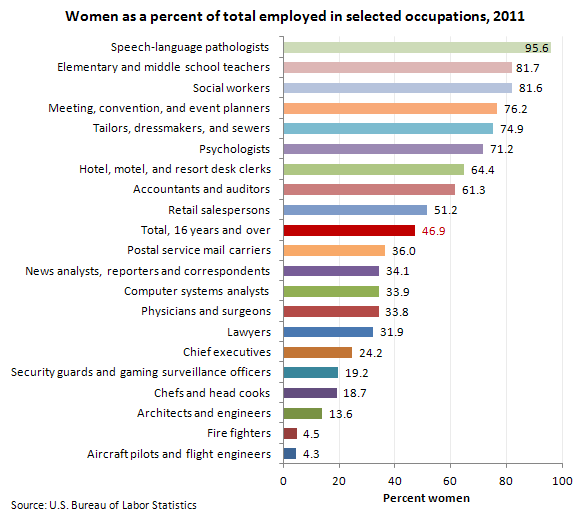







.svg)


[deleted]
Bank of america does this currently. My buddy actually had more time off than his wife who works at a hospital. Its craziness...for however much people hate bank of america, the benefits are thru the roof
In fact my health insurance hasnt gone up in 2 years, and is atill 45$ less than what i was paying at my old company, which was larger size wise than boa.
Also my department is 70% women
Glad to hear all my fees are doing some good.
It just cost you $25 to post that.
But boy, wasn't it convenient?
I bank with citi my old job
In other words: feminists love to complain about equal pay but fail to do equal work.
People dont hate BofA because of their benefits.
Lol. They hate it cause it kinda sucks to bank with. At least my old bank citi, paid back the bailout very quickly
Hey its a job gotta work
(He never said they did)
They screwed up our home buying process countless times. It took months and it's a miracle we were even able to close. Apparently buying a foreclosure from BOA while simultaneously financing through them is a really bad idea. Go figure.
Next thing you're going to say it terrorists don't hate us because of our freedom.
Perhaps they should
Pretty sure they should hate them for their predatory loans, morally bankrupt practices, squandering taxpayer money, and treating their customers like shit...
And you don't think the fact that their employees are incentivized to do all that by awesome benefits packages.
I mean, it's not like everyone to fucks over the world decided at age 10 to go fuck all over people.
Ok, so I should be mad at BofA because they give decent benefits to their employees...
and I should be happy when they treating their employees like shit?
Benefits ain't free man.
Capital One does it as well. Yay Banks!
They probably offer such great benefits because they don't pay 70% of their employees much money, since women get paid less, right?
/sarcasm
How is the pay however?
Average to under avg for my job in the open market
B of A is really going for a different kind of banking culture than most places. They increased their investment banking analyst class by 40% last year, apparently to spread out work more and allow people to actually have lives. As a hopeful future investment banker, this has made them pretty much my top choice.
[deleted]
I'm surprised you'd rank all those non-BBs above BoA, but I'm assuming you were/are in investment banking yourself. I'd appreciate it if you told me what you mean by their overhiring- do you mean there are significant numbers of part-time analysts? I wasn't even aware that was a thing. And I was suspicious of what the figure actually meant, like whether or not it would be harder to get experience in financial modeling.
I'm not getting into it for the life, but I'd love to have one as well. I don't think there's a very good reason for the hours in investment banking beyond "that's our culture." If I'm perfectly honest I see it as a stepping-stone to private equity, if I don't go into that after my stint as an analyst I'll probably go to corp dev or MBA. That's assuming I even get in, which is far from a given since I didn't start preparing for that path until halfway through my sophomore year, and I'm at a semi-target.
they don't hire part time, they just over hire interns and then don't bring all of them back full time.
It's pretty much established now that the "elite boutiques" like Lazard, Centerview, Greenhill, etc. are superior to the BB except maybe GS/MS when it becomes a bit more comparable.
BofA can afford to do this, it regularly avoids paying taxes.
I would imagine that your buddy had more UNPAID time off, but at my hospital mothers get paid time off as a benefit. I'd check to see if that was the case
Well if your employees are helping you fuck over the public, of course they treat you nice.
How far up the ass did you stick it today for your client? I went full branch and up to my elbow sir.
Good, that earns you 3 days paid vacation. Now go clean off your arm and get ready for the next one.
Lol. Damn just replid that some comapnies offer paternity...i sont work ina branch ..i also dont bank with them
Grab the pitchforks- another example of discrimination against women.
I work for Intel and when my wife was 8 months pregnant they announced a new program for 8 weeks fully paid "bonding" leave for either gender. :O
Thats kick ass perfect timing
successful shill is successful.
Not a shill just work there. I mean they lay off 2x a year..so there is that.
+1 for putting the units after the value like a sane person.
[removed]
I dont like em much either, dobt bank there, and they pay me 2x a month. So i got that going for me
My fiance works at the other most hated company they are awicthing their benefits as well...and hopkins is.
Think lots of the larger places are moving to paternity leave
Nice to see the US make a feeble attempt at catching the rest of the world, and actually being there for the timy humans at the start
Paternal leave does exist under the FMLA (Family and Medical Leave Act). Employers have to give 12 weeks to all employees expecting a birth or new child, mothers and fathers alike. The problem is that the leave isn't always paid (that depends on the employer) so often only one parent will take the leave. Usually the mother, for obvious reasons.
Another huge issue is the perception of leaves, and an employee's awareness of their rights. It's far more acceptable in society for a pregnant woman to take the leave, rather than an expectant father. Say a father asks, and their boss pushes back. The father will likely be less inclined to go above their boss to HR. Additionally, as with all leaves in the US, job security can become a worry as well.
My employer gives up to 12 weeks paid paternity leave, equal to maternity leave. There is definitely a stigma attached to any male taking the full time though. Obviously you can't be fired for taking it, but most people assume its career suicide if you do.
That's why leave and vacation should be mandated, with a fine to the company of 2x the employee's salary for time not taken.
Otherwise companies just pressure employees to not take leave and vacation time, and will hurt the careers of those who do.
So what about workers who don't want children?
They just get lower wages to pay for benefits they won't be using.
Sorry if you didn't know, but reproduction is vital to the survival of a nation. And intelligent people with good jobs should be encouraged to have kids, since their kids tend to turn out better.
They already are encouraged.
Reproduction isn't vital to the survival of this nation. Maybe we should only offer paid maternity/paternity leave for adopted children. Those people are actually picking up a burden for society. Making another human is just adding a burden when there are already so many who need adopting. Not that you shouldn't be able to make your own kids, you just shouldn't be rewarded.
Disagree. If two doctors have a kid, that kid is pretty likely to grow up to be a doctor or other useful profession. Assuming you acknowledge that genetics play a role in people's career path, it's better for people with good careers to have kids than it is for them to adopt someone else's kid.
I mean, if nothing else, the biological parents of adopted kids probably have the genes for risky decision making. Otherwise they wouldn't have ended up with a kid they didn't want or couldn't raise and wouldn't have to put it up for adoption.
The problem with offering incentives for adoption (much like the problems with the foster system) is that it encourages people to adopt/foster who just want the money, not the kids.
You neglected to consider the last point that I made; that everyone should be allowed to make new kids, just not rewarded for it. For the sake of discussion, assuming that high-income is a genetic disposition, the carriers of the best genes have no need for "the money". It does nothing for the best genepools to offer these folks paid leave or other incentives; but rather encourages the reproduction of the mediocre genes of those who are working, but not rich enough that the incentives wouldn't matter. Society would thus be better off having the mediocre gene pool of the middle class (an implication of your assertion, not mine) simply mitigating the damage by raising of all those risky-gened adoption kids from the bottom of the bio-economic totem poll.
People with money and good careers don't want to sacrifice their careers to have kids. It isn't about money, it's about letting them have kids and their career at the same time.
But everyone is already entitled to un-paid parental leave. The only difference is the money.
My point was that the leave should be mandated so people's careers aren't hurt when they take it. I don't know what you're on about.
As nouvellefiasco said above: "Paternal leave does exist under the FMLA (Family and Medical Leave Act). Employers have to give 12 weeks to all employees expecting a birth or new child, mothers and fathers alike."
So what I'm saying is that if we accept that income is a genetic predisposition, then the successful people already have all of the incentive that they need. They don't need to sacrifice their careers and they don't need more money. Any more incentive in the form of paid parental leave (read: "the money"), by your reasoning, would only encourage mediocre genes.
[deleted]
I hear you, but that still sounds like a bad solution to a legitimate problem. Where does that leave the parent who does not wish to take the leave? Don't they have a right to determine what they want to do with almost a full third of that year? If some employers retaliate for taking parental leave, then they should be addressed. Why should an unrelated business have to pay for leave that their employee might not even want? Also, that is very unfair to the others who have the burden of making up for all of this leave that may well be legitimately unwanted. Your saying how lucky society is that an employed person is pregnant, which I still find unconvincing, but why should the cost of any reward be borne by their employers and coworkers? Society would be equally benefited if someone took off 3 months to go volunteer in inner-city schools. Should an employer and coworkers bear the burden of paying someone their salary while they do it?
I'd assume the workers without kids don't have to be woke up every night by screaming kids, and spend the next 18 years having to raise kids. Should they chose kids outweighs not having kids they can get those benefits too.
I don't really care for mandating things, but if it is mandated at least the childless workers won't have to take care of and clean after screaming and pooping kids.
^^^^I'm ^^^^at ^^^^the ^^^^point ^^^^where ^^^^kids ^^^^are ^^^^great ^^^^but ^^^^I ^^^^don't ^^^^really ^^^^want ^^^^the ^^^^responsibility.
Almost every single benefit (except salary) is unequally affecting one group or another. Health insurance? What about those in rude health, never needing it? 401k? What about those genetically predisposed to have a short life expectancy? Could go on forever.
One way to be more fair is to give a sabbatical instead of parental leave to those who do not have until a certain age.
One way is to let people choose how they're compensated.
The fact other benefits unequally affect people isn't an argument to keep doing it as a response to thinking it shouldn't unequally affect people.
[removed]
The reasons for Healthcare being expensive in the US are manifold and complex, and I'm fully willing to have a separate discussion regarding that.
I'm pointing to the fact you are diminishing the bargaining power of one group of workers in favor of another group. One sized fits all solutions don't work when people are different sizes.
Why is this being downvoted? There should be required benefits for something that people decide to do themselves, and should fully plan for, even though some individuals have no intentions of using those benefits?
Edit: Entitled fucks.
If this leave is really important to your employer, they should encourage men in top positions to take the full leave. It will send a signal to the people down the corporate ladder that taking leave is ok.
No employee rights law matters as long as at-will employment is still legal.
If you can be hired for any reason, then it follows you can fired for any reason.
Well, that's bullshit, but irrelevant to this discussion anyway.
If you do not get rid of at-will employment then there is absolutely no reason for acts like the FMLA and most of the others, as they couldn't be enforced anyway.
How does your conclusion follow?
Because employers can make up any reason to fire you, and it's up to you to prove that that wasn't the real reason?
With at will employment the reason doesn't matter. I'm afraid you've lost me.
Under at will employment, you can fire for any reason not expressly prohibited by law. Your at will employer can't fire you because of race, religion, national origin, or, in theory, exercise of your FMLA rights.
But because at will employment allows you to fire for an infinite array of other arbitrary reasons, it's easy enough for an at will employer to get around the law by making up or exaggerating some incident or other to make the firing appear justified.
"Oh? You're a dude who just exercised your full FMLA leave? No prob!"
(3 months later)
"Whaoh, you completely blew THAT transaction! You're fired!"
"But the guy gave me all the wrong information three times. There was no way I couldn't blow it."
"I don't care, you're FIRED!!"
In theory.
Has there been any ruling on that being the case, or is the interpretation you would prefer?
And companies who are so cavalier will bear higher turnover costs than those that vet the decisions more carefully.
Which means they're more likely to go out of business.
It's expressly forbidden by statute. That's the entire reason for FMLA's existence. FMLA isn't just a declaration that Congress really thinks it would be great if employers granted family leave. It's a law requiring employers to grant family leave, and which creates a civil cause of action against employers who retaliate in any way against employees who exercise their family leave.
Which has fuck all to do with whether or not FMLA protects a right to take family leave in the event of sickness or childbirth.
You said in theory. Which suggests if it's in a statute it's not in the FMLA statute. So what other statute is it in?
And what you think might happen has fuck all to do with what actually happens. Laws that prevent things that don't happen aren't effective, but do placate the electorate.
It is protected in the FMLA statute. It is protected "in theory" because of subtle pressures not to exercise it, especially for men. In practical terms, a man exercising his FMLA rights does great damage to his career. And suing over a FMLA violation would unquestionably end it.
I'm trying to decide if you're just a complete idiot, or whether you're a complete idiot, and a troll. It isn't that you disagree. It's that you're very obviously completely uninformed on the subject, yet write like you're speaking ex cathedra.
To what degree? It doesn't apply to all employers, or all employees who work for employers it applies to, and requires giving sufficient notice.
That's independent of at-will employment though.
You think being misinformed is the same as being stupid, and you want to say I'm the idiot?
Of course perhaps the better question is: why should you be guaranteed a job someone else is willing to work for under more favorable conditions for the employer?
You're not protecting workers as a group. You're just protecting one group of workers to the detriment of bargaining power of another group of workers.
Can you not read or something...?
I'll rephrase what I thought was a clear question: What part of at will employment makes FMLA unenforceable?
Because it's extremely easy to fire someone "just because" and it's very hard to prove it would be because of taking maternity leave. Not sure what you fail to understand about that.
And?
You're not employed-->you don't get leave.
That's not making it unenforceable, and the cost of employee turnover isn't zero.
Your conclusion is based on thinking those are not employed fall under a provision that only affects the employed.
Do you think people should be required to pay people when voluntarily not working?
I'm confused why you're talking about unemployed people? You're just talking nonsense dude.
It's in regard to at will employment and the conditions for firing people.
I'm lost.
I hate people like you who play dumb, it's annoying. But you get one free answer:
Because anyone trying to enforce them will be fired.
Now, was that soooo hard to understand?
What you're talking about is retaliatory discharge, which is itself illegal in response to the exercise of certain rights. But you're right in principle; at will employment makes many legal protections irrelevant because it's so easy for at will employers to make up or exaggerate some arbitrary bullshit to justify a firing.
Asymmetric relationships FTW !
What about the asymmetric relationships between customers and producers? Customers can stop buying from a producer at the drop of a hat.
Only imperfect analogy would be a producer with only one client.
Most employees in most cases end up with the worse bargaining position of all.
Employee bargaining power is also a function of firms competing for workers, so that's not necessarily the case.
Turns out competition among firms increases both consumer and worker bargaining power.
Except in rare cases (which are usually quickly corrected) there will be more workers than positions to fill. In a post-globalism world that is even more a problem than it used to be, the balance of power a shifted even more toward employers.
Only emerging specializations might have it the other way but when that happens, school will just start churning out graduates until excess capacity is created.
The only saving grace would be fields where self-employment in a realistic endeavor but that is rare and often inefficient. Industries with significant profits will have high barriers to entry and the incumbents will do everything to undercut new competitors or the self-employed.
We have to skew the rules in favor the underdog.
And there are more things to sell than customers to buy them too.
The ratio is not nearly as unfavorable.
Actually given how many millions of businesses go under every year it's more unfavorable.
[removed]
http://en.wikipedia.org/wiki/At-will_employment
Since you obviously don't know what you're talking about.
That's terrible. I get one year of paternity leave at my job in Canada.
You won't find that in the US. That aside, the quality of benefits varies widely among industries and employers, so some companies are definitely better than others.
I wish I lived in Canada...
Oh, that's not all over Canada, trust me.
Nice companies do exist here :) And if you are valuable, you get showered with benefits and vacation time and all the freedom you want.
Most people are not valuable. They are considered disposable. It's... um... a lot worse for the people at the bottom.
Just off the top of my head, in Ontario I don't think any paid maternal or parental PAID time off is guaranteed. Otherwise, I think it's pretty standard, like 12 or 15 weeks unpaid or something like that.
But if you work at BiWay (heh) or WalMart, how are you going to feed your kid? Gotta work.
A section of my company in unionized, so the benefits trickle down to the rest of us.
Fun Fact, if both the mother and the father are employed by the same company, the company only has to provide a combined 12 weeks to both parents.
Source: I work with my husband and this is what my HR department told me.
Fmla also only applies to one parent if the wife is taking it for the baby the husband can take it to care for the wife but not also the baby
The FMLA only guarantees unpaid leave and only to certain people*. It only covers 60% of mothers. Naturally it only benefits those mothers who can afford 12 weeks without pay.
The US is an enormous global outlier here. The norm in western countries is at maybe 6 months paid and 6 months unpaid leave.
*Only to employees of firms with 50+ employees, have worked there for a year and have worked certain hours - so not universal at all. 40% of mothers don't qualify.
There is no mandatory paternal leave. I believe you may have misconstrued some facts.
The wording of the FMLA only specifies eligible employees/employers, with eligibility being determined by the size of the company, hours worked by the employee, and employee tenure. Eligibility is not determined by gender. So yes, theoretically, there is no mandatory paternity/maternity leave. If you/your employer are eligible, however, then it becomes mandatory.
No it's not mandatory but it's likely there for most employees. http://www.dol.gov/whd/fmla/
The other problem is pressure on men not to use their FMLA leave. It's often a career ender for a guy who uses it.
I had this in a previous job. It was just parental leave. Everyone got the same amount of time. If your family adds a child by any means, you got time off. It seems like this should be the default everywhere.
That sounds like the safest and simplest plan for a business. It eliminates the question of gender and equally covers adoption and surrogate delivery.
(ಠ‿ಠ)
We should do this, though I don't know that it will have the effect you want.
Anecdotally, I've known women who quit their jobs right before their unpaid maternity leave expired. They decided they wanted a parent home with the baby or that they individually wanted to be home with the baby. The money isn't a big enough incentive.
Everyone makes trade-offs when choosing which jobs they work. Often, women trade money for convenience: working around school schedules, keeping evenings and weekends free, the ability to leave work in an emergency and still have a job tomorrow. A promotion which infringes upon those things may be turned down.
When an adult family member becomes sick or injured, women are more likely to become their caregiver than men are. So even once children are grown and out of the house, many women are expected to then fill a similar role for their parents or siblings.
I think paid parental leave helps. I think flexible work schedules help. I think a better expectation from employers that family is more important than work will help. I think 40h work weeks will help.
But with all that, the gap may not close if women choose to take more of the intangible benefits than men choose to. Whether they're making that as a healthy, personal choice or under pressure from their family or community, it's not something the employer can control or correct for.
They have done studies where, when the payed maternity leave is increased (6 months), women will come back to work after leave. When it is lower, women tend to not go back because the time is too short and they'd rather stay at home. By the time they are ready to go back, they've already been out of the workforce for an extended period of time.
It probably isn't just the monetary incentive but also the time of maternity leave - where it is acceptable to still come back to your job.
(I'll see if I can find the studies that I mentioned)
I don't think you're wrong, but I'd like to point out that:
I'd say an even more realistic reason is that day care costs, especially for babies under 6 months, are astronomical, and it often simply just doesn't make financial sense to return to work until the child is older and day care is more affordable.
Many people are blind to the cost of returning to work after child birth because it's something they've never been exposed to, and they don't crunch the numbers until they're faced with returning to the workforce.
I know quite a few women who told me they were basically working to pay for daycare. That they only earned about $1-3 hour more then they were spending.
[deleted]
I don't think it's 1:1 anywhere as far as I know. It varies by state in the U.S usually from 1:3 to 1:5. For example in my state of IL it's 1 adult to 4 infants (under 1 year old). So while the cost of one worker is only going to account for $3-5/hr with four infants, there's still plenty of other overhead building,administration, cleaning, etc. Also, the parents are only going to pay a flat rate per hour. So if there's 1 infant in the daycare for 3 hours then the daycare is probably losing money during that time.
People always complain about how much day care costs but I don't see it. Where the hell is it this expensive? Our infant daughter goes to a local home day care and it costs us $18/day.
Do you live in a large city? Is the daycare your child goes to licensed and inspected by the state/county/relevant agency? Is in a church/religious property? Those tend to be cheaper for congregation members. Is it in someone's home? If so, are they actually declaring the income and paying taxes on it?
I mean, if you live in a small city under 250,000, I can see paying $18/day for an unregistered, in-home daycare where there are only a couple of kids. Where I live, in a ginormous conurbation, costs for regulated, insured, etc., daycare top $1250/month. Even for the 100% unregulated, retired lady who occasionally watches our kid, the cost is $50 for drop-ins under 8 hours, and $200/week for a scheduled 4 days. She absolutely knows what the market will bear, and charges appropriately.
Do you live in the midwest or the south? Things tend to be cheaper the further from the coasts, or further south you are.
Wow that is insane. Ours is licensed it is not a religious site, but it is a small town (2,500). I guess thats another reason not to live in a bit city.
Eh, I like the sociocultural aspects of living in a big city; knowing that I can take my kid to a free zoos and world-class museums, and knowing that we have a well-educated, international group of friends that we wouldn't have if we lived in a small town. Plus, awesome restaurants! Sure, there are some economic trade-offs, but I vastly prefer living in the nicer suburbs of a big city.
I've always lookd at it from the aspect that I can just go to those things if I want them. With the money I save by not living in a place like NYC I could go on a vacation every few months and expose my kids to every corner of the world. It also enables me to not work very much, my wife and I each only work about half time so it will allow us to home school our daughter.
To each his own I guess.
Exactly! To each their own.
Sounds nice :)
Ours is $275/week, and that's a moderately priced day care for where I live.
"They only earned $1-3 more than they were spending" describes a huge swath of the population. Not just parents. You make do, but you worry about the future.
None of them really needed that extra $50-100 a week to get by. They were married and their husbands worked full-time. They just felt that if they didn't work then in a few years when their children were school aged then they would not be able to re-join the workforce due to several years of being unemployed.
I've brought this up with my boyfriend before, and he doesn't really see it the same way I do. In a best case scenario, if I had a child around the age of 28-29, I would want to return to work within 6 months. But, if the daycare costs were fucking absurd and took up a good part of my paycheck anyway, at that point, it probably wouldn't be worth it.
And, he's Chinese, so it's pretty likely that his parents would be willing to care for the child while we were at work. But, at the same time, they are both older and saddling them with that burden seems a bit over the top to me. So, it would probably be better for me to simply work part time for a couple of years. That way, I'm still in the work force, but I also have time to care for a child.
And then, what if I got super attached and wanted to stay home for a few years? I don't think a lot of people consider these sorts of things. The idea I'm seeing more and more often is that you push the kid out and stick them in daycare because you want to keep moving up in your career. It's too bad these seem to be the options now.
They promised freedom and emancipation. It seems more like slavery than ever before.
As a small advice, for the sake of your pension working even if it pays little more than what daycare costs would be good. With any risk that you and your husband would separate later on, you having paid that time of taxes will help you keep comfortable when old.
The daycare costs are worth it because they will keep your lifetime earnings and potential career advancements up after the kids are in school/out of the house. Daycare is a small fraction of your life, hopefully a career is not.
I don't think people actually care about the daycare costs. They care about the lost time spent with their child, which can't be bought or replaced.
Good point. This issue really needs to be broken down by salary (probably as well as profession, but that's a bit more subjective). A lower wage earner would probably opt to stay at home while a higher earner would be more likely to go back to work.
Doesn't everyone always complain that childcare work that women do is undervalued? Wouldn't that imply that daycare costs should be even higher?
Not to mention the ear infections and other sicknesses your infant is likely to pick up in daycare, necessitating lost work due to doctor's appointments and staying home with a sick child.
And other studies have shown that the female labor participation rate goes down when requiring/increasing maternity leave.
What exactly does "labor participation rate" mean?
It sounds like it means the number of women working - as in women on maternity leave would count against the participation rate. Is that correct?
No because they still count as employed.
6 months paid? Is that really what woman get? I mean I know its tough to raise a child but that would be like 40k of free money...thats fucking nuts!
It's not so much if you consider a new hire will take at least a year to be where the current employee is...then you're saving 50%!
Again - this is all totally industry/salary/job specific as to whether it's worth it.
I wonder if the reason for that is due to the fact that when a couple has a baby, the father usually works more hours to cover the cost of looking after it (this also increases the likelihood the father will be promoted). perhaps when mothers take time off work and don't have an adequate amount of time off work to look after the baby for 6 months, the father is more likely into higher paying work (usually more hours) permanently.
it is something that would be very interesting to investigate
Six months of PAID maternity leave?! That is insane
In other words: feminists care about equal pay but hate equal work.
In other words: a three month old baby is still too needy for moms to feel comfortable with going back to work, and leaving their child in the care of another. It's that having a baby is a close to a year long commitment.
More like an 18 year+ long commitment.
But I understand what you mean.
In other words: women love to complain about the choices THEY make that sabotage their own earning potential, kinda like if I were to work as a circus clown AND demand a 6 figure income because "surgeons get paid more than me!!!!!!"
To me, the entire concept of allowing one of your employees to take off work for parental/maternal leave for an extended period of time (3-6 months), paid or unpaid, and still have a job after that, is ridiculous... especially if they do it multiple times. I mean, you can choose to have a baby, but you need to live with the consequences by either quitting your job, hiring someone, or having it when you're not working, and that way you're not a liability to everyone at your company.
As it stands now it's kind of a "Get out of work for x number of months with no consequences" card.
I see your point. But if you view it that way, it's not really taking into account some of the facts of (some people's) life.
I think in some (or a lot) of cases, it is actually in the employer's interest to retain the employee. Hiring in many cases is really costly and it's worth it to pay the maternity leave. In others I suppose it's not - but maybe some sort of middle ground could be worked out, where they get time off, but maybe pay into it. I don't know - but I think that the "screw you because you had a kid" mentality is not really taking into account of people being people and having families.
[deleted]
Businesses don't get by on magic fairy dust. Nobody will invest in an unprofitable company, and then such a company will go bankrupt and everyone will lose their jobs. Leave your feminist fantasy land and come join us in reality.
I agree that companies who work only for their investors are bad, but I think that if companies are structured to only work for their consumers that's a good situation, and that would support the same argument /u/sharkman873 made.
You're taking it as an assumption that it's beneficial to society if there is paid paternity leave. But why do you think that is true? It's nice for the specific parents, but it has costs elsewhere. Are there any positive or negative externalities in this situation? If not, then why support it? Best reason I can see to support it is that employers in general take too much away from employees because of unbalanced negotiating power. But that's something I'd prefer to address directly, collectively, rather than through indirect tricks for special interest groups.
[deleted]
That makes sense to some degree.
In another comment below - for some jobs it makes a lot of sense for the company to have paid leave since re-hiring is so costly. So in that case, totally not bullshit.
Another point is that for the jobs that don't offer this, there should/could be maybe some sort of program you can pay into over time. (Not government since, like you said, it is your choice to have a child and people who aren't shouldn't be paying for it). Again, totally not bullshit.
I realize that it isn't really feasible for all jobs. Even if it is unpaid - that just isn't going to work. So I guess right now there isn't a perfect solution. But there probably are ways we can make it better. Not a complete fix - but something more than what we have now.
I second that. It's a great idea but I work in software and there's definitely a cultural stigma beyond economic convenience. Bigger tech companies (the one I can confirm off the top of my head is Qualcomm, though I'm sure there are many others) already offer paternal leave. It can sometimes be harder to get an extension for paternal leave than maternal leave, but in general they're both equally distributed. It creates a much more supportive culture, and also makes a huge difference for equality.
Equality between men and women, which also provides equality for nontraditional families. Something many people do not consider is the fact that gay couples are adopting at rapidly-increasing rates these days. My partner and I have had to have multiple conversations about what we will need to do when we adopt. With both of us being men, and neither being provided paternity leave, we will be faced with a difficult decision of what to do.
What sort of age are you wanting to adopt, just out of interest?
Ideally, we'd like to adopt a newborn (which is our primary need for paternity leave). However, there is higher demand for newborns, so we may end up fostering and adopting an older child.
I just want to give you the heads up in case you haven't heard, it's actually already possible and only a year or two away from being practicable for us to have biological two-male-parent babies. They put one father's DNA into the egg casing.
Possible and practicable, but unfortunately not financially feasible for the vast majority of us.
I think parental leave for adoption should even take precedence over a normal parental leave.
Adoption features zero hospital stays.
That is not always the case. Some adoptive parents choose to stay in the hospital with birthmother for the 72 hours before she relinquishes her rights to the adoptive parents.
A small fraction of the time for parental leave is hospital time.
There's a significant recovery time as well.
The majority of the time is spent on child care. The same thing adopted parents have to do.
In other words: feminists care about equal pay but hate equal work.
Equality between men and women that is. I can't imagine it's very helpful for equality between those who do and do not choose to have kids.
With paid maternal and paternal leave, we may start seeing a shift in who is "traditionally" responsible for parenting. Many men would rather stay home with their kids, be the ones that pick them up from school, or care for them when they're sick, but find doing so would jeopardize their career (because it certainly has for women).
By normalizing fatherhood as parenthood, we may find men picking intangible benefits more often.
That's a good thing, isn't it? Less focus on money, more focus on the things money can't buy?
Oh, absolutely. I'm arguing that all of these things that women do more often, are because we have a gendered society that expects women to do those things more often. That is already changing, as men are taking on more responsibility for parenting. We need to start having a workforce that is mimicking these changes and help promoting them.
bit late to the party here, but are you arguing that society molds women into choosing these options more that men?
Consider this, a family decides to have a baby. Wife takes her unpaid maternity leave. This forces the husband to either get another job/ promotion to support his new family and his pregnant wife physically can't. No you might say that the wife can work up to her last trimester and they save or she can even get a part time job maybe waitress or cashier work. I can tell you as a manager, no one would hire a pregnant women simply because she will leave in the immediate future to have her child. Now as the employer we have just spent countless man hours, (30 - 40 in my restaurant per trainee) to train an employee that we know will leave. We will have to do the same for her replacement. And yes her job will be there when she get back. which we will have to retrain her on or at least bring her up to par again, but why go though hassle when you can just tell her to come back after the baby and work unimpeded.
Now back to the husband. As his wife probably wont have a job for the next few months hes now forced to make it work. Its gonna suck for him but who cares, hes got a family to take care of. So he gets used to it.
When the baby comes the husband is already used to supporting the household on his own. The wife can make the choice to go back to work, but there is nothing forcing her to at this point. It easy to see why they would willingly choose to stay with their child instead of returning to work. And unless she loves her job there is no reason to go back. So that leaves only the women that want a career left. Of course they are going to be behind in salary. They just missed months of work while others are putting in their time to advance their own careers. You cant give the lady that just came back from leave a promotion or a raise she wasn't here to earn it. Now is she wants to bust her ass to catch up with everyone else that's on her.
TL:DR From a business stand point getting pregnant ruins your career.
edit: that got a bit longer than i expected.
I'm not sure how you're arguing against me at all. All of these things point to how our system harms women more than men and expects women to be the caregiver of children.
If mandatory paid maternity and paternity existed, all of this crap would begin to vanish. I'm sure we'd still deal with other societal factors, but it wouldn't be so intrinsic in the way our workforce is structured.
i feel like it wouldn't actually fix the problem. Paid leave is still leave. You're gone from work for a couple months, which puts you behind the curve. Having multiple kid makes it worse. You cant have a family and be at the top of your career, because everyone without kids uses the time your gone to get ahead of you on the career track.
It's a trade-off, nothing more, nothing less
Certainly, but the trade-off wouldn't be foisted, socially, on women significantly more often than men.
I don't feel it's a social thing though. All parents want to spend time with there kids. If any thing I feel the men are expected to give up that role and be the provider. As I said in my last comment if the role of provider is taken by the man the woman is free to choose the role of caregiver. Faced with the fact that she is behind the curve in her career that only makes the choice easier but it's still a choice.
Maybe we'll just have to agree to disagree here.
You consider raising children to be harm?
Hmm..That's a pretty strawman question isn't it?
I didn't think so. At least if the question is a strawman then the assertion it questions would equally be too. How would you prefer the question be phrased?
How about you ask me a question about a position that I presented, instead of one that I didn't. I never presented that position, so you asking me that question implies that I did hold that position. Now you've created a strawman argument, a position I never held, which I then have to argue against and make it continue to seem like I held that position in the first place.
It's shitty.
OK then, please explain the context. Is the harm to women linked to being caregiver for children? Is being a caregiver for children a good thing or a bad thing?
The harm is relative to their ability to enter and compete in the work place. As a single dad that would love full custody, being a caregiver is an amazing responsibility that brings lots and lots of joy. Shit, I'd love to stay at home with him every day.
But we don't provide a way for caregivers to function well in our society, regardless of gender. We don't value that process and we create a system that a caregiver must rely on someone else in order to be that caregiver. Then we gender that caregiving in such a way that mostly women do this.
This is most definitely harm.
Note in my sentence it doesn't say "our system harms women more than men BY expecting women to be the caregiver of children". Which may have been what you were trying to argue against.
Yes and no. I definitely think society pressures the expectations, but there's more to it than just that.
My wife carried our child inside her for 9 months before I even got to meet it. Her desire to stay home and be the caregiver was much stronger than mine because she already had a relationship. I was still learning to love my child where she was already bonded. I can see why it would mostly lean towards women being the ones who stay home. I just think it's an easier emotional decision.
That's some interesting anecdotal evidence. But it's found that a lot of the chemicals that produce the feelings of love and connection occur post-partem. For both women and men, this occurs with eye contact while feeding the child.
Certainly, a woman is going to have a higher connection to something she's already been caring for physically. But any father can also be creating a very dependent bond on that child during the pregnancy for a number of reasons. Doing research with/for the wife on proper diet. Or researching caring techniques for after the child is born.
But what really happens is all of this is usually left to the mother, because it's expected of her, and because the father is likely working more to prepare for or cover for the wife not working.
This also is all fairly hetero-normative, in which we assume both partners are not women and can't get pregnant at the same time.
Skin-to-skin contact is also a key part of this. Mothers and fathers both are encouraged to hold their naked infants against their bare skin, which triggers a release of oxytocin.
Yes, those moments of feeding my son with a bottle while he looked into my eyes and I looked into his and we were skin to skin...that shit was amazing.
Gendered society? More like millions of years of evolution. Just saying.
Yup, because the nuclear family and careers have everything to do with millions of years of evolution
Well of course they do. Women have been the primary child-rearers for millenia. It's very natural. Men were off large portions of time hunting to provide for the family.
None of your friends will tell you this, because it's not PC.
This depends, very largely, on area and social structure. Some tribes moved and hunted together, not separately.
Your fitting the world to your agenda. Of course, it happened sometimes, but isn't often the case.
It's a good thing for the individuals, not so much for the employers. Imagine if two of your employees decided to have a baby together and now you have to give them both several months salary without them doing any work for the company whatsoever in that time. And then at the end of their lengthy paid time at home, one or both of them may likely decide they want to quit and be with the baby full time.
I also think more smart, driven, career women (the kind I'm attracted to) would be willing to have kids and my relationships might have actually turned into something long-term. I really want to have kids and I have a job a could do from home. I just have to find a woman I get on with who is willing to possibly fuck up her career.
I can confirm this. My coworker has two children and took the (paid) paternal leave for both, while his wife went back to work. On both occasions, he took the leave for the maximum amount of days.
I don't know that much about his personal life, but his older daughter picked up one of his catchphrases already, as he proudly proclaimed the other day. He seems to be a really proud father and whenever he leaves early, I know he picks up his daughter from kindergarten.
Women are not attracted to stay at home dads. And most men do not want to be stay at home dads.
I'm not sure why everyone is obsessed with destroying "tradition" rooted in biology.
[citation needed]
Biology barely supports a monogamous relationship, and our biology certainly doesn't have anything built into it to handle the society we live in and the parenting we do now.
Why do you think we have traditional roles in the first place? Where do you think hunter/gatherer tribes sprang from? Coincidence? Why do you think women get pregnant but men don't? Why do you think there are more women in fields like nursing and social workers than men?
Are you one of those people that thinks everything is a "social construct" and not rooted in biology and that humans are "naturally polyamorous"?
I'm certainly not one of those people that believes that the only way our society could be constructed is through biology. Especially when we see that power structures build onto themselves. I mean, the very idea of a paternal naming construction (in which our children take the father's name) was a means in which men could gain control over the familial unit. Certainly much of our society is built around someone in power looking for ways to maintain that power. Look at the way that conservatives come up with the craziest of reasons why gay marriage is bad, interracial marriage is bad, anything that fights the status quo is bad.
I think it's interesting that we look at the society we have now and in the space we have now and somehow we skip past thousands of years and across multiple spaces in which those things have been different. We just kind of throw that under the rug in order to try and provide biological reasons in which white men get a little bit more than the rest.
It kind of blows my mind that you really think that the reason more women are in nursing and social work is because they really want to be in those positions, and not that there's an insurmountable amount of evidence that has shown women from being discouraged from other forms of work and encouraged for those forms of work.
I'm a white man and I'm not in a position of power...neither was my white father.
They've done biological studies in infants that show males and females react and think differently to different stimuli. Why are so convinced that women are nurses because the evil evil white patriarchy forced them to do that and not because...GASP...women are naturally drawn to such professions while men are not? Why is it so shocking to you that women could actually choose to do something instead of being "discouraged" from jobs they have almost no interest in as a group?
Do you really think there are so few women in sanitation, coal mining, construction, vehicle repair because the evil men are simply "stopping" them from being those things? Do you really think most women are chomping at the bit to be a mechanic or a garbage collector? Seriously dude?
Oh no, of course, there is zero chance that biology is deciding these things. It must be the evil constructed patriarchy. As you mentioned, history was constantly in flux. We all know of the hundreds of female dominated matriarchies throughout history where...oh wait. Never mind.
Because we have lots of evidence of this discouragement occuring.
No, I think they're not in those professions because they're scared of the "stereotypical male" employees they'd have to work with.
Through your condescension, I'll go ahead and point out that there were many female dominated matriarchies throughout history. There are primary and secondary sources throughout history in which white male priests would go to different tribes in africa and ask for leaders, when women were brought forward, they demanded a man be brought forward. After a while, men started leading those tribes as well.
Your position is full of ethnocentrism, in which, you look at the society in which you were raised and its history and determine that is how all things are for all societies. And that simply hasn't been true.
Just because we've done something for lots of years, doesn't, at all, make it biological. That is simply a false premise.
We also have lots of evidence that biological factors help decide these things.
Are you shitting me dude? You really think most women, who are like 110 lbs and weak as fuck, the ones that run away screaming when they see a bee, secretly want to be using a jackhammer that they can't even control? They want to be covered in sewage or laying down hot asphalt? Come on dude. Even in your scenario, you're admitting these women do not enter these professions out of choice- because they have goofy fears of stereotypes.
Let me ask you something, if it's all because of the evil boogeymen keeping women out of such great jobs like garbage collector, why aren't feminists more vocal about women taking those jobs? They're always rattling on about CEOs but I never hear feminists complain that not enough women are coal miners.
And another thing, why are there so few men in nursing? Are the evil boogywomen keeping men out of nursing?Or could it be men and women are naturally drawn to different professions...? Hm. No, it must be the evil patriarchy. Definitely.
So you have no credible sources of actual matriarchies then? OK, thanks for proving my point.
You should look into biology or simply watch this documentary: https://www.youtube.com/watch?v=tiJVJ5QRRUE
I'm sure you have seen it and dismissed it. But basically biology is probably the strongest factor in deciding differences in men and women, sociological constructs are completely secondary. And the problem arises when you have the cognitive dissonance of people like the "working women" who enter the male dominated world and can't cut it, can't work the long hours and can't deal with the loneliness that men face and endure, become very unhappy when they are 40 and unmarried with no kids, etc. Obviously not all women do this, but the vast majority. Surprise! Women and men are different.
I'm just sick of this new age attitude that men and women are basically the same creatures. We're very different.
Oh, women are plenty attracted to stay at home dads -- when they're in a position to not have to worry about their own career prospects.
As for most men not wanting to be stay at home dads, that doesn't track to biology; it tracks to economic and social conditions. Western nations in general have seen a significant increase in the amount of fathers who are staying at home over the past two decades, with the countries experiencing the biggest increase being those that have enacted policies that make it easier for women to remain in the workforce after having children; that make it easier for fathers to take time off or be at home; and that encourage fathers to take a more active role (in this I am counting, by the way, more equitable policies surrounding custody battles. In Sweden, for example, the default post-divorce custody arrangement is joint -- and that's true joint, with the children spending an equal amount of time with mom and dad).
Not everything is a social construct, but the fact that people will behave differently depending on what laws and policies are in place (as well as what the economic conditions of an area are, e.g. men are more accepting of female promiscuity in areas where women are economically independent) points to not everything being biology, either. It's not an either/or proposition.
They really truly aren't. Women are not attracted to men who are not ambitious and working. It may seem good at first, but get back to me when she cheats on you in 3 years because she doesn't see you as a "man" anymore.
We have companies that do that here in the U.S. It's just not mandatory, thank god.
Men have no choice but to be "accepting"...which probably means pump and dump. Very few men want a promiscuous woman for anything more than sex. Promiscuity is a very bad trait for a female mate long term. But that's the trade off when a woman decides to be a young dynamo go getter...and those same women complain in their 30s that no "good men" wanted to marry them as they freeze their eggs. They went against biology, which is fine. But there is a trade off for everything.
Did...you delete your next reply? I could've sworn I'd gotten another in my inbox earlier.
I don't plan on cheating on my husband, and do not see him as less of a man. One of the things that I found very attractive about him early on in our relationship was how he how was with kids, and the degree to which he professed a desire to be an active and involved father.
We do, but individual companies offering such things is not the same as there being a country-wide standard or set of policies.
Why would it bother you if it was mandatory? You wouldn't have to take advantage of any of the benefits if you personally didn't want to.
I believe you've misread me. They don't simply put up with it; their actual views on promiscuity are different. They find it less objectionable as a behavior than their peers from areas where women are more financially dependent.
I live in Canada, in Quebec, which has Maternity/Paternity/Parental leave which can be shared. And, personally, I've seen first hand how it has kept highly educated and highly skilled women in the workforce where without those benefits they'd have had to leave.
Saying "Oh man, we shouldn't try this idea to lessen the pressure women feel to volunteer to take on familial duties because the current system which pressures women to volunteer to take on familiar duties clearly shows they would continue to do so even if they weren't pressured!" is super silly, by the way.
It's not just in Quebec- either the father or the mother in Canada can take parental leave, or they can split it 50/50. 50 weeks of paid leave (55% of your salary while you were working, unless your work offers some kind of paid leave, which is rare) and 2 of unpaid.
One reason I believe women stay home after the baby more often than men is breastfeeding. It takes a few months to establish a good supply, and even after that being away from the baby for long periods of time can fuck with your supply, even if you pump (because it's not the same as a nursing latch). Many if not most mother's intend to breastfeed for at least several months to a year and working life is a huge interference with that.
My wife didn't really have problems pumping while working, but she also had a private office and was able to take the time she wanted to do it.
Thank you for this. I'm a very outspoken feminist, and one of the issues I'm most passionate about is Paternity leave, for this reason. It's about giving people the choice and then letting them make it.
What about an employer's choice whether or not to offer maternity and paternity leave? Businesses don't have unlimited resources you know. Most small businesses would go bankrupt if they had to pay maternity leave. Having to pay for paternity leave as well would leave us with no small businesses and a shrinking economy with high unemployment.
The government pays for parental leave you get (in Quebec it's approximately 70% of your salary). Whether your employer tops that up to 100% is up to them.
Parental leave can be shared but not taken at the same time. A certain total amount is given to the father and the mother and it's up to them how they split that time (although they may not take more than 5 weeks concurrently)
So then taxpayers are forced to subsidize other people's decisions to have kids. This favors people who choose to have large families at the expense of people who choose to have small families or to not to have kids.
It's probably not something I'd expect your average frog-eater to care about but in America we aren't fond of high tax rates or social engineering policies.
Keep the Just For Laughs pranks coming though please.
And look how well that's wokring out for you socially.
Sure we have higher tax, all of us. But we have ridiculously high services of quality that come with. Free healthcare, Year long paid parental leave, $7/day daycare, almost free University.
It's a more just society. My wife and i are probably in the top 10% tax bracket. We are happy and proud to give half of our paycheck to the state. The state was there for us and will always be if we need to.
Taxpayers are already forced to subsidize practically everything everyone does. That's the entire point of taxes. People across the country driving on a road? You're paying for that road, in part. Even before the ACA, hospitals were legally forbidden from denying care, so if someone comes in, gets treated, and can't pay? Taxpayers foot the bill.
More than that, it has been shown over and over and over that the earlier we give the money to those who need it, the less we actually have to give. Providing totally free housing to the homeless decreased overall government spending on those people. Making sure children can be raised in a stable environment makes just about everything better, and if it cuts into our 'Kill the Sand Niggers' money then I certainly won't complain.
Incorrect. "Practically everything that everyone does" is not subsidized by taxpayers. Most funding for roads in the various states comes from gasoline taxes paid for by drivers within the state in which the road is being built/maintained. These taxes are essentially user fees that mostly ensure that the people who use roads the most pay the most for the maintenance of those roads.
It's also a false equivalence to compare paying taxes for roads with paying taxes to pay for maternity and paternity leave. Why not just have everyone pay 100% taxes and have all goods and services provided by the government? Following your logic that would be both appropriate and justified.
It's true that taxpayers foot SOME of the bill for these people, but they don't foot all of the bill. Some of the bill is paid for in the form of higher health insurance premiums as hospitals are forced to raise their fees to compensate for those who cannot/do not pay.
Citation needed. Middle class people with corporate jobs do not qualify as "those who need it". A government paid maternity/paternity leave policy would in effect be transferring tax money from the poor to the middle class. It would be regressive.
If I remember correctly, this is only true if you ignore the costs of providing the housing.
Whenever liberals talk about "making sure" of something, I laugh. Well intended government policies almost invariably have the opposite effect of the intentions. Actual effect of the "war on poverty"? MORE POVERTY. The road to hell is paved with good intentions.
What? Hell no.
The poor don't pay taxes buddy! The middle class pays for roughly what it uses, a bit less. And the rich pay for more than they use.
That's how it's supposed to be. I mean, in a just society.
No. In reality, it's the rightwing's ridiculous dogmas that often have the opposite effect of intended (see War on drugs, Tough on crime, Trickle down economics).
Do you know what was observed with the program of $7/day subsidized daycare? The money it cost was offset by the additional amount of taxes collected on women's salary during the daycare years, and after as their career continued to soar, rather than stagnate or even dissipate after having children.
The fact is, we're all better off when we take care of each other. You might not like the idea of it, and that's your right, but it's still true.
Your posts are heavy on dubious claims, and light on citations, even when requested. It's rather humorous that you are assuming that I would support the War On Drugs, which is almost as much of a failure as the War On Poverty.
"Trickle-down economics" is a complete misnomer that is only used by economically ignorant morons. Supply-side economics has been proven to have positive results every single time it has been tried. Keynesian economics has been proven to have negative results every single time it has been tried.
You must be confusing me with someone else. I'm just chiming in.
Also, if that's how you address people, go fuck yourself.
HAHAHAHAHAHAHAHAHAHAHAHA.
That's the best rebuttal you can come up with?
http://newsroom.ucla.edu/releases/FDR-s-Policies-Prolonged-Depression-5409
http://newsroom.ucla.edu/releases/pandering-to-labor-caused-great-91447
http://www.financialsense.com/contributors/john-butler/stagflation-always-everwhere-keynesian-phenomenon
http://www.wsj.com/news/articles/SB10001424052702303942404579362462611843696
So I wouldn't have replied to your first post if I realised what I Republican nutjob you are, but I did so here goes:
What you claim to have the answer to is one of the biggest questions in the history of the world. Millions of experts have not been able to answer "what is the best way to support a population economically". We can't even decide what "support" or "population" means. Back to the issue at hand, though, you wanted citations. As an note, your sources aren't great. "Financial sense" is a right-wing thinktank. Your UCLA sources are editorials reporting on historical economic analysis of the Great Depression, which is widely considered to have been SOLVED through military-induced Keynesianism, due to the Second World War. More Keynesian strategies were used to prop up Europe after the War, and Europe is doing quite well, you'll notice. In fact, there is a strong correlation between socialist policies and overall happiness, economic strength and human index ratings of an economy (for an example, see all of Scandinavia). But I digress, back to parental leave:
Your country is the exception, not the rule: "the United States is among the least generous in the world, ranking down with the handful of countries that don’t offer any paid leave at all, among them Liberia, Suriname and Papua New Guinea" http://www.nytimes.com/2013/02/23/your-money/us-trails-much-of-the-world-in-providing-paid-family-leave.html?_r=0
The economic benefits of parental leave are well documented: "Paid leave benefits employers as well: There are productivity gains, higher employee retention and female labor participation, and improved family incomes." - http://www.bostonglobe.com/opinion/editorials/2015/03/25/parental-leave-benefits-everyone/cydQXF8Fib9OSWY24576LP/story.html
"Parental leave mandates are associated with increases in total employment but appear to have a more modest effect on weekly work hours and there is some evidence that women pay for entitlements to extended leave by receiving lower relative wages."http://www.nber.org/papers/w5688
Additional human index benefits are also clearly documented, particularly child-health (and subsequent dependence on the healthcare system):
" More generous paid leave is found to reduce deaths of infants and young children." http://www.sciencedirect.com/science/article/pii/S0167629600000473
http://onlinelibrary.wiley.com/doi/10.1111/j.0013-0133.2005.00970.x/abstract;jsessionid=152582B51AED2D865296E467F7E325D3.f03t02?deniedAccessCustomisedMessage=&userIsAuthenticated=false
Go to Google Scholar, type in "Parental Leave", and just include anything that comes up as another entry on this list telling you you're wrong, ok? Great.
Ah yes, leading off with an ad-hominem attack. For the record, I'm not a Republican and I've never voted Republican.
So what if Financial Sense is a "right-wing think tank"? That doesn't mean their argument about stagflation being a Keynesian phenomenon is wrong. Anyone with a scintilla of understanding of economic history knows that is correct. I'm sure you're perfectly happy to accept the conclusions of left-wing think thanks.
Classic broken window fallacy. You don't make yourself richer by destroying things. World War II certainly decreased the unemployment rate during the war. It also led to almost 500,000 American young men losing their lives, and many more being seriously wounded. The productive capacity of your economy doesn't increase when a huge portion of your labor force gets killed. What is widely understood by laymen about what ended the Great Depression is simply wrong. The Great Depression ended because after the war Europe was in tatters and they had no choice but to buy from America. So we had a tremendous amount of export led growth during the post-war period. After the war we actually slashed government spending and liquidated our debt, which is the opposite of Keynesianism, yet the economy boomed.
Simply put, your understanding of economic history is deeply flawed, as the UCLA studies prove.
Europe is doing quite well? Not on the planet that I live on. Have you taken a look at their youth unemployment rates lately? Europe is in deep shit.
For the past two decades Scandinavian countries have been electing far fewer socialists and liberalizing their economies. Sweden has had a very successful school voucher program, something that is considered to be an evil right-wing policy in North America. Most Scandinavians would laugh in your face if you suggested that they are examples of socialist countries, they've been running away from socialism for decades. As far as happiness studies go, those studies are worthless because there is no objective way to measure happiness.
And we're still the greatest country in the world, despite the attempts by rabid leftists to gut our economy and destroy our way of life. Europe is mired in economic disaster, and while the United States economy is still in deep trouble, we've been growing far faster than most of Europe. Germany is perhaps the only exception.
This study only looks at how the parental leave policies impact the female labor force participation, and the wages and working hours of females (which were both decreased as a result of the leave policies). I'm interested in the totality of how such a policy effects the economy. Do such policies inhibit small business creation? Europe is notorious for a lack of entrepreneurship and a lack of new businesses creation, whereas the United States is a haven for start-ups. Do such policies inhibit job creation? Do such policies reduce economic growth?
Obviously you only care about the welfare of women, and you couldn't give a damn about anything else.
Europe is an economic basketcase, and their employment benefit policies are a piece of the puzzle as to why that is the case. I favor having a free and strong economy over having a bunch of hapless bureaucrats trying to micro-manage our businesses. If don't value having a strong economy, and you don't care what the impacts of socialist policies are upon the broader economy, that's fine, you're welcome to your opinion. It's a question of values, not a question of right or wrong. As long as you're willing to stop pretending that Europe isn't an economic shit show right now I'll be willing to agree to disagree with you.
Dude, your country has TRILLIONS of dollars of debt. That's an economic shithole. You're not the best, despite what your history books tell you (unless you're comparing military spending, in which case, congrats you win!)
Our public debt as a percentage of GDP is lower than much of Europe, and even lower than Canada's. Our debt is also denominated in our own currency, which is a major advantage compared to Eurozone countries.
If that's the measure you want to use, Canada is in much worse shape than the USA.
GDP:debt ratio only matters if you're actually paying down your debt with your GDP, which you are not. Your country is running a major deficit. Because your economy is in shambles. And go read those articles on parental leave, and remember that women's rights is a subset of human rights, and that women's employment rate is an important factor of the economy-- as is all employment.
That's the same argument against the minimum wage, I don't think it's a winning one.
As something like seven trillion dollars is concentrated in the hands of what - 100, 1,000 people?
There's money all over the place but things like crony politics, crony capitalism, and shitty economic systems do a great job of padding pockets rather than facilitating peoples actual, factual lives.
The company that gave my wife shitty but above-U.S.-standard in the U.S.? It's the same company that is giving her that very-nice-Canadian-standard leave that I'll be able to share.
You know how much my wife has made for this company? Probably 1/100th of what she's been paid in salary/benefits, or less even.
Anyway...I could ramble about a lot more factors and stuff. But, ultimately, no - not every company has the money for this, but many companies, especially large companies, absolutely have the money. And in the economy at large among industrialized nations we certainly have the money for it.
Not relevant to the discussion.
I'm against the cronyism also. We need to reduce the size of government so that we can have true capitalism. I'm not interested in participating in your commie pipe dream.
Good for you. Not relevant.
How did you come up with that figure? I highly doubt that her marginal productivity is significantly more than she is paid. These evil corporations giving people good jobs and expecting to be profitable! How ghastly!
Nice emotional rant. /r/occupy is that way.
Blah blah blah, blah blah blah, blah blah blah, angry white male Dunning-Krugerite blathering. Yeah, yeah, Reddit denizen-extraordinaire-and-special, etc.
Thank you for that! He's been blathering libertarian nonsense.
I don't mind different political viewpoints, but I do mind the immaturity inherent in presenting yourself as so vastly superior you can dismiss anything someone else thinks at a simple whim while simultaneously not understanding how basic interactions with other adults functions (like asking earnest questions rather than just attacking people to grow your e-peen).
Maybe he has asperger's or something.
I'm Canadian, so parental leave falls under EI. I think it's a basic right for all parents, that we need to commit to as a society, but I guess I'm just socialist like that.
Don't forget to mention the importance of our $7/day daycare system in all of this (which yesterday was just changed to $7 to $25 depending on how much you make, thanks to the stupid liberal gov).
A reason why so many women stay home in the US is because with the cost of daycare, especially if you have more than one kids, working is hardly even worth it.
This was also one of the reasons I chose to stay home. $5,000-$7,000/yr for day care, depending on whether you want 6, 8, or 10 hours - while a person working 8 hours clearly needs 10 hours of daycare since they have to commute, too.
My sister is a school teacher, she worked until she popped while being pregnant.
The only time she took off of work was after he pregnancy. Technically she did not have to do that, but she wanted to be with her kid so she use all her vacation days and a month of unpaid FMLA.
Either way, you can work during your pregnancy especially if you have an office job.
Right, but what if you don't have an office job? In Quebec (Canada?) they're required to evaluate your job and make changes where possible, or provide other employment within the company, and if it's not possible then you go on leave.
And vacation days plus unpaid leave? You get a tiny bit of time with a new baby, and new people require a ton of care, and the quality of the care they get affects them, and the quality of the people we raise affects society.
Again you have to outsource the care to daycare, friends, or family.
All of that would have been figured out before getting pregnant.
The company only has to accommodate so much and it does not have to give you time off because you did not pay for daycare.
If the job cannot accommodate your plans then you need to find a company to work for that will. That is how it works in the US.
And people generally disagree and are trying to change that system, because there are a wealth of other countries that have shown a hyper-focus on exploitation of people for the benefit of profit isn't healthy.
shrug
Unfortunately the US was created by businessmen who want a pro-business government. That still holds true today. It is very hard to get US politicians to do anything that would be considered restrictive to private business.
The US will probably never change and be pro-citizen.
[deleted]
Why would you go back? Take the time to find a new job and negotiate a higher salary
Especially if it's unpaid leave, what's the incentive to return to work
It's paid leave, and it's 6 months for mothers, and 4 months for a fathers. And it's hard to beat a Google salary. And looking for another job in your copious free time is difficult, as there isn't much anyway.
You are very fortunate to be in that situation
I've been working 60 hour weeks and I have had the free time to find another job. I imagine that if you have 13 weeks of fmla time you could come up with a few minutes a day to browse snagajob
Exactly, that's why Google chanegd how they did things. It was on front page of reddit months ago. That's when my mind was blown that the US didn't have 1 year pay of Mat leave :S
I've had two close friends, both very highly qualified and highly educated driven out of their companies soon after having kids by people who were just assholes. Asking someone to leave their 4 month old for two weeks to travel and work long hours, and then telling everyone how the new mom was having such a great vacation.
Seeing a woman return after 2 months leave as an opportunity and starting misinformation campaigns every time she had to pump. She was removed from the group after 2 weeks back from maternity and left the company in disgust.
People are assholes.
I get that, but pregnancy and having kids does not mean they need to take off work.
They could keep working and can travel after the kid is born.
Some women would not care and others would chose their kid over their job.
The brutal truth is the employer does not have to accommodate your kids and if you medically able to work then you have to or could be fired.
The only way to change this is to pass laws, which our government would never pass laws that could be seen as bad for business owners.
Um...Do you know why the women you know made that choice? B/c I gotta tell you as much as I love being home with my kids the deciding factor in my family was the cost of day care. It is nearly impossible to find day care for infants under 6 months, and even when you can find it, it is prohibitively expensive. So it may be some of those "intangible" benefits you are thinking of come with some really tangible financial issues (like not needing to pay for afterschool care for your kids...and do you have any idea how impossible it is to find daycare for 2nd and 3rd shift jobs outside of big cities? shudder)
I know where I work (I'm a librarian), there is an employer offered daycare. But, I don't think it covers infants, it still costs some money, and the wait list is 1.5 years. You're allowed to defer though. Seriously, as soon as I start planning to get pregnant, I'm getting my name on one of those lists. At the worst, I'll have to defer for a year.
This just shows that salary is an insufficient metric to use in comparison. The total utility of both the man and the woman are equal, in this case the woman is just choosing benefits that do not reflect in the final salary number. The gap is only a gap in the reporting metric we chose at that point and removing that gap would shift things to an unfair distribution of utility towards the woman.
In the U.S. my wife had something like 12 weeks of leave (8 paid, 4 unpaid). I quit my job to care for the daughter so she didn't have to. Now we live in Canada and she's going to have 40+ weeks and nobody's quitting anything since we have nine months or so to care for our new baby.
Canada FTW
Paid leave still means you're otherwise getting paid less.
It's basically "we can pay you 60K for 12 months of work or 55K for 11 months of work and a month vacation".
If the paid leave is given to both men and women, then both 'salaries' reduce numerically, but the total utility that both the employees receive (11 months + vacation + $55k == 12 months + $60k) remains equal. Now you could argue that the different genders receive different payoffs for that paternity leave. Some people may value a month off more or less than $5k, which is why try balance/equality can never be reached. People have different payoffs and it's subjective.
As it is, that same balance seemingly exists, just that since we only look at the $60k and $50k values instead of the entire picture, we see it as a gap.
Which is why requiring leave is simply picking one groups preferences over another's.
One sized fits all solutions don't work when people aren't the same size.
Did you ever think of, I don't know, not having a baby so one of you doesn't have to quit their job?
I wish people would understand this. Not just in the context of the gender gap but in general. "Money" is not and should not be the sum-total of what you gain from your work.
Having a job where you enjoy your work means having a job where you don't dread going into work and where instead of looking for any excuse to take a sick day, you spend whatever time you're able when you're home sick working because your work is important to you. Having a job where you respect and are respected by your co-workers means less political BS and more of just doing what you enjoy. Having a job with the flexibility to work it into your life instead of building your life around it makes all those little things you need to do like bank appointments so much easier.
Great, so I won't be driving around in a Ferrari any time soon. That's worth it to not have my job sap all my enjoyment out of my life.
In game theory and economics, they use the ever elusive utility. An important point is that monetary compensation and utility are not necessarily aligned 1:1.
A common example is the ultimatum game, with the following rules. Player 1 is given $100 and the task of choosing how to divide the money. Player 2 then has the ability to either accept the offer or refuse it. If Player 2 accepts, both people get the payoff determined by Player 1. If Player 2 refuses, then nobody gets anything.
If money and utility were 1:1, then the obvious strategy for Player 1 is to split it $99/$1 in their favor. The obvious strategy of Player 2 is to accept because $1 is better than $0. It doesn't take much to see that this is not how it plays out at all. To Player 2, fairness and even punishing Player 1 for violating fairness has a greater utility than $1. Sequential playing of this game tends towards a 50/50 split as an optimal strategy.
People, as obvious and evidenced by readers of this sub, like easy numbers. It's much easier to just use the dollar amount versus the harder to nail down and subjective concept of utility. This is also seen in things like taxation. People look at the amount of money paid versus the utility. Due to the diminishing marginal utility of money, the more money you have, the less utility each dollar contributes. A flat tax then is completely unfair as the $100 to feed your children is worth significantly more utility than the $100 used to pay maintenance on your third yacht.
I'm sure I'd read something indicating that this only happens for a culture that values fairness, and that in studies that use participants who are less WEIRD the optimal strategy does tend towards 99/1.
That just reinforces the point. Money isn't the best indicator because cultural values can affect the utility calculation. They value fairness more than money.
[removed]
[removed]
Isn't that the point?
Exactly, because labor force discontinuity means lower lifetime total earnings, the investment in skills it takes to join certain professions has a lower pay off. Over the course of two to three children, that's a lot of forgone wages which means a lower return on investment relative to how much it costs to accumulate skills.
Longer, paid parental leave solves that. It means there is less of a penalty for staying home with a child, which means you have the same ROI on skills investment as someone who will not have a child. The fact that it's only maternity leave generally also influences it. Women may select into those "intangible benefits" simply because the cost of those benefits is lower for her than her husband, who isn't offered paternity leave, or even because she expects to be pushed in that direction and therefore doesn't invest in skills.
[deleted]
Except places with better child care subsidization and higher maternity leave have far higher female labor force activity rates. It's proven that when you decrease the cost of child care, people work more because the opportunity cost of working with children declines. In some places in the US, just day care payments can change work incentives enough to make parents (usually women) select out of the labor market.
People work, their choice of whether to do so is informed by a host of costs and benefits, one of the main costs is child care and the distribution of household labor. Family policy changes those costs drastically, just because your profession has some idosynchrasies doesn't mean family policy doesn't have clear aggregate influences on labor market choice.
Can confirm. My wife chose to leave her job as a banking Vice President at the end of unpaid maternity leave because we both thought it was better to have a SAH parent, and she wanted to do it. We've had 2 kids who have grown up to be wonderful young people and never looked back, despite the stress of losing a (pretty substantial) income.
There is a piece missing from your equation: if the woman in a male/female couple works at a lower-paying job (or is paid less for the same job, say), then that couple has a financial incentive to send the father back to work, and for the mother to stay home. His income is simply more valuable to the family unit than hers.
Anecdotally, paying men and women the same makes this a more difficult decision- in fact, if the mother is making significantly more than the father (or if he's out of work!), may choose to invert the traditional paradigm and keep the father at home.
The number of stay-at-home dads has doubled in the last two decades or so, and that may be a result of several factors, including better paying jobs for women, and the difficulty (at least for dad) in finding a job during the most recent recession.
http://www.theguardian.com/commentisfree/2014/jun/09/stay-at-home-dads-job-parents
I have left reddit for Voat due to years of admin mismanagement and preferential treatment for certain subreddits and users holding certain political and ideological views.
The situation has gotten especially worse since the appointment of Ellen Pao as CEO, culminating in the seemingly unjustified firings of several valuable employees and bans on hundreds of vibrant communities on completely trumped-up charges.
The resignation of Ellen Pao and the appointment of Steve Huffman as CEO, despite initial hopes, has continued the same trend.
As an act of protest, I have chosen to redact all the comments I've ever made on reddit, overwriting them with this message.
If you would like to do the same, install TamperMonkey for Chrome, GreaseMonkey for Firefox, NinjaKit for Safari, Violent Monkey for Opera, or AdGuard for Internet Explorer (in Advanced Mode), then add this GreaseMonkey script.
Finally, click on your username at the top right corner of reddit, click on comments, and click on the new OVERWRITE button at the top of the page. You may need to scroll down to multiple comment pages if you have commented a lot.
After doing all of the above, you are welcome to join me on Voat!
This makes the most sense to me. I think its great if a couple can afford to only have one income provider while the other raises the children. But if you cant afford to do that then perhaps its a good idea to rethink procreation.
That's very black and white thinking. My sister manages a successful career and two kids just fine. We could try to organize career situations around having children. It's not impossible.
I have left reddit for Voat due to years of admin mismanagement and preferential treatment for certain subreddits and users holding certain political and ideological views.
The situation has gotten especially worse since the appointment of Ellen Pao as CEO, culminating in the seemingly unjustified firings of several valuable employees and bans on hundreds of vibrant communities on completely trumped-up charges.
The resignation of Ellen Pao and the appointment of Steve Huffman as CEO, despite initial hopes, has continued the same trend.
As an act of protest, I have chosen to redact all the comments I've ever made on reddit, overwriting them with this message.
If you would like to do the same, install TamperMonkey for Chrome, GreaseMonkey for Firefox, NinjaKit for Safari, Violent Monkey for Opera, or AdGuard for Internet Explorer (in Advanced Mode), then add this GreaseMonkey script.
Finally, click on your username at the top right corner of reddit, click on comments, and click on the new OVERWRITE button at the top of the page. You may need to scroll down to multiple comment pages if you have commented a lot.
After doing all of the above, you are welcome to join me on Voat!
So what, should people just stop reproducing? Your logic is inherently flawed.
I have left reddit for Voat due to years of admin mismanagement and preferential treatment for certain subreddits and users holding certain political and ideological views.
The situation has gotten especially worse since the appointment of Ellen Pao as CEO, culminating in the seemingly unjustified firings of several valuable employees and bans on hundreds of vibrant communities on completely trumped-up charges.
The resignation of Ellen Pao and the appointment of Steve Huffman as CEO, despite initial hopes, has continued the same trend.
As an act of protest, I have chosen to redact all the comments I've ever made on reddit, overwriting them with this message.
If you would like to do the same, install TamperMonkey for Chrome, GreaseMonkey for Firefox, NinjaKit for Safari, Violent Monkey for Opera, or AdGuard for Internet Explorer (in Advanced Mode), then add this GreaseMonkey script.
Finally, click on your username at the top right corner of reddit, click on comments, and click on the new OVERWRITE button at the top of the page. You may need to scroll down to multiple comment pages if you have commented a lot.
After doing all of the above, you are welcome to join me on Voat!
Basically, what it sounds like you're saying is that you can do one or the other. It also sounds like what you're saying is that the only people who should have kids are people who have enough money such that one parent can afford to stay home full time. So basically, the only people who can have children are the wealthy and the gifted. Yeah. Sounds like a fantastic idea. I'm sure nothing can go wrong there. /s
I have left reddit for Voat due to years of admin mismanagement and preferential treatment for certain subreddits and users holding certain political and ideological views.
The situation has gotten especially worse since the appointment of Ellen Pao as CEO, culminating in the seemingly unjustified firings of several valuable employees and bans on hundreds of vibrant communities on completely trumped-up charges.
The resignation of Ellen Pao and the appointment of Steve Huffman as CEO, despite initial hopes, has continued the same trend.
As an act of protest, I have chosen to redact all the comments I've ever made on reddit, overwriting them with this message.
If you would like to do the same, install TamperMonkey for Chrome, GreaseMonkey for Firefox, NinjaKit for Safari, Violent Monkey for Opera, or AdGuard for Internet Explorer (in Advanced Mode), then add this GreaseMonkey script.
Finally, click on your username at the top right corner of reddit, click on comments, and click on the new OVERWRITE button at the top of the page. You may need to scroll down to multiple comment pages if you have commented a lot.
After doing all of the above, you are welcome to join me on Voat!
I'm not making things up. That is exactly what would happen as a consequence of your ignorant stupid logic. Procreation is a fundamentally human thing..... hell, it's a fundamental thing period. Expecting people to chose one over the other is just sociopathic when it is not that difficult to arrange society around it. Other countries do it without any problems at all.
I have left reddit for Voat due to years of admin mismanagement and preferential treatment for certain subreddits and users holding certain political and ideological views.
The situation has gotten especially worse since the appointment of Ellen Pao as CEO, culminating in the seemingly unjustified firings of several valuable employees and bans on hundreds of vibrant communities on completely trumped-up charges.
The resignation of Ellen Pao and the appointment of Steve Huffman as CEO, despite initial hopes, has continued the same trend.
As an act of protest, I have chosen to redact all the comments I've ever made on reddit, overwriting them with this message.
If you would like to do the same, install TamperMonkey for Chrome, GreaseMonkey for Firefox, NinjaKit for Safari, Violent Monkey for Opera, or AdGuard for Internet Explorer (in Advanced Mode), then add this GreaseMonkey script.
Finally, click on your username at the top right corner of reddit, click on comments, and click on the new OVERWRITE button at the top of the page. You may need to scroll down to multiple comment pages if you have commented a lot.
After doing all of the above, you are welcome to join me on Voat!
People want to, it's a fundamental right, it's part of what makes us human. Trying to say you can have one or he other is stupid, ignorant, thoughtless, black and white thinking. Furthermore, your attitude is classist and elitist. Your "ideas" would create a world where only the privileged and wealthy could have children. This makes me wonder if you're a sociopath or just really stupid and incapable of considering the cascading domino-fall of consequences such thinking would have on society.
I'm done talking with you.
I have left reddit for Voat due to years of admin mismanagement and preferential treatment for certain subreddits and users holding certain political and ideological views.
The situation has gotten especially worse since the appointment of Ellen Pao as CEO, culminating in the seemingly unjustified firings of several valuable employees and bans on hundreds of vibrant communities on completely trumped-up charges.
The resignation of Ellen Pao and the appointment of Steve Huffman as CEO, despite initial hopes, has continued the same trend.
As an act of protest, I have chosen to redact all the comments I've ever made on reddit, overwriting them with this message.
If you would like to do the same, install TamperMonkey for Chrome, GreaseMonkey for Firefox, NinjaKit for Safari, Violent Monkey for Opera, or AdGuard for Internet Explorer (in Advanced Mode), then add this GreaseMonkey script.
Finally, click on your username at the top right corner of reddit, click on comments, and click on the new OVERWRITE button at the top of the page. You may need to scroll down to multiple comment pages if you have commented a lot.
After doing all of the above, you are welcome to join me on Voat!
[deleted]
I have left reddit for Voat due to years of admin mismanagement and preferential treatment for certain subreddits and users holding certain political and ideological views.
The situation has gotten especially worse since the appointment of Ellen Pao as CEO, culminating in the seemingly unjustified firings of several valuable employees and bans on hundreds of vibrant communities on completely trumped-up charges.
The resignation of Ellen Pao and the appointment of Steve Huffman as CEO, despite initial hopes, has continued the same trend.
As an act of protest, I have chosen to redact all the comments I've ever made on reddit, overwriting them with this message.
If you would like to do the same, install TamperMonkey for Chrome, GreaseMonkey for Firefox, NinjaKit for Safari, Violent Monkey for Opera, or AdGuard for Internet Explorer (in Advanced Mode), then add this GreaseMonkey script.
Finally, click on your username at the top right corner of reddit, click on comments, and click on the new OVERWRITE button at the top of the page. You may need to scroll down to multiple comment pages if you have commented a lot.
After doing all of the above, you are welcome to join me on Voat!
[deleted]
I have left reddit for Voat due to years of admin mismanagement and preferential treatment for certain subreddits and users holding certain political and ideological views.
The situation has gotten especially worse since the appointment of Ellen Pao as CEO, culminating in the seemingly unjustified firings of several valuable employees and bans on hundreds of vibrant communities on completely trumped-up charges.
The resignation of Ellen Pao and the appointment of Steve Huffman as CEO, despite initial hopes, has continued the same trend.
As an act of protest, I have chosen to redact all the comments I've ever made on reddit, overwriting them with this message.
If you would like to do the same, install TamperMonkey for Chrome, GreaseMonkey for Firefox, NinjaKit for Safari, Violent Monkey for Opera, or AdGuard for Internet Explorer (in Advanced Mode), then add this GreaseMonkey script.
Finally, click on your username at the top right corner of reddit, click on comments, and click on the new OVERWRITE button at the top of the page. You may need to scroll down to multiple comment pages if you have commented a lot.
After doing all of the above, you are welcome to join me on Voat!
[deleted]
I have left reddit for Voat due to years of admin mismanagement and preferential treatment for certain subreddits and users holding certain political and ideological views.
The situation has gotten especially worse since the appointment of Ellen Pao as CEO, culminating in the seemingly unjustified firings of several valuable employees and bans on hundreds of vibrant communities on completely trumped-up charges.
The resignation of Ellen Pao and the appointment of Steve Huffman as CEO, despite initial hopes, has continued the same trend.
As an act of protest, I have chosen to redact all the comments I've ever made on reddit, overwriting them with this message.
If you would like to do the same, install TamperMonkey for Chrome, GreaseMonkey for Firefox, NinjaKit for Safari, Violent Monkey for Opera, or AdGuard for Internet Explorer (in Advanced Mode), then add this GreaseMonkey script.
Finally, click on your username at the top right corner of reddit, click on comments, and click on the new OVERWRITE button at the top of the page. You may need to scroll down to multiple comment pages if you have commented a lot.
After doing all of the above, you are welcome to join me on Voat!
I've noticed that younger couples tend to buck this trend and tend to distribute tasks more equally between them, but when it comes to employment it's usually the wife who is forced to give up her job first because of the lack of paternal leave and the difficulty mothers face in reentering the workforce.
I agree, but only if they know how to spell paid.
Thanks, Freddy Phonics. Fixed.
So you're saying companies aren't necessarily the direct cause of the pay gap, but the choices women, especially mothers, make has something to do with it too?
I think just about every rational person will agree with your logic there. Problem is politics and gender-role discussions are never logical or rational. Too many emotions are thrown into things. Politics in general actually...
Forcing companies to comply with this is a really bad idea, partly for the reasons you stated.
Right now there are companies that DO offer paid parent leave, because they can, not because the government is forcing them to.
Anecdotally, my brother did the exact same with his paternity leave and quit right at the end. Those social changes allowing this will eliminate that remaining gap.
I think that this (and similar) plays a bigger roll than people realize. There seems to be a greater risk in hiring/promoting women, because they're far more likely to leave, all else being equal. Employees are an investment for a company, and no one likes to see an investment go to zero value through factors outside of their control.
Yep... my last job employed a lot of women and I saw the below happen many times while I was there.
Basically they were trialling out being a stay at home mother and getting as much out of the employer as they could while doing so.
Now I'm not saying they did anything wrong, just that it's very common for women to leave the workforce for years at a time to raise kids... it pushes their career back.
I don't think giving men paid paternal leave will change anything really, but it's still something I'd like to see.
Wonder if there is a biological factor influencing that.
If so, pushing for equality ... it's going to clash with society's expectation that most women won't be returning and hiring is adjusted accordingly.
I think this is a very rational response to what is a polarized topic often rife with false data. We as adults often make choices that will have an impact on our lives, part of which happens to be our careers or work lives. As a career changer myself, when someone says more women in STEM, I don't understand why, like myself, more women don't change careers if they enjoy working with those fields.
People often say that there's workplace biases that favor men in those fields. but my thinking is, that work isn't easy. Its demanding, lots of hours, Its stressful, its important, but its high paying. If you can't handle being reprimanded for doing a poor job, can't handle competitive coworkers, can't handle office politics, can't handle someone's attitude, how can you work anywhere? If someone's sexist, make a complaint, if some manager is riding you harder than others and its not about your output, then complain to a higher up. Go to HR. Or deal with it.
[deleted]
I'm sorry that was your experience. Sounds like a disgusting person to make someone feel so uncomfortable especially in a sexual manner. I guess dealing with it can be hard and doesn't fit every situation. Is there any way you can be more assertive with him and plainly tell him to leave you alone? Maybe making it heard by coworkers? If that doesn't work, if someone was touching me inappropriately after I asked them to stop I'd probably hit them. I dk the extent of what this guy said so i really can't say why the HR didn't take it further. Was it sexually graphic, did he say what he wanted to do to you? Did he touch you in inappropriate places? I'm not trying to diminish your experience but its hard to tell what was actually happening? He kissed you on the cheek as in a greeting? Rubbed your back while your were at your desk? Like what is the context of these instances, that could be why the HR didn't take any further steps, especially if its a western country.
From personal exp. If you have a real complaint, like he's making sexual gestures, saying what he'd like to do to you, touching you in an inappropriate places and you take it to HR or higher up, but get fired you have grounds for a law suit. I mean where I worked some of the older women can get a little flirtatious with the younger guys, "oh you're so strong" rubbing arms etc. and there have been sexual harassment meetings but never anyone fired. I guess it depends on what sexual harassment means in terms of your employer's policy.
Have you said anything to this guy? Like don't touch me, don not speak to me like that etc etc.
I would also add subsidize child care to that as well. The average day care cost in DC is $1800 a month.
You also need more men to drop out of the labor force to counter-balance the cultural and/or genetic incentive.
Sweden started this experiment in the 1980s as a way to increase birth rates (educated women just didn't want to give up careers.). By making paternal leave essentially required (the couple got some extra amount, like 8 months total, of paid parental leave ) but only if the father took at least six months. By making it financially lucrative they removed the social stigma for men to request to use paternity leave.
I completely disagree, you know how much it would fuck up my business if everyone that had a damn baby took off work for 3 months? Anyone who argues this has skewed logic.
Plus a male does not go through the physical birthing process, feel sick, have to breastfeed, etc.
Someone has to work, so dad gets paternal leave, you are saying mom is at work then? Wrong, mom just had the baby, now both parents are home. Lazy fucks, if you have a job that someone would have to give you leave, you probably aren't making enough money to just take off work.
Not trying to be rude, but anyone who thinks paternal leave is a good idea, go sit in a corner.
You don't understand the concept of government provided leave, is all. Employers pay into a fund, and then employees can take 6 months off for having a child, paid for by the fund. Typically the woman takes 6 months, and then the man takes 6 months, or perhaps they both take the first month, then five and five.
Either way, you as an employer simply experience 6 months of unpaid employee time off, so you hire someone to take their place for that time.
I understand that you as an employers might be riding the edge of profitability, but that doesn't mean that, "screw all workers everywhere" is the correct response.
Exactly, it's something that only big business could afford, and even then they would have to compensate by paying lower salaries. And big businesses are hiring more and more temporary employees these days as a loophole to get out of the Obamacare requirements. This would only accelerate under a regime where paid maternity and paternity leave were required.
Looks like we need to close the loopholes for these scumbag businesses.
I guess if you have a hammer, everything looks like a nail.
What do you propose, ban the hiring of temporary workers? This would just lead to lower salaries and higher unemployment.
The real solution is to stop attempting to pursue social engineering without taking negative unintended consequences into consideration.
How would you apportion materiality/paternity leave? Do they get the same number of days?
They would pretty much have to in order for there not to be an incentive to favour one gender.
The correct answer to a fair question. Be like Scandinavia.
I'm pretty sure in the UK parents get 12 months maternity leave now between them. A friend of mine had a baby and she took 1 month of pregnancy and 5 months of baby time off, then her husband took 6 months off so neither of them had longer than a 6 month career gap. Once she returned to work and he was primary care giver she decided she liked working and he preferred being the homemaker. He now works part time and they're happy. These options should be there for all, especially with issues like post natal depression an women reporting a loss of themselves after having a baby, no longer are they 'name', now they are just 'baby's mum'
Where women still take more leave and there is still a "pay gap".
It varies in Scandinavia; it's not entirely equal everywhere. In Denmark the two parents get 52 weeks total to split between them, broken down as:
In theory it could be as lopsided as 50 weeks for the mother and 2 for the father, or in the other direction, 18 for the mother and 34 for the father. A common split is 9 months for the mother, 3 months for the father. Choice of split sometimes depends on income also: since you don't usually get 100% of your income while on leave (70% is a common number), whichever parent has the higher salary often chooses to return to work first.
I disagree with the idea that the genders need to have equal paternity leave. Men don't give birth so they don't need as much leave as women.
If your talking about the bare minimum required to biologically have a child, then sure. But we're talking about a month or longer leave for new parents, that's what needs to be equal.
Except that creates an incentive for employers to hire men instead of women as an unintended side-effect.
That's what feminists seem to have a problem with, but I don't. Let's not forget having kids is a choice for modern women. You can take the pill, use condoms, or if those fail abortion. Businesses should not give women special advantages just because of their life choices.
But it's not a choice that a 30 year old woman is often assumed to be about to take lots of maternity leave regardless of their personal choices. This is a real effect.
That's the first valid counter point I've seen today. It sucks for the minority of career women who choose not to go through pregnancy or adopt.
But again giving couples maternity leave is also unfair for working people, male or female who choose not to have kids.
I agree about how it's not fair for childless workers, but it's the "nice" way of dealing with workplace gender inequality. Still, childless workers are going to have more disposable income for life, so it's not that bad.
As much as I hate to be "that person" I feel like giving people reason not to reproduce isn't necessarily good. Especially people who otherwise have the means and career to support children. I'm not saying we should be pushing people to have babies, but we don't want to make it overly difficult for people to reproduce. That just seems ridiculous.
I'm a millennial, and many people I know are not having kids or don't even want them at all. And while I think ample planning time and career planning should be done before having a child, not having children is not always the best answer (unless you really don't want them). We should be making it better to have children and to raise them in supportive environments.
It's a choice for women, but not for society. Ultimately we still need to have enough women having kids to keep society going, it'd be nice if they weren't discriminated against because of it.
Let's see how consistent you are with this statement:
Women now outnumber men in higher education by 3:2. Do you think we should enforce equal quotas in colleges to ensure the ratio is equal? We must ensure men aren't discriminated against because they're an important part in keeping society going (men pay more taxes).
I don't know how anyone else feels about this, but I think to a certain extent, if the gender ratio is getting to out of whack, then we should try to ensure the ratio is equal.
Do you happen to know how much of that discrepancy might be because men take jobs that don't require a college degree? I live an area of the country where most colleges have a pretty equal distribution on gender. I'm guessing the Northeast part of the country is different and there are more women. I'm not attacking you, I'm genuinely curious what you think. Many trade jobs that pay high wages, for example, are not typically done by women but by men. So that could account for something. I know guys that make quite a bit of money as electricians (about $60,000+) or as roofers. I don't think they really work with any women though. But, while women outnumber men in higher education, they aren't necessarily seeing a bigger payoff.
Not that any of that means we should try to even out the ratio in higher education. It's just interesting to find the reasons for the uneven ratio.
There are people talking about this (for eg Warren Farrell). I have no idea how true their theories are but I would love for feminists to stop pushing men and boys issues out the window and start taking them seriously.
It's true. I no longer identify with the feminist movement in the US because of this. Many will tell you that feminism is about the equality of men and women, but when it comes to discussing the inequalities in areas that are less-flattering to women, they'll hear none of it. It's as if we can't acknowledge that men get put down in certain areas too.
I still believe in equality for all people, of all races/genders/sexual orientations/whatever, but I don't think focusing all of our time and energy on any one segment of the population is as effective, in current times, as simply trying to improve inequalities amongst everyone.
Well that's just not comparable to my statement at all. Men aren't the only sex who can pay tax.
I agree with the idea of equal maternal/paternal leave as it reduces the incentive to not hire a woman if a man might also take 3 months of paternity leave. That way both people in the relationship take an equal hit.
Obviously it's not perfect, but it's a lot fairer for all concerned.
Which part of men pay more tax do you not understand? I know it's tough for you to give men even a tiny bit of credit but come on.
I do not believe its social progress to force feed equality where it's not needed. How do businesses benefit from giving men unnecessary paternity leave?
Let's be perfectly honest here, this is only about helping women, not society. You see women being "disadvantaged" in career opportunities and you can't have that because you do not understand the concept of women taking responsibility for their choices. If a woman choose to have kids and miss out on a promotion, it's on HER. It's not society, not men, not the business that needs to accommodate her. If you want that promotion that badly, don't have kids.
Well you give me an argument which is completely different to the original point at hand, which was the fact that women are the only people that can produce a baby and therefore it'd be good if they weren't disadvantaged by doing that.
After the physical recovery from pregnancy there's then the parental bonding phase. I think that's a crucial stage for a child's development and don't see why only the mother should get a protected period under which that can occur. Equal maternal/paternal leave is standard in several EU countries and it seems to work great, and is supported by plenty of people.
Where did I discredit men at all? I chose not to address your completely different and irrelevant argument. I'm a man, I pay plenty of tax myself, but so do women who earn the same salary as me. I give credit to men as being equally useful in a child's early life, that they should share in the bonding period after birth and also have protected time with their newborns.
Nothing, it was about the fact that they're not the only ones that pay tax.
Why do men pay more tax? Because they earn more and end up in higher paying jobs. Based on what you're saying, that isn't correlated to education seeing as we have more women in higher education than men, although that's probably not including the lag time in current education ratios and those who have been in careers for 40 years. Men are the outliers at both ends of the spectrum (although people don't care about the bottom end), so there's the paying more tax there. But does a man, on equal pay as a woman, pay more tax? They shouldn't be.
I think education policy should be based on ability, and apply this across socio-economic status as well as gender and race.
I see maternity leave as being both for physical recovery and parent-child bonding. So whilst paternity leave isn't required for physical recovery, why don't they get to bond? Why don't they get the opportunity to be responsible for caring for the child at 4AM without having to worry about working tomorrow?
Where did I say this was about helping society? My point was that we definitely need some women to have kids, and at least at the replacement rate. Society definitely requires that, so it'd be nice if the women that did do that weren't affected too adversely. If you made it so that families had equal amounts of time off it'd help close that gap a bit, and it'd be done by extending a benefit to men.
Why shouldn't the father get time off for bonding with his child, without having to use all his vacation? Seeing as you accused me (rather baselessly) of not giving men credit... Do you think men are only there to provide for their wife? Why shouldn't they have bonding time as a father? Is the mother the only person required in a kid's first few months? Is the mother expected to do all the childcare?
Agreed. I'm not sure why others think that an employer or the government should be required to pay people to have kids when having kids is a choice. I feel that if you can't afford it, don't have it. Money was certainly a determining factor in our decision not to procreate.
Unintended side effects of requiring employers to provide an equal length of paid maternity and paternity leave:
Here, I've crossed off the ridiculous ones that can't remotely be linked.
Thanks, but no thanks.
Not debatable. Necessarily true.
Already avoiding benefits doesn't mean that they won't avoid benefits to an ever greater degree if more benefits are mandated.
Unemployment rates going up is definitely bad. I have no clue why you think this concern should be dismissed out of hand.
Uhh, yes. Salaries will be cut and more temporary employees will be hired. This will decrease the earnings of the middle class, exacerbating income inequality.
Not debatable. Necessarily true. Higher unemployment and lower middle class earnings = less economic growth.
And you'd have to make sure the dudes actually take it.
[Account no longer active]
Are they ever allowed to stay home together? So, for example, could they both stay home for 6 months with each other?
[Account no longer active]
I like this method.
Flexible time like is done (I'm pretty sure) in Sweden.
So each parent is allocated a certain amount of time (lets say three months each) but there is twelve months total of leave. Each parent must either use or lose the three months, but after that they are free to organize the remaining six months of leave to either parent.
Yes. It's 480 days in Sweden, with 60 days reserved for each parent. The non-giving birth parent is also entitled to 10 days immediately after the birth.
In a lot of places, they do. Men and women both get the same amount of leave :)
[deleted]
You want to force people to not work so we can have a more equal society?
That's the essence of every problem conservatives have with the left.
if you don't mandate it the employer will tell the father "well you can take it off but we're going to fuck you if you do" in so many words.
i'm not saying your wrong though. just saying it would be moot if your employer doesn't recognize that a father is important too.
Individual freedom is the lesser of two evils. We live in a society where people who sacrifice end up profiting more than people who don't. Who in the world seriously thinks that's unfair?
The parent who now needs to provide for an additional human.
So a person who chooses not to marry or have children should not be able to reap the benefits of being able to dedicate themselves to their job and only their job?
Is that the only alternative? I'm all for a solution that doesn't fuck parents for being parents.
They get to reap the intangible benefits of being a parent. Who is sacrificing more?
I'm not asking to fuck parents, but rather saying that Elephantkick is right, in that mandating time off would be fucked up as it would be intruding on personal freedoms. I mean are you going to have to HIDE the fact that your wife is pregnant to keep from being sent home for leave? (with it's attendant pay cut)
That is intruding on people's personal lives and choices.
When did Elephantkick say anything about mandated time off? I realize that's part of this post's thread, but the topic in question here was purely about paid parental leave. If a parent wants to take that paid leave, they should be able to, and if they don't, they shouldn't have to. I don't see any personal intrusion there.
Yes, some benefit intangibly from being parents. Some people also benefit intangibly from being childless (more sleep, fewer activities to keep up with, etc.), so why should that factor in?
My point is that the absolute worst thing to do here is hurt a parent's income, because they need it to provide for the new child. If a company wants to increase the pay for employees without children and leave parents' jobs intact, I'd fully support that. I find it inappropriate to "reward" childless employees purely by screwing parents over.
Elephantkick was responding to "if you don't mandate it the employer will tell the father "well you can take it off but we're going to fuck you if you do."" You responded to his response of that, therefore it was relevant.
(btw... Right now I'm looking at my fiancee getting full pay for 9 months of her leave, I believe. The rest will be 60 or 80% I think (can't remember?). I have no idea what I'm looking at for myself.)
While I am mostly with you, I am always sketchy with the idea that employers should be on the hook for full salaries (even though I hope that's what I get). Job guarantee and paid leave are already a lot, and are already extremely difficult to push down to the small business level.
The idea of "rewarding non-parents" is intriguing though. A holiday bonus for not taking any paid leave beyond sick days during the year would be nice.... except you know it's coming from somewhere. It can't just be whipped up out of nowhere. You are then talking a lower overall salary level to compensate... thereby screwing over parents anyway, just not as visibly.
Right, now I'm up to speed. I was being a bit idealistic, hoping there was a way to not mandate leave and make sure employers would remain fair. That may be too much to ask of some business cultures. I also wasn't quite clear on what paid leave (in my interpretation) entailed, I can understand full salary is difficult, but I think your wife's situation looks like a great solution.
You're right, it does have to come from somewhere, and that's where it starts to look unbalanced again. I guess I just want things to work better than they do in practice.
She's a nurse... in Ontario... with a massive, massive Union. Job security and maternity benefits in such a traditionally female dominated career have no doubt been front and centre in their CBA's for decades.
Another funny thing that happens with mat leave being not paid, is that women with better paying jobs are less likely to have more children. The opportunity cost is too high. But these are the people who are most able to support those children. The wealthy generally have fewer children already, but this may skew it even further.
I have talked to her about her own union's leave policies... and to be honest they are completely, unjustifiably generous if it was a private business. She could quite easily have 3 kids in 5 years, and walk with basically 5 years of full pay, having worked two.
You may look at that as "she was paying for those kids before hand because those benefits come in lieu of higher salaries to some degree" but it's still pretty wild. Again though, this means that non-parents have taken pay cuts in order to subsidize parental leave.
BUT this is not a lot different than mat leave benefits covered by EI or other gov't sources. We all have to subsidize these benefits to begin with. Therefore the "non-parents" are already being "punished" to cover parental benefits (including tax breaks)
The idea is that societally this is desirable and enabling parents to have/afford children is a key part of sustaining our nations (which it is, of course). Children are 100% essential, and in all honesty having children should likely be regarded as a service to the nation. But to what extent should everyone pay for you to do so? And through what mechanism? Taxes to do it through government? Or lower salaries to do it through employers?
Through government obviously takes out the problem of employers who would be overly burdened by it (where do you draw that line? How big does a business have to get before it has to foot the bill itself? Does the business have to share more as it gets bigger?). How much of the salary do you have to cover? Do CEO's get mat leave and their full $1M salary? What about commissions?
I think you wind up paying lost wages only, but up to a max. That opportunity cost winds up just being something parents have to bear, unfortunately, because I don't believe any gov't or employer should be held to paying an exec their $500K salary when they aren't at work (unless it was specifically negotiated for, in which case that's their own business)
The paid leave policy in Sweden doesn't force people to not work. It provides some 480 days of paid leave, to be split between the parents. The mandate ensures that they'll be paid, should they choose to use it.
And they absolutely should. They just brought a human being into the world, for crying out loud.
The United States is the only high-income country to not offer compensation for maternity leave. The only mandated benefit is 12 weeks of unpaid job retention, and even that's among the worst in the world.
In the U.S. it's unfortunately too natural to only think of this as a left v right political issue, and overlook the massive social and economic implications — both in the present and future — for the kids, their parents, and the country's output.
I'm from Germany, and we also have paid paternity leave (though not as long as in Sweden). Maybe I misunderstood OP, but it sounded as if he'd suggest to make the leave mandatory.
This would be very detrimental. For example in my case, my mother took a time out for me, but since my dad is his own boss, paternity leave wouldn't have done him any good. If you are an employee, missing out on most developments and career options for more than a year naturally means to miss out on pay rises and options that can be significant for the coming decades.
I agree. I would never ever advocate for the mandate to rest on the employee. That would not make any sense. It should be a choice absolutely.
I see now the comment you were replying to is kind of vague on that. I misunderstood so I replied to you in the wrong context. :)
I'm running on very little sleep so apologies for leaving bits out. 480 days, 60 of which belong exclusively to each parent, which if not used are lost. That's what I was talking about. Some politicians are still working on splitting it half and half according to Wikipedia (for whatever that's worth as a source).
Edit for clarity: men don't have to take time off, but it is the only way the full parental leave can be granted. I need a nap.
He's not referring to the amount of mat leave as a political issue but D_J-ANGO's suggestion that of the 480 days/12 weeks/whatever is given, you have to force it to be taken and force it to be allocated evenly between man and woman to ensure that your statistics come out how you want at the end of the year.
Which I think we can all agree is nonsense.
100% agree on that. See my comment below, where we both clarified. It still stands as my general point of view — it's just no longer a legit reply to any nearby comments because... 1.) I misunderstood the context, and 2.) /u/bakuninsbart is actually German anyways.
Honestly, with seeing many people run themselves into the ground by overworking themselves, forcing someone to take a few days off every once in a while is a good thing. I've worked for companies where it was clear that someone was working themselves ragged. Manager pulled themside, and said "Go home. Your shifts are covered. I will inform the front desk that if you come in to work, they are to tell you to go home. Come in on Monday. I don't care what you do in your time off, but you will not be here. (It was thursday)."
Why? Because the person (while a excellent worker) was becoming liability to the company. Too many mistakes were happening and required more time to fix. One can only work so many days/shifts in a row. Companies should not allow or force employees to run themselves into the ground. That costs the company too much money in the long haul.
I personally do not want to mandate leave no, but paid parental leave for both mothers and fathers would be nice in my opinion. Whether a person chooses to take that leave is up to them. Also I clarified about the mandate in Sweden down below. They aren't forced to take the leave, but to achieve the full amount of leave offered (480 days), both parents must take at least 60 days off.
I'm not conservative, I'm pretty liberal and I agree with you. This whole thing seems to be about bringing men down to women's level in order to validate some feminist notion of equality. Biology favours men, they are capable of working while the wife is pregnant/ recuperating, so they absolutely should not get as much leave as women.
Not even close. The essence of our biological survival is dependent on both men and women. Assigning arbitrary hierarchies is difficult to do without subjection pseudo-science or cultural beliefs
You're willfully ignoring context. This thread is about maternity leave and I'm obviously speaking about pregnancy.
My point is that on a grand scale, both men and women are very important so it makes more sense to equalize the sexes than to subject people to more constricted gendered roles because sex is not something that you simply choose
bringing men down to women's level... I'm pretty liberal..
Not sure if you're trying to be ironic here. Biology doesn't "favor" anybody. Fathers are just as important in child raising as mothers are.
Pregnancy affects women more. That's all I meant.
Idk, if my wife got pregnant, I'd like to think it would affect me too.
Of course it does. But it doesn't mean you'll physically go through child birth. Or carry a baby for 9 months.
I don't have the organs necessary to do that. What I do have is a brain that will release "parenting" hormones, so yes I will be physically affected, yes I would like to spend time with my kid, and yes I do think it would be a good idea for the US to follow in the footsteps of almost every other 1st world nation in offering paid Parental leave, not just maternal leave. Because Goddamit I'd like to have some relevance in my child's life besides as a glorified ATM.
Do you not have paid parental leave? I live in Singapore and we have it.
I live in US and sadly not all companies do paid parental leave.
How? Both men and women are equally necessary for the survival of the species.
Pregnancy affect women more, that's all I meant.
You should probably rephrase that because it doesn't really make sense. No biological favour is being done to men because women's bodies are affected more by pregnancy than them.
Also, how would men be brought "down to women's level" because they get time of with a baby?
Since you're insistent on arguing semantics, let's follow your inane arguments. Men are on average stronger, faster and bigger than women. That's a biological advantage. Not having to spend 9 months carrying a baby and going though the pains of childbirth is considered an advantage too (thank god) but you seem to disagree so there's that. I also consider not bleeding out your crotch 5 days month a blessing.
Now women do live longer than women across most cultures, women have both the physical and emotional tools to take care of children. Women appear to be biologically predisposed to languages and possess higher emotional intelligence. So who does biology favour? I don't give a fuck you decide.
You didn't answer my question, but whatever, I don't think biology favours either women or men, we're good at different things. The female body does what it has to do and the male body does what it has to do. It’s not a contest; we have developed functions which are good for us to have.
Why did you bring it up as an argument then?
I’ve read a lot your comments in this thread and pretty much all of them have been complete nonsense.
It's necessary to define semantics when someone like yourself is making such ludicrous claims as "biology favors men."
Sorry I triggered you. It can be tough because I don't usually speak to feminists.
I'm about as far from a feminist at you can get, pal. But a blanket statement like "biology favors men" is just the kind of pathetic whining I've come to expect from feminists. There is no favoritism in nature. Only evolution.
I think favor does play a role in evolution. Certain species prefer certain attributes in things like the opposite sex, food source, shelter etc. Those factors are what drives evolution.
OVERWRITE ^^^^^^^^^^^^^^^^0.5734 ^^^What ^^^is ^^^this?
It takes 9 months to recuperate? 2 weeks is probably more realistic.
I've seen fit women back at work within one week. Any woman who takes nine months to physically recover should be on short term disability because that is not normal.
No, but I don't feel much like getting up every two hours during the night to feed baby when I just got done getting up every two hours during the night to piss.
The time off would be paid, so why not? We also foce people to take vacations (in germany).
Men don't have bodies that are healing after child birth. That's not really a sexist issue so much as it is a health issue. It's another factor to consider at the very least.
The real issue regarding sex is that women fall behind other workers when they have children and raise them. Even the most republicany republican will admit that. Hypothetically if men are forced to spend the same amount of time off work for kids, this reduces one of the huge factors in wage disparity. This is why sociologists suggest to not normalize women being paid too little as the problem could equally be men getting paid too much.
That's horrible.
Forcing people to take leave is basically forcing them to not work, all to make things seem equal.
It's asinine.
There are statutory requirements that say they are entitled to the same amount of leave but, in reality, it's still women who use most of that leave. Feminists charge that this is discrimination against women yet when I had my kid, my wife wanted to use up most of the leave and I suspect this is pretty common judging by how its reflected in the stats.
It seems like a lot of people think there's a magic solution to maternity leave (just give both genders equal leave!) when in reality both genders don't need equal leave and businesses should not be mandated to give any more than is necessary.
Close. Women need some minimum amount reserved for physical recovery. I don't know what the right number is but say 4-6 weeks. Call that maternity leave and reserve it for women who birth a child.
After that, give parental leave to the couple that extends beyond that and is sharable however they want.
I met a woman at the bus stop a while ago, and she told me she had just given birth two days ago. She was riding the bus to see her baby in the NICU (that's what it is, right?). She was just kind of limping along. She looked okay standing in one place, but she was not recovered by any means.
Sometimes some women recover very quickly, but some women take a while to physically recover. I can't imagine not having time off for that. They just made a human, and they don't always get time off. That seems crazy to me.
A friend of mine bragged about being back at work a few days after her son was delivered (via C-section). Of course she's the sort of woman who would look down her nose at anyone wanting to be a stay-at-home mom, but she seemed none the worse for wear, despite her time in the hospital.
Considering the epidemic of American children (particularly from lower-income households) growing up without a father, yeah I'd say the number of days should be exactly the same.
I'm pretty sure it isn't paternal leave that's causing this problem.
Didn't say it was. Could present a (partial) solution to the problem though.
I don't think rewarding absent fathers with paid time off is a good thing. Especially considering they abandoned their responsibilities after procreating.
I don't think men need equal days to women because of simple biology. Women need time to give birth and recuperate and men don't need to. Do you agree?
Shouldn't the father be present for the childbirth and help out while she's recuperating? This is considerably easier if he has the time off work.
I was at my child's birth, and was helpful as I could be while she was recuperating, but at some point, I'm not the one having to deal with the hemorrhoids, heavy spotting, incontinence, and breastfeeding, etc. and all the other associated physiological aspects of recuperation from childbirth because I didn't actually give birth and don't lactate.
I was all set to take off some weeks after the birth of my child but it quickly became apparent to my wife and I that there wasn't actually anything useful for me to do except housework that didn't need me to skip work to do. After a week or so, I returned to work and just worked shorter days for a while.
Biology dictates that the first 6 months to a year, the father just isn't the primary care giver for an infant. We can try to overcome that with pumping and formula, but sorry, SJWs, it's a woman's lot to be that caregiver because "biology".
After that, I can easily see equal responsibility and duties because none of it is tied to biology.
It's really disappointing to see the guy above me get down voted into oblivion (as I'm sure I will) when people just can't accept biological reality because of ideological reasons.
I am not going to bash or "down vote you into oblivion", you raise some very valid points. However, it is not a "woman's lot to be caregiver becuase of biology". Yes, women must physically give birth to the child after carrying for nine months. Yes, women produce the milk required for breast-feeding. However, it is not the woman's task to care for the baby in the first 6 months to a year (not anymore anyways, long ago before women and even before men worked it most definitely was). Men are fully capable, with all the tools of child-care at their disposal, of providing everything the woman does to their baby.
I have a higher paying job then my fiance, and as such I will be taking the minimum amount of time required to recover physically and bond initially (breast-feeding etc.) and he would be taking the rest, when/if we have kids. Financially, it is not an option for me to be off work for longer than a few months.
Still pessimistic that it is possible? It is. My cousin's parents did it. My aunt made more than my uncle so when they had my cousin, my aunt took off only the first 3 months and the remaining time went to my uncle to take off. I am happy to say my cousin was provided with loving, nurturing child care from her father and has developed the exact same way as I did (primary care was given by my mother).
My aunt and uncle did the breastfeeding thing; she did it when she was home the first few months, then when she went back to work she would pump often, he would have plenty each day to give the baby (supplemented with regular milk and formula over time) and even had a funny looking breastfeeding device to wear to mimick the act of breastfeeding so that close skin-on-skin bond can form.
I'm not saying the man staying home almost the entire time isn't more difficult, just that it can be possible.
I'm going to disagree with that. While in infancy, women are biologically equipped to provide "what god/gaia" intended to nurture the infant.
Men can only stuff a bottle of something into their mouth.
It's possible to make it work(and I never said it wasn't), but it doesn't mean that it's equal or optimal.
You can fight biology with technology, but it doesn't change innate bias in these roles. B/millions of years of evolutionary winnowing has made the female best equipped at providing for an infant. No amount of proclaiming equality can change that.
Except that it doesn't matter who cares for/nurtures the baby as long as the baby develops on track/healthy/happy and all that good stuff. I have seen children raised by a mom/dad sharing parental leave, a mother with sole parental leave, and a father who took all of the time off except the first three months (she was medically recovering mostly) and not a sinlge one of those children is less healthy/less happy/less well-adjusted in their older years (all around 10 now). Am I also to assume that you feel same sex couples who have had IVF therapy/surrogacy in order to physically have their child (I guess male-male not female-female since one of them can breast feed) cannot raise their newborn as well as a woman can? Since they don't have the genetic ability to do so (they can't breastfeed afterall). I am not being accusatory I am just making a connection that if your arguement is women should stay home because they are better equipped biologically to deal with it then the same logic would dictate that homosexual male couples cannot care for the child properly.
I get it, physically the mother is the best provider due to years of evolution (I am a biochemist no need to explain evolution to me) and that's the way of the animal kingdom. But, oh, would you look at that we have moved beyond the animal kingdom (for the most part) and have built ourselves a society with so much technology and so many tools at our disposal; so why shouldn't the dad stay home and care for the child if it is possible to do so without risking the child's development (also provided that's what the dad wants of course)
That's why they need paternity leave, but feminists seem to want a lot more leave than needed for men.
And it's much harder for women to get the recuperation they need if they're the only one taking care of a screaming baby all day.
I'm still not seeing how men need equal paternity leave to women.
Really? Then you either consider men to be more emotionally detached from their children than women, and less vital for child development, or you think a woman's place is to take care of children without any help from the menfolk. Either way... pretty sexist.
All I can do is laugh at the absurdity of your assumptions.
Or you could refute them. If, you know, you can.
What can be asserted without evidence can be dismissed without evidence. So unless you prove your points, I have the right to ignore them.
"He made a point! Better fall back on philosophical platitudes that I don't really understand and/or big words"
You made no point. You made an accusation based on the false illusion of choice.
" I gave you two choices (out of many), you must either agree with one or the other. Either way you're sexist!"
Fuck off with that crap.
So provide a legitimate alternative explanation/rationalization, or quit whining.
You might have forgotten, it's up to you to make a point. It's not my job to make yours. Give me a valid argument, not the half assed one, and I'll refute it.
Gave you one, you just chose to ignore it out of convenience. I'll give you another chance, frame the question differently: can you justify why men need less leave than women from a nurture/social perspective rather than a biological one? Cause if we're letting our base biology dictate everything we do, we really shouldn't be drinking milk, living in one place, or sitting in chairs.
I don't think men need more or less leave from a social/ nurture pov. Every argument I've made in this thread is about the biological differences between men and women when it comes to pregnancy.
Right, exactly. Can you justify why biology should be allowed to outweigh social progress? Over the past 150 or so years, we as a species have been pretty much constantly overcoming or extending the limitations of our biology. Why, to your view, should this be different?
Depends on what social progress we're talking about. If it's about force feeding the idea of equality by fitting square pecs info round holes, I don't see how that benefits society.
I agree. Still, what exactly makes this a "square peg in a round hole" situation? Other than 1000+ years of stereotypes that is.
When women choose to work less hours, work jobs with more flexible hours, or choose jobs that give them more satisfaction, and that results in a pay gap, it shouldn't be taken as a sign that women are oppressed.
When women choose to stay at home and have kids despite the complete freedom to work, we shouldn't be overly eager to assign some sort of social pressure type excuse to it.
I agree, I don't think that's a bad thing. If it's a voluntary discrepancy, it's a non-issue - the problem is, under the current system that discrepancy isn't always voluntary.
Can you name one example of how discrepancy isn't voluntary?
Consider an example like this: Low income, 2 parent family with a new child. Both parents work full time. Husband makes more money than the wife, but not enough that they can afford outside childcare. Logically, the have two decisions: the mother can put her career on hold to care for the child, and the family can take a significant income cut, or they can put the child up for adoption (unlikely).
Paternity/maternity leave is for caring for the child. Medical leave is for recovering.
Same number, can be split between man and woman, or same number for each, have to take them / same number for each, can take them or get money. Depending on if it's a government job or not or certain states tax structures I guess.
Men don't need as much paternity leave as women. It's simple biology. Why do you think both genders should receive equal m/paternity leave?
Because the point of paid leave is just as much about employment or labor market incentives and early childhood development as it is about any biological imperative, in fact probably far more so.
So give the woman four weeks after the birth to recuperate, then give each of the parents six months off (use it or lose it). That would work well for adoptions too, since the recuperation time would be separate from the parental leave.
If maternity leave is given solely for biological reasons then perhaps we should cut it down to the absolute minimum a woman needs to recover.
Parental leave is so the parents can spend time with their child. That's why it needs to be equal.
Remind me why women need maternity leave again.
What's your point?
The point is there's a child to be taken care of, and labor is only a small part of taking care of a newborn. If men and women are equal caretakers, then the number of days should be equal as well.
Except women undergo pregnancy and men don't. That's why they need more time. I'm sick of answering these half answers about taking care of the child, they're irrelevant.
Again, you haven't answered, my god, do I have to make your answer for you?
What, specifically, about undergoing pregnancy means women need maternity leave?
You seem eager to answer for me, so go ahead.
What, specifically, about undergoing pregnancy means women need maternity leave?
Explain yourself
You get nine months divided between the couple. If she takes 6 months he is legally entitled to three.
Norway does it pretty well. 59 weeks of parental leave are available. 12 weeks are reserved for the mother and 12 for the father. The rest can be split however they would like.
I have 12 weeks at my company, materiality/paternity. You just have to "prove" you are the primary care giver (aka mom and dad just cant take it at the same time)
Many do, reddit, Facebook, I don't remember the list...
In Canada, the mother gets 6 months and the father gets 6 months that he can give to the mother if he chooses. Note, this is just basic unemployment insurance, so if you make decent money, being on mat leave can be a huge pay cut. I had my first kid when I made about 45k, and I think it would have been a 50% pay cut for me to take any leave, so I really couldn't.
In Canada you get one year to split as you wish between two parents.
I like the 6/6/6 proposed by some politicians in Finland. 6 months for both parents and 6 split by the parents how ever they choose. The leaves can be at the same time or after each other.
That sounds very good, especially if there's state-sponsored, high-quality daycare available at 18 months.
It would also have to be mandatory on both ends in order to actually decrease the gap effectively. Otherwise men would have a higher probability of continuing to work and garnering more experience than women who would have much less of a choice in continuing to work while pregnant.
It would help a little. It has to be a mandatory benefit, but we can't force everyone to access that benefit. Men will still take less leave, but it would reduce the gap if men are guaranteed the same leave should they choose to take it.
You would need to make parental leave mandatory.
Are you saying this is a good thing, or a bad thing? Or just a thing?
Just a thing, which I personally consider to be a bad thing.
Paternity leave isn't going to have more men searching for jobs in generally-female dominated careers (nursing/teaching).
There are a few other fields that are notoriously male dominated for reasons other than maternity leave (construction being one, especially manual).
But that's not the point of the paternity leave in this case. It's point is so that employers won't pay the gender without leave more and therefore the salaries would be equal instead of there being a "gap".
The gap isn't because employers go "Oh, she has a uterus, let's pay her less money because she might take maternity leave."
It's because, seen over a lifetime, the average woman has spent, say, a year and a half not working while the average man has continued to work.
If we assume the average salary over your career is $60,000, that's $90,000 the woman has foregone by taking maternity leave. If we assume a career of 25-65, that's $90,000 on a total earnings of $2.4m, or about 4% 'gap'. That doesn't even touch what effect a year and a half less experience might have on job prospects or salary in the first place.
The only way in which this is 'helping' is that, if men choose to take paternity leave you're reducing their overall income and closing the 'gap'. This isn't solving any gender issues, it's just manipulating the numbers so they come out as 'equal'.
It's like trying to solve the disappearing middle class by just taxing all the rich until they're making 'middle class' salaries. Sure, when you look at a piece of paper there are now more people in the middle class... But the people you were trying to help are still impoverished.
It could certainly be both. Especially for higher-paying jobs like executive positions, I could see employers weighing the possibility that a female will have a child in the future and will thus be absent for some time. If the role at the company is critical, I could see this having a big effect.
this makes sense. I think people are trying to change employee benefits to fix a problem that has to do with society and the individual family. Its not employers that say men can't stay home and women work, its society in general(although this is changing) that views women as care takers. I feel like these decisions are made largely in the household. If unpaid leave is offered both parents, thats two incomes they're losing out on and its unrealistic/and unfair in terms of a small business to force a company to pay for you to have a baby(you could make teh case that any publically traded company should, but a private company I just don't know). So then it becomes who stays whom and who brings home the bacon. If you;re choosing to breast feed it would be easier to have the mom more accessible. If not then I suppose the dad could stay home, again its up to the individual family, who makes more money, better insurance, etc. Its family decisions, influenced by society, and the economic ramifications of those decisions being reflected as a statistic explaining a gender wage gap.
Can you force the small business owner to pay maternity leave? you're making 60,000$ take two months paid maternity thats 10000$, 20000$ if both parents work for you. You're a small business, how to deal with those losses and still build your business, not only are you two workers short, but you also have 20000$ in your business, not a big deal if you're google. I dk is there some sort of requirement before you have to offer paid parental leave? like 50+ employees?
It's not that I just went "Oh, this person has an opinion I don't like, let's downvote them to oblivion because they may have a meritorious argument""
It's because you're failing to grasp the very real point that your analysis is meaningless in a scenario where both genders take the same amount of leave, ensuring the same percentage reduction in salary and the same time spent out of the work force and its impacts on their experience.
What you're failing to realize is that mothers aren't the only people who want to take paid parental leave in the event of the birth of a child and the fact that you think that this measure is ONLY to artifically close the wage gap is telling in just how mindfucked society's gender stereotypes have you. I, for one, would like to spend time not only with my wife but with my newborn and not just after work or on the weekends. It's basic, it's human, and it's perfectly okay. Your entire view on the subject IS one of the gender issues the rest of our species is attempting to solve.
It's like trying to explain what water is to a fish. You point at something and, because water is translucent, they see an object in the direction you're pointing in rather than all o the water in front of them.
Also, your last example is flat wrong. Where do you think income taxes go? Who do you think government funded programs help?
But this assumes men will actually take the leave.
You're forcing them to have a benefit they don't necessarily want, or even as a group want to the same degree.
You're just lowering men's wages to make it seem equal to women's and ignoring that what kinds of compensation people want aren't all the same at that point.
I agree. Somewhere in this thread, burrowed within a hundred "load more comments," there exists a comment I wrote pretty much saying the same thing.
What I meant behind my comment was that for this "wage gap" to not exist (or be minimized as much as possible), more men would have to take jobs in those careers I listed, as well as more women taking male-dominated jobs.
So what you're saying is that you want to eliminate the wage gap by reducing the pay of males to that of females.
[removed]
Have you hired a plumber lately?
[removed]
I'm feeling sensitive about it after seeing that I was billed 135$ an hour for some work recently. I know the plumber's not putting that directly in his pocket, but people working in the trades can make really good money.
Comment Removed with Reddit Overwrite
They have higher average pay than plumbers, but it doesn't take nearly as much time/money to become a plumber.
From a time in/money out perspective, you can't go wrong with plumbing, or most trade skills, for that matter.
There was a recent study in STEM fields that showed this isn't true.
Women are hired 2 to 1 to men in these fields and the most popular choice for men to hire were women who took maternity leave. The people that says "people won't hire women because they get pregnant" are completely full of shit. They're the most likely class of people to get hired all things equal and just don't want to get into these fields.
[removed]
This is the biggest truth to the lack of female representation in STEM fields and the reason for the actual pay gap which is really in a single digits%. How can we get more girls into STEM fields. I tried to teach my GF web programming and discuss computer tech with her but she rarely ever seems interested or enthusiastic(two things I would say are paramount to being successful and happy enough to stick with it long term in a STEM career). I have seen recent programs locally that were female coding things for school girls. Thats good but when is it enough? My understanding all kids get teased. I'm sure many of us on here were teased as kids. I know I was. I think its not so much as making girls like STEM but more making society like nerd culture, which I think is happening. Just look at how much popular coverage space exploration gets, they had the Rover landing playing in Times Square. If the thought of scientific discovery, higher salary, or being part of a new age cool hobby is not enough incentive to get people into STEM than what is?
errr.... there is lots of women in stem feilds....
They just tend to not study engineering, physics and tech fields
http://www.pbs.org/newshour/making-sense/truth-women-stem-careers/
http://www.scientificamerican.com/article/women-earning-greater-share-stem-degrees-doctorates-remain-gender-skewed/.
Paternity leave isn't to incentivise men to enter female dominated industries. It's to level the playing field when hiring men or women in any field.
The sentence "I run a serious software company that requires a lot of hours. If I hire this woman she may leave for a month to be pregnant" won't work anymore because even men can leave to be a father for X days.
That works right up until, "yeah, I know it's available but I'm not going to use my paternal leave"
Doesn't happen, almost all fathers take parental leave in Sweden. Why would you pass up on the longest paid vacation you will ever have?
It's a stigma in the US depending on the career.
We have paternity leave in the US and a lot fathers don't use it. You'd be surprised how many men would rather work than sit and home.
Devil's advocate: Would we see then a skew towards unmarried men and women instead?
Possibly. I'm sure someone will correct me if I'm wrong, but if memory serves it's actually illegal in some states for employers to ask whether potential employees are married or not during the hiring process.
Also, solid username.
Oh it is, but hiring based on sex is as well, but the 'theory' is that people still do. You can easily look for a ring on a finger during interviews. If the argument is that women are hired less due to the expectation of maternity leaves, then the same argument could be made for married people being hired less due to the expectation of maternity/paternity leave when compared to singles.
This is true.
Actually that won't do what people think it will for a number of reasons:
1) Women will stay take more parental leave than men, as they do everywhere.
2) Paid leave comes out of your pay. Not everyone will want paid leave, so if you require it you're just diminishing the bargaining power of those who would rather not have paid leave, such as people who can't have children, don't want children, or make enough to afford a nanny,etc.
.This isn't to say that parental leave is a bad thing, but won't have the effect you think it will.
Could be. Personally, I think something like this is more likely.
The article says men take less leave than women.
Again, I don't think that's a bad thing. If it's a voluntary discrepancy, it's a non-issue - the problem is, under the current system that discrepancy isn't always voluntary.
In what way is it not voluntary?
Consider an example like this: Low income, 2 parent family with a new child. Both parents work full time. Husband makes more money than the wife, but not enough that they can afford outside childcare. Logically, the have two decisions: the mother can put her career on hold to care for the child, and the family can take a significant income cut, or they can put the child up for adoption (unlikely).
Paid leave means their pay will be lower, because benefits come at the cost of wages.
Paid leave won't solve that issue.
Not long term. Benefits do come at the (marginal, by the way) cost of wages, but that allows families to distribute the net income loss over time, rather than taking the hit all at once just as their incurring lots of expenses in the form of a new child. Non-breeding families could use the accumulated benefits for time off, or choose instead to cash them in as some sort of retirement bonus. Think of it as financial planning, if it helps.
The U.S. is the only country in the world that doesn't require either of them. Each employer chooses whether to offer it, so I don't see how that creates an economic incentive.
This should be the top response. This was all US data.
Plus, in the US both women AND men get 12 weeks of unpaid leave for having a baby under the Family Medical Leave Act. Still, men rarely utilize this benefit (often because at least one parent needs to earn money, particularly right after having a baby).
To further limit the benefit (as if it wasn't limited enough already), FMLA only applies in a fraction of people working in the US. For example lots of people work for businesses that don't employ 50 or more people.
"Employees are eligible for leave if they have worked for their employer at least 12 months, at least 1,250 hours over the past 12 months, and work at a location where the company employs 50 or more employees within 75 miles."
Source: http://www.dol.gov/dol/topic/benefits-leave/fmla.htm
Edit: nevermind that post was stupid because I didn't read before I replied
I live in California and just went back to work after 6 weeks of paid paternity, "baby bonding", leave. It was a great experience. I really connected with our son and it helped us establish more equal roles in parental responsibilities.
Very interesting points.
Norway has this. Works fine!
Yes but here in america, equality is racist and sexist, depending on the type of equality
In Canada I notice this. We protect paid maternal leave and most women I've worked with make more money than the men in the same positions. This is development and product management. They also come in for 3 months, get pregnant and go on leave regularly. And while that sucks, I'd still do everything to protect their right to it for this very reason.
However the right should be available for men and women to split as you said that's how we do it.
We currently have this system (Denmark) but there is still a wage gap due to maternal leave. The main issue is that most women still prioritise a traditional family setup where they spend more time taking care of the children than their husband, so it ends up being a 70/30 split or a 80/20 split instead of 50/50 (its an option, not a requirement). At the same time there is a stigma for men who earn less than their wife. Bottom line is that there are equal opportunities here but men and women still prioritise differently. Much of it is probably perception and social acceptance that takes a while to change and it will probably slowly gravitate towards a 50/50 split.
edit: words
That seems like progress to me. If it's a voluntary discrepancy, I don't really see a problem with it.
Indeed.
I just wanted to point out that it alone doesn't "eliminate the marginal remaining pay gap" as you suggested... which we both agree isn't a necessity anyway.
perhaps "eliminate the marginal remaining INVOLUNTARY pay gap" would be a better wording
I took paternity for my second child... it was amazing, but I got three weeks in, and my wife told me to go back to work, because she couldn't stand me sitting around the house all day... =p
I absolutely should get paid time off if my wife and I have a baby. I will be generally caring for our child as much as my wife would, so if she got time off for having a baby I don't know why I shouldn't get time off.
To get something like this rolling, needs to be a political push, not a private sector push. the only reason why any businesses give any leave time at all is because they are forced to.
Hey wow, look, a post that I agree with completely.
Govt jobs all do this.
My country has this, but there's still a large gap in average income between genders. Cultural stereotypes change very, very slowly.
Do you mean both can take leave at the same time? Or they can decide who takes leave?
In Canada the father can take paternity leave in lieu of the mother.
Mandatory paid family leave. Meaning "use it or lose it" - that way the men can't just take the extra leave and keep working for an increase in pay, as that doesn't actually fix the issue.
In Canada, we can split it. So if the mom makes more money, the dad can stay home.
This is a model I've seen in Scandinavian countries, and I think it could actually work. But would businesses really be willing to implement this?
I work in a pretty high paying field on the computer all day. The expectations are relentless. Stress and sitting all day I'm sure unhealthy. And the amount of your life you sort of give up to be this food at something isn't really worth it. I dont really wonder why women don't thrive. They are too smart and human to become a highly skilled robot the way a guy is willing. They dont trade their souls and lives as readily as guys.
This has just happened in uk. Men and women can split maternity/paternity leave and pay exactly in half if they so wish. Problem is smaller businesses haven't prepared for this so men still feel pressured to work
Some would still lead you to believe that employers literally pay men more for the same work as women.
I just watched Maddox's take on the whole wage gap discussion and wondering how well or bad his argument is regarding this topic. It seems like he has some good sources but his theory on whatever small gap exist is due to negotiating salary/positions where a lot more women are satisfied with whatever offer they get instead of trying to negotiate.
We have this in Canada...
This is what I believe to be true. From an employer's perspective think about it logically taking risk into account. Assume you're looking at higher managing positions, since the argument I see mostly is that women are not being promoted as much as men. Given two identical candidates keeping everything else constant but one with a probability of having a child and taking a year off and one without, mathematicall speaking, the safer choice is taking the one with less risk.
Typically in a skilled professional position, filling that role costs more than the salary of the employee leaving. You have training, recruitment fees, plus that time period where this individual is learning the position and company and is not very useful. You put this in a much higher role such as a director, Vp or exec which are already very hard to recruit good, qualified candidates and expect to maybe fill this role with a temporary replacement for only one year. Good luck finding someone agreeing to that arrangement. And a company is not going to go a year without a very senior important role filled, potentially multiple times over a course of a few years as they would not be able to decline maternity leave.
So yes, if we're men now given the same leave and men started to actually use it, then this would potentially balance out this disparity. But we're a long way from this as not only would men not have to be legally allowed to do this, but there would also have to be a shift in social acceptance of this. It will then become a question for men to take paternity leave and potential sacrifice promotions due to this choice.
Personally, I would love paternity leave for a year so I could raise a kid if I ever have one.
Take a look at Sheryl Sandberg's book, Lean In (or even her TED talk). One of the things she says is that even before women get pregnant they start planning. They take their foot off the accelerator in their careers because of the possibility of "what if". As a woman, I've personally experienced exactly what she talks about, essentially letting the possibility of moving/marriage stop me from pushing forward because "I was leaving soon anyway". The leaving part didn't happen for over 1.5 years.
Anyway it's a great read from a woman's perspective and most of my friends can really relate to what she says too.
If only we were so egalitarian. The problem is people with power do not relinquish that power without a fight.
This could help reduce inequality between female and male workers, but it could worsen inequality between the employed and job-seekers, between the older generations (who are usually entrenched in the workforce) and younger generations (who are usually just entering the workforce), and between married and unmarried workers.
Requiring paid maternal, paternal, or parental leave increases the potential cost of each new hire (they're just earning money during paid leave without providing any immediate benefit). Even if its unpaid leave, you still incur a cost to make sure that their job gets done while they are away, and this cost is often higher than just paying the individual because there are information and transaction costs associated with doing someone else's job that you're less familiar with. With unemployment, workplace participation, and job creation where they are, I think the problem of making sure that young people with little work experience can still get jobs dwarfs the importance of having abundant and equal paternity leave.
But of course I would think that because I'm a young, male, unmarried worker.
Just because mothers and fathers both have the option to take parental leave doesn't mean they will. A significant reason for women to take leave would be to breastfeed, something the father obviously can't do. It's cheaper than formula if you're already staying at home, and there are benefits to the baby as well.
My employer does this. The men don't get as long (a few weeks) but they do get something. It's nice.
The obvious problem that could arise from this is shifting the pay gap to be ageist. So companies would be less likely to hire people in their mid twenties through mid thirties, and less likely to promote the married.
Still I think it's a step in the right direction. Germany has parental leave. For mothers there's also a shorter leave for before and after the birth, but both parents are entitled to paid parental leave.
It is not compulsory though, so only about 38% of fathers take it. However it isrefreshing to see the number of fathers out with their babies in the park on a weekday in the spring.
Paid maternal and paternal leave is the default in my country, Iceland.
The government should pay maternity leave wages, that way employers would have no incentive to avoid hiring men or women soon starting a family.
Don't know if you'll read this but your argument is sound in theory, but in practice there will always be more women taking maternity over men taking paternity. This is just a consequence of our evolution.
Seems like you could be right, based on the responses of people in countries that have similar parental leave policies to the one I described. Still, as long as it's a voluntary discrepancy, I think I'm okay with it.
[deleted]
You know what's interesting about that reasoning?
Company loyalty isn't really a thing anymore in the sense that someone is hired in their 20s and stays in one office until he retires. The 25 year old man is going to leave your company in 2-3 years when he is offered a better paying position at another company. So assuming a young woman is "just gonna get pregnant and leave" is nonsense, because even if that were true it's not like the young guy is going to stick around for that much longer.
Jobs for people in their 20s generally don't pay super well, so people in their 20s are going to bounce when something better comes up.
And isnt a woman is more likely to settle for a lower paying position that has the stability she needs to provide for her kids than risk jumping around for a better spot.
But that's true for both men and women. So it's a wash. Then you add on the risk of quitting after a baby, something the company can't easily counter with more money or better benefits. Most risks are the same, and then women carry one more.
I like anecdotes. Especially the "difficult to believe" variety.
This isn't true actually, in STEM fields it has been shown that women are twice as likely to be hired as men.
This study is only for Tenure-track teaching/research positions at universities. Do you have any information on the hiring ratio in the non-academic workplace for STEM positions?
This is specifically about faculty tenure in STEM fields in Academia. That's a pretty small and unique subset of the general workforce to be saying something is not true over.
Oh let's just trust this single anonymous anecdote instead.
Bleh.
Incorrect broadening of the research. This is for faculty positions in fields where women are underrepresented (which from a universities standpoint of promoting women in STEM, makes the female candidate inherently more competitive over an identical male resume).
For hiring lab managers? A much more common position that doesn't require a PhD and years of training? Female named resumes are ranked much worse than male named resumes of identical content. source
Most likely because they're attempting to dodge accusations of sexism like the one above, but men enter STEM fields more often than women, so "equal representation" will remain futile until more women join it. People don't want to hear this, but the best solution is to avoid pregnancy.
As /u/skilleted pointed out, this is specifically one area. And I think it's interesting that women being hired more to be teachers is somehow being used as an argument that women are doing better. When, it's been pretty regular that women get hired as teachers more than men. Now they're also just being hired more often in STEM as well as other teaching fields.
[deleted]
Because training her would take resources, and having to temporarily replace her would also take resources.
My company does not have maternal leave at all. Even with that, there are very few women in the upper management (4-5 in a company of 700). Most leave after having their baby. They tend to hire a lot of young women to work knowing that they will most likely get hitched and preggers - churning and burning through lower management.
while the idea is good, and I dont want to shit on it. I have a feeling some CEO's and bosses would start asking the question of "do you plan on having children in the next 5 years." Which could start to affect the hiring factor for both genders. This could start a trend where less people are planning children or having children. Maybe, but what do I know im not a CEO
In the U.S. at least, it's illegal to ask that question in a job interview.
Whether the interviewee knows it's illegal and is bold enough to call the potential employer out on it, however, is where it gets uncertain. Verrrrrry few workers in the U.S. are really aware of their rights.
I know I'm in the minority here but I feel like an employer should have the right to know if they will likely be paying someone for an extended amount of time even though they will not be performing any work. It would really suck for a small business owner to pay to train someone for a couple years, they have a child, get paid for another 6 months(with no work being done) and then the employee to decide to just not come back to work and quit.
The best interests of workers and the best interests of employers are, to put it mildly, not always in accord. But how do we decide whose interests trump whose, and under what circumstances? It's a struggle that's been going on for literally all of history, and the result is the awkward patchwork of laws, rights, protections and vulnerabilities we now navigate.
It's a complex problem with no easy answers. I'm definitely sympathetic to the plight of the small business owner in your example, but if the employer has a right to know if someone's going to use their parental leave, then why don't we also allow employers to look into the medical history of the potential employee, so they can see if there will be any chronic or genetic diseases cutting into that worker's productivity?
Should we as a society allow discrimination in hiring against people who choose to parent--a choice that most people make? Are we going to say that if you want to have children then you'd better just be prepared to drop out of the workforce--hope you have enough saved up for a two-year mini-retirement to stay home with the baby.
You're definitely right on all counts. I was more or less playing devil's advocate. It really sucks becuase(like most important issues) both sides are right.
Interesting, most interviewers probably dont know its illegal :D. But its all up to speculation and if the interviewer was smart they could probably find a way to allude to it in some way without directly asking.
Among other things it's illegal to ask sexual orientation race age and disability.
Sexual orientation is not a federally protected class in the United States.
You are incorrect. Please be more careful when saying these sort of things if you don't actually know the answer. Link to the EEOC Page regarding the matter
You may wish to read your own comment. Sexual orientation is not a protected class. The only protected classes are as follows: Race, Color, Religion, National origin, Age, Sex, Pregnancy, Citizenship status, Familial status, Disability, Veteran status, and Genetic information. You can only bring a discrimination suit against someone if they're discriminating against a homosexual for non-conformance with sex-stereotypes. Meaning, you can't deny hiring because they "dressed queer" or "dressed like a (wo)man," but you can openly deny them because they are homosexual. This is a huge, huge, point of contention and people are fighting to get it put into law.
http://en.wikipedia.org/wiki/Employment_Non-Discrimination_Act
EDIT: Downvotes? This person is completely wrong. My wife is an HR Manager with a master's in Human Resources and Industrial Relations for christ's sake and I verified this with her! You may not like what I'm saying, but I'm absolutely being factual.
You're not being factual. You're being pedantic at best.
Again from the EEOC webpage
So, although sexual orientation isn't a protected class you cannot deny someone based on their sexual orientation.
That's only for federal employees, so I'm not being pedantic. This is the law on the books. You're arguing with someone who just had a professional in the field go over the law with him.
In Mississippi, you could be asked, point blank: Are you homosexual, and if you answer in the affirmative, the employer could use that as grounds to not hire you, or fire you outright and you have no grounds for a discrimination suit. The closest you can get at the moment is if you're in the District Court for the District of Columbia, TerVeer v. Billington made it possible to file suit against your employer, but that's only in the area covered by that District Court. No higher judge has made a ruling.
Just say no?
You could, but if you did end up having a kid and your employer remembers. Or you discuss how you and your SO are "trying" or in any form find out. That could damage your relationship with your boss. And having a good relationship with your Boss is REALLY important if they like you they will think of you when they think of people who need promotions/raises. They like someone clear and trustworthy so idk if it would be the greatest idea but hey maybe they would forget. Its all just theories
It just happened? And we are deciding on keeping the baby?
maybe but idk im just not that kind of person, it would eat at me, plus you would have to be a good liar.
Well you need to do what you gotta do to serve the best interest of your family. Is it right? Questionably. Is it right that employers refuse to hire you because you want a family? Also questionable.
It's currently illegal for a prospective employer to ask that question. Not to say they don't, but they can be hit with some pretty hefty fines for violating the law.
http://employment.findlaw.com/hiring-process/illegal-interview-questions-and-female-applicants.html
The way population trends are going right now, that could actually be a good thing.
That depends on where this trend could take place, I mean in Japan it would be detremental. Less and less men in Japan are having kids because they work like 80 hour work weeks and dont want to pay for a family they have no real part in. So instead they stay single, hence the popularity of dating sims. The relationship happens on their time when they need it.
I agree, that's a huge problem. Talking about U.S. population metrics though.
I'd prefer my employer give me a choice for higher pay or leave.
"What? You're not married and/or gay? Well don't worry, you get maternity/paternity leave instead of an extra 3k a year either way. You know, just in case."
What if a company is too small to afford to pay for leave?
The answer to that is have it paid by taxes.
What you can't get around is that some companies would be too small or at too thin a margin to afford losing a portion of their workforce or be forced to fill it temporarily (as replacement would have to leave when the parental leave ends)
Oh God, more taxes, seriously? When does the madness end?
I'm not necessarily advocating for it, but that would be "the answer".
Spread the cost of children across all the population and time so it doesn't present too large of a shock to any single employer at any single time. I'm not fond of tax and spend, but it's a better answer than mandate companies of any size pay for it directly out of their operating budget.
Though, on the other hand, I suppose some enterprising insurance company would offer a policy to reduce the risk and thus spread the cost across population and time, but that's just another way of taxing everybody through a non-governmental agency. Of course, maybe they'd have less waste and their revenues wouldn't be diverted for some other program.
Why should the employer have to pay an employee that is not working? The benefit of children helps our society not the employer.
I agree, except society won't bear that cost, employers will. In the US, half of tax payers pay 0 dollars of taxes. So employers and half of society will bear that cost. Personally, I'm totally fine with making it a tax if we take away another tax and keep the overall level the same.
Can you clarify your comment a little bit? It sounds like you're saying that it is okay for the government to force employers to pay people for work that is not being done because the employer can afford it (what if they can't) and because the tax payers can't.
As I read it, it sounds like your saying that because I can bear the cost of buying a homeless guy a meal that it would be okay if the government forced me to do it, and I strongly disagree with this.
I don't think I'm understanding your position correctly.
No, let me clarify. 1. I don't think the government should force paid leave. 2. Even if an employer can afford it, I don't ttthink it should be forced by the goverment. Business make decisions based on predictable cost structures and business owners should be rewarded for risk and not heavily taxed. 3. If we decided as a society that paid leave is important and we want to tax people to pay for it, then another tax should be reduced, like social security or medicare, to keep taxes from going up.
Someone above mentioned the employment insurance model, whereby an employee pays into insurance and this covers their leave.
I don't know how it's much different, if at all, than options that cover disability, which is what my company uses in place of a dedicated maternity leave policy.
Would you want to pay more to cover paternity too?
I guess as an optional buy-in, yes, if that were something my husband were interested in doing, we could certainly pay into a system that would allow him to take time off. In reality, I doubt that disability insurance as it's currently offered would consider my birthing a child to be a qualifier for him, only me.
As a general conceptual idea, of paying into an insurance pot for paid paternity/maternity leave, I wouldn't have an issue if it were applied fairly.
As a follow up, at what point does a company become "too small" to pay for leave?
I guess that would depend on how you measure size. Even companies with large revenues but thin margins would have trouble handling a new expense.
Right, of course. Honestly just trying to have a dialogue about this, because I hear that argument come up a lot in economic debates, and I feel that if a business wants to be successful fiscally, their employees (especially in a smaller business) need to be committed - what better way to ensure loyalty and productivity than providing benefits so that your employees don't feel the need to jump ship?
So I guess it's always struck me as a contradiction in terms, is my point.
[deleted]
That's a good idea. It could be implemented in the US through the system already in place for unemployment insurance.
Preach. As a mom-to-be: absolutely.
Which fields exactly, and how to do it? (I agree with you, just wondering the ideas behind it)
Why? Why do we have to be identical? We aren't. We just are not identical. A very young child needs his mother way more than he needs his father. Breastfeeding is a biological fact. A father can't provide that. What makes you think that trying to erase 500,000 years of instinct is a good or noble thing to do?
In Canada we have that. Both men and women get a paid year off of work. It still doesn't have a major difference in the pay gap differences. In fact, it might actually work out worse. Although it is illegal, employers will first offer women between the ages of 25-35 less than they would a man of the same age and experience simply because there is a high risk of having to pay maternity benefits. At the end of the day it comes down to salary negotiating.
If a man isn't being paid for his abilities he will ask for a raise or find a new employer. Women expect to be offered raises and prefer to stay with the same employer, willing to take cut backs to keep the job.
I don't see how those gender stereotypes "hurt everyone" not to say they're great but there aren't a ton of people suffering because mothers are considered traditional child caretakers and father's are the working role
I think I'd rather be at work than raising an infant.
Great idea. If we just pushed for paid maternal leave we wouldn't have enough stop support from men.
It still doesn't address the gap in experience.
I know being progressive and gender neutral is awesome.
But is there a purpose for the roles we play in relationships? I see a ton of girls that like playing feminine and submissive. And guys that fit the yin to that yang. And it works. Is people trying to force some neutrality over their relationships actually healthy? Or is that like a cool theory that doesn't really work in practice. Unless you've got 2 sociopaths or something.
Don't get me wrong, I have no problem with people being comfortable in their gender roles/relationships - hell, I'm pretty damn comfortable in my masculinity. I like being a man. That said, I don't think that shifting responsibility for child-rearing (particularly in early childhood) onto both parents instead of just one necessarily deconstructs said roles. You can be a big manly man, bench press 300lbs, and enjoy wearing dresses; you can be the most feminine woman on the planet, and enjoy sports, beer, and peeing standing up (though that last one could get kind of messy). It's not gender roles that are the problem, it's treating those gender roles as rigid or set in stone.
This is the way to handle the situation.
That's not necessarily a magic bullet, though. A study of academic paternity leave found that while women used maternity leave for child care, men used their paternity leave to advance their academic careers and publishing agendas, furthering the gap between male and female achievement. I don't know how that translates to fields outside of academia, though.
Honestly? I'm okay with that, as long as it's voluntary
The problem is half the time men won't take it. I had two coworkers who could take Paid Family Leave provided by the state for up to six weeks at 55% pay (with no state income tax on the pay) with full benefits. They only left for two weeks.
I am not so certain that is the case, for two reasons:
Serious question: which gender has a higher portion of parents?
My dad had a few weeks' paid paternal leave last year when he had a baby with my stepmother. IIRC he was working for a casino at the time. It's not that common and doesn't last as long, but it exists.
That semicolon that should be a colon really threw me off. I read through it all like 3 times waiting for the delivery of the 'way'.
You're assuming maternal leave is the only cause of the pay gap. While it might account for a fair chunk of the effect, I'd be surprised if covered all of it.
Yeah, let me get right on that lactation...