
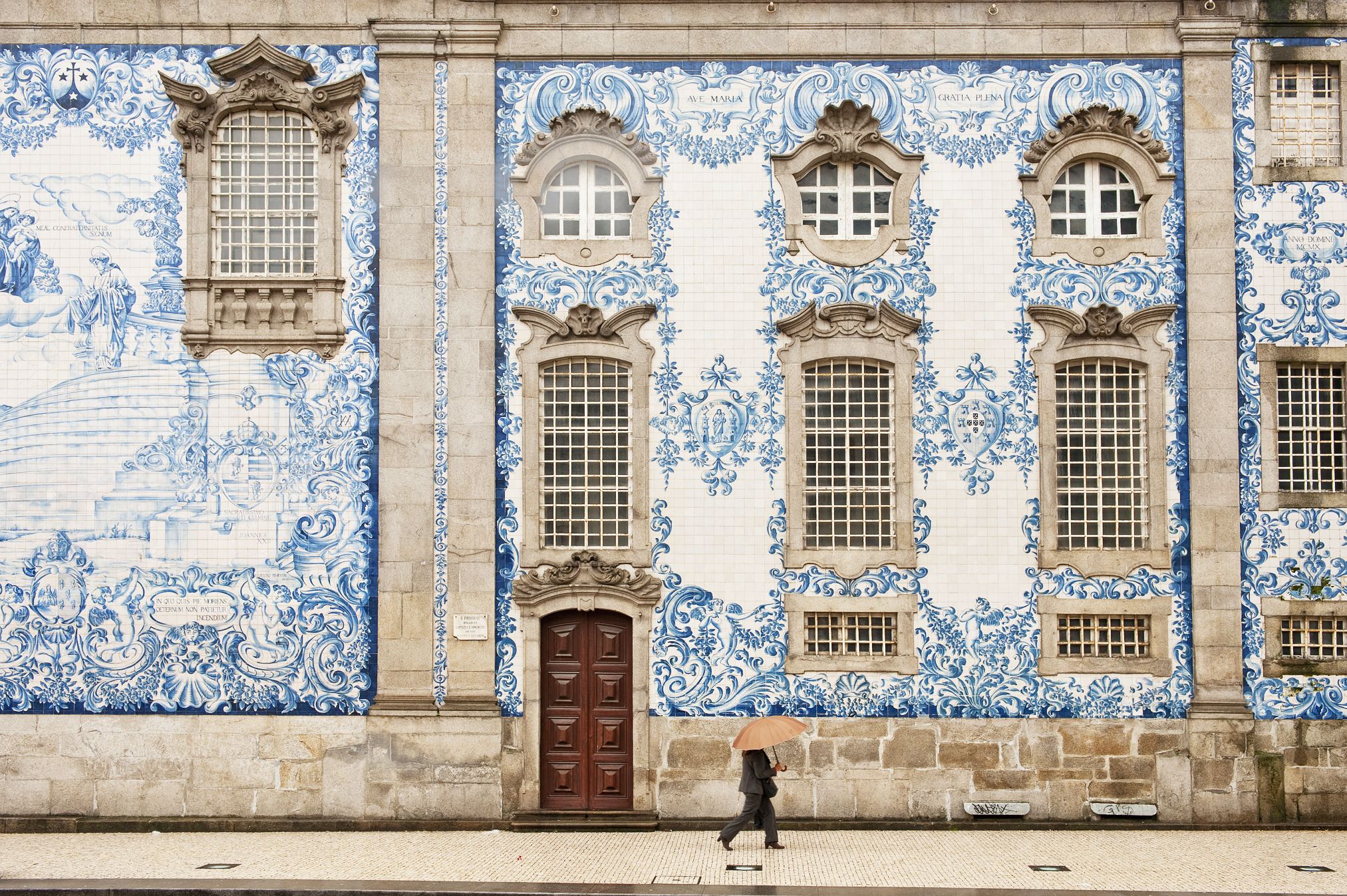
In Brazil at least it just means "tiles", but I love it when they're painted.
In Brazil at least it just means "tiles", but I love it when they're painted.
Yeah, this specific type of azulejo is "azulejo português". I wonder how they call it in Portugal
Just azulejo. The "azul" part of the word indicates the color of the paint (blue). Hence why azulejos are typically blue, however the word has come to just mean tiles
Doesn't the azul bit specifically mean blue?
Yes but the word azulejo has just derivated into "Tile"
I think I saw similar tilework in that hillside park by Gaudi in Barcelona (Guell?). Wonder how difficult it is to maintain these tiles — keep them clean etc.
From what I understand they are basically just ceramic tiles, so they’re maintained like any other ceramic tile except that replacing them is a bit more difficult
Any historian can tell me why this style is common in the area? moorish influence?
Yes, it spread from Al-Andalus. The word itself is from Arabic origin.
Is arabic indeed but it came from Al-zulaich which means polished little stone.
Nice to know!
Moorish influence (the actual act of painting ceramics) paired with the age of discoveries (descobrimentos). This particular style of azulejo is meant to imitate the style of Chinese porcelain. Even the name comes from that (azul is blue in Portuguese)
Cool, thanks for the knowledge!
In São Jorge castle, there is a part where you can see the evolution of tile works from moorish to 18th century
For those who are wondering this is Igreja do Carmo - Carmo Church in Porto, Portugal.
Looks like what we in the Netherlands have as “Delfts Blauw” ceramic.
For a time the portuguese imported their tiles from the netherlands, so It makes sense.
Seville is full of these, but I've pretty much only seen them as decoration on a smaller scale, never a full facade of it. They are gorgeous
never a full facade of it
Portuguese went a score further in that regard.
Where is this exactly?
It’s a church in Porto, Portugal.
There’s a really good board game called “Azul” based on this style.
I had no idea this was a thing before I went to Lisbon and I was absolutely blown away. It's so beautiful.
I passed by a building where builders were breaking off tiles that looked exactly like these. Not sure why. But they let me take a really pretty piece of one, which was much cooler to me than just buying one in a gift shop.
Thanks for sharing, I didn't know about this. Reminds me of Polish village Zalipie, where they like to paint walls and other stuff.
Wow I'm obsessed now! just spend an hour looking at pics of different styles, so gorgeous! thank you for sharing
the board game, azul, celebrates the factories these tiles are made in (and the tiles themselves). Its also an absolute banger of a board game along with being absolutely gorgeous.
You may want to check trencadís (catalonian) and zellige (moroccan) tiling, they're other types of tiles from the area. And for this stuff Daniel Zuloaga was a great ceramist.
I like the Iberian architecture, specially from South of Spain where there seems to be even more Moorish influence
In Northern Europe they made blue and white tiles too. The most popular ones are known as Delft tiles, named after a city in the Netherlands. I've only seen them used for interior work though.
Now look for "Talavera".
Renaissance architecture 🙏🙏
Great boardgame based on exactly this https://en.m.wikipedia.org/wiki/Azul_(board_game)
Azul (Portuguese for blue) is an abstract strategy board game designed by Michael Kiesling and released by Plan B Games in 2017. Based on Portuguese tiles called azulejos, in Azul players collect sets of similarly colored tiles which they place on their player board. When a row is filled, one of the tiles is moved into a square pattern on the right side of the player board, where it garners points depending on where it is placed in relation to other tiles on the board.
^([ )^(F.A.Q)^( | )^(Opt Out)^( | )^(Opt Out Of Subreddit)^( | )^(GitHub)^( ] Downvote to remove | v1.5)
The term azulejo is Portuguese. One of the kings of Portugal visited the king of Spain and fell in love with the tiles, most Spanish tile use different colors unlike the azulejos, and returned to Portugal and had blue and white tiles made for his palace. It took off from there and the blue and white tiles signify Portugal.
This is one of my favorite types of architecture shared between Portugal, Spain, and Morocco. Portugal has definitely ran with it the most (the above pic is in Porto) but you'll find amazing tiled buildings in all 3 countries.